Stitched in Silk and Secrets: The Victorian Crazy Quilt
Victorian Crazy Quilts
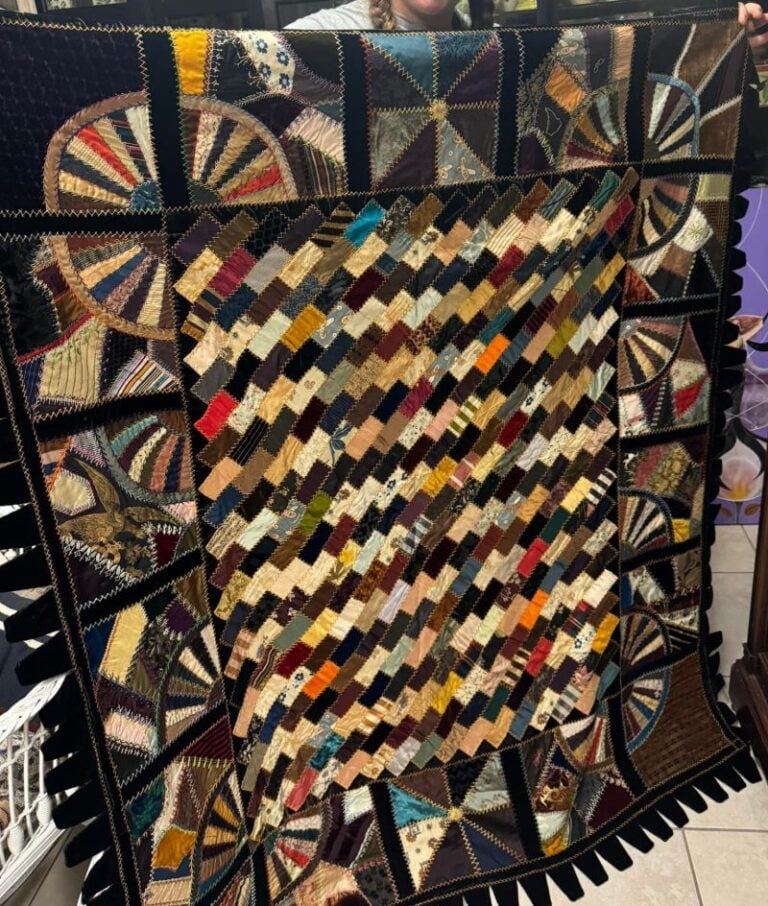
A crazy quilt is a mix of irregular fabric pieces stitched together with decorative embroidery, ribbons, lace, beads, and tiny personal treasures. Nearly every seam is embellished and every patch has a purpose or a story. It was a way for a Victorian woman to express herself and share her opinions in a time period when that was discouraged.
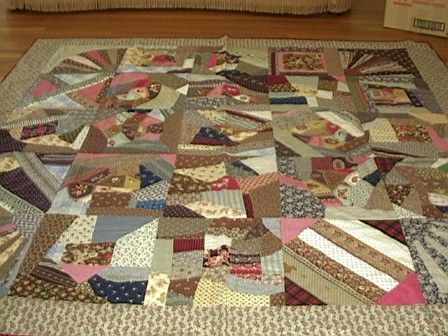
But crazy quilts did not begin as the lavish Victorian showpieces most people picture today. The earliest forms of crazy patchwork were simple. We might call them scrap quilts today, but the pieces were irregular. They used what they had. There were no strict geometric layouts and no repeating blocks marching across the bed.
The Victorian Craze Begins
Crazy quilting exploded in popularity during the 1880s, right in the middle of the Victorian era. America was changing rapidly. Industrialization created a growing middle and upper-middle class, and manufactured goods became easier to obtain. Sewing machines were becoming common in homes, magazines circulated widely, and fashionable women suddenly had both the leisure time and materials to experiment creatively.
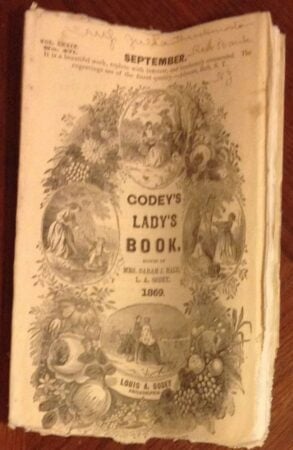
Godey’s Lady’s Book and publications like The Art Amateur and Demorest’s Monthly Magazine were influential in spreading specific stitch patterns and designs.
Crazy quilts offered something deeply personal to the maker. They were time consuming show pieces, made both to create beauty for her home and also to showcase her needlework skill. Making one implied you had leisure time and having leisure time implied you had help. The servants who freed her hands for embroidery were themselves a status signal.
The fabrics you used also signified wealth. Silk, satin, velvet, plush, wool, brocade, and ribbons were stitched together in rich jewel tones. Then came the embroidery. Feather stitch, herringbone stitch, spider webs, flowers, initials, dates, sayings, birds, and elaborate motifs crept across every seam.
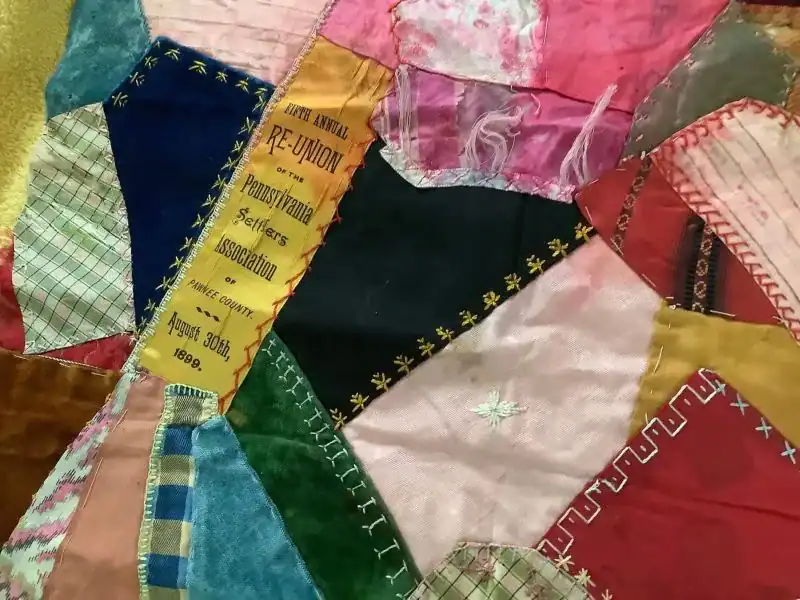
Some quilts even served as family records. Friends and relatives contributed meaningful fabric scraps that were embroidered with names, dates, or sentimental messages. A piece of christening gown fabric might appear beside a mourning ribbon or a fragment from a beloved dress.
Where Did the Name “Crazy Quilt” Come From?
The word “crazy” to describe this style of patchwork turns up earlier than most people expect. As far back as 1864, a writer at a Civil War sanitary fair in Cleveland described a “crazy bedquilt” hung on display — a grotesque, irregular piece made of newspaper and fabric scraps that was sold by lot each day as a kind of joke. By the 1870s, magazines were using terms like “ornamental fancy work” and “mosaic appliqué” for similar styles. The compound phrase “crazy quilt” was firmly in print by 1878, when The Cultivator and Country Gentleman described a “crazy cushion” stitched collaboratively by a group of friends, each embroidering her own section before returning it to the owner.
The style reached its height in the late 1880s, though crazy quilts have never completely disappeared. The most elaborate examples, where embroidery nearly covered the fabric itself, are usually the earliest and most luxurious pieces.
The Influence of Japan
One of the biggest influences on crazy quilting arrived at the 1876 Centennial Exposition in Philadelphia, where Americans were introduced to Japanese art and design on a large scale. Japanese-inspired motifs soon appeared everywhere: fans, butterflies, cranes, dragonflies, flowers, insects, bamboo, and spider webs all became popular embroidery designs. Here are images from a “cheater cloth” crazy quilt.
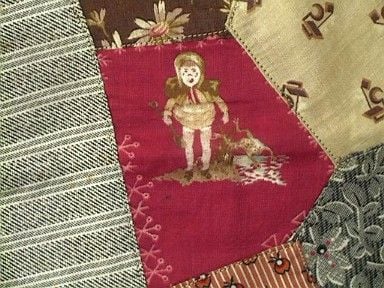
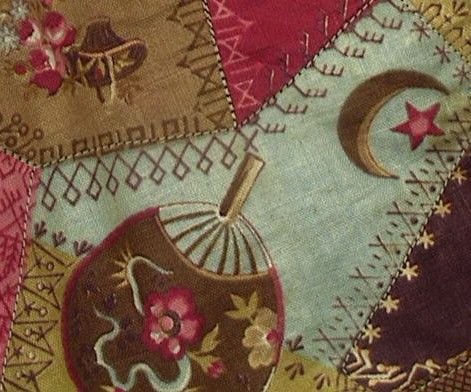
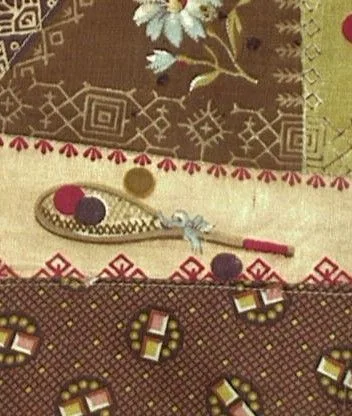
Even the word “crazy” may have been influenced by the craze for “crazed” pottery glazes imported from Asia. Those glazes featured delicate crackled surfaces that resembled irregular patchwork.
A Fashionable Obsession
At the height of the trend, crazy quilting became something of an obsession. Women searched everywhere for scraps of luxurious fabric. Ladies’ magazines published embroidery patterns and stitch diagrams. Thread manufacturers promoted specialty embroidery flosses. Tobacco companies even tucked printed silk “cigarette silks” into cigarette packages, knowing women would collect them for quilts.
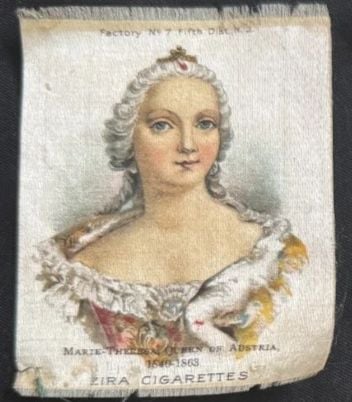
Stories and poems from the period joked about the extreme lengths some women went to in order to obtain free scraps of velvet and silk.
More Art Than Bedding
Most crazy quilts were never made to become a finished quilt. If you have ever seen a crazy quilt with no batting or backing, it’s likely that is wasn’t finished on purpose. Instead, they were decorative showpieces displayed in parlors on sofas, pianos, tables, or “fainting couches.” Victorian homes prized ornamentation, and crazy quilts fit perfectly into that world. The more elaborate the stitching, the more impressive the quilt.
Many makers added:
- Painted motifs on velvet or satin
- Beads and ribbonwork
- Lace and braid trims
- Political ribbons
- Souvenir fabrics
- Handwritten names and dates
Crazy patchwork appeared on far more than quilts. Victorian women decorated pillow covers, table scarves, slippers, piano covers, wall pockets, robes, fire screens, lambrequins, and even furniture with crazy patchwork. Some families created elaborate memorial textiles or ceremonial coverings for funerals. The style seemed to spread onto nearly every surface that could possibly hold a needle and thread.
Symbolism was also important during the Victorian era. Flowers and motifs often carried hidden meanings. Roses represented love. Rosemary symbolized remembrance. Spider webs brought good luck. Anchors stood for hope and faith. Wreaths often signified mourning.
Why Crazy Quilts Still Matter Today
By the early 1900s, tastes began changing. The heavily ornamented Victorian style fell out of fashion, and crazy quilts were often dismissed as excessive or old-fashioned.
Today, however, crazy quilts are appreciated once again for their artistry, individuality, and emotional power. Every scrap, stitch, and embellishment reflects the hand of the maker. Some are elegant. Some are exuberantly chaotic. Some are deeply sentimental. Together they offer a remarkable glimpse into the creativity of women who often had limited outlets for personal expression.
Perhaps that freedom is part of why crazy quilts still resonate today. Traditional quilt patterns follow rules. Crazy quilts invite you to break them. And sometimes, that is exactly what makes them beautiful.
Suggested Reading:
American Quilts by Elizabeth Wells Robertson Studio Publications, N.Y.C. 1948
Crazy Quilts by Penny McMorris Dutton, NY 11984
Crazy Quilts: History, Techniques, Embroidery Motifs by Cindy Brick and Nancy Kirk
Crazy Quilt Odyssey by Judith Montano C & T Publishing , Ca 1991
Patchwork and Applique by Sara Parr and Pamela Tubby Marshall Cavendish Unlmtd.1970
Quilting Manual by Dolores Hinson Hearthside Press 1966
Silk Ribbon Embroidery C & T Publishing, Ca. 1993
The Language of Flowers by Margaret Pickston The Yeoman Group, NY
Wrapped in Glory – Figurative Quilts and Bedcovers 1700 – 1900 by Sandi Fox Thames and Hudson, L.A.
