Victorian Quilts
What Makes a Quilt Victorian?
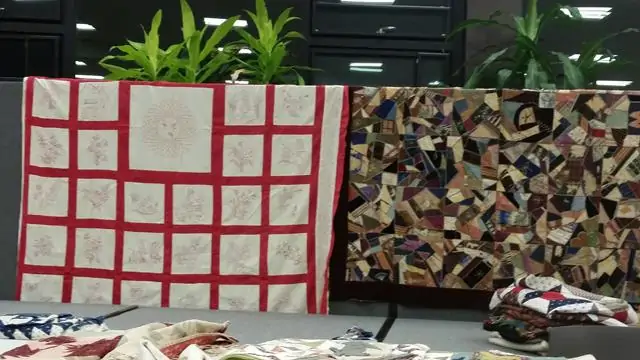
For purposes of American quilt history, this site defines the Victorian era as approximately 1870 to 1900. Quilts from these years ranged from practical cotton bedcovers to elaborate silk and velvet parlor throws. Crazy quilting (the quilt on the right above) became the era’s most distinctive needlework fashion during the 1880s and 1890s, but traditional pieced and appliquéd quilts continued to be made throughout the period. Pink and brown color combinations were also characteristic of the period.
Victorian Quilt History Timeline
- 1846–1850s: Elias Howe patented an improved lockstitch sewing machine in 1846, followed by Isaac Singer’s practical machine in 1851. Household sewing machines became increasingly available during the 1850s and 1860s, although their adoption by quiltmakers was gradual. See The Influence of Textiles on the lives of 19th century women
- 1868–1870s: William Morris and his associates revived traditional block-printing methods and historical chintz-inspired designs. Morris’s company produced its first block-printed fabrics in 1868, followed by designs such as Tulip and Willow in 1873.
- 1876: Quilts and printed fabrics commemorated the American Centennial. The Philadelphia Centennial Exposition also encouraged an interest in decorative needlework and Asian-inspired design that contributed to the crazy-quilt fashion of the 1880s.
- Late 1870s–1890s: Mechanized textile production, declining raw cotton prices, improved printing methods, and expanding transportation networks made cotton cloth increasingly plentiful and affordable. Quilters had access to a wider assortment of dressmaking remnants and manufactured cotton prints.
- 1880s: Crazy quilting became a major Victorian needlework fashion. Silk, velvet, wool, ribbon, and cotton scraps were joined in irregular arrangements and embellished with embroidery. Cigar ribbons also found their way into Victorian quilts and decorative throws. Beginning in the late nineteenth century, women collected the colorful silk ribbons used to bundle cigars and arranged them in Log Cabin, fan, string and crazy-patchwork designs. Their shiny fabric, printed lettering and rich colors suited the fashionable crazy-quilt style, although cigar-ribbon quilts are considered a distinct type of tobacco-premium quilt.
- The use of wool and silk in quilts increased during this period and remained popular through about 1925.
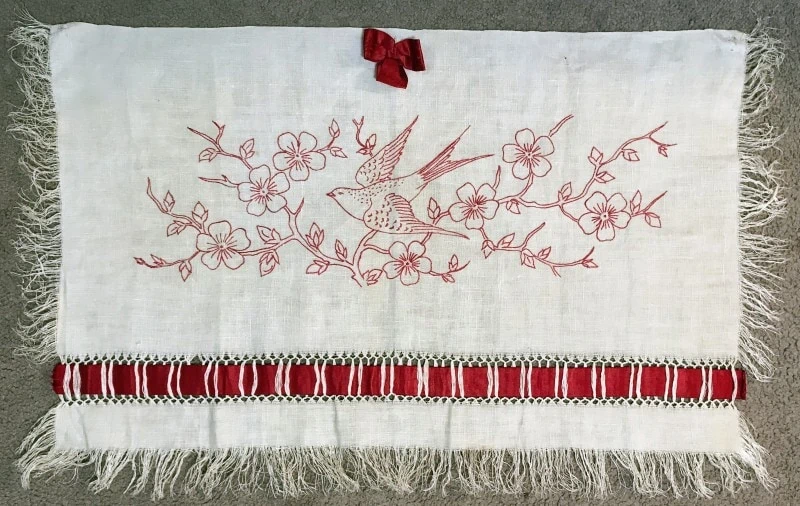
- Redwork Embroidery became popular during the 1880s and was especially fashionable from the 1890s into the early twentieth century. Designs were embroidered in Turkey-red cotton thread on white or cream fabric usually with simple outline stitches like the quilt on the left at the top of the page. Some makers purchased inexpensive preprinted “penny squares,” while others traced designs from magazines and pattern sheets. Flowers, animals, children, household objects and nursery-rhyme figures were common subjects.
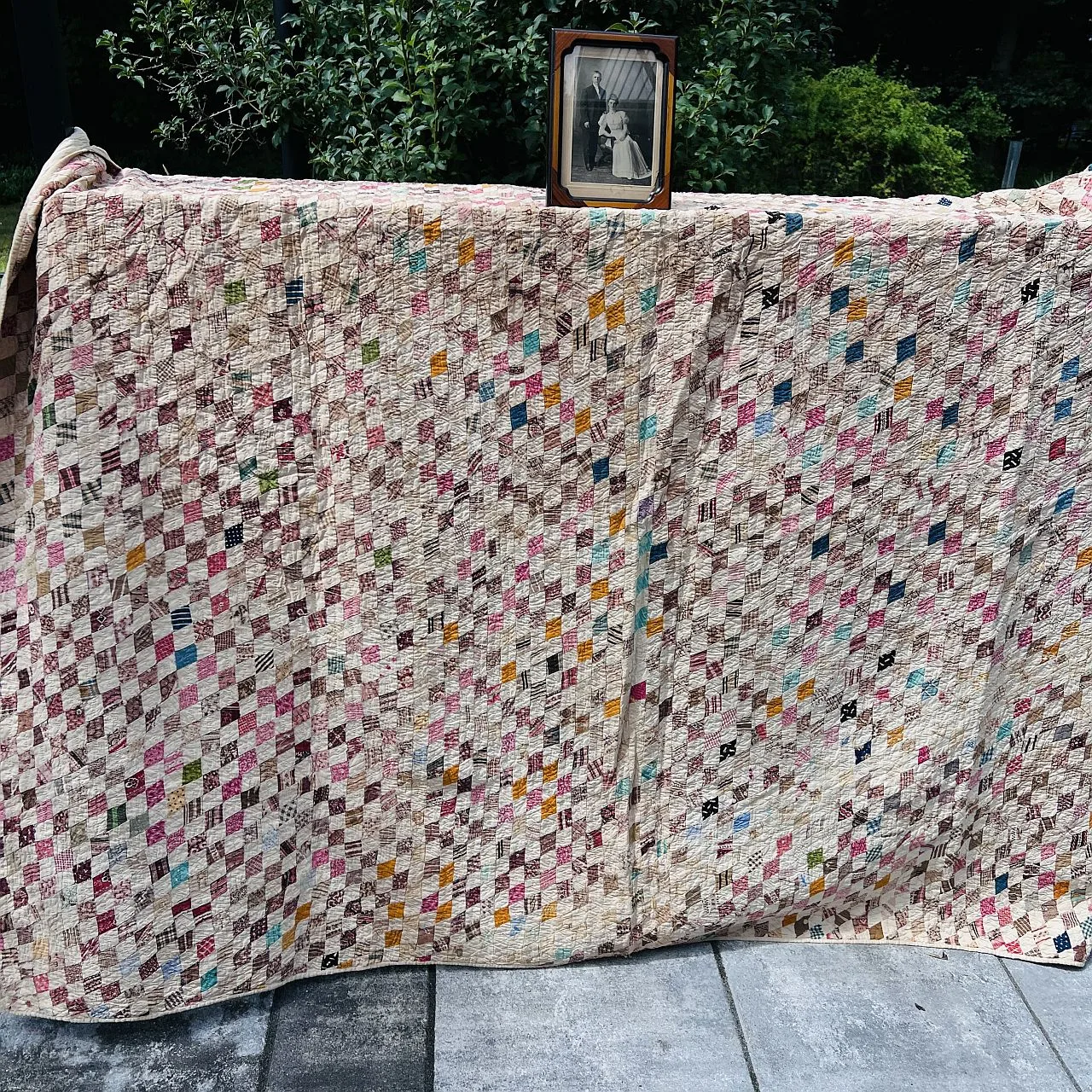
- 1884–1885: The World’s Industrial and Cotton Centennial Exposition was held in New Orleans. Nine-year-old Lula Redmond’s quilt of 1,233 pieces demonstrates the period’s admiration for intricate workmanship, thrift, and youthful accomplishment. See Nine Years Old and 1,233 Pieces: The Little Alabama Quilter Who Deserved a World’s Fair
- Late nineteenth century: Temperance organizations and other community groups made quilts to raise money and publicize their causes. Some quilts were raffled or auctioned, while supporters sometimes paid to have their names added. Although blue-and-white Drunkard’s Path quilts have often been associated with temperance, historians caution that the movement did not officially adopt one particular quilt pattern.
- Late nineteenth century: Commercial cloth sacks increasingly replaced barrels for shipping flour, grain, sugar, and other products. These early sacks were generally plain or marked with company names. Dress-quality decorative feed-sack prints did not become widespread until the 1920s and 1930s. See The Feedsack Story
- Late nineteen century: Signature quilts were popular throughout the nineteenth century, especially as friendship, presentation and fundraising quilts. Names might be signed in ink, embroidered or inscribed by one person for the entire group. These quilts commemorated families, churches, communities and special events, or were presented to someone who was marrying, moving away or retiring. By the late 1800s, organizations also charged contributors to have their names included and then raffled or auctioned the finished quilt to raise additional money.
- Late nineteenth century: Quilts resembling the Double Wedding Ring are known from this period, but the named pattern became broadly popular after its publication during the late 1920s.
Learn More
International Quilt Museum: Temperance Quilts
International Quilt Museum: Fundraising Quilts
National Museum of American History: 1876 Centennial Quilt
The T Block and Temperance Quilts: Separating Fact from Folklore
The Craze for Crazy Quilts by Cindy Brick
The Sewing Machine and Quilters in the 19th Century by Kimberly Wulfert, PhD
Quilting in North Carolina, 1880 – 1920.
