The Smithsonian Quilt Controversy
In 1992, catalogs began arriving in American mailboxes that would set off one of the biggest disputes in quilting history. These catalogs were selling handmade copies of historic 19th-century quilts from the Smithsonian collection, and quilters across the country were not happy about it.
A Deal With the Smithsonian
The Smithsonian had licensed four quilts from its collection to American Pacific Enterprises Inc., a deal intended to generate revenue for the institution. The contract was set to run three years and was expected to bring in between $500,000 and $800,000 in royalties.
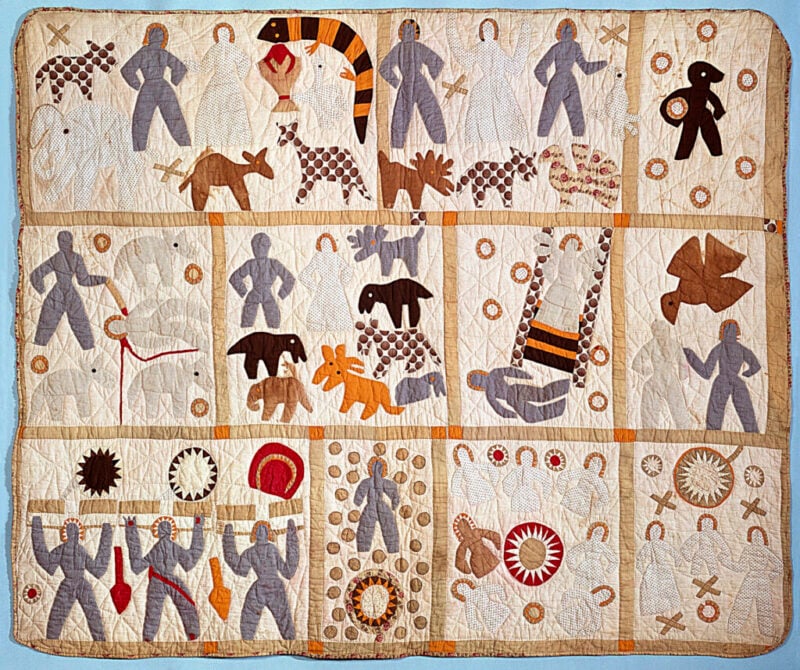
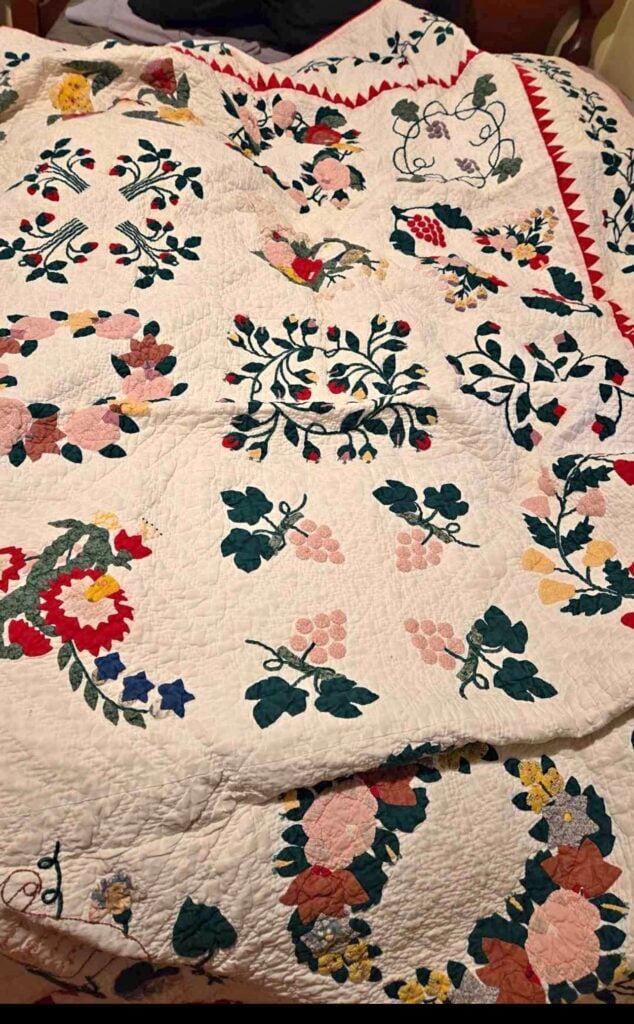
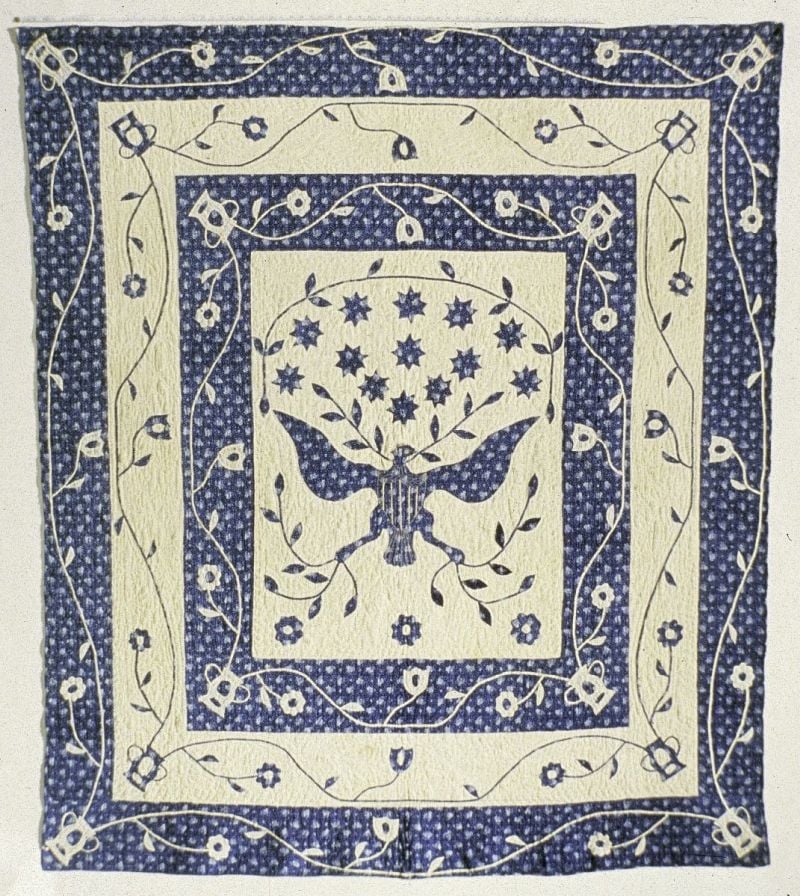
The four quilts selected for reproduction were an 1851 Bride’s Quilt, an 1830 Great Seal of the United States quilt, a circa 1850 Sunburst quilt, and the well-known 1855 Bible Quilt made by Harriet Powers. Each reproduction took three or four workers in China approximately 50 hours to complete. American textiles were used for the applique, while the backing and batting were Chinese-made cotton. The quilts were sewn by machine but quilted by hand. Each one came with a registration card and a certificate calling them Authentic Smithsonian Reproductions. American Pacific sold more than 23,000 reproductions of the four designs by March 1993, at an average price between $150 and $300. The exact total number of quilts produced is not known.
Quilters Push Back
Quilt and textile historians were among the first to raise the alarm. They worried that once the quilts left their original packaging, dishonest or simply uninformed resellers might try to pass them off as genuine antiques.
The word spread quickly through guild meetings, magazines, catalogs, fax networks, phone trees, quilt shows, and letters to Congress. The National Quilting Association faxed its official position paper to member chapters and called for action. According to Quiltfolk, around 25,000 people signed roughly 500 petitions, including through quilt shops and the Houston Quilt Festival.
Quilters Concerns
The concerns went beyond the quilts themselves. Many quilters believed the Smithsonian should have contracted American quilt makers for the project rather than outsourcing production overseas. Others worried that lower-quality reproductions could hurt the market for American-made quilts. Some simply wanted the quilts to be clearly labeled “Made in China,” particularly given that the United States was running a $12.7 billion trade deficit with China at the time.
There was also a broader concern: if museums could license designs from their collections, would individual quilters one day find their own donated works reproduced without their permission?
Smithsonian Concessions and Changes
Smithsonian officials met with quilters to hear their concerns, and some changes followed. The Smithsonian agreed to print its name and the copyright year (1992) on reproduced quilts. Steps were also taken toward permanent “Made in China” labeling, tighter advertising standards, and increased domestic production. They also agreed not to use the words “heirloom” or “American heritage” in their advertising. Later contracts were signed with American groups, including Cabin Creek Quilters in Appalachia and Missouri Breaks in the Lakota Sioux reservation. By 1994, the Smithsonian had stopped licensing reproduction quilts entirely.
A Turning Point for Quilters
The controversy had a lasting effect on how museums think about their collections. The Smithsonian now frames its quilt holdings as cultural, artistic, and historical objects, not simply decorative items. The episode prompted museums more broadly to take a harder look at labeling practices, cultural context, artist rights, and the ethics of reproduction.
For quilters, the dispute also marked a shift in how they saw themselves and their craft. This was not just a disagreement over imported bedcovers. Quilters argued that historic quilts carry women’s history, regional stories, family labor, and artistic value. When those quilts are copied, stripped of context, and sold through mass-market catalogs, those meanings can be lost. Quilt scholar Judy Elsley later described the episode as “cultural dislocation,” a phrase that gets at the real concern: not just that the quilts were being copied, but that their stories were being lost in the process.
Learn More
Quilters Protests Answered by the Washington Post
Uncoverings 1993 includes the article The Smithsonian Quilt Controversy: Cultural Dislocation by Judy Eisley
AQSG Review of Uncoverings 1993, Volume 14 of the Research Papers of the American Quilt Study Group, edited by Laurel Horton
The Quilt Index has over 100,000 images of American Made Quilts
Hearts and Hands: The Influence of Women and Quilts on American Society (San Francisco: The Quilt Digest, 1987)
Always There: The African American Influence in American Quilts (Louisville, Kentucky: Kentucky Quilt Project, 1992)
Stitching Stars: The Story Quilts of Harriet Powers by Mary E. Lyon, (Aladdin Paperbacks, 1993).
