Victorian Mourning Customs
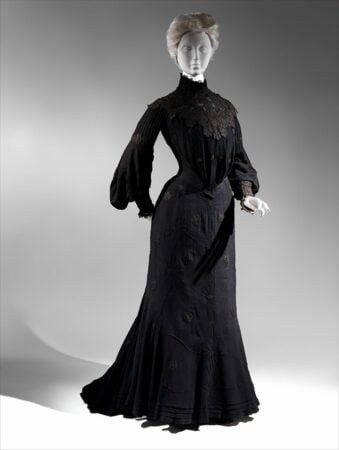
What to Wear, How Long to Wear It, and Why It Mattered
Mourning clothes may seem like a small detail when a family is grieving, but in the Victorian era, what a person wore after a death carried a great deal of meaning. Black clothing, crape veils, widow’s caps, black-edged handkerchiefs, and even the timing of social calls all helped signal grief, respect, and social standing. Crape, now more commonly spelled crepe, was a crinkled black fabric strongly associated with Victorian mourning clothes.
This article is based on a period description of mourning etiquette commonly circulated as “Victorian Mourning Customs from Collier’s Cyclopedia, published in 1901.” A very similar version also appears in The Manners of the Aristocracy, in the chapter “The Etiquette of Mourning.” The wording and advice reflect the customs, class assumptions, and social expectations of the late Victorian and Edwardian period.
Mourning as a Public Sign of Respect
In Victorian society, mourning was not considered only a private feeling. It was also expected to be shown outwardly through clothing and behavior. Black clothing served as a visible sign that the wearer had suffered a loss and was observing the customs of grief.
The original article is very firm on this point. It criticizes those who wore only a black armband after the death of a close relative, explaining that such a small sign was more appropriate for men in uniform than for ordinary social life. A new bright dress with a crape band around the arm was seen as especially improper because it suggested that the wearer could afford mourning clothes but chose not to follow the custom.
This may sound harsh to us today, but it shows how strongly clothing was tied to duty and respectability. Mourning dress was a kind of social language. Everyone was expected to know what it meant.
The Deepest Mourning: Widows
A widow’s mourning was considered the deepest and most formal. The first stage lasted a year and a day. During that time, her clothing was expected to be plain black and heavily trimmed with crape.
Older mourning fabrics such as bombazine were becoming less common by the time this article was written. Melrose and Henrietta cloth were recommended for widows’ dresses, with the skirt, bodice, and sleeves trimmed so heavily with crape that the dress almost appeared to be made entirely of it. The article also mentions rainproof crape, which was considered more practical and economical than ordinary crape. Since first mourning lasted so long, a widow was advised to have at least two dresses, so one could be spared while the other was worn.
A widow’s outdoor clothing followed the same rules. Mantles, jackets, capes, and summer wraps were trimmed with crape. Her bonnet was made of crape, with a long veil hanging down the back and a shorter veil worn over the face. Hats were not considered proper for widows during the deepest stage of mourning, even for younger women.
A Widow’s Mourning Outfit
The original article gives a surprisingly detailed list of what was considered a suitable widow’s outfit. A complete wardrobe might include:
- One best dress of Henrietta trimmed entirely with crape.
- One second dress, either made of Cyprus crape or an older black dress covered with rainproof crape.
- One Henrietta mantle lined with silk and deeply trimmed with crape.
- One warmer cloth jacket, also trimmed with crape.
- One best silk crape bonnet with a long veil.
- One rainproof crape bonnet with a crape veil.
- Muslin or lawn collars and cuffs.
- Black petticoats, black stockings, black gloves, and black-bordered handkerchiefs.
- Widow’s caps, made of lisse, tulle, lawn, or tarlatan, with long streamers.
The article notes that widows’ caps were difficult to make well at home. If a woman tried, she was advised to use a purchased cap as a model and shape the new one on a wooden head form. This is one of those historical details that makes you realize how many small skills were once part of everyday domestic life.
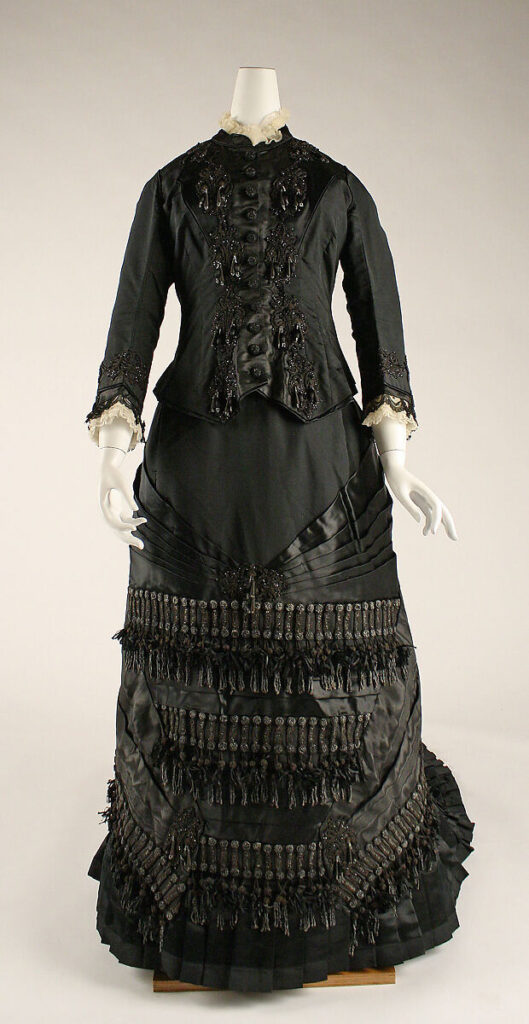
Second Mourning and Half-Mourning
After the first year and a day, a widow moved into second mourning. The widow’s cap was usually left off, and the heavy crape was reduced. Instead of covering the dress, crape might be used in tucks or smaller trimmings.
Second mourning could last another nine to twelve months. After that, plain black without crape was worn, followed by half-mourning. Half-mourning allowed softer colors such as gray, pale lavender, black-and-white combinations, and sometimes muted violet. Jewelry was still restrained, though jet ornaments were allowed earlier than gold or silver.
Some widows eventually returned to ordinary dress. Others, especially older widows, remained in mourning or semi-mourning for the rest of their lives. A widow might set aside black only for a special family occasion, such as the wedding of a child.
Mourning for Parents and Children
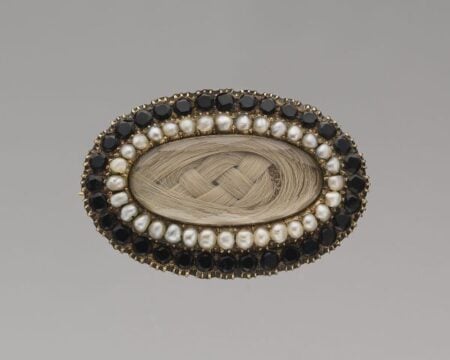
Mourning for parents by children, or for children by parents, ranked next after widow’s mourning. The usual period was twelve months. The first six months were worn in black with crape trimmings. The next three months were plain black. The final three months were half-mourning, though the article suggests that many people considered it better taste to remain in plain black for the full year and wear half-mourning afterward.
The clothing for this stage was still formal, but not quite as severe as widow’s mourning. Dresses might be made of Henrietta, Melrose, cashmere, or black corded fabrics such as Janus cord or Victoria cord. Collars and cuffs were usually muslin or lawn with small tucks, rather than the wide hems associated with widows.
Black stockings, black gloves, crape bonnets or hats, and black-bordered handkerchiefs were recommended. Jet jewelry was acceptable while crape was worn, but gold and silver jewelry were discouraged during the earlier stages.
Mourning for Other Relatives
The article also lays out shorter mourning periods for other family members. These rules varied by region, and social class, but the general guidelines were:
- For parents-in-law, one month of black was considered suitable, followed by black and white with lilac.
- For grandparents, simple black without crape was worn for three months.
- For brothers and sisters, mourning lasted about six months: three months with crape, two months in plain black, and one month in half-mourning.
- For uncles, aunts, nephews, and nieces, plain black with jet was worn for three months, without crape.
- For great-uncles and great-aunts, mourning lasted about two months.
- For first cousins, six weeks was considered enough, with part of that time in half-mourning.
- More distant cousins were usually not mourned with special clothing unless they had lived in the same household.
These rules may feel oddly specific now, but they helped people know what was expected. In Victorian mourning, black carried the heavy lifting. Gray came in later, during half-mourning, when the rules began to loosen and the mourner could slowly step back toward everyday life.
Mourning and Social Life
Mourning affected more than clothing. It also changed a person’s social calendar.
Invitations were not accepted before the funeral of a relative close enough to require mourning. For parents, grandparents, brothers, and sisters, society was often given up for at least three months. Widows were not expected to enter society for at least a year, during the period of deepest mourning. The article also warns against attending balls or large festive gatherings while wearing crape. In the social rules of the time, mourning clothing and festive entertainment did not belong together.
Calls after a bereavement were handled carefully. Cards were left, and the grieving family might later send cards thanking friends for their kind inquiries. Letters of condolence were written on slightly black-edged paper. The article suggests telling the recipient that no answer is expected, since even a kind letter could create another burden for someone newly grieving.
Mourning for Servants
One revealing section discusses servants’ mourning. Servants were usually put into mourning only for members of the household in which they worked, not for the wider relatives of their employers. Often this applied only to the heads of the household.
A servant’s mourning might include a best black dress of Victoria cord or alpaca, two black cotton dresses for work, a cloth jacket with slight crape trimming, a silk and crape bonnet, black kid gloves, and black cap ribbon. This mourning might be worn for six months or even a year.
This section shows the class structure behind mourning customs. Mourning dress was not just about grief. It also displayed household status, respectability, and the relationship between employers and servants.
Mourning Fabrics and Materials
The original article names many fabrics that were considered suitable for mourning. These included silk crape, Henrietta, Albert crape, Melrose, rainproof crape, Cyprus crape, Janus cord, Victoria cord, Balmoral cloth, Cashmere Francais, Kashgar cashmere, drap d’ete, barege, nun’s veiling, satine, and foulardine.
For summer mourning, lighter fabrics were recommended. For children, black washable cottons were preferred over heavier fabrics. Black with tiny white spots or sprigs could be used for lighter mourning. Strict mourning did not include velvet, satin, or plush because these were not considered proper mourning materials.
Gray and pale lavender were acceptable for half-mourning, along with gray gloves, gray-and-black ribbons, gray feathers, and black flowers mixed with gray. Children under fifteen were not generally expected to wear mourning, and girls under seventeen were not expected to wear crape.
The Cost of Mourning
The article ends with practical advice about expense. Mourning often had to be purchased quickly, which made families vulnerable to buying more than they needed or paying too much. The writer advised purchasing from reputable mourning establishments and choosing durable materials instead of cheap fabrics that would not wear well.
At the same time, the article admits that mourning should fit the family’s means. A household was not expected to spend beyond its purse. Still, the writer strongly hoped that the custom of wearing “decent mourning” would continue in America, calling it a visible sign of family affection and respect.
Today, we may not agree with every rule, judgment, or expectation in this old advice. Grief is personal, and clothing customs have changed dramatically. But as a historical source, this article gives us a vivid look at a time when mourning was stitched into daily life, from veils and collars to calling cards and handkerchiefs.
Learn More
Myras Journal of Dress and Fashion 1875- 1912
Useful as a period fashion source because it mentions mourning fabrics including Henrietta cloth, Melrose cloth, crêpe cloth, veiling, and other black dress materials.
The Dictionary of Textiles (1915)
Helpful for old fabric terms such as crape, crape cloth, Albert crape, and other textiles from a Victorian sewing basket.
Mid-Late Victorian Mouning Dress from Lancaster History
A clear article explaining Victorian mourning dress, including the influence of Queen Victoria’s long mourning after Prince Albert’s death.
Hudson River Museum: “Mourning in the Victorian Era and Glenview”
A good museum source on mourning customs, including how expectations differed for men and women.
