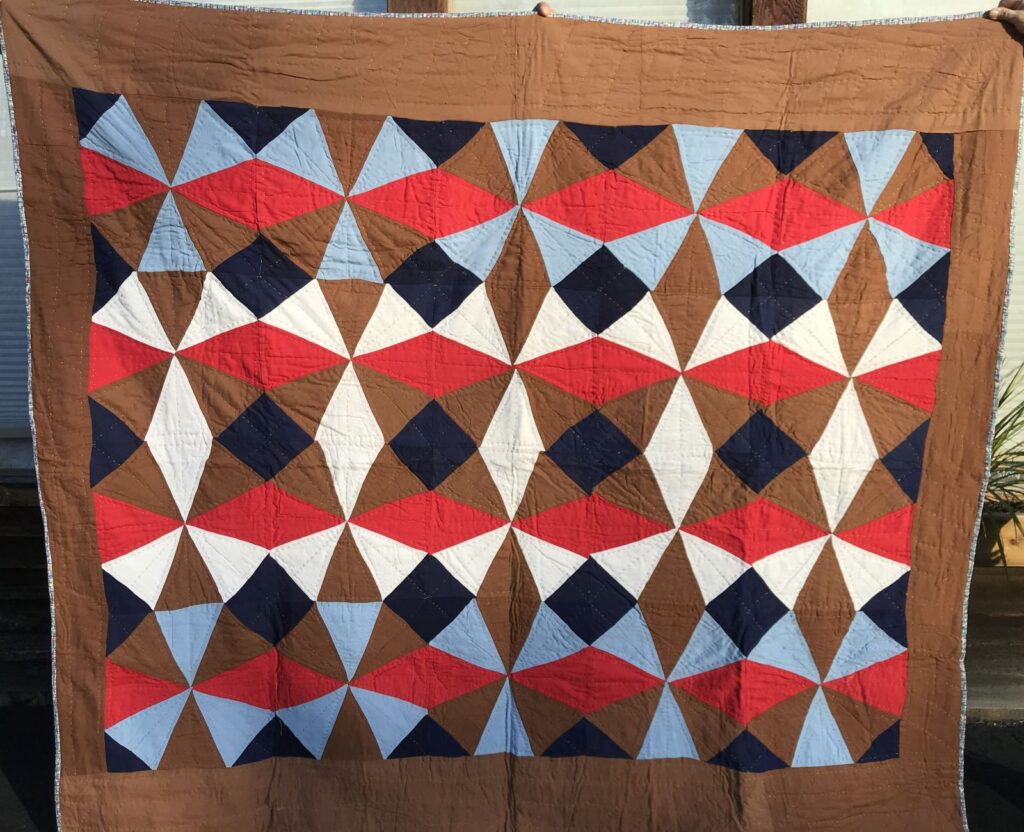
Postwar Quilts
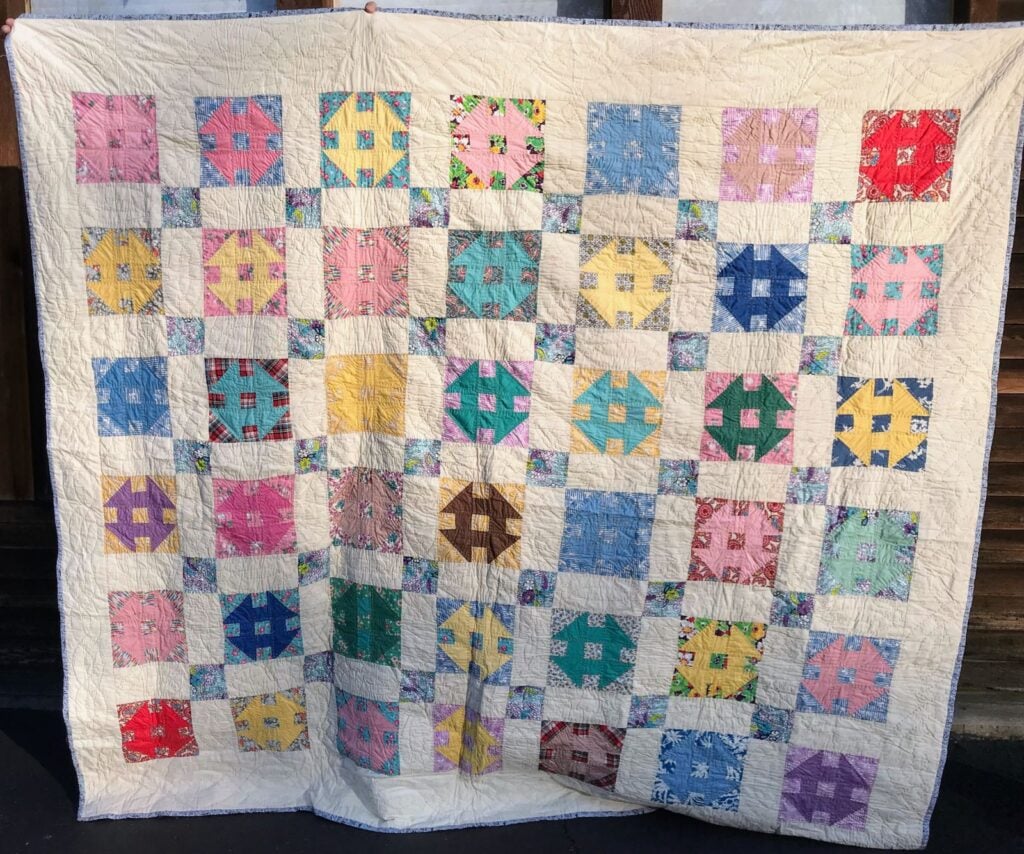
1940s–50s: Postwar Revival
The postwar years brought significant changes in materials. Satin and sateen, popular since about 1925, remained fashionable as whole-cloth quilt fabrics through roughly 1950. Applique outlined with black thread in a buttonhole stitch was also popular. Machine-made quilts became available in department stores around 1950, and polyester fabrics and batting were introduced, permanently changing the materials available to quilters.
Embroidered “red work” blocks featuring nursery characters, baskets, birds, and flowers had been popular since around 1914 and continued into this era. Blocks colored with crayons and heat-set had been a popular technique since the 1920s. Multi-stranded embroidery thread, introduced in 1925, was by now a standard supply.
- Around 1950: Polyester fabrics and batting introduced
- 1963: Synthetic threads become available