Depression Quilts

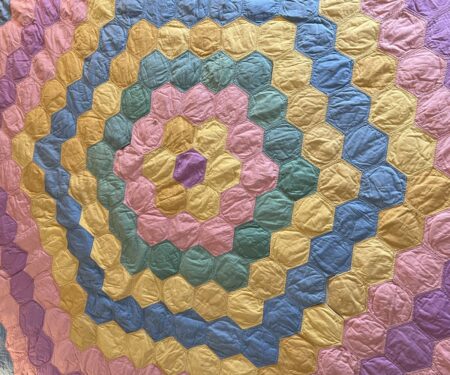
A quilt with a pattern of concentric hexagonal rings in pastel colors, including pink, yellow, green, and blue. The fabric appears slightly wrinkled, and each hexagon is outlined with stitching.

1930s: Depression Era

The Great Depression shaped quilt making in immediate and practical ways. Quilters relied heavily on scraps and repurposed materials, particularly feed, flour, and sugar sack prints. Pastel colors dominated, with shades of purple especially prevalent. Applique kits became popular, scalloped borders were fashionable, and Sunbonnet Sue was born as an enduring pattern character. Grandmother’s Flower Garden became a favorite design for using up scraps.

The revival of printed quilt patterns in newspapers and company brochures had already begun in 1927 and continued through this period, making patterns more accessible to home quilters across the country.

Some Dates:

  • 1927–1939: Quilt patterns widely distributed through newspapers and company brochures
  • 1929–1939: Feed, flour, and sugar sack prints characterize Depression-era quilts
  • 1930: The Airplane block is introduced
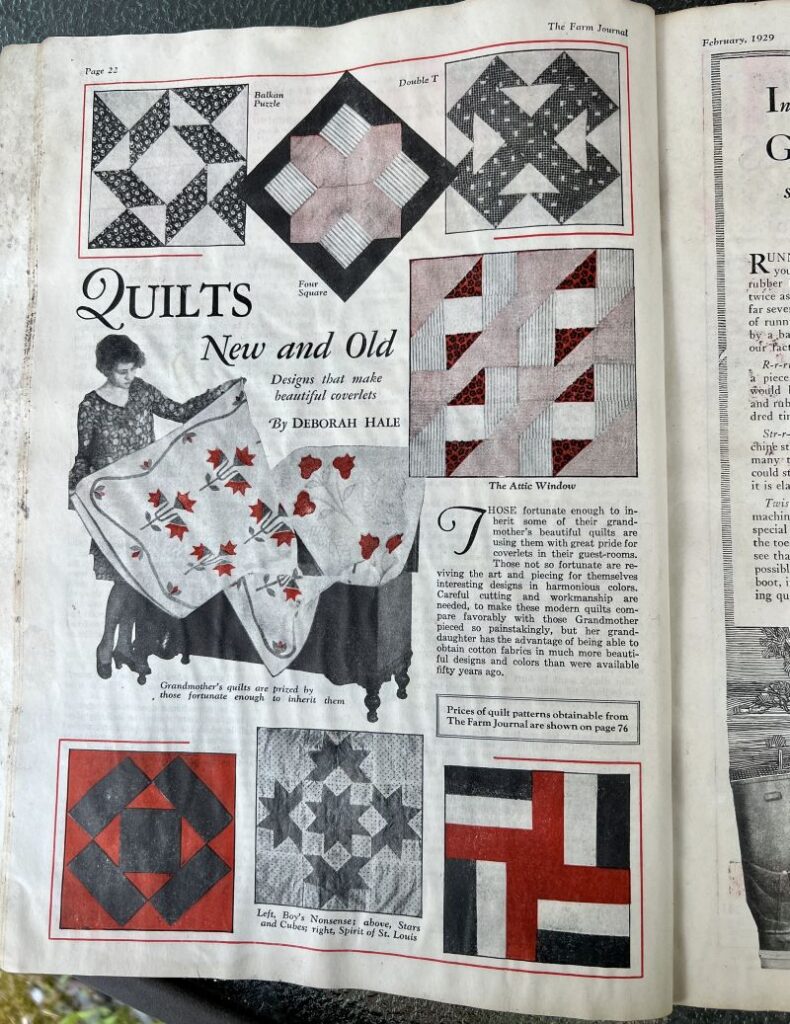
A vintage magazine page titled “Quilts New and Old” shows a woman holding a quilt with red and white flowers, surrounded by illustrations of five geometric quilt patterns in red, black, and gray.
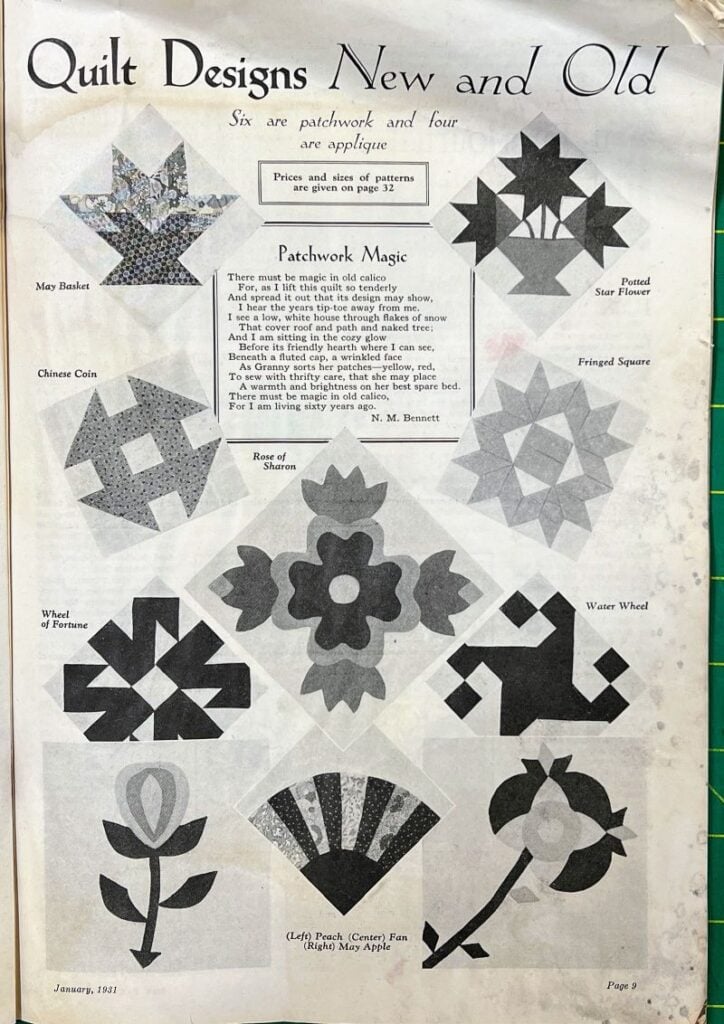
A vintage magazine page titled Quilt Designs New and Old displays black and white illustrations of ten quilt block patterns, each labeled, along with brief text about patchwork magic.
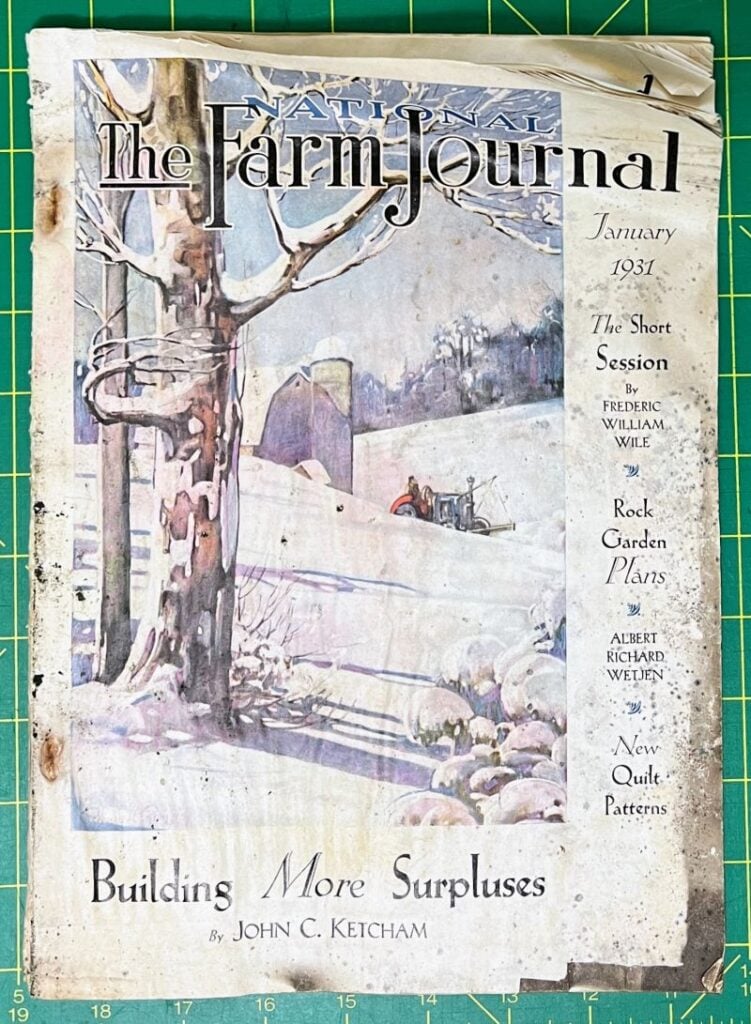
A vintage January 1931 issue of The Farm Journal features a snowy rural scene with a horse-drawn sleigh, bare trees, and rock walls. Headlines include articles on surpluses, garden plants, and quilt patterns.
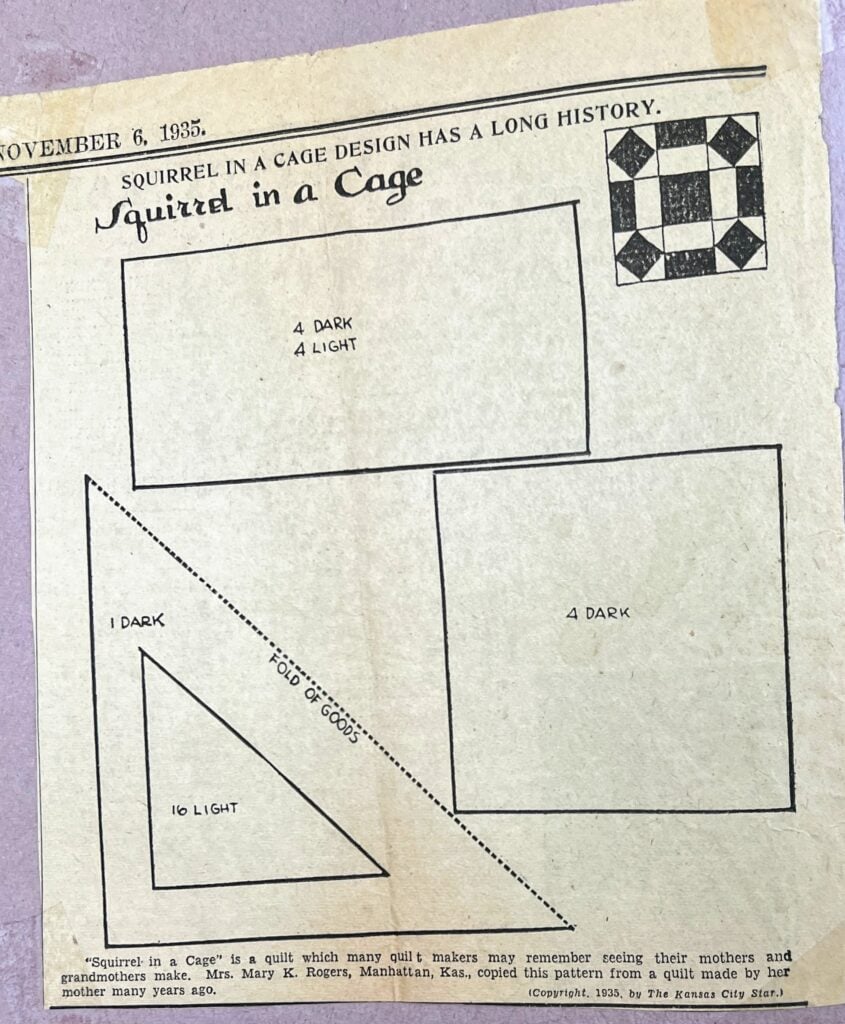
A newspaper clipping dated November 6, 1933, features a Squirrel in a Cage quilt pattern with labeled quilt piece diagrams, a small quilt illustration, and a brief description of the patterns history at the bottom.
Squirrel in a Cage
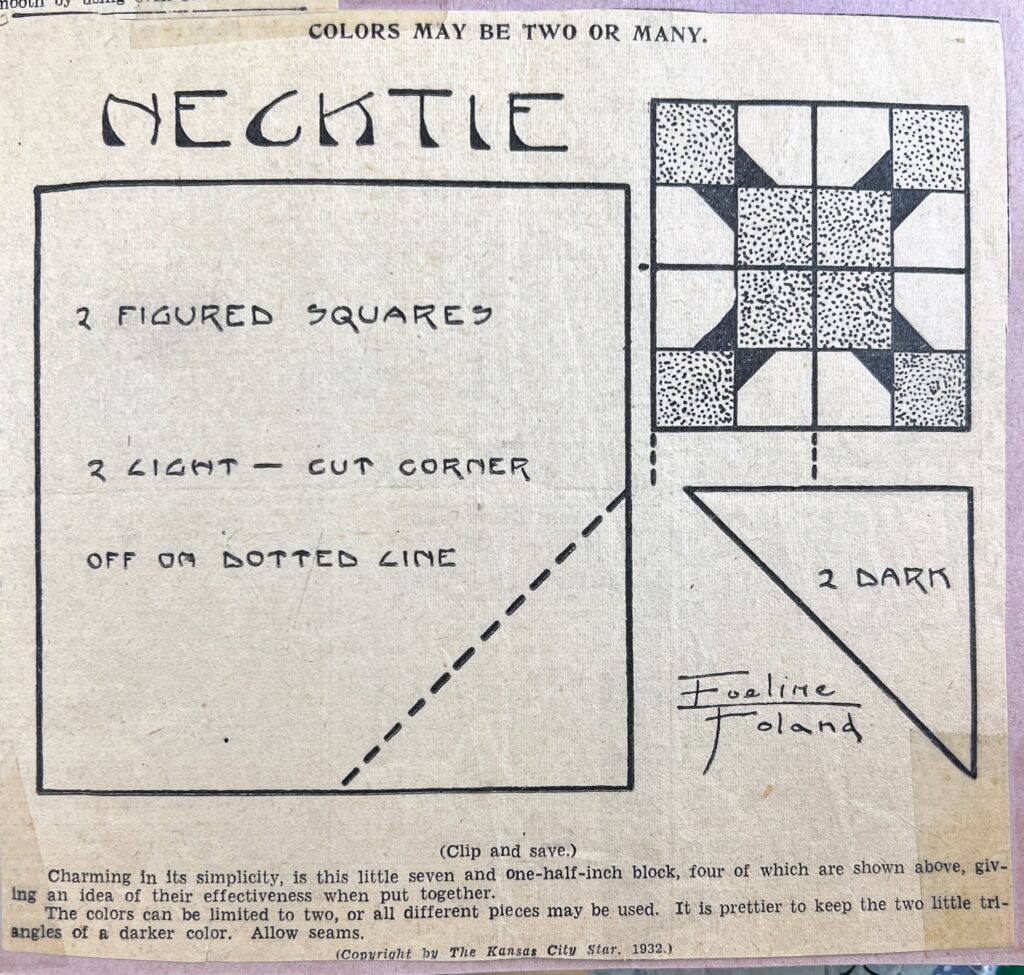
Vintage sewing pattern labeled “Necktie” with diagrams showing how to cut fabric pieces: 2 figured squares, 2 light triangles with cut corners, and 2 dark triangles. Includes assembly guide.
Necktie
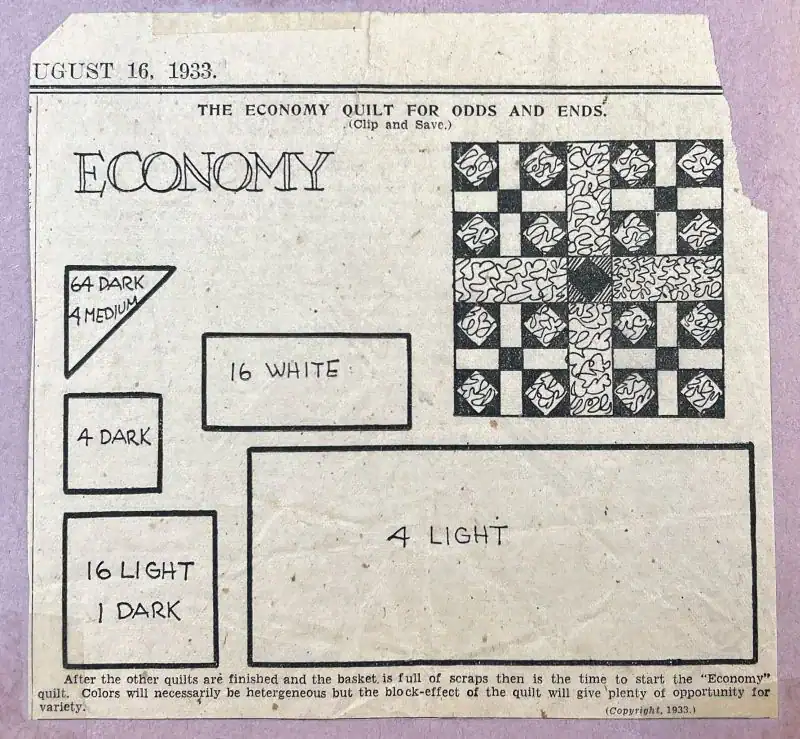
A vintage quilt pattern from 1933 titled Economy, showing labeled fabric cut sizes and a black-and-white illustration of the quilt block design with notes for using fabric scraps.
Economy Quilt Block
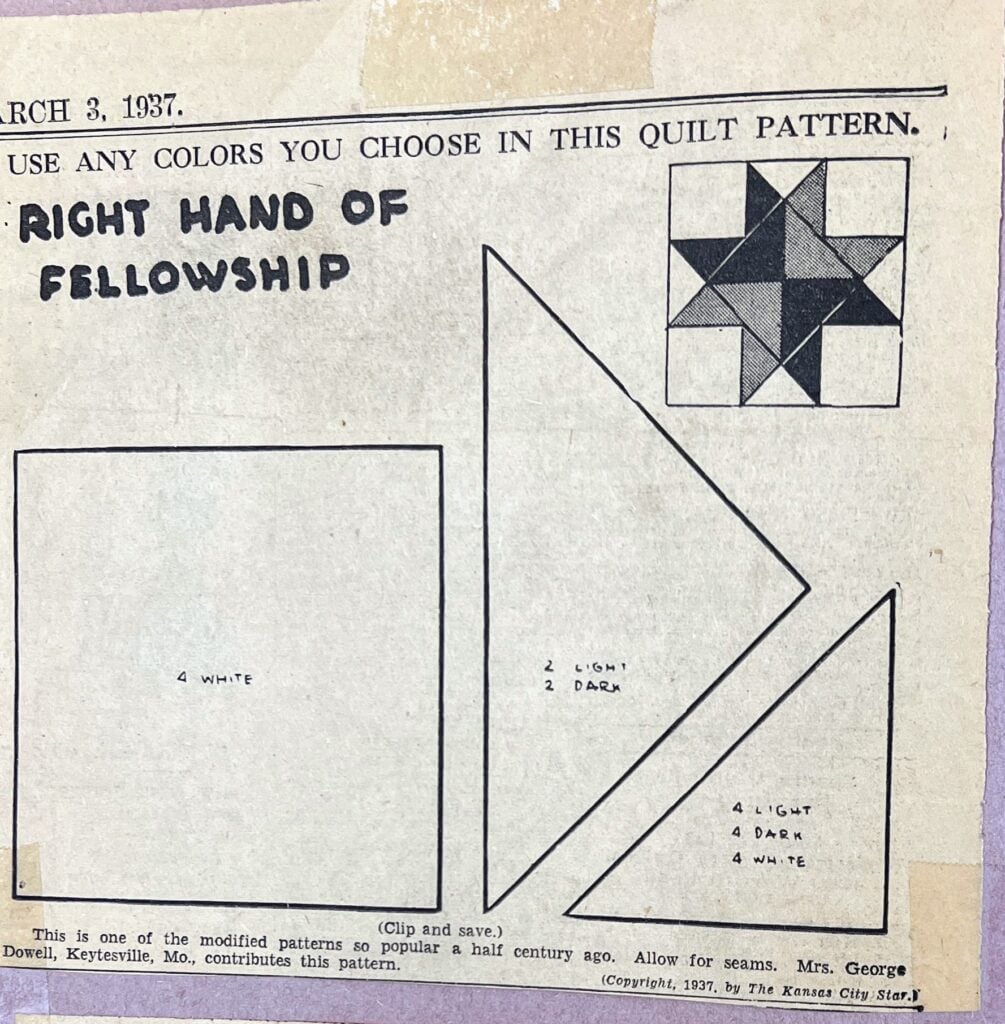
A vintage quilt pattern titled Right Hand of Fellowship with labeled shapes: a large square, two large triangles, and a small triangle, each marked with fabric color instructions. A completed quilt block example appears in the top right corner.
Right Hand of Fellowship
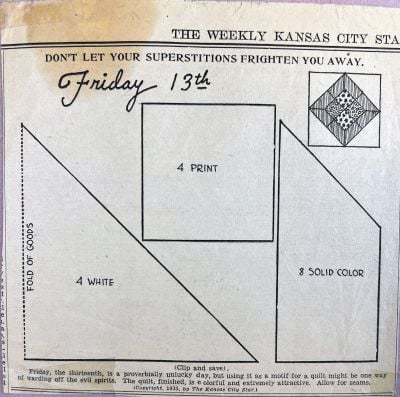
A vintage newspaper quilt pattern labeled Friday 13th with sections marked 4 print, 4 white, and 8 solid color, plus instructions and a small quilt illustration in the corner.
Friday the 13th
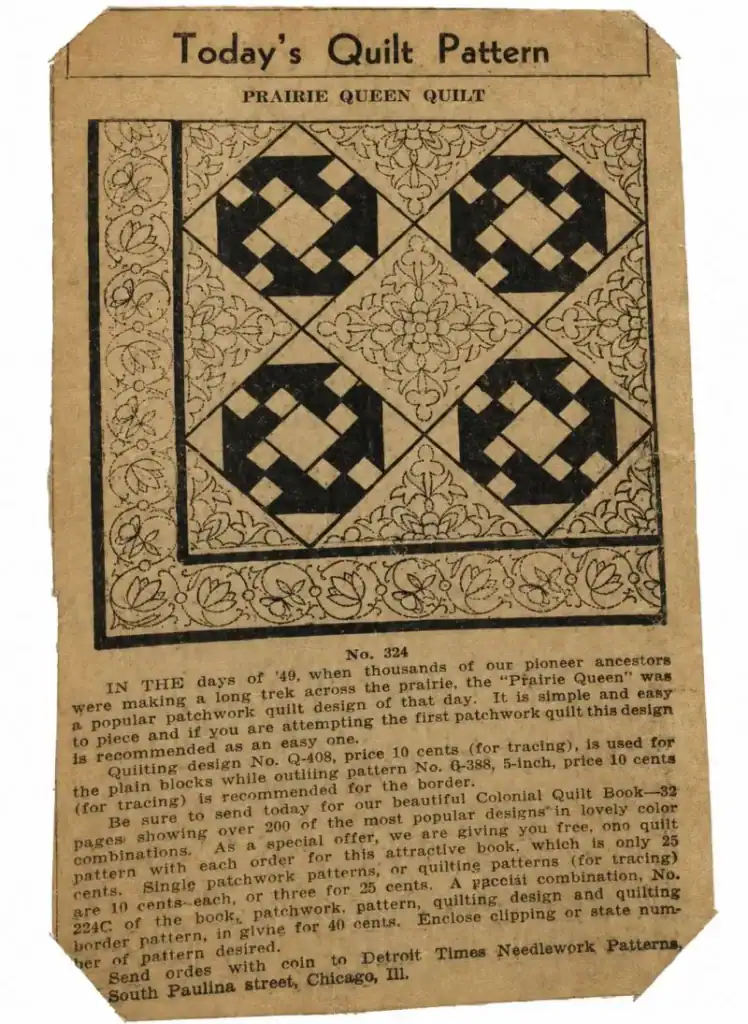
Prairie Queen Laura Wheeler A vintage newspaper clipping titled Todays Quilt Pattern showcases a Prairie Queen quilt design, reminiscent of Depression Era Quilts, featuring four blocks with geometric patterns and a decorative border, along with descriptive text and instructions below the image.
Prairie Queen, Laura Wheeler
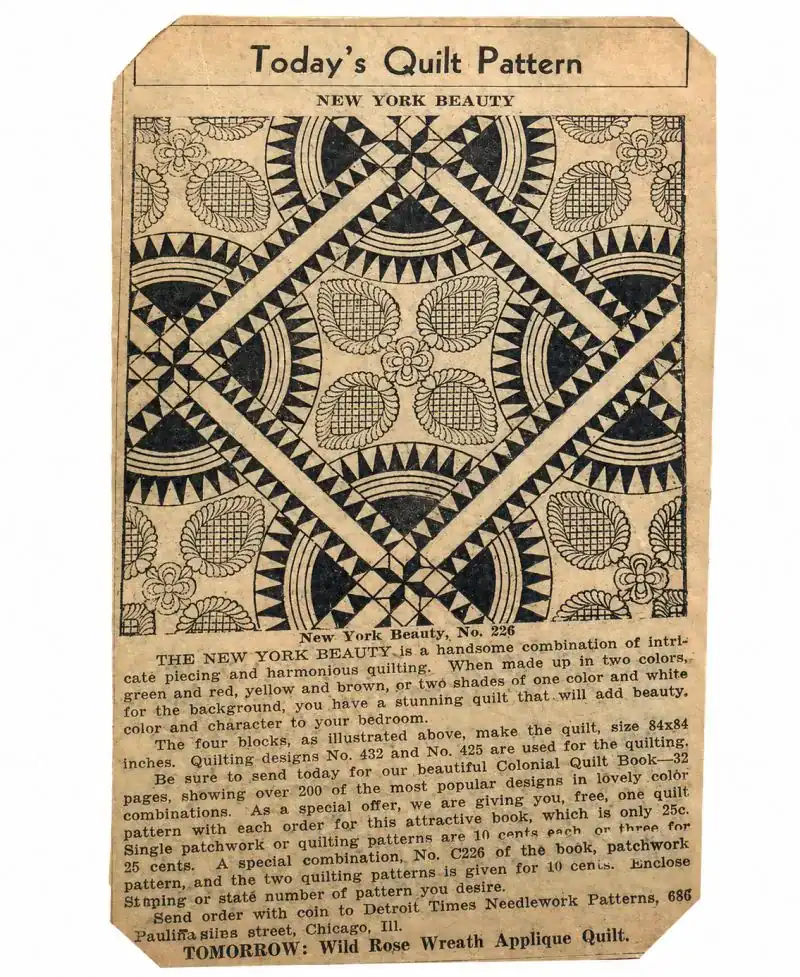
New York Beauty Laura Wheeler A vintage newspaper clipping of a quilt pattern called New York Beauty, featuring a geometric, circular black and white patchwork design with floral motifs and detailed instructions—a striking example of Depression Era Quilts.
New York Beauty, Laura Wheeler
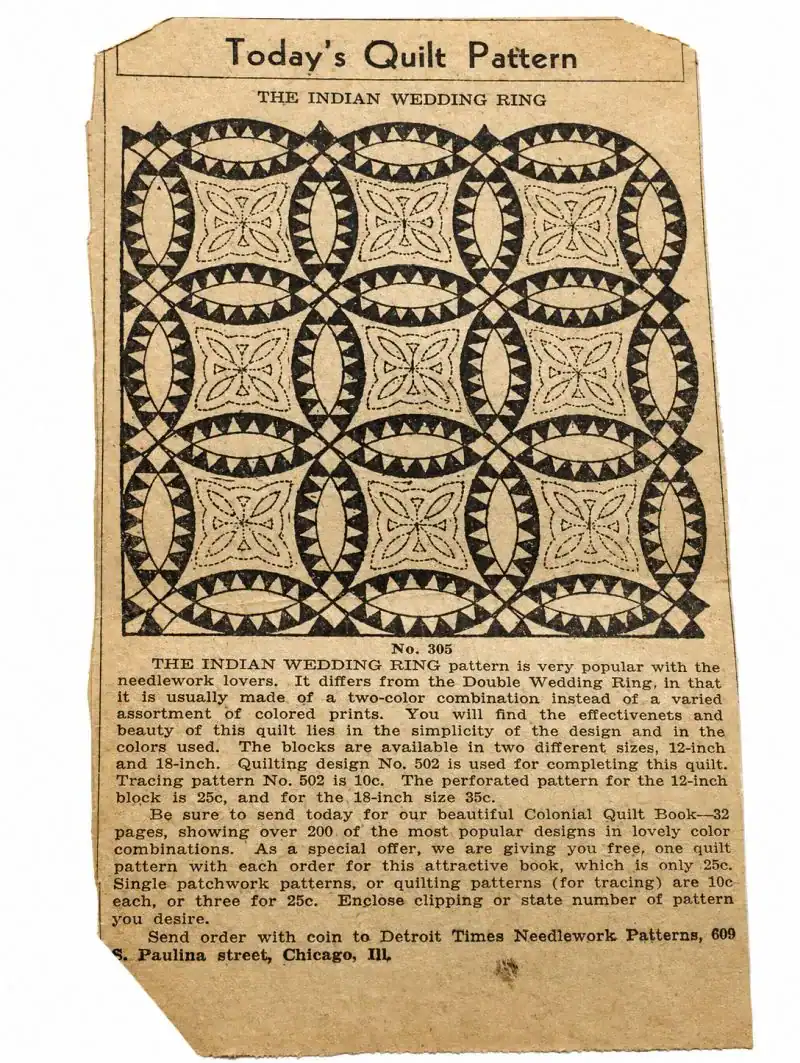
Indian Wedding Ring, Laura Wheeler A vintage newspaper clipping titled Todays Quilt Pattern: The Indian Wedding Ring features a black-and-white quilt diagram and text instructions for making the quilt, capturing the timeless style of Depression Era Quilts.
Indian Wedding Ring, Laura Wheeler
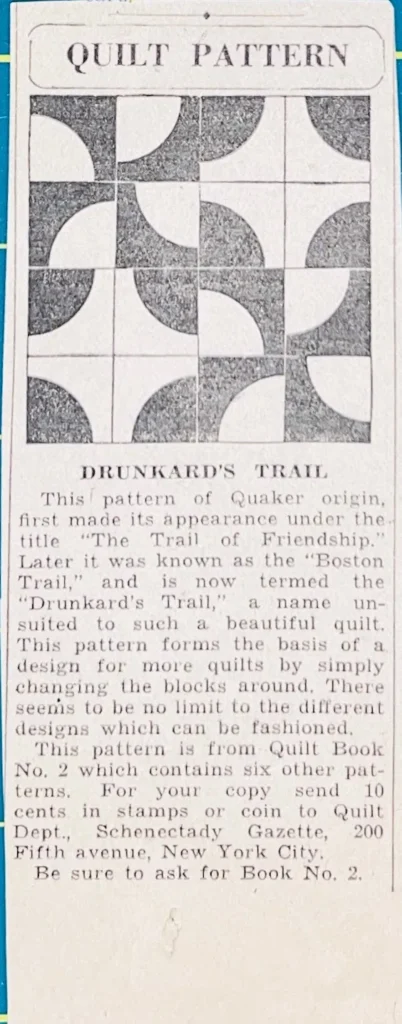
A newspaper clipping showing a black-and-white quilt pattern called Drunkards Trail, with a description of its history and instructions on how to request more patterns.
Drunkards-Trail-1933
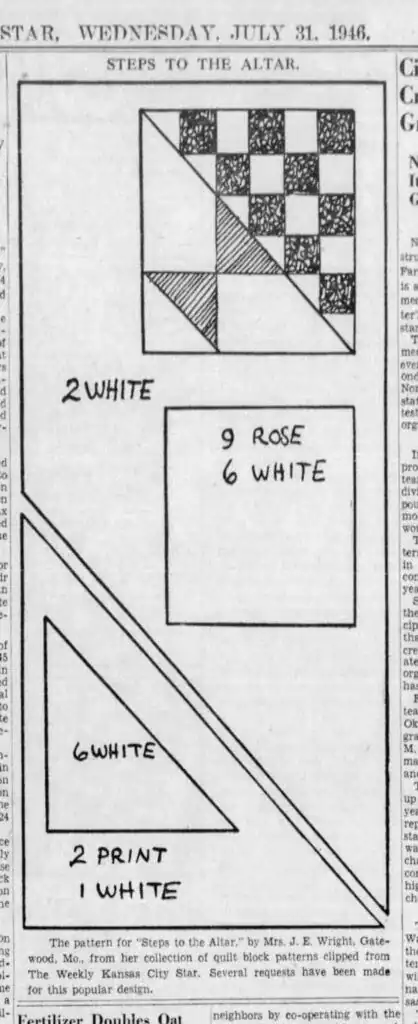
Black-and-white quilt block patterns labeled with numbers and colors (white, rose, print) are shown above the caption in this 1946 newspaper clipping titled Steps to the Altar, beautifully reflecting the timeless charm of Depression Era Quilts.
Steps-to-the-Altar