Quilt Care: Practical tips for the use and enjoyment of your antique quilt.
Display
Avoid displaying your quilt in a room with poor ventilation, high humidity or other temperature extremes. Choose a method of display that distributes the weight of the quilt over the entire quilt such as an unused bed. This assumes you don’t have any cats. Cats are notorious for finding the only antique quilt in the house on which to sleep. Spread a length of muslin or a sheet on top of the quilt to keep off dust when it is not being viewed. Rotate your displayed quilts.
If you don’t have a spare bed, you could fold it and place it over a quilt rack or even the back of an unused chair. If possible, pad the folds with unbuffered acid-free tissue paper. Don’t fold it over a sharp surface like a chair rung or table edge. This just invites damage. Every month or so, refold the quilt along different lines.
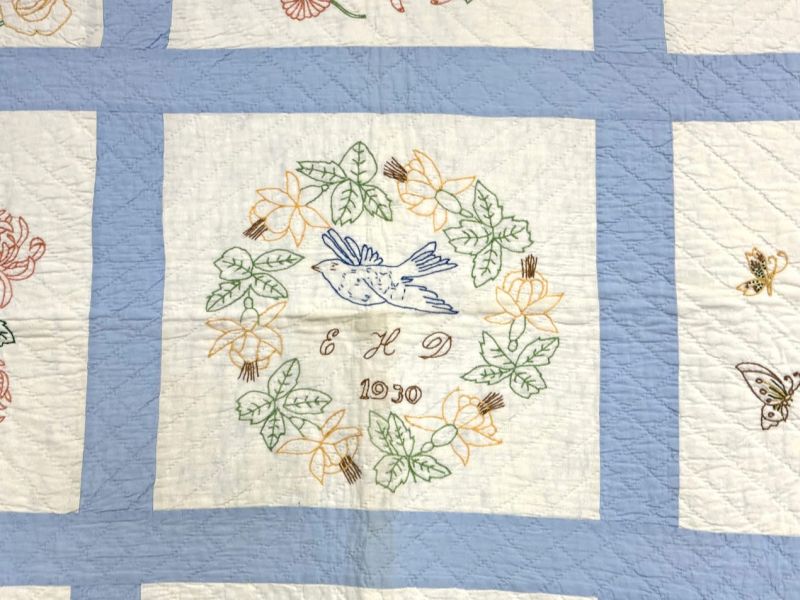
To display a quilt on a wall, sew a hanging sleeve to the top of the quilt and hang it on a non-wood rod. Suspend this rod from the ceiling using wire or attach brackets to the wall. A hanging sleeve is a four-inch wide tube of fabric sewn along the top back edge with stitches every inch or so through all layers of the quilt. It looks a bit like the casing of kitchen curtains. Make sure the hanging sleeve is sewn securely. Watch for signs of stress. Never use nails, pins or staples to hold a quilt on the wall. Display quilts in areas where light levels are low. Light damage to textiles is irreversible. Both sunlight and artificial light will cause fading.
Cleaning
Start by lightly vacuuming your quilt on low power using a brush attachment through a screen, if this is appropriate for your quilt. Damaged quilts, samplers, painted and embroidered pictures (as on a crazy quilt), and beaded work should not be vacuumed. Damage can be caused by the suction of even a low power vacuum.
If you quilt is just musty, try airing it by draping it over a railing (on a sheet or large towel) on a breezy day. Do not put it on a clothesline. The stress of hanging over a small piece of rope may cause damage. You could also lay it out on your lawn on a clean sheet, with a clean sheet on top of course, to protect from the sun. Do not wet wash your quilt unless absolutely necessary.
Never, under any circumstances, dry clean it. If your quilt is truly in need of intensive care, consult a professional quilt conservator for assistance. Some conservators may use specialized solvent cleaning methods. Click here for a list of restorers in your area. The American Institute for Conservation can also give you a list of professional conservators in your area.
Storage
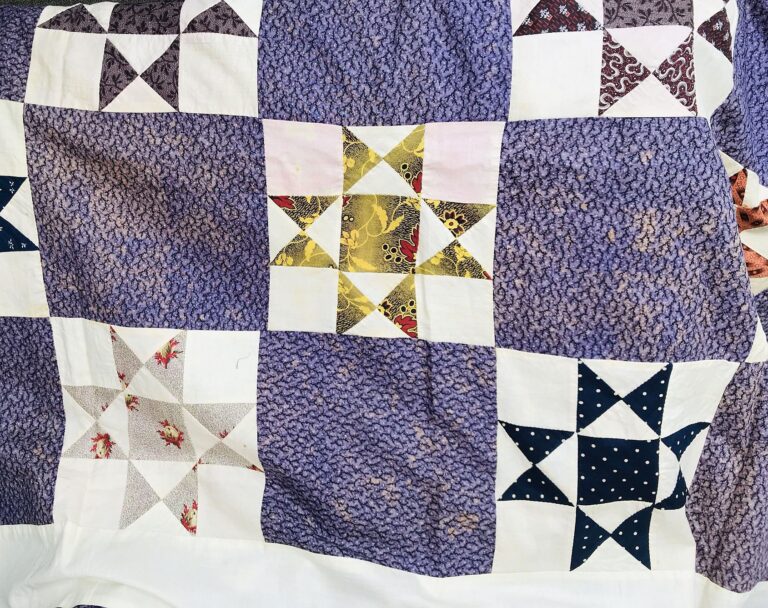
If you plan to store your quilt for more than six months, lay it out fully on a white cotton sheet. Lay the same type of sheet on top and fold the quilt in an accordion pleated fashion. Avoid folding on any existing fold lines, and pad the folds with unbuffered acid-free tissue paper if possible. Do not store your quilt in a plastic bag, cardboard boxes or wooden trunks. Store your quilts individually in a large cardboard tube, a sturdy plastic container or an acid-free box. Modern archival polypropylene containers are considered acceptable if breathable conditions are maintained. Don’t pack it too firmly. There should be air circulation around the quilt.
Take care to ensure nothing heavy is placed on the quilt. If possible, store it in a temperature controlled area protected against insects such as moths, carpet beetles, and rodents. Many conservators now discourage mothballs around textiles, so if you use them, inspect carefully. Do not use attic or basement storage as temperature and humidity can fluctuate wildly.
Document the quilt
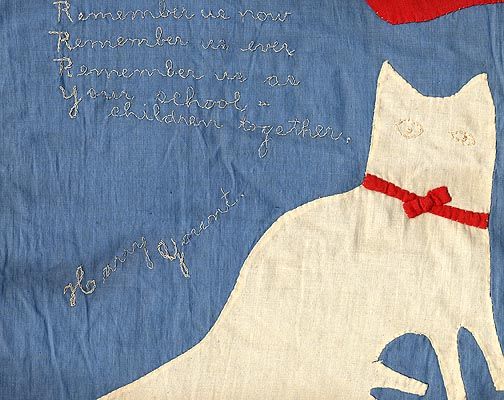
Quilts are more than fabric and thread. They are pieces of family history, carrying the stories of the people who made, used, and loved them. Take time to photograph your quilts, record any known history, save receipts or appraisals, and label stored quilts carefully so future generations will know their story. Even today’s quilts may become tomorrow’s antiques. If you made the quilt, or did any work to it, be sure to preserve your place in history: sign and date your quilts!
Sources for Archival Supplies
The Hollinger Corp., P.O. Box 8360, Fredericksburg, VA 22404; (800) 634-0491
Light Impressions, PO Box 22708, Rochester, NY 14692-2708, (800) 828-6216, FAX (800) 828-5539
TALAS, 568 Broadway, New York, NY 10012; (212) 219-0770
University Products, Inc., P.O. Box 101, Holyoke, MA 01041; (800) 628-1912
