Jane McCrea, Burgoyne Surrounded, and the Making of an American Myth
Some American myths begin with pure invention. Others begin with something painfully real. The story of Jane McCrea belongs in the second group. Jane McCrea was a real woman. She really did die near Fort Edward, New York, during the summer of 1777, while General John Burgoyne’s army was moving south from Canada toward Albany. Her death was tragic but very useful to the Patriot cause.
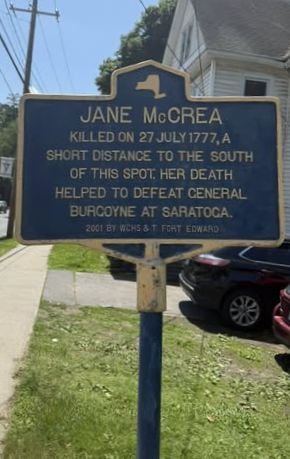
That last part is where the story begins to change. Like the Underground Railroad quilt block story, this is not a case where someone sat down and said, “Let’s fool people for the next 200 years.” It is more complicated than that. A real event was dramatized and retold until the version most people remembered was not quite the version historians could prove. The story started as news. Then it became propaganda.
Who Was Jane McCrea?
Jane McCrea was born in New Jersey around 1752 and later moved to New York, where she lived with her older brother and his family. Her family, like many families during the American Revolution, was divided by the war. One brother served in the Continental Army. Other family connections leaned Loyalist.
That matters, because the popular version of Jane’s story often presents her as a beautiful young woman waiting for her Loyalist fiancé, David Jones, an officer serving with Burgoyne’s British army. In that version, Jane stayed behind while others fled, believing she would be protected because of her fiancé’s position.
But historians are not completely certain that Jane was engaged to David Jones. She may have had a romantic connection to him, and she certainly knew Loyalists in the area, but the pretty story of the Loyalist bride waiting for her groom is harder to prove than it is to remember. What we do know is that Jane was at the home of Sarah McNeil near Fort Edward on July 27, 1777. Sarah was preparing to leave as Burgoyne’s forces advanced. Also in the house was Eve, a Black woman enslaved by Sarah McNeil, who hid with her infant son.
A bit of trivia: New York State did not abolish slavery completely until 1827. This law made New York the first state to pass a piece of legislation mandating the total abolition of legal slavery.
What Happened at Fort Edward?
In the summer of 1777, the area around Fort Edward, NY, was not a tidy battlefield with clear lines and polite turns. It was a dangerous borderland of scouting parties, militia, civilians, retreating soldiers, Loyalists, Patriots, British troops, Native allies, and families trying to get out of the way.
Burgoyne’s campaign depended in part on Native allies, including warriors from nations with their own politics. On July 27, Native warriors allied with the British came to Sarah McNeil’s house. Jane McCrea and Sarah McNeil were taken prisoner. Eve, hidden inside the house, survived. Jane was killed soon afterward. Sarah McNeil survived and was taken to the British camp.
Some accounts say Jane was killed by her captors after a quarrel over who would receive a reward for delivering her. Other accounts suggest she may have been struck by gunfire during a clash with pursuing Patriot soldiers. There were claims that she was scalped. There were later claims that physical evidence did not support that story. Her body was exhumed more than once, and even that became part of the legend. The third time she was exhumed, they couldn’t find her head so the manner of her death could never be confirmed. Jane McCrea’s final resting place is Union Cemetery, between Fort Edward and Hudson Falls, New York.
How a Tragedy Became Propaganda
Jane McCrea’s death came at a perfect moment for the Patriot cause. General Burgoyne was moving south, and many local settlers were frightened, or reluctant to join the fight. The killing of a young woman near Fort Edward gave Patriot leaders a story they could use. General Horatio Gates accused Burgoyne of unleashing violence on innocent civilians. Newspapers repeated the story. The image of a helpless woman murdered by Britain’s Native allies spread quickly.
Burgoyne argued that the story was false or at least exaggerated. He said Jane’s death was an accident and objected to the accusations against his army and its allies. But once a story has been printed and used to stir outrage, it is very hard to gather it back up again. That is especially true when the story confirms what people already want to believe. Patriot writers did not simply report Jane’s death. They used it to show British cruelty and Native “savagery,” a word that says more about colonial attitudes than it does about the people being described.
Burgoyne’s campaign ended in disaster for the British. In October 1777, after the Battles of Saratoga, Burgoyne surrendered with nearly 6,000 men. That surrender became one of the turning points of the American Revolution.
The Burgoyne Surrounded Quilt Block – A Myth?
The quilt block known as Burgoyne Surrounded or Burgoyne Surrenders is said to commemorate that moment. The usual explanation is wonderfully visual: the center squares represent Burgoyne and his army, while the surrounding squares represent American forces closing in from every side. It is a perfect quilt story. It may even be partly true.
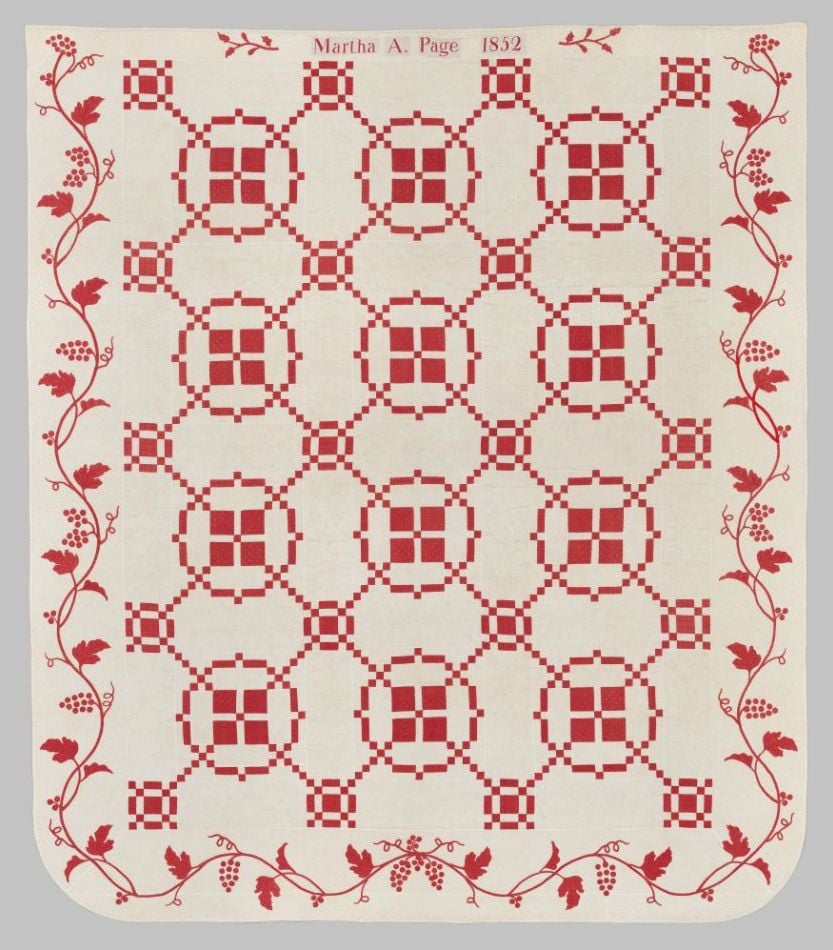
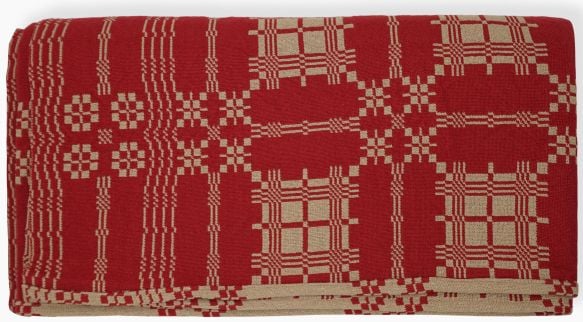
Although the Burgoyne Surrounded design is often connected to the surrender at Saratoga, museum notes and quilt historians have also pointed out that the design may have developed from the grid-like patterns found in early nineteenth-century woven coverlets. In that case, the name and the story may have been attached to a design that already existed or was evolving from other textile traditions.
A block can carry more than one story. It can be a design, a memory, a marketing name, a patriotic reference, and a good excuse to cut a mountain of little squares. This is where the Jane McCrea story and the Burgoyne Surrounded block fit into a larger pattern of American folklore. A well-intentioned writer wants to make history interesting. A speaker wants to make a point. A teacher wants students to remember the lesson. A museum label has limited space. A quilt pattern needs a good story. Each person may only add a tiny bit of certainty to something that began as uncertain. Over time, a legend is born.
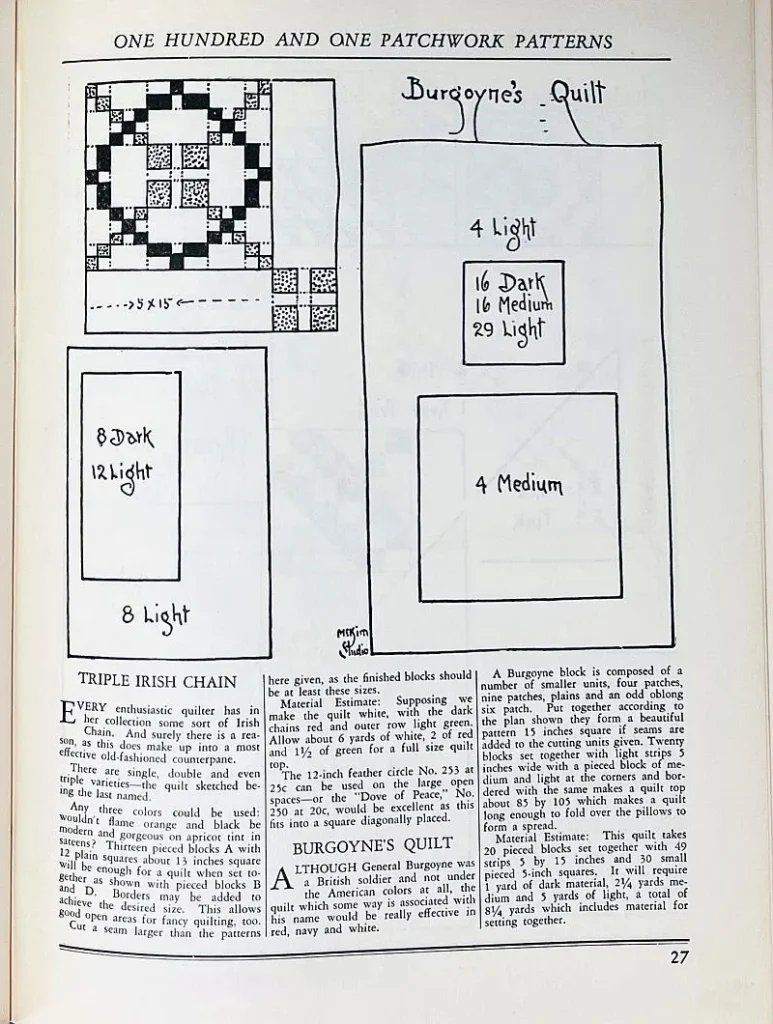
Notice that it names the block “Burgoyne”.
Why These Stories Last
The legend of Jane McCrea lasted because it was useful. During the Revolution, it was useful to the Patriot cause. In the nineteenth century, it was useful to writers and historians building a dramatic national story. Later, it was useful in justifying harsh attitudes and policies toward Native people. That does not mean every person who repeated the story had bad motives. Many were simply repeating the version they had inherited.
Jane McCrea’s death does not need exaggeration to matter. The real story is already powerful. A young woman died in a violent and confusing war. Her family and friends lived in a world divided by loyalty. Native people were turned into symbols instead of being treated as nations and individuals with their own stakes in the war. Patriot leaders used Jane’s death to stir anger, and that anger helped shape how generations remembered the Revolution.
The Burgoyne Surrounded block also deserves that same careful treatment. It may commemorate Saratoga. It may have grown from woven coverlet designs. It may be both a patriotic name and a practical pattern. It is a design with a story attached, and like many traditional quilt blocks, the story may have been pieced together over time.
Jane McCrea was real. Her death was real. The grief and fear that followed were real. The myth came later. And like many myths, it tells us as much about the people who repeated it as it does about the event itself.
Learn More
- The Killing of Jane McCrea: An American Tragedy on the Revolutionary Frontier by Paul Staiti
- Smithsonian Magazine – Jane McCrea, from Victim to Martyr
- America’s Heritage Quilts (edited by Patricia Wilens / Better Homes and Gardens)
- the Old Fort House Museum in Fort Edward, NY
- Quilters Newsletter Magazine, Issue # 70 (August 1975)
