Palampores: The Painted Cloth Behind Our Chintz Quilts
This page contains affiliate links. If you buy through them, I may earn a small commission at no extra cost to you. As an Amazon Associate I earn from qualifying purchases. Learn more
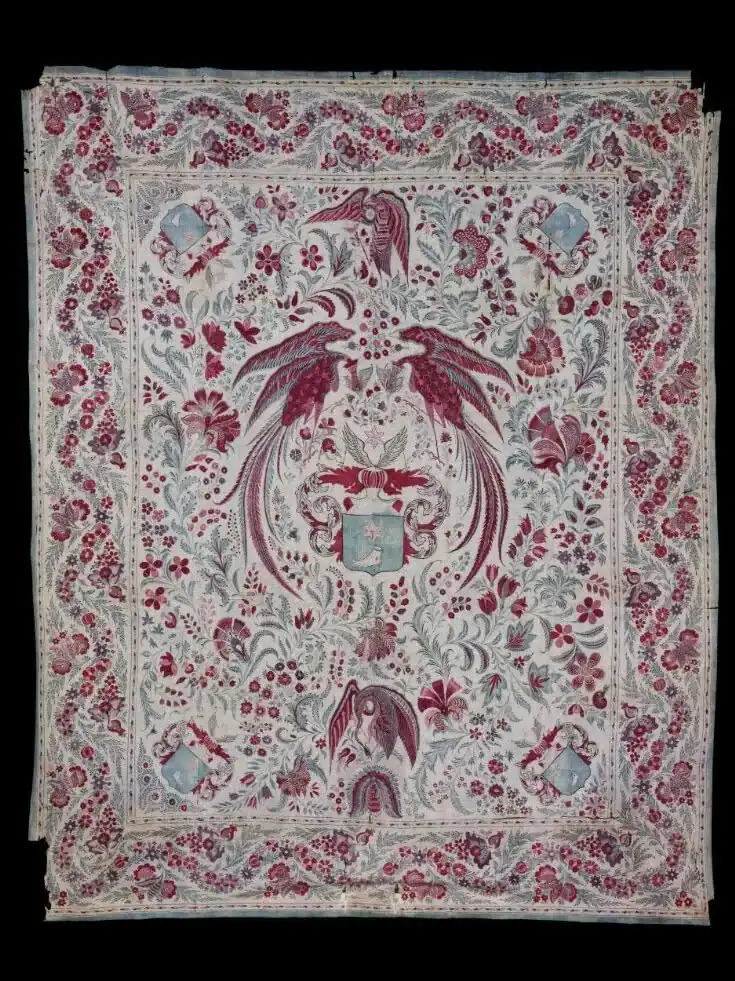
If you have spent much time looking at early quilts in museums, you have probably seen the word palampore. You may even have nodded wisely while quietly wondering what it meant. I know the feeling.
A palampore, usually pronounced puh-LAM-por, is a large cotton cloth that was hand-painted and dyed in India. Most of the examples familiar to collectors and museums were made for export between the late 1600s and early 1800s. They were used as bedcovers, bed curtains and wall hangings.
The name comes from palangposh, a Hindi and Persian term meaning a covering for a bed. In other words, a rather exotic-sounding word began with the very practical purpose of keeping a bed covered.
Is a Palampore a Quilt?
Maybe.
The original cloth was a single, finished panel. Some palampores were later lined, filled and quilted. Those pieces are quilts. Others remained a single layer of decorated cloth.
This helps explain why museum descriptions can be confusing. A similar textile may be called a palampore, bedcover, counterpane or bed curtains. The name may describe the cloth, its use or the way it was eventually constructed. Textile history does not always fit into tidy little boxes. Quilters already know something about that.
What Does a Palampore Look Like?
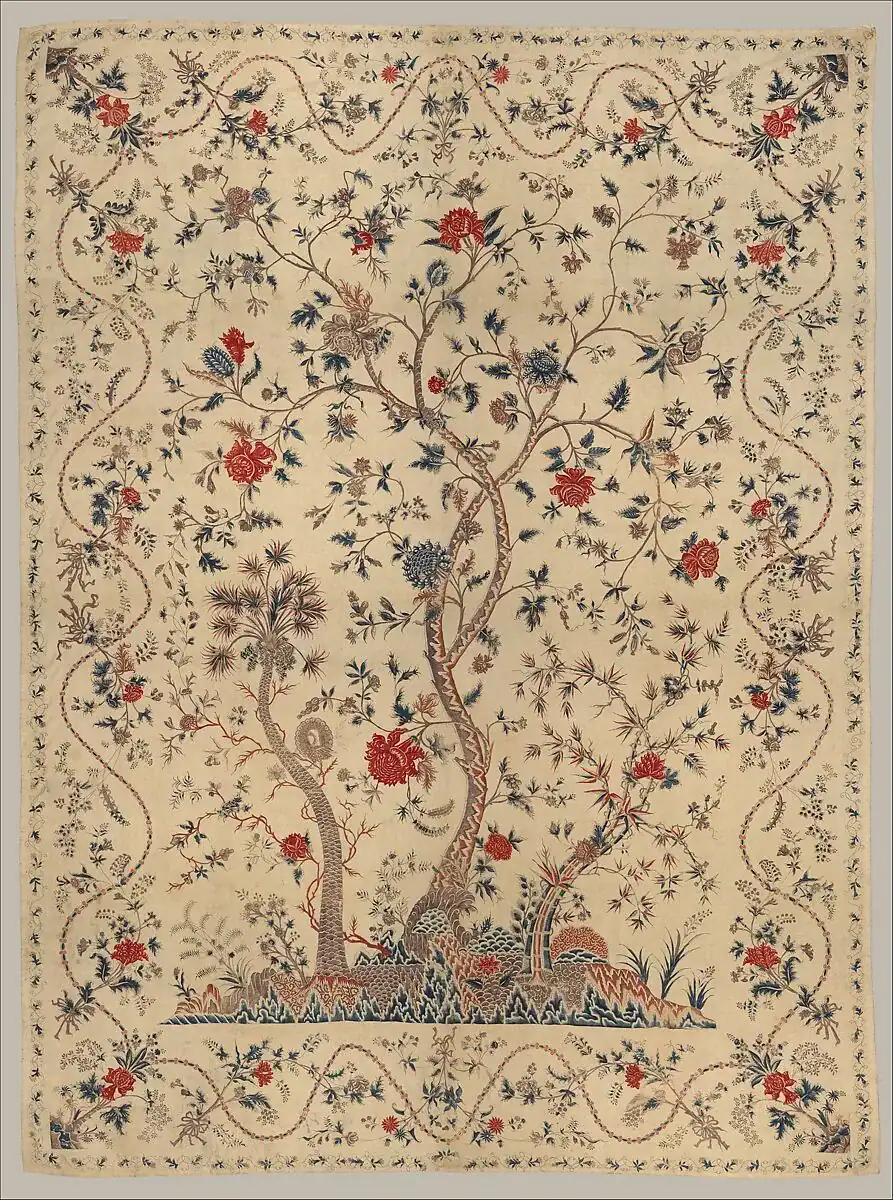
The best-known palampores have a large flowering tree in the center of a light-colored background. It may grow from a rocky mound or a decorative vase. The tree can carry several kinds of flowers and fruit at the same time, whether nature approves or not. Birds, butterflies and other small creatures may be tucked among the branches. A wide floral border frames the entire design.
These trees are often called Tree of Life designs. That is a useful description, but it can also be misleading. The image is not necessarily one particular tree or a single religious symbol. It is usually an imaginary flowering tree assembled from many sources. The designer was creating beauty, not preparing a field guide.
What about a Mezzaro?
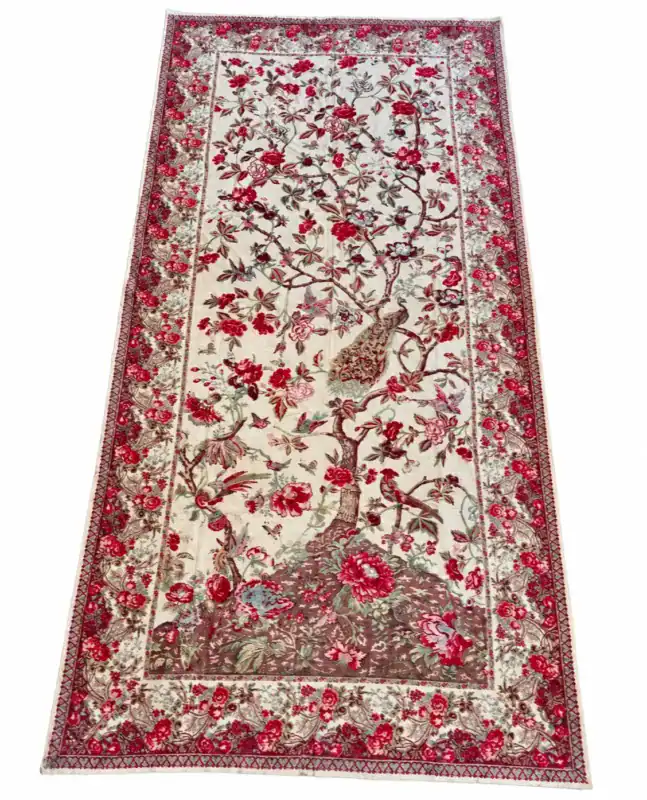
A mezzaro can look so much like a palampore that the two are easily confused. The mezzaro was a large cotton shawl or veil worn by women in Genoa and the surrounding Liguria region of Italy. Early examples were made from Indian printed cottons, while later ones were produced in Genoa and elsewhere in Europe. Many kept the flowering tree, birds, animals and wide floral borders associated with Indian palampores.
The chief difference is in how the cloth was used and identified: a palampore was an Indian furnishing textile or bedcover, while a mezzaro belonged to a Genoese clothing tradition. This example, dating to about 1840, shows just how closely the two textile traditions were related. (Click on the image thumbnail to see it up close.)
How the Cloth Was Made
Calling a palampore painted cotton is accurate, but it barely hints at the work involved.
Artisans first drew the design on cotton, often with a bamboo pen. They applied mordants to the areas that would receive certain colors. Iron mordants produced dark outlines and black areas, while alum was used for reds. Wax or another resist protected portions of the cloth that were meant to remain white or avoid a particular dye.
The cloth was dyed, washed, bleached in the sun and dyed again. Each color required its own steps. The process is often described as kalamkari, or pen work.
One person did not necessarily perform the entire job. Drawing, applying mordants, dyeing, washing and finishing could be handled by different specialists. A completed palampore represented artistic skill, chemistry, careful timing and a remarkable amount of labor. It was very similiar to the way indigo prints were made.
Why Europeans Wanted Them
By the late 1600s, the English and Dutch East India Companies were carrying Indian cotton textiles to Europe in great numbers. The bright colors, large floral designs and washable cotton made them very desirable.
Palampores were used for bed hangings, curtains, valances and wall coverings. Bed curtains were more than decoration in a house without central heating. They helped hold in warmth and provided privacy when a bedchamber was also used for dressing, visiting or conducting business. Of course, an expensive imported bedcover also told visitors that the owner could afford one.
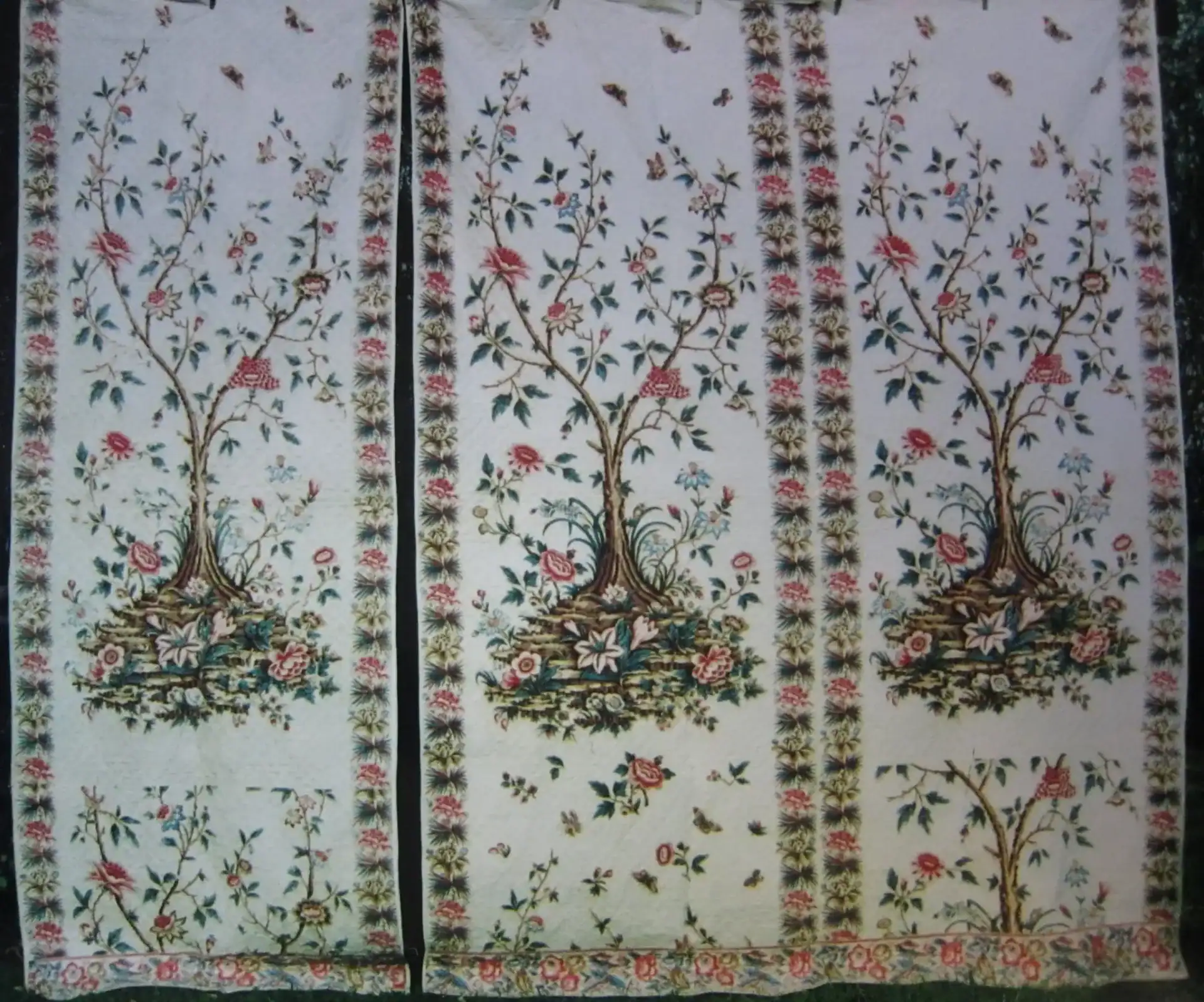
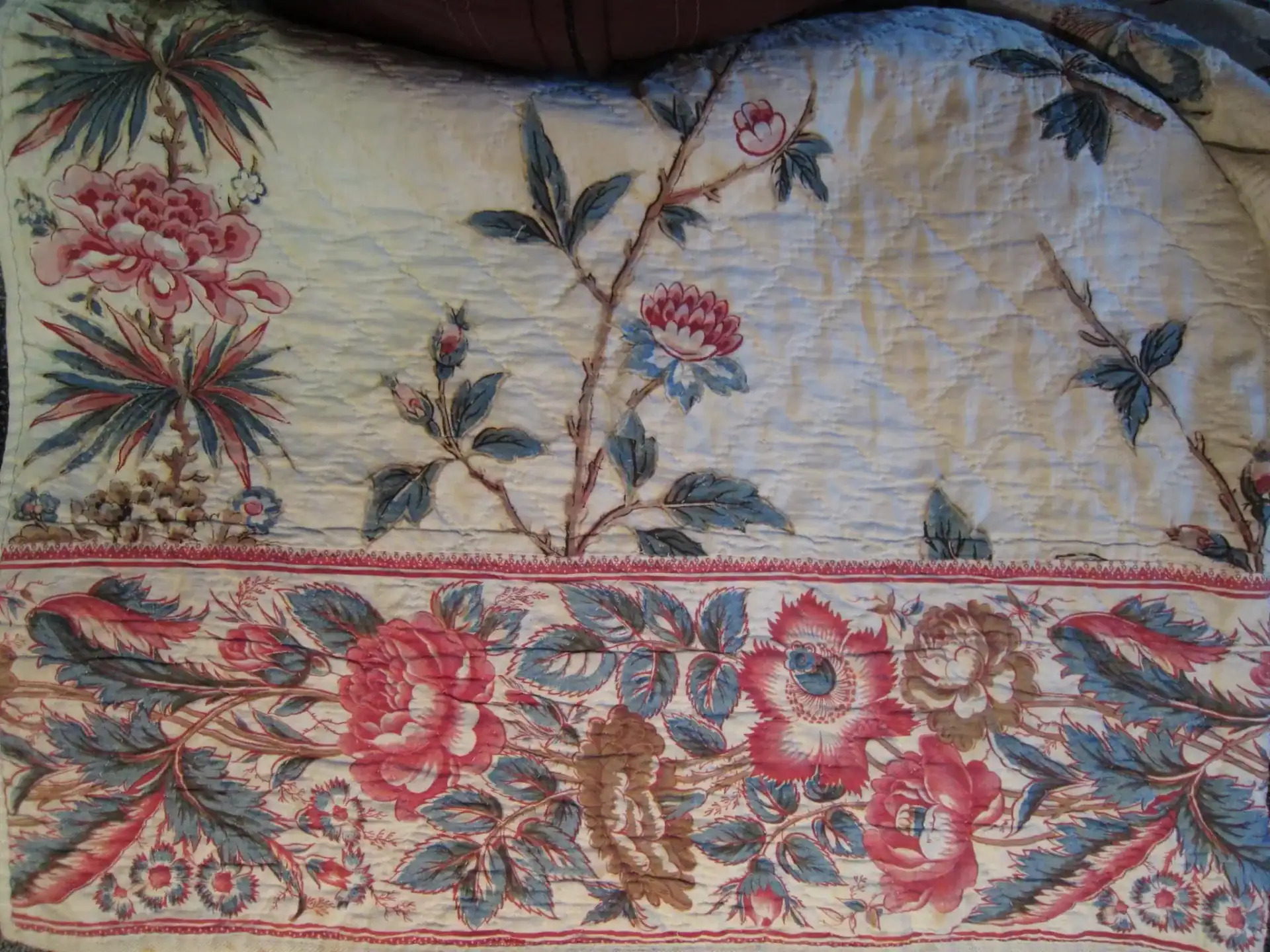
The designs changed to suit their markets. Indian artists combined their own materials and techniques with ideas supplied by European merchants. Some patterns borrowed details from European embroidery, Chinese porcelain and Japanese art. One surviving palampore includes a scene from Don Quixote. Another, intended for the Dutch market, uses Japanese-style pines and rocks.
European wool and silk manufacturers were less enthusiastic. England began restricting imported Indian cotton in 1700 and passed stricter laws in 1721. France enacted similar restrictions. These Calico Acts had loopholes and did not cure anyone’s desire for colorful cotton. Instead, European manufacturers studied Indian cloth and worked to produce printed cotton more cheaply at home.
When a Palampore Became a Quilt
Palampores reached North America, where owners adapted them to their needs. A panel might be used whole, trimmed for a particular bed, enlarged with borders or backed and quilted.
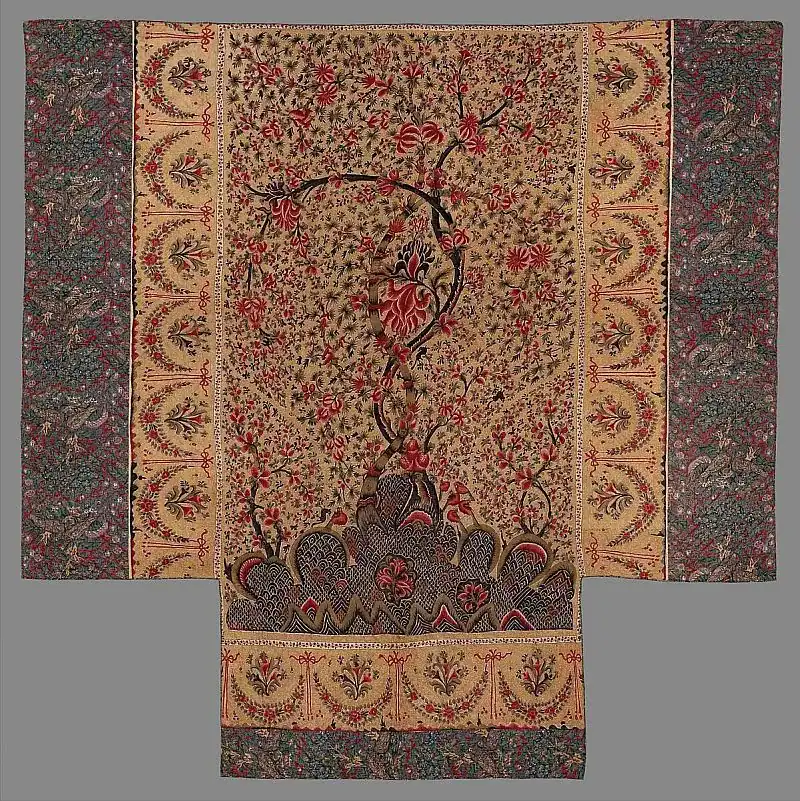
An American quilt dating to about 1815, now in the Metropolitan Museum of Art, has an imported Indian palampore in the center and English chintz borders. The corners were shaped to fit around the posts of a bed. It is a wonderful example of an expensive international textile being altered for use in an American home. The Met says, “Many New England merchants were involved with direct trade with India and China during the period this quilt was made, and it is likely that owning a quilt featuring a palampore was considered highly fashionable, signaling sophistication and knowledge of far-flung lands.”
By the 1800s, factory-printed European cottons were cheaper and easier to obtain. The market for the labor-intensive Indian export palampore gradually declined, but its designs did not disappear.
Large flowers, curling vines, bouquets and elaborate borders continued to appear in furnishing fabrics and quilts. Quiltmakers cut flowers and other motifs from printed chintz and appliquéd them to a new background, a technique we call broderie perse. Those chintz appliqué quilts owe a considerable debt to the palampore.
Is This Quilt a Palampore?
That brings me to the quilt shown here. It is a Tree of Life on an ivory ground with a wide floral border and dense hand quilting. Is it a palampore?
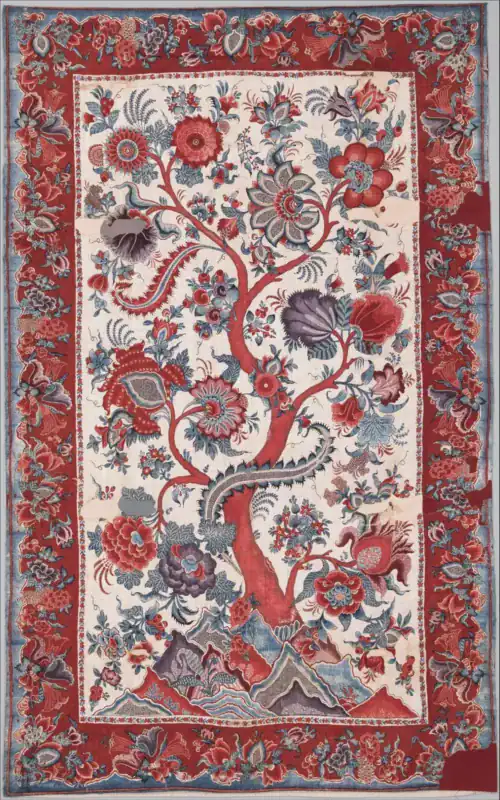
Yes, because the museum says so, but it really can’t be evaluated photographs alone. Without documentation or a close examination of the fabric, I would call it a whole-cloth quilt with a palampore-style printed face. That leaves room for further study without giving the quilt a history that has not yet been proven.
Color and design alone is not enough to date the cloth. Later manufacturers deliberately reproduced old chintz patterns and colors. Photographs have limits too. The back, seams, quilting stitches and fabric surface often provide the clues needed to identify a textile accurately.
Why Palampores Matter
Palampores connect several chapters of quilt history. They show the skill of Indian textile workers, the reach of international trade, the effect of colonialism and the origins of designs that later appeared in European and American quilts.
They also remind us that quilt designs do not stay in one place. They travel, change hands and are adapted to new uses. A flowering tree painted and dyed in India could become a bed hanging in Europe, a quilt in America and, generations later, the inspiration for a reproduction chintz in a modern quilt shop.
That is quite a journey for a piece of cotton.
Learn More
Want to see real palampores up close, or dig deeper into the history? These are good places to start.
Museum Collections
- Denver Art Museum, Palampore — freely downloadable image under the museum’s Open Access policy.
- Victoria and Albert Museum, Palampore Collections — search “palampore” on the V&A site for several strong object records, including pieces tied to the Calico Acts and the actor David Garrick’s household.
- International Quilt Museum, “Quilts Under the Microscope” — helpful for telling original palampores apart from later quilted, appliqued, or reproduction versions.
Books
- Crill, Rosemary. Chintz: Indian Textiles for the West. London: V&A Publishing, 2008.
- Fee, Sarah, ed. Cloth That Changed the World: The Art and Fashion of Indian Chintz. Toronto: Royal Ontario Museum, 2020.
- Irwin, John, and Katharine B. Brett. Origins of Chintz. London: Her Majesty’s Stationery Office, 1970.
Further Reading
- Royal Ontario Museum, “A Revolution in the Bedroom” — on how washable Indian cottons changed European bedrooms.
- V&A Blog, “Guest Post: Renuka Reddy’s Adventures in Chintz” — a contemporary Indian artist’s account of reviving historic hand-painted, resist-dyed cotton techniques.

