July 19 – 25, 2001
These restored messages come from the Quilt History List, an online forum where quilt historians, collectors, researchers, appraisers, and enthusiasts discussed antique quilts and related textiles. The archive dates from 1996 through approximately 2016 and is being restored gradually. Sign up in the form at the bottom of the page if you want to know when a new page is added. Original spelling, opinions, formatting, and inactive links may remain unchanged.
Primary topics of this QHL Digest:
- Did Earlier Generations Really Have More Time? — A discussion of paper piecing templates grows into a broader debate over the romanticized notion that past generations had less distraction and more time for fine handwork.
- Origami-Inspired Quilt Patterns — Members discuss Kei Kobayashi’s book on using origami folding principles to design quilt patterns.
- Remembering Garrett Raterink — The list shares condolences and memories after the death of Garrett Raterink, a quilt collector and community figure well known to many longtime members.
- Quilters Hall of Fame Celebration Recap — A member recaps the 2001 Quilters Hall of Fame Celebration in Marion, Indiana, for those who couldn’t attend.
- Amish Communities Within Pennsylvania German Settlement — Following up on earlier Amish-quilt discussion, members clarify how Amish communities fit within the larger Pennsylvania German settlement pattern, and point to a new state quilt-documentation website.
Date: Thu, 19 Jul 2001 23:59:22 -0400 | From: “Jan Drechsler” <quiltdoc@>
Dear Judy,
Re: Sandpaper, templates, adhesive tape, Civil War bandages, Morse Code andlong pieces of newspaper…
You need to get more sleep!
Am sending my yoga book, meditation tapes and chocolate by express mail. Aone week supply of sleeping pills and herb teas will be included. Try to cutdown on your caffeine intake (except for chocolate) and eat plenty of fruits and vegetables. Breathe deeply from the diaphram and follow your breathing for 5 minutes.
Find a large piece of blank paper, about 11′ x 17″, and a big black or red magic marker.
Write as large as possible the words ‘SO WHAT!.’ Prop it by your sewing machine and your hand sewing chair. ‘So What’ if every point doesn’t meet. ‘So What’ if some of the compass parts aren’t quite equal. Your son will not love you any more or less due to imperfections. He will get married in June whether the quilt is finished or not. So What?
Who needs a quilt in June when you live in NJ anyway? Give yourself permission to finish only a portion of the quilt for display at the wedding.
And thanks for letting us know that sandpaper was invented in the late 1820’s. Now there is a great job description. ‘I glue sand on paper.’ Good to know that someone else’s head rambles off into the blue about these things!
Hang in there.
Jan —
Date: Thu, 19 Jul 2001 23:04:05 -0500 | From: Mary Waller <mswaller@>
In Northern Comfort – New England’s Early Quilts, a paper template is pictured on pg. 93. It’s an oak leaf design and is cut from an 1831 anti-slavery meeting’s program.
Two pages from a student’s geometry notebook are on pg. 99. Assuming this girl could use a compass as well as she did pen and ink, she would have been able to draft any quilt pattern (and probably build bridges, a space station, etc.).
Mary Waller Vermillion SD USA
—–
Date: Fri, 20 Jul 2001 04:16:28 EDT | From: JBQUILTOK@
How did they do it, those women who were never taught math >and geometry, nor did they have the fabric to waste, or freezer paper, or >even newsprint to fold to get the size to cut swags or do cable quilting in >the borders?
I think one thing previous generations had going for them was less distractions. They sat down to sew with a fabric, scissors, needle, & thread often kept in a very small basket by their chair. No TV or radio blaring. No sewing machine to worry about stitch length or bobbin thread running out. They could work on their quilt during the day instead of late at night. Without a library full of quilt books, they concentrated on one quilt at time without falling prey to the ‘I want to make them all’ syndrome so common now when 5 new magazines a month land at our doorstep filled with ‘gotta do that one’ patterns.
And for every wonderful, perfect heirloom quilt there were hundreds of women making ‘good enough’ quilts. After all, winning the blue ribbon at the fair would not have been any fun without some competition!
Janet
—–
Date: Fri, 20 Jul 2001 14:04:21 +0100 | From: MARK POWER
Dear QHers, I recently bought Nebraska Quilts and Quilt makers and Indiana Quilts, both are excellent. Presumably there are books covering every state in the union- does anyone else have favourites? The thing I like about them, apart from the beautiful reproductions, is the window it gives the reader on to the lives of people who would otherwise be ignored by history. The big historical processes are fascinating but for me the lives of ‘little’ people as expressed through their quilting and other art work is even more so. I’ve also been looking at the history of British quilting and was struck by the similarity between some British designs and Amish ones. I know the Amish came to quilting later than the surrounding community but I would still have expected their influences to have been more from continental europe given their Swiss connections. Any thoughts.
—–
Date: Fri, 20 Jul 2001 08:30:20 -0500 | From: Laura Hobby Syler
Hi Mark, It’s so nice to have “new blood” on the list, and someone that has just jumped in with both feet! Kris has developed a wonderful research tool with the QHL Archives and pages on the web site. She can give all the correct particulars, but there is a book listing section on the website/archives as well.
Several months ago we collectively compiled a list of all the state projects. My computer died and I have only a hard copy, but I’m sure someone will offer to send it to you. It is a great and ever growing resource. Welcome to the ever changing world of Quilt History! Laura Hobby Syler
OH, if you can find a copy of Fall 2001 QUILT I have several articles in there…one on Julie Silber and The Quilt Complex and Hearts & Hands B&B just up the road. What a wonderful place for a quilt retreat!!
—–
Date: Fri, 20 Jul 2001 08:41:56 -0700 (PDT) | From: Kris Driessen
Hey! Y’all talking about me? <G>
I have been working on making the site a little more attractive and useful lately. You should be able to access everything from the first page – any member is more than welcome to go to the site and constructively criticize! I do want this to be a good resource for us.
Nancy Cameron Armstrong wrote a great article called “The Top Ten Articles for the study of quilts from seven Quilt Historians” which can be reached from the articles page.
The link to the state book list is on that page too. It is NOT done yet, I want to hyperlink to amazon any book that is still in print. (The amazon commission and occasional donations supports the site.)
Please feel free to explore and make liberal use of the comments page.
Thanks,
Kris
__________________________________________________
Date: Fri, 20 Jul 2001 10:43:11 -0700 | From: Denise Clausen
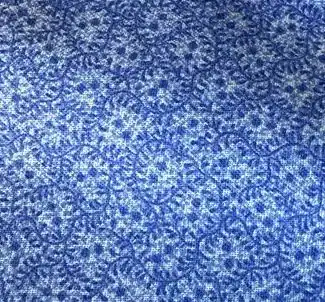
In the search for more info regarding indigo/white quilts… I would like to try a survey of members… If enough replys come in, I will assemble the info and share it with the list.
Questions: Do you have an indigo/white quilt in your collection? Description of print… What is the pattern? What is the circa Date (your best guess)or documented Date? Location of origin (if known)? Maker (if known)? How is it quilted?
Example for my collection…… Indigo/white quilt Print has tiny white keys about and inch appart (discharge print) Pattern 5″ circles, possibly a snowball pattern 1830 – 1930 (B.B) Origin – Unknown Maker – Unknown Quilted – recently
Example from Latimer Quilt and Textile Center collection Indigo/white quilt Print is small dots (discharge print) Pattern – Feathered star before 1900 (family estimate) Tillamook, OR diagonal, lines straight across pieced blocks, cross hatching between blocks.
Thanks Denise Clausen
Date: Fri, 20 Jul 2001 22:35:03 EDT | From: [from unknown]
Four or five years ago I called the Art Dept at our local college and ask for some instruction on using French Curves. I thought if I new how to use all the little curvy pieces of plastic I have I would be able to make better designs. The professor said “you have to be kidding. We use computers now.” I put the French Curves away and continued to do what I had been doing. As a result, I try to teach whole cloth and quilting designs the “way the grandmothers did it”. They didn’t have fancy things – probably only paper, a pencil (to be sharpened with a pin knife), a piece of string for making circles and a straight edge of some kind. I also discovered that in most cases the way to draw a perfect heart and tulip is when both sides match. Now this is not to say that these modern gadgets are not useful. Some are. As a result, many students are delighted when they learn that they can do satisfactory original design just by folding paper. I also read somewhere in a little self published book that “God didn’t make all feathers on a ducks back absolutely alike. Therefore, the feathers we quilt in our quilt do not have to be perfect either. These discoveries have certainly freed up my designing skills. Now, talking about feathers. I’m trying to find out if there was a time in which the style of quilted feathers changed. It appears from some of the quilts I have seen, that in the 1800’s they appeared to be separated from each other and those after this time became more overlaping…..Anyone else had this thought. I’m working on a program for ASQG on wholecloth and think this may be an interesting observation. Holice
Date: Sat, 21 Jul 2001 11:53:09 +0200 | From: Ady Hirsch <adamroni@>
>I think one thing previous generations had going for them was less >distractions. They sat down to sew with a fabric, scissors, needle, & thread >often kept in a very small basket by their chair. Hi all, I beg to differ. Except for the relatively few affluent ladies of the leisured classes, the majority of women slaved from dawn till night, and none more so than farm women. The romantic view of life in “previous generations” is mostly a misconception. Just consider for a moment life without electricity, indoor plumbing and convenient shopping and transport facilities – ugh! (Shudder). Whenever I read a despcription of life on a 19th cent. farm, or even an urban house, I think of how fortunate we are. A basic necessity like bread required lighting a wood stove, making bread from scratch (from a home made starter – no store bought yeast for them), etc. Soap had to be made at home – the recipes for home made soap are enough to make anyone shudder. Before the invention of the sewing maching, every article of clothing and household linen was made by the woman of the house. Life was drudgery, and I doubt any of us would have lasted very long in these conditions. If any of you have seen the British program about domestic life in the late 1800’s or early 1900’s – the final conclusion was that life was incredibly hard! And this in an urban middle-class house rather late in the century. If memory serves me right, the one who suffered the most (and quit halfway through the program) was the housemaid. These women had plenty of things to distract them from quilting – these just weren’t TV, computers and books, but rather more basic things like food, clothing and generally surviving. And I doubt very much people worked on their quilts during the day – they were probably far too busy doing things around the house and/or farm and would’nt have “wasted” precious daylight hours on quilting. If they they had no TV, they wouldn’t have had the leisure time to watch it, either! Except the richer women who made quilts to show off their skills, most quilts (certainly the humbler ones) were made for the most practical of reasons – because you couldn’t go into a store and buy inexpensive, warm blankets for a large family. I’ll get off my soap box now and go quilt… Ady in Israel
Date: Sat, 21 Jul 2001 09:23:40 EDT | From: QuiltFixer@
Just wanted to share that I had two very successful classes teaching children to do Redwork. We had a wonderful time learning stitch technique, history, crayon coloring on cloth, and stamping on flour sack dish towels. To those of you who sent and posted information on crayon coloring, I thank you very much! I am very dedicated to teaching children as I feel that our needlework heritage and women’s history will slip away if this is not done. Any of you who feel the same way or are teaching children’s classes? Would love to hear from you and to share experiences. Toni B
Date: Sat, 21 Jul 2001 10:15:26 -0400 | From: monicamacdonald@
There are some really wonderful quilt-related books that give you a real feel for what life was like for “ordinary” folks in the 1800’s. I highly recommend Pieced From Ellen’s Quilt and Elizabeth Roseberry Mitchell’s Graveyard Quilt, both by Linda Otto Lipsett. I also enjoyed reading the Trail of Thread series by Linda K. Hubalek. Are there any others like this that anyone can recommend? Monica Mac in Maine
Date: Sat, 21 Jul 2001 16:21:10 +0100 | From: “Sally Ward” <Sally.D.Ward@>
. If any of you have seen the British program about > domestic life in the late 1800’s or early 1900’s – the final conclusion was > that life was incredibly hard! And this in an urban middle-class house > rather late in the century. If memory serves me right, the one who suffered > the most (and quit halfway through the program) was the housemaid. In defence of that maid: she didn’t quit, she was fired by the lady of the house whose 20th century sensibilites got in the way of her playing the role of mistress and giving orders, and having an outsider privy to all the workings of her household. The maid was the one person who made a good fist of living in the 19th century, as I recall the thing she found most difficult was the master of the house being too keen on his role-playing as a critical task master. Sally W in UK
Date: Sat, 21 Jul 2001 15:03:31 -0500 | From: Marcia Kaylakie <marciark@>
I can also recommend the series “Life in Everyday America” There are 6 books to the series, all edited by different authors. I find them invaluable when doing a talk on American quilt history. Marcia
Date: Sat, 21 Jul 2001 17:59:52 -0400 | From: “Kris Driessen, QuiltBus.com” <krisdriessen@>
Thanks! I added hyprlinks to purchase these to our book list at http://www.quilthistory.com/top_twenty.htm (and promptly ordered one:-))
Kris At 03:03 PM 7/21/2001 -0500, Marcia Kaylakie wrote: >I can also recommend the series “Life in Everyday America” There are 6 >books to the series, all edited by different authors. I find them >invaluable when doing a talk on American quilt history. Marcia
Date: Sat, 21 Jul 2001 18:44:06 EDT | From: JQuilt@
i saw that series on pbs…and i thought the matriarch of the house, whined a lot……i was amazed at how long all of the household chores took…especially the laundry ugh! jean
Date: Sat, 21 Jul 2001 17:07:00 -0700 (PDT) | From: Judy Schwender <
I wore a corset for a production of A Christmas Carol, and I gotta tell you, I would last about 5 seconds doing ANY household chores wearing one. I would last about 2 seconds doing the laundry. And here I sit in Lincoln, Nebraska, thinking “How on earth did they stand wearing corsets in the heat and humidity of the midwestern summers???” No wonder British women who went to India following their husbands succumbed to fevers and such. — JQuilt@ wrote:
>I can also recommend the series “Life in Everyday America” There are 6 >books to the series, all edited by different authors. I find them >invaluable when doing a talk on American quilt history. Marcia
DITTO FROM ME! Especially the book on the transitional period that describes life going into the 1800’s, written by Jack Larkin. Judy Roche put me on to that series when she quoted from that book at one of her lectures. Barb Garrett was reading “Call The Darkness LIght”, a very well researched huge novel about a mill girl in Lowell during the 20 years before the Civil War. By Nancy Zaroulis. Thank you Barb! I ordered it the next day from Amazon.com and couldn’t put it down until I finished it, about 2 weeks ago. A wonderful read. It’s about 20 years old, but is available in paperback. I just checked and Amazon has it listed right now for $8.00 to $13.00 (gently used books). Judy in Ringoes, NJ judygrow@
Date: Sun, 22 Jul 2001 01:00:44 -0500 | From: Gail Ingram <GIngram@>
Re Addy’s reminder that “The romantic view of life in ‘previous generations’ is mostly a misconception.” Oh yes! For two weeks, temperatures in North Louisiana have reached 95 degrees before noon each day, with a heat-index consistently above 105. Walking from my air-conditioned kitchen to the outdoor trash container literally takes my breath away even at 8 A.M. A ninety-year-old friend tells me she still feels dread early on July afternoons because of her memories of childhood summers. Growing up, she lived on a farm, and each day her mother arose early and cooked a big noon meal for the farm hands. After the meal was served and the dishes cleaned and put away, she threw more wood into the wood cookstove and summoned her daughter, my friend, to the kitchen to help her can peaches, a job that always lasted until first dusk. The kitchen was on the west side of the house, and between the summer sun and the wood fire, my friend says it felt like Hell. All these years later, she grows tense around noon in peach and vegetable canning season! That’s how much fun it was. In this part of the country, women pieced quilts after the harvests were completed and before spring gardening and planting work began. Most piecing was done in stolen moments on dark days and at the end of the day’s work, by the light of coal oil lamps. Quilting was almost always a joint endeavor, involving several family members or friends and was done after crops had been harvested or on bright winter days. In our region, 85-90 percent of the quilting done was “utilitarian,” done with one thing in mindproviding winter warmth for large families who lived in drafty houses. Women like my grandmothers, each of whom reared eight children and were their household’s seamstresses and cooks and kitchen gardeners, managed to conceive and produce only a handful of really beautiful quilts in the course of their lifetimes. It is no wonder they stored these in dark blanket chests and armoires and brought them out only to display or to place on the bed of a really important visitor. Sitting here at my computer in my air-conditioned study, my freezer stocked with enough peaches and peas to last my family a year, I hear the buzzer that tells me the clothes I put into my dryer are ready to come out. I also need to go into the sitting room and turn off the fluorescent lamp with magnifying lens which I used to put a few stitches into a sampler earlier this evening. Then, before I go to sleep, I’m going to ask God to take special care of all our grandmothers who, living in far different conditions, created those beautiful quilts all of us admire, discuss, and take care to preserve. Too bad the art of appraisal cannot take into consideration the difficulties under which they labored. Gail Ingram
Date: Sun, 22 Jul 2001 11:30:47 +0200 | From: Ady Hirsch <
><Now, talking about feathers. I’m trying to find out if there was a time in ><which the style of quilted feathers changed. It appears from some of the ><quilts I have seen, that in the 1800’s they appeared to be separated from ><each other and those after this time became more overlaping…..Anyone else ><had this thought. ><I’m working on a program for ASQG on wholecloth and think this may be an ><interesting observation > >Hi Holice I’m quoting from Dorothy Osler’s Traditional British Quilts, p. 54: “Three groups of border patterns can be distinguished on traditional british quilts: (1) geometrically divided borders with the spaces between the geometric lines filled with either motif or infill patterns; (2) interconnecting or linking patterns like cable twist, running feather, linked spirals and the various chain patterns; and (3) repeated motifs, e.g. roses or snail creep. There are almost as many border patterns as there are motif patterns [….] Of the three goups of border patterns, the first two have a long established history and can be seen on the earliest surviving examples of traditional British quilting. Repeated motifs, on the other hand, are more likely to be found on later quilts.” Hope this helps Ady in Israel
Date: Sun, 22 Jul 2001 10:55:59 +0100 | From: “Sally Ward” <
Thanks for your description Gail, which gave me a whole different perspective on the past and just how big and varied a country yours is. When we think of our foremothers’ lives here in the UK the physical conditions are just so different….their problems would be lack of light, cold damp draughts, salting pigs for winter and trying to store the root vegetables without them rotting….but canning .peaches? what’s a peach?<G> With our short days lack of light was a real problem. I talked a while ago with someone who recalled her aged aunt quilting in a Northumbrian cottage with the aid of a series of glass globes. They were filled with water and arranged in a circle around a central candle, and – she reported – thus radiated a much magnified light. Sally W Yorkshire, UK
Date: Sun, 22 Jul 2001 09:18:21 EDT | From: DDBSTUFF@
Hi everyone; I’m just writing to say that I’m receiving the digest again on a regular basis. It seems AOL had blocked it from it’s subscribers. I made a lot of calls and sent a lot of emails and I guess it had positive results. How many of you had stopped getting it? Maybe it was only a couple of us? Well, let’s just hope it continues. I do enjoy receiving it even though I don’t always have time to read them all. I would like to know if anyone is still having problems receiving QHL? Of course, if you are you probably won’t get this on either. Darwin
Date: Sun, 22 Jul 2001 09:54:44 EDT | From: SSQuilt@
Good Morning, Many of you on the History list knew my Father, Garrett Raterink who brought to quilters the first slotted quilting stencils in the 1930s and later the first raised edge quilting thimble. It is with great sadness that I share with you his passing on July 20, 2001, at the age of 90. He will be greatly missed by his family, but as his daughter and a quilter I know we have all been blessed by his contributions to our craft throughout the 72 years of his owning the Needleart Guild. Gay Raterink Bomers
Date: Sun, 22 Jul 2001 09:04:21 -0500 | From: “Avalon” <malthaus@>
Right now, Wisconsin can match LA. with the F temp, but maybe a tad lower humidity. When I romanticize about the “good old days”, I always am “the lady of the manor”—-not the “scullery maid”. I gave a talk a week ago about the “Dear Jane” phenomenon. I wore my “period dress” as I assumed the meeting place would be air conditioned. 🙂 Well, it wasn’t. I gained a new respect for what a “country woman” in the 1860’s had to endure with just a skirt consisting of 4 yards of fabric, a bodice with long sleeves, and high top shoes. They had the addition of petticoats, bloomers, and other “odds and ends”. I am just grateful for my Verilux lenses! Mary
Date: Sun, 22 Jul 2001 10:08:11 -0600 | From: Xenia Cord <xecord@>
Just some random thoughts on women of the past, and our view of their lives: When we look back on how they lived, we filter our understanding through our own experiences. So we can’t help but compare what we have with what we understand that they had (or didn’t have), and their lives come off badly. Granted, airconditioning and shorts and rotary cutters and modern appliances and Ott lights are great, but if you never had these, and no one else did either (because they didn’t exist), you might feel that your life was in balance with everyone else’s, and that you wered not suffering any particular hardships. Don’t you imagine that women who had pumps in the yard or in the kitchen felt sorry for women before them who had to carry water in buckets from a stream or spring? And women with stoves on which to heat water for washing and laundry might have felt pity for their forebears who heated water in kettles over an open fire and “cooked” their clothing outdoors? What I’m trying to say (rather badly, I know) is that it’s all relative. Probably our descendants will wonder how we managed with gasoline-driven automobiles and 56K modems and nylon hosiery! Xenia (in air conditioning, in very hot Indiana)
Date: Sun, 22 Jul 2001 16:51:06 -0400 | From: “Jon Minard” <
I tried once before to place this on QHL, but I never saw it, and it was when I wasn’t getting the posts, either. I’m not on AOL, but feel that something was amiss, anyway. If you received notice of this before, I appologize. The Knox County Quilt Guild is having a non-juried quilt show in Mt. Vernon, Ohio, in conjunction with the Dan Emmett Music and Arts Festival. It usually has over 100 examples of quilts, quilted clothing, and accessories. There are always a few antique quilts, too. It is free to the public, and lots of fun. It is held in the YMCA, on Main St., on August 10, 11, and 12. On August 10, there will be a special mail cancellation, and sale of the Amish antique quilt stamps. At 7 p.m. that day, the Post Office is having a little celebration/presentation to introduce the Amish quilt stamps, and to make a presentation to the Knox County Quilt Guild. We also have a raffle quilt that is entirely hand quilted (machine pieced), that the majority of the proceeds go to Hospice. I probably forgot something. I would be happy to have some mail cancelled for you. Just send a sase, or blank envelope with postage enclosed if you would like the cancellation to be over the new stamp quilt stamps. The 10th is the first day they will be available for sale. Feel free to e-mail me, privately, and if you would like to have a piece of mail cancelled, I will give you my snail-mail address. Up till now, I have always been an avid lurker. Thank you to whomever came up with the special cancellation idea. I got it from here!!! Margie Minard, in hot, steamy, Mt. Vernon, Ohio –
Date: Sun, 22 Jul 2001 18:02:42 -0600 | From: Xenia Cord <
This weekend has just concluded the Quilters Hall of Fame Celebration 2001, in Marion, Indiana. For anyone not familiar with the event, it represents the linking of the Hall of Fame with the restoration of the longtime home of 20th century quilt entrepreneur Marie Daugherty Webster, who is generally considered to have begun the first quilt revival of the 20th century (in the US). Each year during the Celebration, an individual who has contributed substantially to the art and/or the history of quilts is honored by induction into the Hall of Fame. This year’s honoree was Barbara Brackman; a few of the 31 other honorees are Cuesta Benberry, Michael James, Karey Bresenhan, Amy Emms, MBE, Ruth Finley, Anne Orr, Marie Webster herself, Shiela Betterton, and Jonathan Holstein. During the weekend Barbara gave one of her marvelous seminars on “Dating Old Quilts – Material Pleasures,” sharing her knowledge of vintage fabrics. Another day she conducted gallery tours through her exhibit of documentaries (the originals) and quilts made with reproduction fabrics from her Moda line (with Terry Thompson), and also through the competition quilts, which reflected the theme “A Glimpse of the Past” (traditional designs using at least 3 reproduction fabrics). Tours of the Webster house renovations, a luncheon and lecture by Phyllis Twigg and Judi Gunter and their workshop on “Ratty Quilts,,” a live auction and silent auction, a vendor mall, a performance of “The Quilters,” and a potpourri of classes helped to round out the weekend’s activities. Highlight of the weekend was Barbara’s induction on Saturday evening, a dinner gala attended by many of her friends, most of whom were willing to indulge in some mild “roasting” of the honoree. Barbara is a polkadot fanatic, and her friends were uniformly attired in dotted fabrics, some of which were made so by map dots from an office supply store. Several presented her with a special quilt, “Indiana Puzzle” in polkadot fabrics, and she was lauded for having set the quilt world on its too-serious ear when she and the Kaw Valley quilters created “The Killing of Sunbonnet Sue” in the 1970s. On a more serious note Barbara was properly recognized for her tremendous contributions to the quilt world, including her monumental Encyclopedia of Pieced Quilt Patterns, which evolved from over 4000 notecards, and her Encyclopedia of Applique, as well as her pioneering Clues in the Calico. In “rebuttal,” Barbara shared with the audience some interesting insights into her scholarship, including this interesting idea: that the fundamentals of literary criticism have given writers (quilt-literate or not) the confidence to “deconstruct” quilts, and to dissect their segments in an attempt to “interpret” their meanings. Symbolism, maps, hidden messages, color significance, and other “clues” have been implied by those seeking to put their own spin on the quiltmaker’s product, regardless of what the quiltmaker herself ( or himself) may have had in mind. It’s a profound idea, Barbara, casually but thoughtfully offered and stunning in its implications. Xenia, in Indiana (I apologize for any errors in substance or interpretation; the assessment of Barbara’s remarks is mine alone.)
Date: Sun, 22 Jul 2001 19:44:42 -0500 | From: Gail Ingram <
Xenia wrote, “What I’m trying to say . . . is that it’s all relative. Probably our descendants will wonder how we managed with gasoline-driven automobiles and 56K modems and nylon hosiery!” I agree that changing technology will undoubtedly permit our descendants to look at our physical comforts in the same general way those of us whose grandmothers lived in rural America look at their lives. Yet they will be in many cases be talking about the degree of comfort, not the existance of comfort. Electric lights are better than gas lights, which were better than kerosene lamps, which were better than candle light, which beat firelight. But the people I’ve known who worked by kerosene or candlelight never considered it satisfactoryjust better than nothing. I am not sure that basic comfort is altogether relative. Cooking on a woodstove in 95-degree heat struck my elderly friend and her mother as uncomfortable in the 1920’s and now. Doing laundry with a rub board and water heated in outdoors in those black castiron pots for a family of seven sons, as my paternal grandmother did, was a physically exhausting task without redeeming “spiritual” side-effects in 1910 or in 2001. Raising children in an era without anti-biotics and similar life-saving drugs was terrifying in 1900 and 2000. A Baby Boomer, my early childhood was spent among a bevy of elderly women who had grown up and lived to old age in a region that was in critical ways a frontier until the advent of WW II. They “had no time for” romanticized yearnings for “the old days.” They talked often of physical hardships and their attendant gratitude for the devices that had lightened their physical burdens. My grandmother owned one of the first window air-conditioning units in Rapides Parish, Louisiana, in the rather late 50’s. Her cardiologist said it extended her life. Certainly advancing technology often creates possibilities for social and moral slippage, but it also makes possible many good things, including civilizations. As I study the past, what strikes me is that our grandmothers and great-grandmothers found within themselves the means to satisfy the undying human need for beauty, even in circumstances that precluded leisure and discretionary expenditures. Their ingenuity and determination to elevate the lives in their care is seen in their aprons and quilts and gardens as well as in the clothing they made their children. That inheritance stood me in good stead when, as a young mother and wife on a tight budget, I found joy and created beauty with my first quilt, a Double Wedding Ring made from scraps from sewing remnants and a soft yellow sheet which had been a wedding gift. People like Kris Driessen and educational institutions like the University of Nebraska, which early helped document and encourage the study of the history of American quilts and quiltmakers, make it possible for those of us with Ott lamps and year-round air-conditioned sewing rooms truly to know and, therefore, genuinely to appreciate the achievements of all those quilters who worked under different, less pleasant physical conditions. My grandmothers would have given up their most treasured secret recipes for a few hours in that climate-controlled room where the James Collection is housed or for access to something like the QHL, which would broaden their knowledge and improve their quilting skills. Feeling and sounding like Polyanna in the hills of North Louisiana, Gail Ingram
Hi all, What I meant by calling life in previous centuries “incredibly difficult” was not that those women (or men, for that matter) whined and complained, but rather that their days were long, filled with exhausting work and very little time for themselves, and that by the end of each say they probably collapsed and slept like the dead, knowing that they’d have to do it all again starting at dawn. And just the fact that everybody lived like that does not make such a life any easier, or less taxing on the human body. The fact that people in the 19th century lived longer than people in the Middle Ages does not make an average life-span of 55 or whatever very impressive. One must also take into consideration the quantum-leap in the quality of life between the 19th and 20th centuries – as opposed to the very slow and gradual improvement in life conditions in preceding centuries. Let’s face it, we’re healthier, live longer, do not wear our bodies with endless pregnancies, don’t have to dread every birth as possibly fatal (have you noticed how many of the women documented in quilt documentation books are second wives and stepmothers to men whose the first wives died in childbirth or some epidemic?), don’t have to cook fresh food every day unless we want to, because we have storage and freezing facilities, and the list goes on and on. I bake my own bread and cook for a family of four, and every single day I bless my oven, magimix, washing machine and air conditionr. In the late Fifties and early Sixties, whet I was a little girl, Israel was a relatively poor (well, backward) country still struggling to absorb Jewish refugees from post WWII Europe and the Arab countries. When my baby sister was born, I can still remember my grandma coming to help my mother with the wash – they’d boil the diapers in a cast iron pot set over bricks in the back yard. Sheets were boiled likewise, then pulled through a mangle and hung outside to dry. And “hard cases” were scrubbed on a wash board – my Grandma had one she’d used since the Twenties. This was back-breaking, thankless slave labor and good riddance to it. And when my Granpa bought my Grandma a washing machine, she was the happiest woman on the block (also one of the first to have one<g>). When I read stories of women like Talullah Bottoms or Dorinda Moody Slade, I am filled with admiration, but bless my lucky stars to have been born in an age that allows me more time for myself and my quilts, and the ability to do it with s much more comfort. Ady in Israel
Date: Mon, 23 Jul 2001 13:08:30 -0400 | From: “pepper cory” <
Hello to all QHL readers-Upon reading Gay Raterink Bomers’ news of her dad’s death, I felt compelled to write. For those of you who never had the chance to know him, Mr. Raterink was a true gentleman in the finest sense of the word. Back when I started a quilt shop in 1976, I realized Needleart Guild, that company that made quilting stencils, was less then 60 miles away. I’d frequently travel to Grand Rapids, Michigan and go to the Raterinks’ house and buy stencils direct from the source. Mr. Raterink always was hospitable and kind to me and shared his knowledge and insight of the wax and wane and then the Centennial resurgence of the craft of quilting. He showed me patterns and quilts from his personal collection (he was especially proud of his wife Violet’s work and of having Gay join the business-) and always made me feel like a guest in his house and not just a business account. For years I saw him at shows and made a point to speak with him.and he always remembered me–no small feat considering how many people he had to meet and greet. I have a request for Gay–after a while when the services are over and you feel like it, could you write a biography of your dad for QHL readers? We could all then get to know him a little better through your eyes. Please accept my condolences on your father’s passing. Pepper Cory
Date: Mon, 23 Jul 2001 16:46:37 -0400 | From: “laurafisher” <
Kei Kobiyashi of New York City wrote a book several years ago about using origami to create quilt patterns, but I think it was published only in Japan. I’ll tcontact her to see if she can post info to the list so people can find out if it can be ordered. Her idea was brilliant, needing no tools to create complex designs, but I think it was ahead of its time. Don’t think it was translated into English though. Laura Fisher/Antique Quilts & Americana, NYC
Date: Mon, 23 Jul 2001 13:05:10 -0700 (PDT) | From: Kris Driessen <
QuiltBus is on the road again! We have been having an awful lot of fun – people are surprised to see how much we can fit on an old school bus. I’ve got a good spot for the antique quilts, but I am still working on how to display vintage fabrics. If you would like to see our bus, I just put some before and after pictures at http://www.quiltbus.com/story.htm. This weekend we will be in Ithaca, NY, in the parking lot of the NYS Armory as part of the Continuing the Tradition Weekend Quilting Celebration. Their website is http://www.tcqg.org/, one of the best guild websites I have seen. They are having some really super lectures and exhibits so if you are anywhere in the area, make it a point to visit. Off the quilting topic! There is a nasty virus out there, which looks for all the world like a personal note someone has sent you. The text of the note is along the line of “I need your advice on this file” or “Here is the file you asked for” and the attachment shows a Word document with the extension .doc.ink or .doc.pif. (etc) People see the .doc, ignore the additional extension, think it is okay to open and Poof! The virus replicates itself 8,000 times. Literally.
For more information – and to clean your machine if you already opened it – see http://www.symantec.com/avcenter/venc/data/w32.sircam.worm@ Moral of the story: don’t open attachments unless you are expecting something from the sender. Cuenet will filter for viruses, so you should never receive a virus with your digest. If an attachment DOES show up, it is probably MIME – but don’t open it anyway, just to be safe. Please say hi to me if you do see us at a show. I like to put faces to e-mail addresses:-)) Kris __________________________________________________
Date: Tue, 24 Jul 2001 12:20:43 EDT | From: Windquilt@
Laura wrote: “Kei Kobiyashi of New York City wrote a book several years ago about using origami to create quilt patterns, but I think it was published only in Japan. ” I have a copy of this book! It was translated into English in 1993 and published by Sterling Publishing Co. under the title ” 520 Quick & Easy Patchwork Designs: The Amazing Paper-Folding Method for Endless Variations,” ISBN 0-8069-8508-9. This English edition has a few pages of instructions, and many pages of the gridded (folded) designs, including some very intriquing ideas. Amazon lists this book as out of print, but also indicates that a used copy is available. Hard-To-Find-Needlework Books might also have a copy.
Nancy Blake south of Boston “Don’t just live the length of your life, live the width of it as well.” Diane Ackerman
Date: Tue, 24 Jul 2001 22:09:00 EDT | From: Lindaingr@
Dear QHL’ers, I’m writing to let you know of the loss of part of our living quilting heritage. Last week Friday, Garrett Raterink left this world, he was 90 years old. For those of you who may not know him or of him, he was the father of Gay Bomers on this list. He also dedicated 72 years of his working life to quilting. In 1990 he was the recipient of the Michael Kile lifetime achievement award for his contributions to quilting. In 1924, at the age of 14, he began his first job of cleaning the wooden printing blocks for the beautiful applique kit quilts of the 1920’s and 30’s. He continued to work for and with quilters until his retirement at the age of 86. In 1930, Mr. Raterink invented the machine that made the first slotted quilting stencils. If you use a raised edge thimble when you quilt, Mr. Raterink also was the first person to bring us that invention. Other contributions included quilting frames and hoops. With his wife Violet, and daughter Gay, he brought us many patterns from the Needle Art Guild Company. I didn’t want his loss to go by without a tribute of thanks for all of his contributions. Sincerely, Linda Gabrielse –
Date: Wed, 25 Jul 2001 07:38:05 -0400 | From: Barb Garrett <bgarrett@>
I’m way behind on my reading, so this refers to a question a few days ago. Mark Power wrote – > I’ve also been looking at the history of > British quilting and was struck by the similarity between some British > designs and Amish ones. I know the Amish came to quilting later than > the surrounding community but I would still have expected their > influences to have been more from continental europe given their Swiss > connections. Any thoughts. While it is true the Amish, Mennonites and Brethren have a Swiss German background, when they came to this country in the late 1600s and 1700s, they were doing weaving for bedding — linen sheets and woven coverlets. They did not learn to quilt til they came to this country, therefore would not have had continental influence in their quiltmaking, but rather the influence of their new neighbors, which in Pennsylvania would have been to a large extent the English. Maybe that’s why they refer to anyone who isn’t Amish as English — just thought of that. The PA Germans did bring with them a terrific needlework tradition — their cross stitch on linen is beautiful – intricate and tiny — and can definitely be considered a forerunner of the Lancaster County Amish quilting stitching style. Several things may have worked together to help the Amish develop their early quilt style — unfortunately we can’t ask anyone what they were thinking <grin>. 1. They wore solid wool clothing — not the beautiful printed silks and cottons that others were wearing, so this was the fabric they were familiar with to use in their quilting. 2. Because they were using wool, it would have made more sense to them to piece large pieces rather than small pieces — and easier — and perhaps less wasteful since we all know how seams eat up fabric. Keep in mind that by 1870, the date of the earliest documented Amish quilt, quilters in southeastern PA were buying fabric to make their quilts so it would have been logical to them to use their dress yardage to make quilts. I’ve been told that it isn’t uncommon for an Amish woman to buy a bolt of fabric to make dresses and shirts for her family — all the same, therefore less leftovers, and it would have been a simple matter to use a length from that bolt in her quiltmaking. I still see the evidence of this practice today — all members of the family emerging from the vehicle dressed identically in the same bright shade of polyester. 3. The large open spaces provided them with a huge canvas to show off their marvelous needlework skills, which is what they did bring with them from the continent. I believe they were more interested in a canvas for their needlework rather than spending time piecing. These quilts were “chust for nice”, and a way for them to show off their needlework skills in much the same way the English showed off their needlework skills in intricate piecing and intense quilting. Barb in hot southeastern PA
Date: Wed, 25 Jul 2001 09:36:11 -0500 | From: “schwenkfelder library & heritage center” <schwenkfeld@>
I might add that the Amish were actually pockets within larger Pennsylvania German communities, and the English were there, certainly, but so were a slew of other “plain” people and “church” people of German background. In some Pennsylvania German communities where the Amish settled, you’d be hard-pressed to find many people of Anglo-Saxon background. I think that you’re dead-on about the Amish quilting being a purely American phenomenon. I know next to nothing about the subject, but other groups certainly absorbed what their American neighbors were doing, including the group I work with, the Schwenkfelders. By the way, we were recently given and are presently exhibiting a spectacular quilt illustrated on page 82 (figure 3.28)of Anita Schorsch’s “Plain and Fancy: Country Quilts of the Pennsylvania Germans.” If you’re in our area, please stop in (30 minutes south of Allentown and 1 hour northwest of Philadelphia in Pennsburg PA) We will be rotating Schwenkfelder made quilts in our permanent exhbition space. Candace Perry Schwenkfelder Library & Heritage Center (we’re air conditioned…after 50 years!) www.schwenkfelder.com –
Date: Wed, 25 Jul 2001 14:01:37 EDT | From: Windquilt@
Carol, HTFNWBooks is based in Newton, Massachusetts, and does have a website : www.needleworkbooks.com <A HREF=”http://www.needleworkbooks.com/”>Click here: Hard-to-Find Needlework Books</A> Be prepared to find some real gems here! Nancy (not Laura)
Nancy Blake south of Boston “Don’t just live the length of your life, live the width of it as well.” Diane Ackerman
Date: Wed, 25 Jul 2001 14:37:46 -0400 | From: “pepper cory” <
I’ve been following the comments on Amish quilts with interest. If you read histories of the Amish migrations to America, they include the Netherlands (which had a strong quilting tradition) and England, particularly the west (read Wales here-) since the seaports that were the jumping-off point to America were naturally along the southwest coast of England.There are also references to the Society of Friends (Quakers) in England and America helping the Amish immigrants with donations of money and supplies. Might not some of the supplies been bedding, as in quilts? The striking similarity between Lancaster PA Center Diamonds and the layout of the classic Welsh Diamond quilts cannot, to me, be coincidental. If the Amish adapted the Welsh Diamond to their own purposes, this takes nothing away from the beauty of either form. On the other hand, the quilting designs (stitched into the fabric) of PA Amish quilts do show greater similarity to their PA Dutch neighbors. Like jazz, which melded and restructured African rhythms into a whole new musical genre, Amish quilts beautifully synthesize English and Dutch sensibilities into the present recognizably unique Amish quilting style. On a side note here: while judging a quilt show in Malvern, England, I was backing up to take into view a beautiful black, red, green, and pearl gray Center Diamond. I must have muttered my thought aloud, which was, “What an unusual color combination for an Amish quilt-” when an indignant lady rounded on me and declared, “That’s not Amish! It’s Welsh I’ll have you know! They got the Center Diamond from us!” Having been put in my place by an expert, I apologized. Pepper Cory (from hot and steamy coastal North Carolina)
Date: Wed, 25 Jul 2001 15:36:02 -0400 | From: “Cinda Cawley” <
I was invited to see the quilt collection of a fellow member of the Bayside Quilters. (I had no idea that this lady was a big-time doll collector and I enjoyed a private tutorial on a subject of which I am profoundly ignorant.) She is also someone who was interested in quilts long before the current revival. Her mother actually collected in the 1930s. She has a characteristically Maryland mid-19th century Crossed Laurel Leaves (10 ft. square) which, unfortunately has suffered deterioration in the motifs on the turkey red. My favorite was a Rose Wreath variation (red and green with tiny touches of cheddar). The stems were very sturdy (none of the fussy Baltimore-style applique for that lady) and the flowers and leaves large and simple. The really exciting thing about this quilt is the border. Along 3 sides march vases filled, not with flowers, but with a kind of tree shape. I’ve never seen anything quite like it. The owner bought it for $20 in the early 50s. My question for the list is can anybody suggest a date for Bucilla kit # 1117, Poppy Bouquet? My friend showed me the kit which appears to be complete in its original box. We even found the receipt made out in her mother’s name at an address the family moved to in 1939; the cost was $3.98. Oddly enough the entire quilt seems to have been intended to be red, white and blue. The poppies, of course, are red; the leaves and ribbons to tie the bouquets together are stamped on a clear medium blue fabric. Could this very patriotic color scheme be a clue to the date? Did the rage for kit quilts cross the Atlantic? Cinda on the Eastern Shore
Date: Wed, 25 Jul 2001 15:35:47 -0400 | From: Sandi or Mike Hardy <shardy@>
Hi QHLers, I went to the web site http://www.quilthistory.com/state.htm (it looks great Kris) to see if the book written about our Vermont state quilts was listed and it was. Vermont – Plain and Fancy, Vermont People and their Quilts as a Reflection of America, Richard L. Cleveland and Donna Bister, the Quilt Digest Press (1991), ISBN 0-913327-30-1 But it is listed as not currently in print. I do know that there were still some available from the Vermont Quilt Festival at this year’s show. If any one is interested in a copy you might try http://vqf.org It has some wonderful quilts and stories. Sandi in Vermont