February 5 – 8, 2004
These restored messages come from the Quilt History List, an online forum where quilt historians, collectors, researchers, appraisers, and enthusiasts discussed antique quilts and related textiles. The archive dates from 1996 through approximately 2016 and is being restored gradually. Sign up in the form at the bottom of the page if you want to know when a new page is added. Original spelling, opinions, formatting, and inactive links may remain unchanged.
Primary topics of this QHL Digest:
- The Underground Railroad Quilt-Code Debate Continues — Members weigh the evidence and discuss how to respond to the “Hidden in Plain View” myth in schools and museums. (see the article on Underground Railroad quilts)
- Lincoln’s Deathbed Relics and Quilt Provenance — A discussion of the bed, sheets, and pillow linked to Lincoln’s death, with Sue Reich’s newspaper excerpts as backdrop.
- A Question About an IQSC Quilt — A member asks about a specific quilt in the International Quilt Study Center collection.
- A Trivia Quiz Sparks an “Odd Man Out” Puzzle — An online quilt-trivia quiz leads to a side discussion about a confusing quiz answer.
- Dating a Mystery Fabric — A member requests help identifying and dating an unfamiliar print. (see the article on dating quilts)
From: Sue Reich
“I knew Wilkes Booth very well, and he sometimes slept at our house. Hew was a tall, well made young fellow, and he had large black eyes and luxuriant hair. He was a nervous, erratic, strange man; and it is a curious thing that he slept in our house a week before this deed was done, and under this same coverlid upon which Lincoln died. “The assassination, you know, occurred on the night of the 14th of April, and I saw Booth that morning riding a little sorrel mare down Pennsylvania avenue. It was not far off from Willard’s hotel that I saw him, and I was then on my way to play ball on the grounds just below the White House. When the game was over I went home and had supper. After supper I went the theatre, but I did not go to Ford’s, as I had often seen the “American Cousin,” but I went to another theatre, where “Aladdin and the Wonderful Lamp” was being played. As I started out to go to the theatre I saw the president’s carriage drive up to Ford’s, and President Lincoln and some other gentlemen and ladies got out. After I had been at the theatre but a short time the manager came to the front of the stage and said that the president had been shot at Ford’s. The crowd made a rush for the doors, and I tried to go home. As I reached the corner of Tenth and E streets, a block away from the theatre, I heard some men gathered around a fellow whom they caught hold of, and yelling: “Hang him! hang him!” They were standing under a sycamore tree, and one of them suggested that it was a good place to string him up. The wretch was a poor fellow who had nothing to do with the assassination, but whom they suspected. I pushed my way past these men, and finally got to the door of my father’s house. Two soldiers were in front of it. I tried to pass them, but they said: “You can’t go in. The president is lying in there.” “But I live here, I replied. “That makes no difference, you can’t go in,” returned the soldiers. “I will see if I can’t get in!” I muttered to myself as I slipped around to a shutter which I knew could be opened, and climbed into the window. The first man I met was my father, and he told me the president was lying in the room the actor Matthews had formerly occupied, and that he wanted me to help him. My sister was at school at Bethlehem, Pa., and my mother was there with her. So I was practically alone with my father. “Did Lincoln die in the room into which he was first carried?! “Yes, but this room has not been well represented in the pictures of the scene. It was a small narrow room in the rear of the house and just at the end of the entrance hall. It was about ten feet wide and fifteen feet long. It was very plainly furnished, and the walls were covered with brown and white stripes of paper running up and down from the floor to the ceiling. Some engravings and photographs were hanging on the wall” (here Mr Peterson pointed to some cheap pictures upon the walls of his room where we were sitting), “and these pictures were among them. The furniture of the room was very simple. There was a bureau, a little black walnut bedstead and a few chairs. To be continued… sue reich
Date: Thu, 5 Feb 2004 | From: <chrisa@>
<<it’s folklore now, and I have this awful feeling we have as much chance of correcting/countering >> Karen says. I concur.
Earlier this week I was interviewed by a international and very well known magazine for an article about the UGRR because it is Black History month. I won’t give the name because they were professional with me; when asked to send a draft for me to preview, they did, and when I asked them to remove me and my part of the article they did.
When asked for the purpose of the article, I was told Dobard was interviewed and myself, to show both sides. The draft gave him 9/10ths of space and I got 1/10th. It was a short article anyway. My quotes were a word or two, no sentences in a row. What I said was taken out of context and left a completely different image then what i have to say or said to her. For example, when asked why I thought the idea has continued I said I thought it had to do with marketing of the book to public TV and other public venues as well as quilt shops and fabric companies making CW fabric lines and offering classes and pattern books. This lead to it being fun for people. What get’s quoted “It’s Fun” Wulfert says, without the question being stated. it was line all by itself. Now what image does that give?!! I could go on and on about the mis-quotes, but you get the picture.
I specifically asked her to discuss the precursors of this code idea, harkening back to children’s fiction. I gave her an academic scholar’s name that has written on this subject(of the quilts as symbols) and is not involved with quilts or the UGRR studies, but is interested in Black women,children’s books and their goals for their children. The reporter said there wasn’t space for that. Had she distributed the space there might have been.
The article and the title were so biased toward Dobard’s view. I don’t think she was biased herself, just uninformed. She resides in Washington DC and I imagine has heard about it, but certainly not read the book. The article states that Tobin and Dobard had multiple conversations with Ozella, and this of course is untrue, so I have the impression she is uninformed on this matter.
Unfortunately this simple article I wrote a couple years ago now has stirred up claims of racism and anger coming from the authors toward Giles Wright and I. This is so far from ours minds. Accurate history was and is our only interest in the matter. Interviewers call me regularly, but I am realizing that I am never given serious time or quotes or consideration in these news articles. it’s making me very very weary of agreeing to do them at all. In fact, I had told this reporter when she first approached me, to use my article- take the quotes from there.
Giles and I are working on a new piece together, for updates and new information that has come to us since the first article. I will let the list know when that is available. It will be on my website.
Kim Wulfert http://www.antiquequiltdating.com/tours.html
From: Sue Reich
Thanks for the feedback about the bed, sheets, and pillow Lincoln died upon. Just for the record, I am going to finish the article. This is supposed to be an eyewitness account and seems to be accurate about some things. We can all speculate, but who really knows. I think the word “spattered” was used as a descriptive by the author of the article. As an ER nurse, I can tell you for a fact the when you have bleeding from a head wound, there are lots of bodily fluids are everywhere. From the layman’s perspective it is always more gruesome. sue reich
“When I came in the president was lying on the bed. His face looked ghastly, and the blood was still flowing from his wound upon the pillows. The blood flowed fast and the pillows were saturated. A number of the cabinet, including Edward Stanton, Salmon P. Chase, Secretary Wells and others, stood beside the bed, and several doctors were present. Charles Sumner sat on the bed holding the president’s hand, and sobbed like a child. There were tears in the eyes of nearly every man present, and now and then they tried to speak to the president. He lay with his head on this pillow, and his eyes. all blood shot, almost protruded from their sockets. His face twitched, and it looked as though he was trying to speak, but I suppose the action of his features was involuntary.” “Was Mrs. Lincoln present?” I asked. “No, at this time she was in an adjoining room, and Robert was there trying to comfort her. She was sobbing and crying, and during that night she came now and then to the bed and burst into a flood of tears, and then went away, sobbing, into the other room. The doctors wanted some hot water and bottles and asked me to get them for them. We had a hot fire in the kitchen, and I had the cook put the hot water in the bottles and bring them in. The doctors then placed them about the body of the president, rubbing his limbs all the time to keep the blood in circulation. I helped them, and stood at the foot of the bed, rubbing his right leg.
At this time all hope had not been given up, but as the night wore on the prospects became very gloomy, and the scene comes before me to-night. “Between 3 and 4 o’clock I got very sleepy, and was sitting on a trunk at the foot of the bed and nodding. Secretary Wells touched me and said: “My boy, you are tired out, and you had better go out and get some sleep, and we will call you if we need you.’ At this I went into the next room and sat down upon a rocking chair. I was soon sound asleep, but in a moment a rough hand caught my shoulder, and Secretary Stanton’s voice said: “My boy, this is no time to sleep, and you had better go in and watch.” I then returned to my place, but I could not keep my eyes open, and I finally went into the back room and slept till dawn. It was just light when I returned to the death chamber. President Lincoln was breathing so heavily that you could have heard him in any part of the house. His face was death like, and his jaw had fallen down upon his breast, showing his teeth. So he remained until 7:22, when he died. “I have never seen a correct painting of the death bed. A lot of cheap things were thrown upon the country at the time, but they were not in accordance with the facts. Mrs. Lincoln is painted in these pictures as kneeling at the bedside and holding her husband’s hand as the life went out of his body. She was, in fact, not in the room. The cabinet were, however, all present, and all were weeping. Charles Sumner and Robert Lincoln stood together, and Sumner’s arm was thrown around young Robert’s shoulders. Sumner was crying, and young Lincoln was sobbing.
Date: Fri, 6 Feb | From: <chrisa@>
<<Thanks for writing me about the quilt article. I have received quite a few e-mails in regards to the acuracy of the research in “Hidden in Plain Sight” and regret perpetuating misinformation, if that is the case. We are considering a way to cover this topic again in the newspaper>> Ms. Kiplinger
This is very good news if in fact they follow-up on it. Pat- this may be an opportunity since your article has already come to their attention.
Kim Wulfert www.antiquequiltdating.com/tours.html
From: Sue Reich
“I then left the house and went to tell my father, who was at his store. It was a nasty day. As I opened the door I saw that it was drizzling, cloudy and dark. There was a guard around the house, and also one stationed on each of the corners, above and below. I gave the first announcement of the death to them and through them to the outside world. I got father, and when I came back the president was all black about the eye and forehead. I put my hand on his eye and forehead. I put my hand on his face, and it was cold as a stone. “Soon after the Mr. Lincoln was taken from the house. His body was wrapped up in a couple of blankets and carried to the embalmer’s. It was then laid out in state in the East Room of the White House.” “You do not own the house in which President Lincoln died, Mr. Peterson?” “No; all is changed now, and these relics which I have are the last practical evidences of the president’s last sufferings. The room in which he died has been changed, and we have sold the house to its present owner, Mr. Louis Shade. We got $4,000 for it, and the buyer took it because he thought the government would use it as a museum, and he asked, some time ago, $12,000 for it. These pictures and these pillow cases are all that is left of the furniture. We sold the bed upon which the president died for $80, and I think it is now in Syracuse, N.Y. No one had ever slept under this coverlid since that night, and we would not think of using it. I do not think it should be sold to any one. It should be preserved for a museum. We could have sold it time and again.” “It is wonderful the desire people have for collecting relics of Lincoln. They came for days after the president’s death to see the room in which he died, and they stole everything they could get their hands on. They snipped pieces out of the curtains, pulled paper off of the walls, and even carried away the mustard plasters we used that night. When the president was carried over from the theatre to the house that night, some drops of blood fell upon our doorstop, and the next day men and boys dipped little pieces of paper into his blood, and carries them away as mementoes. “The day after the assassination was Sunday, and Washington was draped in black, and all the preachers preached funeral sermons over him. “I don’t like to think of it,” concluded Mr. Peterson, as he folded up the blood stained pillow cases and quilt. “The scenes of it sometimes haunt me like a nightmare, and I almost wish that I had not been a part of them.” Thomas A. Todd
From: Xenia Cord
Judy Kelius is absolutely correct about the IQSC quilt that J. G. Row questioned; it is a Marie Webster: Pink Dogwood in Baskets (designed 1927, appeared in Ladies Home Journal, September 1927). So J. G. Row also has a good eye! For color illustrations of that quilt see Perry, Rosalind Webster, and Marty Frolli, Marie Webster’s Garden of Quilts (Santa Barbara, CA: Practical Patchwork, 2001)108-109.
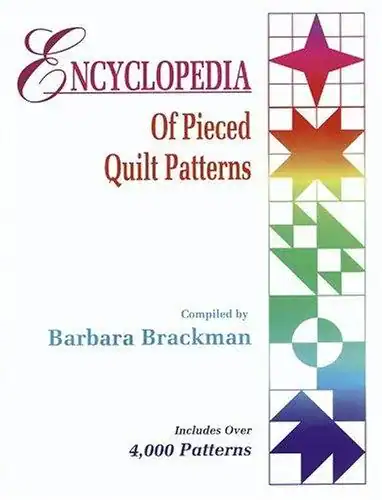
In her Encyclopedia of Appliqué, Brackman illustrates this as #80.44 Webster, Pink Dogwood in Baskets.
Xenia
This poem is not about our other President who is honored this month but about his wife. I found it in a book that was printed nearly one hundred years ago in 1906, “Patriotic Poems of New Jersey” by the New Jersey Society of the Sons of the Revolution. The poem was actually written in 1896 by Charles D. Platt for “Ballads of New Jersey in the Revolution.”
A CALL ON LADY WASHINGTON. January, 1780
“O Lady Martha Washington Has come to Morristown, And we must go and quickly so, Each in her finest gown, And call at Colonel Ford’s to see The dame of high renown.”
So spake the dames of Hanover And put on their array Of silks to wit, and all that’s fit To grace a gala day, And called on Lady Washington In raiment bright and gay.
Those were the days of scarcity In all our strickin land, When hardships tried the country-side; Want was on every hand, When they called on Lady Washington In fine attire so grand.
“And don’t you think! we found her with A speckled homespun apron on; With knitting in hand – that lady so grand- That stately Lady Washington! When we came to Morristown that day With all our finest fixin’s on!
She welcomed us right graciously and then, quite at her ease, She makes the glancing needles fly As nimbly as you please; And so we found that courtly dame As busy as two bees.”
“For while our gallant soldiers bear The brunt of war,” quoth she, “It is not right that we delight In costly finery.” So spake good Martha Washington, Still smiling graciously.
“But let us do our part,” quoth she, “And speedily begin To clothe our armies on the field And independence win”- “Good-bye! Good-bye!” we all did cry- “We’re going home to spin!” Charles D. Platt
From: Sue Reich
This poem is not about our other President who is honored this month but about his wife. I found it in a book that was printed nearly one hundred years ago in 1906, “Patriotic Poems of New Jersey” by the New Jersey Society of the Sons of the Revolution. The poem was actually written in 1896 by Charles D. Platt for “Ballads of New Jersey in the Revolution.”
A CALL ON LADY WASHINGTON. January, 1780
“O Lady Martha Washington Has come to Morristown, And we must go and quickly so, Each in her finest gown, And call at Colonel Ford’s to see The dame of high renown.”
So spake the dames of Hanover And put on their array Of silks to wit, and all that’s fit To grace a gala day, And called on Lady Washington In raiment bright and gay.
Those were the days of scarcity In all our strickin land, When hardships tried the country-side; Want was on every hand, When they called on Lady Washington In fine attire so grand.
“And don’t you think! we found her with A speckled homespun apron on; With knitting in hand – that lady so grand- That stately Lady Washington! When we came to Morristown that day With all our finest fixin’s on!
She welcomed us right graciously and then, quite at her ease, She makes the glancing needles fly As nimbly as you please; And so we found that courtly dame As busy as two bees.”
“For while our gallant soldiers bear The brunt of war,” quoth she, “It is not right that we delight In costly finery.” So spake good Martha Washington, Still smiling graciously.
“But let us do our part,” quoth she, “And speedily begin To clothe our armies on the field And independence win”- “Good-bye! Good-bye!” we all did cry- “We’re going home to spin!” Charles D. Platt
Date: Sun, | From: FuzzWamp@
Hi Judy, What a lovely quilt. I believe the dark color to be green but could not be sure. Thanks for sharing. Linda
Date: Sun, 8 Feb 2004 10:44:23 | From: <chrisa@>
While at B&N yesterday I saw a book titled- “American Slavery : 1619-1877” by Peter Kolchin (10th-Anniversary Edition, with a new Preface and Afterword) It was about 200 pages long, paperback. Using the index, Underground Railroad is listed on 1 page, pg. 168. It is mentioned in reference to Harriet Tubman being a conductor. I would have expected more than that.
I think your idea to reach the school kids is a very good one Jan. When it’s possible, doing so in person would be more effective, as someone else mentioned. It would probably draw more teachers to discuss it over lunch and in their lounge, since a speaker coming in, is a more unusual event than receiving written info. The discussion would then include this other perspective and educators would be talking to educators about the topic rather than the book. In either case, I hope an educator volunteers to write this letter. I will make it known on my K-12 Teacher’s Exchange section of my website. If you have a link where they can get the info from you, make sure to give it to me.
Kim Wulfert www.antiquequiltdating.com/tours.html
Date: Sun, 8 Feb 2004 13:56:03 | From: aol.com
Only one page? That’s not very much. I wonder why?
Interesting fact: the old family farm in Venango County, Pennsylvania, was reportedly a stop on the UGRR. It’s about an hour south of Erie by car, and of course the Erie/Buffalo region would have the perfect place to cross the border into Canada. The hiding place was possibly in the barn, or in a small bedroom over the kitchen, but no one knew for sure by the time I was born; my family didn’t buy the property until the 1920s and was passing along information received from the sellers.
Of course, I thought that meant there was a train station in the cellar. I kept pestering my mother to see it when I was very young, which must have driven her absolutely crazy….
Karen Evans
From: “Judy Kelius (judysue)” <judysue@>
The Underground Railroad seems to have many myths associated with it. For 20 years I worked in public relations for Friends Hospital, a Quaker psychiatric hospital in Philadelphia. Because 1) the hospital opened in 1817 before the URR began, 2) Quakers were very involved in antislavery activities, and 3) the hospital had an elaborate series of underground tunnels connecting its buildings, many people ASSUMED it had been a stop on the Underground Railroad but we found absolutely no indication of that.
Date: Sun, 08 Feb | From: Joan Kiplinger <jkip@>
Need some help with dating a fabric and thought some you may have seen something similar in old quilts you’ve come across or have in your collection. I’ve posted to eboard on the fabrics tab a section of doll dress for which I would love to get a date range for this fabric. Reminds me of late teens to just barely 30s. From a doll collectors’/ costumers’ point of view, it is an interesting dress as it has a side pocket, not often found on doll clothes. This dress is plainswoman style suitable for an 1880s china head but made later. I’ve also posted this to VF list. Any help would be appreciated. I want to add a swatch to my binder so a date or date range would be helpful. Dress is quite damaged but will serve as pattern for new dress. http://vintagepictures.eboard.com