August 4 – 7, 2004
These restored messages come from the Quilt History List, an online forum where quilt historians, collectors, researchers, appraisers, and enthusiasts discussed antique quilts and related textiles. The archive dates from 1996 through approximately 2016 and is being restored gradually. Sign up in the form at the bottom of the page if you want to know when a new page is added. Original spelling, opinions, formatting, and inactive links may remain unchanged.
Primary topics of this QHL Digest:
- Hawaiian Quilting Traditions — More detail on nineteenth-century Hawaiian quilters taught by New England missionaries, with museum and book resources.
- More Book Recommendations — Members recommend Ontario’s Heritage Quilts, Patchwork: Iowa Quilts and Quilters, and other regional quilt-history titles.
- A Copyright Dispute Over a Dear Jane Quilt on eBay — An eBay listing for a Dear Jane-pattern quilt sparks the list’s first exchange over copyright and pattern reproduction.
From: Loretta Woodard <Lwoodard@>
Sorry about the non-functioning link to the Bishop Museum Ethnology database. Try this: http://www2.bishopmuseum.org/ethnologydb/type.asp?typequilt. The quilt in question is 1961.105.002. —– Laurie Woodard Hawaiian Quilt Research Project PO Box 691 Kailua, HI 96734
From: Judy Kelius <quilts@>
At 07:37 PM 8/4/04, you wrote: >I’m hoping someone on the list might be able to help me in my search
for >Barbara Brackman’s Clues in the Calico. I’m looking for an >affordable copy of the text.
It’s hard to find an affordable copy of Clues, but Barbara’s new book
America’s Printed Fabrics 1770-1890 is being published this month by C & T Publishing. I read somewhere that much of the text is taken from the series Barbara has done for Quilters Newletter – great, since I have always intended to copy and keep those in one place! It will also have how-to projects for repro quilts, but I guess that is to be expected because
of the publisher. A section on repro fabrics should also be helpful . . . I took one of Barbara’s workshops where we worked with repros and her comments were very educational. It will be interesting to see what she has to say about the newer repros like those from Baum (which look as close to the originals as any I have found). The cover price is $29.95.
I haven’t seen the book yet but my contact at C & T wrote yesterday that she just saw a proof copy and thought it was fabulous. Exact release date not known but it will be sometime this month. I’ve ordered so many copies that she had to write me to confirm that I really did want that many!
By the way, I also talked with the publisher of Clues not that long ago and he says they are considering reprinting it. –_1447734.ALT–
From: patkyser <patkyser@>
Re: Hawaiian quilts Sandra’s note brought back lovely memories of a trip to Hawaii in 1980 where I met Deborah Kakalia and interviewed her for an article in Quilt World Magazine ini which I had a regular column at the time. She and her husband David were so gracious to my husband and me. Not liking the fabrics available in Hawaii at the time, upon my return, I mailed her
fabric that she made into a wall quilt for me, cutting a dogwood pattern to honor my Southern roots. I wish I could recall the brand name of that fabric, for it worked beautifully and the colors are as rich today as they were back then. (Senior moment!) It was a popular
solid, expensive at the time, and I’m sure I got it from Jeff Gutcheon. I love the quilt. Deborah designed and cut it, David basted it, my California friend Elizabeth Voris appliqued it, and I hand quilted it. Thus it is a special ” memory quilt.” Pat Kyser in Alabama
From: “Lynne Z. Bassett” <lzbassett@>
Can anyone on the QHL give me an email address for Marion Haslam?
Thanks! Lynne
From: “Candace Perry” <candace@>
I’m reluctant to do an advertisiement, but we have two copies…ours are slightly higher, $29.95…plus shipping. $$ go to a good cause! Candace Perry Schwenkfelder Library & Heritage Center
From: Litwinow@
The Figge Art Museum in Davenport, IA is considering showing quilts from the Eli Leon Collection. Anyone know anything? Also, if anyone is near Kalona, IA Saturday-it’s our quilt study group day + Even Cinda would find it difficult to praise the Amish quilts that are hanging in the Kalona Quilt and Textile Museum-as the TV ad says “Better then Great!” Thanks, Cathy Litwinow
From: “Lucinda Cawley” <lrcawley@>
I just noticed on amazon.com two books I’m not familiar with: Ontario’s Heritage Quilts by Marilynn (forget the last name) and Patchwork: Iowa Quilts and Quilters. What does anybody know about these? Also, has there been an Alaska book published recently? Cinda on the Eastern Shore
From: “Merry Endres” <merrymenetnet.net>
Hello everyone! My name is Merry and I live in Wittenberg, Wisconsin. I just joined this list and am very excited! I have been quilting for almost 14 years. I am also on the Dear Jane and Nearly Insane lists.
I am fascinated by antique quilts and textiles and look forward to reading everyone’s posts to this list. I graduated in 1990 from Madison Area Technical College with an associates degree in clothing design/apparel arts. For a while I had
a custom sewing business and then I tried quilting and I was immediately hooked. I am now a single mom/home-maker to two boys, ages 7 and 8,
three cats and one dog. I teach quilting for recreation (I would say
profit, too, but my expenditures in fabric and books far surpasses any profit I make, hee hee. I mostly do it for fun). My other interests include designing quilts and reading. I look
forward to participating in your discussions.
Hugs, Merry
Date: Fri, 06 Aug 04 05:42:04 -0400 | From: Kathie Holland <kathieholland@>
Hi Cinda I own both of these books. I love the Ontario’s Heritage Quilts……..think the photography of quilts in this book is well worth the price of the book. Many different style of quilts, have to admit haven’t read it completely yet. I would recommend this book just for the photography of the quilts. Marilyn I. Walker is the author. The Iowa book if I remember correctly have to go find it………but think I was a bit disappointed in the book as they talked about quilts that were not pictured in the book……. anyone else find this? I do really like the book and especially the quilt on the cover of the book. I would recommend it again for the quilts pictured in the book and I did enjoy reading parts of this book about the different quilters. any specific questions Cinda feel free to email me Kathie in NJ kathieholland@
Date: Fri, 06 Aug 04 05:33:35 -0500 | From: “Virginia Berger” <cifbanetins.net>
I bought the book Patchwork: Iowa Quilts and Quilters by Jacqueline Andre Schmeal last winter. There are 13 chapters about Iowa quilters-one is about a church quilting group, one about sisters that quilt, one about a husband and wife that quilt, most about individual quilters and written from personal interviews. There are qute a few photos of old quilts dating from the 1840’s to 1950’s, many from the collection of the Grout Museum in eastern Iowa. Just flipping through it now, it looks like there are 5-6 pictures between each story, one quilt per page with a little blurb about each quilt. (there are 140 pages total in the book) The one thing that disappointed me about the book was that the none of the quilts included are connected with the stories. It was interesting to read about these quilters but I would have liked to see THEIR quilts! It’s almost like two separate books melded together. No patterns and no detailed pictures of the quilts but all quilts have a date or date range given and the photography was excellent.
Virginia
From: “Cathy Hooley” <cathy@>
For those interested, tomorrow’s (August 7) Capital Region Quilt Study Group meeting has been cancelled.
Hope to see everyone in a couple of months when things aren’t so busy.
Cathy ****************************************** Cathy Hooley Goose Tracks Quilts www.goosetracks.com
Date: Fri, 6 Aug 04 :15:31 -0500 | From: Barbara Woodford <haq@>
My intention was to enlighten myself on the different characteristics of the many and varying woven white coverlets that have been made over
the last 125 years. There seem to be many contradictions of terms in the literature, such as “marseilles, marcella, marcels, matelassE9, which makes it difficult to know what the heck anyone is talking about.
An example would be that at least one “Marseilles Trapunto Quilt Coverlet” was auctioned off on EBay.
Items 1 and 2 are concepts that I KNOW. The rest I have tried to glean
from several interpretations of the literature and talking to some others in the textile world, and by examining two pieces that I own.
1. Quilting—Defined as placing a needle in and out of at least two layers of fabric, most with batting betwixt.
2. Trapunto—Defined as a method of providing a three-dimensional appearance to a quilt by making small slits in the backing and then stuffing the quilted spaces with extra batting, then sewing closed the
slit with a couple of stitches. (Forget any other kind of stuffing in this report.)
3. The above-mentioned trapunto quilting was done in France, especially in Marseille and the rest of Provence, during the 18th century and back into the mists of time. It was admired and coveted by
the English, the Americans and everyone else including probably the Javanese. But hold on, the French didn’t call it trapunto quilting. No,
they called it “broderie de Marseille”. And not much of it still exists. And colored or printed fabric was used as well as white.
4. The English, who were not really into time-consuming quilting at this point, but still not willing to let the French get away with something unique, actually had a contest to see who could come up with
a device to WEAVE a white piece that resembled “broderie de Marseille”.
The invention in 1763 by Glasgow and Elder (not the French as “Quilts in Community, Ohio’s Traditions” states) was a version of the drawloom
that used draw boys to pull the warp threads. Note this was all done by hand—a lot of hands. The resulting piece looked so much like “broderie de Marseille” that they called it “Marseilles quilting”—even though it was certainly not quilted. This was probably
an early case of fooling the American consumer into buying something with misleading advertising.
This “Marseilles quilting” or “Marseilles cloth”, bought either as coverlets or as fabric to make a variety of garments and furnishings, became very popular. The Bolton and other loomworks in Manchester in Lancashire, England, produced and exported many thousands of pieces. There is little evidence that America produced anything like this until
the Jacquard loom (power driven) was invented and came to be used here
and in England between 1802 and 1840. To further confuse things, the English also called their hand woven goods “Bolton cloth, Marseillez,
and Marseils (Garoutte) and Marcella (Montgomery). With the advent of the increased use of the Jacquard loom, the coverlets got lighter, thinner, flatter, with smaller motifs. Now, selvedges of a different and finishing weave were woven to the main body of the coverlet (Goody). These coverlets were made by power-driven looms, yet still the
name persisted—“Marseilles quilts”. (Garoutte)
Hand-loomed wool and cotton coverlets, such as overshot weavings, presently seem not to be popular, with many people preferring the fancy
or jacquard loomed coverlets. Nevertheless there are purists who prefer
hand-made textiles. In the case of “Marseilles quilts”, you might want
to know an EARLY “Marseille quilt” from a later one. The following are
the CHARACTERISTICS (as I understand them) of a hand-loomed “Marseilles
quilt” or “quilted in the loom” coverlet: Firstly, it is WOVEN in one piece and not quilted. No needle has gone in and out the thickness of the piece. Instead what appears to be lines of stitching are actually little holes made as as the warp and weft are “picked”. There is no quilting thread.
Secondly, look at the weft edges. The pattern ends abruptly on the edge, and you can see THICK ROVING threads turning at the edge and going back through the warps in such a way as to produce a three-dimensional effect. You might see the above edge on a good close-up photograph, but you must really see the piece in person to note other characteristics.
Thirdly, the pieces are heavy, and composed of relatively large figures. On coverlets there are central medallions, and diamonds are popular as background for the other motifs of roses, urns, swags and ferns. The three-dimensional aspect is on the back as well as the front, although the back is less closely woven than the front. In a photograph, this can look exactly like trapunto quilting. In “Quilts of
Provence”, there is on page , examples of “Marseilles quilting” and
“broderie de Marseille” right next to each other. They look very much alike. I thank Pauline Adams of the Quilt Guild of the British Isles for discussing the problem of identifying the hand-loomed “Marseilles Quilts”. If I had my way, I would visit all the museums with “Marseilles quilts” and record the patterns and motifs to pin down the
earliest. I would also try to get information from the weaving manufacturers of the 19th century here and in England. Also thread identification is a method to use, but I don’t have the background for
that. If anyone wants to contribute or correct my knowledge, please get
in touch! But onward!
5. Besides the continuation of weaving “Marseilles quilts” after 1840, other weaving methods were used to produce three dimensional effects (Garoutte). One method was to pull the weft into loops. Peck distinguishes the latter, called “Bolton counterpanes”, from “Marseilles quilts”. Still another, was to use crepe yarns , which cause the ordinary yarns to shrink causing a blistering effect on the top of the weaving. This was and still is called “MatelassE9” (Tortora
and Merkel, but Montgomery and Burnham differ with this). Present day spreads found in Penny’s catalogue are called “MatelassE9” and appear to be the blistered top type with a flat backing. These are a long way from the original English drawloom productions of “Marseilles quilts”.
But all three of these offspring of the original are probably abundant
in the East coast markets today.
6. Ironically, around 1850, the circle was closed, when Americans wanted to replicate “Marseilles quilts” by doing hand stitched “whitework quilts”—probably trapunto (Northern Comfort, p.86). The quilters were making replicas of replicas of French quilting . Give us
a break! Thank goodness the makers didn’t call them a name that started
with “M”.
References (Abbreviated)
Bassett and Larkin, “Northern Comfort, New England’s Quilts”, 1998, pp.
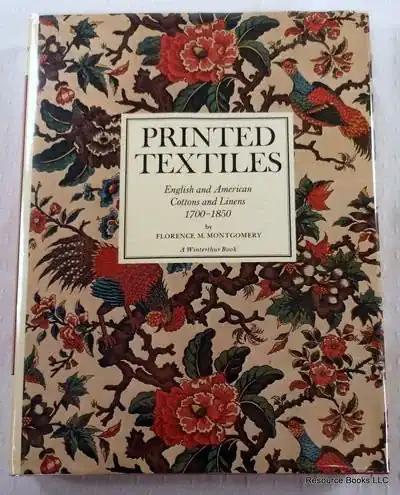
79-86. Berenson, “Quilts of Provence”, 1996, pp. 48-67. Clark, Knepper and Ronsheim, “Quilts in Community, Ohio’s Tradition”, 1991, pp. 84-90. Burnham, “A Textile Terminology, Warp and Weft”, 1980. Garoutte, “Marseilles Quilts and their Woven Offspring”, in “Uncoverings, 1982″ pp. 116-134. Montgomery, “Textiles in American, 1650-1870”, 1984. Peck, “American Quilts and Coverlets in the Metropolitan Museum of Art,
1990″, pp. 131-135 and Catalogue of the Collection. Tortora and Merket, “Fairchild’s Dictionary of Textiles, 7th Ed.”, 00.
From: “Charlotte Bull” <charlou@> \
I suppose local Iowa members will comment on Cinda’s question. But, because I grew up in Iowa, I bought the book: “Patchwork: Iowa Quilts
& Quilters”. It is charming. Each chapter is the personal story of a quilter. In between are excellent photos of historic quilts. From author’s collection and from Museums. Author has history as owner of folk art store etc. Jacqueline Andre Schmeal. She also wrote book on Iowa Folk Artists. I especially loved the quilt on the cover! I surely expect that others loved it too! The personal stories of unknown quilters can really “grab you”.
Re Brackman’s new book: “America’s Printed Fabrics”, I’ve already ordered it from AQS catalog. It’s backordered, but I’ll get it soon!!! It was a “must have” before I even saw a picture of the cover! When you are an AQS member and buy 6 or more books you get a good price with VERY cheap s&h charges. So I order every 3 months! Hey, their magazine is great, and so are the Annual Shows. I did not exactly move to MO in order to be nearer to Paducah, KY, but it was a side benefit!
Do note that they also have Roy’s new calendar, “Masterpieces in Cloth”, that was mentioned in earlier digest, and they also have Aug & Roy’s “Antique Quilts & Textiles” as well as Kratovil’s “Bold Black & Beautiful”. Hey, we might as well give credit to others on this List! They filled up my order form yesterday! There’s also a new one out on “Vintage Quilt Blocks: State by State”.
Now you know that I am an addicted Book Buyer! : ))) I feel as if I should join Bookaholics! But this is a GOOD disease! Right? Please allow me to add a new category to Must Have Books List!!! The 5 books I must have but have not yet read!
From: “Julia D. Zgliniec” <rzglini1@>
Dear QHL, Good Morning! My bookshelves are sagging!
Ontario’s Heritage Quilts was published in 1992. It is worth reading.
The quilts have been “artfully” photographed in various settings which I find distract from the textiles themselves. There is a broad range of
quilts presented. The Ontario quiltmakers were kindred spirits.
Don’t waste your money on the Iowa book. It is one of the worst quilt
books perpetrated recently. The author is a journalist and collector of quilts. This is one of those “well let’s see – I’ll publish my collection”. Some of the quilters discussed don’t have any quilts shown and no picutres of the quilters themselves. This is not a state survey.
\
Date: Fri, 6 Aug 04 15:03:55 -0400 | From: “Lucinda Cawley” <lrcawley@>
Thanks to everybody who asnwered my questions about Iowa and Ontario I’ve saved some money. Most people responded privately and the consensus was Ontario yes, Iowa no. Thanks to these helpful people I realized that I already own the Ontario book (come on, I know lots of you have bought
the same book twice) and don’t need the Iowa book (it is not the product of a documentation project). Thanks everyone. Cinda on the Eastern Shore off to the library for books on CD to while away the drive to Ithaca
Date: Fri, 06 Aug 04 12:05:30 -0700 | From: Julie Silber <quiltcomplex@>
Hi, I have been asked to lecture in South Carolina in early May, 05. I would like to add a couple more talks (antique quilts and women’s history) and make a “mini-tour” out of it. However, I’m not familiar with guilds, museums, or other potential venues thereabouts. Georgia, South Carolina, North Carolina, Tennessee) Any ideas or contacts for me?
Thanks a lot, Julie Silber quiltcomplexdirecway.com
Date: Thu, 5 Aug 04 23:13:02 -0400 | From: “Maureen” <maureen@>
Hi Cinda on the Eastern Shore:
Thank you for your many interesting posts. Here are the Iowa and Ontario quilt history books you noted; I’ve got all of them and love them
dearly. The Alaska title is the most recent I know of. It has a wonderful cover of a quilt made of actual green and brown duck necks — the quilt history and local culture is amazing to read.
Quilts of Alaska: a textile album of the last frontier. Juneau, Alaska: Alaska Quilt Survey Gastineau Channel Historical Society, 01. 112 pages, index, biblio. soft cover.
Schmeal, Jacqueline Andre. Patchwork: Iowa Quilts and Quilters. Iowa
City, IA: University of Iowa Press, 03. 158 p. 0877458650
Walker, Marilyn L. ONTARIO’S HERITAGE QUILTS. Toronto: Boston Mills Press. C1992. illus. color 157pp. [Canada, Ontario ]
Burnham, Dorothy K. PIECED QUILTS OF ONTARIO. Toronto: Royal Ontario Museum. C1975. illus. blk & white. 64pp. [Canada, Ontario]
Bell, Michael and Kim Ondaatje. TRADITION PLUS ONE: PATCHWORK QUILTS FROM SOUTH EASTERN ONTARIO. Toronto: Agnes Etherington Art Center . C 1974. illus. color, & blk & white. Exhibition catalogue. (text in both French and English). [Canada, Ontario]
PATCHWORDS 1992 & PATCHWORDS 1994. RESEARCH PAPERS OF THE CANADIAN QUILT STUDY GROUP. Vol. 1 &2. Nancy Cameron Armstrong, editor. White Rock, British Columbia: Canadian Quilt Study Group. C 1995. (Papers from Volumes 1 & 2 from 1992 symposium and the 1994 symposium were published in one book.).
Best regards,
Maureen Battistella In Ashland, Oregon where it is cooler today.
Subject: books From: “Lucinda Cawley” <lrcawley@> Date: Thu, 5 Aug 04 23:13:02 -0400 X-Message-Number: 9
I just noticed on amazon.com two books I’m not familiar with: Ontario’s Heritage Quilts by Marilynn (forget the last name) and Patchwork: Iowa Quilts and Quilters. What does anybody know about these? Also,
has there been an Alaska book published recently? Cinda on the Eastern Shore
******************** Ashland Mystery … ******************** Steve Brewer August 12, 04, 7p at the Ashland Public Library.
If you like Elmore Leonard and Carl Haissen you’ll love Brewer’s Bubba Mabry mysteries set in Albuquerque, NM. Bubba is a modern kind of guy
who flees rather than fights and is sensitive to girlfriend Felicia Quattlebaum’s rather eccentric personality. Bubba made his PI bones detecting for Mister Aaron — who is actually Elvis, still alive,
living undercover, and more fit than he was in 1977. The first book in the series, Lonely Street is being filmed in Hollywood. His latest is
Bullets set in the high roller hotels and seamy streets of Las Vegas, published 04 by Intrigue Press.
Signing at Barnes and Noble Medford Saturday, August 14th, 1-3p ******************** Next up: ** Hosting a Mystery Party by Carol McNair and Bob DeVoe 9/9/04 ** Donna Cohen on Ladies No. 1 Detective Agency 10/3/04 2p ** Forensic Anthropologist Nici Wanek 10/23/04 ** Ron Lovall 11/11/04, Oregon’s own author of the Dr. Thomas Martindale series ** Dale Furutani 12/9/04, Ken Tanaka and The Samurai mysteries — Speakers and books on second Thursdays! ******************** Sponsored by the Ashland Mystery Readers Group, the Friends of the Ashland Public Library and Bloomsbury Books. www.booksandoldlace.com/mysteries/ PO Box 1081 Ashland, Oregon 975 ** 541-552-0743
From: “Louise” <ltiemannstny.@>
Alas, I was too late to get one of Candace’s books. Are there any more Clues in the Calico books available out there? (that don’t cost an arm and a leg). I would appreciate it.
Also for you Ruby McKim fans out there, there is a new site: http://www.rubyslegacy.com
It is done by Christina F. Jones – I know Ruby has a granddaughter named Chris Jones – maybe they are one in the same?
The site has cross-stitch and bead work patterns for several of Ruby’s earlier patterns: Alice in Wonderland, Three Little Pigs, The Bedtime Quilt and Child Life Quilt.
The site is new and doesn’t have all the bells and whistles connected
yet, but it has all the patterns available to look at.
Best regards, Louise
From: “Lucinda Cawley” <lrcawley@>
Check this out from the British Quilt History List. Isn’t life in the 21st century grand! Cinda on the Eastern Shore where the temp is going down to the mid-fifties tonight (Is it really August on Delmarva?)
http://www.quiltsouthafrica.co.za/heritage.asp
From: “Christine Thresh” <christine@>
Are any of you following this Dear Jane quilt top saga on eBay? http://cgi.ebay.com/ws/eBayISAPI.dll?ViewItem&item8121416446
Christine Thresh http://www.winnowing.com
Date: Fri, 6 Aug 04 08:32:56 -0700 (PDT) | From: janakamom <janakamom@>
Hello all, I’m new to the list, but have been reading the notes as I can. One of my favorite books is by Paul Pilgrim and is titled Blending the Old with the New. I spend so much time on ebay just browsing through antique quilts and blocks, mainly for inspiration! I recently was in gardenweb.com and did a search for quilts there. This link came up with the gal wondering if anyone knew the flowers on this antique quilt. I’m sending the link for you to see the one block of the 1848 quilt she is reproducing. It’s lovely. My guess was Shooting Star. http://community.webshots.com/photo/59373255/83410396oJtAFK
Enjoy!
I’m Jan and I’ve been quilting for 4 years. I love antique quilt styles and the creativity by using what they had on hand. Looking forward to meeting you all and learning much from you. Jan B in Washington
From: Midnitelaptop@
i’m not sure i really understand the copyright laws….but if i buy a
Simplicity bridal dress pattern …..make it and sell it to a future bride…am i doing something illegal?
our guild had brenda papadakis as a guest teacher and lecturer…and one of our guild members made a dear jane quilt replica(it took her years)…it was highly honored a few years ago at the vermont quilt festival..does that mean that she, the quiltmaker or any of her decendents may never sell the quilt? jeanL
Date: Sat, 7 Aug 04 01:52:56 -0400 | From: “J. G. Row” <JudyGrow@>
One of my employees is from Coeur d’Alene Idaho and had me enthralled
this evening with the story of his grandmother and her quilting. Mary Schilke died in the 1990’s, at about 95 years of age. Ray mentioned that she was very active until near the end, and even rode her grandson’s motorcycle at the age of 90. I asked if he meant that she rode on the back and he told me that, “au contraire, she rode alone!” Most intriguing for us is what
he remembers of her quilt frames.
Mary lived on Empire Avenue (possibly number 103) in a house that had
a huge kitchen — he estimates it was probably 25 feet square, and had at one end two pantries with a bathroom between them. One pantry was used as a pantry but the other had had its door removed and replaced with a curtain and was empty except for tracks on the ceiling like those used for sliding doors, with what looked to him almost like butcher’s hooks hanging from each
track. The hooks operated on a pulley system with ropes — he said to think of window draperies opening and closing. The pantry was possibly 6 x 10
feet.
Mary’s husband Dan was a carpenter and made her quilting frames with corners cut the same way as modern artist canvas stretcher frames, but made from heavier dimension lumber. She had pairs of sides in different lengths and could put together quilt frames of many different sizes without using
clamps or carriage bolts.
He remembers that her kitchen table folded down easily and could be put away so that a large quilting frame could be set up in the kitchen. I asked specifically about hooks in the ceiling, but he said that he remembers clearly that the corners of the quilting frame would be propped up on
fern stands, which were higher than any of her chair backs and were just the right height for the quilting.
Her Methodist church ladies, her 2 sisters, and friends and neighbors
would come in almost every day for quilting. Friends from Odessa, WA would
often come for a quilting weekend. At the end of the day the frame would be
taken into the pantry, turned vertically, and hung on the hooks on a single
track. Mary could and would store a number of quilts in progress on their frames in this pantry. That was the pantry’s only use.
Ray is over 50, so these are not the fuzzy remembrances of someone much too young to remember clearly what he saw. Yet, there are many unanswered questions — like, how did these frames roll to get to the inside of the quilt? I imagine the frame could be taken apart only if the quilt was loose in the frame — perhaps with 3″ of slack. Then it could be rolled up on the two ends and new, shorter sides could be added. I’d pin the sides of the quilt to tapes spiraled around the sides and continue quilting. But I have no idea if that is the way this set-up worked. What was the purpose of the pulley system?
Mary also had a sewing room upstairs with closets and chests of drawers full of fabric and yarn and all the other fiber-related items Mary would have used.
When Mary died her quilts were dispersed throughout the family. Ray’s sisters and brother have some, and tomorrow Ray will bring the one quilt that was his legacy. I can’t wait to see it. Lordy, how I hope it
is as wonderful as this story.
Ray has worked at Frames & Framers for 9 months. I see him on almost
a daily basis. I am always bringing new quilts into the store so he knows my passion. I wonder why he waited so long to tell me this story about his grandmother. Was it to see if I was worthy? Or gullible? (wink, wink, nudge, nudge) Picture framers have to be artistic and imaginative people, and Ray himself is an excellent painting restorer, framing designer, and a superior craftsman.
Are there any quilters on the Quilt History List who might remember Mary Schilke and her quilts?
I don’t think Idaho has done a documentation, has it?
Judy Ringo judygrow@
Date: Sat, 07 Aug 04 07:05:53 -0700 | From: “Julia D. Zgliniec” <rzglini1@>
> Wow…I would sure love to see the rest of THAT quilt! > Any chance? > Julia Zgliniec, Poway CA – who was an avid gardner until I “went to > seed” (as my mother put it) on quilting and textiles.
It’s lovely. My guess was Shooting Star. > http://community.webshots.com/photo/59373255/83410396oJtAFK >
Date: Sat, 7 Aug 04 10:22:46 -0400 | From: danabalsamo@
Hi, Copyright laws are so confusing. And some times just don’t make sense, at least to me…but here is how I understand them, and someone please correct me if I am wrong. When you buy a pattern or book, you are agreeing that anything you make is going to be for your own personal use…most books state in the front
or back the the information is for personal use only unless permission is granted for otherwise use. If you want to teach a pattern that is copyrighted, you must gain permission for the patternmaker/author. Usually, most are very gracious and ask that eash student purchases their own copy and that credit is given where it is due. I have done it myself, had to buy 12 copies of the magazine that the pattern was in and sold them to each of my students. The magazine required that I make a profit, since I purchased them for $1.99, I charged $2. When you make a quilt from a pattern that is copyrighted, you should state that on the quilt’s label. And it should be noted on the story board
card for the quilt if it is put in a show. If you wish to make a quilt from a pattern to sell, again, get permission. Usually something can be worked out. The woman selling her Dear Jane quilt top on ebay is in violation of copyright laws. She did not change the quilt enough…it is still a Dear Jane quilt. She should have contacted Brenda (the patternmaker), and considered Brenda’s royalty in the asking price of the quilt top. Brenda has every legal ground to take legal action against the seller. She can also go through ebay and have the auction pulled. Is it worth the $150 to Brenda…it’s probably not about the money…but all the hard work that went into the pattern, it’s the principle. Legal action will probably cost more that $150, after all. Imitation is the best form of flattery, but credit should be given where credit is due. I understand the amount of time and money that goes into making a quilt. But unless the pattern is your own original pattern, partial credit belongs to the pattern maker. If you had your quilt professionally quilted, you would give the quilter credit, right? Wht not the pattern maker? So label that Dear Jane Quilt properly, and if someone wishes to sell it while the copyright is still in effect, Yes, You have to contact Brenda…I am unsure of how long a copyright lasts. As far as the wedding gown from the Simplicity Pattern, read the pattern and envelope, it will tell you if it is for personal use only or otherwise. If you have any questions, call Simplicity. I am sure they deal with this question everyday. They are only trying to protect the rights of their designers (and themselves) and one dress is probably not a big deal and they would probably be very gracious to consent…they would probably want some sort of arrangement from someoe intending on mass producing them, though, and rightfully so. Are there people that disregard copyrights? Yes. Do they get caught?
Probably not often…but why take the chance? There were some great articles about copyrights in Quilters Magazine a year or two ago…all my back issues are stored in my attic, so maybe someone else has them handy? My best, Dana Material Pleasures www.material-pleasures.com
Date: Sat, 7 Aug 04 08:39:22 -0700 | From: <chrisa@>
This is another example of the problems that can come from using others work without permission. This is on the Web of Thread website. “The Nancy Drew Quilt – A Cautionary Tale” Written by Judy Heim
http://www.welshofer.com/WebThreads/excerpts/two_three/nancy2.htm
Kim Wulfert www.antiquequiltdating.com
Date: Sat, 7 Aug 04 10:59:03 -0500 | From: “Kathy Moore” <KathyMooreneb.@>
Barbara, yours is a very comprehensive summary of what I’ve learned about these quilts and coverlets. Thank you for the work and the report with sources. I’m keeping it handy for future reference.
One thing I didn’t see mentioned that I think needs to be said is that most of these 18th century pieces, the ones that were actually quilted, were done by “professional” quilters and were done on commission for the wealthy and privileged who could afford them. ——_NextPart_000_00_01C47C6D.8D3421E0–
From: “J. G. Row” <JudyGrow@>
Correct me if I am wrong, but…..
I think that the Jane Stickles quilt falls into a different category.
If Ms Jones had seen the Stickles quilt herself, done a photo, measured the
blocks and made her patterns and quilt top from that she would have had no legal problems selling her quilt. If Ms Jone had titled her quilt “a Jane Stitckles quilt reproduction” and hadn’t mentioned or used any references to JP or DJ she would have been home free. I think that Jane Papadakis only owns her designs from the quilt, her pages and illustrations from her
book and the title “Dear Jane.” She doesn’t own the quilt or any visuals others glean from it.
What about the book “Still Crazy after all these years”? The patterns from that quilt came from the photos from the quilt dealer, who no longer even owned the quilt. If I used those same published photos and made my own copy of the quilt I’d be able to sell it without copyright infringement, wouldn’t I?
Judy in Ringoes, NJ judygrow@
Date: Sat, 07 Aug 04 12:54:49 -0500 | From: Gail Ingram <gingram@>
One more question—-when does copyright elapse for such pattern books? Are they in the same category as literature, history, art, etc books? A century?
And is one free to copy a quilt, then provide patterns and copyright those without recompense to the museum or private owner?
I know sometimes the spirit of the law is not captured in the letter of the law.
Were Dear Jane quilts being made in production line fashion, I would
feel differently, but in this case, since the seller obviously was ignorant of the law and had put so much time into the creation, I personally feel
that a shot across the bow would have been charitable and would have served the purpose of educating public–perhaps a 1-3% charge, with an announcement of plans for future incidents of the kind.
I just cannot imagine parting with such a quilt, frankly, and I feel some unannounced need or circumstance must have impelled its sale. That would have inclined me toward charity.
only one person’s opinion, Gail
Date: Sat, 07 Aug 04 13:01:01 -0500 | From: Gail Ingram <gingram@>
I am seeking museum catalogs (e.g., Mary Elizabeth Johnson Huff’s “Cotton Country Quilts: South Alabama Quiilts and Their Makers”–Monroeville,
GA: Monroe County Heritage Museum), articles on Southern quilts from magazines, books/pamphlets, archival sources including information regarding quilts from the South, particularly from the Deep South and TN and TX.
I am also interested in locating local collections of such quilts (e.g, the one in Athens, TN).
Should any list member have information on such, I would appreciate her/his contacting me personally.
Thanks in advance, Gail Ingram
Date: Sat, 7 Aug 04 15:10:05 EDT | From: Feedsackfanatic@
The seller of this quilt is a member of the forum on quilt.com, and she has a number of explanations as to why she decided to sell the quilt, along
with numerous correspondence from other members.
Paula in GA
Date: Sat, 7 Aug 04 12:22:56 -0700 | From: “Christine Thresh” <christine@>
I re-read the eBay listing. At first Brenda P. said selling the quilt was in violatiion of her copyright. Then, in the next letter she said she wanted a royalty for the use of her TRADEMARK “Dear Jane.”
Copyrights and trademarks are two different things. If the seller had said she was selling a Jane Stickle replica quilt top, it probably would not have raised a question.
I am pretty sure you cannot copyright a book title. B.P. has trademarked the words “Dear Jane” and is selling merchandise with those words and the registration mark on them. I think she started doing this after the book became a best seller.
Christine Thresh
Date: Sat, 07 Aug 04 15:29:28 -0400 | From: Patricia L Cummings <quiltersmuse@>
A good place to begin learning about copyright law is Sylvia Landman’s website page:
http://www.sylvias-studio.com/copyright.htm
The “Dear Jane” quilt issue seems more complex however. The quilt patterns were “lifted” from a quilt made in 1863 which is the property of the Bennington Museum. So the book writer is not the originator of
the actual designs, only an imitator herself. She has copyrighted the
set of patterns and says “All Rights Reserved” on the inside cover. In addition, she has trademarked the name “Dear Jane”, according to what
she wrote the ebay seller.
Knowing about the extraordinary work the quiltmaker went to in piecing the top, it is clear to anyone, I would think, that the would not grind these out, one after the other, just to make a profit. This seems like a one time sale. Therefore, I was shocked at the book writer’s immediate demand for a royalty. This was not a good PR move on the part of the book’s writer….it just made her look bad, in my opinion. In the long run, what has she gained?
A similar debate has gone on recently about the October 1965 issue of
Woman’s Day which featured the photo of an antique Baltimore Album quilt (which is currently owned by the Metropolitan Museum of Art). Someone
had found this old magazine with a photo of the original quilt. The pattern had originally been offered in the magazine for just $1.00. She called the company, and yes, they had the pattern in their file, just
one copy, which they mailed to her in 1971.
Others wanted to know if they could buy a copy from her. She was reluctant to do so, feeling that to copy the pattern would be in violation of copyright law. In the meantime, it was announced that the Folsom Quilt Guild had reproduced the same pattern for use as a raffle quilt this year. A member had “lifted” the patterns from a poster printed by the Met and reportedly “altered them”, at least a little. The resulting quilt can be seen online at their website. In addition, the
patterns created by the guild member are being sold as a fundraiser for $50.
Now, it gets hairy. Does Woman’s Day magazine own the copyright, as they claim, just because they published the quilt’s photo? Does the person
who created the patterns from the original quilt own the copyright? Does the photographer or person who produced the Metropolitan poster own the copyright? Could they claim damages because someone used their photo image to make something for sale (i.e. to profit from?). And, or, does the guild person who “altered” the patterns to create the new pattern
pack have the right to claim them as her own? Surely, the original designer of the quilt has long been pushing up the daisies.
I could go on and on. I have three cousins who are copyright attorneys and I have not discussed any of the above with them…yet. With everyone claiming rights of ownership and being potentially sue-happy
over historic designs, it is no wonder that quilters are in such a state of confusion, myself included.
There is another pending case that is in the hands of a lawyer which I will have the discretion not to discuss. I am just not sure when the quilt world started turning nasty, becoming competitive, and so geared toward money making. When did the greenbacks become more important than individuals, than kindness, than sharing?
In addition to Sylvia’s site, you can find a number of entries online
that speak of landmark decision cases and there is at least one direct link to the U.S. Copyright office.
Hope that I’ve given you a few things to ponder. Have a terrific rest
of the weekend.
Pat
Date: Sat, 7 Aug 04 13:11:30 -0700 (PDT) | From: Rissa Peace Root <rissapeace@>
I think you are on track here. I know the people who published the Camel Crochet patterns were always upset about copyright violations, but you can’t copyright the stitch, especially since they did not invent it. They trademarked the name Camel Crochet and they copyright protected their written directions for doing this stitch. That was something concrete they could persue. All it really did was end designer interest in creating patterns for them!
I also ran into it when I wanted to title an artbra I designed “A Bra that Only a Sweet Potato Queen Could Love”. I contacted Jill Connor Brown before submitting the design for a traveling exhibit. She forwarded it to her lawyer, who said it was a trademark infringement and to cease and desist immediately…in a really tacky way no less. And THIS was for a donation to a charitable organization for breast cancer research. I decided on an alternate name before sending in my final design!!!!
Rissa Peace Root http://www.prettyimpressivestuff.com
From: “Andi Reynolds” <andi0613@>
Hi all,
I’ve been reading the list for a couple of months and enjoyed it. Lots to share and learn. Julie, I tried replying directly to you about SC
guilds, but your server didn’t recognize me (why would it?), I think.
Anyway, here’s what I sent:
Hi Julie,
I grew up in Winston-Salem, North Carolina, home of Old Salem, which is now a living history sort of place. Within Old Salem (which is in the
W-S downtown area) is the Museum of Early Southern Decorative Arts. From the website:
“The Museum of Early Southern Decorative Arts (MESDA) is the only museum dedicated to exhibiting and researching the regional decorative arts of the early South. With its 24 period rooms and six galleries, MESDA showcases the furniture, paintings, textiles, ceramics, silver, and other metalwares made and used in Maryland, Virginia, the Carolinas,
Georgia, Kentucky, and Tennessee through 18.”
The quilt collection is fantastic. If you have time, make an appointment to see the quilts. It’s been several years since I was there, but as I recall, many are stored in plain sight. And of course you can ask to see specific examples of whatever. They have a web site – www.oldsalem.org. Click on Museum of Early Southern Decorative Arts. Unless you join MESDA, the online research database is not available, but this is great – they not only have information on artifacts, but on artisans! And “quilter” is one of their categories. Although their focus is on those states named above, they have artisan information from many other states as well. I didn’t get involved with quilts/quilting until after I left NC, so don’t have any guild connections for you, Julie – sorry. But MESDA is worth the time and trouble if you’re anywhere in the Carolinas, Virginia, Georgia or Tennesee. The nearest airport is Greensboro (GSO), which is about an hour from MESDA.
End of original message to Julie.
In the spirit of “most of us have more than a passing interest in textiles other than quilts,” I’ve copied the following from their web
site: MESDA Needlework Seminar
January 26-29, 05, The Museum of Early Southern Decorative Arts (MESDA) at Old Salem will present a Needlework Seminar, Conversations
with Samplers: Eight Centuries of Old World Traditions. This seminar
provides a rare opportunity for needlework enthusiasts to explore 800
years of Old World sampler structures, patterns and techniques from the Middle East, Europe, and Central America.
Participants will study pieces from private collections and learn the
basics of embroidery research. Workshops, lectures, and collections studies will range from 12 th century Egypt to the Mediterranean, post-Reformation northern Europe to New Spain/Mexico. Seminar lecturers include Margriet Hogue, independent researcher and owner of The Essamplaire; Sumru Belger Krody, associate curator of Eastern Hemisphere, The Textile Museum; and Kathleen Staples, author, lecturer, and curator in the field of textile history.
Registration for the 05 Needlework Seminar is $350 and includes three lunches, one dinner, seminar sessions, and materials. Registration deadline is January 5, 05.
The usual disclaimer – I have no affiliation with Old Salem or MESDA,
but I value this treasure in my hometown and tout it whenever possible. Maybe I *should* ask for remuneration…. VBG
Andi Reynolds, now in Keota, Iowa ( minutes from Kalona) and just back from the morning portion of the Iowa-Illinois Quilt Study Group. Others will post a formal account, I’m sure, but we saw some wonderful finds. Interesting twist to all we examine here is “where was it really made?” We see examples of work that may predate homesteading in the Midwest
(for example, Keota was founded in 1846 and is not the earliest place
in SE Iowa, but it’s not the latest place, either), especially tops that
may have been assembled or quilted later. Best discussion of this topic came up around a signature quilt from Salem County, Ohio that seemed
incongruous in construction and was brought to Marilyn Woodin in Kalona, Iowa, bought by Sarah George and is now owned by the Kalona Quilt and
Textile Museum. Dated 1850 (inked on one or more blocks). Best guess was it was a ‘going away’ quilt from friends and well-wishers in Ohio for
someone heading west.
Continuing this line of thought, I’d like to hear from those knowledgeable about just how mobile people were/were not in the 18th and 19th centuries. There were quite a few pioneers who headed west but returned east (two of three of my husband’s immigrant ancestors actually went back across the Atlantic – ha!), and people who traipsed from place to place for various reasons. The notion that most everyone was born and reared, lived and died within a certain area – is that true or wishful thinking? At some point I was told something about using a five-mile
radius to locate a quilt’s origins because that was the distance a courting man could walk after a day’s work and return home in time to
get enough sleep for the next day. When I make labels for my quilts, I say that I was born in NC, learned to quilt in FL and ‘started-finished-made’ this piece in Iowa. Because I think we quilt-makers should be the epitome of “you can run, but you can’t hide.”
From: Judy Schwender <sister3603@>
Image rights (a photo) are different from a copyright. You could be in violation of another set of laws if you take a photo, since the image rights may belong to someone other than the owner of the quilt (not that unusual.) And it doesn’t matter how you copy something- you can even replicate it entirely from memory. If it is a copy, it’s a copy, (a rose is a rose is a rose) and as such, you cannot realize personal gain from it. The quilt world since day one has relied on copying. It was part and
parcel of the craft back before photography, xeroxes, and the web. A
method of historical transmission of information has come up against 21st century legal issues. In The New Museum Registration Methods (American Association of Museums, 1998) Awerdick and Kettle write that for works created on or
after 1/1/1978: a) “Except for anonymous and pseudonymous works, some architectural works and works made for hire, works are protected for the life of the author plus 50 years. In the case of joint works,” it’s “the life of
the last surviving author plus 50 years. b) “Copyright for anonymous and pseudonymous and works for hire last
for 75 years from first publication or 100 years from creation, whichever comes first.” They go on to bring up the Visual Artists Rights Act (VARA), a 1990 amendment to the 1976 copyright act. This act gives artists “specific rights independent of the basic exclusive rights of copyright,” among
them “attribution and integrity.” Copyright law is, to quote Garrison Keillor, a cloud of mosquitoes. You could stand in your kitchen holding a mixer above your head with boiled frosting flying off the beaters and still not approach the mess that is copyright law.
Subject: Everything that’s legal isn’t generous From: Gail Ingram <gingram@>
There’s an article in this and related copyright issues.
I think it might address the question someone asked: since when did the quilt world become so petty?
I love Judy Swhender’s metaphor of the frosting laden mixer and copyright law, but the fact is that such minutiae suggest a significant change in the world of quilting, it seems to me.
The “tradition” in traditional quilting implies a passing along from one generation to the next the best designs and techniques. This occurs not because contemporary quilters cannot devise designs of their own, but because they desire or need the link with a world the traditional pattern embodies.
In all traditions, one finds innovators, people who test themselves against the best the past has sent forward and attempt to improve it or who use the general tradition in an idiosyncratic manner. In literature, for instance, Henry James, Marcel Proust, and William Faulkner are noted for their innovations in point of view within the traditional genre of the novel. You reckon Proust could copyright “stream of consciousness” technique? An extreme, but not so very.
Were one selling the pattern, that would be one thing. But that is not the case.
I try not to patronize petty folks if I can help it. This quiltmaker ought to start a boycott of Dear Miss Jane.
And as for Jill Conner Brown, readers should do the same thing. The Sweet Potato Queens could be sued by the women they parody, prhaps. I bet Dolly Partin would be nicer.
Were I the sort who could bear to make a Dear Jane quilt and I’m not—I would whip one out and sell it for a good cause and defy the pattern maker to take me to court. And I believe that many of you would make banners for my cause.
Emily Dickinson has a cute little poem about people who forget their
place in the universe. I’ll get the lineation wrong, but here goes:
I’m nobody. Who are you? Are you nobody too? ………… How dreary to be Somebody, How public, like a frog To call your name the livelong day To an admiring bog
We who seek so diligently to rescue past generations of quilters from anonymity do so because being one of them, we appreciate the nature of their labors. I wonder how Jane Stickle would feel about all this?
Gail
From: “Julia D. Zgliniec” <rzglini1@>
Dear QHL, I am going to dip that beater in some more frosting and ask a question.
We all see many quilts on ebay made from commercial patterns. What about the Marie Webster designs? What about the quilts made from Mt. Mist patterns? What about other kit quilts? Have the copyrights on these expired?
If they have are the makers or the families of the makers now able to
sell them? A Mickey Mouse quilt was pulled a year or so ago because Disney told the family they could not sell the quilt and profit from an image they owned. I don’t remember all the details.
What constitutes “fair use” besides making one of something for personal enjoyment?
Inquiring mind,
Julia Zgliniec
Date: Sat, 07 Aug 04 22:17:28 -0400 | From: Patricia L Cummings <quiltersmuse@>
Re: copyright discussion. Gail Ingram stated:
This (use of antique designs)occurs not because contemporary quilters
cannot devise designs of their own, but because they desire or need the link with a world the traditional pattern embodies.
What a brilliant thought! I totally agree. People do want a sense of continuity with the past and to feel that they are part of something greater than themselves, namely the traditions of quilters who lived before them, in other centuries.
I really enjoyed your letter, Gail, particularly the poem, “I am Nobody” by Emily Dickinson, my all time favorite poet.
Thank you.
Pat Cummings