January 2 – 16, 2001
These restored messages come from the Quilt History List, an online forum where quilt historians, collectors, researchers, appraisers, and enthusiasts discussed antique quilts and related textiles. The archive dates from 1996 through approximately 2016 and is being restored gradually. Sign up in the form at the bottom of the page if you want to know when a new page is added. Original spelling, opinions, formatting, and inactive links may remain unchanged.
Primary topics of this QHL Digest:
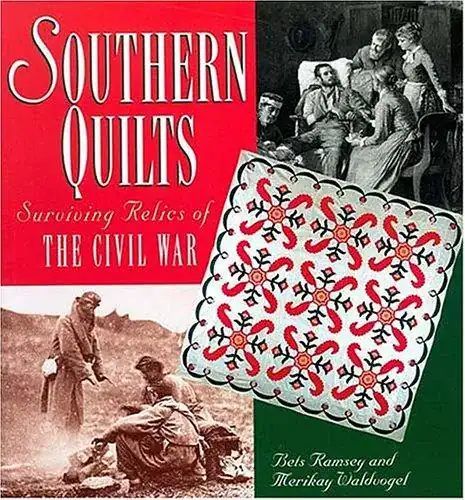
- Civil War-Era Quilts and Fabric Supply — Members debate whether cotton fabric shortages during the Civil War affected quiltmaking, trading soldiers’ letters and museum sources as evidence. (see the article on a Civil War quilt)
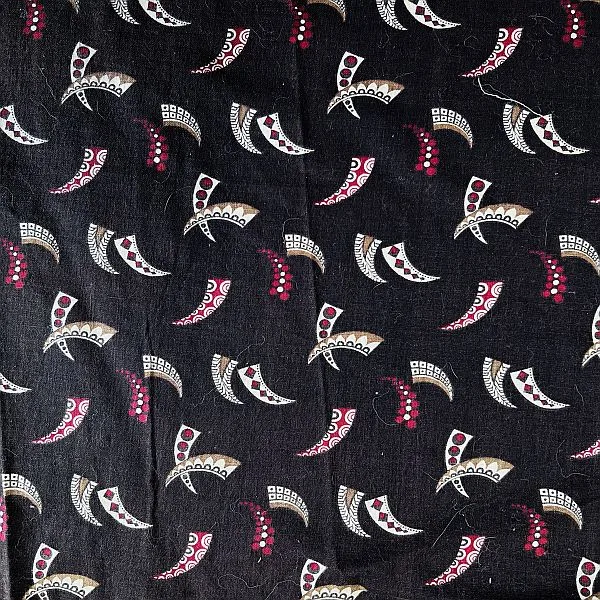
- Removing Fugitive Dye for Restoration — Restorers compare methods (including a commercial Fabric Fade product) for safely fading or removing dye from antique fabric during conservation work. (see the article on natural dyes)
- Applique Double Wedding Ring Provenance — A member’s find of an appliqued Double Wedding Ring quilt sparks a discussion of historical applique-construction variants of the pattern, citing a 1931 Ruby McKim reference.
- Homes for Quilt Collections — Members share ideas for museums and institutions willing to accept donated quilt and feedsack collections, including the International Quilt Study Center and the Shelburne Museum.
- Origin of the “Clay’s Choice” Block Name — A thread traces the naming of the Clay’s Choice quilt block to statesman Henry Clay, reportedly after he judged a 19th-century quilt contest.
- Quilting Frame and Repair-Pricing Questions — Members trade advice on sourcing a larger quilting frame and on typical pricing for simple quilt repairs and binding work. (see the article on quilt restoration)
Date: Mon, 8 Jan 2001 22:48:50 EST | From: KRONEIL@
RE: Animal hides. I can completely understand what that Union soldier was thinking when he used sheepskin. I used to work for an importing company from NZ and purchased through them a 4 part sheepskin hide rug that was just way too beautiful to ever put on the floor, I draped it over the back of the couch. When I was later employed as a Residence Hall Director for a VERY small college, during Xmas vacation when the “kids” went home, they turned off the heat in my entire building. I had no place else to go so I made due with space heaters in the day, but at night, I don’t care how many quilts I had (even my wool backed in flannel one) it was just plain cold. That is until I took my sheepskin and placed it over my bed. Never had a moment of discomfort the whole time. Nowadays, we use them as bedding for our sleeping bags when we go tenting. RE: Brethren quilts. I work for a local Brethren church and I told my boss, the Pastor, about the notes we’ve been posting about what determines an “Amish” quilt. I also mentioned that someone had posted something about being able to see “Amish/Mennonite/Brethren” quilts. I don’t remember if this was a website or a museum display. If any one remembers this listing, please e-mail me privately so as not to clog up the works. The Pastor is interested because he cannot fathom what would be considered a “Brethren” quilt in particular, especially since these Brethren women are known to quilt at the drop of the word “disaster.” Thank you for your time and patience. Again, my apologies for AOL V.6. Patt in Olympia
Date: Tue, 16 Jan 2001 07:16:37 -0600 | From: Jocelyn <Jocelynm@>
Our guild meeting was last night, and here are the answers from Barbara: No, she knows nothing specific about the Boston Sanitation Committee and its making quilts for soldiers. Her suggestion was to check newspaper archives from that time, for notices about meetings, etc. Blocks with historical names cannot be assumed to have come into use at the same time as the historical event. The example used in her talk was the Underground Railroad block, which she says she has been unable to trace to use prior to the Civil War (about 50 years after the heyday of the UGRR). She knew nothing specifically about Clay’s Choice. The only written source she has found about quilts and the UGRR, is one specific case, here locally in Kansas. Lawrence was the freestate town, and nearby Lecompton was the slave state capital. A slave who escaped a master in Lecompton headed for Lawrence, and came up with the plan of waiting by the side of the road for a ‘kind person’ to come along and help her. This, as you might imagine, was a pretty risky plan- assuming you could recognize who was a kind freestater just by looks! But she was successful- perhaps because she decided that a passerby who was reading as he traveled must be from Lawrence (well, it’s the home of the University of Kansas!). He went home and got a wagon, and transported her to Lawrence…under a quilt. That’s it. No signals, no black-centered Log Cabins, nothing. Just used the quilt to cover her up in the back of the wagon. This comes from his account of the story, not hers. After she made it to Canada, she did write and tell him, but they did not keep in touch after that and local historians don’t know any more about her. Cotton quilt fabric was in common supply in the North during the Civil War. There was not sufficient shortage that the practice of making a quilt in the 1860s out of exclusively pre-1860 fabric would have been a widespread practice (although, of course, anything might happen in one particular case!). In the South, though, cotton quickly became unavailable, and sources document the recycling of fabric from household decorations into clothing- Margaret Mead wasn’t making anything up when she had Scarlett O’Hara wearing the drapes. There are also very few quilts that survived from the era in the South. It’s possible that they were made, but destroyed at a faster rate (used until worn out instead of preserved). However, it’s more likely that quilts simply weren’t made. Backing fabric wouldn’t have been available (old sheets were being diverted to war use) so a woman would have to have huge quantities of small scraps (too small for clothing construction) just laying around at the beginning of the war, to be able to piece both the top and the backing. Even if a woman had 15-20 yards of small scraps, she might be diverting her time into making shirts for soldiers, rolling bandages, etc. Regardless, though, she doesn’t believe that any quilt should be dated so precisely, in the absence of hard evidence. If she were to see a quilt with only c. 1850 fabrics in it, she would date it as c. 1850-1875 anyway, because of the frequency of quilters using ‘old’ fabric, or taking a long time to finish a quilt. In the absence of evidence, she would consider it just as likely that someone started the quilt in the 1850s, and didn’t get around to quilting it til later, as that someone pieced and quilted a quilt during the Civil War, exclusively from pre-Civil War scraps, because they couldn’t get new fabrics due to the War.
Date: Tue, 16 Jan 2001 08:12:36 -0600 | From: “Karen S Bush” <birdsong@>
As soon as I get back from enteraining UNEXPECTED company (again)…I’ll dig out my great,great Grandmother’s ‘will’ and what she was leaving. Very interesting. Kind of sad,too. The men left land/property/homes….the women left a quilt, etc….but I Will get that out and probaly type into a post, I don’t think it would scan very clearly. 🙂 kb www.karenbushquilts.com I Brake for Rainbows Member of TAS-The Applique Society Ebay seller name- karenbush http://cgi6.ebay.com/aw-cgi/eBayISAPI.dll?ViewListedItems&userid=karenbush
Date: Tue, 16 Jan 2001 09:35:29 EST | From: JHACALA@
It’s been awhile since this topic has been discussed. I would like to know what people charge to do simple quilt repairs and bindings. I usually charge $15.00/hr. for repair work, but that gets rather expensive when spending over 10 hrs. doing a binding for someone. (Especially when you have to make your own binding). Any thoughts on this? I also want to know the best way to get cigarette odors out of a quilt.
Air it outside or fluff it in the dryer on low? Is the cigarette smell ever completely gone??? Thanks for your help, Julie Hacala
Date: Tue, 16 Jan 2001 12:30:23 EST | From: Baglady111@
I had posted a mesg previously on Quilter’s Bee as to my concern as to where I would ‘leave’ my feedsack collection in the near future. I am not the only one facing a decision such as this as there are many out there that have pieces, items of historical importance..and WHERE is a serious decision..the below mesg came from a member of QB..and then triggered a suggestion from LAURETTE to post it here for added input…all thoughts/ideas are most welcome. my original post . Jane here is a prime example as to why I ask..WHAT DO YOU DO WITH YOUR HISTORICAL QUILTS/ITEMS.. I had written a lady who sent me some info and I am trying to be careful here in divulging too much identity…but here is the gist the subject is feedsacks..feedsacks that carried millions and millions of pounds of flour to BELGIUM back when Germany invaded that country. We thought that if we starved the Germans out of the country, they would leave..so a blockade was set up..well, all this did was to starve the Belgians…so, our country and MANY others supplied them with flour.. Many of the people used the bags just as we did..for clothing, household items, and many were embellished upon..with magnificent needlework..beads, laces (and we all know the wonderful laces that came from BELGIUM..and the marvelous needlework of these people).. Well, many of the people wanted to thank your country for the lives saved from starvation..so some of the bags found there way to America..and some are housed in museums here in the United States.. A member of THE FEEDSACK CLUB was instrumental in having a book written about this era entitled OUT OF WAR A Legacy of Art. I recently wrote her asking for some info and here is what I have in reply At the time we were working on the book we could not believe the unconcern of the director of the Museum. This needlework is priceless, really jewels., There is a lot of it, it is carefully stored (NOTE THAT????? CAREFULLY STORED ), but it has been ignored, and the only attempt to do anything about it was thru the efforts we did with the book. The director and the gift shop would rather sell pencils and T shirts than promote the book. They do admit taht the most inquiries they receive from visitors is about the flour sacks… So, now you know why I have concern as to WHERE will my collection rest? If the curator/director/ has no interst in the item (s)..what will happen to them?? Does anyone recall Jackie Kennedy when she entered the White House? She went into the attic and was APPALLED at the furniture from many many presidents ago….carelessly stacked, one piece on top of another..causing scratching, unnecessary weight being placed on fraglie pieces of furniture…treated as you would old furniture tossed into your basement/garage/or worse..chairs that ADAMS, TAFT, HARRISON, and soooo many others sat on, desks they used, beds, on and on..and one wonders..WHO WOULD YOU EXPECT TO TAKE CARE OF THESE HEIRLOOMS??? WHO DO YOU TRUST!!! I made an offer to a museum in a particular state..that I would donate the entire feedsack collection that I own to them..and do you know what I was told?? NO THANKS, WE HAVE ENOUGH!!!!! I was left with my mouth hanging open… Now, I don’t know if they have a WALT DISNEY “CINDERELLA”, or an “ALICE in WONDERLAND”, possibly a ‘DAVEY CROCKETT’, or a ‘MICKEY MOUSE, GOOFY, & DONALD DUCK’ all three characters on one sack..or a large portion of the quilts/clothing made and entered in the NATIONAL COTTON COUNCIL CONTEST back in the 50’s..plus the paperwork that I purchased from the woman who entered… or a WWll feedsack decorated with so much memoribilia (IWO JIMA, PEARL HARBOR, BATAAN, ROOSEVELT/CHURCHILL/STALIN, HITLER/MUSSOLINI/HIROHITO , THE FLYING TIGERS and soooo much more…symbolism that many of us recognize from that era but will be lost to future generations.. No, I do not know if they have any of these..BUT at the same time, THEY NEVER ASKED ”what did I have???” HMMMMMMMM!!!!!!!!!! Jane of THE FEEDSACK CLUB.. this is a reply to the above post Who originally printed the feedsacks? They may have a museum. I know you are in Pittsburgh. The museum there may not want them, but may know who might want that type of collection. There are textile museums in Massachusetts, I think, also. >> Thanx, Terri good thoughts/input and worth checking into..one of our noted members contacted alot of the manufacturers when doing research on her book on feedsacks, and it was unbelievable the dis-interest..because they have converted over entirely to plastic, most of the people left in these companies are a much younger generation, MUCH LIKE MY KIDS, who have no interest in what is involved. Altho, I will say that one manufacturer, who did not show much interest previously, was sooooo amazed at what we had started by having a seminar for several years running in the town named for the company and having a factory there, saw this response from the local people and are now taking an active part in the community..one can always hope. There are serious issues for collections and great consideration must be given.. Quilters today are buying newly made fabrics..it is hard to think that 50 yrs from how, what they are using today, would have some significant value at that time. So just imagine what I am working with..fabric that is ALREADY that old and 50 yrs from now will be of even MORE value..Feedsacks are waaaaayyyy ahead today..the fabrics made today may differ in print/color/size/texture 50 yrs from now, but these type of fabs will continue to be manufactured. Feedsacks WILL NEVER be manufactured the same way again.. Prime example is what HAD been mfg’d several years ago by a company who is no longer doing it . colors were nice but NOTHING like the original. patterns well selected BUT THE TEXTURE WAS NOT THE SAME. altho, those that were made are now collectable too..so what I am involved with in feedsacks, is highly specialized..and it is a concern.. Jane
Date: Tue, 16 Jan 2001 08:34:45 -1000 | From: quilts@
Perhaps it’s time for the “ladies of the list” and other interested parties to start gathering support from quilters throughout the US to start a USA Quilt Museum that will house and display these fine collections. There must be those on the list already involved with museums and aware of grant money/matching funds available and art and other foundations/companies with available funds. There is so much talent and information and research done by those here and by those known by the “ladies” that it would be a shame to waste it. And as with so many or our national resources it would be a shame to lose these collections. I remember posts about historical quilts on Ebay going out of the country to the highest bidder. I would imagine that most, preserving quilts and acquiring personal quilt collections, would be glad of somewhere, as “Baglady 111 – Jane” queries, to leave these collections where someone cares and will care for them. Where they will not be stored in a back room, but displayed from time to time to impart their wealth of our history and the women/men who created them. Big project, but something to ponder…could this be the true mission of “the list” unfolding? Elizabeth
Date: Tue, 16 Jan 2001 13:42:14 EST | From: [from unknown]
maybe the block.. clay’s choice.. was named after henry clay Clay, Henry (1777-1852), American statesman, who was secretary of state under John Quincy Adams and an unsuccessful candidate for the presidency in 1824, 1832, and 1844. He was one of the most popular and influential political leaders in American history. His genius in the art of compromise three times resolved bitter political conflicts that threatened to tear the nation apart, winning him the title The Great Pacificator. jean l
Date: Tue, 16 Jan 2001 14:06:17 +0400 | From: Xenia Cord <
The International Quilt Study Center, housed at the University of Nebraska at Lincoln, already has a fine start on being a “USA Quilt Museum” – they hold a spectacular collection of over 1000 antique quilts, art quilts, African-American quilts, Amish crib quilts. These are archivally stored in climate controlled space, and a selection is on exhibit somewhere most of the time. They are so successful that additional storage and exhibit space will be the next major funding issue. http://ianr.unl.edu/quiltstudy There is also the Museum of the American Quilter’s Society, and the New England Quilt Museum, and the Museum of American Folk Art, and the Smithsonian Institution. Maybe what we need is a FAQ page listing the requirements for donation to various of these museums? Xenia
Date: Tue, 16 Jan 2001 13:01:19 -0600 | From: “Susan Wildemuth” <ksandbcw@>
Here’s an idea for individual/groups to contact for possible museums who might be interested in your quilt collection items:
American Quilt Study Group 35th and Holdredge, East Campus Loop P.O. Box 4737 Lincoln, NE 68504-0737 AQSG2 [at] unl [dot] edu If they can’t help, they might be able to point you in another direction.
Date: Tue, 16 Jan 2001 15:55:53 -0600 | From: RICHARD STISH <
I am interested in some information on W.C.T.U. quilts and what particular patterns where, if any, made at that time, If someone has any reference that I could look up I would appreciate it very much. Dorothy Stish
Date: Tue, 16 Jan 2001 17:48:55 -0500 | From: “John Cawley” <cawley@>
Is there a catalogue of this exhibit of the Montana quilt project Cinda on the Eastern Shore
Date: Tue, 16 Jan 2001 18:27:24 -0500 | From: Newbie Richardson <pastcrafts@>
Just came back from the most fabulous two days at the Williamsburg Institute on “Textiles in the Home”. Among the presenters was Lynne Bassett – what a treat! We had some discussion on this list some weeks back about fur bed covers. Lynne sited a c. 1770 quilted silk bed cover ( ordered “ensuite” with hangings and cushions from London.) In the order, the gentleman specified that no lining was needed as they were going to line it with fur. She had a slide of the quilt – sans fur now. I think she said that it was at Old Sturbridge and originally came from
Massachusettes – but don’t hold me to that, I wasn’t taking notes. Newbie Richardson, brain dead form all the info I have to absorb!
Date: Tue, 16 Jan 2001 19:06:15 EST | From: AndreaBlackhurst@
I remember reading (don’t know where) that Henry Clay was asked to judge a quilt contest. The winner became “Clay’s Choice”. Andrea
Date: Tue, 16 Jan 2001 20:32:20 EST | From: @aol.com
Another museum with a superb collection of quilts *and* the money to take care of them is the Shelburne Museum up in Vermont. It was endowed by a Vanderbilt and has the sense to keep the quilts in a properly lit, climate controlled building (and rotate the collection on a regular basis). I don’t know if they’re still acquiring quilts or accepting legacies, but they sure do a nice job with what they have. More museums with quilts and expertise: Old Sturbridge Village in Massachusetts, Winterthur in Delaware, the Abby Aldrich Folk Art Collection (either New York or Washington), the Cooper Hewitt Museum in New York City, and the Wadsworth Atheneum in Connecticut. There’s also a Museum of Women in the Arts in Washington – they’re fairly new and would probably love a well documented collection. Karen Evans
Date: Tue, 16 Jan 2001 22:41:49 -0500 | From: “J. G. Row” <Judygrow@>
>Another museum with a superb collection of quilts *and* the money to take >care of them is the I think Karen hit the nail on the head with the statement above. It takes money, and lots of it, to run a museum — to provide proper storage,
display, cataloging, and access for scholars. Go into the storage area of any large museum, and you will see 5 times, 10 times, 100 times the amount of holdings than are on display. There comes a point where, unless the item being donated is truly one of a kind and the best of its kind, donations must be declined. I’ve probably written about this before…..Back in the ’70’s when I was researching my first book I spent time in the basement (truly) of the Essex Institute in Salem Mass. There were 2 samplers on display to the public, and they were the best and the earliest of the entire museum, actually one was the first documented made in this country. Downstairs, in a cabinet of drawers which stretched at least 16 feet and was over 6 feet tall were hundreds and hundreds, perhaps thousands of early American samplers. Very few of them were ever going to go on display, if any. I was able to spend a day going through the drawers and studying patterns and designs. It took money to build the storage case and to continue to heat, cool, humidify, or dehumidify that room, and to provide access to thecollection for researchers. Walking through the basement to get to the samplers, I passed through a huge room with shelving units along the walls and out into the room. All those open shelves were filled with leather fire buckets. Perhaps one, maybe 2 were on display upstairs. How many leather fire buckets would you display? My suggestion to anyone who wants to donate their collection to a museum and doesn’t want to be turned down? Set up a trust fund to provide for their storage, display, and cataloging. Even then, if what you are donating is just an encyclopedic collection of everyday items perhaps they don’t belong in a museum. For Jane specifically, it couldn’t hurt to try the Philadelphia College of Textile, (which might have changed its name this year) or F.I.T. in New York. What you are trying to donate is textile graphic design, which happens to be on textiles of a certain size and weight, made in a certain time period. It is like a giant swatch collection. And a place that specializes in textiles before they are “made up” might show some
interest. Judy in Ringoes, NJ judygrow [at] rcn [dot] com