July 22 – 25, 2003
This page contains affiliate links. If you buy through them, I may earn a small commission at no extra cost to you. As an Amazon Associate I earn from qualifying purchases. Learn more
These restored messages come from the Quilt History List, an online forum where quilt historians, collectors, researchers, appraisers, and enthusiasts discussed antique quilts and related textiles. The archive dates from 1996 through approximately 2016 and is being restored gradually. Sign up in the form at the bottom of the page if you want to know when a new page is added. Original spelling, opinions, formatting, and inactive links may remain unchanged.
Primary topics of this QHL Digest:
- Bias Tape Quilt Patterns — A member seeks vintage bias-tape quilt patterns, prompting others to point to a rainbow bias-tape pattern posted on the QHL E-board. (see the article on bias tape applique)
- Fabric Chain Lines & Wal-Mart Fabric Quality — A discussion of manufacturing “chain” lines in yardage and the varying quality of fabric sold at big-box retailers like Wal-Mart, including comparisons from a member in Israel.
- Cathedral Window Pattern History — Members trace the Cathedral Window pattern’s documented history, including Brackman’s dating of it to 1933 in Aunt Martha’s.
- Stonewall Jackson Quilt & Guild Photos — A member plans to photograph a large Stonewall Jackson quilt at an upcoming guild meeting for the group.
- Sewing Machine & Textile History Research — Early discussion questions about historical sewing-machine manufacturers set up the more extensive sewing-machine history thread that continues in the following digest.
- Embroiderer’s Story & Fabric Manufacturer Research — A member reviews a library book on the history of embroidery, and another researches a historical fabric manufacturer’s mark.
Tags: Quiltmaking Techniques & Construction, Quilt Dating, Fabric Identification
SEO meta description: A QHL digest spanning July 22–25, 2003 (a misfiled batch of messages captured under the site’s July 2000 page numbering), covering bias-tape patterns, fabric quality debates, the Cathedral Window pattern’s history, and early sewing-machine history questions.
Date: [date unknown] | From: Ady Hirsch
>Wal-mart occasionally has some top-line fabrics, in and among the >near-gauze. > > Living in Israel, Wal-Mart and Joanne’s are out of my reach, so I buy all my fabric in on-line stores. When I look at my extensive collection of repro fabrics (12 years’ worth), I have to say that some fabrics, bought at full price from reputable quilt-stores, are so thin that, as a quilter friend once put it, “I can spit through them.” These all come from well-known manufacturers. Some of the earlier RJR Smithsonian lines are notoriously thin, for example – not my idea of top quality greige-goods [sp???]. I recently bought on-line some beautiful mid-19th century repros from a well known designer, produced by a very well known manufacturer – they’re so thin I cannot makr them accurately, they shift so much. Just thinking what they might look like a few years from now, I’m afraid to use them. Other fabrics, bought at discount internet stores, are much nicer and have a better “hand”. I suspect the blame should be placed at the manufacturers’ door, and frankly, I have a hard time buying the theory of different greige-goods for different kinds of stores (i.e. superior cotton for higher-end stores, inferior for chain-stores). Just my 2 cents’ worth… Ady in Israel PS – anyone noticed that fabric is no longer 45″ wide? It’s anything from 40 to 42″. Not much, but when you work out that a bolt has 25 yards, and multiply that by the number of bolts produced, the result is – how shll I put it? an eye opener?
Date: Tue, | From: “Jean Carlton”
Hi everyone. I am interested in bias tape quilt patterns and I know there was considerable discussion some time ago- but the archives are not allowing me to ‘search’ for those posts. Is it my computer or is the search function ‘down’ at the moment? Anyone remember about when that was?
Jean Carlton
Date: Tue, 22 Jul 2003 | From: ARabara15@
Hello All, Does anyone have an extra copy of the New Jersey Quilt book that they are interested in selling? Or does anyone know where I can get one? It seems rare and hard to find. Thanks,
Donald Brokate Trenton, NJ
Jean, Karen Stone has a pattern that uses bias tape. Sharon Newman
Date: Tue, 22 Jul | From: jocelynm@
I suspect the blame should be placed at the > manufacturers’ door, and frankly, I have a hard time buying the theory of different greige-goods for different kinds of stores (i.e. superior cotton for higher-end stores, inferior for chain-stores). Just my 2 cents’
Ady, I don’t think the manufacturer is the one that specifies where it goes, but the buyer for the store. Most quilt shops won’t mess around with ordering fabric that’s not of finest quality, because they know that’s why we shop there! The Ginny Beyer lines used to be cheaper griege, I think because RJR knew that they would sell because of the beauty of the designs. I had an owner tell me that she had returned some RJR because it was too gauzy and told them not to bother sending her trash like that again. Sometimes the identical bolt of fabric is for sale at the quilt shops and at Hobby Lobby or Wal-Mart here. I think it’s just a matter of the buyers for the less-pricey shops choosing to buy cheaper fabric they can sell at more of a discount to those people who don’t care, or for purposes where it doesn’t matter.
Jocelyn
Date: Tue, 22 Jul 2003 16:40:38 -0400 | From: Joan Kiplinger
Ady — as Joycelyn says, chains exist on second lines both for turnover that is required for their bottom line profit and because they are not permitted by manufacturer to sell first line at discount. Mary Englebreit prints are a perfect example; you can tell the immediate difference at Joannes where it is second line and about $5 cheaper and at better stores where it is first line and more expensive. However, chains will often buy a good sub-brandname from a manufacturer which while of lesser quality is still good quality cotton strain, often only a difference of carded vs combed. I’ve notice Joanne’s has been upgrading fabrics in its quilting section and home decorating with these better quality secondary and even top brandnames. Maybe the message is finally getting through.
Date: Tue, 22 Jul 2003 16:12:38 -0500 | From: Gary Parrett
Hello to you all,
I am one of those who reads qhl almost daily and enjoys learning from all of your accumulated knowledge. I recently purchased a quilt, 91 ” x 77″, (it was in one of those craft and antique shops, no provenance, and was priced very low) which is made up of 3″ squares of three – 1″ stripes, alternating chambray blue, white shirting print with very small black figures, and another stripe of chambray. The squares are set together so stripes are vertical in one square, with the square next to it set with the stripes horizontal, and they alternate in that pattern over the quilt top. There is a 3″ border of chambray around the pieced squares. The pieced squares are set together 22 by 28, so in total there are 616 of these little blocks, and it is all sewn by hand, even the long border strips.
She even sewed the binding on by hand, even where it is pieced together. The back is made of long panels of white cotton. (She used a machine to sew them together – Whew!) The quilt is tufted in the joining corners where the squares meet. The maker must have used a cotton crochet weight thread to tie through the quilt, then added 1″ pieces of white yarn to form little white puff balls over the top of the quilt.(667 little puffers) It is so cute and in very good condition with a few exceptions. The batting has congregated in little round balls in the corners and on the inside edges of the borders and is most obviously wool (according to my stuffy nose). I would like to replace the wooly batting balls with a good batt, and refinish the quilt as it was with the puffy tufts. There are only five minor, very small stains, which I am not really concerned about, but there are a few very small holes in the shirting print, maybe three or four that I have found. By small, they are 1/4 to 1/2 inch max. in size. I would like to stabilize these few spots while I have the quilt back off. What are your suggestions?
Karen
: thoughts about Courtesy Cloth
Judy — I haven’t seen Sharon’s reply but I will offer this thought about Courtesy Cloth. Cancel it if Sharon has IDed it. First, the name brought a smile — it’s a common term for men’s loin cloth which of course has no bearing here. Possibly this fabric is distressed merchandise, yardage leftover from the cutting rooms which manufacturers and finishers regularly dump on OTC through jobbers, agents or direct sales, and mill overrruns. Somewhere along the way yardage can be attractively packaged and/or labeled for marketing purposes or left as a flat fold. Another possibility is that sometimes inventory can be extensive of a fabric which didn’t sell originally as RTW so it is renamed and sold until the bolts run out. I’m sure you’ve all seen those special sales of “fabric from a famous manufacturer whose name we cannot mention but you would immediately recognize….” These would be sold by better department stores in their fabric sections, even in Sears or Wards catalogs. Lower quality would be found at dimestores, discount chains like Newberrys and department store basements. My favorite buy was at Newberry’s in the early 70s — 3 yds/$1 wrapped in a band labeled Royal Prints-ess, colorful 80 sq percale. Sharon — if I missed your post, what was it? As I said, these are just thoughts about random fabric labeling.
Date: Wed, 23 Jul 2003 | From: QuilterB@
As part of our ongoing documentation of the quilts found in the Rochester Museum and Science Center, we have found a very unusual quilt which until last night I had never seen before. It appears to be felted wool pieced with tiny stitches like English paper piecing, except that it is made up of 7 elaborate pictoral scenes from the Old Testament. There is a very small amount of embroidery and some painting. We had guessed it was German (and Jewish) in origin from the family name (Leiter) and found out yesterday that it had been donated by the granddaughter of the first rabbi of a local Reform Temple. He migrated to the US in 1860. This local Temple had requested the loan of this piece for a three month exhibit. Two women had come to see it who are also docents at the local Memorial Art Gallery and said that the clothing on the figures was definitely 1700’s but they knew no more and also guessed that it was German.
I was going through some of my historical quilt books (for another reason) last night and came upon “The History of the Patchwork Quilt” by Schuppe von Gwinner (Schiffler) which describes this type of quilt on pages 61 and 62. This book indicates that this type is very rare and cites three examples (two in Germany and one at V&A). We are asking the Museum to get it up on the web site soon. My question is: Has anyone come upon this type of quilt or know anything about this type of patchwork? I figured if anyone knew anything, this list would!
Beth Brandkamp (look for me – if I made through editing — on episode 922 of Simply Quilts this next season)
Date: Wed, 23 Jul | From: @aol.com
There are also some examples in Janet Rae’s =Quilts of the British Isles.= I’ve seen it referred to as “intarsia patchwork.” The technique is very old – Kay Staniland’s =Medieval Embroiderers= has pictures of an English example from the 13th century and a couple of Swedish examples from the 15th century.
That’s quite an unusual piece, both because of its technique and because there are very few 19th century Jewish quilts. Could you let us know when the picture is up on the web site? I’d love to see it.
Karen Evans Easthampton, MA
Date: [date unknown] | From: “Pam Weeks Worthen”
The Maine Quilt Festival, hosted by the Pine Tree Quilters (State-wide quilt guild) is this weekend, July 25-27, at the Augusta civic Center, Augusta, Maine.
There is usually a wonderful room full of antique quilts put together by Wendy Reed and Cindy Black, as well as an auditorium full of contemporary and traditional quilts and of course, vendors.
Will I see any of you there? Bonnie Dwyer and I are doing the appraisals, so if you are coming, follow the signs for the Appraisal Room and have a visit. Hope to see you! Bonnie is bringing her digital camera, so if we get permission, maybe we can send along a full report!
Pam in NH where it’s muggy and rainy and it feels like a puddle of heat.
Date: Wed, | From: “Barbara Vlack”
Does anyone know anything about the history of this quilt pattern? I heard from a dealer that he thinks this pattern was not made before the 1950s. I just bought one that looks like 30s colors to me, buttons sewn at the intersections, some diamond quilting on the border, dusty gold and light purple solids.
Barb Vlack cptvdeo@
Date: [date unknown] | From: “Candace Perry”
Barb…I rarely can provide input on these type of questions because I am not exclusively “quilt-y” …however, one of our volunteers has a history of the Cathedral Windows pattern in her family. She herself has made a magnificent one. She did tell me she has pillows in the pattern made by an older member of her family, and I will check with her tomorrow when I see her to find out when she thinks they were made (she is around 70). I’ll post the answer tomorrow! Candace Perry Schwenkfelder Library & Heritage Center
Date: [date unknown] | From: Gail Ingram
This quilt raises a question that has long interested me, whether Jewish immigrants–particularly those who settled in small towns and areas where quilting was popular and where cross-cultural contact was essential—became quilters and, if so, whether they incorporated European and distinctively Jewish elements in their quilts.
Is there research that addresses these issues?
I know several Jewish families who came into small Southern towns in the late 19th and early 20th century whose descendants quilt, but their quilts are indistinguishable from others produced in their communities. I believe this is also the case with the quite large Jewish population that settled in the Mississippi Delta during the same time period and became either prosperous merchants and, in many cases, eventually large landholders and farmers. I assume the experience of Jews in the hinterlands would differ from that of their city relatives, who tended to form communities of their own.
Can anyone recommend a book on Jewish needlework traditions?
From the hills of Louisiana where one needs a machete to cut her way through the heat and humidity, Gail
P.S. Don Beld, we’re waiting for you to post a photo of your Stonewall Jackson quilt.
Date: Wed, 23 | From: jocelynm@
I first saw a Cathedral Windows in about 1970. My mother had a brother who was 20 years older than his siblings, and his wife was making one. All the SILs kept kidding about ‘She’s making it for me.’ ‘No, she’s making it for ME!’ One day, a package arrived at our house, and when my mother opened it, it was the Cathedral Windows. She sat down on the porch steps and cried. 🙂 She still uses it on her bed. I’ve heard it dates to the 1950s, but every book I’ve seen that shows how to do it is c. 1970. Jocelyn
Date: Wed, 23 Jul | From: Slnquilts@
There is a book Called The Work of Our Hands, which is all Jewish handwork.
Date: Wed, 23 Jul 2003 | From: Midnitelaptop@i borrowed this book from the library..The Embroiderer’s Story by thomasina beck…. the history of embroiderers and their embroidery…it begins in the Elizabethan era and ends in the 1990s…. it’s wonderful reading…i had to stop reading last nite after midnite….but i really didn’t want to put the book down… i read about Mary queen of Scots who in the year 1569 began fifteen years in the custody of the Shrewsbury’s…Bess the earl of Shrewsbury’s wife and Mary spent many hours together doing needlework. in fact the word worke (old eng. spelling) was the term used for needlework….before it became needlework… i learned things like how great it was to have access to a sharp needle and shears…..sewing tools i never gave much thought to their not always available… women shared herbal pictures, used them for tracing and pouncing designs… just the way we now share patterns and ideas…
if you get a chance to read this book, take it…it’s so much fun reading about how “we” started on this wonderful journey of stitches… tonite….right after i finish watching the Wives of Henry VIII on PBS… it’s on to the Stuart embroiderer…and then to dreams of samplers and petticoats. jeanL
Date: [date unknown] | From: “Julia D. Zgliniec”
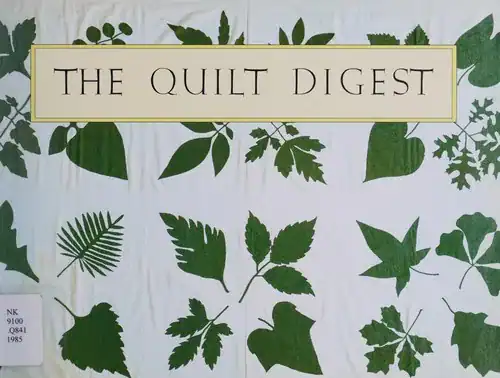
Dear Gail and QHL, You can read about just such a story in the first vol. of The Quilt Digest by Kiracofe and Kile, 1983. The Reiter Quilt: A Family Story in Cloth by Julie Silber begins on pg 50.
The Quilt Digest was a wonderful publication with 5 vols as I recall.
Regards, Julia Zgliniec
Gail Ingram wrote:
> This quilt raises a question that has long interested me, whether Jewish > immigrants–particularly those who settled in small towns and areas where > quilting was popular and where cross-cultural contact was essential—became > quilters and, if so, whether they incorporated European and distinctively > Jewish elements in their quilts.
Date: Wed, 23 Jul 2003 | From: Edwaquilt@
Don’t over look the old McCalls pattern that used bias tape in a rainbow pattern almost like Drunkards Path. It has 3 or 4 rows of bias tape to make the rainbows.
Holice
Date: [date unknown] | From: “judygrow”
Dear friends,
Kris Dreissen has kindly put photos and commentary of our last Studio Study Group meeting at the Burlington County Historical Society Museum on the quilt history/study group site.
http://www.quilthistory.com/study/July12.htm
Especially look at the photo of the group looking at the hung quilts. You will be able to see some of the other quilts just peeking out on the right side on their sliding panels. Can you identify anyone in the photo? Seeing us all from the rear may not be the most flattering view, and for that I apologize.
I hope you enjoy reading about our day there, and seeing some of the quilts we saw.
I have sent Kris all the information on the reproduction of the circa 1850 quilt we are making, including the file in EQ 5.
“Ours” is number 2376 in Brackman, and there it has 4 names — Economy Patch, Hour Glass, Thrift Block, and This and That. Be sure to click on the thumbnail to enlarge the photo.
I did make a “quiltlet” using the measurements from the original quilt, but I used only 20 pieced blocks instead of the 169 in the original. My colors are also entirely different!! (I used black and solids.) I just did this one as an example, to make sure any info I gave out would work.
Judy in Ringoes, NJ judygrow@
Date: Wed, | From: Donald Beld
I am going to take digital photos of the Stonewall Jackson at my guild meeting on Friday morning–It is too tall to hang and photo at my home, and I will post them Friday afternoon if I am smart enough to figure out how. Kris, can any idiot (me) post to your web site? Thanks all of you for wanting to see it. Don Beld
Date: Fri, 25 Jul 2003 09:30:31 +0000 | From: “JG Kane”
Hello,
Joan said in her reply that much cotton fabric “while of lesser quality is still good quality cotton strain, often only a difference of carded vs combed. “, which made my ears prick up.(eyes open ?<G>).
Could you please elaborate on this for a dim Brit?
I had the great fortune to have a private tour of the oldest privately owned card clothing mill last week – James Holdsworths at South Brook Mill in Mirfield, Yorkshire. Mirfield. Mirfield, on the edge of Huddersfield developed around mills, and this firm (started) 1790 is in a wonderful old cotton mill. They make card cloth for all types of manufacturing , and export to 30 different countries. I saw the finest of fine, tiny teethed cloth, that almost looked like velvet and was used for carding cashmere – incredible that metal could look so delicate. There were strong, fearsome looking cloths for carpets, …….and, always needing new markets in a world of change, widely spaced, long ,needled, cloths that are exported to France to put the holes on paper to ventilate baguette bags! The cloth is made of multiple layers of linen bonded together until the thickness required for the strength of cloth. Precision machines, feed wire in, cut the length required for the specific ‘needles, bend it, and then push it through the band of cloth at precise angles, and with precise spacing.Any lack of precision would give an irregularity that would damage the cloth it ultimately carded. It is therefore a slow process, and the small machines were trundling away, gleaming, and richly oiled, so they didn’t overheat as they ran for hours clacketting out their particular cloth. The lengths are checked by women, as cloth is, and any faults are rectified by them, by hand, extracting particular ‘needles’ and replacing them by hand. The checking room was at the top of the building, huge and long like th others, with each woman’s table in front of a high mill window, to get maximum light. The most expert checker and finisher was a lady who originally was a cloth checker in a cotton mill. The cloth is finally completed by being ground and each needle sharpened as the cloth,seamlessly wound around a drum as it will be in the mills, is burnished by the grinding drums.Sparks fly!
I was so mesmerised by the machines and the processes, that I didn’t ask anything about carding V combing! Sad to note that a firm that when it moved to these premises in the 50’s would have had difficulty meeting the needs of the immediate area and now the mills are nearly all gone. India, Patagonia, China, Australia, N.Z.,Canada, are some of the destinations on the packing cases we saw -all specially made and sealed to prevent any moisture that would ruin the product.Water is their enemy!
I do hope my rambles aren’t too off topic for the list. My apologies Kris if I’ve boobed.
Jill, blushing, in Leeds. U.K>
Date: Fri, 25 Jul 2003 04:10:13 -0700 (PDT) | From: Dana Balsamo
Hi Barb, Usually you can search RN #s here:
http://www.ftc.gov/bcp/rn/rn.htm/
But nothing came up in the query…maybe you can contact the FTC w/ the # directly?
Hugs, Dana
Quilt History List digest <qhl@> wrote: QHL Digest for Thursday, July 24, 2003.
- bias drunkard’s path photo 2. RE: Cathedral Windows 3. Stonewall Jackson 4. Re: Stonewall Jackson 5. rainbow bias 6. Deerfield update 7. Windows 8. NC Quilts 9. Singer Sewing Machine History Link 10. RE: Cathedral Windows 11. Cathedral Windows 12. Oh dear, what a dummy! 13. Re: Oh dear, what a dummy! 14. Re: Oh dear, what a dummy! 15. Re: bias tape quilts photo 16. Re: Marion Cheever Whiteside Newton 17. HGTV Quilt History Show 18. Re: thoughts about Courtesy Cloth
Date: Thu, 24 Jul 2003 00:18:27 -0400 | From: “judygrow”
>Don’t over look the old McCalls pattern that used bias tape in a rainbow >pattern almost like Drunkards Path. It has 3 or 4 rows of bias tape to make the >rainbows.
>Holice
If you go to the following address….. http://www.quilthistory.com/study/newpage1.htm the 9th photo down is just such a quilt. Click on the thumbnail to enlarge the photo.
Judy in Ringoes, NJ judygrow@
Date: Wed, 23 Jul 2003 23:50:05 -0500 | From: “Karan Flanscha”
I found a McCall’s “How To Quilt It!” magazine �1973 that has instructions for Cathedral Window (I made a crib size CW piece from these instructions, then ran out of muslin & could never find another to match 🙂 The copyright on this lists �1953, 1954, 1955, 1964, 1969, 1970, 1971, 1972, 1973. Don’t know if this refers to some of the individual articles in the magazine, which were then combined in this 1973 publication?? Then, I found a book “Cathedral Window- A New View” by Mary Ryder Kline �1983 That Patchwork Place. In her “History” info, it says: “The earliest printed instructions to be found to date were in an article that ran in the Iowa Farm and Home Register of June 1956. Accompanying the article was the sketch that is redrawn and printed here. No name was given to the pattern. As you will note, little advantage was taken of the bias edges of the fabric that surround the windows. “Quilter’s Journal, Winter 1979, carried a rambling account of the earliest known beginnings. They reported that a quilt answering the description of Cathedral Window was seen at the Chicago World’s Fair of 1933. Until a little over 10 years ago the pattern was known variously as Daisy Block, Mock Orange Blossoms, Attic Window and Pain-in-the-Neck. History can be so unkind! “If indeed the basic design was created by some innovative, patient person in 1933, then Cathedral Window is half a century old this year. In celebration of this 50th anniversary, we present “Cathedral Window- A New View”. Leman Publications (Quilter’s Newsletter) was selling kits and/or instructions for CW, copyrighted 1976 & 1977. They gave instructions in the Nov/Dec 1979 issue for CW Christmas ornaments. So, it does sound possible that Barb’s CW find could be a 30’s or 40’s era piece. Happy Stitching!! Karan
Date: Wed, 23 Jul 2003 22:11:25 -0700 (PDT) | From: Donald Beld
I am going to take digital photos of the Stonewall Jackson at my guild meeting on Friday morning–It is too tall to hang and photo at my home, and I will post them Friday afternoon if I am smart enough to figure out how. Kris, can any idiot (me) post to your web site? Thanks all of you for wanting to see it. Don Beld
Date: Thu, 24 Jul 2003 08:24:43 -0500 | From: “Jean Carlton”
Holice ‘ll bet THAT’S what I have! Your description sounds just right. I am sorry to be so slow to get it posted. I will do so today under Quilts on the e-Board. If you can tell me more about this McCalls pattern that would be great. I wasn’t clear on my first post…..I didn’t mean finding a pattern so I could make one now – but researching designs made years ago. Thanks. Jean
Date: Thu, 24 Jul 2003 10:18:24 -0400 | From: @aol.com
Brochures are now available for the “In Search of Origins” symposium at Historic Deerfield this fall. All workshops are on Friday, September 12, 2003, while lectures will take place on the 13th and 14th. The workshop schedule is as follows:
Morning and afternoon:
Karen Evans – “Medieval Quilting Techniques”
Meg Grossman – “Corded Quilting”
Edward Maeder – “A Closer Look at Calamanco Quilted Petticoats”
Dorothy Osler – “Assembling (and Dis-Assembling) Paper-Pieced Patchwork – 18th century style”
Morning only:
An Moonen – “Going Dutch: How Did the Dutch Quilt And Make Patchwork in the 18th Century?”
Thessy Schoenholzer-Nichols – “Trapunto Fiorentino”
Afternoon only:
Kathryn Berenson – “Inside Embroidery From Within, A Close Look At the Three-Dimensional Quilted Art of Provence”
Hope this helps people plan their schedules. Registration is due by August 15, 2003, and spaces are filling fast. Call Joan Morel at 413/775-7201 or morel@ for registration and more information.
Karen Evans
Date: Thu, 24 Jul 2003 10:24:32 -0500 | From: “Charlotte Bull”
Re Barb’s question about dating a Cathedral Windows quilt. Someone else has probably already mentioned this, but I found what looks just like this block with the name Daisy Block. It is mentioned in Brackman’s book as being in a 1933 Aunt Martha’s publication. Then it was called Attic Windows in ad from Old Chelsea Station which began in 1933. So, Barb, your thoughts re an earlier date might be certainly right on. Later publications using the name we all know now were in the 1950s. There was a sketch of what might be a Cathedral Window called Mock Orange. Does anyone have the Workbasket Vol 9 #11 from 1944 to check that out? I have not gone to my stored collection of these oldies to see if I have any with the answer.
I admit that it is not my favorite technique but I recall a friend who said it took something like 20 yards of muslin for her finished big one!!! That was way back in the 1980s and she was using old print scraps!!! So, that aspect of fabric dating always rears its head in these discussions! She’d started it in the 1970s as a project to do in the car on long trips. So…
Need I add it is hot & humid in MO?
Date: Thu, 24 Jul 2003 12:24:06 -0400 | From: Palampore@
I stumbled upon a site today that I thought some of you might enjoy. Go
Type in “Quilt”. You will see an inventory of 450 quilt related items. Only about 10-20% have pictures, but at least you have those. And some of those are wonderful!!! They are dated on the inventory by the year they were acquired, and you have to go to the description to find the year they were made. I spoke with Jane Hall of Raleigh about these today and found that she is listed as well because she made some reproduction blocks from the collection. Enjoy!!! Are there other state sites like this out there for those of us who like to look at quilts? Rain, rain, go away……. Lynn Lancaster Gorges, Historic Textiles Studio, textilepreservation.com, New Bern, NC
Date: Thu, 24 Jul 2003 10:16:46 -0700 (PDT) | From: Ark Quilts
Hello all!
I just stumbled across an informative web site from the Singer Sewing Machine Company’s home page. If you are interested in the history of the Singer sewing machines, they have an historical outline for their machine including a subsite with information based on model / serial number information. I found it most interesting when trying to find out when the first Featherweight model 221’s were made (1933). Thought some on the list might enjoy this info. Not all sewing machine manufacturers have this info included on their web sites:
Go to the Singershop.com or main website and use the >History link or use the address below. http://www.singershop.com/history.html
Connie Ark in Mount Victory, Ohio.
Do you Yahoo!? Yahoo! SiteBuilder – Free, easy-to-use web site design software http://sitebuilder.
Date: Thu, 24 Jul 2003 14:23:35 -0400 | From: “Candace Perry”
Well, here’s my report on the cathdral windows pattern…my volunteer said that the woman in question who “introduced” her to the pattern was making it in the 60s and early 70s…she also commented that she went to a quilt show in a nearby town in the 60s and there were 2 of them entered… so I’m not much help! Candace Perry
Date: Thu, 24 Jul 2003 11:48:53 -0400 | From: “Jan Drechsler”
Cathedral Window’s are dated by Brackman, no. 460, as 1933 in Aunt Martha’s but called Attic Block. Also in Iowa Farm- Cathedral Window, 6/56 and my favorite name, same block and number in Brackman is ‘Pain in the Neck Quilt,’ 1980. It sounds as though this block had numerous name changes.
My first e-bay purchase many years ago was an attic windows from the ’30’s-40’s and weighs 17 pounds. It came from California and two teenage sisters made it. Their father was very strict and would not permit them to date. My visions of two furious teens making square after square gives this pretty quilt such bad vibes that I won’t sleep under it.
Jan — Jan Drechsler in Vermont Quilt Restoration; Quilting teacher www./~bobmills
Date: Thu, 24 Jul 2003 15:44:02 -0400 | From: “Pam Weeks Worthen”
Re: Maine quilt festival: OF COURSE I didn’t mean we would give a report on the quilts we hope to appraise, but of the antique quilt exhibit! Jeez!
However, i do need a little QHL help with another appraisal I’m researching. Yesterday I saw a child’s quilt, and to me it looked like the source for the design might be an early 20th century magazine pattern. There were 24 blocks, each with a different international figure. The bodies were appliqued cotton, and the details and backgrounds were embroidered with cotton floss. There were Mexican figures, Scottish, Scandinavian, US cowboys, Indian/east Asian to name a few. Any hints?
thanks in advance
Pam Weeks Worthen, blushing brightly in NH
Pam Weeks Worthen
_ The new MSN 8: smart spam protection and 2 months FREE* http://join./?page=features/junkmail
Date: Thu, 24 Jul 2003 13:21:42 -0700 | From: “Julia D. Zgliniec”
Dear Pam and QHL, Is it possible that this is a Marion Cheever Whiteside design? Did she ever do one with “figures of the world”?
Julia Zgliniec >
Yesterday I saw a child’s quilt, and to me it looked like > the source for the design might be an early 20th century magazine > pattern. There were 24 blocks, each with a different international > figure. The bodies were appliqued cotton, and the details and > backgrounds were embroidered with cotton floss. There were Mexican > figures, Scottish, Scandinavian, US cowboys, Indian/east Asian to name a > few. Any hints?
Date: Thu, 24 Jul 2003 16:48:54 -0400 | From: Vivien Lee Sayre
Julia, Pam and QHL
Yes, I believe she did. Her full name is Marion Cheevers Whiteside Newton. Jennifer Gilbert at the New England Quilt Museum could give you more information. She can be reached at http://www.NEQuiltMuseum.org/
Vivien Sayre
At 01:21 PM 7/24/2003 -0700, you wrote: >Dear Pam and QHL, >Is it possible that this is a Marion Cheever Whiteside design? Did she >ever do one with “figures of the world”? > >Julia Zgliniec > >Yesterday I saw a child’s quilt, and to me it looked like >>the source for the design might be an early 20th century magazine >>pattern. There were 24 blocks, each with a different international >>figure. The bodies were appliqued cotton, and the details and backgrounds >>were embroidered with cotton floss. There were Mexican figures, Scottish, >>Scandinavian, US cowboys, Indian/east Asian to name a few. Any hints? > > > > > >— >You are currently subscribed to qhl as: vsayre@. >To unsubscribe send a blank email to leave-qhl-1442705S@
Date: Thu, 24 Jul 2003 18:15:54 -0400 | From: Barb Garrett
This link is for a picture of a summer spread that was shown at one of the NJ Quilt Study Days. It was made from 4 feedsacks using bias tape for the designs.
http://www.quilthistory.com/study/images/P5190042.JPG
Barb in southeastern PA
Date: Thu, 24 Jul 2003 17:52:00 -0600 | From: Xenia Cord
In the 1995 issue of Uncoverings (Vol. 16 of the Research Papers of the American Quilt Study Group), Naida Treadway Patterson wrote about MCW Newton (pp.67-94). At the end of the article are three appendices, listing women’s magazines in which the patterns for her quilts appeared, listing quilts completed from Newton’s photo log, and a listing of patterns she intended to work into storybook quilts.
In the second list, of completed storybook quilts, there is one called United Nations quilt. Of all the titles (no illustrations), this one seems most likely to be the quilt Pam described. From looking at the illustrations that are provided, it appears that most of her designs were organized in straight blocks, alternating with squares of plain fabric, so the story could be “read” from left to right, top to bottom.
Xenia
Date: Thu, 24 Jul 2003 19:36:01 -0500 | From: “Avalon”
http://www.hgtv.com/hgtv/spclprsntn/episode/0,1806,HGTV3909_21607,00.html
I see this show will air on HGTV on Sat. @ 5:00 EDT.
Mary in Wisconsin