July 27 – 29, 2003
This page contains affiliate links. If you buy through them, I may earn a small commission at no extra cost to you. As an Amazon Associate I earn from qualifying purchases. Learn more
These restored messages come from the Quilt History List, an online forum where quilt historians, collectors, researchers, appraisers, and enthusiasts discussed antique quilts and related textiles. The archive dates from 1996 through approximately 2016 and is being restored gradually. Sign up in the form at the bottom of the page if you want to know when a new page is added. Original spelling, opinions, formatting, and inactive links may remain unchanged.
Primary topics of this QHL Digest:
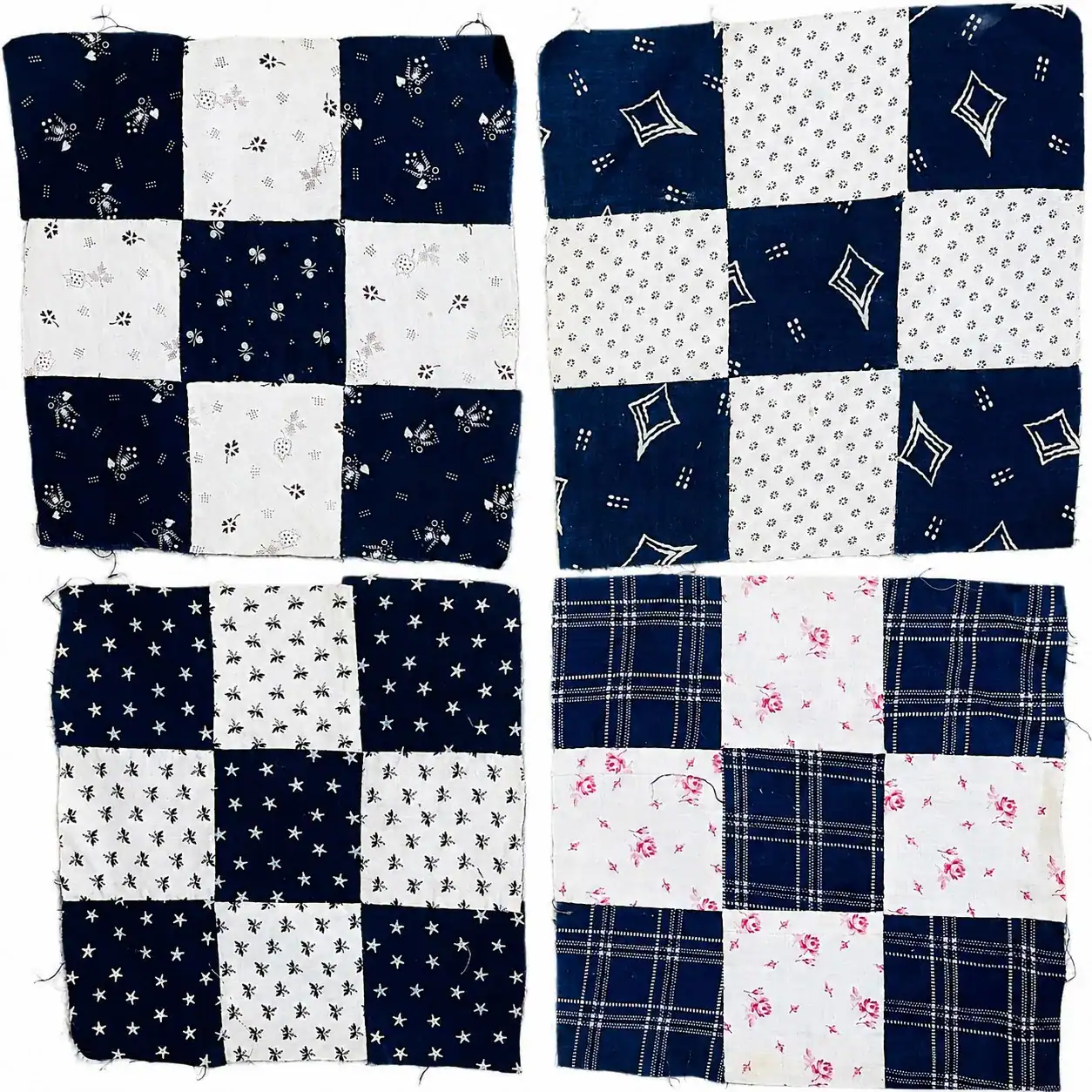
- Lancaster Blue / Double Blue Fabric Discussion — A wide-ranging thread identifies “Lancaster Blue” and “double blue” prints, ties them to Mennonite quilts, and members post fabric swatch examples to the QHL E-board.
- Bias Tape Rainbow Quilt Follow-Up — Continued discussion and E-board links for the rainbow bias-tape quilt pattern raised earlier in the batch. (see the article on bias tape applique)
- Kansas City Star Pattern Drafting — A member reports finishing computer-drafted redrawings of the Roly Poly Circus pattern and its accompanying stencils from the Kansas City Star series.
- Mary Schafer Quilts on eBay — The Michigan State University Museum announces periodic eBay auctions of Mary Schafer quilts not selected for its permanent collection, with background on Schafer’s career.
- Hawaiian Quilt & Study Group Resources — Members share the Bishop Museum’s online Hawaiian-quilt ethnology database and updates from a regional quilt study group’s meeting on patriotic quilts. (see the article on quilt study groups)
- Museum Textile Storage Question — A member asks for advice on better protecting a quilt donated to a museum, sparking discussion of Coroplast storage boxes used by conservators. (see the article on caring for antique quilts)
Date: Sun, 27 Jul 2003 12:21:26 EDT | From: Midnitelaptop@
Quilts:secrets hidden in fabric i sent a request to hgtv, asking when a repeat showing of this program will be take place…will let you know what i hear… i only caught the last 15 minutes of the show and it was wonderful jeanL
Date: Sun, 27 Jul 2003 15:05:15 -0400 | From:
I need to preface this poem with the events of my past week. I flew to Paris for a week of travel with my daughter. I hate flying and air turbulence makes me ponder the directions of my life, giving me perspective once again to what is really important. I got to thinking about all of the quilt trivia in my collection and just what might happen to it. To my DH, it looks like a bunch of clutter which would most certainly be bound for the trash can. In the process of researching in the 19th century, one comes across oodles poetry and prose in journals, newspapers, diaries, albums, and books reflecting the times. This was a wonderful way of expression that unfortunately has become extinct.
I have long collected these pieces to keep and perhaps use in some future article or chapter. Although you may consider it quilt trivia, it does gives a glimpse of 19th century attitudes. These are the very ways of thinking that quilt researchers can usually only guess at. So as I was rocking back and forth over the Atlantic, I decided that every so often I would place a poem or neat story on QHL. Some are humorous and some are pensive, some are even brooding. I hope that you will have as much fun with them as I have. At the end of the 19th century, there were many poems written about crazy quilts. Like quilt aficionados of today, you either like them or you hate them. The first batch of poems are about crazy quilts. Here is the first one from that group. This is a poem that is actually sung to the medley of our national anthem.
Oh—y can you see by the dawn’s early light, What you failed to perceive at the twilight’s last gleaming; A cranky concern that through the long night, O’er the bed where you slept are so ugly streaming; The silk patches so fair, Round, three cornered, and square, Gives proof that the lunatic bed-quilt is there. Oh, the crazy quilt mania triumphantly raves, And maid, wife and widow are bound as its slaves.
The Trenton Times August 27, 1884
sue reich, who is glad to be back home.
Date: Sun, 27 Jul 2003 19:27:36 +0000 | From: “JG Kane”
Joan – many thanks for the explanation. I feel an idiot! I do understand carding and combing – I have had kids in my class busy carding fleece we had collected. What I hadn’t taken in was one being a refining of the other – and I’d got so mesmerised by the process of making the card cloth that I saw, and the fact that it was for finishing processes, that I didn’t engage my brain.
Date: Sun, 27 Jul 2003 15:41:29 -0400 | From: Joan Kiplinger
Jill [hope I remembered the correct name] — No apologies. What I just recently learned while watching a fleece-to-shawl group process card, spin and weave into a garment is that wool is not combed when processed manually. At least most persons will tell you this and question combing, some vehemently. We had a big discussion about this and I thought for awhile I was losing my memory. However, as textbooks reveal, combing is essential in the commercial wool industry process for making worsted; in other words, the difference wool is carded; worsted requires the extra step of combing. So next time you acquire homespun wool, it is likely to be carded only.
JG Kane wrote:
> Joan – many thanks for the explanation. I feel an idiot! I do > understand carding and combing – I have had kids in my class busy > carding fleece we had collected. What I hadn’t taken in was one being > a refining of the other – and I’d got so mesmerised by the process of > making the card cloth that I saw, and the fact that it was for > finishing processes, that I didn’t engage my brain. > >
Date: Sun, 27 Jul 2003 15:21:32 -0600 | From: Xenia Cord
Excellent idea, Sue (Reich) ; bring’em on!
Xenia
Date: Sun, 27 Jul 2003 19:15:10 -0400 | From: “judygrow”
Gail has asked me about double blue, and all I can tell her is that the term names a number of small prints of a bright light blue on blue that was beloved and well used by the Penna. German community. It was often used in the typical Pa. German pallette that included (double) pink, red, cheddar, yellow, and green.
I’ve searched my library of quilting and textile books and the only use of the word “double” with a specific color is found in “Down by the Old Mill Stream: Quilts in Rhode Island” by Ordonez and Welters. There on page 104 she begins a section on “discharges and resists with the madder style” and gives an explanation of how the double pinks and purples are made. Blue is not mentioned at all. The two color plates are of a double pink and a double purple from the Allen Print Works, Providence, RI ca. 1880.
The last paragraphs of the section reads, “One advantage of the cover and pad style was its flexibility. The printer could print many yards of one design of acid resist, then subject it to a variety of covers and pads.” I assume this means that after the acid resist, the covers and pads could print any number of colors.
Thinking about the double blues I know and love, I can’t recall one which has the same patterns as a double pink or purple. Anyone?
Does anyone know where these blue fabrics were made, who made them, how long they were made, and how far afield they were used away from the SE Pa. area.
Gail and I both thank you.
Judy in Ringoes, NJ judygrow@
Date: Sun, 27 Jul 2003 19:21:50 -0600 | From: Xenia Cord
I don’t think I can add anything but more questions to the discussion on “double blue”; however, we might want to check the name in two ways: printers and designers sometimes referred to these designs as “two blue”; “two pink” rather than “double.” I have a piece of chintz dated (in printing) 1854, and on it the colors are noted, including “two pink.”
Second, the shade of blue may be called Prussian blue, and maybe looking for it under that name will yield information. It is a reduced blue. All of the examples I have are not designs so much as tone on tone: darker blue dots spattered on a lighter blue ground.
Xenia
Date: Sun, 27 Jul 2003 18:14:24 -0700 | From: “Julia D. Zgliniec”
Dear Qhl, In addition to the names already mentioned – I know these “double blues” by the names of “Lancaster Blue” and alizarin blue.
I will post a very typical one to the eboard if you like – I have it in blue purple and pink.
Regards, Julia Zgliniec
Date: Sun, 27 Jul 2003 18:39:48 -0700 | From: “Julia D. Zgliniec”
Dear QHL, I have posted an example of a “double blue” to the eboard at: http://vintagepictures.eboard.com It is under the fabric tab. Julia
Julia D. Zgliniec wrote: > Dear Qhl, > In addition to the names already mentioned – I know these “double blues” > by the names of “Lancaster Blue” and alizarin blue. > > I will post a very typical one to the eboard if you like – I have it in > blue purple and pink. > > Regards, > Julia Zgliniec > > > > > — > You are currently subscribed to qhl as: rzglini1@. > To unsubscribe send a blank email to > leave-qhl-1442694K@ >
Date: Sun, 27 Jul 2003 20:39:34 -0500 | From: “Karan Flanscha”
I first learned of Lancaster blue or double blues when I saw an exhibit of Mennonite quilts in Lancaster, PA. I had not seen this before, living in the Midwest. There is a photo of a quilt with what looks like the Lancaster double blue for background on the cover of “Quilting Traditions- Pieces from the Past” by Patricia Herr. Margo Krager of Reproductionfabri provided the following info on Lancaster Blues in one of her History Packet of the Month mailings: “Like the ever-popular double pinks and purples, double blues are usually small to medium size calicos printed in two or more layers to achieve the depth of coloration. The designs were mostly small vines, flowers or geometrics. Often the background print was so finely printed (textured) as to appear solid. Double blues were being printed in Europe early in the 19th century. American mills offered a good selection of them by the late 19th century. “
A few years ago, I had the good fortune to spend 3 ‘golden hours’ with Diane Fagan-Affleck and the fabric sample books at the Museum of American Textile History (at that time the Museum was in North Andover, MA). Amongst the samples I saw that day were examples of blue ‘doubles’ and ‘shirting’ prints of mid to late 19th century. I remember opening one of the sample books and being stunned by the vibrancy of some of the blue prints. They were so periwinkle! “These prints (double blues and blue shirtings) were especially popular in southeastern Pennsylvania amongst the German population. Quilters there loved the strong blue-purple color and used it freely in combination with reds, pinks yellows and greens. We often hear clear bright blues referred to as ‘Lancaster blues’.” Eileen Jahnke Trestain, in her book “Dating Fabrics” gives the following definition of Double prints: A print made by printing several layers of pink, rose or red over one another to create the appearance at a distance of a solid color, but on close examination a textured pink can be seen. The same technique was used to create Lancaster blues, butterscotch (with chrome yellow), purples and browns. …” pg. 194.
There are some current repros of the Lancaster blues, you can see these at the www.reproductionfabri website, if this link is too long, scroll down to the “Timeless fabrics” and click on Double blue/purples. http://www.reproductionfabri/lines.php?subcat=119&PHPSESSID=3e0ba92280 1a1b98dbb7f7270dc46476 Once you have seen this unique color, you will remember it 🙂 Happy stitching!! Karan
Date: Mon, 28 Jul 2003 00:59:28 -0700 | From: Gail Ingram
Karen and Julia,
Thanks for the intormation on the Lancaster/Double Blues. You are right, Karen: periwinkle!
What accounts for what appears to be the extreme popularity of these prints among Southeastern PA German population? Was this a taste that had came from Europe with the group? Or was it acquired in consequence of locally available textiles?
Are there other areas with large German settlements that also used these WOW blues?
Are there antique fabric dealers who stock these fabrics?
Finally, are they related to the Prussian blues?
Thank you for the information.
Gail
P.S. Judy, thanks for passing along to list.
Date: Mon, 28 Jul 2003 07:58:55 -0400 | From: Joan Kiplinger
Julia — thanx for posting this.. Such examples are of great help to us who are not quilters and would not recognize the significance if we did come in contact with this type of cloth — would be just another allover blue print. I willl post this to vintage fabric list.
Joan new column live — the inventive man who gave us Sanforizing & new meaning to licensing http://www.fabrics.net/joan.asp
Julia D. Zgliniec wrote:
I have posted an example of a “double blue” to the eboard at: http://vintagepictures.eboard.com It is under the fabric tab.
Date: Mon, 28 Jul 2003 09:08:27 -0400 | From: Debby Kratovil
I have finished drafting (by computer) the KCStar patterns of the Roly Poly Circus and all the Stencils (27) from the Star. (Memory Bouquet is done, too, but I found a quilt). I am hoping to locate a quilt made from the Roly Poly designs that I might be able to use the photo of for my newest CD. You can see all of the 20 animal designs here: http://www.quilterbydesign.com/KansasCityStar2.html and from there you can get a link to the page about the Stencils. I would also love to see any quilts using any of these stencil designs. Some of them remind me of sashiko.
I am most grateful to this list for helping me track down some quilts for the Memory Bouquet quilt and in fact, my guild helped me make one this past winter. It’s beautiful and we’re hoping to find a local charity to donate it to for its raffle.
My next projects (I would like to see quilts for) are: Garden Bouquet – 1931 – by Nancy Page (boy, are there are lot of words accompanying each pattern!!) and the Farm Life redwork patterns (26 designs) from 1931 and the Fruit Basket Quilt (32 designs) – 1932. Anyone having any leads on quilts for these, please let me know.
BTW, I do have copyright permission from the Star to reproduce these patterns for this project. While they probably don’t have some legal authority over some of the series, I wanted more than anything to use their name in my labeling and promotions. I contacted a granddaughter of Ruby McKim and she assures me the McKim estate has no claim on the patterns. And I did want to include them in the QuiltPro patterns I’ve done for QuiltPro, but since these are embroidery and appliqu=E9 designs, they are a bit tricky to reproduce in their software.
I use a high-end vector based graphics program and I’m able to then put them in a page layout program and convert to Adobe Acrobat files so EVERYONE, no matter their computer platform, can view and print them – and the original text is included. These are wonderful patterns that I’m finding have quite an appeal to the quilting world. Thanks for all your help and historic advice! Debby — Debby (with a “y” and not “ie”) Kratovil http://www.quilterbydesign.com
Date: Mon, 28 Jul 2003 07:25:18 -0700 | From: “Julia D. Zgliniec”
You are most welcome! I found it really EASY to post the picture – the directions were very clear. It was fun. If you want any other examples at any time – just ask. If I have a sample – I am happy to share.
Julia
Date: Mon, 28 Jul 2003 10:49:58 -0400 | From: Joan Kiplinger
Julia and all — I think it would be a great educational treat if those in the know posted samples of doubles, dye peculiarities, etc., to make us non-quilters and others more aware and knowledgable about dyes and color names and quilter terminology for them. I know terms differ from commercial/industrial textile language in some instances. For instance are there double colors for only certain ones or all? There are persons like moi who look at a print and see it as various colors rather than overprint or double and think it nothing special, just another pretty or ho-hum print — that is aside from printing defects. So it would be welcome to have such lessons. I have many books on printing but not personalized such as posts with examples would be. I or others can keep VF list aware of these when they posted.
Julia D. Zgliniec wrote:
> You are most welcome! > I found it really EASY to post the picture – the directions were very > clear. It was fun. If you want any other examples at any time – just > ask. If I have a sample – I am happy to share. >
Date: Mon, 28 Jul 2003 10:41:17 -0500 | From: “Maurice Northen” <3forks@>
Ruby McKim Vintage FARM LIFE Quilt Blocks Item number: 2546538620
—– Original Message —– From: “Debby Kratovil” <kratovil@> To: “Quilt History List” <qhl@> Sent: Monday, July 28, 2003 8:08 AM Subject: [qhl] Kansas City Star patterns
Here are the farm blocks for sale. Perhaps you can chart who buys and get the photos?
Joan of the South
http://www.quilterbydesign.com
— You are currently subscribed to qhl as: 3forks@. To unsubscribe send a blank email to leave-qhl-1466471O@
Date: Mon, 28 Jul 2003 12:15:48 -0500 | From: “Charlotte Bull”
Years ago while at AQS Paducah Show I bought a wonderful small pieced quilt top done in Double Pink and that Eli Walker Green with the yellow & black print. That was fabric combo was my passion at the time. Well, it still is!
As I was looking at it I noticed that there were tiny scraps of torn Double Blue fabric all around the outside edges. There had been a Blue Border. I asked for an explanation. The seller admitted she had ripped it off as she thought it looked ugly with the Green Border next to it! I could have “ripped into her” but I just demanded a big reduction on price because she had ruined it!!! I got it too! ….. Oh I do hope none of you were that Vendor! : ) Charlie
Date: Mon, 28 Jul 2003 12:04:13 -0500 | From: “Charlotte Bull”
Sue, don’t you think you should pursue permission to place all of this fascinating collection into one book ??? Poetical Quilt Threads from the Past!!! charlie
Date: Mon, 28 Jul 2003 10:32:46 -0700 (PDT) | From: Kris Driessen
To QHL Re: Barb Garrett
In my “collection” I have 2 partial bolts of fabric labeled Courtesy. One is a red and white candy cane stripe, and the other is a triangles cheater cloth. The one end of the bolt says — COURTESY Fine Cotton Guaranteed Fast to Washing 100% cotton RN14193
There is a small black silhoette (sp?) of a man and lady bowing or dancing — they look very “Williamsburg” to me and are about 1/2″ tall. The other end says — Guaranteed Fast to Washing 100% Cotton The fabric is 36″ wide and my guess is 1950s. It isn’t limp or cheezy.
If you have access to mail order catalogs, Sears, Montgomery Wards, etc. they may give you some information as they often illustrated a type of fabric with some different patterns, some in color, and sometimes carried the promotional language the manufacturer used.
Finally enjoying nice weather in San Diego – Pat L. Nickols
Do you Yahoo!? Yahoo! SiteBuilder – Free, easy-to-use web site design software http://sitebuilder.
Date: Mon, 28 Jul 2003 13:43:31 -0500 | From: “Charlotte Bull”
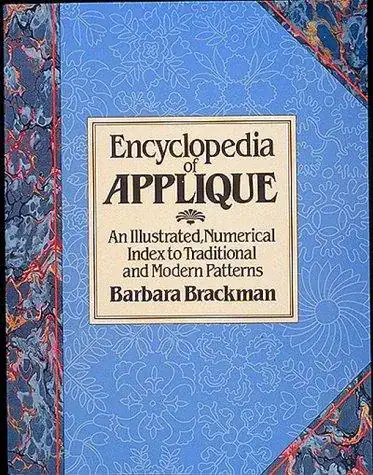
For those interested in Bias Tape. While doing some research for a new friend I noted a Bias Tape Whale shown in Brackman’s book Encyclopedia of Applique.
I have some vintage bias birds too, both patterns and one Tea Towel. Sorry! I can’t scan! Have Not yet figured out How! I know Why I should learn, but When is an unknown aspect of my life! Charlie
Date: Mon, 28 Jul 2003 16:08:16 -0400 | From: “Candace Perry”
I am, just wanted to know if there were any friendly QHLers I should look out for! Candace Perry
Date: Mon, 28 Jul 2003 17:17:02 -0700 | From: Gail Ingram
> There are persons like moi who look at a print and see it as > various colors rather than overprint or double and think it nothing > special, just another pretty or ho-hum print — that is aside from > printing defects.
Joan, I second your request for people to post samples of “doubles,’ especially of Double Blues.
But you could not think the Lancaster blues “ho-hum”—they light up a quilt. This is an “aHA!!” color with a pulse.
For instance, go to University of Minnesota site recommended by Linda McShannock— www.mnhs.org/quilts. Type “6358” in keyword category and see if you could go “ho hum.” See also the Touching Stars quilt listed on Stella Rubin’s web site—–http://www.StellaRubinAntiques.com. Are you “ho-humming”?
<g> Gail
Date: Mon, 28 Jul 2003 19:03:57 -0400 | From: Joan Kiplinger
Gail — ho-hum referred to nothing specific. Just those that are ho-hum by the longest stretch of the word.. 🙁 Actually I thought the double blues very attractive which is why I would like to see more prints in the doubles category. Capische??
Gail Ingram wrote:
>Joan, I second your request for people to post samples of “doubles,’ >especially of Double Blues. > >But you could not think the Lancaster blues “ho-hum”—they light up a >quilt. This is an “aHA!!” color with a pulse. > > > >
Date: Mon, 28 Jul 2003 18:43:06 -0700 | From: “Julia D. Zgliniec”
Dear Gail and QHL, I have posted 2 more swatches of “doubles” the first is of the same print as the first blue , in pink and chrome orange. The second is another popular double blue.
Anyone have these in purple?
Regards, Julia
Gail Ingram wrote: >
> > Joan, I second your request for people to post samples of “doubles,’ > especially of Double Blues. > > > > > — > You are currently subscribed to qhl as: rzglini1@. > To unsubscribe send a blank email to leave-qhl-1442694K@ >
Date: Mon, 28 Jul 2003 22:03:59 -0400 | From: Joan Kiplinger
Julia — thanx for posting these. Lovely prints, definitely not ho-hum.
Julia D. Zgliniec wrote:
> Dear Gail and QHL, > I have posted 2 more swatches of “doubles” the first is of the same > print as the first blue , in pink and chrome orange. The second is > another popular double blue. > Anyone have these in purple? > >
Date: [date unknown] | From: Beth Donaldson
Mary Schafer Quilts on eBay.
In 1998 Michigan State University Museum acquired 118 quilts from Mary Schafer. Per our original understanding with Mary and with her counsel, 75 quilts were selected for accessioning into the museum’s collection. The remaining ones were intended to be periodically publicly auctioned off to raise funds to complete the purchase costs of the collection as well as to help support the long-term care and use of the collection. In 1998 fifteen of the quilts were auctioned off. This is the first auction offering since 1998.
Born in Austria-Hungary in 1910 and later immigrating to the United States, Mary Schafer became one of an important group of women who kept quilting and quilt studies alive between World War II and the 1970s revival of interest in quilts. A resident of Michigan for most of her life, she has long been recognized as one of the forerunners of quilt studies and as a prizewinning quilter, as well as the developer of one of the most important quilt history collections in the country.
Watch eBay periodically in the upcoming months, the quilts will appear one or two at a time. Currently you can find the next two quilts
The quilts being auctioned represent a wide range of Mary’s activities. Some are antique quilts she collected. Some are reproductions of antique quilts made by Mary. Some are quilt tops or blocks she found, added borders to and quilted. Some were started by Betty Harriman and finished by Mary after Betty passed away. All are an excellent chance to add an important piece of quilt history to your collection. All the quilts are catalogued with the Michigan Quilt Project and a cloth label is sewn onto the back with the MQP# to encourage you to keep in touch with us. If you have any questions on a quilt you see for auction, feel free to e-mail your questions and they will be forwarded to us.
More information about Mary Schafer and her quilts can be found in:
Cunningham, Joe. “Fourteen Quilts Begun by One Woman and Finished by Another.” Uncoverings 7 (1986): 61-71.
MacDowell, Marsha, ed. Great Lakes, Great Quilts from the Michigan State University Museum. Lafayette, California: C&T Publishing, 2001.
Marston, Gwen and Cunningham, Joe. Mary Schafer and Her Quilts. East Lansing, MI: Michigan State University Museum, 1990.
Beth Donaldson Quilt Collections Assistant Great Lakes Quilt Center at the Michigan State University Museum 201 Central Services East Lansing, Michigan 48824-1045 quilt line: 517-432-3800 quiltsmuseum.msu.edu http://museum.msu.edu/glqc/index.html
Date: [date unknown] | From: Judy Roche
Gail et al I live in SE Pennsylvania—one spring day I was driving along and it hit me—–the sky was a clear bright’ double blue’, the wild mustards were vivid yellows, the fruit trees all of the ‘double’pinks, and of course the greens were right out of a shelf of yellow greens ——all of ‘those’ quilts in my mind reflect spring/and spring ,the quilts— happy and bright thoughts! Judy Roche
Joan Kiplinger wrote:
Gail — ho-hum referred to nothing specific. Just those that are ho-hum by the longest stretch of the word.. 🙁 Actually I thought the double blues very attractive which is why I would like to see more prints in the doubles category. Capische??
Gail Ingram wrote:
Joan, I second your request for people to post samples of “doubles,’ especially of Double Blues.
But you could not think the Lancaster blues “ho-hum”—they light up a quilt. This is an “aHA!!” color with a pulse.
Date: [date unknown] | From: “Pat L. Nickols” Re: “Lancaster Blue, Double blue,etc.”
The photos Julia has put up on the eboard are a big help to this discussion as we can all see the #2 blue pattern in detail and note that the ground is “blotched” (similar to spatter painting with a tooth brush) then another pattern of tiny vines and squared off dots in a dark blue is seemingly printed on top. In my fabric examples only one ground had fine lines, all of the rest were ‘blotched’.The tiny vine & dot pattern is similar to many of the “double pink” prints, but different grounds were seen in the pinks, often solid pink, lots of dots, some fine lines.When I look at these intense blue prints it seems the shade of ‘raw’ blue is sharp, and the saturation of color strong.Pat L. Nickols
Date: Tue, 29 | From: “Cinda Cawley” The recent discussion on QHL about “Summer Spreads” prompted Hazel and Bunnie to choose that topic for our meeting on Sunday. It was an inspired choice. There was much discussion about regional variations in terminology and customs. The D.C. area is the perfect place to find people from all over (since hardly anybody is a native). We had input from Buffalo to Texas and points in between. Most of us agreed that a Summer Spread is a top with a back, but no batting. In Buffalo, NY (where summer lasts about a day and a half) the Summer Quilts still had a batting but were lighter in weight and color than the serious winter quilts. We also talked about coverlets, counterpanes, bedspreads, etc. which seem to have been used pretty much interchangeably when we were growing up (didn’t see any regional patterns). Barb Garrett led off with some general information and examples from her “vast” (G) collection. The first was made of four feedsacks to which charming tulip sprays had been appliqued and neat mitered strips used to finish the edge. She had several other variations on that same theme, all circa 1930. My one and only example, from central PA, is a huge Whig Rose in Nile green and “tangee” in the center of a muslin sheet with a complimentary spray covering the pillows. This is the “quick and dirty” applique favored in that area, i.e.. stems 1″ wide and very simple motifs.We saw many quilt tops of various vintages (1880-1950) with hemmed edges, not backed. All of these were made from scraps in a variety of simple pieced patterns.
One top was a marvelous collection of large scale turkey reds made into Flying Geese strips put together with alternating strips of 1970s fabrics and a muslin back! The next treasure was made of half square triangles of turkey red prints and muslin with a border on two sides of the most gorgeous turkey red paisley fabric I ever expect to see; this also had a back. We went once around the table with the topic and then got to see some quilts. The most exciting was a red and green floral applique quilt from Annapolis with the maker’s name and “47,” surely 1847, in appliqued letters. The border was a fascinating parade of small, footed urns filled with flowers and lots of circles (not flowers) kind of floating around randomly. I showed my “rescue” quilt, an 1840s Lemoyne Star with a tape binding that I found inside a very tattered 1880s quilt that was labeled “cutter” at an antique show. It’s a long way back to the Eastern shore from the real world so a stop for duck confit and apricot mousse at our favorite restaurant was a necessity. Are there any quilt people who don’t like to eat? Not in my crowd. Cinda on the Eastern Shore off to Quilt Odyssey in Gettysburg tomorrow to give a talk on Pennsylvania quilts.
Date: [date unknown] | From: Gail IngramThanks to all who posted samples of Lancaster Blues/Double Blues on eboard.Now, I have three more questions:1) Is the use of these fabrics limited to SE PA quilts (I myself have never seen them in quilts from other sections, but that proves nothing at all)2) If they do tend to be limited in use to SE PA quilts, why?3) What was the approximate dates of their popularity?From North Louisiana hills, where my car themometer registers 101 degrees, Gail
Date: [date unknown] | From: jocelynmdelphiforums.comOn Fri, 25 Jul 2003 16:24:42 -0400 “Newbie Richardson” wrote:Dear list, Whenever anyone questions how quickly the sewing machine took over home sewing, I just remind us all just how fast we all bought (and now can not live without)our microwave ovens! Human nature does not change: women appreciate labor saving devices! Newbie Richardson Newbie, Not just the women- but the men, too. I’m sure that many men sat, dog-tired, in the evenings, watching their wives mend and sew, knowing that the women were just as tired after a long day of gardening, housekeeping, canning or laundry. For a long time, it just had to be done, but once the sewing machine was around, a man could really do something to lighten his wife’s workload. In the same way, a microwave really lightened the workload of working women in the 1970s and 1980s- although I suspect that once women started bringing home the bacon, they started bringing home the frying pan, too. <GJocelyn
Date: [date unknown] | From: Laurie Woodard The Bishop Museum in Honolulu has provided online access to their ethnology databases, including Hawaiian quilts, at http://www2.bishopmuseum.org/ethnologydb/index.asp. It’s a great site. The images are wonderful but don’t take the quilt descriptions too literally as they are taken from old accession records and the terminology can be misleading. For instance, one quilt (1961.105.001) is described as “Cotton muslin and chambray with design woven through it .” A more accurate description would be “blue plain-weave cotton applique on bleached white muslin background fabric with blue plain-weave chambray backing. Other descriptions mention “piping” when they mean binding. — Laurie Woodard Hawaiian Quilt Research Project http://openstudio.hawaii.edu/hqrp/index.htm
Date: [date unknown] | From: Kris Driessen Wow, everyone got quiet all of a sudden. Must be the weather.I have been working on the website(s) lately and would like to remind everyone of http://www.QuiltHistoryTeachers.com . If any part of your lectures or classes involves our quilting heritage, please feel free to send me the information so I can add you to these pages. Every little bit helps!I think I have all but one of the study groups updated, too. (http://www.quilthistory.com/study/ ) I even put a search engine on that page to help you find bias tape quilts:-))Kris
Date: [date unknown] | From: “Jean Carlton” Hi all Just a note to say the Land of Lakes Quilt Study Group comments and photos from our July meeting on Patriotic Quilts are now up on the Study Group page. I am so appreciative of Kris making this possible – I love seeing what the other groups around the country are doing – so MANY quilts compared to what we have had! It’s a great way to share and learn from each other.Just a reminder to anyone who is part of a quilt study group but not aware of or listed yet, go to http://www.quilthistory.com/study/ for a good time! Do ‘Click Here’ to add your group to the site. I hope existing groups will post to QHL so we know when new photos or comments have been added to their site. Thanks again, Kris! Jeanps – also on that page you’ll find a ‘search’ link as well as a ‘book’ link.
Date: [date unknown] | From: “Pam Weeks Worthen” I thought I’d post at the beginning of the week this year to remind anyone
within a day’s drive of NH that this is the heavenly week here with a major
antiques auction or show every day from now to the 10th of August. Several
areas in the state with concentrations of antiques shops extend their hours
so you can visit before and after the shows. It’s great, and it kills me
that ABC Quilts does a quilt-a-thon at the Annual Craftsmen’s Fair during
the same week–I love my day job except for this week!today I am missing a Northeast Auction in Manchester, NH. You can check out
this three day event at www.northeastauctions.com. There are a few quilts
and other textiles listed. For those of you interested in coverlets, there
are 2 significant ones being offered, but at this moment the provenance is
not coming into my mind. Their on-line catalog is gorgeous and includes the
descriptions–worth sifting through.I have arranged a couple of strategic days off, one for an ephemera show, then Friday for the Bedford Picker’s Market–this had some fabulous stuff
last year, including an entire quilt made of commemorative fabrics, lots of
early clothing with a very friendly dealer who taught me TONS, etc.and of course it started raining today on load-in day for the quilt-a-thon.
Nothing like lugging cardboard boxes full of quilt blocks and batting into a
tent in a thunderstorm.Pam, grumbling in NH
Date: [date unknown] | From: “Carol H. Elmore” Hi, everybody,
Another librarian collegue of mine sent me this
website:http://hearth.library.cornell.edu/h/hearth/subjects.htmlQuilts are under the Clothing and Textile section. It’s a fun site to play
with for older book titles. Cornell always does good library things.Carol Elmore
AQS Certified Appraiser
Manhattan, KS
Date: [date unknown] | From: Joan Kiplinger A question for the curators or museum staff or anyone else on
this list — I have just been made aware of Coroplast containers and
boxes by a curator at the Museum of Strasbourg, France. The museum,
along with other museums, began converting to this barrier substance a
few years ago to replace acid-free boxes. The curator’s description of Coroplast — a corrugated polypropylene board with smooth exteriors. It does not absorb acidity,
and although it is static you can clean it indefinitely……..
……..It is lightweight, and does not accumulate moisture as,
acting as an insulator, thermal changes inside are gradual. Not being
cellulose-based, there is no insect activity in the corrugations. You
can also use it to line shelves and as separators between paintings, for
example. Coroplast comes in various thicknesses and colors, sheet form
and box form. USPS uses containers for mail sorting.I checked Gaylord’s catalog which carries a nice selection of
containers and seem reasonably priced. What experiences have any of you had with this product and do you recommend it?
Date: [date unknown] | From: “Pilar Donoso” About 6 years ago I had a Quilt Show at the Chilean-North American
Institue of Culture in Chile. I left one quilt as a present and they
call me because they want to protect the Quilt better and they think
about protecting the Quilt under a glass. The Quilt has been hung for 6
years but the smog in Santiago can penetrate anything. They want to
wash the Quilt and then put it under a glass case or frame. What do you
suggest? The Quilt is about 40″ x 50″. They were afraid about humidity
or heat affecting an enclose frame. Will the wheather or heater do any
damage? Will it need to be ventilated once in a while?Thank you for your help.
Pilar
Pilar Donoso I.
The Quilt Shop
Santiago, Chile
quiltpdmi.cl