Telltale Textiles: Quilt Batting
Every quilt carries clues about when it was made, if you know where to look. Telltale Textiles is an ongoing series digging into the fabrics, dyes, prints, and construction details that help pin down a quilt’s age. This entry examines the batting, stuffing, or wadding a quilt may or may not have.
What’s Hiding Inside Tells a Story
Here’s the golden rule for this whole article: batting is supporting evidence, never the sole deciding factor. Fiber type, how it was prepared, loft, how closely it’s quilted, where it was likely made, how it’s been washed, whether it’s been repaired or replaced entirely. All of that has to be weighed together. The batting might suggest a date, but the fabrics, stitching, backing, and style all have to agree with it before you commit to anything.
Batting won’t hand you an exact date. But it can rule things out, back up other clues, and sometimes give you a firm “this quilt wasn’t finished before such-and-such a year.” That’s genuinely useful, even if it’s less satisfying than a neat little date stamped on the back.
Cotton: The Long-Timer
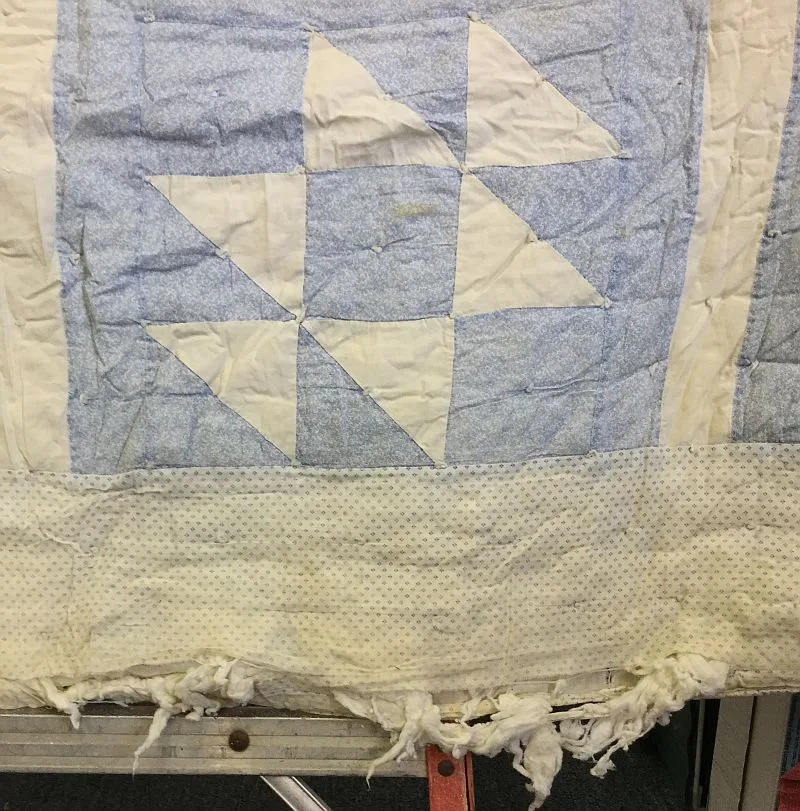
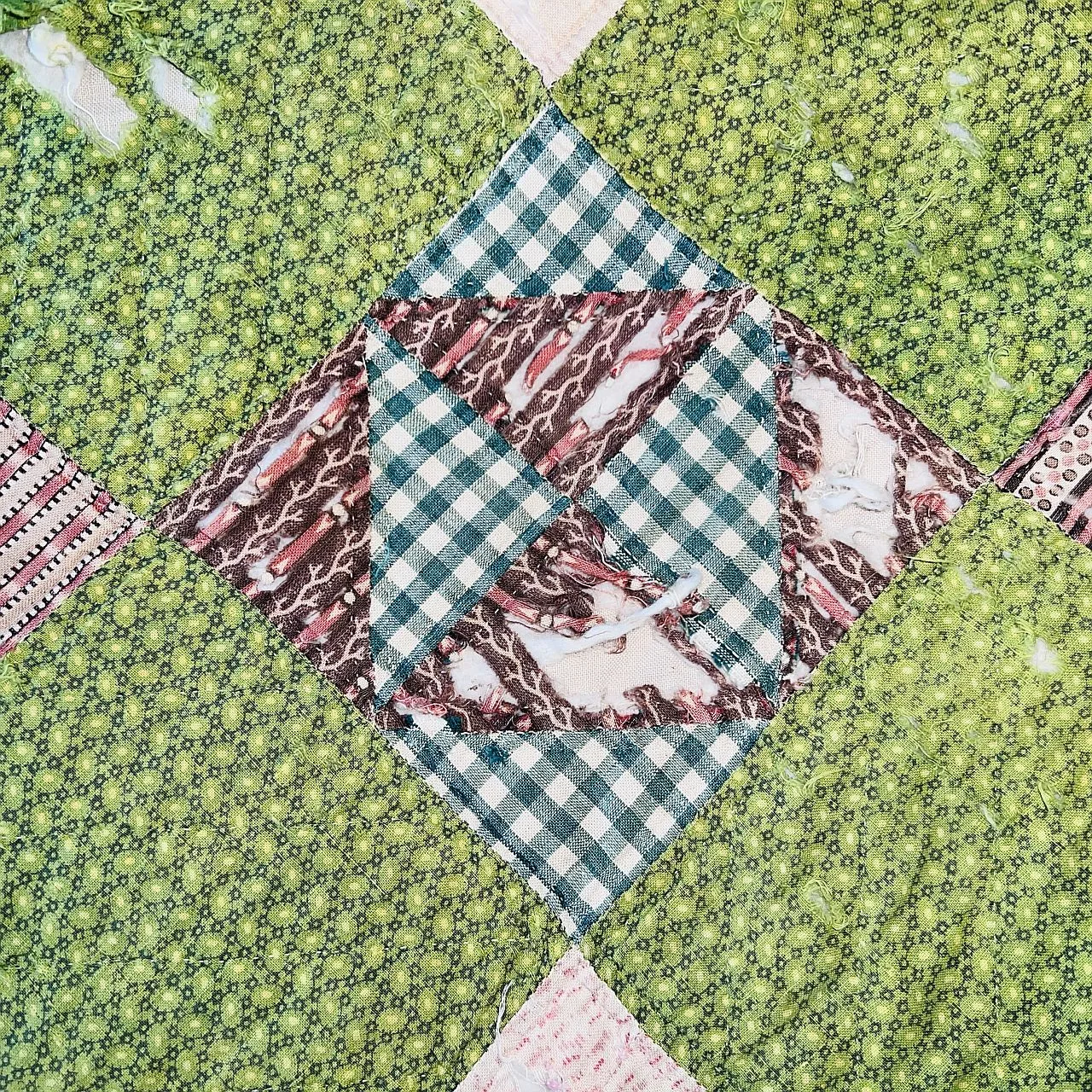
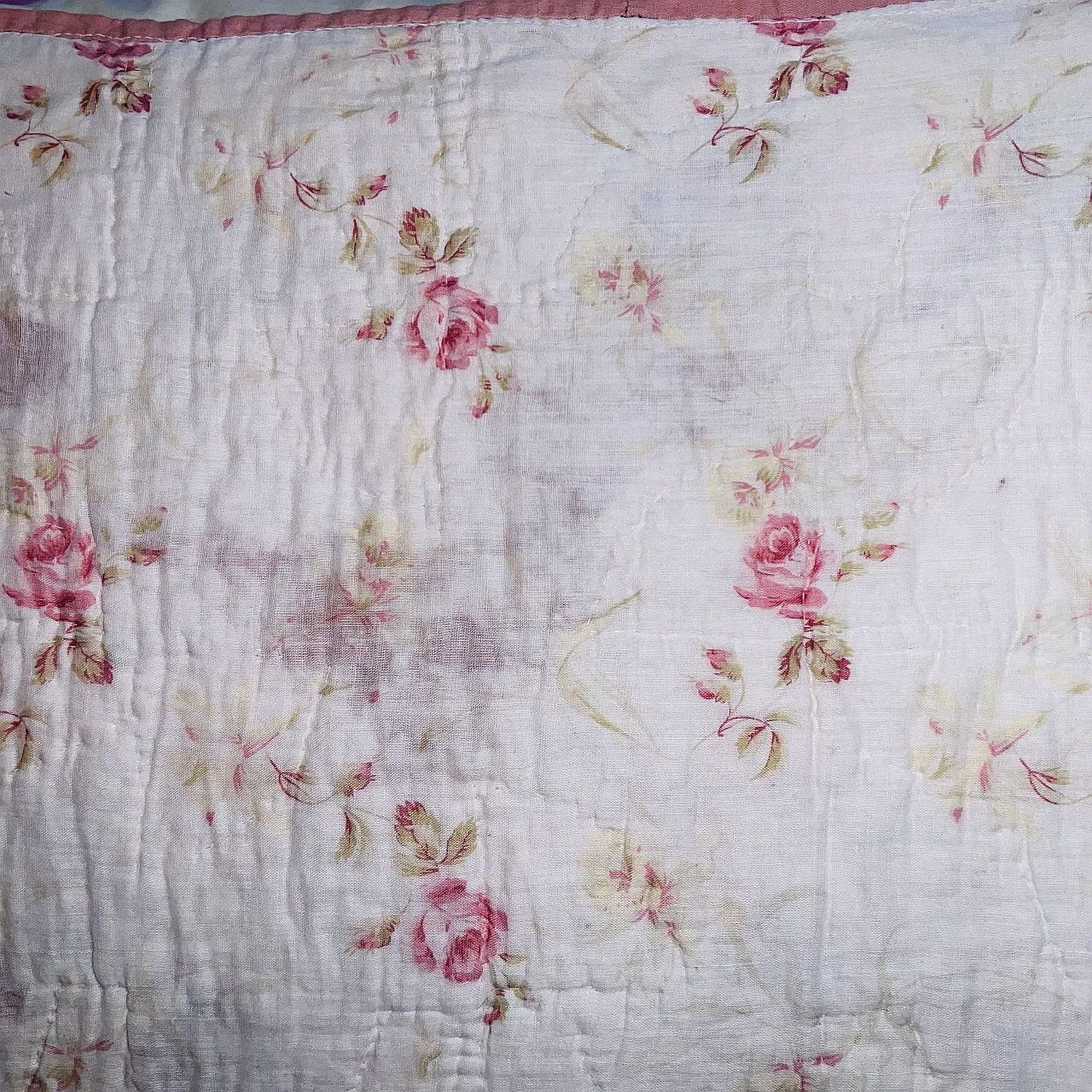
Cotton batting covers such a long stretch of quilt history that, on its own, it’s one of the least precise clues you’ll find. Most early batting was prepared at home from raw cotton that was cleaned, carded, and spread by hand. If you find seed fragments or bits of plant debris caught in the batting, that can hint at less-processed cotton, but it’s a hint, not a date.
A common myth worth busting: finding a smooth, commercially even cotton batt does not automatically mean you’re looking at a twentieth century quilt. Commercial cotton batting has been around longer than you think.
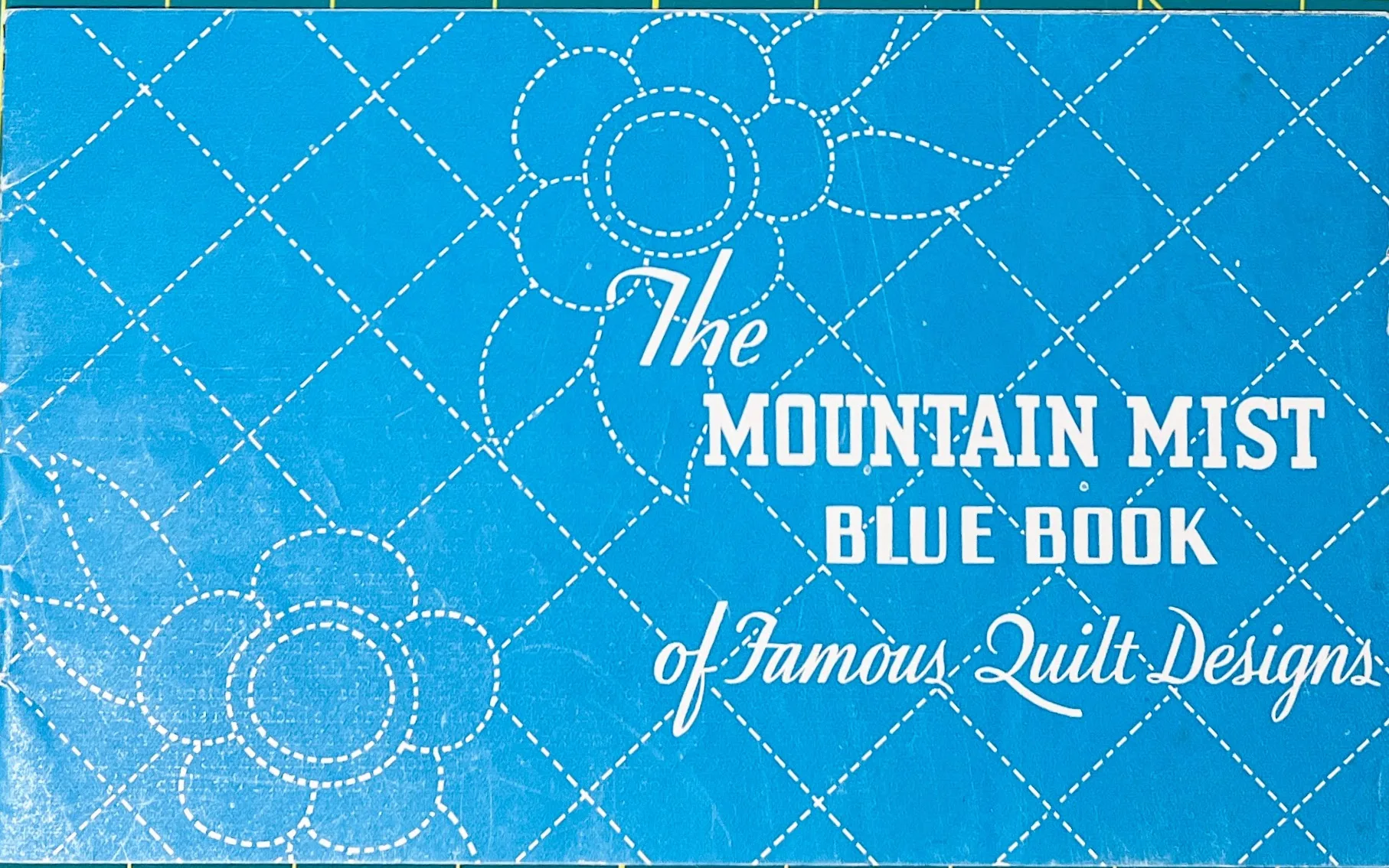
Stearns & Foster started manufacturing cotton batting in Cincinnati back in 1846. Their Mountain Mist wrappers got a lot more colorful and recognizable in the late 1920s, and starting in 1929, they printed free quilt patterns right on the wrapper. So if you ever find a Mountain Mist wrapper (or a pattern that clearly came from one) tucked inside or alongside a quilt, that’s a genuinely useful anchor point for anything from about 1929 onward. You can click on the pictures below to see them up close.
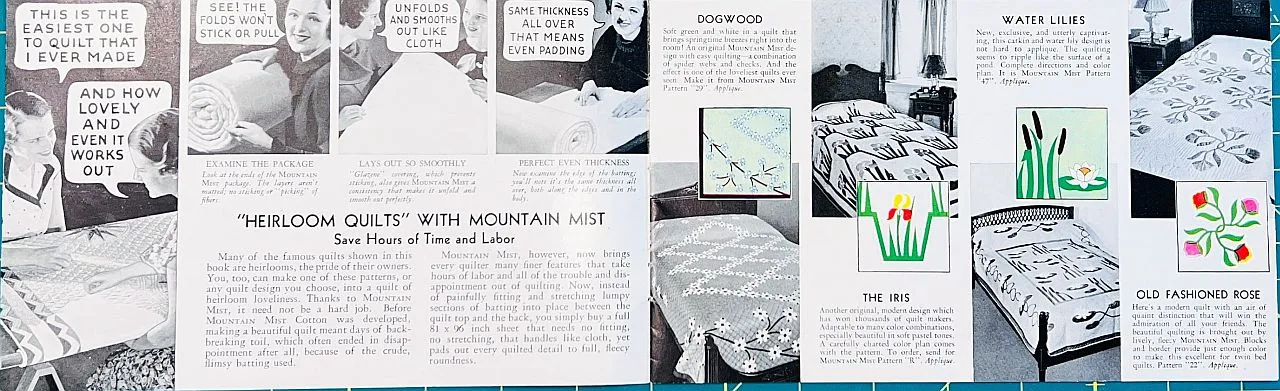
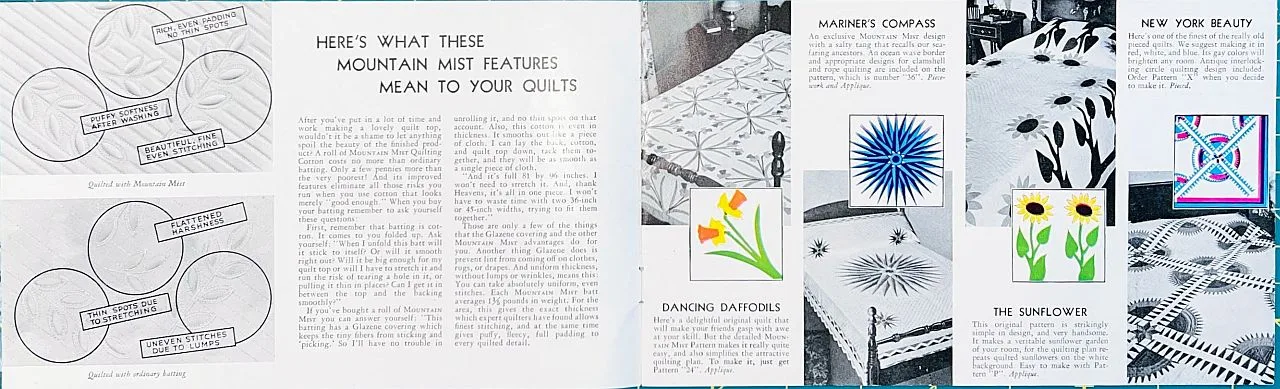
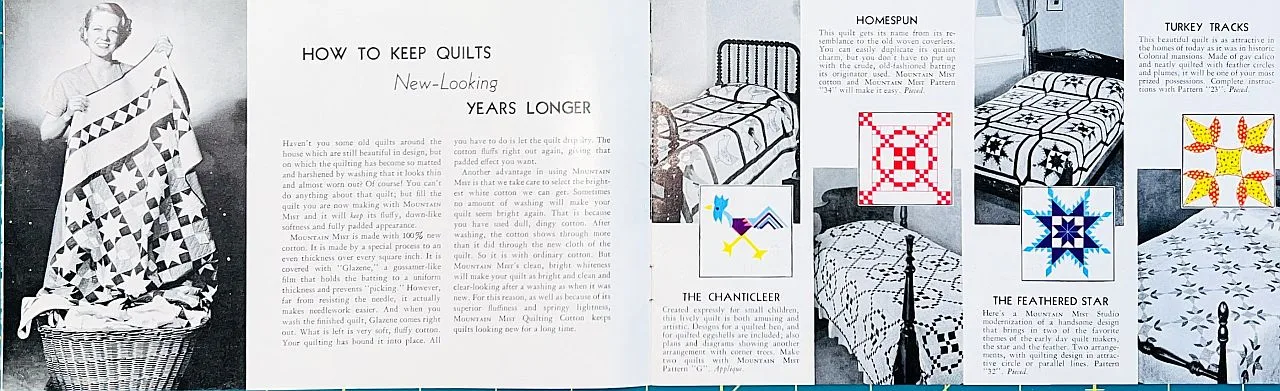
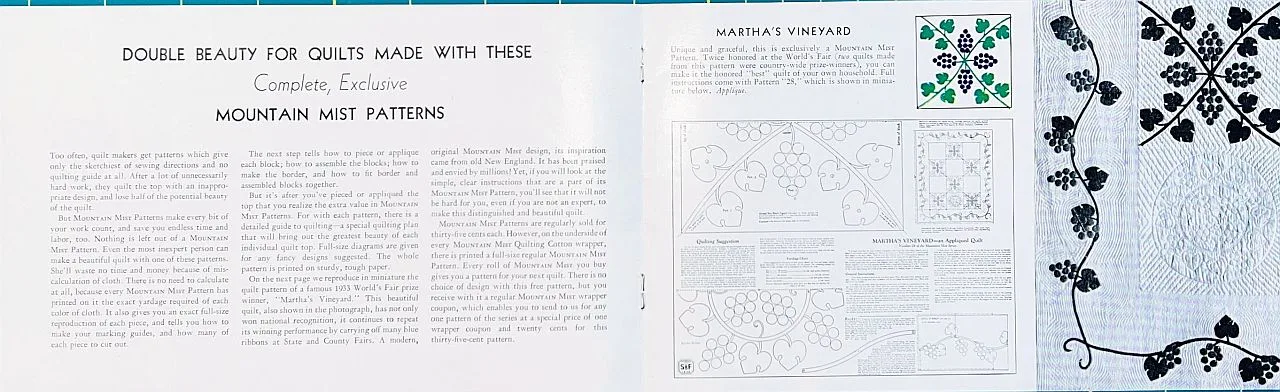
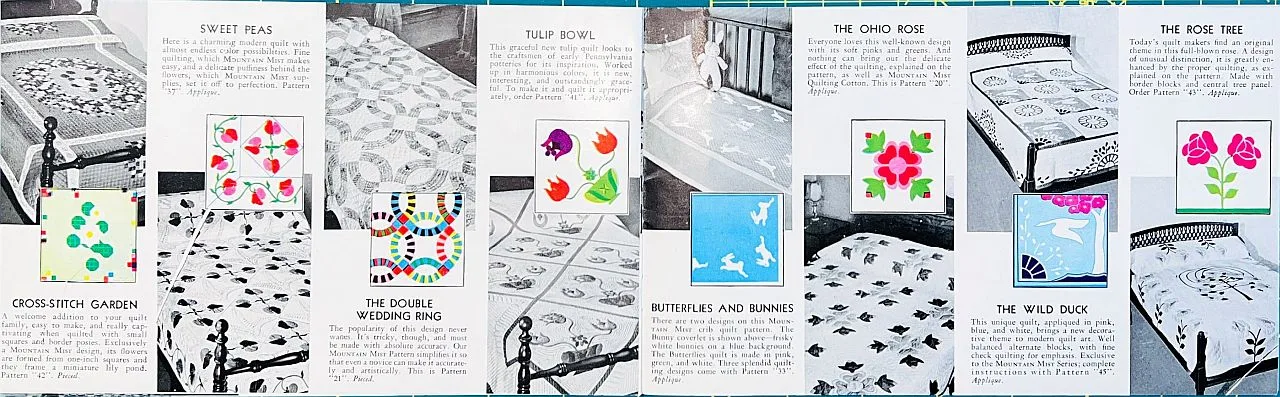
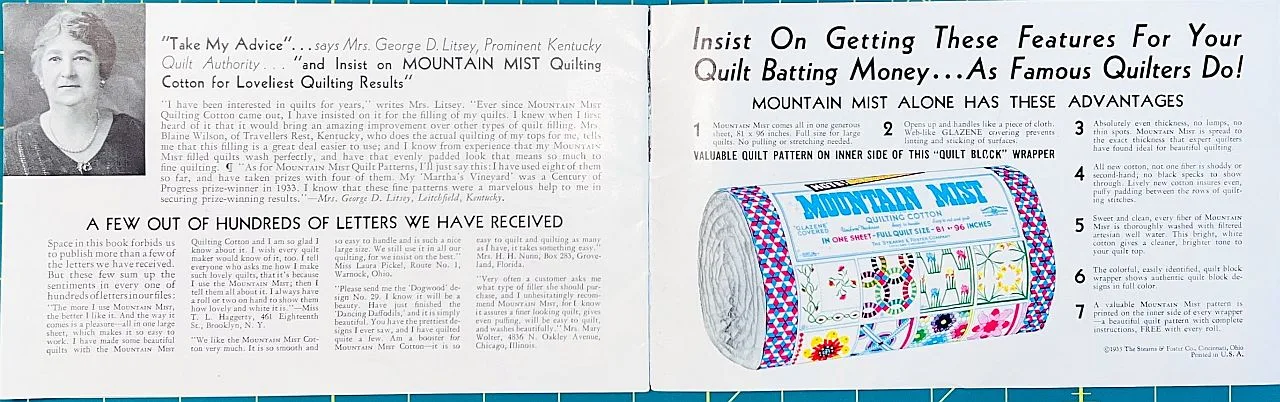
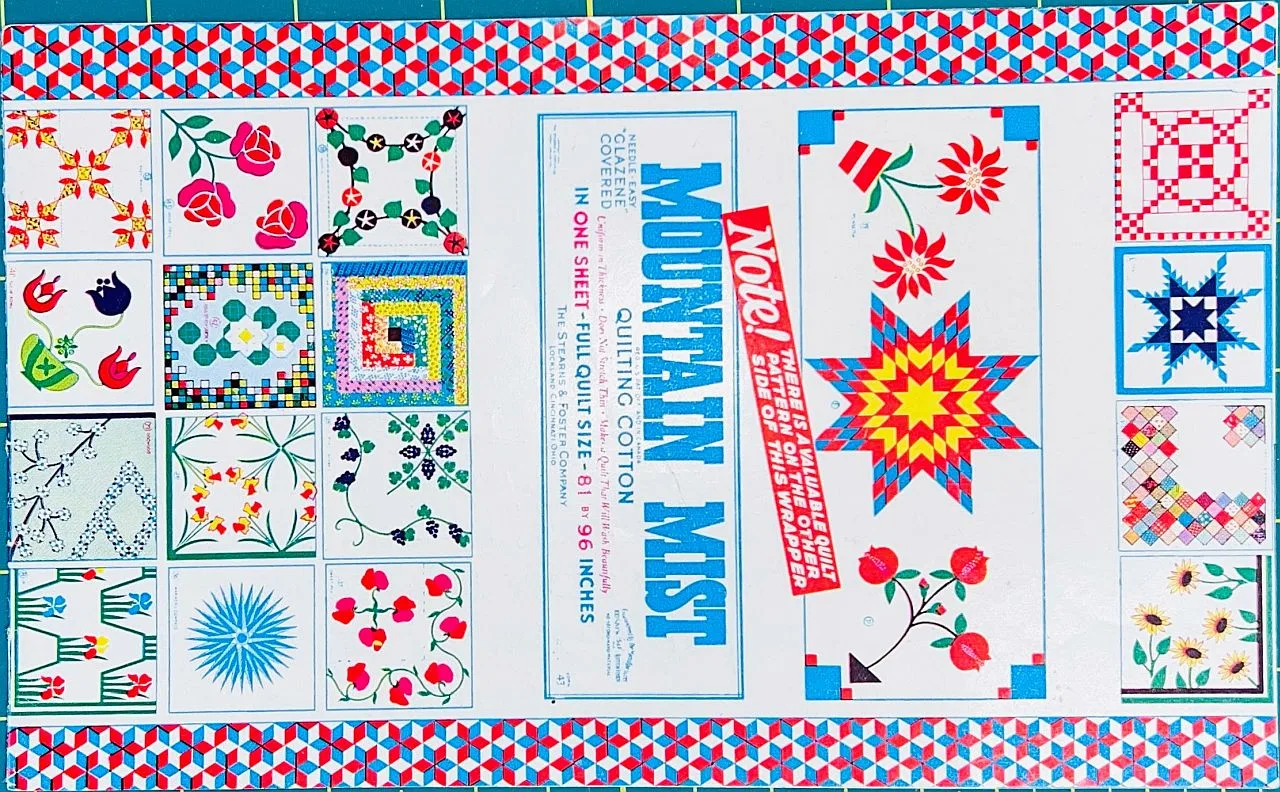
One more wrinkle with cotton: it flattens. Use, washing, and age all compress a once-plump batt, and cotton can also bunch or migrate if the quilting lines are spaced too far apart. So whatever thickness you’re looking at today is not necessarily the original thickness. Don’t let a thin, tired batt convince you the quilt was always thin.
Early batts, by the way, weren’t even a manufactured sheet. They were loose handfuls of fiber, laid in by hand.
While we’re busting myths, here’s one worth setting straight: the United States rationed a lot of things during World War Two, gasoline, tires, meat, nylon stockings, shoes, sugar, but cotton itself wasn’t one of them. So the old claim that “cotton was scarce, so women used flannel sheets instead” isn’t quite accurate as a blanket statement (pun very much intended).
What actually happened was more specific. A 1942 law gave cotton prints intended for feedsack manufacturing priority over civilian dress goods production. That’s why feedsack fabric use spiked in the 1940s. It wasn’t a raw cotton shortage. It was a redirection of printed cotton toward sacking.
Wool: A Regional Clue Dressed Up as a Date
Wool shows up in quilts because it delivers real warmth without piling on the weight the way cotton does. It can look lofty, springy, or a little irregular, but age, felting, moth damage, and repeated washing all take their toll and change its appearance over time. One indication of a wool batting is the fact it tends to “beard”. That is, the fibers migrate through the cloth making the quilt look vaguely furry. The International Quilt Museum has an 18th-century whole-cloth quilt where the woolen batting was dyed blue before quilting specifically to hide “bearding” showing through dark wool fabric.
What wool actually tells you is more about geography and household priorities than a specific year. It likely belonged to a household in a colder climate, with local access to sheep. It might have been used for economy, or it might have been used because it was a prefered fabric. It’s lightweight, holds heat, and does not transmit cold when it is wet.
A wool-filled quilt from New England, Pennsylvania, or another sheep-raising region wouldn’t be surprising at all, but wool was traded and used well beyond those areas too. As a regional indicator, it does suggest a northern quilt, but people do move and take their preferences with them.
You may come across the claim that whole-cloth wool quilts fell out of fashion before the Civil War. That’s true, but it’s a statement about style and outer fabric, not proof that wool disappeared as a filling. Wool-filled quilts kept being made well after whole-cloth wool went out of vogue as a look.
Polyester: Your Strongest “Not Before” Indication
If cotton is the fiber that resists dating, polyester is the fiber that helps you the most. DuPont introduced Dacron polyester to American consumers in 1951, though it took time before quilters widely adopted it as batting.
A clearly synthetic polyester filling makes an original pre-1950 construction extremely unlikely. Interestingly, I once appraised a quilt that had a shredded polyester batting like fiberglass in it. It didn’t seem to beard through, though. Family history dated it just after WWII, which fits the timeline. Puffy, high-loft polyester batting is especially associated with the quiltmaking revival of the 1960s through 1980s.
It should be noted that a quilt top can still be older than its filling. Plenty of old tops sat unfinished for decades before someone finally layered and quilted them with whatever batting was available at the time.
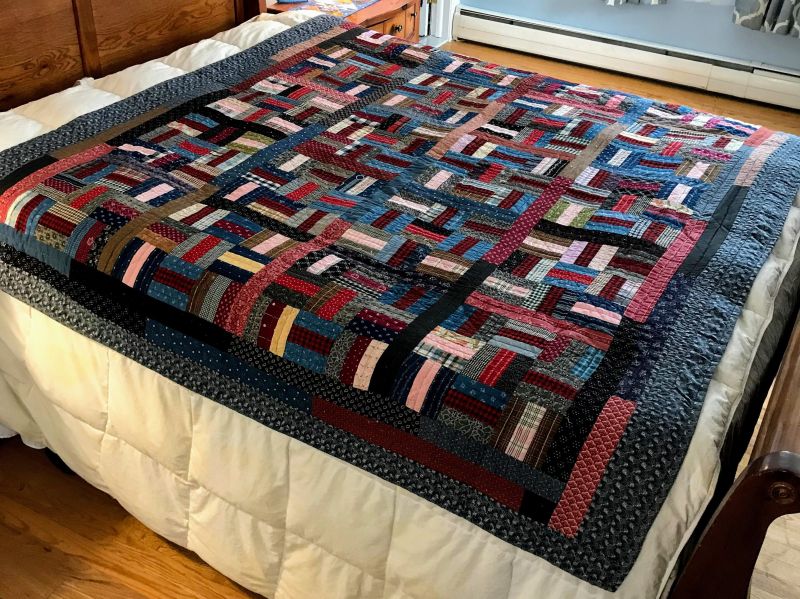
A quick physical tell: polyester has higher loft than cotton, so cotton-batted quilts tend to look and lay flatter. Because polyester batting is bonded, quilters could space their quilting lines three to four inches apart. Cotton needs much closer quilting, or it shifts and bunches over time. If you’re staring at a quilt with widely spaced quilting and a noticeably puffy feel, polyester is a good first guess.
Blends Are the Tricky Middle Ground
Cotton-poly blends are harder to pin down visually. After years of wear, some blends look nearly identical to straight cotton. In these cases, bonding, scrim, resin, and needle-punching construction details can tell you more than the fiber ratio itself.
As a rule of thumb, a blend generally points toward the later twentieth century, but you shouldn’t lock in an exact range unless you can tie it to a specific manufacturer, product name, wrapper, or lab identification.
One more quick test if you have access to a black light: synthetic thread often fluoresces bright white, while cotton thread doesn’t. Cross-checking the thread alongside the batting can help confirm what you’re dealing with.
Black Light Trivia: LOTS of things fluoresce under a black light. Laundry detergent with “whitners and brighteners” added for example. That’s why you can’t date a quilt solely by shining a black light on it. If it doesn’t fluoresce, it was probably made before 1940 when laundry detergents first began incorporating optical brighteners. But if it does fluoresce, it may just mean that it was washed.
When the Batting Isn’t Batting At All
Old blankets and quilts, worn-out quilts, sheets, and flannel have all served as a quilt’s middle layer at one point or another. Reusing household textiles this way tells you more about the frugality of the household than the date. Waste not, quilt not, as the saying nearly goes. But reuse wasn’t limited to any one period. People have always hated throwing away good cloth.
If you find a printed sheet inside a quilt, the sheet itself is the real clue. Its weave, print, seams, hems, or any label can be dated on its own, quite apart from the quilt surrounding it.
What If There’s No Batting At All?
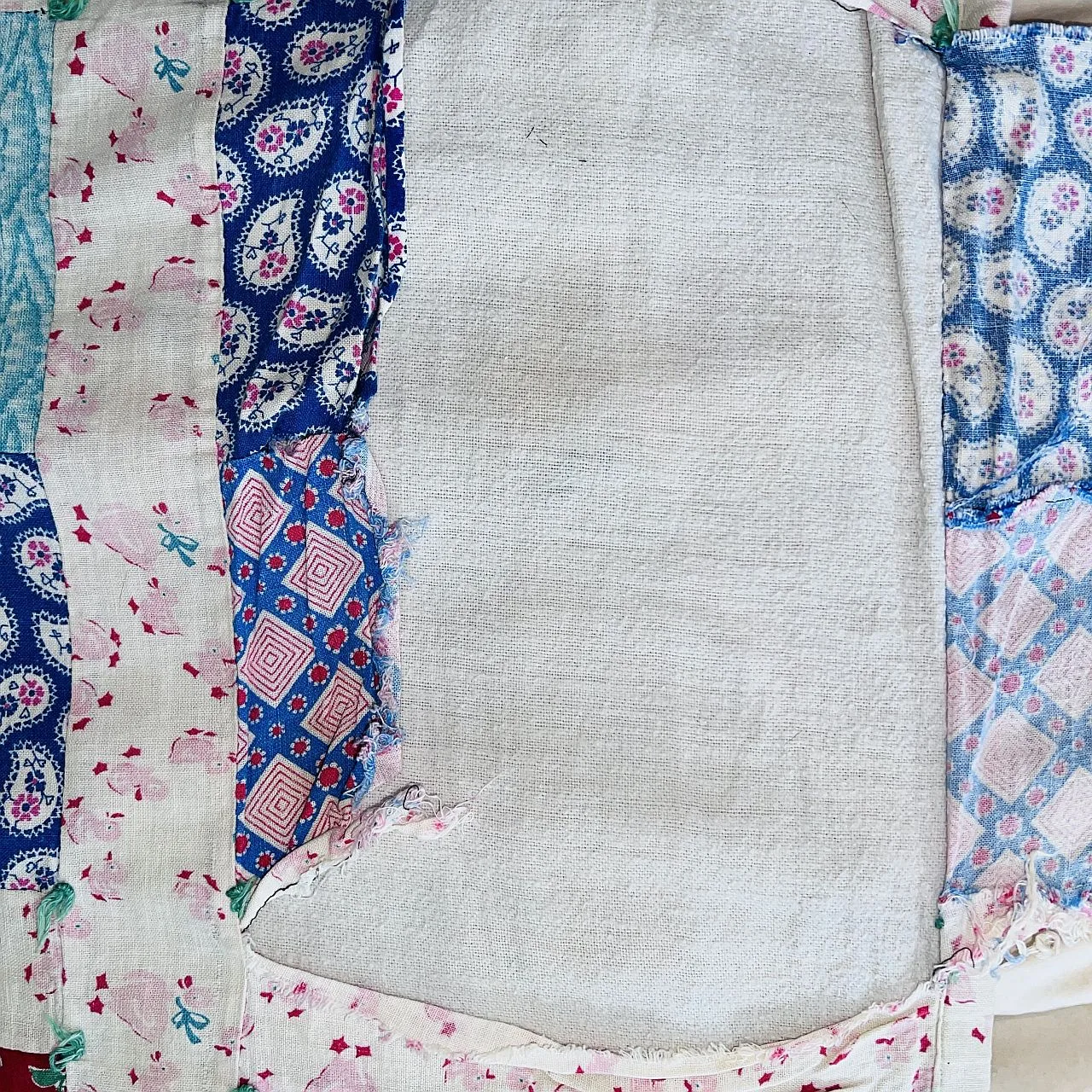
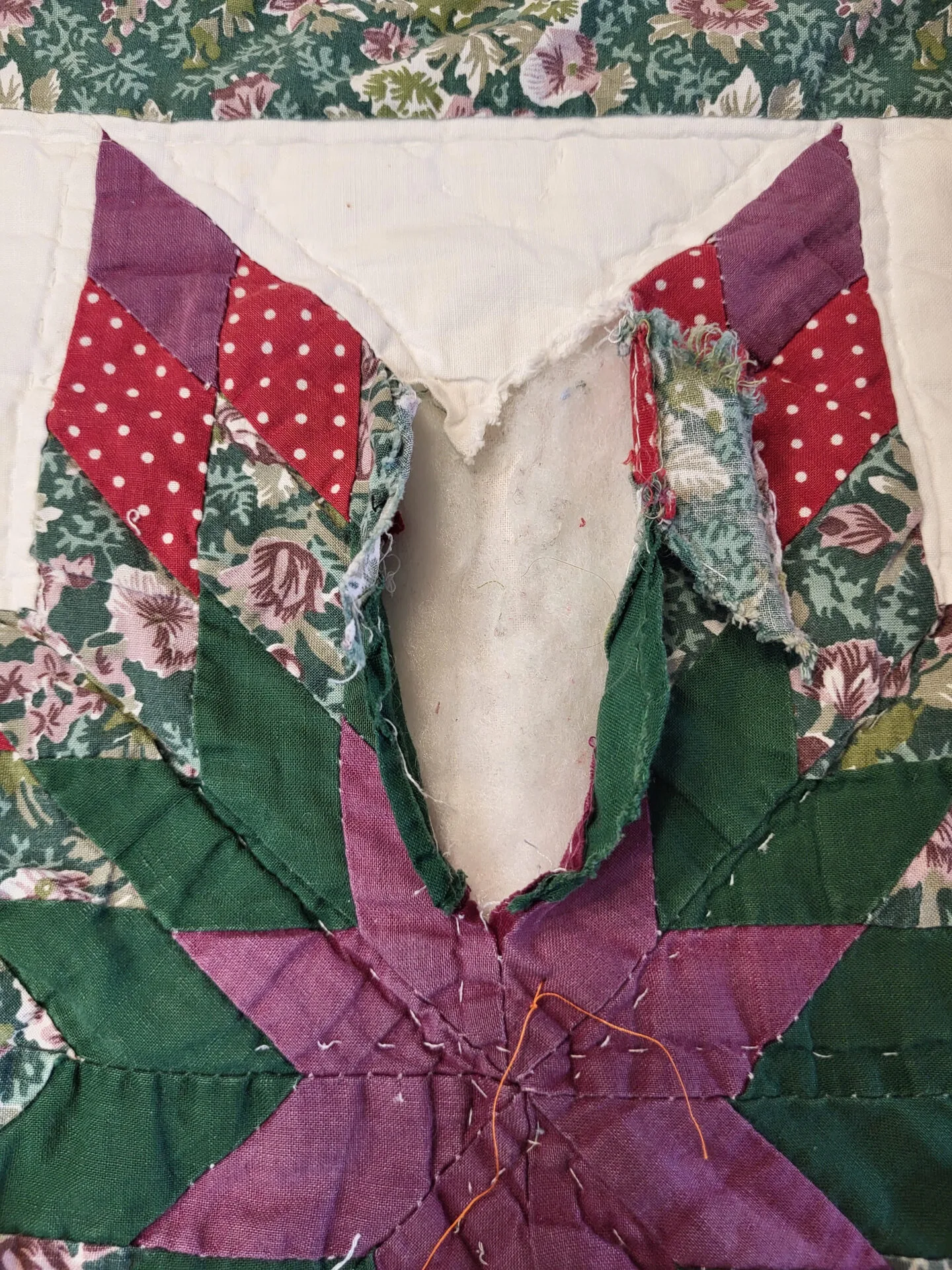
Sometimes a quilt seems to have no filling whatsoever. That could mean it’s a summer quilt, a spread, or a coverlet-style piece meant for looks rather than warmth. But cotton can also compress so thoroughly over time that it looks like it’s vanished entirely. I thought this lovely quilt had no batting until I examined the corners. The quilt must have been washed and the batting migrated to the edges and left town.
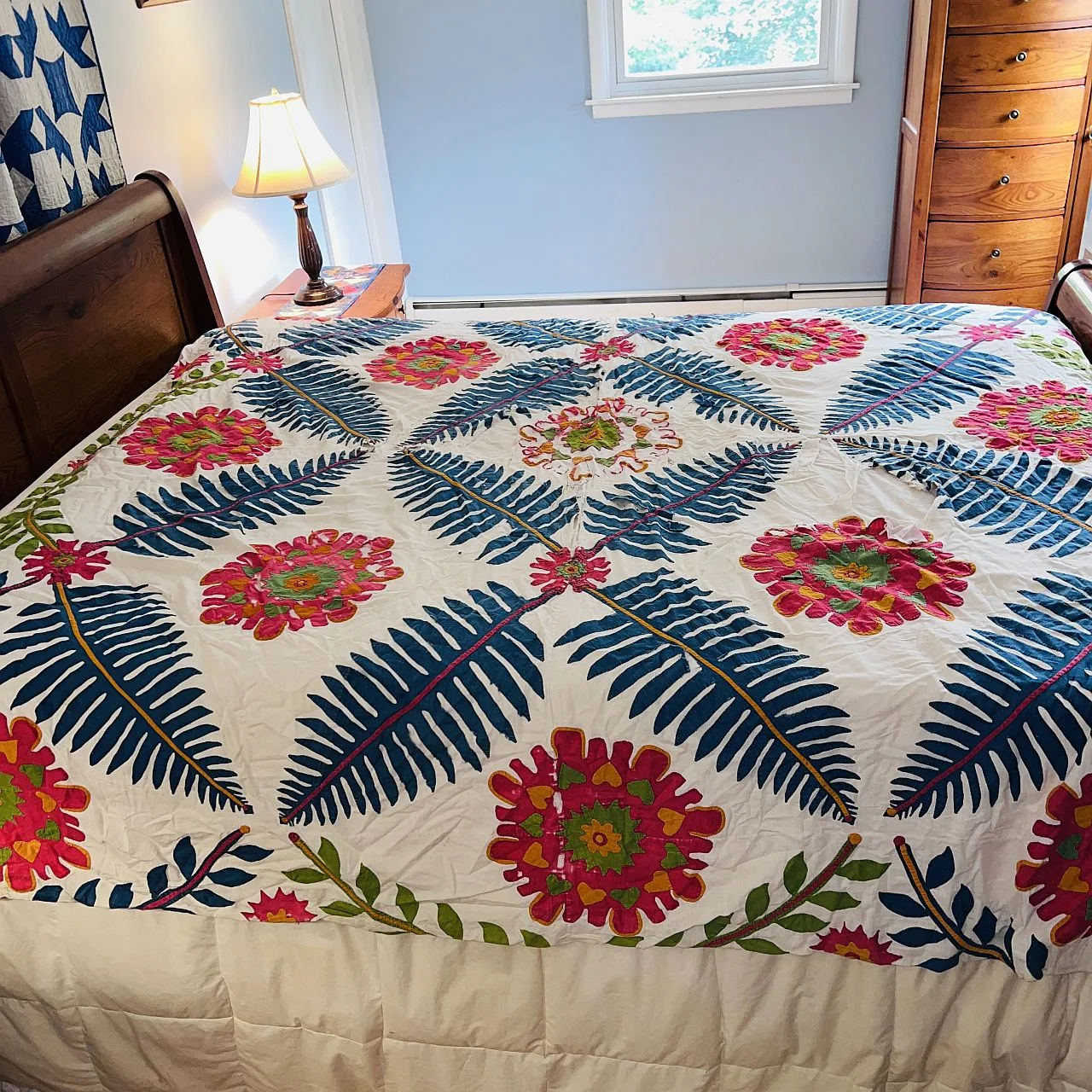
The woman I bought this quilt from told me it was on her bed when she was a child. She used to love jumping up and down on her bed, aiming for the different motifs. You can tell. But it gave me a chance to peek under a blue fern. It was always blue, so that helps date it. The white is a soft muslin, the applique is all hand needle-turned, and the pink/orange/green layered flowers with those little heart-shaped notches are classic for that post-Civil War period when applique got really bold and graphic.
Before you declare a quilt battingless, check the areas near the binding, any tears or open seams, and if you can see any batting when you hold it up to strong light. A batt that’s migrated, disintegrated, or simply flattened can fool you into thinking it was never there.
Thick, Fat, and Puffy Isn’t a Clue By Itself
A thick quilt might contain wool, several layers of cotton, a folded blanket, an old quilt, polyester, loose local fiber, unevenly hand-laid batting, or even old repairs and added stuffing. Thickness alone is a genuinely risky thing to date by. Construction tells you far more than puffiness does. Closely quilted thick filling, widely tied filling, and thick filling confined to trapunto areas each tell a different story about how and why the quilt was made.
One more quick story: Hubby and I were vending at an antique show. He wandered around and found another vendor who had quilts in his van that he was happy to sell. He brought them back and started taking the lumpiest one apart as he thought there might be a quilt in the center. He soon gathered a crowd who were quite amazed at what he was pulling out it. There were blouses without buttons, underwear, stockings and garter belts, a bra, a girdle – all in rough shape. And the quilt STUNK. You knew why the vendor was so happy to sell that quilt if you stood downwind. I suggested to him that he might want to take a break and go wash up but he said, “No, there is a naked quilter in here somewhere!” Much to the crowds delight.
How to Actually Look at the Batting
For anything historically important, start with non-destructive examination:
- Check naturally exposed fibers at a tear, open binding, or worn seam. The late Camille Cognac called these spots an “area of deficit,” and they’re often your best window into what’s inside without taking anything apart.
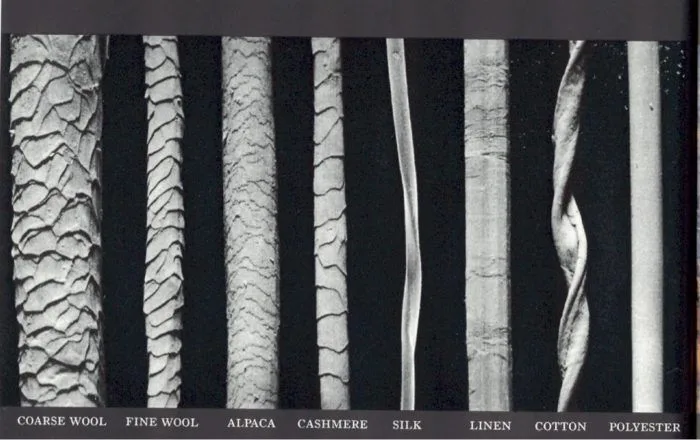
- Use magnification to study fiber length, crimp, sheen, and surface texture. An inexpensive handheld microscope will do the job.
- Photograph the fibers against both dark and light backgrounds so texture and color show up clearly.
- Bring in a textile conservator if identification will materially affect how the quilt is attributed or valued.
I’d steer clear of a household burn test. Beyond the obvious fire risk, it requires removing material, and blends, finishes, dirt, and general degradation can all muddy the results. That kind of test belongs in a controlled lab.
The Big Warnings, All in One Place
Batting gives you a “not before” date more reliably than a finishing date. Polyester can tell you a quilt probably wasn’t completed in 1890. Cotton can’t tell you whether it was completed in 1890, 1930, or 1980.
An old top may have new filling. Tops sometimes waited decades to be quilted, or were taken apart and requilted later. The batting may date the quilting itself, not the piecing.
Requilting happens. Restorers, family members, or owners sometimes remove deteriorated filling and replace it. Look for opened bindings, altered quilting, machine restitching, mismatched thread, or a replaced backing as signs this may have happened.
Loft isn’t permanent. Washing, compression, felting, migration, and years of use can turn a once-plump batt into something closer to a tired pancake.
Geography matters. Wool, cotton, blankets, flannel, and commercial batting weren’t equally available everywhere. Local agriculture, transportation, stores, and household income all shaped what a quilter had on hand. Plus people do travel. They went west in the 1850’s, and south in the 1950’s.
Intended use matters too. A show quilt, summer quilt, crib quilt, tied comforter, and everyday bed quilt might all use different fillings even if they came out of the very same household in the very same year.
Batting is one thread in the story, not the whole plot. Look at it alongside everything else the quilt is telling you, and you’ll end up with a date range you can actually defend, rather than a guess dressed up as a fact.
Learn More
Quilt Restoration: A Practical Guide by Camille Cognac
American Quilt Study Group, Mountain Mist research summary
Barbara Brackman, Clues in the Calico, digital download
Fiber identification under a microscope
International Quilt Museum, Inside the Wrapper: The True Tales of the Mountain Mist Quilt Patterns
Kimberly Wulfert, New England’s Early Whole-Cloth Wool Quilts
Library of Congress, Glossary of Quilt Terms
Linda Pumphrey, “Stearns & Foster Company, 1846–1900: The Inside Story,” Uncoverings 2009
Merikay Waldvogel, “The Origins of Mountain Mist Patterns,” Uncoverings 1995
The Quilt Index: Guide to Documenting Quilts
This is especially useful because it discusses how to examine and record batting in an actual quilt. It recognizes cotton, wool, polyester, blends, blankets or flannel, sheets, another quilt, and no filling. It also records batting loft as thin, medium, or thick.
Hobbs Heirloom Batting Information
This page compares cotton, cotton-polyester blend, and wool batting. It describes differences in warmth, weight, loft, quilting distance, resin bonding, needle punching, and fiber migration. Those manufacturing characteristics may be useful when discussing whether batting appears loose, bonded, needle-punched, or supported by scrim.

