Telltale Textiles: Feedsack Fabrics
Every quilt carries clues about when it was made, if you know where to look. Telltale Textiles is an ongoing series digging into the fabrics, dyes, prints, and construction details that help pin down a quilt’s age. This entry: feedsack fabric, one of the most beloved and most misidentified fabrics in quilt history.
What feedsack fabric actually is
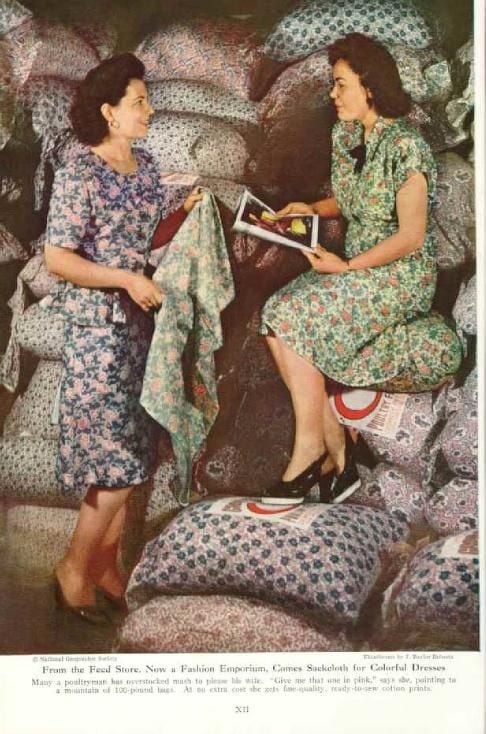
Feedsack fabric started life as cotton bags used to package flour, sugar, feed, seed, and other household staples. Plain white sacks gave way to solid colors, then to printed dress-quality fabric as manufacturers realized farm wives were choosing their brand of flour based on which print they wanted for a dress. By the late 1930s, companies were hiring artists and competing hard for the prettiest prints, and feedsack fabric became a genuine source of dress and quilt fabric for millions of women.
Why it’s a tricky clue
Here’s the part that trips people up: “feedsack” gets used loosely to mean any charming 1930s-looking print, but a lot of what’s labeled that way was never actually a sack. Coarse weave alone doesn’t prove anything, since that same rougher cotton was also sold by the bolt off the shelf. The one truly reliable physical sign is a line of small holes along one edge, left behind from the chain-stitching that once held the sack closed. If you’re lucky enough to find a piece with the original stitching or string still intact, that’s about as certain as it gets.
The other trap is timing. Bright, colorful printed sacks are often called “1930s feedsack” as a catch-all, but the truly widespread dress-print bags didn’t take off until Percy Kent Bag Company pushed them hard starting around 1937, and their real heyday was during and just after World War II, not the early Depression years most people assume.
The dating window
- Before 1925: Feedsacks are mostly plain white or solid colored, useful for household purposes but not yet a fashion fabric.
- Mid-1920s: The first printed sacks begin appearing, though not yet in wide use.
- Late 1930s: Dress-print bags become a genuine industry, with companies competing over artist-designed prints, coordinated floral lines, and novelty themes.
- World War II era: Peak popularity. Feedsack fabric was considered patriotic since it was classified as industrial packaging rather than restricted yard goods.
- Early 1950s onward: Demand drops sharply as paper and plastic packaging take over, and cotton struggles to compete with new synthetics. Production is largely finished by the mid-1960s.
What to look for
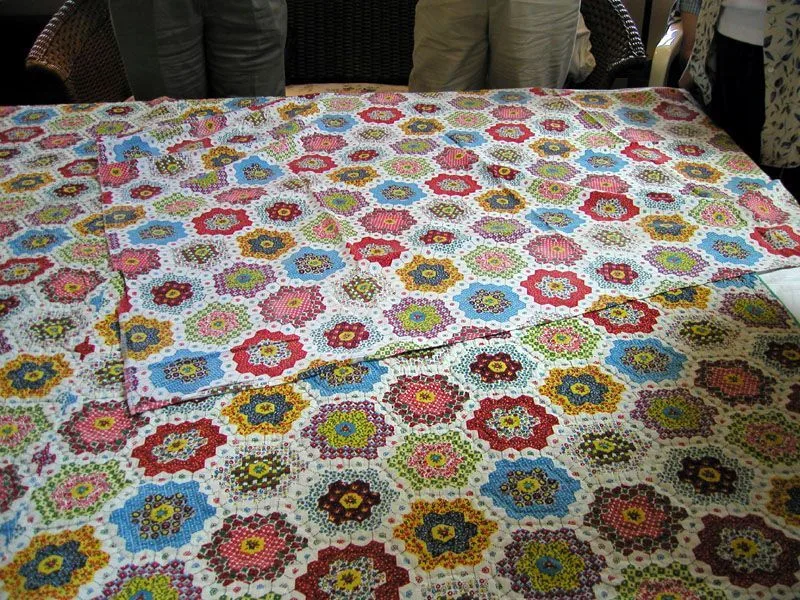
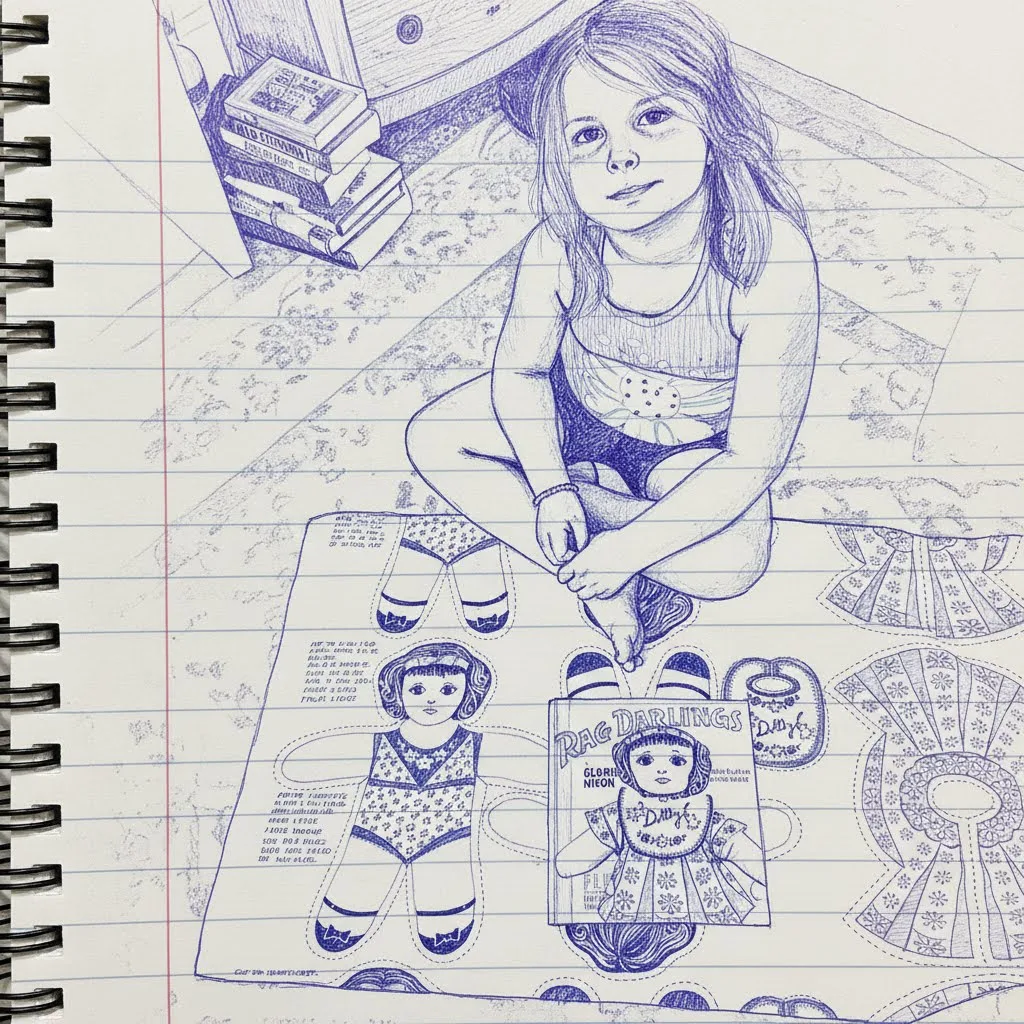
Check the edge of any suspected feedsack piece for a row of small, evenly spaced holes, the ghost of the original stitching. Look for coordinated floral or novelty prints designed to be sold as a set, since manufacturers often released matching lines so a quilter could mix pieces from different bags. Novelty and themed prints (nursery rhyme characters, wartime and patriotic motifs, licensed characters) are especially useful, since many of those were tied to specific, datable marketing campaigns. And keep the golden rule of scrap quilts in mind: a quilt is only as old as its newest fabric, so a few genuine 1940s feedsack pieces don’t necessarily mean the whole quilt was made in the 1940s, especially if it also contains later fabrics.
Putting it together
Feedsack fabric rewards a close look rather than a quick guess. A coarse weave and a cheerful floral print might just be an off-the-bolt fabric that happens to look the part. Stitching holes, coordinated print lines, and dateable novelty themes are what actually build a real case, especially when paired with other clues already in this series, like the block pattern or the surrounding fabrics in the same quilt.
For the fuller story behind feedsacks, from flour bags to fashion statement, see the complete article: The Feedsack Story.
Learn More
Spoiler Alert: Your Feed Sack Quilt Was Probably Not Made in the 1930s — a genuinely useful myth-busting piece on feedsack dating, with good detail on when printed dress bags actually became widespread.
A Short Feed Sack History — includes a clear caution about a quilt being only as old as its newest fabric, directly relevant to dating scrap quilts.
Feed Sack Fabric Identification — a practical look at spotting genuine feedsack fabric, including the stitching-hole clue.
A Feed Sack Fabric Collecting Guide — geared toward collectors and identification, with real-world examples.
Linzee Kull McCray, Feed Sacks: The Colourful History of a Frugal Fabric — widely considered the reference book for identifying and dating specific feedsack prints.
Marian Ann J. Montgomery, Cotton & Thrift: Feed Sacks and the Fabric of the American Household — another strong reference with detailed print documentation.
