Centennial Prints – The Fabric That Celebrated a Country Still Healing
Every quilt carries clues about when it was made, if you know where to look. Telltale Textiles is an ongoing series digging into the fabrics, dyes, prints, and construction details that help pin down a quilt’s age. This entry: the bold, flag-waving fabrics made for America’s 1876 Centennial, and why a country throwing itself a birthday party was more complicated than it looked.
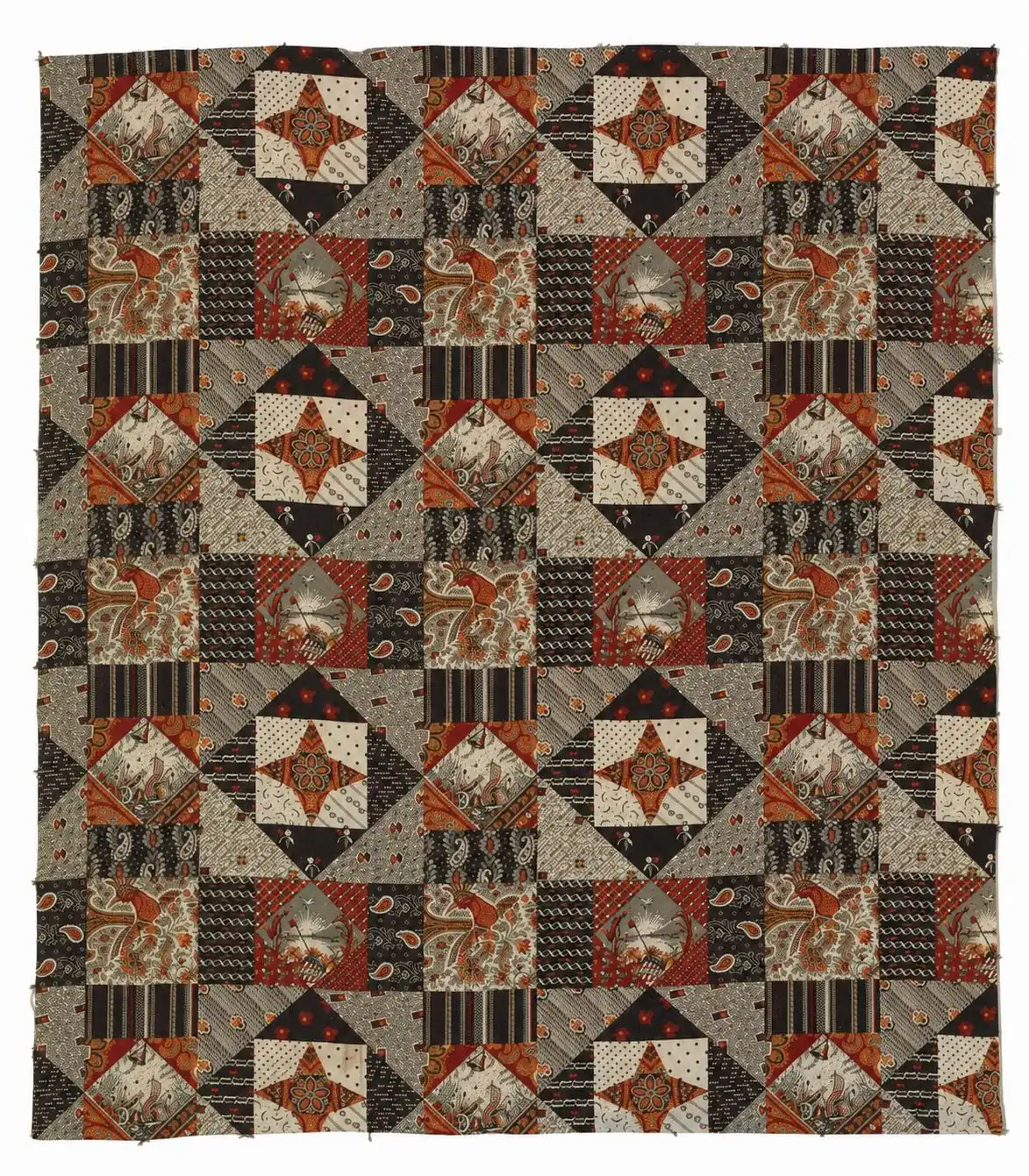
A Celebration With a Catch
In 1876, the United States turned 100, and it decided to throw the biggest party the country had ever seen. Philadelphia hosted a massive exhibition, millions of visitors came through, and manufacturers rushed to print fabric covered in eagles, flags, and stars to sell to every one of them.
Here’s the part that gets left out of the pretty pictures: the Civil War had ended just eleven years earlier, and the country was nowhere near as unified as its own birthday fabric suggested. That same year, the presidential election between Rutherford B. Hayes and Samuel Tilden turned into one of the messiest in American history, with disputed results in several states and a resolution that came agonizingly close to a second constitutional crisis. So while cloth manufacturers were printing “E Pluribus Unum” on handkerchiefs, the country buying them was anything but settled.
Proof You Were There
The Centennial Exhibition in Philadelphia’s Fairmount Park ran from May to November of 1876, and pulled in close to ten million visitors, an enormous number for the time. And nearly every one of them wanted a souvenir.
Manufacturers had figured out how to print cloth quickly and cheaply using engraved rollers, which meant a handkerchief that once would have taken a skilled hand days to produce could now be turned out by the thousands. A 25-cent handkerchief, printed with the exhibition buildings or a patriotic slogan, became the era’s version of a t-shirt from a theme park. Buy it, wave it, take it home, and everyone would know you’d been part of something big.
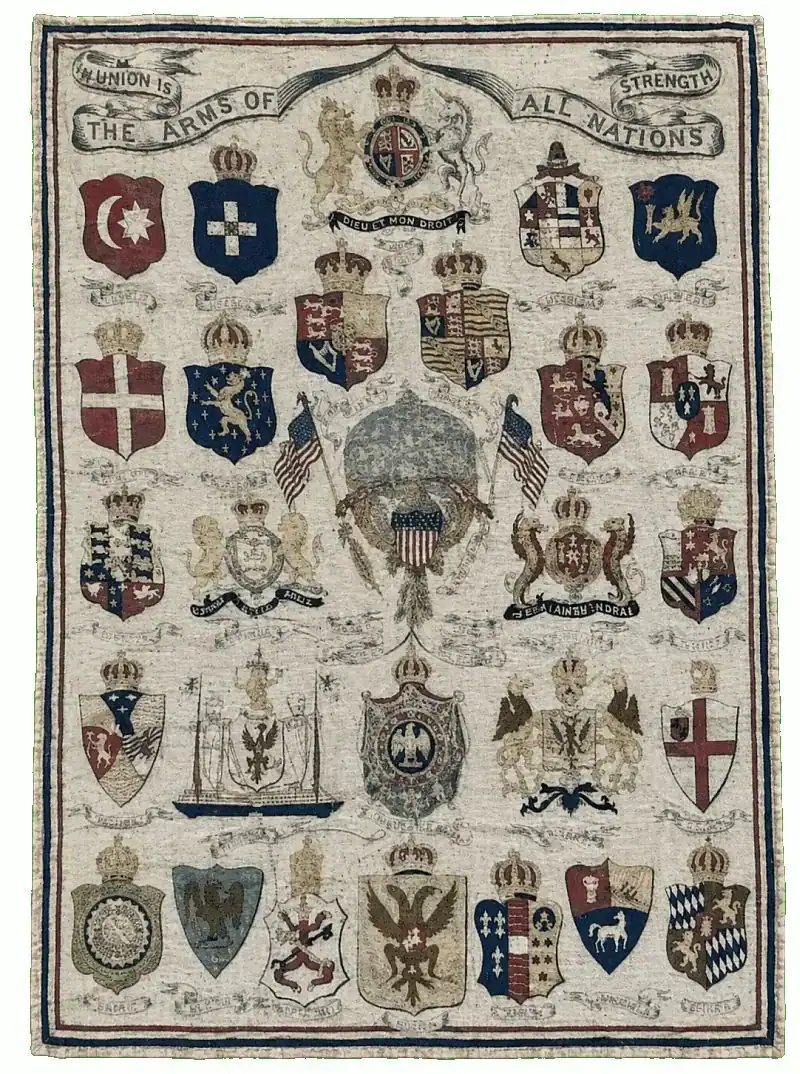
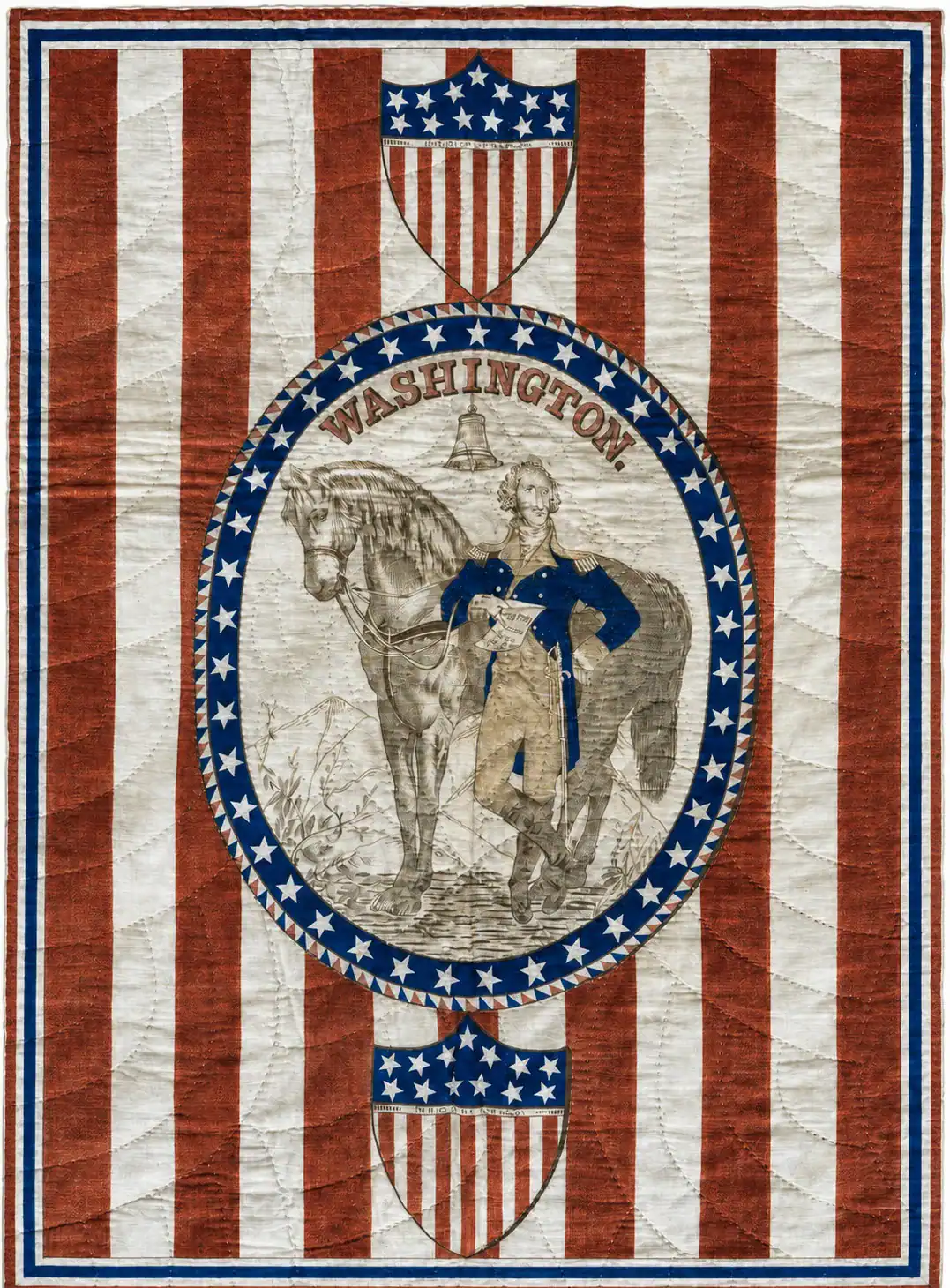
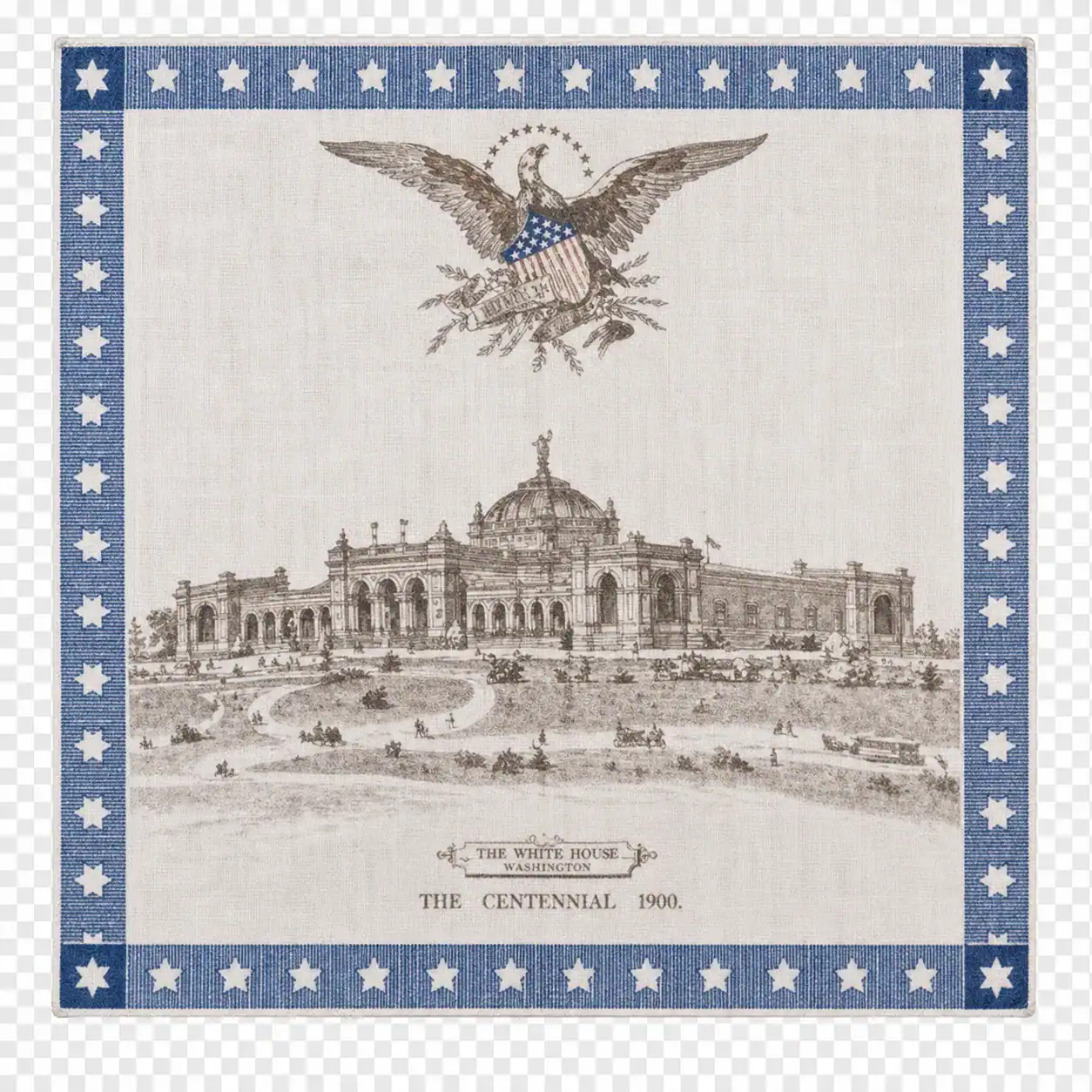
What to Look For
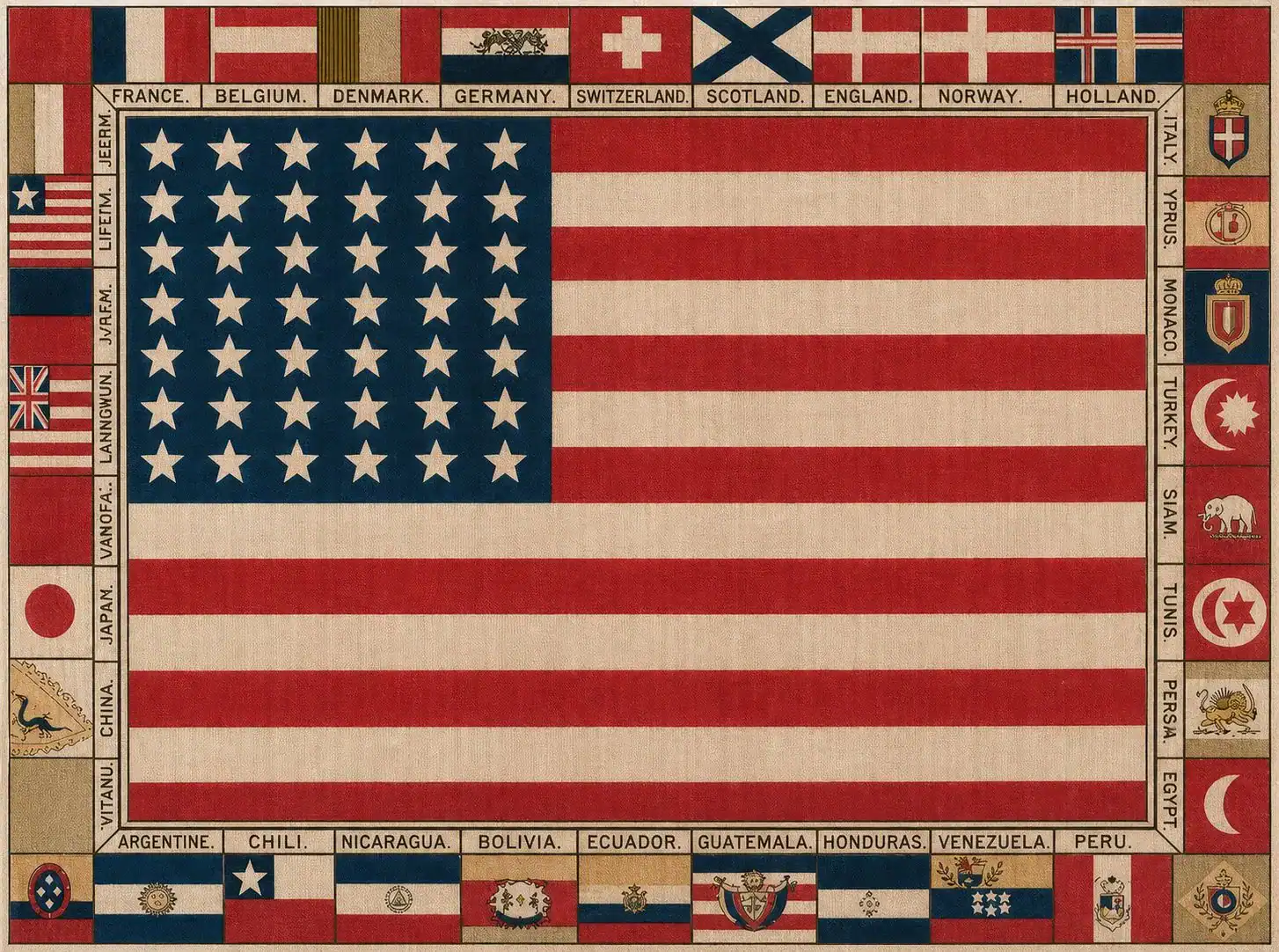
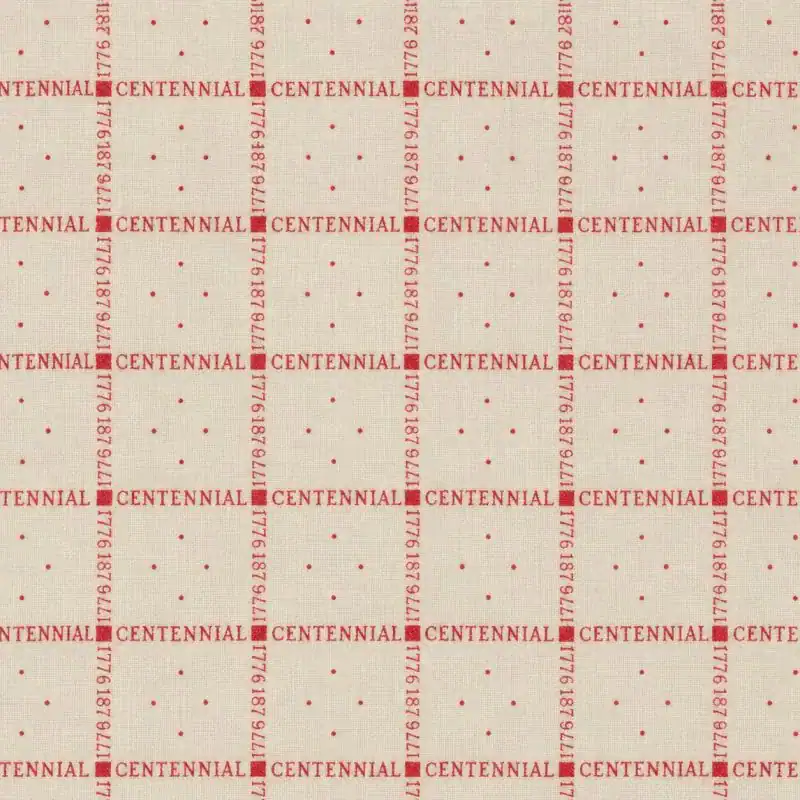
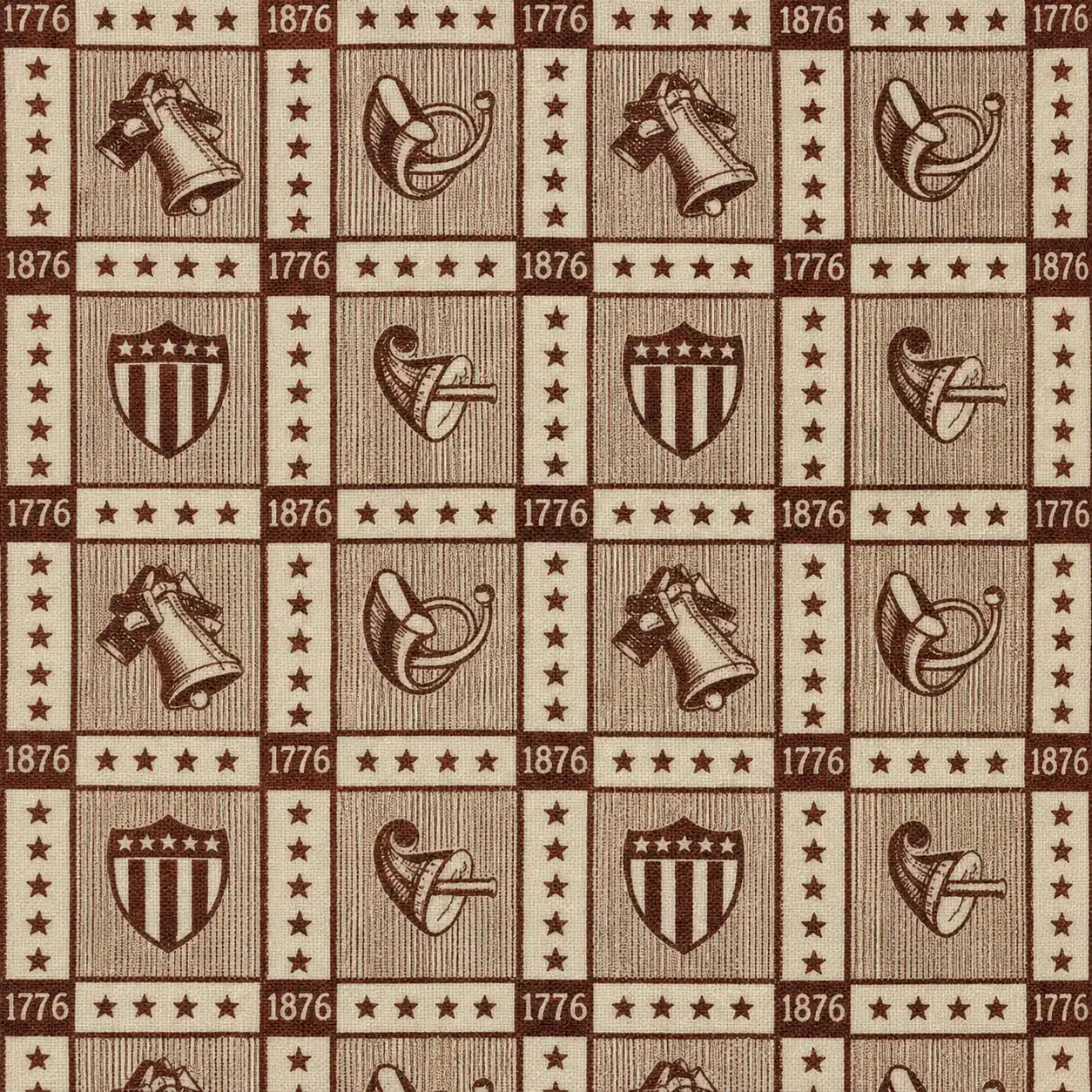
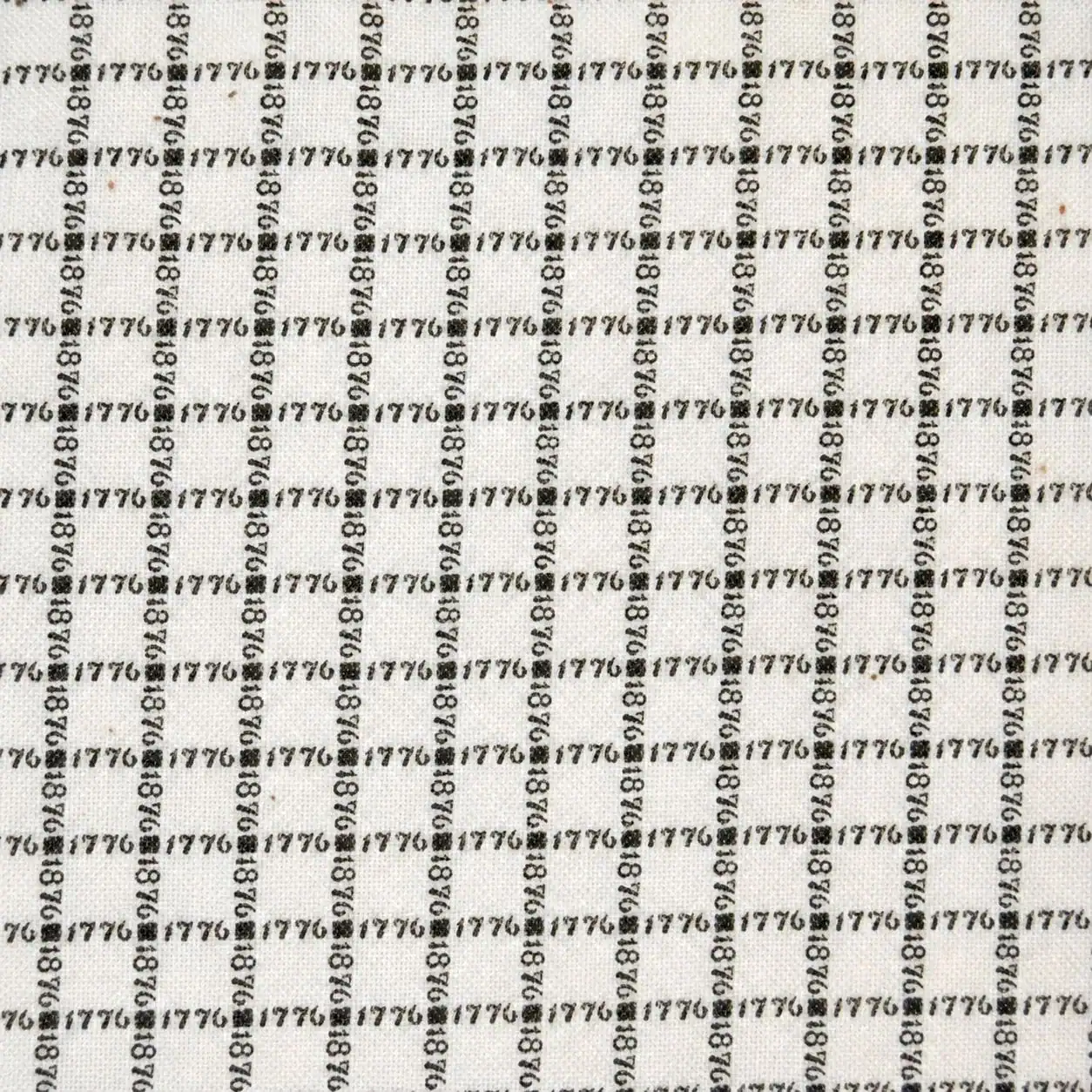
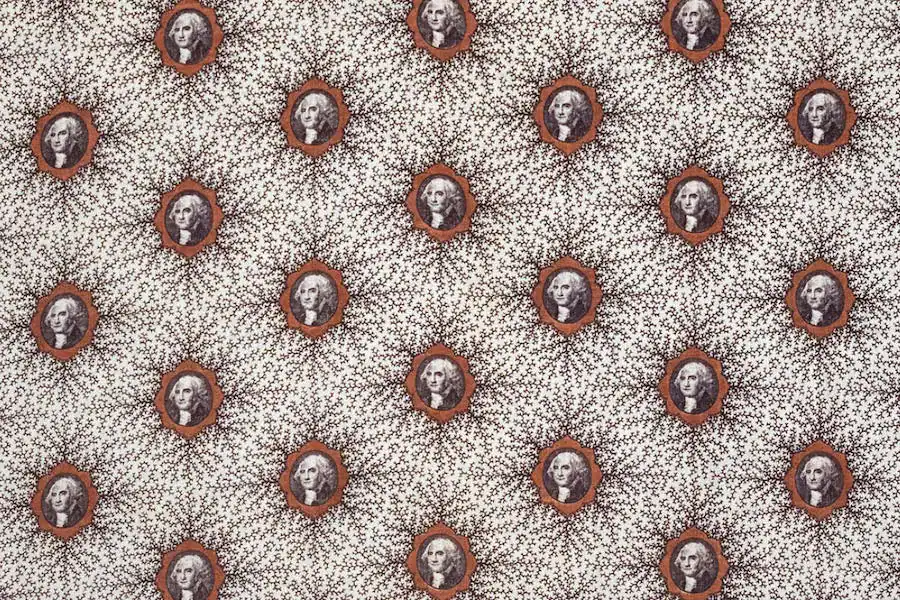
Centennial fabrics tend to announce themselves. Common motifs include eagles, crossed flags, stars, medallion portraits of George Washington, and images of the exhibition’s massive buildings, like Memorial Hall and the Main Exhibition Building, often labeled right on the cloth. Dates like “1776” and “1876” show up constantly, since the whole point was linking the signing of the Declaration of Independence to the celebration a century later.
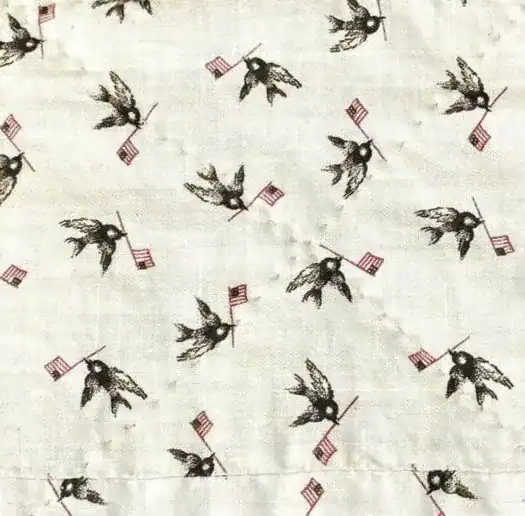
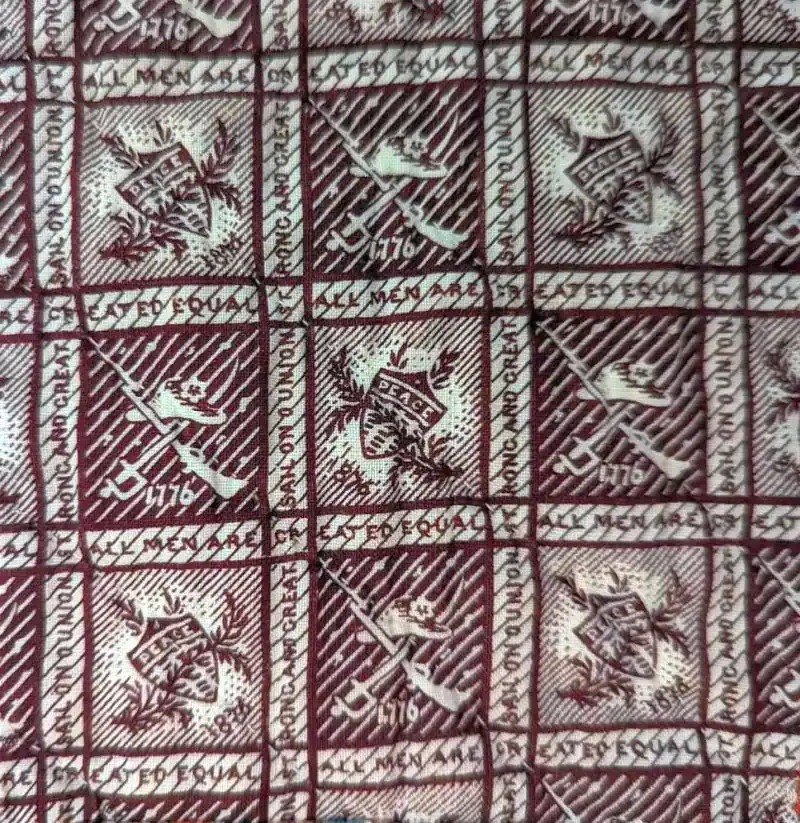
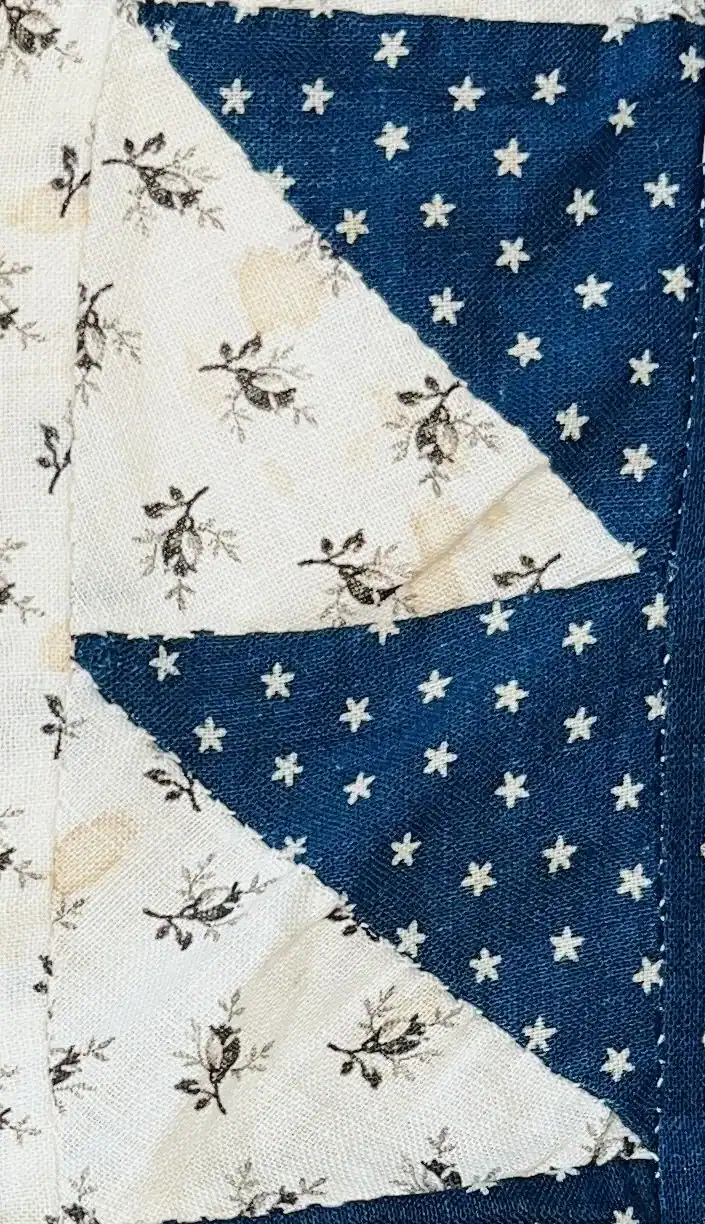
A lot of surviving pieces were never meant to be quilts at all. Handkerchiefs were the most common form, but the same imagery showed up on dress fabric and furnishing cloth meant for curtains or upholstery. One well documented dress from the period was pieced together entirely out of Centennial handkerchiefs. The maker placed eagles on the shoulders and a building right at the waist.
The Influence of Japan
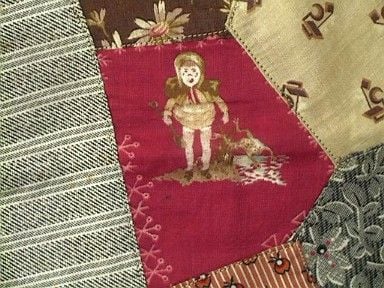
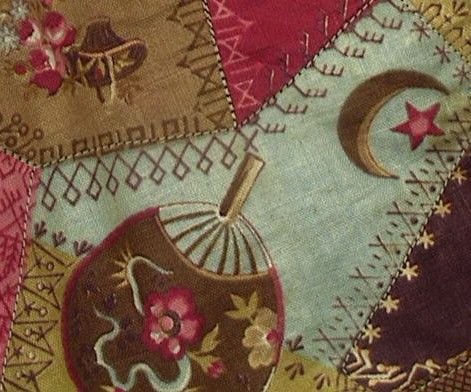
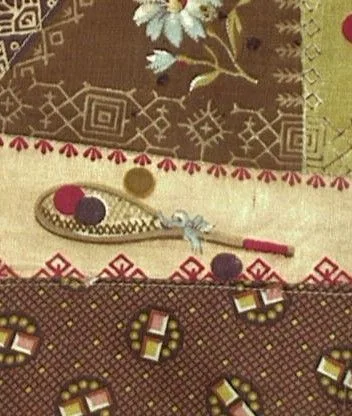
One of the many countries to exhibit at the Centennial Exhibition was Japan, which introduced Japanese art and design to American audiences on a large scale for the first time. Japanese-inspired motifs, like asymmetry and silk embroidery, soon caught on everywhere and became a major influence on crazy quilting. Even the silk ribbons handed out at the exhibition often ended up stitched into crazy quilts a few years later. Below is a “cheater cloth” version, fabric printed to look like an already-pieced crazy quilt, that was likely produced right around this time to cash in on the upcoming trend.
When Politics Borrowed the Party
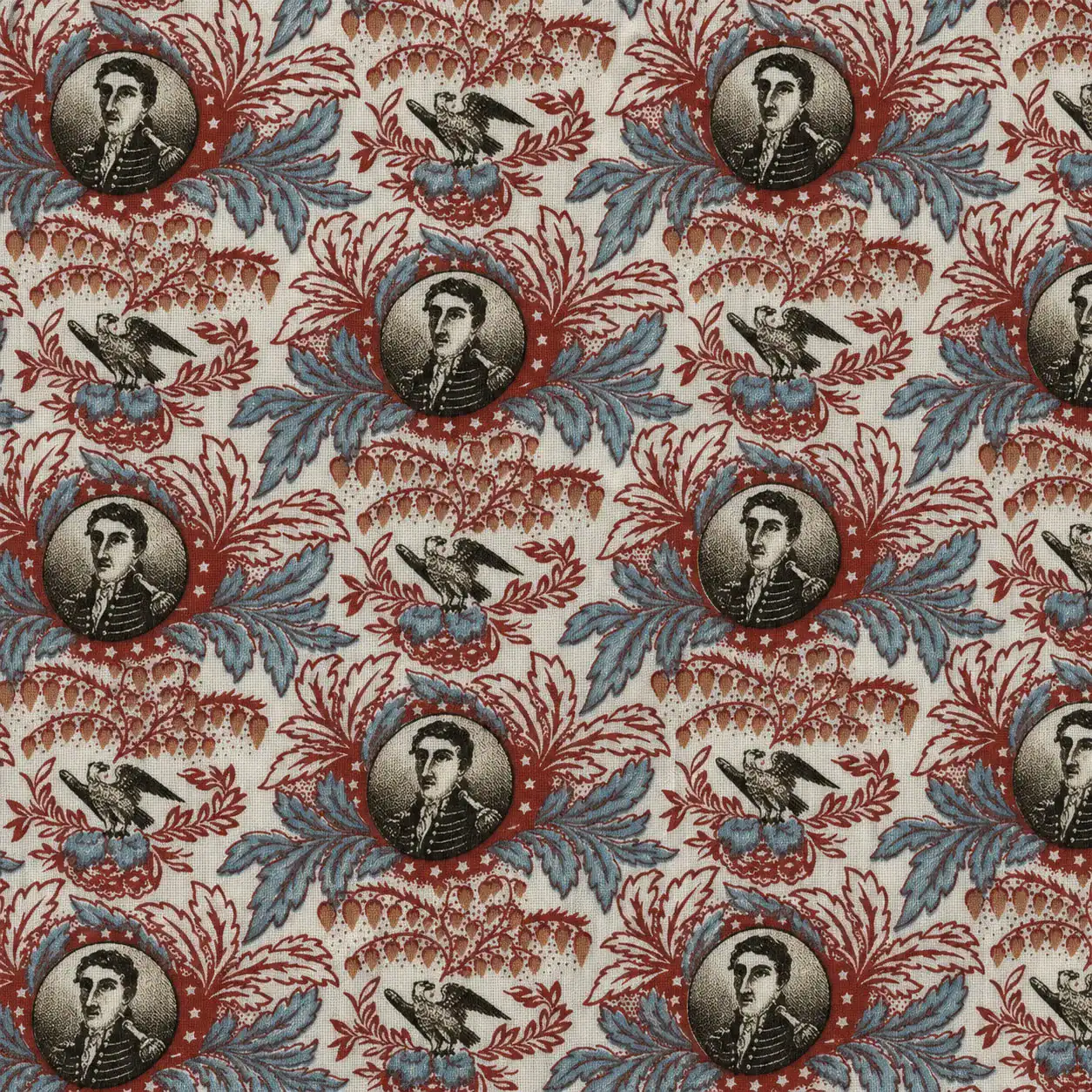
The Centennial wasn’t only about looking backward. It landed right in the middle of a presidential race, and both parties knew a good patriotic image when they saw one. Campaign kerchiefs had already been part of American elections for decades by 1876, with candidates depicted as heroic, Washington-style figures meant to borrow some of his credibility. That year, some of the rarest and most sought after political textiles combined portraits of both the Republican and Democratic candidates side by side, wrapped in the same Centennial imagery everyone else was buying at the fair. Political fabric was doing the same thing patriotic souvenir fabric was doing: borrowing a beloved national moment and hoping some of that goodwill would rub off.
Why This Matters for Dating a Quilt
If you come across a quilt with a fragment of eagle-and-flag print, a Washington medallion, or a labeled building tucked into a block, you may be looking at a piece of Centennial fabric that outlived its original handkerchief or dress. These fabrics are useful dating anchors precisely because they were tied to a single, specific event. Unlike a generic calico that could have been printed anytime across a couple of decades (I’m looking at you, double pink), Centennial fabric points to a narrow window around 1876, give or take a few years for fabric that got saved and reused later.
Here are some border prints you might have seen, with a caveat. They are pictures taken from a damaged quilt so I did ask AI to clean them up for me.
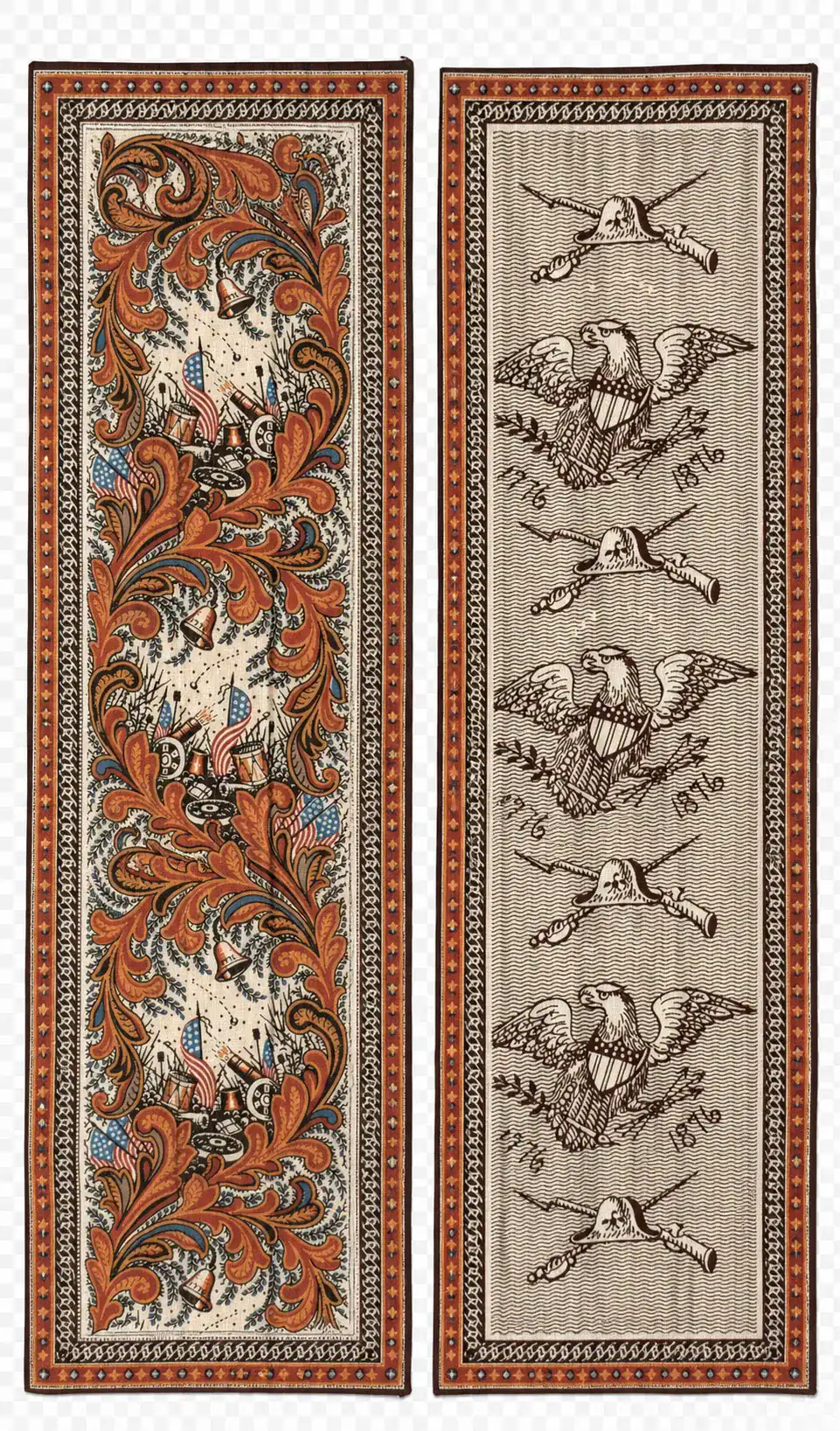
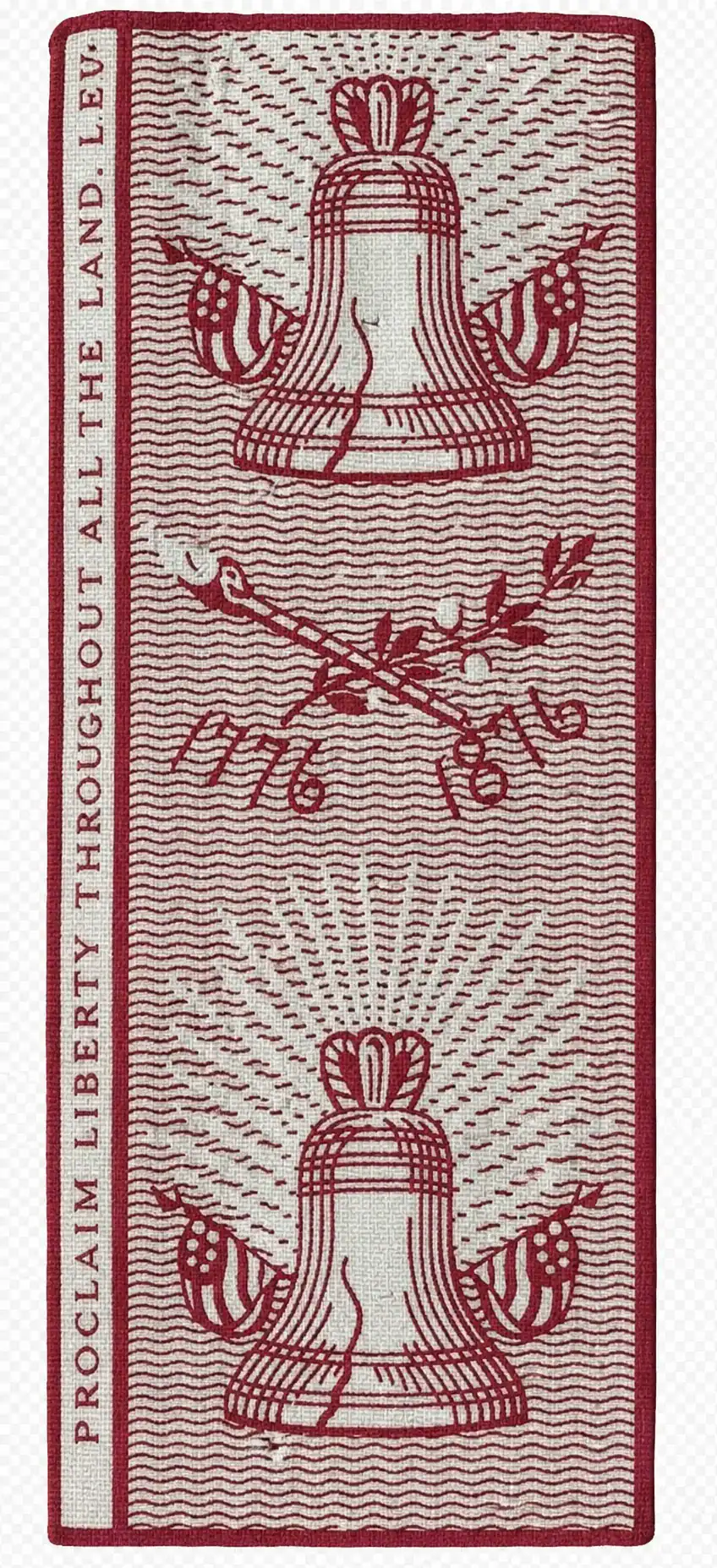
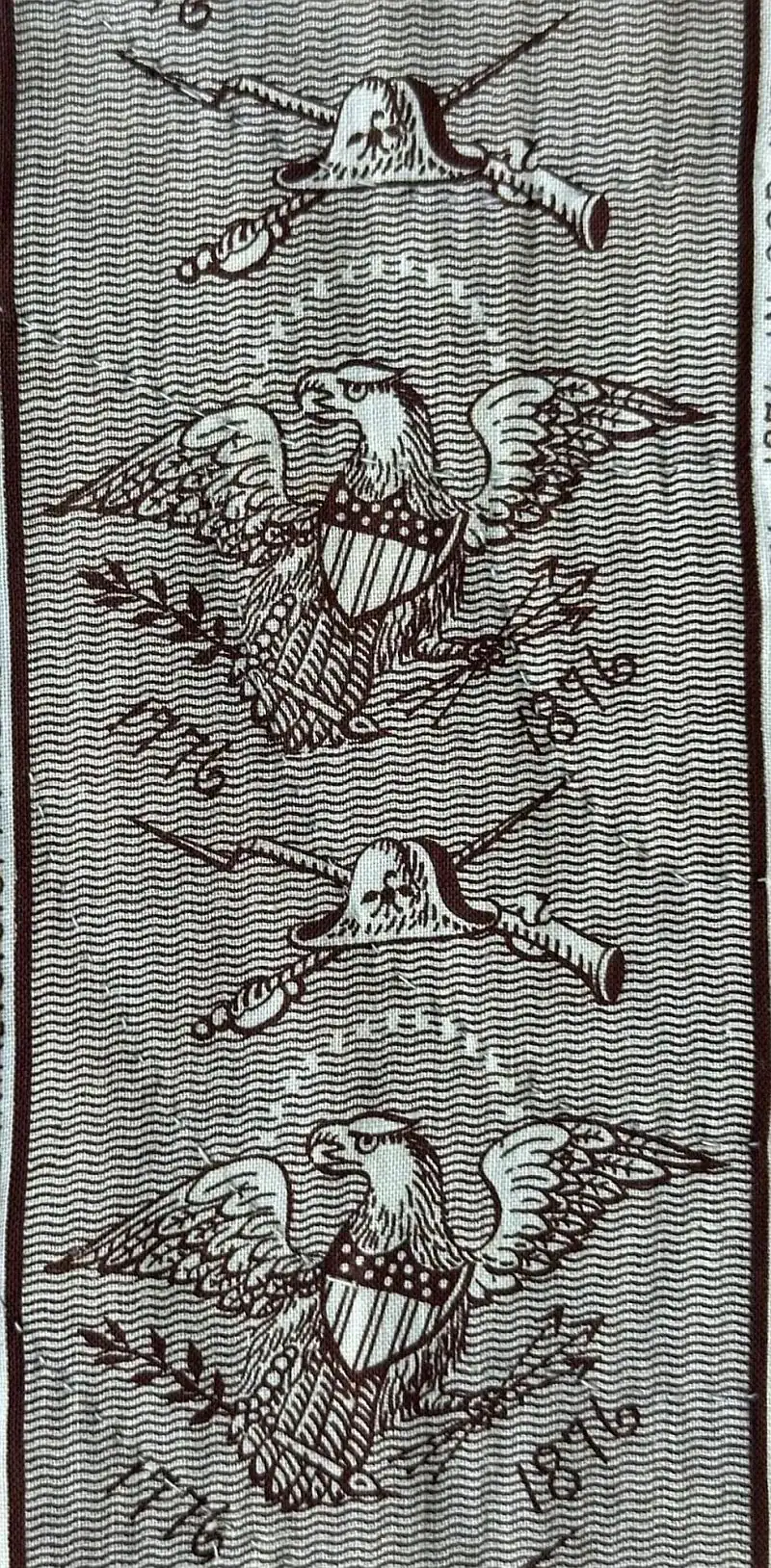
It’s also a good reminder that a quilt is often a scrapbook of leftovers. The maker didn’t set out to record a contested election or a nation’s uneasy peace. She just had a handkerchief or a ribbon left over from a big trip to Philadelphia, and it was too nice to throw away.
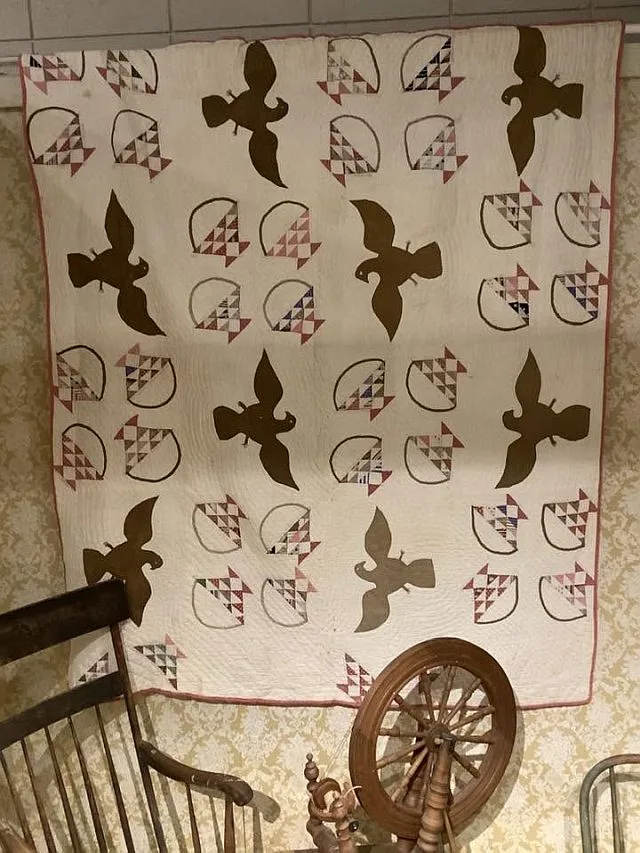
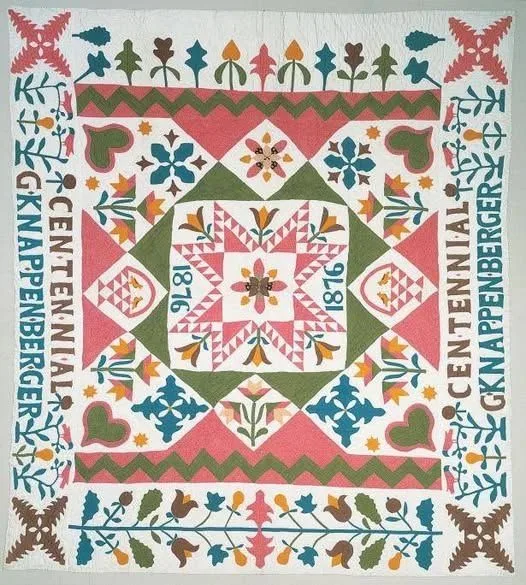
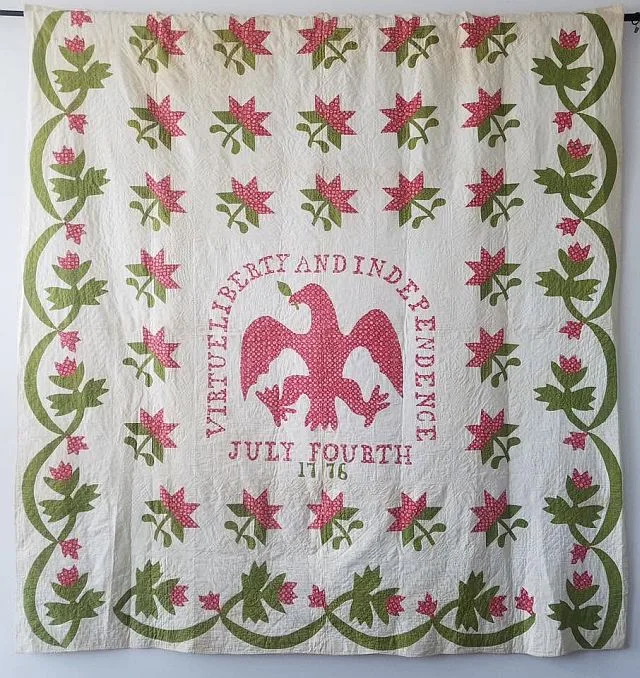
Some Centennial Quilts
Learn More
Books & Online Exhibits
- America’s Printed Fabrics 1770-1890
- Campaigns on Cotton, New York Historical Society via Google Arts & Culture — an online exhibit tracing the rise and fall of the campaign bandanna as a political tool.
- Commemorative American Quilts: Stitching Our Heritage from 1876 to Today by Sandra Sider — a full book tracing commemorative quiltmaking from the 1876 Centennial through today.
- Threads of History: Americana Recorded on Cloth, 1775 to the Present
Herbert Ridgeway Collins’s extensive Smithsonian reference on patriotic handkerchiefs, banners, quilts and printed textiles. - 1876: New Fabric/New Ideas
Barbara Brackman discusses novel Centennial cotton prints and illustrates several examples. - Visiting the 1876 Centennial Fair
Concentrates on souvenir textiles, quilts and what visitors may have encountered. - Official Catalogue of the 1876 International Exhibition
A primary source listing textile manufacturers, fabrics, machinery and other exhibits.
Museums
- American Antiquarian Society
- Art Institute of Chicago
- Library Company of Philadelphia Digital Collections
- Metropolitan Museum of Art
- Mary W. Stow’s “Centennial” Quilt, National Museum of American History — a quilt made from cut-up Centennial souvenir bandannas, including portraits of both 1876 presidential tickets.
- Esther Cooley’s “1876 Centennial” Quilt, National Museum of American History — a pieced quilt made from souvenir fabric the maker collected in person at the Philadelphia exhibition.
- Bradbury Family’s 1876 Centennial Quilt, National Museum of American History — a quilt assembled from manufacturer fabric samples sent to a New York dry goods merchant for the Centennial.
