May 30 – June 6, 2003
These restored messages come from the Quilt History List, an online forum where quilt historians, collectors, researchers, appraisers, and enthusiasts discussed antique quilts and related textiles. The archive dates from 1996 through approximately 2016 and is being restored gradually. Sign up in the form at the bottom of the page if you want to know when a new page is added. Original spelling, opinions, formatting, and inactive links may remain unchanged.
Primary topics of this QHL Digest:
- Mary Schafer Quilt Collection Auction — The Michigan State University Museum announces an eBay auction of Mary Schafer quilts, part of a periodic sale to fund the museum collection, with members discussing the sale and a related quilt vandalism news story.
- Outsider Art and Visionary Quilts — A continuing discussion distinguishing “outsider” from “visionary” art in the context of quilts made by self-taught or compulsively driven makers.
- Kettle Cloth Fabric Identification — Members identify and reminisce about Kettlecloth (Kettle Cloth), a bonded polyester-look fabric popular in the early 1970s for garments and later repurposed into quilts.
- Ombre / Handy Andy Block Naming — A discussion tracing the naming history of a five-patch block called Ombre by Maggie Malone, identified in Brackman as Handy Andy.
- Value of Reproduction Quilts — Members discuss whether the production of reproduction Jane Stickle and Salinda Rupp quilts affects the market value of the original antique quilts.
Date: Fri, 30 May 2003 16:10:30 -0400 | From: Beth Donaldson
Mary Schafer Quilts on eBay.
In 1998 Michigan State University Museum acquired 118 quilts from Mary Schafer. Per our original understanding with Mary and with her counsel, 75 quilts were selected for accessioning into the museum’s collection. The remaining ones were intended to be periodically publicly auctioned off to raise funds to complete the purchase costs of the collection as well as to help support the long-term care and use of the collection. In 1998 fifteen of the quilts were auctioned off. This is the first auction offering since 1998.
Born in Austria-Hungary in 1910 and later immigrating to the United States, Mary Schafer became one of an important group of women who kept quilting and quilt studies alive between World War II and the 1970s revival of interest in quilts. A resident of Michigan for most of her life, she has long been recognized as one of the forerunners of quilt studies and as a prizewinning quilter, as well as the developer of one of the most important quilt history collections in the country.
Watch eBay periodically in the upcoming months, the quilts will appear one or two at a time. The quilts being auctioned represent a wide range of Mary’s activities. Some are antique quilts she collected. Some are reproductions of antique quilts made by Mary. Some are quilt tops or blocks she found, added borders to and quilted. Some were started by Betty Harriman and finished by Mary after Betty passed away. All are an excellent chance to add an important piece of quilt history to your collection. All the quilts are catalogued with the Michigan Quilt Project and a cloth label is sewn onto the back with the MQP# to encourage you to keep in touch with us. If you have any questions on a quilt you see for auction, feel free to e-mail your questions and they will be forwarded to us.
More information about Mary Schafer and her quilts can be found in:
Cunningham, Joe. “Fourteen Quilts Begun by One Woman and Finished by Another.” Uncoverings 7 (1986): 61-71.
MacDowell, Marsha, ed. Great Lakes, Great Quilts from the Michigan State University Museum. Lafayette, California: C&T Publishing, 2001.
Marston, Gwen and Cunningham, Joe. Mary Schafer and Her Quilts. East Lansing, MI: Michigan State University Museum, 1990.
Beth Donaldson Quilt Collections Assistant Great Lakes Quilt Center at the Michigan State University Museum 201 Central Services East Lansing, Michigan 48824-1045 quilt line: 517-432-3800 quilts@ http://museum.msu.edu/glqc/index.html
Date: Wed, 4 Jun 2003 20:06:01 +1000 | From: “Lorraine Olsson”
http://cgi.liveauctions.ebay.com/ws/eBayISAPI.dll?ViewItem&item=3D2174105= 583&sspagename=3DADME%3AB%3ARECO%3AUS%3A2
I would like to see this all spread out (No affiliations of course) Cheers,=20 Lorraine in Oz
Date: Wed, 4 Jun 2003 06:15:17 -0500 | From: “Barbara Vlack”
Darwin offered: <<Thought some of you might enjoy this article written by <A HREF=”mail Ashleigh</A>. She is an appraiser and one of the Antique Road Show’s “Experts”
<<Copy and paste this address into your browser:
http://www.chubbcollectors.com/Vacnews/index.jsp?form=2&ArticleId=12 2 >>
RESPONSE: I found this article to be very interesting. Ashleigh listed 5 symbols (cross, square, triangle, circle, and spiral). The article suggested that many collect things relating to a certain symbol and the heart came to my mind. If my memory serves me correctly, Mary Emmerling had a book out a while ago about hearts for folk art collectors. Hearts certainly pervade in quilts and cross cultural lines. Denmark even puts a heart on some of its coins.
Barb Vlack cptvdeo@
Date: Wed, 4 Jun 2003 04:50:15 -0700 (PDT) | From: Kris Driessen
Just thought some of you might be interested to see what happened to the man who defaced a quilt at the Houston show.
“A Kentucky quilting machine manufacturer pleaded guilty Monday to defacing an Elvis quilt with bleach, ……”
http://www.chron.com/cs/CDA/ssistory.mpl/metropolitan/1934781
Kris
Date: Wed, | From: ARabara15@
I will be attending this auction and will report back with condition and winning bid price. They are truly a remarkable piece of quilt history. Donald Brokate
Date: [date unknown] | From: Midnitelaptop@
this is not a quilt….it’s a collection of blocks.. right? jeanL
Date: Wed, 04 | From: Joan Kiplinger
This is to let you all know that Candace is one of the most accommodating curators I have ever met, and if anyone on this list is ever in the vicinity of Schwenkfelder Museum near Reading, please stop in to meet this charming person. Last week I and some fellow travelers had the opportunity to meet her. She spent about 3 hours with us in a private viewing of some early 1800s PA German garments, going out of her way to answer our questions and taking up her otherwise valuable time. We also got to see a quilt display of old and new; 2 were by Barb Garrett. One quilt in particular by a first-time quilter caught everyone’s attention. It was created of blocks from old military uniforms. Some blocks contained service rank insignias; a few, pockets. To set off the drabs of olive and khacki, a bright red 2″ border was used. This museum visit was also an opportunity for me to meet Barb and Sharon Stark and her mate Bill, a most knowledgable gent about anything old. So thanx, Candace, for the grand tour.
Date: Wed, | From: ARabara15@
Yes, they were presented to the original owner and never assembled. Donald
Date: [date unknown] | From: jocelynm@
> That’s why I used the term “visionary” to distinguish…much of what we > originally labelled as outsider art is visionary…the artists have > visions > that compel them to create this art. There is one famous artist, in > particular, who was compelled by his visions to make a huge series of > paintings (can’t remember his name right now).
Hieronymous Bosch? Jocelyn
Date: Wed, 04 Jun | From: Joan Kiplinger
Jackie — I still have my Kettle Cloth “quilt” [meaning I don’t know what else to call this thing I made and quilt sounds the most fraudently respectible], flounce, shams and curtains. They were made in the late 70s, early 80s and are still in use and still look and feel new. So I can understand your admiration for this cloth. I didn’t realize that when I received the Kettle Cloth/Harvest Cloth information that there were samples of Harvest in the package. It is beautiful fabric, just a tad lighter than Kettle and would be beautiful as a quilt backing or even as part of top as well as for home decor. I don’t know where to obtain Harvest but have written to find out. I’m basing springs wording OTC as yardage for retail, hopefully. But I will let list know when I find out.
Date: Thu, | From: “Celia Eddy”
Hello, everyone,
In Maggie Malone’s 10001 Patchwork Patterns there’s a Five-patch block = she calls OMBRE. It’s not in Brackman or Beyer and I wonder if anyone has a provenance for it, or an alternative name?
An information appreciated,
Celia
Celia Eddy www.quilt.co.uk
Date: Thu, | From: Xenia Cord
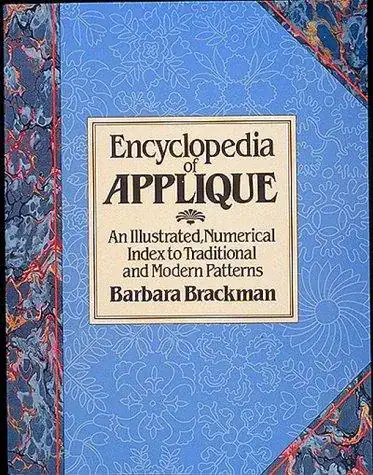
In Brackman, the block that Malone calls Ombre is #1878 Handy Andy (Finley). The set is half-square triangle units, 4 in each corner, set with a vertical and horizontal dividing strip and a square in the center. The strips in the Brackman illustration are solid, and in Malone they are squares pieced together.
Xenia
Date: Thu, 5 Jun 2003 15:48:11 +0100 | From: “Celia Eddy”
Thanks, Xenia. I can see the relation to Finlay’s Handy Andy, but the coloring of the Malone version produces a completely different block, to my way of looking at it. Interesting. And I still wonder where she got the name Ombre from! French for ‘shadow’ seems along way off anything the block suggests.
Anyway, I’m making a little quilt with the Malone verion and shall call t – OMBRE! Thanks again, Celia
Date: Thu, 5 Jun 2003 06:55:38 | From: “Barbara Vlack”
In the early 70s, I think a lot of my homemade wardrobe was made with kettlecloth. It was a wonderful bottom and dress-weight fabric that came in many colors and prints. In 1976 I made my brother and his bride a scrap quilt out of kettlecloth. It was in the days when I didn’t know any better about how to make a quilt. The top was large squares of my kettlecloth clothing scraps, the backing was kettlecloth, and I tied it with a double polyester batt. At the time I was so proud. But the double batt, used double for fluff, proved to be way too warm, even in Denver winters.
What’s now left of this quilt is a partial shell with singed edges, after an apartment fire many years ago claimed just about everything. I’ve looked at the piece of the quilt that survived, edges not only singed but melted, and I have laughed at my na�ve attempt to make this quilt. I had no idea that kettlecloth could have any “historical” significance for the period of time it was available and popular, though I was disappointed when it went out of production. I still have some yardage, I think, probably bought with an (outdated) intended use for play clothes. Remarkable thing is that the colors are still good! I wonder if it’s the polyester thing that kept them bright.
Barb Vlack cptvdeoinil.com
Date: Fri, 06 Jun | From: Joan Kiplinger
Following up on Weavers Cloth/Harvest Cloth — I received a call from Springs Industries today regarding some questions I had about its line which so meticulously duplicates the never-to-be-had-again Kettle Cloth right down to the last nub. Harvest Cloth is available at all chains such as Joannes and Walmart. The natural and dyed colors have a soft finish and textured feel and look while the white is calendered and considerably different in texture and appearance. Ask for fabric by Weavers Cloth name as sales persons probably won’t recognize Harvest Cloth. And, very important, this is not second-line fabric. I also learned why I did not like the white weaver’s cloth I bought several years ago at Joanne’s and was so disappointed in its appearance and properties after washing. Several years ago Joanne’s dropped the line and used a similar cloth nowhere near the quality of Springs fabric. It has now resumed stocking the real Weavers Cloth.
Date: Thu, 5 Jun 2003 | From: “Avalon”
Now that more reproductions of Jane Stickle’s quilt are being completed, does this increase the value of the original quilt made by Jane Stickle?
As the patterns are now available for the Salinda Rupp quilt to be reproduced, the same situation with the value of this original will happen with Salina’s quilt.
Mary
Date: [date unknown] | From: Barb Garrett
Thank you Judy for watching the auction and telling us the final price. The blocks are Beautiful — and I do mean that with a capital B <grin>. I was unable to stay for the auction, but I was fortunate to be able to spend 1 1/2 hours with the blocks this morning — from 7 am to 8:30 during the preview — studying and memorizing them <grin> — and nobody else was looking at them so it was wonderful <grin>. I just kept sorting through them — looking and comparing. The stitches are smaller than tiny — like perforations on a sheet of paper — that close together. The seamstress had to reposition the applique on 2 blocks (POLK name and star flowers) — and the stitching holes were visible where the applique was first attached.
There are 2 place names mentioned on 2 different blocks — Philadelphia and Kennet Square — a location in Chester County (now spelled Kennett) which has a large and long standing Quaker population. Dates range from 1844 to 1849. Family names include Holt, Bready, Worthington, Tyson, Lafferts, Swain, Hallowell, Wells, Kimball, Livingston, Howel, Rapson, Griffith, Kimbel. Both ladies’ and mens’ names are inscribed. A large variety of red prints was used — most with very small motifs — about 1/2 inch or less. I agree with Judy — all indicators that the blocks are probably Quaker.
Barb in southeastern PA Who feels very blessed to live in “Quilt Country” <grin>
Date: [date unknown] | From: “Avalon”
There is a picture in Quilt Masterpieces, page 26.
Sampler by Salinda Rupp Pieced cotton 88X87&3/4″ c1870. Lancaster County, Penn. Formerly in the Collection of America Hurrah Antiques, NY.
Mary