September 15 – 19, 1998
These restored messages come from the Quilt History List, an online forum where quilt historians, collectors, researchers, appraisers, and enthusiasts discussed antique quilts and related textiles. The archive dates from 1996 through approximately 2016 and is being restored gradually. Sign up in the form at the bottom of the page if you want to know when a new page is added. Original spelling, opinions, formatting, and inactive links may remain unchanged.
Primary topics of this QHL Digest:
- Quilt Restoration Conference Recap — Bob Mills praises the Restoration Conference in Omaha, and members share follow-up notes including the QHL group photo and conference logistics. (see the article on quilt restoration)
- Depression-Era Quilt Books — Members recommend resources on 1930s quilts including Merikay Waldvogel’s ‘Soft Covers for Hard Times,’ Woodward and Greenstein’s ‘Twentieth Century Quilts,’ and Sara Nephew’s ‘My Mother’s Quilts.’
- Wool and Cotton Batting Properties — Celia Eddy asks about wool battings, prompting detailed comparisons of wool, cotton, and polyester batting brands (Hobbs, Warm and Natural) and their warmth, washability, and drape characteristics. (see the article on quilt batting)
- EVE Fabric — Liggett & Myers Tobacco Selvage — Alice Cruz finds fabric with ‘EVE Pattern — Liggett & Myers Tobacco Co.’ printed in the selvage, and members speculate about the tobacco company’s connection to textile manufacturing.
- Quilt Show Insurance — Lisa Erlandson asks for a recap of earlier QHL discussion about guild show insurance requirements, including NQA membership.
- Male Quilters — Houston Exhibit — BLF recalls an exhibit of quilts made entirely by men at the Houston International Quilt Festival several years earlier.
- Quaker Meeting Quilt Project — Patricia Keller describes a Bucks County, Pennsylvania, Quaker meeting participating in a county-wide millennium quilt project celebrating local meetinghouse history.
Date: Tue, 15 Sep 1998 17:39:19 -0700 | From: BLF [at] fwpa [dot] com (BLF)
Recent talk of male quilters prompted my memory that several years ago there was an exhibit of quilts that were all made by men at the Grout Museum in Waterloo, Iowa. I believe it was titled, “Man Made Quilts”. I didn’t see the exhibit but I spoke to Robin Ventor, the curator, about the exhibit and she said that lots more men came to this exhibit than to their usual quilt exhibits and some said quietly to her that they too had made a quilt!
Good luck with your talk.
Bobbi
Date: Tue, 15 Sep 1998 20:32:23 -0500 | From: “Lisa Erlandson” <erland [at] cooke [dot] net>
A long time ago, there was a discussion about quilt show insurance on QHL – is there anyone out there who could recap this for me and tell me about NQA insurance and any other experience with quilt show insurance. Please email me privately if you have any info.
Thanks, Lisa Erlandson erland [at] cooke [dot] net
Date: Wed, 16 Sep 1998 06:29:53 -0400 | From: Debby Kratovil <kratovil [at] his [dot] com>
The National Quilting Association provides quilt show insurance. The NQA has a website (I know because I’m webmaster and also host their pages on my own personal space). Get to their site and then if your questions aren’t answered on their various pages (I can’t remember everything I’ve loaded!), then you can contact Gayle Sternheim who fields email for the NQA.
NQA – http://www.his.com/queenb/nqa
Debby Kratovil — Quilter By Design kratovil [at] his [dot] com
http://www.his.com/~queenb
Paper Piecing Patterns & More!
Mac Pfaffie 7570
Date: Wed, 16 Sep 1998 07:39:00 -0500 | From: Merry May <gridgees [at] algorithms [dot] com
Hi, Anthony, and welcome to the QHL list!
I saw your post about researching men and quilting, and wanted to point you toward an article in Quilter’s Newsletter Magazine. It was their issue #232 from May 1991, which includes an article about Albert Small and his three quilts… His first quilt, made in 1933-34, contained 36,000 pieces, each 3/4″ wide hexagons. Quilt #2 from 1939 contained 63,460 pieces, each 1/2″ wide hexagons. His third and final quilt, made from 1941-44 contained 123,200 hexagons, each 1/4″ wide. It’s an interesting article. Issue #232 should still be floating around out there somewhere! Perhaps someone on QHL has a spare copy. Take care. We can’t wait to hear what you come up with!!
—
Date: Wed, 16 Sep 1998 08:47:09 -0500 | From: Laura Hobby Syler <texas_quilt.co [at] mail [dot] airmail [dot] net
Well, while my so-called partner in crime Lisa Erlandson is pretending to be a college prof again, (sitting in for a former co-worker that had surgery) I’m going to toot our collective horn! We have an article on Red dyes that is in the current issue of Quilt Magazine. Winter, 1998…pgs 32-33…. Not to mention the fact that there are several pics of quilts from Lisa’s massive stash of quilts scattered throughout the magazine! I also have word that there is to be another article on “Blue” in a upcoming issue. ………The Feedsack Club newsletter reprinted an article that I wrote on One Patch designs (originally for the VQTS newsletter!) in their most recent issue. From one who switched majors in college from journalism to elem ed/Art/ Eng lit…….
…….oh, this IS fun!!!
Laura
IN r~e~a~l~l~y rainy N. Texas (YEAH!!!)
Date: Wed, 16 Sep 1998 07:09:48 -0800 | From: “Norma I. Herbold” <normah [at] olypen [dot] com
To all those who responded privately and through the list to my inquiry reguarding “appliquing or not appliqueing” over the product information on a old crib quilt kit , I very much appreciate the information you shared with me that I was able to pass on to my friend. Xenia provided some very valuable information reguarding the maker of the kit to add to the history of the quilt. I thank you all.
My belated thanks are due to the wonderful celebration that has surrounded my 50th birthday. Oliver, the cat, threw me a fantastic party, with guests bringing their favorite quote to write on a piece of muslin. Each piece is part of a block, and before long, I hope to have a picture of the quilt to scan and share on my web site. Thanks again to those of you who so generously share your knowledge with those of us who want to learn.
Norma Herbold
Greenhaven Enterprises
Quilt Retreats on the Olympic Peninsula
http://www.olypen.com/normah
Date: Wed, 16 Sep 98 14:07:10 EDT | From: “Bob Mills” <decision [at] tigger [dot] jvnc [dot] net>
What an incredible experience to attend the Restoration Conference. Alice, I don’t know how you had time to put in daily reports to QHL when so many of us were up til 1:30 looking at old quilts, swapping late night stories in the lobby while working on hand piecing projects, talking about what we learned or questioning others for restoration tips… By Sunday, I was into sleep deprivation.
Jennifer ‘forgot’ to mention that she negotiated 20 $60 seats for $5 apiece to hear Marilyn Horn singing with the Omaha Symphony on Saturday night. Jennifer, I need you around to negotiate for the next quilt or top I buy!! The Opera house was a 1920 decorative wonder of chandeliers, gilding, artwork and period architecture. Worth a trip alone.
The two days that many of us spent with Deborah Bede was an eye-opener. I had writer’s cramp from taking so many notes. The labwork included sewing techniques, chemistry of detergents, various materials to use in repairs and washing a quilt in a wonderful, huge tilted washtub which had an adjustable tilt using a car jack on one end.
If I learned anything from Deborah, it was the notion that conserving involves stabilizing and doing no irreversible repairs. The soap for cleaning was Orvus, in greater quantities than the label suggests. Two things were extremely important for me at the conference. The first was meeting people that also were fanatic about old quilts, who had this urge to rescue quilts that spoke to them and who were interested in quilt history.
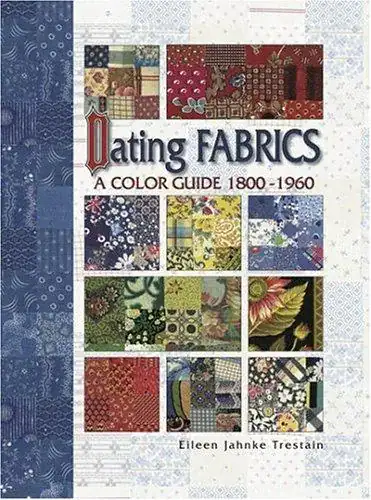
The second was seeing and touching so many examples of quilts and fabrics from a wide time span. Quilts were laid out on tables, were pulled out of suitcases, were draped over stairways. One could compare fabric in quilts from the end of the 19th c to those in an early 19th c quilt sitting side by side on a table. If a question arose re how something differed, Sharon Newman or Bobbie Aug would pull two examples from a stack for us to examine. The faculty were always available and many were in the classes themselves to learn and share information. Eileen Trestain’s book on fabric swatches by dates was delayed in the binding process so was not yet available, but I hope that Kris will carry it. I will snap it up as soon as it arrives. Eileen was kind enough to date the fabrics in the fabric swatch books that Judy Grow and I brought to her.
During a break in Saturday’s quilt show and tell, my 1870’s double sided comforter was determined to have another quilt inside. Two seam rippers came out and Sue and Kathy carefully picked out an edge of the comforter to reveal a much worn Irish chain in worn yellow and double pink with a wonderful, 1/2 inch wide pieced zig-zag style border. So now I will have three tops. I asked the conference participants what to do with the comforter. The vote was almost unanimous that I should separate the tops and quilt them as two quilts.
Although this was billed as a Restoration Conference, those who would love to have the opportunity to see antique quilts up close and talk with their owners and the experts should save up their money for the next gathering.
Nice work Nancy Kirk.
Jan Drechsler back in NJ
Date: Wed, 16 Sep 1998 18:02:26 EDT | From: KareQuilt [at] aol [dot] com
This just appeared on the [Virginia] Quilters Unlimited’s e-mail newsletter [QU Digest – September 16, 1998]. Is it a subject that the QHL list members would like to participate in also?
Karen Alexander
SILK THREAD – Debbie Babin (McL) would like information about the YLI Silk Thread that everyone seems to be using. Some of her students have questioned its durability over time.
The pros of using it are that the taupe and brown shades can be used for almost any color of applique, so thread colors don’t have to be constantly matched to fabric. In addition, the thin silk thread makes stitches virtually invisible. The question is whether it will endure over time. Other than sunlight possibly damaging it, or harsh washings possibly breaking it, are there any other reason why silk thread should not be used on applique for posterity’s sake? Send Debbie your feedback, and she’ll compile results for the QU Digest. her e-mail is:
babin4 [at] ameritel [dot] net
Date: Wed, 16 Sep 1998 23:13:13 -0400 | From: “John and Cinda Cawley” <cawley [at] epix [dot] net>
Susan McKelvey’s book Friendship’s Offering is a good source for appropriate sentiments for quilts. ISBN 0-913881-30-2. She has also written a book on Friendship quilts with Pepper Cory, one on labels and a collections of scrolls and banners for tracing.
I use them frequently.
Cinda in Scranton
Date: Thu, 17 Sep 1998 10:20:37 EDT | From: JQuilt [at] aol [dot] com
I am looking for quilt history books about the depression years with pictures of quilts made in those years(1930s)…can anyone recommend any titles? In fact is there a site where American quilt history books are listed?
TIA jean jquilt [at] aol [dot] com
Date: Thu, 17 Sep 1998 09:57:50 -0500 | From: Laura Hobby Syler <texasquilt.co [at] mail [dot] airmail [dot] net>
Jean,
From what I have here at my fingertips….
The obvious one is Merikay Waldvogel’s book ” Soft Covers for Hard Times”
ISBN1-55853-062-2 Rutledge Hill Press
Then the one that she and Barbara Brackman did on the 1933 World’s Fair…”Patchwork Souvenirs” ISBN 1-55853-27-9, also Rutledge Hill Press… I imagine that there are others as well, but these just happen to be at eye level on the bookcase <G>
Laura
OH…don’t forget to check the book list page that Kris has up on the QHL web site…she has some good reviews ( which we are *encouraged* to contribute to <G>) and offers most for sale at a *good* price!
At 10:20 AM 9/17/98 EDT, you wrote:
>I am looking for quilt history books about the depression years with pictures of quilts made in those years(1930s)…can anyone recommend any titles? In fact is there a site where American quilt history books are listed? TIA jean jquilt [at] aol [dot] com
Date: Thu, 17 Sep 1998 12:03:03 -0400 (EDT) | From: quiltsnbears [at] webtv [dot] net (Roberta Geanangel)
The three things I regret about the nine days I just spent in Omaha: 1. I lacked the time to get to know all the interesting people who were in attendance.
2. I lacked the time to see *every* quilt that was there. 3. I had airline reservations to return home the day of the added tour of the James Collection.
Guess I have to add a fourth: Nancy was talking of doing the conferences every two years instead of every year.
I *am* sorry, but if you did not attend this event you missed out on a very educational conference.
To all the QHLers who were there: I learned a lot from you!
Theodore sends his greetings also…
Roberta
Take your place in history..sign and date your quilts!
Date: Thu, 17 Sep 1998 16:42:05 | From: PATRICIA KELLER <pat/keller [at] usa [dot] net>
Dear Listers,
The Makefield Friends Monthly Meeting in Bucks County, Pennsylvania, is participating along with other Bucks County Friends’ Meetings and sites in a 16-site “Quaker Heritage Celebration” to be held October 3, 1998. The Makefield Monthly Meeting’s contribution was to invite people to bring heirloom/antique quilts to the Meetinghouse and to have a knowledgeable quilt appraiser or evaluator on hand from 10 am to 2 pm at the Meetinghouse to tell people about their quilts – historical significance, pattern name, age, unusual features, and market value, if that was something the appraiser was qualified to do. None of this information was planned to be in written form, just orally transmitted, in the interest of time (please, no flames about the oral part, I am not an organizer of this project). The person who had agreed to do this for the Makefield Monthly Meeting has withdrawn, leaving the group in need of a replacement – on very short notice! They contacted me today to try to find help – I am speaking on “Quaker Quilts in the Delaware Valley” at the event during the day.
If anyone is in a position to offer their services or suggest someone to contact, please contact the organizer,
Karen Shaudys, at (215) 493-9406 as soon as possible (she is not on email.)
An honorarium is available and is negotiable.
At this late date they realize it is probably going to be nigh near impossible to locate an available certified appraise. So instead of offering visitors market values for quilts brought to the event, they hope to find someone who can comment on pattern name, age, unusual features, construction, possible geographical area of origin – quilt historian information – and leave market values out of it.
I suggested to Karen that the QHLers might be a great source of help.
Thanks to anyone who responds!
Pat Keller
Get free e-mail and a permanent address at http://www.netaddress.com/?N1
Date: Thu, 17 Sep 1998 11:38:59 -0400 | From: laurel horton <kalmia [at] innova [dot] net>
For some of you quilt restorers who had such a fine time in Omaha, I have a question. A client in the Charlotte area asked me for references to quilt restorers in the Southeastern states. Who’s out there who fits this description, or who knows someone who’s not on the list? We’re talking about a collection of quilts–mostly late-nineteenth-century, as I remember–some of which need some work before they are exhibited.
Thanks!
Laurel Horton
Date: Thu, 17 Sep 1998 19:19:31 -0400 | From: Debby Kratovil <kratovil [at] his [dot] com>
At 10:20 AM -0400 9/17/98, JQuilt [at] aol [dot] com wrote:
>I am looking for quilt history books about the depression years with pictures of quilts made in those years(1930s)…can anyone recommend any titles? In fact is there a site where American quilt history books are listed?
Merikay Woldvogel’s “Soft Covers For Hard Times” is a perfect match here. Lots of pictures,history, and stories. Published by Rutledge Hill Press.
Debby Kratovil — Quilter By Design kratovil [at] his [dot] com
http://www.his.com/~queenb
Paper Piecing Patterns & More!
Mac Pfaffie 7570
Date: Thu, 17 Sep 1998 19:42:58 EDT | From: QuiltEvals [at] aol [dot] com
Hi all,
I am doing some research, and would like to contact the following quilters. If anyone has any suggestions on how to contact them, or if you have an address for them, would you please e-mail me privately. Thank you.
Deborah Roberts
Thelma Barr – VA
Dorothy Finley – TN
Donna Eddy Andrew – OR
Caryl Bryer Fallert – IL
Julia Needham – TN
Beverly Williams – MI
Linda Goodman Emery – KS
Rose Sanders – LA
Betty Ekern Suiter – WI
Janice Streeter – VA
June Culvey – IL
Debra Wagner – MN
Irma Gail Hatcher – AR
Jane Holihan – NY
Date: Thu, 17 Sep 1998 21:23:03 EDT | From: Quilt97 [at] aol [dot] com
Thanks to all those who wrote with suggestions, opinions, etc., about flannel quilt tying and batting. The interesting thing is that those who wrote are split 50-50 as to which is warmer, cotton or poly. Enclosed are two excerpted examples.
Interesting 🙂
Elisabeth
<< I’ve made a number of flannel quilts, only used W&N in one, it was way too heavy, it is a warm lap quilt tho! Impossible to hand quilt thru. I really prefer Hobbs Heirloom the 80/20 batting. It is just wonderful to work with.
Hope this helps! >>
>>I used warm and natural in the quilt I have on my bed and in the winter I
have to put another quilt with it. It isn’t half as warm as the quilt I was previously using, with poly batting. I thought it was just me or just that quilt, but I have since made a lap quilt and found the same thing, it isn’t as warm as the old one. So I am swearing off Warm and Natural from now on.
Date: Thu, 17 Sep 1998 22:22:15 -0400 | From: Anthony Jones <ajones2 [at] tampabay [dot] rr [dot] com>
To: QHL [at] cuenet [dot] com, JQuilt [at] aol [dot] com Subject: QHL: Re: books about 30s
Message-ID: <3601C3D7.E6FBA02B [at] tampabay [dot] rr [dot] com> Content-Type: text/plain; charsetus-ascii
Content-Transfer-Encoding: 7bit
I’m doing some research on another topic and found a delightful resource. Add to yout list, “Twentieth Century Quilts” by Woodward and Greenstein (E.P. Dutton). It covers 1900-1950, but there is quite a bit on the depression years in both historical context as well as a wide cross section of examples of the work.
I think you can find it at
Hickory Hill Quilts, http://www.hickoryhillquilts.com/books.htm Agree that “Soft Covers for Hard Times” is worth finding. Merikay Waldvogel is a very competent and sensitive researcher.
Good luck.
Date: Thu, 17 Sep 1998 22:27:05 -0400 | From: Anthony Jones <ajones2 [at] tampabay [dot] rr [dot] com>
oops, wrong URL. Should have been
http://www.hickoryhillquilts.com/heritage.htm
They have a lot of great quilt history books there. Worth a browse. No affiliation.
Good luck.
Date: Thu, 17 Sep 98 22:09:14 PDT | From: “Cheryl Longyear” <cml115 [at] ny [dot] tds [dot] net>
Hi Everyone,
This is my first response to the group. I’m enjoying all the wonderful input you have on quilt history/conservation/restoration. Jean, my very first quilt book was won at a library upon becoming interested in this “hobby” (obsession?): “My Mother’s Quillts – Designs From the Thirties” by Sara Nephew from That Patchwork Place B-96 (64 pages). It covers history, characteristics, patterns and interesting stories about 30s quilters with nice pictures of the quilts and their makers.
Cheryl cml115 [at] ny [dot] tds [dot] net
Date: Thu, 17 Sep 1998 21:09:39 -0600 | From: Sharon Harleman Tandy <harleman [at] micron [dot] net>
Hi all, I heartily recommend the surgeons’ square. Just ‘go through’ one more time at each part; ie, when you tie the first part, the ‘granny’, go through again; then the second part, also go through twice. If this makes any sense, you wouldn’t believe how tired I am, just back tonight from 2700 miles and 11 days at Omaha/QRS’98. Anyway, the surgeons’ square was shown me by my orthopedic surgeon and he swears by it, he ought to know, there’s enough of them in me! I’ve used it for years and have never seen one let go. I can demonstrate it much better than I can describe it. Try it. Quilted Chile: Thanks for the lovely words. You’re a peach! Sharon.
Date: Thu, 17 Sep 1998 22:24:04 -0700 | From: KAREN BUSH <Birdsong [at] worldnet [dot] att [dot] net>
If I want ‘warmth’ I use a poly batt..it must be the synthetic blend and the fact it’s ‘air-ated’ (is that a word)…and the cotton is denser. I know people who use Warm and Natural or any cotton brand for the ‘core’ and sandwich it with poly for warmth…I think I’d probably have a heat stroke with those, but, do like the poly for my tied quilts. 🙂 kb — used warm and natural in the quilt I have on my bed and in the winter I
> have to put another quilt with it. It isn’t half as warm as the quilt I was previously using, with poly batting. I thought it was just me or just that
KAREN BUSH- “QUILT AS DESIRED” The Tell All book on Hand Quilting AND Professional Hand Quilting Services
Member of American Quilter’s Society
Member of the Professional HandCrafters
http://thelistmanagers.com/procrafter.htm
Date: Thu, 17 Sep 1998 23:43:18 -0400 | From: Carole Spencer <spencer [at] bgnet [dot] bgsu [dot] edu>
“Twentieth Century Quilts 1900-1950” by Thos. K. Woodward and Blanche Greenstein covers the depression era (including quilt contests). The cover quilt, “Prosperity is Just Around the Corner,” is one of my favorites. There are also chapters on collecting and displaying 2oth century quilts. Marikay Waldvogel’s “Soft Covers for Hard Times” (as already recommended)
is a must.
Carole
<snip>
I am looking for quilt history books about the depression years with pictures of quilts made in those years(1930s)…can anyone recommend any titles? In fact is there a site where American quilt history books are listed?
TIA jean jquilt [at] aol [dot] com
Date: Fri, 18 Sep 1998 08:00:37 +0100 | From: “Sally Ward” <sward [at] t-ward [dot] demon [dot] co [dot] uk>
To: <QHL [at] cuenet [dot] com>
Subject: QHL: Re:Flannel Quilt Batting
Message-ID: <005a01bde2d5$907155e0$eb58e4d4@default> Content-Type: multipart/alternative;
boundary”—-NextPart000005201BDE2DA.6BD96880″
This is a multi-part message in MIME format.
——NextPart000005201BDE2DA.6BD96880
Content-Type: text/plain;
charset”iso-8859-1″
Content-Transfer-Encoding: quoted-printable
Hi Elizabeth
20
Did no-one mention Wool? I have Hobbs wool in my little flannel lap quilt and it is light, warm without being ‘sweaty’, soft and cuddly, and was like butter to quilt through. I know its expensive, but I’ve used it in all sorts and don’t think you can beat it for ‘comfortable warmth’.
20
Sally, looking forward to another long, wet winter in UK ——NextPart000005201BDE2DA.6BD96880
Content-Type: text/html;
charset”iso-8859-1″
Content-Transfer-Encoding: quoted-printable
<!DOCTYPE HTML PUBLIC “-//W3C//DTD W3 HT
Date: Fri, 18 Sep 1998 05:53:03 -0400 | From: Debby Kratovil <kratovil [at] his [dot] com>
Please DO NOT send attached files of either graphics or text unannounced. It clogs up the delivery of email when I download as I’m sure it does for others on the list. Tho I have a fast machine, that is not the issue. I do not like getting any files in my email that I haven’t been notified are coming. I’m sorry if this comes across angry. I haven’t said anything before but I really must say something as this has become a real bug-a-boo for me. Now that I’ve said it, I’ll get over it and will be nice on the list! But please, for the general list, please don’t send attached files this way. Thanks!
Debby Kratovil — Quilter By Design kratovil [at] his [dot] com
http://www.his.com/~queenb
Paper Piecing Patterns & More!
Mac Pfaffie 7570
Date: Fri, 18 Sep 1998 07:29:34 EDT | From: Baglady111 [at] aol [dot] com
Just had to share…I am putting out a line of FEEDSACK KITS..the kit allows for a finished 12″ pillow or the beginning to collecting all patterns offered to make a wallhanging/quilt…I took the ‘bags’ with me on the last three lectures, MO> NE> and PA..sold out all that I carried with me and picked up three quilt shops as well…I was just tickled!!
One lady came up to me and said, ” I am not into feedsacks and don’t know that I would ever work with them, but this is a piece of history not to be seen again..so just as I would not wear an old timey sunbonnet…I still use one to decorate my home..”
Now, to think SCANNER!!! any info on WHICH one to buy would be appreciated..Jane of THE FEEDSACK CLUB, cranking out kits in Pa.,,
Date: Fri, 18 Sep 1998 09:18:38 -0600 | From: Sharon Harleman Tandy <harleman [at] micron [dot] net>
To: QHL [at] cuenet [dot] com
Sorry, don’t know how to do these things and am working on nearly total lack of sleep lately. Our website was several months late in coming, our show is next weekend, and we were desperate to get it out. Many nice comments from those who were able to actually see the quilt. Thank you. A few blasts with instructions that are intelligeble to me, but will try to do better. Also thank you.
Shamefaced and trying hard, deepest apologies, Sharon Harleman Tandy, Quilts & Answers, Boise, Idaho.
Date: Fri, 18 Sep 1998 08:47:23 -0700 (PDT) | From: Marilyn Maddalena <marilyn [at] crl [dot] com>
To Deborah Roberts — it looks like the list of names for whom you’re requesting addresses is the list of the 14 Master Quilters so designated by NQA. Contact NQA at nqa [at] erols [dot] com — they would have the addresses.
marilyn in Sacramento
Date: Fri, 18 Sep 1998 21:00:49 +0100 | From: “Celia Eddy” <celia [at] eddy [dot] u-net [dot] com>
Can someone give me information about wool battings currently available? What are their advantages/disadvantages?
What are appropriate uses for them?
Are they washable?
Thanks in advance.
Celia Eddy in UK
Date: Fri, 18 Sep 1998 23:02:25 -0400 | From: Anthony Jones <ajones2 [at] tampabay [dot] rr [dot] com>
To: QHL [at] cuenet [dot] com
Subject: QHL: Re: QHL-Digest Digest V98 #269
Message-ID: <36031EC1.304D71BD [at] tampabay [dot] rr [dot] com>
You wrote:
<<Can someone give me information about wool battings currently available?
What are their advantages/disadvantages?
What are appropriate uses for them?
Are they washable?
Thanks in advance.
Celia Eddy in UK>>
The only one I know of readily available in the States is by Hobbs. It’s also available in Australia and I’d think in the UK as well. It’s advantages are many. It’s easy to quilt. If you heavily quilt or distort the quilt, it can be blocked to hang flat, It will hold it’s shape, which is also helpful if you pack and ship your work. It has loft similar to a poly batting. It is cool water machine washable which is not important to many artists, but is to me. Disadvantges are; bugs like ot eat wool which ay be less of a problem in the UK than in Florida. You can’t machine dry it, which is ok if you don’t machine wash. It’s about half again the price of comparable cotton battings. Wool blankets make excellent batting, too. In many area of the US he old army/navy surplus 100% wool blankets are still available. Unfortunately, they’re green and not suitable for light colored quilts. Be sure to ask about fibre content because many are now poly/wool blends. Perhaps in the UK you can find surplus RAF/RN blankets. Caryl Bryer Fallert deserves credit for this hint about using wool blankets. She uses them in her quilts and thinks they a flatter, more contemporary feel than the batting. They are also stable enough to support her extensive machine quilting.
Date: Sat, 19 Sep 1998 07:43:37 -0300 | From: KAREN BUSH <Birdsong [at] worldnet [dot] att [dot] net>
Hobbs has been the leader in wool batting, but, like everything else, the market is getting more manufacturerers of it. There are several new ones this past year. One is called “NatureOs Comfort”…the “O” has a little squiggle at the top and I can’t type that in.It comes in soft ivory and a dark. It’s l00% natural fiber. I haven’t used this one yet. But in general, I Love to quilt with wool, it needles beautifully, just like quilting through butter.
I have washed And dried the Hobbs, and depending on the amount of quilting, have had a lot of success with it. Most of the customers right now, prefer the ‘puckered’ look and wash/dry for the quilting to draw up to give the ‘antique’ look. I really don’t know why ‘puckered’ would be ‘antique’, but, it does give it a great look. If the quilting isn’t dense enough, then the quilt/wool batting will draw even more. Sometimes a little TOO much.
I’m working on one now with wool batting, and the batting was a new product, I don’t know the maker since it was already sandwiched and basted when I got it, but, it’s needling beautifully. The batt has no scrim (finish of poly to keep it from shredding, a bonding process) and, unlike cotton, I don’t have to contend with seeds in there. I would think, though, that you have to be very careful with oils just like the cotton batts. I’m sure there’s more on the market, I just haven’t been paying attention lately. Has anyone bitten the bullet,yet and bought a SILK batting???? I tried a sample, and it’s like quilting air…..WONDERFUL! But, I just can’t spend $l20 for a batting! hahaha… Oh, and I just read the post about this and the army blankets. I found out last year, that the Navy blankets, are off white. I bought one from the Salvation Army and it’s stencil says Property of the USN Medical Corps…??? it’s a lovely off white and the same weight (ugh, HEAVY) as the old green army blankets….I’m using mine for a Poncho/type cape. 🙂
kb
Date: Sat, 19 Sep 1998 12:32:00 EDT | From: Crowcreek2 [at] aol [dot] com
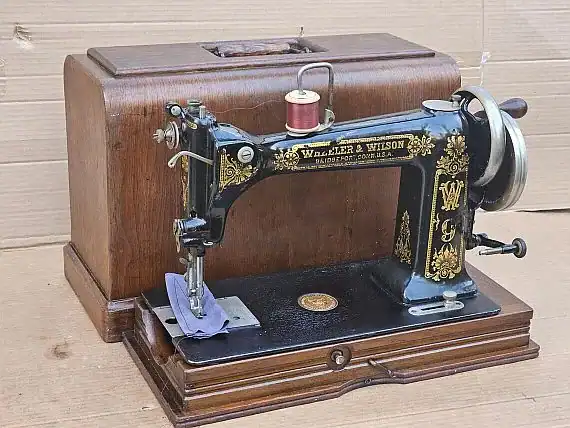
I live in Las Vegas/Henderson, NV and ran across two machines if anyone is interested:
FW221K in 8 condition, just checked out at a machine shop, but the attach. are not the originals. Selling for 375.00. Seriel #ES175579, with a case in great condition.
Phone:(702)385-2770 “field of dreams” antique mall
Willcox & Gibbs machine, serial # starts with an “A”, with wooden case. This one swivels on a pivit point, and locks into sewing position. Great shape for being over 100 years old. It is selling for 225.00, don’t know what attachments go with it, the owner was not there, we could’nt reach him at the time.
Phone:(702)387-0334 “Corner House” Antique Mall
Both places were very friendly and helpful, and also wanted to know how they worked, especially the willcox and gibbs machine. It is so interesting looking…..
Denise in Henderson, NV
Date: Sat, 19 Sep 1998 15:10:19 -0400 | From: Jean Binns Smith <shejean [at] vicon [dot] net>
Hi,
Was at the Fort Washington show on Thursday. Enjoyed. While I was there I leafed through a book on 30-40 fabrics. Brought back a lot of childhood memories. There was also on on the 50’s fabrics and one on the 60’s. Sorry now I did not buy it. Does anyone know the complete title and author ?
TIA
Jean in central Pa.
Date: Sat, 19 Sep 1998 15:12:42 EDT | From: KirkColl [at] aol [dot] com
It was a great conference in Omaha as you’ve heard. I’m still catching up on sleep and hugging my kids a lot — I don’t get to spend much time with them the last week. Thanks to all the extra Moms and Grandma’s who invited them to go swimming and to ride on the trolley with them.
We’re working on finalizing plans for next year. We had some discussion about an annual versus a biennial conference, with some retreats and intensive workshops on the off years.
However people immediately suggested two intensive workshops back to back with a general meeting in between — exactly the format as this year’s conference! In another couple of weeks we’ll let you know for sure. In the meantime, tentatively mark out the weekend after Labor Day and the days around it for “something happening in Omaha”.
And don’t foget the Crazy Quilt Conference in July. And NQA in June. Maybe just move to Omaha for the summer?
Nancy Kirk
Quilt Heritage Foundation
Sponor of the Quilt Restoration Conference
Date: Sat, 19 Sep 1998 15:38:39 EDT | From: KirkColl [at] aol [dot] com
We have our wool batts made custom for us by a mill in Minnesota. They are very thin queen sized batts — 2 pounds of wool per batt. The wool has been scoured to remove all lanolin so you don’t have to worry about the lanolin seeping into your quilt tops and batts. There are no resins added and no polyester scrim — just wool.
We also have a few black wool batts made each year from the sheep at Round Hill farm. Same size, and only the black sheep are sheared for us. They are dark black with just a hint to deep brown glow. Also 2 opund batts. Very thin and soft.
For more information drop a note or give us a call.
Nancy Kirk
The Kirk Collection
1513 Military Avenue
Omaha, NE 68111
KirkColl [at] aol [dot] com
www.kirkcollection.com
1-800-398-2542
Date: Sat, 19 Sep 1998 15:02:07 -0500 | From: Laura Hobby Syler <texasquilt.co [at] mail [dot] airmail [dot] net>
Jean, the 50’s book is
:”Fabulous Fabrics of the 50s..(and other terrific textiles of the 20s 30s and 40s)” by Gideon Bosker, mIchele Mancini and John Gramstad ISSBN 0-87701-811-1 $16.95. I think I picked up mine in Paducah at the AQS bookstore.
Laura
At 03:10 PM 9/19/98 -0400, Jean Binns Smith wrote:
>Hi,
>Was at the Fort Washington show on Thursday. Enjoyed. While I was there I leafed through a book on 30-40 fabrics. Brought back a lot of childhood memories. There was also on on the 50’s fabrics and one on the 60’s. Sorry now I did not buy it. Does anyone know the complete title and author ?
> TIA
>Jean in central Pa.
Date: Sat, 19 Sep 1998 21:15:31 +0100 | From: “Celia Eddy” <celia [at] eddy [dot] u-net [dot] com>
Thanks for some fascinating replies to my query about wool battings. It’s a whole new world to me, previously a dedicated user of pure cotton waddings. I’ve never liked the synthetic-feeling, bouncy-but-thin effect of polyester. Interesting that so many contemporary quiltmakers prefer natural materials like cotton and wool. Is there a message here?
Celia Eddy.
Date: Sat, 19 Sep 1998 16:52:29 -0500 | From: Laura Hobby Syler <texas_quilt.co [at] mail [dot] airmail [dot] net>
Subject: Re QHL WOOL BATTING
Celia Eddy wrote
>Thanks for some fascinating replies to my query about wool battings. It’s a
whole new world to me, previously a dedicated user of pure cotton waddings. I’ve never liked the synthetic-feeling, bouncy-but-thin effect of polyester. Interesting that so many contemporary quiltmakers prefer natural materials like cotton and wool.
Is there a message here?
Celia Eddy.>>
Celia,
I think that so many quiltmakers realize just why we quilt…it’s the tactile effect that playing with the fabrics has on us. Despite the advantage of a creative release, ….do you remember the post a while back about the pheromones released while in a fabric store…it may have been tongue-in- cheek, but it really must be true. Working with natural fibers really does give one pleasure.
On another note, from the restorers side of the coin, I’m seeing more and more quilts in for repair…ones that were tops from the 1850-1900’s that were quilted up in the late ’70s and ’80s with “the next best thing since sliced bread”…aka polyester batting …inside. The poly batting is much stronger than the cotton fabrics and it is -slowly, however, nonetheless- acting as a scouring pad and abrading our quilts from the inside out. I have to admit that I have about 6 of these myself that I had quilted up when I had my quilt shop . . . and I am watching them deteriorate on a daily basis . . . Live and learn!
From: Anita concerning washing wool fleece and fabrics
Wool does not like sudden changes in temperature, or agitation, So 1. Fill washer tub with hot water and mild soap.
2. TURN OFF WASHER.
3. Put sweaters/ whatever-you-have-that’s-wool in the washer, close the lid.
4. Go read e-mail for 30-40 minutes.
5. Go back to washer set on last spin, (the one that does NOT spray cold water on the clothes and cuts off after it’s done)
6. Remove all clothes from washer.
7. Repeat above steps but leave out soap and add 2 glugs of vinegar (take bottle of white vinegar to washer turn up, bottle will go glug, glug, ok that’s enough) the vinegar is to get the pH back to the acid side which wool likes. You can also add some hair conditioner, which will soften it. 8. Lay flat to dry.
That is all there is to it, I wash raw fleece this way, but with more soaps and at least 2 rinses. I would wash any wool labeled “hand wash” in the machine, as directed. Things such as suits have other fabrics in them also, rayon, stabilizers, etc., which might interact unfavorable so I dry-clean these.
Anita
Date: Sat, 19 Sep 1998 18:49:28 -0500 | From: Laura Hobby Syler <texasquilt.co [at] mail [dot] airmail [dot] net>
Hi! We carry this book at http://www.hickoryhillquilts.com/heritage.htm
for $15.11. It really is a great book.
And for the record, I have never kicked anyone off this list (though I have come awfully close.) That QuiltArt list sounds interesting, this is the second time a dispute has spilled over into this list;-)) I wonder if we maybe shouldn’t oughta change our name…
Kris
Jean, the 50’s book is
:”Fabulous Fabrics of the 50s..(and other terrific textiles of the 20s 30s and 40s)” by Gideon Bosker, mIchele Mancini and John Gramstad ISSBN 0-87701-811-1 $16.95. I think I picked up mine in Paducah at the AQS bookstore.
Laura
At 03:10 PM 9/19/98 -0400, Jean Binns Smith wrote:
>Hi,
>Was at the Fort Washington show on Thursday. Enjoyed. While I was there I leafed through a book on 30-40 fabrics. Brought back a lot of childhood memories. There was also on on the 50’s fabrics and one on the 60’s. Sorry now I did not buy it. Does anyone know the complete title and author ?
> TIA
>Jean in central Pa.
Date: Sat, 19 Sep 1998 19:13:54 -0500 (CDT) | From: akcruz [at] ix [dot] netcom [dot] com (Alfonso & Alice Cruz )
This is info for the QHLers who attended the QRC – For those of you who are immortalized (sp?) in the QHL group photo taken at the conference – I have the list of who we all are in the picture. I’ll send it out to you when I get the roster, but if you can’t wait til then, drop me a note & I’ll send it sooner.
Alice Cruz
The Quilted Chile akcruz [at] ix [dot] netcom [dot] com
Date: Sat, 19 Sep 1998 19:09:43 -0500 (CDT) | From: akcruz [at] ix [dot] netcom [dot] com (Alfonso & Alice Cruz )
I acquired a piece of fabric last week with this printed in the selvedge —
EVE Pattern — Liggett & Myers Tobacco Co., Inc. Does anyone know when this company was producing fabric?
More detail on the fabric itself:
It’s approximately 45″ wide. The pattern is a leafy floral. It’s a very busy print. Makes you think of a jungle, with leaves & plants crowding each other. There is no background – the print completely fills all space. The colors really make me think of early 1960s colors. Not bold & vibrant but not pastel.
The leaf colors are greens & yellow greens. The flowers have yellow, white, light blue & orange in different combinations, each color a separate round of petal on the flowers. Everything has a light black outline & the same light black is used to create shading on leaves & petals. There is a darker blue used in one flower. Also some small circles in bunches which give the feeling of grapes in the light blue and also a gray-brown which isn’t purple enough.
Another question – are there any books which document selvedge printing? How about textile producers? Any suggestions on how to research question like mine?
Alice Cruz
The Quilted Chile akcruz [at] ix [dot] netcom [dot] com