February 22 – 25, 2000
These restored messages come from the Quilt History List, an online forum where quilt historians, collectors, researchers, appraisers, and enthusiasts discussed antique quilts and related textiles. The archive dates from 1996 through approximately 2016 and is being restored gradually. Sign up in the form at the bottom of the page if you want to know when a new page is added. Original spelling, opinions, formatting, and inactive links may remain unchanged.
Primary topics of this QHL Digest:
- Underground Railroad Quilt-Code Debate Winds Down — The thread that dominated the prior digest reaches its closing arguments, with members citing published sources on both sides. (see the article on Underground Railroad quilts)
- Do Quilters Live Longer? Discussion Continues — Members debate methodology and share family longevity anecdotes in the ongoing life-expectancy thread.
- Quilting as Occupational Therapy — A tangent on quilting’s historical use in mental institutions and rehabilitation settings, including a firsthand account from an occupational therapist.
- Dating a Quilt by Its Thread — Members help estimate a quilt’s age from its stitching thread, and a separate inquiry seeks help dating a Trapunto quilt. (see the article on dating quilts)
- Hawaii’s Bishop Museum “To Honor and Comfort” Exhibit — An announcement for a major Native American and Hawaiian quilt exhibition and its accompanying lecture series. (see the article on quilt museums)
Date: Tue, 22 Feb 2000 22:04:41 -0600 | From: Mary Waller <mswaller@>
Mindy Sharp asked Do quilters on the average live longer than others? The upper Midwest or Great Plains has the greatest percentage of elderly population in the U.S., outside of Arizona and Florida. Don’t know if that can directly correlated with quilting, Nordic heritage, wholesome farm family values, etc. but practicing a technical skill and concentrating enhances one’s mental faculties and activities like quilting reduce stress (at least for some of us).
It’s probably my warped sense of humor (does that have anything to do with weaving?), but it strikes me as odd that wool dyed by humans to change its color retains the dye’s color over long periods, while the natural color of animals’ coats and fur and our own hair fade with light and time.
Mary Waller, Vermillion, South Dakota, USA
Date: Wed, 23 Feb 2000 23:20:19 -0500 | From: “J. G. Row” <Judygrow@>
Dear Midnight,
You don’t understand. This is an ongoing discussion by informed people on a topic of vital interest to everyone participating. This is not bickering.
This is not argueing. This is called discussion — debating if you will.
And this is exciting!
I for one am sorry you have decided to leave this discussion — and all the others that come along with it. You will miss some wonderful learning experiences. And we will miss your voice.
Judy in Ringoes, NJ judygrow@
>Date Tue, 22 Feb 2000 08:01:00 EST
>From Midnitelaptop@
>To QHL@
>Subject (no subject)
>i’m tired of all the bickering…i’m going to unsubscribe for a few months..will come back in May…and see if this “I’m right and your wrong” nonsense is still going on.
>bye for now
Date: Tue, 22 Feb 2000 21:56:15 -0500 | From: “John Cawley” <cawley@>
What bedcovering would have been used in a prosperous Quaker home of the first quarter of the 19th century in an urban setting in the Tidewater (Easton, MD)? Quilts? Coverlets? Other? I have consulted everything I could find on the subject of Quaker quilts Trish Herr’s articles in Quilt Digest 3 and Pieced by Mother, Patricia Keller’s article in The Magazine Antiques (August 1999) and her catalogue for the Brandywine Museum Exhibit, two articles in Uncoverings 1986 one by Tandy Hersch on the Primitive Hall Quilt, the other by Jessica Nicholl on Signature Quilts. But I don’t have a clear picture of whether quilts were the bedcover of choice at this time. Our local historical society is furnishing a bed and nobody seems to have given this any thought. I want to get it right. Can anybody help?
TIA.
Cinda on the Eastern Shore
Date: Tue, 22 Feb 2000 22:31:18 -0600 | From: Jocelyn <Jocelynm@>
> If someone hung any quilt outside in inclement weather, at night or for prolonged periods of time, wouldn’t that raise suspicion? And then I back at how do you identify the black center of any block in the rain or at night?
Mary,
Someone, during a previous incarnation of this story <G>, reported that their grandmother had told them that when she was a girl in the late 19th century, they hung quilts out daily. For one thing…it was a lot easier to freshen them than wash them, and for another, think about how many young children with uncertain bladders must have been around at the time. <G> It’s been proposed that quilts could be used as signals, to ‘conductors’
who were arriving with a wagonload of hidden slaves- if the blue quilt is on the line, come on in, but if the green quilt is out, don’t stop. If airing quilts were a common practice, slave catchers would probably never notice a woman or child switching the quilts. They might be guarding the man of the house, but chances are a mother could say, ‘Sarah, go tend the clothesline,’
and send a daughter out of the house, without rousing a bit of suspicion. But I agree with you 100% about the centers of the log cabins! Would YOU bet your life on being able to see the color of a 1″ square at several hundred yards? <G>
Date: Tue, 22 Feb 2000 22:31:25 -0600 | From: Jocelyn <Jocelynm@>
Can you imagine meeting your spouse-to-be at a mental
> institution?
Alan,
At least they were staff….I once had a patient who was conceived when his parents, who were state hospital patients, ran away from the hospital together….
Date: Tue, 22 Feb 2000 22:31:28 -0600 | From: Jocelyn <Jocelynm@>
> I’m white ,so I don’t really know, but I doubt that the black readers on this list will find anything about slavery humorous.
Jean,
One thing I’ve learned as a social worker, is that it is absolutely impossible to predict what a person’s reaction will be to anything, based on his or her race. I’m sure there are some people of all ethnicities who would say that some topics are just too serious to make jokes about, and then there are some people who’d say that that’s when humor is most needed. My favorite columnist, Leonard Pitts of the Miami Herald, writes about racial issues, and uses lots of humorous imagery. If you get a chance to read his column, by all means, do so. He’s a wonderful writer.
Date: Tue, 22 Feb 2000 22:31:32 -0600 | From: Jocelyn <Jocelynm@>
If African Americans say the book
> is true, what’s it to us on the Quilt History list? Why are we getting so upset over the book?
Judy,
I know many people who say their family is descended from a Cherokee princess. I also know many First Nations people who say that there never WAS such a thing as a Cherokee princess- that Cherokees did not have hereditary royalty. No one seems to know how the legend originated. It’s been suggested that it was a misinterpretation by whites, of the identity of a woman who was assigned a temporary ceremonial role (she MUST be a princess, look at how she’s dressed!), OR that Cherokee women were trying to increase their status vis a vis their white partners, OR that the white men were trying to justify having a Cherokee partner by describing her as being of high status.
So whose story would you accept as ‘true’- the family legends, or the modern First Nations people, who contradict it?
Being African American isn’t really a bona fide qualification for judging the quality of this book. An African American could have fallen victim to distorted family legends. It’s been over 150 years now- plenty long for people to have misremembered and misreported a story. (about as long ago as all those Cherokee-white liasons, for that matter).
As for why are we getting upset- isn’t it history we’re here to learn about? Shouldn’t we be upset at the possibility that inaccuracies and unsubstantiated stories are being reported as historical fact?
Date: Tue, 22 Feb 2000 23:54:37 EST | From: Bunjorda@
In researching Dr. Wm.Dunton,Jr. (Old Quilts, 1946), I found he encouraged quilting as “therapy” with his psychiatric pts. as early as 1915. He practiced ( and encouraged quilting) at Shepherd Pratt and Harlem Lodge Hospitals near Baltimore, Md. for many years. As he also founded Occupational
Therapy as a profession and edited the organization’s journal, I think this “theraputic tool” got an enthusiastic push from him. He attended Haverford College, which I believe is Quaker, so perhaps his ideas came from that source? I would love to know if anyone has seen any of the quilts made at these two Md. hospitals. I did my own nursing psychiatric affiliation at Shepherd Pratt, but didn’t learn any quilting there. (Perhaps the same warped sense of humor mentioned by Roberta, though <G>)
Bunnie Jordan
Date: Tue, 22 Feb 2000 22:58:05 -0600 | From: Russell-Hill <russhill@>
I need to add my 2 cents worth here also on life expectancy. First more women died from burning to death then in child birth. Once the wood cooking stove became a common item in the home that danger was down. So it may be that by the early late 1800’s there were more women cooking on a stove than over a fire.
I almost had a first hand experience of what can happen when cooking over a fire with a long skirt. I was greatful that I had been wearing wool and not cotton. I smelled it before I saw it. Now I have a great big burn hole to repair in my work dress but it is better then the alternative.
Being a reenactor we have had discussion on age a lot and now that many of us are reach the 1/2 century mark we marvel at the fact that if we had lived during the time period we are reenacting we would be respected for the fact we have lived so long and have avoided dieing from various deseases or fire or Indians or anything else that might have caused one to have not reached 50. Today if you reach 50 it is no big deal, it is expected. I just wish the respect of the 1800’s for the elderly still existed. That I am afraid died an early death.
Debbie
Date: Wed, 23 Feb 2000 17:08:29 +1100 | From: Sven Olsson <sven@>
Hello all,
I have a request from a client for a “pre-stencilled wholecloth quilttop”.
I do not have one, nor have I seen one, but I promised I would ask o} Does anyone have anything like this for sale, and if so would you please email me privately.
Thanks,
Lorraine in Oz
Date: Tue, 22 Feb 2000 22:38:23 -0800 | From: Barbara <qwhiltr@>
I saw this on the World Wide Quilting Page today, under quilt shows in the southwestern U.S. Note the special display and who is sponsoring the show.
Barbara Black in Ventura
Date: Tue, 22 Feb 2000 21:56:25 -1000 | From: “Laurie Woodard” <lwoodard@>
E komo mai! (i.e., ya’ll come!)
If you’re planning a visit to Hawaii nei, do take advantage of the opportunity to see the Smithsonian Traveling exhibit curated by OUR Marsha McDowell and husband Kurt Dewhurst at Bishop Museum, The State Museum of Natural and Cultural History in Honolulu. Native American and Native Hawaiian quilts are the focus. There’s also a wonderful exhibit catalog available through your local book store.
New Exhibits to open Saturday, February 26, 2000.
Come and join us for an opening reception from 930 to 1130am in the Castle
Building. Bishop Museum will celebrate the opening of “To Honor and Comfort” and “Aloha from Waikiki”. Meet the curators of the “To Honor and Comfort” exhibit, Marsha MacDowell and Kurt Dewhurst, who will give an overview of how and why the exhibit was developed. See how Waikiki was transformed from a mosquito ridden area into a mega resort. Admission required.
EXHIBIT LECTURES & WORKSHOPS
To: complement To Honor and Comfort, Bishop Museum will offer a special series of evening lectures and workshops. The exhibit will be open for viewing each evening (at no charge) beginning at 630 pm in Castle Memorial Building.
Lectures
730-900 pm, Atherton Hdlau. Bishop Museum
Price per program $5, (BMA $4), series of nine ($36) For information call Betty Lou Kam at 848- 4144 or Sarah Ili at 848 -4110 Monday, February 14 – Meet Margaret Wood
The work of Margaret Wood, Navajo/Seminole quilter, is featured in the exhibit. She will speak on Native American Indian quilting and her approach to this art. Her presentation is sure to be an exciting one and we’ll be able to visualize other American Indian designs through slides that she will show. Ms. Wood will also have some favored patterns available for purchase.
Tuesday, March 7 – Hannah Baker and Her Legacy
Well-known Hawaii quilter and historian, Elizabeth Akana, will share the story of quilter Hannah Baker and her incredible talent. Bishop Museum holds a large collection of Baker patterns, donated by Baker’s family. Ms. Akana will be able to relay some of the secrets hidden in the design of some patterns!
Tuesday, March 14 – Meet Harriet Soong
Harriet Soong lives in Kona and is recognized as one of Hawaii’s finest quilters. Ms. Soong will be available to discuss her work and will share a little on how she was introduced to quilting.
Tuesday, March 21 – Redwork Embroidery The “Other” Hawaiian Quilt Laurie Woodard of the Hawaiian Quilt Research Project will help us explore this little known type of quilt, adopted and adapted by Hawaiian quilters. Tuesday, March 28 – History of Hawaiian Quilts.
Laurie Woodard, long associated with quilt research in the Islands will guide the audience through the history of Hawaii-style quilting. Tuesday, April 4 – Inspirations for Hawaiian Quilts. Lee Wild will take us from idea to design in her slide presentation on Hawaiian quilts that are inspired by the natural world around us. Tuesday, April 11 – Bishop Museum Quilt Treasures
Join Bishop Museum staff Betty Lou Kam for a slide program presenting a selection of the Museum’s own quilted treasures!
Tuesday, April 18 – Native Plant & Animal Quilts Noted entomologist Dean Jamieson has been creating quilted wall hangings with Native plants and animal motifs for many years. Some of his quilts will be shown in Castle Memorial Building in conjunction with the To Honor and Comfort exhibit. Come and hear stories about this unique collection and how they reflect Hawaii’s unique natural environment. Tuesday, April 25 – Quilt Care and Identification
Experts Laurie Woodard, Lee Wild, and Barbara Harger will provide some important information on how to care for your quilts. Bring your quilts with you and they will be able to help you understand some of challenges in preserving your quilt. They may also be able to identify some of those unknown patterns of quilts that are unexplained family heirlooms.
Workshops
9 – 12 Noon, Pdko Conference Room, Bishop Museum
Price per workshop $10 (BMA $8) / Space limited, reservations required. Call Betty Lou Kam at 848- 4144 or Sarah Ili at 848 -4110 Saturday, March 11 – Quilt Pattern Tracing
Elizabeth Akana will host a quilt pattern tracing session on specific designs selected from Bishop Museum’s collection of Hannah Baker patterns.
Saturday, March 25 – Redwork Embroidery
With Elaine Zinn and Laurie Woodard.
Bishop Museum 1525 Bernice Street, Honolulu, Hawai’i 96817-2704 USA For more information call Bishop Museum at (808) 847-3511 http://www.bishop.hawaii.org/
—
Laurie Woodard
Researcher
Hawaiian Quilt Research Project http://openstudio.hawaii.edu/hqrp/default.html
Date: Tue, 22 Feb 2000 21:31:19 -0000 | From: “Sally Ward” <sward@>
I too am interested in the life expectancy of quilters, but beware ‘averages’. Last week I was at a medical museum in Leeds which said that at the turn of the century if living in the worst parts of Leeds my life expectancy would be about 42. But then we saw lots of records of people dying in their 70s or 80s. What was bringing the figure down was the apalling rate of infant mortality. If you made it past childhood you in fact had a good enough chance of getting old!
Sally W
Date: Wed, 23 Feb 2000 09:39:28 -0000 | From: “Sally Ward” <sward@>
> In researching Dr. Wm.Dunton,Jr. (Old Quilts, 1946), I found he
encouraged
> quilting as “therapy” with his psychiatric pts. as early as 1915.
And I think we have heard mention before about the remarkable work currently being done in British Prisons introducing long-stay male prisoners to quilting? They are calmed, absorbed, creative, take a pride in their work, learn a skill and even are looking at job prospects.
Sally W
Date: Wed, 23 Feb 2000 05:39:46 -0500 | From: “Judy Kelius (judysue)” <judy@>
It would seem to me that the prosperous Quakers weren’t that different from other prosperous citizens – a chintz whole-cloth quilt or one pieced from good fabrics would seem appropriate. At that time, there was a lot of communication and travel between Quakers in the US and those in England, so they had access to good imported fabrics and you might assume that their quilts shared some characteristics of English quilts. Quakers also often used silk in their quilts – I have a Quaker variable star quilt in silks with a robin’s egg blue chintz back that I date to the mid 19th century. I’ve also heard that 19th century Quakers would not buy domestic cottons because they were produced by slave labor, but I’m not sure if this is true.
There is also a book on Quaker Delaware Valley Signature Quilts called “Quilted for Friends” – I just looked to verify the name and was surprised to see it is available from Barnes and Noble for only $6.36 . . . a couple of months ago when I sold an extra copy I had, the information I got was that it was out of print, so this may be a great time to grab a copy at this price. They must have found a stash somewhere . . . Amazon doesn’t even have it. This is the catalogue from a 1986 exhibit at the Winterthur Museum. It is a great addition to any quilt historian’s library. BTW, I worked for a Quaker organization for 20 years, and I loved what our former Board chairman (a Quaker and president of a local bank) used to say “The Quakers came to this country to do good, and they did well.” This man was so Quaker that he used “thee” and “thou” when he spoke to me . . . and it was his natural way of addressing someone informally. It was charming! At 0956 PM 2/22/00 -0500, John Cawley wrote
> What bedcovering would have been used in a prosperous Quaker home of
the
>first quarter of the 19th century in an urban setting in the Tidewater (Easton, MD)? Quilts? Coverlets? Other? I have consulted everything I could find on the subject of Quaker quilts Trish Herr’s articles in
Quilt
>Digest 3 and Pieced by Mother, Patricia Keller’s article in The Magazine Antiques (August 1999) and her catalogue for the Brandywine Museum
Exhibit,
>two articles in Uncoverings 1986 one by Tandy Hersch on the Primitive Hall Quilt, the other by Jessica Nicholl on Signature Quilts. But I don’t have
a
>clear picture of whether quilts were the bedcover of choice at this time. Our local historical society is furnishing a bed and nobody seems to have given this any thought. I want to get it right. Can anybody help? TIA.
>Cinda on the Eastern Shore
Date: Wed, 23 Feb 2000 05:42:09 -0500 | From: “Judy Kelius (judysue)” <judy@>
Where I used to work, we used to say the only way to tell the difference between the patients and the staff was that the patients got better and went home <GR>.
At 1031 PM 2/22/00 -0600, Jocelyn wrote
> Can you imagine meeting your spouse-to-be at a mental institution?
>Alan,
> At least they were staff….I once had a patient who was conceived when his parents, who were state hospital patients, ran away from the hospital together….
Date: Wed, 23 Feb 2000 07:12:25 -0500 | From: “Diane McGuire” <dianemcg@>
Life Expectancy is an average of the ages of people who died in a certain period. Beth is right that infant mortality shifts the average much lower.
I am constantly looking for a source of statistics of life expectancy to use in my American Lit course. The kids have a really hard time seeing the difference between the 16th, 17th, 18th, 19th, and now 20th centuries. As experienced adults we have a much better perspective. I always tell them the story of Mary Leonard who lived in our little southeastern Massachusetts town. She rests now in the Leonard family plot along with five of her children who died within three weeks in 1778. Two of them died on the same day! We think it was a small pox epidemic. She must have been paralized with grief, and yet she has a footstone “mother” which makes me believe at least one of her children outlived her.
I found some statistics somewhere (I think about the 17th century) that if you survived until you were 10 years old you had a pretty good chance of living until at least 50 or 60 EXCEPT if you were a married female. Our local cemetery shows many young mothers died in childbirth. It is common for a husband to rest next to two wives and four or five children who died as babies.
I am willing to bet that quilters live longer because of their sense of community. The same reason married people live longer. We are constantly involved in each other’s lives on a most intimate level. And our level of activity, both mental and physical, is probably higher than average. Think of the exercise we get carrying around all those bolts of fabric through the store looking for the perfect color combinations! Our foremothers knew the Bee was the highlight of their social lives.
Diane in southeastern Massachusetts where I hope the thaw will melt the ice in my driveway.
Date: Wed, 23 Feb 2000 08:02:13 +0400 | From: Xenia Cord <xecord@>
Judy said <I’ve also heard that 19th century Quakers would not buy domestic cottons because they were produced by slave labor, but I’m not sure if this is true.>
There was a movement among some Quakers to limit their purchasing to those items produced by a non-slave economy – sort of like our trying to buy only American. It was often difficult to determine which products might have come from slave labor, and the issue was a devisive one among some Quaker comunities. In eastern Indiana, the Quakers were divided into those who espoused only free commerce items, and those who did not. Levi Coffin, of UGRR fame, was a free trade exponent.
Xenia
Date: Wed, 23 Feb 2000 07:20:08 -0600 | From: Laura Hobby Syler <texas_quilt.co@>
As for why are we getting upset- isn’t it history we’re here to learn
>about? Shouldn’t we be upset at the possibility that inaccuracies and unsubstantiated stories are being reported as historical fact?
AMEN!!!!
This is exactly the issue!!!
As stated before, it wouldn’t matter if we were talking about quilts used as signals for the French Underground during WWII……..Lets go “get” information from one of the “ole’ cronies”<G> sitting down at farmers market who is reminescing about what his family told him, but only “when we are ready to receive the information” and , quick, sew up some quilts for illustrations to “prove our theory” and get a lot of other passionate people who think…yeah, it could have happened that way to agree with us and write 1/2 of the book defending our “notion”…….
It just really makes me sad…………
Laura
In finally WET north Texas
Date: Wed, 23 Feb 2000 09:42:37 -0500 | From: Newbie Richardson <pastcrafts@>
Concerning the use of quilting in mental hospitals
When I was at the Univ. of Rhode Island textile dept. this past summer, I noticed that they had quite a collection of “miniature” floor looms. One of the gals in my group was a weaver. (she was a lady in her early 70’s) She explained that these looms were specifically manufactured and marketed for the mental hospitals for use in occupational therapy in the mid 20th c. Over the years she had collected quite a few examples of the table runners, place mats, etc. that were made. The looms were about 24″ wide.
On the accepted clinical therory that hands on “crafts” were theraputic, do you suppose that the type of therapy chosen would vary with the interests of the occupational threapist in charge as well as with the particular interests/expertise of the volunteer staff, as well as the availability of materials? Remember, these instutions were woefully underfunded and ignored at that point in our history. If we follow that thread, then quilting would be seen in more rural/agricultural regions where it was a more practiced craft in the mid-20th c. Perhaps beadwork was more popular in the desert southwest, and knitting/crotcheting in the upper mid-west, etc. (I know, I know, these are gross generalizations – but we were a whole lot more regional 50 years ago than today. The interstate highway system, the GI bill, and the growth of TV created a “homogenous” culture that did not exist before 1950.)
Just musing in Alexandria, Va. where we have crocuses! Newbie Richardson
Date: Wed, 23 Feb 2000 12:39:38 EST | From: AG32040@
I’m to locate a list of sources for a friend who wants to conserve some c. 1840-50 family quilts. Some of the fabrics have disintegrated and need overlay applique to preserve them . I believe the Textile Museum has printed a line as well as some other museums.If anyone has a list of sources could you please send them to me ?These quilts are in very good codition and quilted beautifully .
Thanks in advance, Amy Goodhart
Date: Wed, 23 Feb 2000 09:44:05 -0800 (PST) | From: Kris Driessen <krisdriessen@>
Cuenet has really tightened up. If you suddenly find yourself unsubscribed, it may have been because
1) your mail bounced for whatever reason, no matter how silly. Computers don’t care.
2) You posted in MIME or HTML, or with stationery. 3) You sent an attachment to the list – a picture, a business card, an inadvertant virus. 4) You cross-posted, creating too many headers. Once you fix the problem, you can resubscribe.
The instructions are at http://www.quilthistory.com
Kris
__________________________________________________ Do You Yahoo!?
Talk to your friends online with Yahoo! Messenger.
http://im.@
Date: Wed, 23 Feb 2000 17:40:41 +0400 | From: Xenia Cord <xecord@>
A correspondent has recently sent me the following
<I got a letter from an quilt historian who has been around since the early 50’s. She told me about a phrase I had not heard before.
“Quilter’s
Catalog” a term discribing a block collection made as a pattern record. Also I have heard about quilters(in the old days) making a block collection as a way to remember patterns, but now that I think about it…I can’t remember reading it. Is this a myth or is there solid evidence? It seems logical to me.>
I replied that I was aware of a firm tradition of saving quilt patterns in fabric form, and that I have bought at auction boxes of single blocks, each with a basted slip of paper on which the pattern name, or the name of the pattern donor or other information was written. In my foggy brain I seem to remember that there has been research published on this. Can anyone shed light?
Xenia
Date: Wed, 23 Feb 2000 16:34:58 -0600 | From: Valerie Davis <vpse@>
I’ve been an Occupational Therapist for the last 26 years and only once did I prescribe quilting with a patient. It is correct that therapists’ select particular arts and crafts for therapeutic reasons but time, space, and the interests of the OT has a lot to do with it. In the several mental hospitals that I have worked in (in the 1970’s) quilting wasn’t done, but making rugs on large floor looms were. Also big in the ’70’s was tiling, copper tooling, and macrami plant hangers! I wasn’t into quilting until the last 15 years, but then patients couldn’t have therapy for all that long because of funding limitations. I am proud to say that one of my patients made a quilt (male, age 16 yrs., out of old blue jeans) last year and it was so rewarding to see this teen realize so much self worth when his quilt was displayed in the cafeteria showcase! The occupation of OT (1917) was an offshoot of nursing in mental hospitals because it was realized that patients did better when they had purposeful activity in which to engage in. Unfortunately, quilting as a therapeutic medium isn’t used a whole lot, some OT’s I know don’t even know how to thread a needle. I recently was laid off my job (third time in 10 years) because of funding cut backs for children with special needs in Wisconsin. Oh well, more time to quilt! I decided several years ago to go back to school and pursue my life long interest in history. Valerie
Date: Wed, 23 Feb 2000 18:48:30 EST | From: @aol.com
There’s an article about this very topic in =Quiltmaking in America,= the collection of papers from Uncoverings. It’s not a myth, but was fairly common in the 19th century.
Karen Evans
Date: Wed, 23 Feb 2000 18:59:19 -0600 | From: “Debra Reynen” <drey@>
I acquired a full bed size Trapunto quilt at an antique shop. The dealer did not have any information regarding where it was from or how old it was. I paid $450 for it, which was a lot for me, but I figured that I would probably never see one again in my life, so I bought it. It is in good shape overall with a couple of places that the stitching is broken and the stuffing is in a ball. I am curious on how to try to determine the date of this quilt. As far as I can see there is no date or name in the quilting and of course no label. The fabric is a cream color cotton on the top and bottom.
I am a member of this list to learn and so I only post occasionally. Without taking it to a professional for an appraisal (which I will eventually do), is there any way to determine how old this quilt is? I have been adding to my library of reference books and have the Dating Fabric book (which is great). But since the fabric is just cream cotton, I don’t know where to start. Are there any other ways that an amateur could try to do this? Are there books that would help to identify the date from the quilting pattern?
Any information you could provide would be great.
Debbie (in Chicagoland area)
Date: Wed, 23 Feb 2000 21:24:02 EST | From: Palampore@
Thanks for all the kind notes about our cat, Pounce. We will probably go ahead with the surgery, but after we do a bit more research. Will let you know how it goes. She will purrrrrr extra loud when I tell her how concerned everyone has been! This list is great!
We put up my mother-in-law’s show and it is super!!! She can’t see it very well, but still seems very pleased. My husband seems the most excited over it, so it makes it all worthwhile. He is enjoying showing off his mother.and her accomplishments………
I opened a file tonight that had a virus. I do hope that none of you I wrote to about the cat got it. It was a file supposedly about “Black History – Quilts”. Did anyone else get it? Unfortunately I was not sharp enough to pick up on the “exe” that was hidden in it. It took ages to get the computer back to normal.
Good night, Lynn in New Bern, NC
Date: Wed, 23 Feb 2000 21:40:49 -0500 | From: “John Cawley” <cawley@>
Did anybody else get to see Judy talking about her James Monroe quilt on Presidents’ Day? I felt proud vicariously for all of us QHLers that one of our own was a winner in the American Presidents Contest. I’m sure that C-Span will run the series again. I didn’t see all 41 episodes, but most of those I did see were marvelous and anyone interested in American history should make a point of seeing these programs. (Sorry to say see three times in one sentence).
Cinda on the Eastern Shore
Date: Wed, 23 Feb 2000 22:46:16 EST | From: WileneSmth@
Xenia and Karen — I presented a research paper on this subject at the AQSG seminar in 1986. It’s in Uncoverings 1986 and was updated and reprinted in Quiltmaking in America. The idea began to formulate itself after I had bought quite a few collections of these myself, then went searching through all my original research material for contemporary evidence and found several mentions of them in various forms. Several years ago, I bought yet another collection on eBay from a seller right here in KS so picked them up the very next day in person! Several of the blocks actually have the names written on the back in pencil and in an older style handwriting — the ultimate #1 item on my wish list! This group ranges from the late 1880s to the 1930s, and many were easily matched to their original published sources. Others have names we’d not recorded before. Needless to say, I was thrilled beyond words with finding them. The term, quilter’s catalog, is from Delores Hinson.
–Wilene
<< Date Wed, 23 Feb 2000 17:40:41 +0400
From: Xenia Cord <xecord@>
To: QHL@
Subject: A new topic
A correspondent has recently sent me the following
I replied that I was aware of a firm tradition of saving quilt patterns in fabric form, and that I have bought at auction boxes of single blocks, each with a basted slip of paper on which the pattern name, or the name of the pattern donor or other information was written.
In my foggy brain I seem to remember that there has been research published on this. Can anyone shed light?
Xenia >>
<< Date Wed, 23 Feb 2000 18:48:30 EST
From: @aol.com
To: qhl@
Subject: Re QHL A new topic
There’s an article about this very topic in =Quiltmaking in America,= the collection of papers from Uncoverings. It’s not a myth, but was fairly common in the 19th century.
Karen Evans >>
Date: Wed, 23 Feb 2000 22:58:41 -0500 | From: jthompson <jthompson26@>
Cinda,
Thanks for the nice comments on QHL. It was a wonderful experience to be among the winners. The others were as passionate about the history of their president and his times as I am, it made for marvelous conversation.
I was fortunate enough to be seated at dinner next to Brian Lamb and with Doug Brinkley, John Splaine and Richard Norton Smith. We spoke about current events and former presidents, comparisons and contrasts, some inside stories and more great conversation. We dined at the rooftop restaurant of the Washington Hotel overlooking the White House at sunset and later illuminated on a clear night. Sound like a “fairy tale come true” for a history buff? I didn’t want the evening to end but the Pumpkin Coach was leaving…where is that glass slipper? C-SPAN did a tremendous job of seeing that we had a great time. They were as thrilled with themselves about the series as we were. Next series is yet to be determined and they were open to suggestions…it will have to come after the election.
Judy
Date: Wed, 23 Feb 2000 22:35:11 -0600 | From: Laura Hobby Syler <texas_quilt.co@>
Debbie, an easy place to start is by inspecting the thread used to stitch the quilt. Refer to “Clues in the Calico” Barbara gives a good guideline and diagram on thread twist and ply counts to help establish a “prior to” date. From: there….best bet is to go to www.quiltappraisers.org and locate a member of PAAQT in your area.
Laura Hobby Syler
AQS Certified Quilt Appraiser member of the
Professional Association of Appraisers of Quilted Textiles At 0659 PM 02/23/2000 -0600, Debra Reynen wrote
>I acquired a full bed size Trapunto quilt at an antique shop. The dealer did not have any information regarding where it was from or how old it
was.
>I paid $450 for it, which was a lot for me, but I figured that I would probably never see one again in my life, so I bought it.
>It is in good shape overall with a couple of places that the stitching is broken and the stuffing is in a ball. I am curious on how to try to determine the date of this quilt. As far as I can see there is no date or name in the quilting and of course no label. The fabric is a cream color cotton on the top and bottom.
>I am a member of this list to learn and so I only post occasionally. Without taking it to a professional for an appraisal (which I will eventually do), is there any way to determine how old this quilt is? I
have
>been adding to my library of reference books and have the Dating Fabric
book
>(which is great). But since the fabric is just cream cotton, I don’t know where to start. Are there any other ways that an amateur could try to do this? Are there books that would help to identify the date from the quilting pattern?
>Any information you could provide would be great.
>Debbie (in Chicagoland area)
Date: Wed, 23 Feb 2000 22:55:22 -0600 | From: Russell-Hill <russhill@>
Mary and the list,
I have to say that outside of AR and Fl, Fredericksburg TX has all the other elderly. It is quite evident on a day that I need to get some place quickly that they all have decide to get on the roads and drive. It is also the case when I need to go to the grocery for only a few things and find that they have managed to bet me there, where they hold their social club meetings and therefore my quick trip to the store has not been so.
I am willing to bet that our little town is going to be at the top of the list in the next few years as have thie most elderly anywhere in the USA.
Debbie, saying this tongue in check yet at times it seems so true.
Date: Thu, 24 Feb 2000 10:40:13 -0500 | From: Newbie Richardson <pastcrafts@>
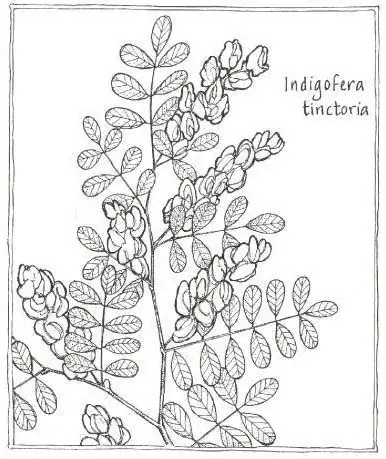
Cinda, unfortunately most of the scholarship on dressing beds in the late 18th and early 19th c. is from New England. The Society for the Preservation of New England Antiquities (SPINEA) has serveral publications on this topic, but all the info is northern. I did this for a living until the tax laws changed in the late 80’s and we lost the tax credit for historic preservation of private residences. I did a lot of work in St. Mary’s Co. Maryland. the trade influences tended to be British – many by way of the Carribean. Mosquito netting was very important for the summer months. Tidewater is a more difficult location to research because it was not on direct trade routes as Charleston and Annpolis were. As has been pointed out by others, there are many forms of religious observance in the Quaker Communities as there are among Jews. However, according to David Hackett Fischer, prof. emeritus of history at Brandeis, and author of the BEST book on cultural influences Albion’s Seed Four British Folkways in America,(still in print and available everywhere) the Quakers tended to avoid dyes in general (they hid the dirt) and indigo in particular. Indigo was absolutely a product of slave labor.
When was the house actually built, you can’t get more specific than a 25 year window? How wealthy and socially prestigious was the family? The chances of there having been a quilt on the best bed are slim – more probably a matching set of curtains/testers and spread of printed textiles/home woven plaids/ or crewel embroidery.
That said a really good source of information is Sumpter Pridy/ Sumpter Priddy Antiques in Alexandria, Va. He is one of the country’s leading experts on Southern dec. arts – and a hell of a nice guy. Also talk to Orlando Rideout @ Historic Annapolis, or Freddy Struse at the Hammond Harwood House. She is lives at Rideout House/120 Duke of Glouchester Str. Annapolis (Mrs.R.Clayton Struse). There isn’t much she does not know about Maryland Dec. arts and interiors. She has small kids so you can call her at home!
Good luck
Newbie
Date: Thu, 24 Feb 2000 22:17:23 -0000 | From: “Jenni Dobson” <jenni@>
On the topic of wool colors fading, I would like to add to the comment from Aus. about the dark sheep whose coat lightened up at the tips as it grew.
Over here in the UK, we also have quite a lot of sheep and particular breeds tend to be favoured by different parts of the country. Up in NW England is an area called the Lake District where there are several varieties with color variations I can say I have seen ‘black’ sheep, not just lambs – & even bought yarn spun from such fleeces & knitted into a sweater (before I became so avid a quilter! <G>) And yes it stays very dark, tho’ not absolutely black when compared with synthetic modern black dyes. I recently sent one to a charity shop, knitted probably over 15 years ago, more hard done-by not at all faded.
Also there’s a variety called Jacob’s coat, sheep with mixed colours & produces a characteristically patchy or mottled yarn when spun. And there’s the Herdwick, which is naturally grey.
Any of these spun into yarn for weaving into cloth would I am sure not fade for the proverbial ‘donkeys years’.
And in passing, I live within walking distance of the home of Robert Bakewell, an agrarian reformer of the C18th / early C19th who was one of the first people to aim to breed sheep for different purposes (ie for better fleeces or better eating <G>)
Jenni D in UK.
Date: Thu, 24 Feb 2000 18:34:05 -0600 | From: Jocelyn <Jocelynm@>
> I am willing to bet that quilters live longer because of their sense of community. The same reason married people live longer.
On the other hand, we know these women as quilters because their quilts survived, right?
A woman who died young simply hadn’t had time to make as many quilts, and during her child-rearing years her quilts were heavily used. After her children were grown, she had more ‘leisure’ to make quilts, and to make the sort of ‘fancy’ quilts that were going to be treasured by her descendants. Plus, her quilts wouldn’t be as heavily used! So not only was she making more quilts each year at 50-60 than she made at 20-30, fewer of them were wearing out, and more are surviving to end up in museums.
Date: Thu, 24 Feb 2000 20:45:34 -0700 | From: “Eileen Trestain” <ejtrestain@>
Knowing you ladies to be wizards at finding historical info, I am looking for purchasable postcards, preferably in packs like the set one can buy at Sturbridge Village, featuring 1840-1850 period reinactments. A living history museum which covers this period, like Sturbridge, would also be a great help. TO not waste any one else’s time, please email me privately.
If you also happen to know of any 1860-70 period postcards with the same type depictions, I am also interested in those.
Found a (so far) great book, called ” Incidents in the Life of a Slave Girl”
written by Harriet Jacobs, and edited by Lydia Childs, that paragon of early
19th century life. The incidents written of in the book have been researched, and most validated, though intentional name changes were made, to protect the innocent, and the guilty. It was written in 1857 by Harriet Jacobs, who was an educated slave, who escaped to the north.. The book was sold by the abolitionist movement as part of the fight against slavery. It is well documented and footnoted at the end, as to where and how teh info has been substantiated.
Date: Fri, 25 Feb 2000 02:02:41 EST | From: Kathi2174@
Hello All,
I’d be very interested in the comments of our colleagues after viewing the Log Cabin on ebay, # 268820852. It is from Maryland and is carrying the earliest date I’ve heard for this pattern. What is the Eastern opinion?
Kathi in Calif.
Date: Fri, 25 Feb 2000 07:18:31 -0500 | From: “Judy Kelius (judysue)” <judy@>
Although it would help to see the quilt itself, I’d say that their date is at least 100 years off! Just because something is written on a piece of paper does not mean it is true! NO WAY is this quilt from the 1760’s. At 0202 AM 2/25/00 -0500, Kathi2174@ wrote
>Hello All,
>I’d be very interested in the comments of our colleagues after viewing the Log Cabin on ebay, # 268820852. It is from Maryland and is carrying the earliest date I’ve heard for this pattern. What is the Eastern opinion? Kathi in Calif.
Date: Fri, 25 Feb 2000 10:04:38 -0500 (EST) | From: “Joanna E. Evans” <jevans@>
There’s more research on dating thread in Jenny Yearous’s article in Uncoverings, 1998.
Joanna Evans
Bloomington, IN
Date: Fri, 25 Feb 2000 07:29:56 -0800 (PST) | From: Marla Ivy <marla_rain@>
Hi, I don’t know if D.C. has much of a quilting population but I will be visiting there March 10th thru the 15th. Does any one know of any exibits, classes, quilt shops…. in the area that I shoulp plan into my itenary?
Thanks,
Marla in Texas
__________________________________________________ Do You Yahoo!?
Talk to your friends online with Yahoo! Messenger.
http://im.@
Date: Fri, 25 Feb 2000 09:46:58 -0600 | From: Laura Hobby Syler <texas_quilt.co@>
I concur with Judy…….at least 100 years off. This goes back to the “family stories” handed down vs. what we “see”. Now, if we could see the fabrics in the log cabin blocks better we might be able to see some fabrics from the late 1700’s……but WE all know that you date a quilt by the newest fabric in the quilt……..looks like circa 1860-70’s to me…..
Laura
At 0718 AM 02/25/2000 -0500, Judy Kelius \(judysue\) wrote
>Although it would help to see the quilt itself, I’d say that their date is at least 100 years off! Just because something is written on a piece of paper does not mean it is true! NO WAY is this quilt from the 1760’s.
>At 0202 AM 2/25/00 -0500, Kathi2174@ wrote
>>Hello All,
>>I’d be very interested in the comments of our colleagues after viewing
the
>>Log Cabin on ebay, # 268820852. It is from Maryland and is carrying the earliest date I’ve heard for this pattern. What is the Eastern opinion? Kathi in Calif.
Date: Fri, 25 Feb 2000 16:31:56 EST | From: KareQuilt@
Where else is the Smithsonian Traveling exhibit curated by Marsha McDowell and husband Kurt Dewhurst on Native American and Native Hawaiian quilts going to be hung?
Karen A.
Date: Fri, 25 Feb 2000 11:41:37 -1000 | From: “Laurie Woodard” <lwoodard@>
Hawaiians made kapa or tapa cloth from mulberry and other fibers for use as clothing and bedding through the mid-nineteenth century. Their five-layered sleeping kapa , kapa moe, with the decorated kilohana or top layer was the forerunner of their western cloth kapa.
There’s a nice article in Fiberarts, Mar/Apr 2000 on Puanani Van Dorpe, who has spent the last twenty-five years rediscovering the techniques for making and decorating Hawaiian kapa. Hawaiian kapa, known to be some of the finest in polynesia, is very different in weight, texture, and design from the Samoan and Tongan barkcloth you see today.
—
Laurie Woodard
Researcher
Hawaiian Quilt Research Project http://openstudio.hawaii.edu/hqrp/default.html