September 22 – 29, 2000
These restored messages come from the Quilt History List, an online forum where quilt historians, collectors, researchers, appraisers, and enthusiasts discussed antique quilts and related textiles. The archive dates from 1996 through approximately 2016 and is being restored gradually. Sign up in the form at the bottom of the page if you want to know when a new page is added. Original spelling, opinions, formatting, and inactive links may remain unchanged.
Primary topics of this QHL Digest:
- Red Dye Bleeding & Color-Run Fixes — A long thread on what to do when a red or other dark fabric bleeds during rinsing, covering Dye Magnet, Synthrapol, and other color-run removers, plus a caution that some old dyes never fully stop bleeding. (see the article on natural dyes)
- Hunting a Discontinued Fabric Shade — Members commiserate over a beloved blue print (compared to Prussian Blue) that seems to have vanished from current fabric lines.
- Copake Textile Auction Announcement — A heads-up about a major antique quilt and textile auction in Copake, NY, with over 150 quilts going up for sale.
- Acid-Free Paper & Quilt Storage — A question about how acid-free paper is actually made, prompted by concerns over long-term quilt storage materials. (see the article on caring for antique quilts)
- Maryland/DC Guild Lecture on 1930s Sears Quilts — An announcement for a regional guild lecture on Depression-era Sears mail-order quilts.
- Durham & Brandywine Exhibit Follow-Up — Members who attended the Durham quilts tour and the Quaker quilts exhibit at the Brandywine River Museum share catalog ordering details and impressions. (see the article on quilting in Europe)
- Mystery Antique Quilt Frame Part — A member describes an unusual mid-to-late-1800s quilt frame part and asks for help identifying it.
- Odd Fellows Quilt Block History — A member asks about the origin and story behind the Odd Fellows (or Odd Fellow’s Star) quilt block.
- New Member Introductions & AQSG Conference Chatter — A new subscriber introduces herself, and members trade notes on travel plans for the upcoming AQSG seminar in Lincoln, Nebraska.
Date: Sat, 23 Sep 2000 13:05:31 -0400 | From: “Jeff Lesh” <jeffleshnetins.net>
Thanks to so many of you that have responding to my dilemma. I will let you know what ends up working. Just to add to my story. I did wash it a couple of times initially when it happened and that didn’t seem to make any difference. But some of you sent some good suggestions to try. I already did the rubbing alcohol/water solution. That didn’t seem to do anything. So at the moment I am soaking it in a synthapol bath again, with warm water. I am trying to decide if I want a tan and white quilt!!!!! BOOO!!!!! Sheri on a pig farm in Iowa
Date: Sat, 23 Sep 2000 15:15:00 -0400 | From: “pepper cory” <pepcorybmd.clis.com>
pepcorybmd.clis.com > Hello allJust got the info about the Indiana Heritage Show next year. These folks did an excellent job on their web site-check it out! Go to http://www.ihqs-quiltshow.org .My only bit of quilt history news is that I’ve been puzzling about the designation of some (but not other-) antique quilts as “folk art.” Anyone want to weigh in on this? I’d love to hear from academics plus lay people, collectors, and dealers on what they think defines a “folk art” quilt. I recently bought a typical NC orange/teal/brown knockout quilt that might qualify as one. The pattern is an oversize star with a pieced circle with appliqued leaves. Dynamite! Right now I have it on the wall of my studio and am happily gazing at it. So, folks, what is a folk art quilt?
Date: Sun, 24 Sep 2000 01:12:23 -0400 | From: “J. G. Row” <Judygrow@>
For you east coasters, there will be a major auction of textiles in Copake, NY, on Saturday, October 21st. They are advertising over 150 quality quilts, including a major collection of Midwest and Pennsylvania Amish and Mennonite quilts, over 50 hooked rugs, over 20 coverlets, paisley shawls, samplers, quilt and display racks, books, sewing machines, fabric, prints and more. They have a full page ad in the latest issue of Maine Antiques Digest (page 35-H). But, they also have a web page, where they have put at least 4 pages of photos of what they are auctioning. Y’all have GOT to go to www.copakeauction.com, and click on the thumbnails and detail photos! BUT ESPECIALLY LOOK FOR THE POLITICAL QUILT, circa 1889! I think it is on page 2. I cannot even imagine what this special quilt will go for, but I am sure the heavy hitters with really deep pockets will take this out of the reach of us mere mortals. There is also a really nice early quilt which is, I think the very last quilt on the catalog pages. It looks like a brickworks quilt in strips. The detail shows a wonderful serpentine printed fabric with Prussian blue (hard to tell on the computer screen). Am I right in thinking it is circa 1820-1840? They don’t have it dated.Also, if you enlarge the photos of the blue and white coverlets you can really tell where some of the design inspiration for the early applique quilts came from. I wish I could collect coverlets AND quilts. It seems to me that even if you can’t bid, this would be an auction to sit and watch! I wish I could go! Copake NY is in Columbia County NY, and is easy access off the Taconic Parkway, NYS Thruway, and Mass. Pike. It is about one hour southeast of Albany, east of Hudson, one hour northeast of Poughkeepsie. Driving directions are at the web site. Right off the top of my head I can think of 2 people who should not miss this — Jan, and Kris? Judy in Ringoes, NJ judygrowblast.net
Date: Sun, 24 Sep 2000 16:19:18 -0700 | From: “Marilyn Maddalena” <marilynquiltsjps.net>
I have a question for other historians on this list. I have been told by many folks that to make acid-free paper, a coating is put on the paper. When the paper is crumbled and scrunched up to use when storing a quilt, within three to five years the coating crumbles and you are worse off than if you hadn’t used it in the first place. Also, acid-free boxes are fine, and acid-free mats for paintings, etc., because they don’t get crumpled and lose their coating. However, they also begin to deteriorate eventually. I always thought, and was taught, that the best way to store quilts is wrapped in two sheets, one on top and one on the bottom, then rolled to avoid creasing the fabrics. Do you other historians out there agree or disagree — or does someone know just how acid-free paper is made? I can’t seem to locate any factual information on how acid-free paper is made. Thanks. Marilyn Maddalena — “Sew Special” — Quilt Appraiser, Judge, Historian and speaker on antique quilts and Russian quiltingNQA Publications Chair, Secretary of the CA Heritage Quilt Project, Board member of River City Quilters’ Guild, Sacramento, CA Check out my websites http://www.jps.net/marilynquilt and http://www.geocities.com/marilynquilts http://www.quiltappraiser.net http://www.quiltjudge.net
Date: Sun, 24 Sep 2000 17:05:51 -0400 | From: “anne” <datkoa@> (by way of List Mom < qrs@ qrs@>)
qrsalbany.net >) Please post the following announcement for those in the Maryland-Virginia-DC area PM Patchwork Quilt Guild invites you to attend a lecture, “1933 Sears Quilt Contest- The Latest News!,” by noted quilt authority and author Merikay Waldvogel Thursday October 19 at 7 PM, Chevy Chase Community Center, Washington, DC. Merikay and co-author Barbara Brackman tracked down 85 quilts entered in the 1933 Sears National Quilt Contest held in conjunction with the Chicago World s Fair for their book, Patchwork Souvenirs of the 1933 Chicago World s Fair, published in 1993. The contest attracted over 24,000 entries and, to date, over 200 of these quilts have been found. Merikay will share a contest quilt from her own collection and slides of others discovered in recent years. Copies of her books will be available for purchase. A $2.00 donation is requested to help PM Patchwork continue to sponsor interesting and noted speakers. Chevy Chase Community Center is at 5601 Connecticut Ave. NW- two blocks south of Chevy Chase Circle at McKinley St. Parking is available in the rear and on side streets. Phone Anne Datko at 301-949-9458 or email <mailtodatkoaerols.com>datkoaerols.com ifadditional information is needed. Thanks. Anne Datko
Date: Mon, 25 Sep 2000 17:28:08 -0500 | From: Sheryl Till <sctill@>
sctillbellsouth.net > At 0723 AM 9/23/00 -0500, Laura Hobby Syler wrote >Ok, So if the quilt is basically “lost art”<G> at this point, and what >ever you try cant hurt…. >Go to the grocery store or JoAnne’s Fabrics and find “Color Run Remover” >by Carbona… I have some pictures of a quilt that one of my swappers in NF8 used this product on to remove some bleeding. Not only did it remove the bleeding but also took the color out of practically every other fabric in the quilt. This was a beautiful quilt that was made from blocks she received from: Nifty Fifty 2. It was intended to be an heirloom and it’s totally ruined now. The block that I had made in this quilt was almost entirely Hoffman fabric and the burgundy is now an ugly rust color. The green is hardly recognizable. If it’s a quilt that basically has been given up on, the Carbona Run Remover may be okay to use, but I’d be *very* cautious about using it on anything else, especially a vintage quilt. I’m hoping to get these pictures scanned soon and put them on my web site so others can see what happened after she used it but it will be a few days before I can get to it. -) Please forgive it I went way off-topic here….I just didn’t want anyone to have the same experience my friend did. Sheryl sctillbellsouth.net …..
Date: Mon, 25 Sep 2000 17:13:24 -0500 | From: Laura Hobby Syler <texas_quilt.co@>
Sheryl, Very good advise! I guess I wasn’t clear enough. One other thing that I just realized….there are 2 sizes of the Color Run. I use the smaller size box in a FULL bathtub of water. Much more water than my washing machine will hold, which is were the instructions say to put the product. I guess I’ve just been lucky. It hasn’t affected the other fabrics (that I could tell) but at the point where I decided to try it, the quilt was destined for the trash anyway. Thanks for more information. Laura
Date: Mon, 25 Sep 2000 17:15:22 -0500 | From: Laura Hobby Syler <texas_quilt.co@>
texas_quilt.coairmail.net > Oh, one more note….the dyes used today are very much different from those used in the 30’s – 50’s which is the date of the quilts that I’ve used it on. That could be the reason my attempts were not disastrous…..just a thought! Laura
Date: Mon, 25 Sep 2000 18:12:42 -0500 | From: Jocelyn <Jocelynm@>
> Jennifer, there are those strange pieces of old (and new)fabric which > simply will not change color. You can cook them all day, eventually > making kleenex, but they just won’t fade. I don’t know why. > Judy, I think it’s dye technology. I had an older house where NOTHING would strip the woodwork. I finally called 3-M and they said it was a turn-of-the-century dye, not a varnish or stain, and nothing had been invented yet that would strip it. That’s one reason why they quit making it. <G> So I suspect there were similar fabric dyes, that fell into disfavor with the manufacturers because they were so hard to clean up afterwards.
Date: Tue, 26 Sep 2000 13:41:35 GMT | From: “Anne Copeland” <anneappraiser@>
What happened to a friend’s contemporary quilt is very odd indeed. I have used this product (the dye magnet) so many times with every type of quilt (my antique quilts and my contemporary ones) and have never, ever had a problem. Could it be that something else was responsible? Could it have been a particular soap, or is it possible that the dye itself in the fabric had little, no, or the wrong mordant? If these are contemporary fabrics, there should be more of them available, so it would be interesting to try some other tests with the fabric to see what happens. I honestly don’t believe the dye magnet could actually cause the problem. I believe that the problem may have been of such magnitude that the dye magnet was even inadequate to handle it. This is sure a testimony for prewashing your fabrics. Cheers, Annie _________________________________________________________________________ Get Your Private, Free E-mail from MSN Hotmail at http://www.@. Share information about yourself, create your own public profile at http://profiles.@.
Date: Tue, 26 Sep 2000 13:46:15 GMT | From: “Anne Copeland” <anneappraiser@>
Oops, folks, Here I sent a post about the dye magnet, which does in fact work great, and you are talking about Colorall run remover. That will teach me to jump on the computer in the early AM before I get my coffee. Duh!!! Well, anyway, the dye magnet still IS a good product, and apparently 100 x safer than Colorall run remover. Cheers, Annie Awake and smiling now . . . ______
Date: Tue, 26 Sep 2000 14:00:18 GMT | From: “Anne Copeland” <anneappraiser@>
When your dyes get out of hand, get the dye magnet (available at many grocery stores and K-mart, Jo-Ann’s, etc.). Costs about $4, and is good for 50 uses. It will somehow draw the dye out. Hey, it’s like chicken soup–it can’t hurt, and honestly, will probably make it a little better at least. Cheers, Annie Awake now and on a roll . . . _
Date: Tue, 26 Sep 2000 11:28:26 +0100 | From: “Sally Ward” <Sally.D.Ward@>
fabric dyes, that fell into disfavor > with the manufacturers because they were so hard to clean up afterwards. > And so hard on the health of the dyers? Sally Ward in UK
Date: Tue, 26 Sep 2000 21:27:03 -0400 | From: “Jeff Lesh” <jefflesh@>
I just wanted to tell you all what I ended up doing and having it work. I heard from Sehoy about using hot water with the Synthepol which I did not do initially. The directions on my bottle from Djama say nothing about the water temperature. But I did chicken out and use warm, not hot water, but I let it soak in the washer for almost an hour. And really while it was wet I didn’t think it looked any better, but I hung it up on the line. But since it has dried, I think it looks good now. The bleeding was not terrible to begin with, just a very, light pink around the red patches. So I took the quilt upstairs and am going to look at it awhile in the daylight but I think it is OK now. You know how you look at something so long, you don’t know if it imaginary or what. I did go out and buy a dye magnet and also the color run removal stuff, but I was glad to here more info on that before I had used it. Thanks so much to the many of you, who have contributed information to help me work through this. Everyones experience helps to give insight as to which way to proceed. Sheri (in the middle of harvesting corn and beans in Iowa)
Date: Tue, 26 Sep 2000 22:21:13 -0400 | From: “John Cawley” <cawley@>
On my way home from my travels in PA and Upstate NY I stopped in Chadds Ford to see the exhibit that Rachel Cochrane told us about. It is fabulous. I arrived at 130 and stayed till the museum closed at 430 and looked at nothing but the 25 or so quilts. Now, I will admit that I spend what others may consider an inordinate amount of time over a single quilt, but these beauties demand close attention. I was glad that I was alone (no one to make me feel I was taking too long), but it would have been nice to have another quilt lover to share with. I looked at the entire exhibit, bought the catalogue, read it and went back to write copious notes as I looked at everything twice more. The toile of George Washington which was on ebay a couple of weeks ago is on the cover of the catalogue. A wholecloth quilt dated 1789-1825 is made of it, a quilt which has quite fancy quilting almost lost in the complexity of the fabric. Rachel’s Presidents’ Medallion Quilt (c. 1830) is spectacular. It has a framed center of tiny Irish Chain blocks surrounded by Flying Geese, punctuated by appliqued portraits of the first six presidents taken from a toile printed to commemorate the seventh president Andrew Jackson, and the borders continue with clamshells and all kinds of wonderful fabrics. A wholecloth quilt made from the Jackson fabric is also in the exhibit. A disgruntled Federalist must have made Rachel’s quilt because, although the portraits from Jackson’s Inaugural fabric were used, his image is conspicuously absent. The amazing Primitive Hall Quilt Top was displayed in a case which allowed close viewing of four blocks (it was folded so that you could see a block with an inked drawing commemorating the Wm Henry Harrison campaign. I’ve had a couple of chances to see this quilt top which I consider one of the stars of the American quilt Pantheon and each time I do I literally hyperventilate. Shelly Zegart lent a quilt which features a Garfield-Arthur bandanna set in a frame of star-like triangular blades (hard to describe) but truly wonderful and all contained in a brilliant red chintz with flowers and birds. There’s a peanut quilt called “Jimmy Who” from 1976 and examples of everything from crazies to redwork all with a political theme. Besides the quilts there are interesting items of political memorabilia, many of a sewing nature, e.g. pincushion post cards of Wm. Howard Taft and Theodore Roosevelt. The Brandywine Museum does not have a permanent quilt collection, but they do have a curator who puts on remarkable quilt exhibits. A couple of years ago it was Quaker quilts. The exhibit runs until Nov. 19, 2000. I hope some of you can get there. Cinda on the Eastern Shore
Date: Wed, 27 Sep 2000 06:27:11 -0700 | From: “Julia D. Zgliniec” <rzglini1@>
Dear Cinda, Is it possible to get a catalogue of this exhibit? Could you post the address of the museum so that I might contact them? If the catalogue does not have pictures, at least the text would be interesting. Thank you, Julia, Poway, CA ——————————Date Wed, 27 Sep 2000 092137 -0400 From: Janstormy [at] aol [dot] com (by way of List Mom <qrs [at] albany [dot] net>) To: QHL [at] cuenet [dot] com Subject: Re Odd Fellow Message-Id <4.1.20000927092130.00ad7720 [at] mail [dot] albany [dot] net> Content-Type text/plain; charset=”us-ascii” Does anyone know the history of a block known as Odd Fellows or Odd Fellow’s Star? It sounds like something that must have an interesting story. Janet
Date: Wed, 27 Sep 2000 09:21:37 -0400 | From: Janstormy@ (by way of List Mom <qrs@>)
Does anyone know the history of a block known as Odd Fellows or Odd Fellow’s Star? It sounds like something that must have an interesting story. Janet
Date: Wed, 27 Sep 2000 16:53:16 -0400 | From: “The Wykes Family” <wykesfcn@>
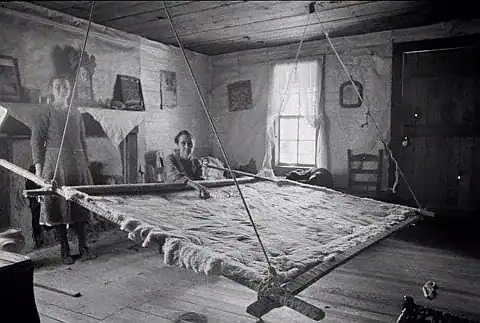
Hi QHL I found a quilt frame that appears to be from the mid to late 1800’s and I’d like help in identifying a part of it. Look at www.Wykesfamily.eboard.com and click on the note at the bottom marked “1800’s Quilt Frame” Look at the pictures that show 2 “swinging arms”. What are they? Any guesses? The frame is quite usable and of good craftsmanship, just needs the wooden pegs to keep the frame secure to the ends. Thanks! Debbie Wykes Monroe, MI
Date: Wed, 27 Sep 2000 22:32:15 -0500 | From: Becky Sunderman <sewcarve@>
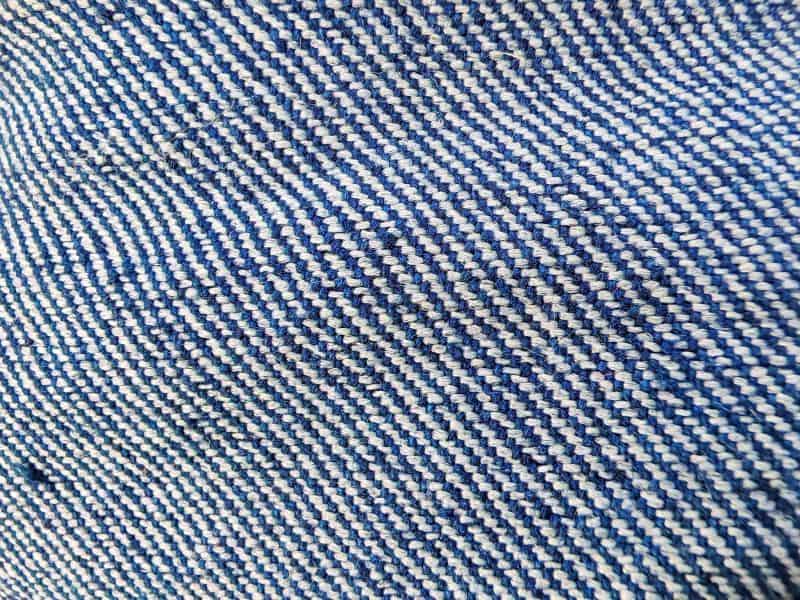
I’ve been reading this thread with interest. I’m in a dilemma, here, and am asking for some sage advice before I proceed. This is the story A friend gave me quite a few South African indigoes, and I picked up a few more online, plus some Dutch wax batiks that are quite similar in looks. The friend suggested that saponification was the best way to wash the batiks, i.e., cutting bars of Ivory soap into slivers, then machine washing until the water ran clear. Also, it was suggested that I throw a couple of pairs of blue jeans in with the fabrics during the final wash/rinse cycles. I did that. Then, upon the advise of the shop from which I’d bought the batiks and other indigoes, I washed all of the fabrics with Dylon Color Shield, making sure that I washed only the amount of fabric per box that the instructions dictated. Did this twice per load. Water finally ran clear. I ran a couple of loads of jeans, then ran two empty cycles using hot water and bleach, to make sure, I thought, that the machine was free of excess dye. I even took a damp cloth and wiped down all surfaces that I could reach inside the washer, and saw no dye on the cloth. Thinking I’d done everything right, I proceeded with the laundry – washing a dark pink/dark green and white double quilt. You guessed it. I didn’t check the quilt when it came out of the washer, and dried it. ( I dried the indigo fabrics on a clothesline in the shade, not in the dryer.) There are traces of indigo on the quilt, most of which is on the white fabric. Arrgghh! What do I use now to remove it? I have at my disposal Retayne, Synthrapol, Dye Magnet and more Dylon Color Shield. I also have all these indigoes. I don’t dare cut them up and make a quilt, only to find that they still aren’t colorfast. Even with clear rinse water, apparently there is still some excess dye. If this thread is becoming boring to some of you, please reply privately. I’m just sick that I’ve ‘ruined’ one of my favorite quilts, and that all of these beautiful indigo fabrics won’t be going into a quilt/quilts. Thanks in advance for any advice. Becky S., in Arkansas
Date: Thu, 28 Sep 2000 10:32:01 +0200 | From: “Tilde Binger” <binger.hougaard@>
Dear Friends It is almost a month since Dr. Tobin professed a readiness to discuss her book (HIPW). Has anyone heard from her ? I wrote her a lengthy epistle but have so far not heard a word from her -) Please answer privately to me, as I think the majority of the list is rather tired of this discussion -) Tilde in Copenhagen
Date: Thu, 28 Sep 2000 12:12:56 EDT | From: Cml791@
Content-Type text/plain; charset=”US-ASCII” I was very fortunate to be in northern England last week and attended the same tour of the Durham quilts and heard Dorothy speak. I had thought of Durham quilts as the whole cloth variety with the gorgeous quilting motifs and was very impressed with these but was totally awed by the early pieced ones from the late 1700’s. I certainly hope the exhibit can come to America. Carolyn from North Texas
Date: Thu, 28 Sep 2000 14:15:12 -0400 | From: “John Cawley” <cawley@>
So many people emailed me for info on how to get the catalogue that I called the Museum this morning to get the answer. The address is Museum Shop Brandywine River Museum P.O. Box 141 Chadds Ford, PA 19317 610-388-2700 www.brandywinemuseum.org When I was there I noticed that they still have copies of the wonderful catalogue of the exhibit of Quaker Quilts of the Delaware Valley that they did a couple of years ago. Ask them to send you that one also. The woman I spoke to said there is no problem sending copies abroad; call and give them a credit card number. The Fabric of Persuasion catalogue cost $12.95 plus 6% PA tax (no tax if its sent out of state). I think the Quaker catalogue was about the same price. Let’s all read it and have a discussion. I want to know if they still make campaign bandanas and such political textiles. Cinda on the Eastern Shore
Date: Thu, 28 Sep 2000 15:00:23 +0400 | From: Xenia Cord <xecord@>
I am cross-posting this message (lazy!) so please excuse any odd references Last week I had the tremendous pleasure of attending the exhibit of North Country Quilts currently on display at the Bowes Museum, County Durham, UK. Those of us who attended owe grateful thanks to Sally Ward of BQL and West Yortkshire, who organized the special visit with Dorothy Osler as our guide and “color commentator,” and as our guest for luncheon at the museum (and Sally graciously took me under her wing for several days, even though we had not previously met). There have in the past few days been several postings about the exhibit, but I hope you will bear with me as I indulge myself and describe what we heard and saw. We were introduced to Joanna Hashagan, the textiles curator at the Bowes, who worked in tandem with Dorothy to organize, photograph, and mount this terrific exhibit in what must be record time – less than half a year from inception to publication and opening, if I understood them correctly. The exhibit is brilliantly displayed on stretched dark blue cloth walls, which were installed especially for this display. Ranging from a wonderful linen center medallion top with exquisite applique from a Quaker quiltmaker in 1783 (my personal favorite), to “Assault and Battery 2,” an issue quilt made in plastics and PVC earlier this year, the exhibition smoothly meets its subtitle Legend and Living Tradition. This is wonderful stuff! Reaching well beyond the whole cloth tradition that is normally associated with North Country quilting, some 80 selections are pieced, appliqued, strippy, medallion, whole cloth, and in a wide range of materials from homespun wool to the aforementioned plastics. And throughout, the underlying richness of North Country quilting tradition will not be denied. Dense quilting, elaborate motifs, rich fabrics – it’s all there. There is considerable ephemeral material to augment the exhibit, and more elaboration and explanation in the book written by Dorothy as the exhibit catalog. The catalog is, if possible, even better than the exhibit. I found that the quilts were so riveting that I had to make a conscious effort to read the detailed story boards that went with each selection. Considerably more intformation is included in the book, and the photos are excellent (at times better that the view of the quilts themselves, given the somewhat subdued lighting). As Joanna explained to the group, the quilts were gathered from a variety of private and public sources, and all had been differently (or indifferently) stored. Because there was no time to create a vertical surface where each could be photographed to advantage, the museum allowed a temporary opening in the ceiling of one of the exhibit rooms (20 foot ceilings), and the quilts were photographed flat on the floor below. But not without much running between floors to check light readings, smooth wrinkles (they used a large “rolling pin”) and make final adjustments to each quilt. This exhibit deserves to be seen in other venues, once it closes at Bowes (5 August 2000-7 January 2001), so if anyone knows of a museum setting that would be interested in displaying this collection, please contact Dorothy directly, or go through me. In preparation for this possibility, all lenders have signed paperwork allowing their items to be exhibited elsewhere. As several of us, and Dorothy herself, said, this exhibit should do for British quilting tradition what the Whitney exhibit did for Amish quiltlmaking. If there is any way you can see this exhibition I urge you to do so; you won’t be disappointed. Currently the exhibit catalog is not available in the US. I am writing to Rob Roberts of Quilting Books Unlimited (Batavia, IL) to see if he can ontain a supply. If he does, look for copies at Houston, or from him directly. I will be taking one copy to the American Quilt Study Group seminar in Lincoln, Nebraska, in 2 weeks, for the silent auction. So if you are attending, maybe you can be the first on your block to own thils great addition to quilt scholarship! Xenia, in Indiana
Date: Fri, 29 Sep 2000 01:26:08 -0400 | From: “J. G. Row” <Judygrow@>
Tilde, Dr Tobin answered one of my questions, which I posted, and one of Karen Evans’s, with the promise of further answers. So far nothing. I am not tired of the discussion, as there really has been none. I’d love to hear from: anyone who has heard from her as well. Please notice my new e-mail address. Judy in Ringoes, NJ judygrow [at] rcn [dot] com
Date: Thu, 28 Sep 2000 23:24:14 -0700 (PDT) | From: Cindy Brick <brickworksinc@>
Marcia, One of the best in the country for coverlets is Rabbit Goody of New York. I know of two others who have also studied coverlets — one is Jeananne Wright of Colorado (Denver area) and Terris Ellis of Texas. Please feel free to e-mail me privately and I will get their e-mail addresses for you. I am not home right now… But working at the Columbia River Gorge quilt conference in the Skamania/Stevenson area — actually, only about 30-45 min. from Portland. We hung more than 85 quilts today, many of them vintage. Two magnificent red and green appliques, one dated 1869, the other in the 1850s range. Some terrific Depression-era quilts, including two Marie Websters in pastels. And a widevariety of others. Classes are going on, including Mary Cross continuing her ‘Treasures in the Trunk’ theme about the Western immigration, and Bettina Havig about her book on Carrie Hall and Hall’s collection of quilt blocks. Also Jane Stapel on (ta-da!) feedsacks, but also a fascinating talk on how patterns got their names; Toni Baumgard, not only doing her Redwork, but also an unusual Blue Redwork talk; as Indigoes class (which must be translated, because it’s Japanese teacher is not fluent); Linda Carlson on 4-blocks quilts…and much more. Oh yes — and yours truly on replicating old quilts, dating and restoring them, and Crazies. The conference is at the fairgrounds in the Skamania area–call the city council, or e-mail dfcook [at] gorge [dot] net for more information. The conference starts Friday and goes through Sunday. You can buy a class — or the full package, which includes free lunches (including a lunch lecture) and a Meet the Teachers reception. Oh yes, and it’s absolutely beautiful out here. Just an added bonus. Cindy Brick
Date: Fri, 29 Sep 2000 15:06:15 +0200 | From: Ady Hirsch <adamroni@>
Hi all A while back I E-mailed Dorothy Osler, who very kindly supplied the information for ordering the Bowes catalog directly from the Bowes museum. The book costs 16BP plus shipping, and can be ordered from the museum shop – Tel. 01833-690606, ext. 225 (shop). Well worth the phone call to Britain, IMHO (my copy is on its way, no affiliation etc). Becky, I collect indigos and particularly those great South African ones. I’ve used them in several quilts with no trouble. I bought some of them from The kirk Collection, followed the directions for getting rid of excess dye and it works perfectly. Before washing I fill a 2 gallon bucket with VERY hot water, add 1 cup salt and 1 cup vinegar, add the fabric, make sure it is thouroughly soaked and leave overnight. The next day I rinse the fabrics well (at which stage my hands turn a fetching shade of blue), wash it on a regular cycle, dry and press and that’s it. I used considerable quantities of the SA as well as Javanese (Dutch) indigo fabrics in a red, white and blue quilt, and now, 2 years and several washes later, the white is still pristine. Sorry I can’t be more helpful re removeing indigo stains from the other quilt. Hope this helps Ady in Israel
Date: Fri, 29 Sep 2000 08:40:24 -0400 | From: deborah babin <babin4@>
Hi everyone-I have just joined and I am so excited to have found such a wonderful group to subscribe to!! Antique and vintage quilts are my favorite. I am fortunate enough to be going on a trip to IReland in NOv. Was wondering if anyone has any good info to pass along to me? Not just quilts, but fabric or any associated topics. Thanks alot. Debbie
Date: Fri, 29 Sep 2000 09:07:48 EDT | From: RBCochran@
In a message dated 9/28/2000 31807 PM Eastern Daylight Time, cawley [at] goeaston [dot] net writes << www.brandywinemuseum.org When I was there I noticed that they still have copies of the wonderfulcatalogue of the exhibit of Quaker Quilts of the Delaware Valley that they did a couple of years ago. Ask them to send you that one also. >> In a message dated 9/28/2000 31807 PM Eastern Daylight Time, cawley [at] goeaston [dot] net writes << www.brandywinemuseum.org When I was there I noticed that they still have copies of the wonderful catalogue of the exhibit of Quaker Quilts of the Delaware Valley that they did a couple of years ago. Ask them to send you that one also. >> The museum also has copies of On The Cutting Edge, an Oral Traditions Project edited by Jeannette Lasansky, from a 1993 symposium at Franklin & Marshall College. In addition to the article Quilted Ballots by Julie Powell (guest curator at Brandywine) the contents are Electra Havemeyer Webb and Shelburne by Celia Oliver The Evolution of the Quilt Collection at the DAR by Nancy Gibson Tuckhorn Rags Into Riches by Richard and Rosemarie Machmer All In and All Done? by Alan Keyser Fabric and the Amish Quilt by Eve Wheatcroft Granick Quiltmaking on Chesapeake Plantations by Gloria Seaman Allen Characteristics of Signed New Jersey Quilts by Rita Erickson and Barbara Schaffer Quilt Design Explosion of the Great Depression by Merikay Waldvogel Feed, Flour, Tobacco and other Sacks by Pat Nickols The Hispanic Tradition of Quiltmaking in Taos County, New Mexico by Dorothy Zopf Myth and Reality in Craft Tradition by Jeannette Lasansky Besides being slightly prejudiced (I worked on NJ article), I feel this book is a must in any quilt history library. It is not always easy to find, but here is an opportunity. –Rachel P.S. Thanks, Cinda, for the kind words about my quilt. ——————————Date Fri, 29 Sep 2000 092508 -0700 From: “Kimberly Wulfert” <chrisa [at] jetlink [dot] net> Hi, I’m wondering if any Omahaians are leaving for the AQSG conference Thursday afternoon, Oct.12. I am landing at that airport at 115 and would love to share a ride, conversation and gas with a fellow antique quilt lover. Please e-mail me personally. Thank you. Kim Ojai Ca
Date: Fri, 29 Sep 2000 09:25:08 -0700 | From: “Kimberly Wulfert” <chrisa@>
Hi, I’m wondering if any Omahaians are leaving for the AQSG conference Thursday afternoon, Oct.12. I am landing at that airport at 115 and would love to share a ride, conversation and gas with a fellow antique quilt lover. Please e-mail me personally. Thank you. Kim Ojai Ca
Date: Wed, 27 Sep 2000 | From: Yvonne Jones <ayjones [at] tacoma [dot] nwrain [dot] net>
Dear Cinda,I would like to express my appreciation for the details about your visit to the exhibit. Not everyone can get to this exhibit but hearing about it is great. Thank you, Yvonne Washington State
Date: Fri, 29 Sep 2000 22:16:38 EDT | From: QuiltEvals [at] aol [dot] com
Does anyone know of the Linsey Wooley Quilt Guild in Attleboro, MA? If so, do you have a telephone number or mailing address, better yet, an email address? You may respond privately, thanks! Deb Roberts
Date: Sat, 30 Sep 2000 10:53:31 -0700 | From: Audrey Waite <awquiltr [at] sedona [dot] net>
We have reservations at the Hyatt and will not be going. Anyone need a room? Audrey Waite Quilt Camp in the Pines http://www.quiltcamp.com
Date: Sat, 30 Sep 2000 11:22:48 -0700 | From: “Laurette Carroll” <Robert.J.Carroll [at] GTE [dot] net>
Hello! <img align=”left” alt=”quiltpatrioticlg.jpg (143837 bytes)” border=”0″ height=”92″ src=”images/quiltpatrioticlg_small.jpg” width=”100″/>Check out this quilt! http://cgi.ebay.com/aw-cgi/eBayISAPI.dll?ViewItem&item=448453012 Is it nailed to the wall? (click on the thumbnail) Laurette Carroll Southern California Look to the Future with Hope These are thumbnails – click on them to see them full size. <img alt=”quiltpatrioticdetail3.jpg (201098 bytes)” border=”0″ height=”149″ src=”images/quiltpatrioticdetail3_small.jpg” width=”100″/> <img alt=”quiltpatrioticdetail4.jpg (191599 bytes)” border=”0″ height=”149″ src=”images/quiltpatrioticdetail4_small.jpg” width=”100″/> <img alt=”quiltpatrioticdetail5.jpg (216629 bytes)” border=”0″ height=”146″ src=”images/quiltpatrioticdetail5_small.jpg” width=”100″/> <img alt=”quiltpatrioticeagle.jpg (206006 bytes)” border=”0″ height=”150″ src=”images/quiltpatrioticeagle_small.jpg” width=”100″/>
Date: Sat, 30 Sep 2000 17:36:16 EDT | From: NataliePM [at] aol [dot] com
This coming year will be the 100th anniversary of the Pan-American exposition in Buffalo, NY. I am doing some research on redwork images from the exposition. I know they had patterns of Pres. McKinley and some of the buildings. If anyone has a redwork quilt with any images that might relate to the exposition in 1901, please e-mail me. Thank you. Natalie Masker NataliePM [at] aol [dot] com
Date: Sat, 30 Sep 2000 18:14:09 -0500 | From: Jocelyn <Jocelynm [at] delphi [dot] com>
> Oops, folks, Here I sent a post about the dye magnet, which does in fact > work great, FWIW, you can extend the life of a Dye Magnet by soaking it in Chlorox water….<G> Once you’ve bleached all the dye out of it, it’ll start sucking up dye again, just like new!