March 11 – 15, 2004 (Part 2)
These restored messages come from the Quilt History List, an online forum where quilt historians, collectors, researchers, appraisers, and enthusiasts discussed antique quilts and related textiles. The archive dates from 1996 through approximately 2016 and is being restored gradually. Sign up in the form at the bottom of the page if you want to know when a new page is added. Original spelling, opinions, formatting, and inactive links may remain unchanged.
Primary topics of this QHL Digest:
- Vinegar & Dye-Setting Debate — Members question the chemistry behind using vinegar to set old dyes, with detailed responses on natural mordants. (see the article on natural dyes)
- New York Quilt History Books — Book recommendations on historic New York quilts, prompted by a local study group’s meeting.
- A Spy Museum Follow-Up on HIPV — The Spy Museum responds to a member’s feedback about its Hidden in Plain View program. (see the article on quilt museums)
- Pillowcase vs. Sham Terminology — A good-natured debate over the correct terms for different styles of pillow coverings. (see the article on cotton and textile terms)
Date: Sat, 13 Mar 2004 | From: “Quiltstuff” <quiltstuffoptusnet.com.au>
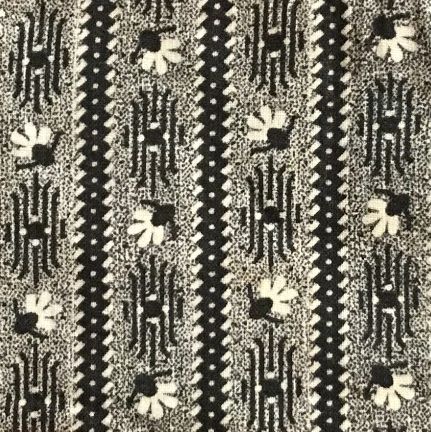
I was looking at a quilt on EBay described as 1850s and was intrigued by the fabric with the quite bright pink flowers.
Would that be more like the fabrics described as having neon like colours from the 1890’s?? It seems like an artificial dye. Just curious http://cgi.ebay.com/ws/eBayISAPI.dll?ViewItem&item=3709566463
Suzy
From: “Velia Lauerman” <velialive@>
Dear Anne, When I was embroidering the Remembrances Two Victorian ladies by Nancy Bowen and Cheryl Pedersen I used 12 different reds and different flosses including silk for each lady. What Joy doing this leisure project for my daughter Reina Joy Skelton’s birthday. Started Jan 1-04 and completed for birthday 2-27 . to my surprise. Turned out exquisite except for glitches in the one silk which did blur even after treating with vinegar. At Needle Arts, Shay Pendray’s shop in Dearborn, Mi. was told to treat silk floss in vinegar and dry in microwave. I let it air dry as heat was not a good choice. Boo Hoo, wrong ! I’ll try it again and use heat. Doing one for myself and call it Red Hat. When restoring old pieces vinegar treatment gets out residue that soap ( four letter word ) leaves. As a licensed facial esthetician the final cleanser on the face and hands is water vinegar. I’m sold . Velia
Date: Sat, 13 Mar 2004 09:34:50 -0600 | From: “Charlotte Bull” <charloumo-net.com>
Kris, I do not want the books, but may I add a comment? There are a FEW books on embroidered, cross stitch & needlepoint projects that utilize quilt block designs! A few years ago I bought some for a cross-stitch grandchild as a way of sharing my interest in quilt blocks! LOL (Little Old Lady) I do see quilt blocks in many counted cross stitch patterns in the current magazines that a RLOL (Really Little Old Lady) insists on giving to me. I ship them to my girl or donate them to the Freebies Table at Quilt Guild.
Odd nostalgic thought. I made my first quilt 50 years ago – a cross stitch kit quilt! Well, I embroidered and set the blocks together then. At the time I did not quilt. But it is what got me into this wonderful world! Right now I am restoring printed cross stitch blocks & setting & sashing them into a top for a lady who found the blocks in her mother’s trunk. She will have it quilted by some LOLs at the Senior Center! Maybe I should quilt mine! Yes, it is my oldest UFO (UnFinished Object) – but a daughter has offered to do that when she retires IF she inherits it!
Sorry – off the track! I suddenly realized I’d always thought LOL meant Laugh Out Loud! CB from MO OZ
From: “Sally Ward” <sallytatters@>
I’m bemused. I can understand that washing in vinegar will remove soap traces, but how (chemically speaking) does rinsing in vinegar set a colour? I have read of using vinegar on new fabric to set the colour before using, but if it was a simple as that wouldn’t all manufacturers give their fabric a vinegar bath?
Sally W
Date: Sat, 13 Mar 2004 | From: “Judy Kelius (judysue)” <judysue@>
From what I can see, I think you are exactly right – neon print, 1890s, not 1850s!
From: Kris Driessen <krisdriessen@>
Sally,
I am pretty sure vinegar only works on the old dyes. New fabrics have a different chemical composition that doesn’t react to vinegar.
Kris
From: Kris Driessen <krisdriessen@>
Pictures are up! I ran out of space on my digital card, so I didn’t get them all. Maybe some of the other participants will share:-)) We also had a scribe, so I didn’t take notes. If you want to see the pictures with my remembrances, they are at http://www.quilthistory.com/study/CRQSG.htm I will put up the actual minutes and information we gathered later.
We saw a couple of wonderful crazy quilts, several early (1820- 1840) quilts in great condition, a late 1700’s toile, some terrific family quilts, a couple of garage sale quilts that were worth more than the $5 paid:-)), an unusual signature quilt, some absolutely pristine quilts from estate sales, several utility quilts and tops with their own charm and many more I am probably not even remembering.
The Most Appropriate Quilt Label award goes to Linda Miller, who not only labeled her quilt, but also put in the genealogy of the quilter behind the label.
The Nice Try award goes to the quilter who, in 1950, tried to restore an 1840’s quilt using red fabric with little barns and farm animals on it. Actually, I think the colors of the fabric was pretty good, especially considering what she had to work with at the time. The yellow gingham might have been more well thought out, and we wish she hadn’t removed the fabric underneath. The library had a nice big window we held it up to so we could see through the quilt. Question for the Pennsylvania people on the list: could this have been a PA quilt? The appliqued border is interesting.
We had a lot of fun examining the border squares on the two double irish chains and trying to figure out if they were pieced or appliqued. Does anyone know when they first starting piecing the corner?
In the Things I Have Never Seen Before category were two pillowcases made out of quilt tops on the front and muslin on the back. They were made that way, they weren’t quilt tops cut down and remade into something else. Interesting.
The thing I liked the most about this meeting was hearing all the local names. Most of the quilts we discussed were found within 30 miles of where we were. It was kinda nice.
Our tentative next meeting date is June 19 and our theme will be “Potpourri”. All are, of course, invited.
Kris
From: Patricia L Cummings <quiltersmuse@>
Dear Kris:
Thanks for posting the photos from your quilt study group. What a nice variety of quilts you had that day! Thanks for sharing with us!
Pat Cummings
From: Gail Ingram <gingram@>
I have just photographed a local 19th century (1855?) Whig’s Defeat quilt made in North Louisiana and getting ready to leave the sttate. I am copying pattern and quilting patten using the lightweight interfacing.
One of our problems is discerning the date. We’ve put magnified to a fare-thee-well, but that next to last number still is not entirely clear. Any ideas?
I would appreciate hearing from members of the list who own, know whereabouts of, extant Whig’s Defeat quilts. I know of a number that are photographed (e.g., “Civil War Women”), but wonder how many more are out there undocumented or recognized. I also would welcome any information about the dates of their construction.
I am also trying to assemble materials on Scioto Danner. A number list members have been most helpful. Will appreciate anything still around. I am particularly interested in her accounts at dept stores and whether news stories/photos exist of these? Helen Ericson does not have all that data. Any help is welcome offline or on.
Thanks again, Gail
Date: Sat, 13 Mar 2004 | From: MargaretFahey@
I have really enjoyed seeing the quilts. And I look forward to reading the notes. Is your group also documenting the quilts? Recording them with the state records? They do in Colorado and I wonder if there is interest in NY? Would it be an appropriate task for the Quilters Consortium NYS?
Margaret
From: “kerrybrackozemail.com.au” <kerrybrackozemail.com.au>
just been to the above site as i am thinking of attending paducah this yea r and saw the below listed=2E Is this Laura Fisher from our list? If so lau ra how many quilts are on display?
“In a Thousand Pieces: Teeny-Pieced Quilts” On display April 10 – June 5, 2004 A selection of antique quilts from the Laura Fisher/Antique Quilts & Americana, New York=2E
kerry in sydneyx —
From: “J. G. Row” <JudyGrow@>
Studio Quilt Study Group will be meeting here in Ringoes this Tuesday, March 16th, at 10 AM.
As always, you are invited to join us. 10 AM to 4-5 PM with a break for lunch. Bring your own or we order pizza.
E-mail for driving directions. Ringoes NJ is on Route 202, between Flemington NJ and New Hope PA.
Judy “the Ringo Kid” in Ringoes, NJ judygrow@
From: Kris Driessen <krisdriessen@>
Margaret,
No, we aren’t doing any documentation. I don’t know of anyone in NY who is – does anyone else? I also don’t know how to reach the Quilters Consortium, the E-mail address on their website is no good:-((
Kris
Date: Sun, 14 Mar 2004 09:30:10 -0500 | From: sstarknni.com
Kris and all,
The patchwork pillowcases at your study group meeting were almost certainly from Pennsylvania… as far as I know, it’s a form that is unique to the area. I see them seldom, but currently own a pair and two singles, have bought and sold others – and all had a verifiable eastern Pennsylvania origin.
Do you have notes on the size? They appear slightly wider than the average; usually they are rather narrow in proportion to their length. I currently have a pair on my website made and signed by a Sophia Mantz of Northern Lehigh County PA. http://www.rickrack.com/smps.html
As to the “restored” quilt, it certainly could be PA, but perhaps just as easily not…??
Sharon Stark
From: Patricia L Cummings <quiltersmuse@>
Dear Kris:
I have a book that is the result of the earlier research about New York quilts: /New York Beauties:/ /Quilts from the Empire State/, Jacqueline M. Atkins and Phyllis A. Tepper (Dutton Studio Books, 1992). Neither of the authors names appear in the American Quilt Study Group membership roster. The foreword by Phyllis A. Tepper includes the statement that a firm foundation has been set for continuing research. I don’t readily see any further contact information for anyone. This is a beautiful book!
Pat Cummings
Date: Sun, 14 Mar 2004 10:06:21 | From: “Charlotte Bull” <charloumo-net.com>
I was always told to set colors – reds especially – but that vinegar should be White Distilled Vinegar, not apple cider tan! Any comments?
Date: Sun, 14 Mar 2004 | From: Kris Driessen <krisdriessen@>
I could swear it was someone on the list who said that vinegar didn’t effect modern cottons but did help set the dye of old fabrics. I know vinegar will help set some acid dyes but acid dyes are used on silk, wool, or nylon, not cotton.
But vinegar DOES help cut soap scum, and is an excellent cleaner. I can easily see where putting vinegar in the rinse water would brighten colors. In that case, I would use white vinegar.
Kris
Date: Sun, 14 Mar 2004 | From: Sylvia Adair <piecethepastwi.@>
Here’s another good book with lots of New York quilts. I found it at an antique store, and just finished reading it yesterday. The author is also Jacqueline M. Atkins, and the forward is by Phyllis A. Tepper. The title is : Shared Threads: Quilting Together, Past and Present. (Published by Viking Studio Books, copyright 1994.) There are many quilts from New York included (some of which were excluded due to space from the New York Beauties book) but the focus is the whole US. Most of the quilts are from the mid to late 19th century, but cooperative quilting from the 20th century (including the AIDS quilt) is also covered. Scholarship seems sound, and the color photos are terrific. BTW, I absolutely loved seeing the pictures of the study group quilts on the web site. Does anybody in Wisconsin want to start a local group? Sylvia Adair, librarian and quilter, Germantown, Wisconsin
Date: Sun, 14 Mar 2004 12:55:25 | From: DDBSTUFF@
In a message dated 3/14/2004 12:19:27 AM Eastern Standard Time, qhl@ writes: I’m bemused. I can understand that washing in vinegar will remove soap traces, but how (chemically speaking) does rinsing in vinegar set a colour? I have read of using vinegar on new fabric to set the colour before using, but if it was a simple as that wouldn’t all manufacturers give their fabric a vinegar bath?
Sally W Its all about PH. Vinegar is an acid and in most cases it will help set dyes. Any acid will even urine. (This is readily available in most households and quite inexpensive but if you do use it on a quilt, I don’t suggest telling any prospective buyer) Some dyes need more alkaline to set them. In this case a little ammonia will work. It would be a good idea to do a test first to see which is needed. However, vinegar will not harm a quilt. It will brighten whites and act as a fabric softener without those awful perfumes softeners have. Great on windows also…
Darwin
Date: Sun, 14 Mar 2004 15:27:53 -0500 | From: “Anne Datko” <datkoa@>
I received the following message from the Spy Museum….I had emailed a comment re their HIPV program. AnneD
—– Original Message —– From: Amanda Ohlke To: datkoa@ Cc: Anna Slafer ; jackie Eyl Sent: Friday, March 12, 2004 10:36 AM Subject: Dobard
Dear Ms. Datko:
I am embarrassed that it has taken this long for you to receive a reply to your inquiry regarding the Museum’s program “Quilts as Codes.” I was not yet onboard as the Manager of Adult Education at the time of the event, and I just recently came across a copy your email. Although, I was not yet on staff, I did attend the program. I can assure you that the Museum did highlight the controversial aspect of the presentation. In particular, our staff historian, Thomas Boghardt, made a point of questioning Dr. Dobard about the scarcity of collaborating evidence for his theory. I think the audience understood that this was a theory and not an accepted piece of history. Dr. Dobard is an art historian and a needleworker, so he brings some interesting context to the story.
Thank you for your comments and concern.
Amanda Ohlke
Amanda A. Ohlke
Manager of Adult Education
P] 202.654.0937
International Spy Museum
800 F Street NW
Washington, DC 20004
Spymuseum.org
aohlkespymuseum.org
F] 202.393.7797
From: “J. G. Row” <JudyGrow@>
I am confused as to terminology. I’ve always thought that if a pillow can go inside, it is a _pillowcase_, and if it just covers the pillows, it is a _sham_. Sharon, you use both words interchangeably. Your website calls them shams, and your post calls them pillowcases. Last weekend at FVF we saw a few of _them_ , and some people used both words as well.
Pillow sham, a covering to be laid on a pillow. 1. pillow sham — (bed linen consisting of a decorative cover for a pillow) Pillow sham, an ornamental covering laid over a pillow when not in use. Pillow slip, a pillowcase.
From: <sstarknni.com> To: “Quilt History List” <qhl@>
The patchwork pillowcases at your study group meeting were almost certainly from Pennsylvania… as far as I know, it’s a form that is unique to the area. I see them seldom, but currently own a pair and two singles, have bought and sold others – and all had a verifiable eastern Pennsylvania origin.
Do you have notes on the size? They appear slightly wider than the average; usually they are rather narrow in proportion to their length. I currently have a pair on my website made and signed by a Sophia Mantz of Northern Lehigh County PA. http://www.rickrack.com/smps.html
Sharon Stark
From: “J. G. Row” <JudyGrow@>
Some English teacher ought to teach the writer of the following about how to define a word………….
1. case, pillowcase, slip, pillow slip — (bed linen consisting of a cover for a pillow; “the burglar carried his loot in a pillowcase”)
Source: Webster’s Revised Unabridged Dictionary (1913) Pillowcase \Pil”low*case`\, n. A removable case or covering for a pillow, usually of white linen or cotton cloth.
Judy “the Ringo Kid” in Ringoes, NJ judygrow@
Date: Sun, 14 Mar 2004 19:04:15 | From: sstarknni.com
A pillowcase is on the pillow when you sleep, a sham is removed, whether it is laid over the pillow, or encloses it completely, only decorating the pillow when not in use.
Sharon
Date: Mon, 15 Mar 2004 | From: “Sally Ward” <sallytatters@>
Does anone have experience of this particular type of quilt frame. I can’t find a UK outlet where I can try it, and I’d like to hear (privately) from anyone who has seen or used one.
http://threadsintyme.tripod.com/amish_quilt_frame.htm
Thanks
Sally W Sallytatters@
Date: Sun, 14 Mar 2004 | From: “Velia Lauerman” <velialive@>
charlotte, Urine as a mordant like apple cider vinegar, white vinegar or salt set in dyes. when asking a veteran floss shop for advice on making the silk floss colorfast was told to set in the dye with vinegar then dry in microwave for a few seconds. the silk was air dried but was not completely color fast. there will be another try. my guess is that needlepoint silk,inc does not know the secret used by turkey red dye as the rest of us don’t. history of dyes certainly are fascinating.velia
Date: Sun, 14 Mar 2004 21:48:29 EST | From: aol.com
There’s a redaction for Turkey Red in J.N. Liles =The Art and Craft of Natural Dyeing.= I’ve never tried it because it’s a long, involved, process (and post-medieval, which wrecks it for my historical quilting), but the basic process involves mordanting first with a super-fatted olive oil soap, washing, then mordanting again with some sort of urea-based substance before dyeing with madder. In the old process they would sometimes bury the goods in a dung heap for a few weeks!
Karen Evans