April 21 – 26, 2004
These restored messages come from the Quilt History List, an online forum where quilt historians, collectors, researchers, appraisers, and enthusiasts discussed antique quilts and related textiles. The archive dates from 1996 through approximately 2016 and is being restored gradually. Sign up in the form at the bottom of the page if you want to know when a new page is added. Original spelling, opinions, formatting, and inactive links may remain unchanged.
Primary topics of this QHL Digest:
- Wagon Trail Piecing Debate Continues — More members weigh in with family diaries and stories on whether pioneer women pieced quilts en route west.
- Machine-Made vs. Hand-Pieced Quilt Value — A debate over why finely made antique quilts often sell for less than mass-produced modern ones.
- Quilt History Book Recommendations — Members swap suggestions for out-of-print references like Colby’s “Quilting” and Safford & Bishop’s “America’s Quilts and Coverlets.”
- Mary Carpenter Pickering Quilt Authenticity — Members discuss dating and provenance questions around a specific 19th-century signed quilt.
Date: Sat, 24 Apr 2004 | From: “Crandall Associates” <rcrandalmaine.@>
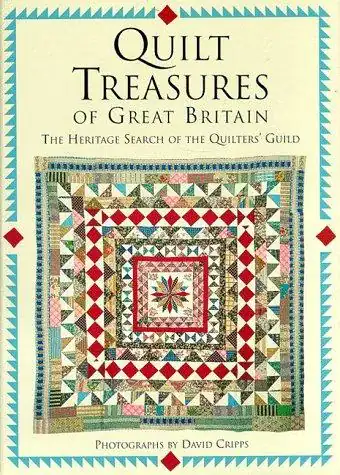
Hi All-I seem to be in the book business lately. I hope anyone who wanted the “Calico and Chintz” book was able to contact me for their copy. Those who ordered should have them by now. Today I visited a local rare/used bookstore that I scope out from time to time. I found “Quilting” by Averil Colby hardcover c 1971 printed in Great Britain hardcover $55.00
“America’s Quilts & Coverlets” Safford & Bishop hardcover $40.00
“American Patchwork Quilts” by Lenice Ingram Bacon (signed by author dated 1976) soft cover $5.00
“Needlework” The Smithsonian Library of Antiques prepared by the Cooper-Hewitt Adolph S. Carrllo $12.50 Should I buy these?
If anyone can advise me on the prices etc. could you email me privately. Thanks in advance. Carole in Maine
Date: Sat, 24 Apr 2004 08:45:39 | From: <chrisa@>
You can find “America’s Quilts & Coverlets” Safford & Bishop hardcover $40.00 for 10.00. even &.7.00 I have seen. The Colby book is available in paperback for very little $, like 10.00 and there are lots of them. I think the needlework book is one of a set of volumes on the Museum’s collections. That book doesn’t have much on quilts.
Hope this helps. I have books for sale from my hunts on my website, priced well to sell. www.antiquequiltdating.com if you get the desire to buy.
Date: Sat, 24 Apr 2004 15:54:16 | From: “Karen Evans”
At the very least buy the Colby. It’s indispensable if you’re interested in early quilting. The Bishop & Safford book is also a classic, and was the first one that interested me in quilting.
Karen Evans
From: louise-b
Picked up this book yesterday at Barnes and Noble and have had a good time reading it. Have read various articles by Gwen Marston over the years in LCPQ about her but haven’t collected the various books. Guess I will be looking for them now!
“Mary Schafer, American Quilt Maker” is published by the Univ. of Michigan Press. Extensive lists are available as well as chronological timelines. All in all, a good read.
Of course, one of the added features is the information about Betty Harriman who lived near Columbia, MO (my area) in Bunceton for many years. Several of her quilts belong to guild members as well as several more in a nearby area.
Louise Bequette — in mid-Missouri
Date: Sat, 24 Apr 2004 16:22:58 -0700 (PDT) | From: Victoria Maki <vmaki2001@>
I will be in Southeastern Ohio in May and would like to get in touch with anyone in that area who has 1930s, 1940s or pre-1900 quilts for sale. Please email me off-list.
Thanks, and I enjoy the list very much, Viki Maki -quilter and collector–
Date: Sat, 24 Apr 2004 19:33:46 -0500 | From: “Jocelyn Martin” <jocelynm@>
>>>A visitor to the exhibit turned to me and asked why old quilts seem to have lasted so much longer than the ones today.
Pat, I know I’m late in replying, but I had another idea on this. It may be a matter of quality of construction- that poorly made old quilts just didn’t survive. So the comparison may be between well-constructed old quilts and modern quilts of the ‘All sizes $39.95’ variety (that is, cheaper fabrics, huge quilting stitches, attention to speed rather than to craftsmanship). It seems to me that of the cases where I’ve heard of anyone ‘wearing out’ a top-quality modern quilt, it was either a child’s quilt that got a lot of wrassling and washing, or a poly batting that abraded the quilt fabric (both washing-related, as you noted). I’ve never heard of anyone wearing out a modern quilt that was all-cotton and of top-quality materials.
Date: Sat, 24 Apr 2004 21:18:03 -0700 | From: “Melissa L Devin”
In interest of the thread of quilting along the covered wagon trail, I came upon this website when I was reading the layers of meaning blog, which referenced a collection of Pacific Northwest Coast Indian art. http://www.150.si.edu/150trav/remember/celeb.htm
http://www.150.si.edu/150trav/remember/r522.htm Noted along with the quilt image: “Mary Carpenter Pickering (1831-1900) worked on this quilt while her friend John Bruce Bell accompanied a wagon train to the Oregon Territory. In American culture, quilts are often passed down through the generations, becoming treasures commemorating their makers. Mary Pickering’s quilt has been cherished by 3 generations of her family.”
I found Nancy’s comment interesting regarding nothing in the Holmes diaries about quilting on the trail (not that it may have never happened, I understand). And I wonder if this particular quilt has been documented correctly, as the notation does not state any familial connection with John Bruce Bell, yet the quilt has been “cherished by 3 generations of her family.”, all those credited by National Museum of American History as being a part of this quilt are Bells.
My question regarding this… Would this then mean that Mary Pickering also accompanied her friend John Bruce Bell on the wagon train, and if she didn’t… Why even bother mentioning this extra bit of information?
Melissa in Washington state ><> ><> ><> ><> ><> ><> ><> ><> http://solje.thedevins.com/ <>< <>< <>< <>< <>< <>< <>< <><
Date: Sun, 25 Apr 2004 01:33:55 -0400 | From: “Patchwork Secrets” <patchworksecrets2@>
Just a quick interjection here. I have taken week long wagon trains across parts of NC (Uncle is actually a wagon master). It IS possible to hand sew while riding and there are long noontime breaks for the horses to rest and meals to be served. Wagons are not as bumpy as you would image. There is a rhythm to their swaying so you can adapt. We usually stop long before dark so there is time to settle the animals and prepare for the on coming night. I can easily see how a lady traveling across the country for days/weeks/months on end could piece an entire top.
Sharon in NC
Date: Sun, 25 Apr 2004 04:38:19 -0400 | From: Patricia L Cummings <quiltersmuse@>
Jocelyn wrote:
It seems to me that of the cases where I’ve heard of anyone ‘wearing out’ a top-quality modern quilt, it was either a child’s quilt that got a lot of wrassling and washing, or a poly batting that abraded the quilt fabric (both washing-related, as you noted). I’ve never heard of anyone wearing out a modern quilt that was all-cotton and of top-quality materials.
Dear Jocelyn:
Thanks for your thoughts.
There are a number of factors that have influenced why some old quilts had longevity and others became part of the landfill.
In the past, a quilt represented the hard work and vision of its maker. There were more personal connections between source and object. The quilt was not whipped together in some foreign sweat factory, by an unnamed worker, and in the most shoddy way possible, and sold on the American market for $39.95. In this society, if you don’t pay much for something, it isn’t considered to be worth much. The mass marketing of quilts may have put a “quilt” on more beds, but something has gotten lost in the translation. That “something” may seem intangible, yet we all know what I mean by that statement.
There are a number of problems with fabrics today. Some fabric dyes are unstable. They particularly do not react well to chemical baths (read “detergents”). Some fade terribly, even if not subjected to direct sunlight. I have had poor experiences with navy blue (not indigo). Blacks are awful. Over time, they fade like crazy or “crock” off. Many quilters chose to buy their fabrics that are priced lower. They find that after washing them, preliminary to using them in a quilt, the fabric just flop. The crispness of them in the store was dependent on the amount of sizing added to them. Even after washing, they are stiff and do not have a good “hand” for hand quilting, although that factor may not be of any consequence to many quilters who machine stitch their quilts or farm them out to long-arm quilters.
In the past, many quilts were more heavily quilted. As you well know, quilting stitches secure the batting in place and prevent shifting. When one puts together the factors of home washing, little quilting, and polyester battings that lump and shift, one can see a disaster just waiting to happen when that quilt is put into a home machine with a central agitator. We won’t even mention the damage done by home dryers. Shudder to think…..
But, then again, who cares? You and I care about old quilts, but the general public sees quilts, in general, as commonplace and expendable. We are a throw away society. In a sense, putting these cheap imports on the market has trivialized the whole process of quilting and in a way, has demeaned it. Why should the public buy a more highly priced but better made quilt that is of heirloom quality from an individual maker? Why should they learn to make their own quilt? The cost of supplies alone would far exceed the price of a store bought quilt.
Much more went into the making of a quilt in the past. The bed size quilts in my collection mostly have wool battings from wool that was grown on the farm, cleaned and carded, and placed between cheesecloth type netting to hold it in place, secured by quilting stitches. With this much of a time investment and with that much of an emotional investment, in having collected just the right color scraps to make a pattern work, the quilt was prized by the family and passed along in good condition. The very weight of wet wool (and its smell) would have deterred washing of these quilts.
I personally wish that Americans could get away from the idea that quick is better. Quick is quicker, but not necessarily better.
Much more education needs to happen. As individuals, we can help by telling others about what quilts and quilting mean to us.
Just a few thoughts.
Call me “Sleepless in NH”.
Pat Cummings www.quiltersmuse.com
Date: Sun, 25 Apr 2004 12:55:58 -0700 (PDT) | From: Babette Moorleghen <happyquilterq@>
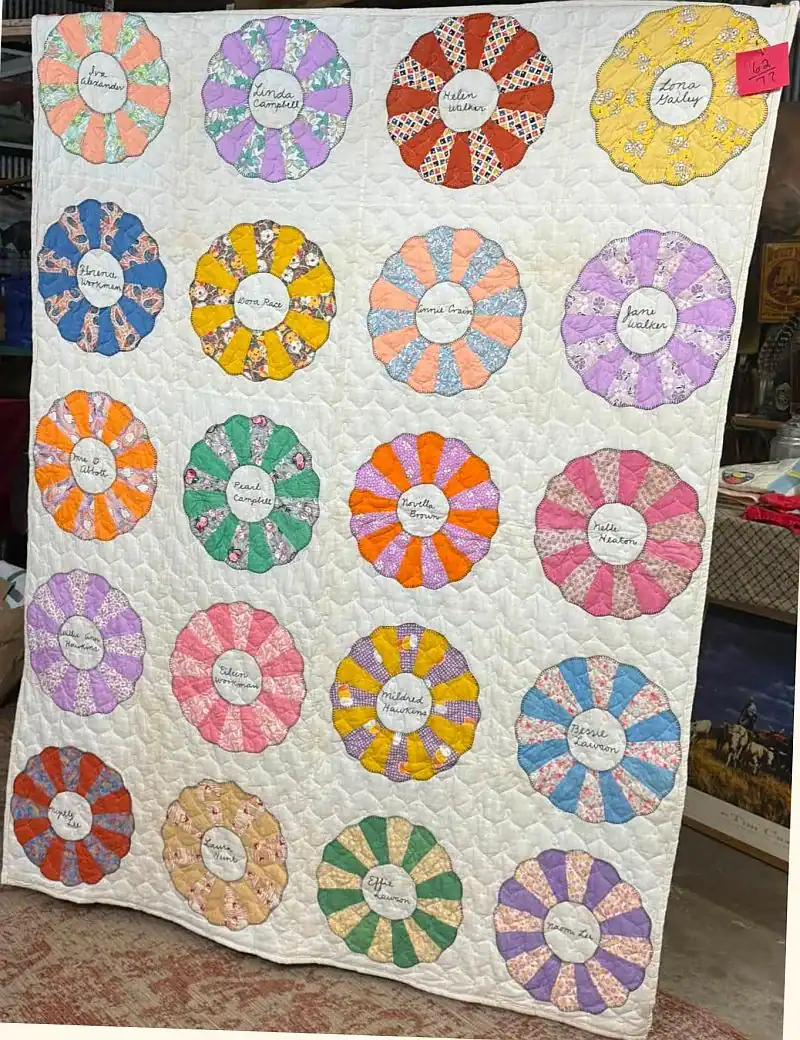
Hi, my name is Babette. I am new on this list and real excited about finding it!! Where have you been all my life?? LOL Okay, now to serious business. I just read Patricia Cummings e-mail regarding why some quilts last and some don’t. I must say that I totally agree with her! I would not buy a “quilt” that you find in Penny’s, Sears or any other store that sells them, nor would I recommend them to anyone! However, most people do not want to pay what it is worth to have a real handquilted heirloom! Can I share my story? My mother said I had a needle in my hand from the time I was 3 or 4 years old. I can remember doing embroidery bibs for my brother who is 4.5 years younger than me. I was making my own clothes from the time I was 8 or 9 years old and made my first quilt (a bed size) when I was between the ages of 10 and 11. I can remember this since my youngest brother was born the day after I turned 11 and the quilt was finished the year he was born! I still h! ave that quilt. Is is usable? No, not really. In fact, I didn’t think it even existed until about 8 years or so ago when my DM asked me if I would like to have it! Imagine my surprise and, of course, I said YES! Knowing my dad I thought it had made it to a landfill (another long story)! I will be 55 years old this year, so now you know just how “old” that quilt is!! I was raised in a small town in Nebraska and had a wonderful grandmother who taught me how to quilt (again, long story there) and it was under her tutiledge that I made this quilt, as well as 2 others which were twin size. Those are also still existing. Now to the interesting part… what type of fabrics were used? As I examine the blocks, which are a Sunflower, or Dresden Plate, pattern, I see a lot of feedsack fabrics that were available in the late ’50 and early ’60’s. How do I know they are “feedsack”? Well, since we lived in a rural area I can remember my uncles bringing mom flour and sugar in bags, or! sacks that were 100% cotton prints. I’m not sure how many pounds were in some of the sacks, but I remember the flour being close to 25 pounds. If the sack had cowboys on it, or plaids in browns, blues, etc. my brothers were the recipients of shirts. If the sacks had flowers, tiny prints, etc. then my sisters and I had dresses or blouses and skirts. My first 4-H project, which was a simple skirt I made when I was 9 or so was made from one of these “sacks”. Please note that these feedsacks differed quite a bit from the feedsacks of the ’20 and ’30’s and you can easily distinquish between the two eras. Now, back to my quilt. The blocks were all hand pieced and then attached by hand to the block which meaures approx. 16 inches and has 2″ wide sashing around the blocks. I now know I “appliqued” them to the block. The back “appears” to be a white cotton that has been pieced down the middle, so I know it’s not a sheet! Fabric was approximately 36″ wide, which was the norm. ! What was in the middle? Well, that is an interesting subject in itself. Batting was not used in this quilt! Instead, there is a mix of teatowels and diapers!! Yes, that’s correct. When I really began to examine the quilt and take apart some of the layers so I could know more that is what I found! They were evenly spaced but not sewn together so there were no seams to contend with when quilting. Yes, I hand quilted the entire quilt and when I look at it I find the stitches to be pretty evenly spaced, which is probably why the quilt survived to the degree it did. I have been studying quilt restoration and plan on restoring this quilt so it can be displayed and used again. You might be asking about the other 2 quilts. They were the same pattern, as far as I can tell, cause somewhere along the line I used them as the “middle” of patchwork quilts, oh sometime in the late ’70’s, when I took up quilting once again!! Some of the appliqued pieces have fallen off on these quilts ! due to heavy use and prior to being “re-made”. When you are from a family of 6 kids and everything is hand-me-down, you can imagine the wear and tear all these quilts went through. Wringer washing machine which my mom used until the middle 1970’s when my dad bought her her first automatic machine! Gosh, seems like I am talking about the dark ages here, however, I can assure you this is no exaggeration! Over the last 10 or so years I have begun collecting quilts and have a variety of age ranging from the Civil War era through the 1950’s. I was blessed to have both of my grandmother’s to be quilters, as well as my beloved MIL who was also a quilter. In fact, from her I inherited a mass of fabrics dating back to the early 1900’s. Neither she, nor her mother, threw anything away!! I have a lot of fun going through the bins and finding feedsacks from the 1920’s and 30’s as well as recognizing fabrics from the 1940’s on up. I did throw away all the polyester fabrics!! I also ! found original quilt patterns that she designed, patterns from the Kansas City Star and Ruby McKim and other items to numerous to mention. MIL made all of her quilting templates and someday I would love to take and trace them onto paper and perhaps make a book. Some of the templates I believe to be original to her as I have yet to come across any like them. I was able to give all her grandchildren, as well as all of her surviving children (my DH’s sibs) a quilt which she had made, stored away not having quilted after her death almost 4 years ago. I am STILL finding quilt blocks she experimented with and even some whole tops. Why she didn’t quilt them I will never know, except that perhaps her eyesight was going long before she would admit to it! I was also priviledged, prior to her death, to have her give me a hand pieced Ocean’s Wave quilt top that HER mother had pieced together, but had never been quilted. I am now in process of handquilting this top. What to do with ! all of this? Right now I share a lot with others who are doing restoration or would like to make their own “original” antique quilt. Yes, I also have a lot of muslin from her estate. As I said, she didn’t throw anything away!! LOL I had best shut up here as I don’t want you all mad at me on the first outing! Thanks for “listening” to me. Can you tell I’m excited about finding you? Hugs, Babette in Illinois
Date: Sun, 25 Apr 2004 13:11:51 -0700 | From: “Maureen Flanagan”
Hi all:
I am weeding my personal collection, and if anyone would like one or two of the books below, please let me know. Postage is about $2.
Best,
Maureen Battistella PO Box 1081 Ashland, OR 97520
Better Homes and Gardens applique Happy Easter! [sweatshirt pattern] Mother Wilkes Studley Duds, Antioch, IL 1993 Grosskopf, Susan. Kitchen Christmas Pattern C-8. That Patchwork Place, 1984 Hein, Gisela. Printing fabric by hand: beginning techniques (xlibrary) Kliot, Kaethe. Bobbin lace: form by the twisting of cords (xlibrary) Hall, Eliza. A Quilters wisdom: conversations with Aunt Jane (hard cover, new) Four seasons cross-stitch (hard cover, new) Savage, George. A concise history of interior decoration (hard cover) Tod, Osma Galliger. Joy of handweaving (xlibrary) Kroncke, Grete. Mounting handicraft: ideas and instructions for assembling and finishing (hard cover, fine)
Date: Sun, 25 Apr 2004 14:44:01 -0700 | From: “Judy Anne” <anne_j@>
I have a short article on this but it does reference some other resources. It’s at http://www.womenfolk.com/historyofquilts/pioneer.htm
My sense is that there wasn’t much quilting done while traveling west but for protection in Indian attacks.
In her 1992 Uncoverings article, Quiltmaking on the Overland Trails: Evidence from Women’s Writing”, Barbara Brackman pretty much concludes that when women did have time to pick up the needle it was to mend clothing.
Somewhere I have it in my head that some knitting was done. Would that make sense. I’d think it would be easier to knit in the poor evening light when women most likely finally had time to do such things. I can’t remember the resource on that though.
Judy Anne
Date: Sun, 25 Apr 2004 15:29:07 -0700 | From: “Judy Anne” <anne_j@>
Judy,
I have been wondering about the earliest dated Manx Quilt. It appears they could have been made earlier than what we have documented here. Although they weren’t made exactly like we think of making a log cabin today they are basically a log cabin in design. I believe they were called ‘roof’ quilts as well. I wrote to the Manx National Heritage at Douglas on the Isle of Man but they didn’t have a date on one. since they were utilitarian quilts apparently there isn’t any recorded information from the early quilts. There is an article written by a Dr. Larch Garrad about the older quilts in that collection which I hope to obtain. Perhaps someone over on that side of the pond could find out more.
I am very interested in what you find in your research. Be sure to update us here on this list.
Judy Anne
> > Subject: Log Cabin quilts > From: Judy Schwender <sister3603@> > Date: Wed, 21 Apr 2004 13:34:27 -0700 (PDT) > X-Message-Number: 10 > > > > > Hello- > I have received several replies to my inquiry with regard to date and name inscribed Log Cabin quilts. Barbara Brackman’s 1869 listing was mentioned. The Minnesota Historical Society has a Pineapple quilt made by Lucy Lee Lamson dated 1865. You can see it and a detail at: > http://www.mnhs.org/collections/museum/8297.html > Thank you to Linda McShannock, curator, for this information. > If you know of friends, family, fellow guild members, or local museums that have signed and/or dated Log Cabin quilts I would very much appreciate any information about them. > I realize this is my second shot at this so thanks very much! > Judy Schwender > International Quilt Study Center > Lincoln, Nebraska
Date: Sun, 25 Apr 2004 19:44:21 EDT | From: JBQUILTOK@
I bought a treadle about 6 months ago. Went to treadlon.com and subscribe for a while, hoping to get some info on using my new toy. Found more off-topic &/or challenge messages than usable info so I dropped the list. I was able to find a site that had the manual I needed (I mailed a check – it wasn’t a freebee.) Spending some time trying to figure out how to make it tick is on my list of things to do while DH is away this spring. It’s not quite as intuitive as setting up this new computer was – 1/2 hr from box to on-line!
Janet
Date: Sun, 25 Apr 2004 21:28:08 -0700 (PDT) | From: Babette Moorleghen <happyquilterq@>
I will have to do some searching to see where I read this but I think it was from a diary of a young girl who was going West in a covered wagon. She told how her friends gave her a “gift” of fabric squares/scraps in a basket to be used to make a quilt for her hope chest (not sure if that was what it was called). Anyway, several entries mentioned how she had this basket of fabric and she would take a piece and sew it to another piece as she walked next to her wagon. There were no “quilting bees” as those were reserved for the settling down time when families would come to help with raising a barn or in the fields. IF I remember correctly, the quilt top was finished by the time their destination was reached. I’ll do some digging and see if I can find the source. Hugs, Babette in Illinois
Sally Ward <sallytatters@> wrote:< Not one mentions quilting on the trails.
Does this mean that they didn’t quilt, or at least piece, or that it was so ordinary that they didn’t bother mentioning it? If piecing a bit of fabric was, to them, as everyday as flipping through a magazine to us – would they record it?
The curator at a museum of Roman artefacts here in the UK once described trying to reproduce a particular dish from a recipe found at the excavation site. They had no success until they realised that it required yeast to work. They concluded that the writer had presumably not included that in the recipe because it was just ‘so obvious’ that it should be there. So..did the diaries generally record just the interesting bits, or the mundane as well?
Sally W
— You are cu
Date: Sun, 25 Apr 2004 21:49:09 -0700 | From: “Judy Anne” <anne_j@>
> My sense is that there wasn’t much quilting done while traveling west but > for protection in Indian attacks.
Nothing like getting the digest in the evening and realizing you wrote a sentence that makes absolutely no sense. I think I must have accidentally deleted the middle line. It was something about quilts were used for warmth, burials and protection in Indian attacks. The idea was to show quilts were an important part of the westward trip even if few were made while traveling.
Judy Anne
Date: Mon, 26 Apr 2004 01:00:39 -0500 | From: “Jocelyn Martin” <jocelynm@>
>>> Why should the public buy a more highly priced but better made quilt that is of heirloom quality from an individual maker? Why should they learn to make their own quilt? The cost of supplies alone would far exceed the price of a store bought quilt.
Pat, When I was in college, I had a similar conversation with my roommate. My mother was of the ‘buy the best quality clothing, and you’ll wear them for years’ school. My roommate shopped at K-Mart. She explained it, ‘Sure, you can wear one good-quality shirt for 5 or 6 years, and I pay a third as much and wear the shirt I buy for 2 years. But in the end, it costs me about as much as it costs you- AND I get to have more variety!’ Well, she had a point. <G> And K-Mart doesn’t seem to have done much damage to the high-quality clothing lines, either.
My sister is not a quilter. She has one beautiful quilt, pieced by her husband’s grandmother and quilted by our mother. She also has had several of those $39.95 quilts. I know she knows which is ‘best’. But the cheap quilts provide her with two things the top-quality quilts can’t: variety, and not-to-worry. 🙂 She doesn’t have to tell her children (and now, grandchildren) to not ‘wallow’ (as our mother called it) on the cheap quilt.
I once met a young quilter who treated quilts as something between museum art and holy scripture: she was horrified to learn that I USED my quilts on my bed. 🙂
I think there’s plenty of room for us all- from the people who see the beauty in quilt design but who don’t want to learn to make them, to those who want to use them without having to worry about destroying a piece of art, to those who want to finish UFOs to those who want to preserve their authenticity without contaminating the timeline.
After all…I still want to have pictures in my home, even though I don’t want to learn to paint them myself. 🙂
Date: Mon, 26 Apr 2004 01:00:42 -0500 | From: “Jocelyn Martin” <jocelynm@>
>>> I would not buy a “quilt” that you find in Penny’s, Sears or any other store that sells them, nor would I recommend them to anyone! However, most people do not want to pay what it is worth to have a real handquilted heirloom!
I suspect the majority of people buying the quilts from Penney’s, etc., aren’t wanting to buy an heirloom…just something to cover their beds. If you check out the Penney’s catalog, it’s about 80-90% quilts and only 10-20% bedspreads; in other words, by the time you find something that suits your decor and tastes, it’s virtually certain that it will be a quilt, not a bedspread. That’s just the way home decor is these days. And not everyone who owns a real handquilted heirloom wants to use it on their bed every day…so what are they going to buy for everyday use? 🙂 I think there’s plenty of space for the inexpensive bedcovering (for those who like to change their ‘look’ frequently, or who want something durable and carefree) in the bed-covering repetoire. The only problem, IMO, is when people buy it thinking they’re buying quality. But then, if anyone is so foolish as to assume there’s only one quality of quilts, and a $39.95 quilt is just as good as a $700 one, then they’re probably buying Hyundais and thinking they’ve really pulled off a deal over those fools who drive a Lexus or a Jaguar. <G>
Date: Mon, 26 Apr 2004 01:00:41 -0500 | From: “Jocelyn Martin” <jocelynm@>
>>>My question regarding this… Would this then mean that Mary Pickering also accompanied her friend John Bruce Bell on the wagon train, and if she didn’t… Why even bother mentioning this extra bit of information?
Melissa, I’d read this that Mary was waiting for John to come home and marry her, and used the time while he was gone to make a quilt. 🙂 I’ve seen similar references to quilts made by women when their menfolk were away at war. That may not be what the curator intended, but I don’t think it necessarily follows, from what was written, that she went on the wagon train with him. Sounds scandalous to me, Miss Pickering traveling with Mr. Bell! <G>
Date: Mon, 26 Apr 2004 07:04:56 -0400 | From: “Judy Kelius (judysue)” <judysue@>
Do the rest of you agree with me that this is a fairly new piece made to look old with tea dying? I was just browsing closed auctions in eBay and found it, too late to notify the seller. Look at the price!!! Plus you can’t see who bought it to let them know.
Is there any possibility this really is old?
http://cgi.ebay.com/ws/eBayISAPI.dll?ViewItem&category=357&item=3717682142
Date: Mon, 26 Apr 2004 14:39:22 +0000 | From: Ady Hirsch
>”Mary Carpenter Pickering (1831-1900) worked on this quilt while >her >friend John Bruce Bell accompanied a wagon train to the Oregon >Territory. In >American culture, quilts are often passed down through the generations, >becoming treasures commemorating their makers. Mary Pickering’s quilt >has >been cherished by 3 generations of her family.” > >I found Nancy’s comment interesting regarding nothing in the Holmes >diaries >about quilting on the trail (not that it may have never happened, I >understand). And I wonder if this particular quilt has been documented >correctly, as the notation does not state any familial connection with >John >Bruce Bell, yet the quilt has been “cherished by 3 generations of her >family.”, all those credited by National Museum of American History as >being >a part of this quilt are Bells. > >My question regarding this… Would this then mean that Mary Pickering >also >accompanied her friend John Bruce Bell on the wagon train, and if she >didn’t… Why even bother mentioning this extra bit of information? > >Melissa in Washington state
Mary Carpenter Pickering Bell made this quilt in Ohio, while waiting for the return of her friend John Bruce Bell from Oregon. According to family documentation, 19 year old Mary started the quilt “to make the time go more quickly.” John, however, only returned eight years later and they were married on September 3, 1861. Mary Bywater Clark, “Treasures in the Trunk,” pp. 123-4
Ady in Israel
Date: Mon, 26 Apr 2004 08:08:01 -0500 | From: “Wanda” <fattyoldkidhouston.@>
After looking at it I tend to agree…some of that black fabric does NOT look 1920 era..but I’m not an expert…hopefully one one else on the list has a better opinion….as for finding the seller…just look at the feedback and see who posted a reply for a private auction…should be easy to figure it out. Just my thought, I hate to think someone got took because they didn’t know. Wanda