July 16 – 19, 2004
These restored messages come from the Quilt History List, an online forum where quilt historians, collectors, researchers, appraisers, and enthusiasts discussed antique quilts and related textiles. The archive dates from 1996 through approximately 2016 and is being restored gradually. Sign up in the form at the bottom of the page if you want to know when a new page is added. Original spelling, opinions, formatting, and inactive links may remain unchanged.
Primary topics of this QHL Digest:
- Identifying a Kansas City Star Block — Members help pin down whether a pattern is the Kansas City Star’s “Blockade” or “A Four Corner Puzzle” block.
- Feedsack Fabric Debate Wraps Up — The JoAnn’s feedsack-reproduction discussion concludes with selvage details confirming the fabric’s maker and date. (see the article on the feedsack story)
- Authenticating a Civil War-Era Dress — A civil-war-era dress listed on eBay sparks discussion of oil-boiled calico and Turkey red dye as dating clues. (see the article on a Civil War quilt)
- Reproduction Fabric Houses — Members point each other to reproduction-fabric retailers and discuss period-accurate prints.
Date: Sat, 17 Jul 2004 00:08:23 EDT | From: Palampore@
<img alt=”8118788950.jpg (73996 bytes)” border=”2″ height=”153″ src=”images/8118788950_small.jpg” width=”100″/>View this Civil War era dress on Ebay # 8118788950. (click on the thumbnail)This is why I began to collect clothing. It helped me date quilts better. Yes, I know the fabrics can be from a fabric stash or a re-made dress, but most of the time the cotton lining of the dress is of the period of the dress. And they are often easy to date due to the construction, cut, length, etc. What a great piece for study! Lynn Lancaster Gorges Historic Textiles Studio New Bern, NC
Date: Fri, 16 Jul 2004 22:18:39 -0700 | From: Anne Copeland <anneappraiser1@>
Thanks Joan for the great info. That was VERY helpful. I have only seen feedsacks with more or less the same weave and either logos, prints and solids.
Yes, I have bought many other types of repros over the years, but had simply not heard of anyone carrying feedsack reproductions. Very happy they are available. Peace and blessings, Annie
Date: Sat, 17 Jul 2004 02:16:26 -0400 | From: Kathie Holland <kathieholland@>
Hi Carol, P and B Textiles just put out a new line of reproduction fabrics by Harriet Hargrave Birds and Basics which has 3 different colorations of the bird chintz fabric. http://www.pbtex.com http://www.pbtex.com/html/birdsandbasics.html If you live near Kindred Quilts in Clinton NJ they carry and have in stock the complete line. I am very excited about this line……….970G is so true to color in mho. I bought the whole line for my stash and yes did order a whole bolt of the 970G! just have to have it! Hope this helps you. Kathie in NJ
Date: Sat, 17 Jul 2004 21:26:39 +1000 | From: nomad1@
Hi Lynn, Many thanks for your very kind words. Have been flat chat, so only caught up with emails now. It was an absolute pleasure to have you and your sweet family. You are all welcome anytime.How wonderful it would be if more QHL’ers pop down to Australia and I am sure the Kiwis , would like it too. Thanks Kris, so very, very much for uniting a quilting community worldwide, not just in the USA you realise?? Now Kris, I am holding you to the promise of visiting Down Under ok! Smiles. Hiranya Loder from Sydney, Australia : >
From: Xenia Cord
To Sue in Illinois, and others: yes, textile mills printed a great many centennial prints with the word ‘centennial” on them, as well as combinations of the dates 1776-1876, and images of military accouterments; Liberty Bells, caps, and poles; historic personages such as Washington and LaFayette; and listings of the thirteen original states. The song “Hail Columbia” was rendered in print as a stripe, and there were other images.
For fabric details, see Collins, Herbert Ridgeway. Threads of History, Americana Recorded on Cloth 1775 to the Present. City of Washington: Smithsonian Institution Press, 1979. (Out of print; try libraries) (mostly public, patriotic, and political figures/events in textiles)
Xenia, in Indiana
Date: Sat, 17 Jul 2004 09:32:07 -0400 | From: Joan Kiplinger <jkip@>
Lynn — are you going to bid on this dress? The fabric closeup which showed the sleeve appeared to be a twill although that could have been the way sleeve was cut on the grain. But it left me wondering as this is a paisley and if it is twill, whether fabric might be foulard or surah, popular at that time either as a cotton or silk. What would be purpose of wax paper in pocket — to serve as a protector of sorts?? and was this common practice?? If you do bid and win, please let us know more about this dress and fabric.
Palampore@ wrote:
>View this Civil War era dress on Ebay # 8118788950. This is why I began to >collect clothing. It helped me date quilts better. Yes, I know the fabrics >can be from a fabric stash or a re-made dress, but most of the time the cotton >lining of the dress is of the period of the dress. And they are often easy to >date due to the construction, cut, length, etc. What a great piece for study! >Lynn Lancaster Gorges > > >
Date: Sat, 17 Jul 2004 11:21:10 -0400 | From: “Candace Perry” <candace@>
I know we’re more interested in the fabric than the dress, but don’t the collar and cuffs seem odd? And the pockets? That pointed collar is very off to me. Please enlighten me if anyone knows better. I wonder if it was added to make a “costume.” Candace Perry
Date: Sat, 17 Jul 2004 11:28:40 -0500 | From: “Barbara Vlack” <cptvdeo@>
RE: Playing the Garters in Church. I, too, looked up in BlockBase the patterns that Louise cited. I’ll never look at the Garden Maze setting in the same way again! It will always bring a (suppressed) giggle.
RE: Are we THAT old? I lived in a neighborhood in Chicago until I was almost 9 years old, and I remember the rag man pushing a cart down the alley and calling out, “Rags!” I also remember hollyhocks growing around everyone’s garbage cans in the alley. I used to pretend the flowers were miniature dolls in fine ball gowns. When I was growing up, I never saw hollyhocks in anyone’s garden. They were always in the alley. They probably reseeded themselves ad infinitum. I remember the ice cream man. I still have a milk man. I remember the Fuller brush man. I’ve heard about the ice man and lived in an old Victorian house, after we moved away from Chicago, that had an ice delivery box built into the house with a door to the outside of the house for delivery and a door to the inside for retrieval. The box was lined with galvanized steel. I never heard of the bread man, but perhaps we just never needed his services because my mom always baked ours. I grew up thinking that Wonder Bread was a treat because we always had the more coarse homemade stuff. Couldn’t ball up that bread like you could with Wonder Bread.
RE: Reproduction feedsack fabrics at JoAnn’s. I’ll have to check these out. At my local JoAnn’s, they have these fancy dancy computerized gadgets for figuring the price of yardage. I believe they can sell by the inch. I seem to remember one of my local WalMarts doing the same. Isn’t it a riot how salesclerks, especially the young ones, have no idea about working fractions in yard goods? I never thought about buying 1/6 yard pieces, but it does make for easier math for measuring than 1/8 yard pieces! It’s a “Duh! Moment.” I am more amazed about the young clerk Anne mentioned who didn’t know what wool was.
Barb Vlack cptvdeo@
Date: Sat, 17 Jul 2004 13:50:00 EDT | From: Jccullencrew@
Hi Kathie, Thanks so much for getting back to me. I don’t think I’m very far from Clinton–half an hour to forty-five minutes maybe. I’ll go there on a cooler day this summer. It’s a pretty ride that way. Where are you in NJ? I’m in Succasunna, west of Dover and Morristown. East of Newton and Netcong. I have a thing for birds…always have. Such beautiful creatures. For awhile there they were eating out of my hand with no problem. Had some gorgeous red-breasted grosbeaks who sat outside the window to eat–piled all the sunflower shells very neatly to one side, and would make a fuss if the feeder was empty. We got the surprise of our life one day in late summer to see five of them hanging on the feeder…must have been the family. They were very polite and took their turns. Amazing the social habits of different species. Think some of our leaders could learn from them??? I shall peruse the website today which will inspire me to get out to look at them for myself in Clinton. I thank you…my DH will probably groan since I haven’t made a quilt yet, but I’m working on several CQ blocks right now so feel justified in getting more fabric to inspire me. Women’s logic my husband would say and we’d both chuckle. Talk later. Carol Grace
Date: Sat, 17 Jul 2004 13:52:48 EDT | From: Jccullencrew@
Sorry, ladies, the previous note was to go direct, but I goofed. Sorry for that. Carol Grace
Date: Sat, 17 Jul 2004 14:29:57 -0400 | From: “J. G. Row” <JudyGrow@>
Page 45 of the July 19th issue of “New York” . More than a quarter of a page of editorial article under Sales and Bargains. Photo shows 9 applique blocks in Hawaiian style, 9 different colors on white background
“SQUARE DEAL DEAL OF THE WEEK Set yourself apart from the knitting crowd — and keep bored fingers busy during summer downtime on the beach or in transit — with alternative handicraft: Felissimo Design HOuse’s Hawaiian Quilt project-in-a-bag, which includes all the materials you’ll need to fashion a bright and exotic cotton quilt square. Based on traditional Hawaiian quilting themes, which celebrate the islands’ native flowers and plants, the squares are available in nine patterns and colors, from pink, (plumeria) to turquoise (ginger). Frame individual squares and hang them on the wall, or sew them together for a lightweight throw. Either way, the finished product will make a colorful gift come fall, when no one has to know you haven’t just returned from the tropics ($25 at Felissimo Design HOuse, 10 West 56th Street; 212-247-5656).”
no affiliation, yada yada
I just brought it up because I haven’t ever heard the name Felissimo in quilting circles. Notice, also, the the word “quilting” is never mentioned.
I just searched and you can see the ad for yourself at http://www.newyorkmetro.com/shopping/
Judy Ringo judygrow@
Date: Sat, 17 Jul 2004 14:58:56 -0400 | From: “Jan Drechsler” <quiltdoc@>
Hi Brenda,
Groves Publishing put out a 10 volume set of notebooks.
> http://www.quilterbydesign.com/kansascitystar.html
Debby Kratovil, in 2000, was working with Quiltpro to put out a CD of the KCS blocks, for the PC. Google Quiltpro for their website to see if it is available.
Regards, Jan — Jan Drechsler in Vermont Quilt Restoration; Quilting teacher www.sover.net/~bobmills
Date: Sat, 17 Jul 2004 22:06:47 -0400 | From: “Teddy Pruett” <aprayzer@>
Hi all. This list is just so cool! There’s nothing you cant find an answer for. In this particular instance, it is I (ahem!!) who has some answers.
Nancy, when you posted your question about FLorida Women’s CLubs and the clubhouses, you posted to the right place. About ten years ago, I received a call from an elderly lady who had some quilts she wanted to have identified and dated. We made an appointment for her to come to my home, as she was going to be on a trip that brought her close by. She rang the doorbell, and when I opened it, we spent the next ten minutes in a tight embrace – it was my 6th through 8th grade teacher!! It had been years – and years and years……… anyway, we spent a lovely afternoon together, and when she left, she gave me a copy of a book she had just written. It is called “Leading the Way: A Century of Service, GFWC Florida Federation of Women’s CLubs 1895-1995” by Jessie Hamm Meyer. (I know it should be underlined, but I can’t underline on this mail program.)
I havent had time to read it, (heck, it’s only been ten years) but after your note I looked through it, and you are correct. The architecture of these places is just wonderful. There are about 25 of the clubhouses pictured in the book. Just amazing. It seems that most of these were built from the turn of the century through the 20’s and 30’s, and most are still in use.
My speedy peak at the book seems to indicate that most of the groups were started for civic beautification – picking up garbage, finding ways to keep stray cattle frorm the downtown area, (For those of you who are only familiar with Disney World, Florida was once one of the largest cattle producing states in the country. Cattle were allowed free range, and you will occasionally still see an older home with a sturdy concrete fence that was constructed to keep livestock out of the garden.)
I think I will take this little book with me the next time I have some sitting and waiting to do. It is chock full of history, as it tells of the clubs responses to wartime and depression, their fight for suffrage, that sort of thing. There is one mention of sewing relief during WWI, but it does not specify what type of sewing. Thre is a wondrful photo of some women around 1900 in their beautiful white summer gowns and enormous hats, poling across a waterway to get to their meeting. It has some hysterical stories in it, such as the group of gals who raised funds to buy a barrel of disinfectant to pour into offensive outhouses in the area.
One lady relates the following pertaining to slow membership growth: “It was an interesting and disturbing fact that many of our best women did not venture to join this woman’s organization, fearing to lose the respect of their husbands and families if they became part of such an audacious group of women who dared to think they could do for a town what the men could not”.
ANd another one: “While she was President, (1894-1897) the town council ordered many of the oak trees cut down. A man came to her and told her what he was ordered to do. She replied, with some emphasis, that she would shoot anyone who tried to cut the trees. They are still standing today.”
And there was the lady who insisted on erecting her own sign at the edge of the railroad to tell visitors what town they were approaching. The sign was right in the middle of a hog pen, much to the enjoyment of travelers. I guess this could go on and on. Aincha glad you asked?? Teddy Pruett, who still has her oak trees, too.
From: “Becky Phillips”
I have been lurking for a while, but this is my first post. I joined because I have been trying to find sources of information about traditional methods of sewing patches together. I’m not even sure of the terms I would use to seach, but here is an example: I have been studying the photo of an antique Trip Around The World quilt. It is obvious that the fabric squares were sewn on in tiers — round and round — rather than in rows. Yet, instructions invariably describe laying out the whole quilt and then sewing patches together in strips, then sewing the strips together. Of couse, this is how modern machine piecers would do it. But I feel sure that handpiecers would have inset each square. I decided to see if it could be done, and yes, it can. Easily, and pleasantly. (I am an experienced handpiecer.) In fact, it feels a lot like knitting.
I began to think in terms of concentric construction rather than row construction, and I’m finding many other opportunities to apply it. Surely this is the way many old time quilters pieced!
I realize that this is not the place to discuss construction of reproduction quilts, but I am hoping any of you may be able to point me in the right direction.
Thanks so much for your attention!
Becky Phillips
Date: Sun, 18 Jul 2004 10:56:04 +0100 | From: “Sally Ward” <sallytatters@>
I wonder if any conservators on the list can give me some advice?
I’ve just acquired a full-size quilt frame and the only place to accommodate it is in front of an east facing window. This gives a good, almost northern, light for working once the sun has moved round, but for the first few hours of the day there is bright sun streaming in. Obviously I have to protect the fabric of the quilt in the frame and don’t uncover it until the sun has moved round. But I’m wondering what is the best thing to use as a dust and sunlight repelling cover? At the moment I am using a reject quilt, calico backing outwards. I’ve wondered whether just a calico cover would suffice, or perhaps one of those aluminium type heat retaining blankets, to repel the sunlight. Or would just tissue paper do the job?
Sadly, I can’t afford to re-glaze the window, and as its the living room Dh likes to open the curtains <G>
Sally W
Date: Sun, 18 Jul 2004 08:52:16 -0400 | From: “J. G. Row” <JudyGrow@>
Sally,
I store some of my antique quilts on a bed in a bright bedroom. I bought yardage of the rubberized light-blocking room-darkening drapery lining and just lay that over the stack of quilts. It prevents uv light from harming the quilts. I’ll often have a sheet as the first layer, so that the lining itself doesn’t touch the quilts, but I often forget and I’ve seen no damage to the top layer of quilt if it is just the lining fabric.
J. G. Row aka Judy Ringo judygrow@ Hostessing Gail Ingram and later today Carolyn Miller who have come from the Deep South to the Delaware Valley for the Studio Quilt Study Group meeting on Tuesday. A grey, damp day to go to the flea market, but we’re going to see what’s up and fight over anything quilty that we can find. Dana Balsamo is bringing the Danish, we’re making the coffee.
Date: Sun, 18 Jul 2004 10:21:32 -0400 | From: Judy Kelius <quilts@>
Welcome Becky! I think your subject is quite appropriate for the list . . . and very interesting! I think you are right in that many antique quilts were pieced as you describe – the idea of sewing in rows seems more contemporary. I’ve had a number of partially sewn tops where you could easily see that this was the method used. It always seemed like the hard way because you are creating inset seams where you don’t need to deal with them. I’ve never tried it myself, but I guess it wouldn’t be that difficult if you are piecing by hand – and it makes it much easier to keep track of which fabric to use in designs like Trip Around the World!
At 01:48 AM 7/17/2004, you wrote: >I have been lurking for a while, but this is my first post. I joined >because I have been trying to find sources of information about >traditional methods of sewing patches together. I’m not even sure of the >terms I would use to seach, but here is an example: I have been studying >the photo of an antique Trip Around The World quilt. It is obvious that >the fabric squares were sewn on in tiers — round and round — rather than >in rows. Yet, instructions invariably describe laying out the whole quilt >and then sewing patches together in strips, then sewing the strips >together. Of couse, this is how modern machine piecers would do it. But I >feel sure that handpiecers would have inset each square. I decided to see >if it could be done, and yes, it can. Easily, and pleasantly. (I am an >experienced handpiecer.) In fact, it feels a lot like knitting. > >I began to think in terms of concentric construction rather than row >construction, and I’m finding many other opportunities to apply it. Surely >this is the way many old time quilters pieced! > >I realize that this is not the place to discuss construction of >reproduction quilts, but I am hoping any of you may be able to point me in >the right direction.
From: “Jan Drechsler”
Becky,
Start hunting down antique quilt tops and studying construction techniques from the back of the top. Keep a notebook of your findings of the different patterns and methods of construction of each top. Soon you’ll have lots of data.
Jan — Jan Drechsler in Vermont Quilt Restoration; Quilting teacher www.sover.net/~bobmills
Date: Sun, 18 Jul 2004 14:46:17 -0400 | From: tracy jamar <tjamar@>
If you haven’t checked it out yet you might want to see what the “bird and basics” repro fabric looks like next to a piece of the original. What a great job Harriet and P&B have done! The two fabrics are shown side by side at Kim Wulfert’s site, which is loaded with other interesting info.
http://www.antiquequiltdating.com/BirdsandBasics.html
As one who is mainly interested in antique textiles, I think it’s a good idea to see what repro fabrics are coming out, it broadens ones overall awareness of what is available and around. The companion fabrics are pretty nice as well. Thanks to Kim for putting them together for comparison along with other information.
Tracy Jamar
Date: Sun, 18 Jul 2004 15:55:17 -0400 | From: “Lucinda Cawley” <lrcawley@>
I mentioned Reproduction Fabrics in my post about the VT Quilt Festival. The website is www.reproductionfabri@. All the usual disclaimers; it’s a great resource. Cinda on the rainy Eastern Shore but yesterday was beautiful and spent at the beach (Assateague where the wild ponies were much in evidence)
From: “Nancy Roberts”
Thanks to Teddy and others who provided info on Women’s Clubs in Florida and elsewhere. It would seem that quilting was not “audacious” enough an endeavor to be part of their efforts! I especially enjoyed the serendipitous events that led to Teddy being in possession of the book that could answer my questions. I’m sure you’ll enjoy spending time poring over the info in it. And I’m glad it has photos of the buildings. They are quite unique. So, I learned a lot, and thank you all for your input. Collective wisdom through this list is invaluable. Nancy Roberts
PS for Teddy: Does the book indicate how the groups funded their building programs? I wonder if women from families of means endowed the groups to aid in the buildings, or if their group fund-raising met the need. Someone suggested looking at cornerstones on these buildings for construction dates. That’s a great idea, and I’ll follow up on it.
From: Loretta Woodard
Judy–My guess is that these are Hawaiian quilt kits from Kathy Nakajima, Japan’s foremost Hawaiian quilting teacher. She owns her own shops in Tokyo and is even planning to open one in Hawaii. She’s featured in the cover article for the August 2004 Patchwork Quilt Tsushin magazine. She’s also a featured artist in the Brandon & Woodard, Hawaiian Quilts, Tradition and Transition exhibit catalog. Since the exhibit was funded by Kokusai Art, Japan and traveled throughout Japan, KA wanted their Maui-born, Japan-raised, most famous Hawaiian-style quilter to be included.
Fellisimo itself turns out to be interesting. Hawaiian quilt kits seem to be traveling in high style! Fellisimo sounds very upscale . They must have gallery space, because Ann Agee (came up on search for Fellisimo) has exhibited her work there. On another site they awarded someone the Fellisimo/New York Foundation for the Arts first prize. Apparently the Fellisimo building itself has won architectural awards.
The following blurb is excerpted from another web site http://www.splendora.com/NewYork/Retail/NeedfulThings/46704.htm This Japanese new age gift emporium is a tribute to all things calming and serene–step inside and find all the necessities to sooth your stressed urban soul. From Bloom bath salts to dinner plate-sized floating candles, from one-of-a-kind jewelry to windchimes, Fellisimo is the place to indulge your desires or come across the perfect knick-knack for a friend. After you’ve shopped your fill, amble up the store’s huge marble staircase to the Fellisimo Tea Room on the fourth floor.
I know, more than anyone ever wanted to know about Fellismo! Sorry.
> From: “J. G. Row” <JudyGrow@> > Date: Sat, 17 Jul 2004 14:29:57 -0400 > Page 45 of the July 19th issue of “New York” . > More than a quarter of a page of editorial article under Sales and > Bargains. > Photo shows 9 applique blocks in Hawaiian style, 9 different colors on > white > background > I just searched and you can see the ad for yourself at > http://www.newyorkmetro.com/shopping/ > > Judy Ringo > judygrow@ —– Laurie Woodard Hawaiian Quilt Research Project PO Box 691 Kailua, HI 96734
Date: Sun, 18 Jul 2004 11:07:55 -1000 | From: Loretta Woodard <Lwoodard@>
The annual Hawaiian quilt exhibit at Mission Houses Museum in Honolulu
will feature 22 quilts, of which 12 are from museum collections, four are privately owned, and 6 are contemporary wall hangings by Patricia Lei Murray and Lincoln Okita. The museum blurb (below) doesn’t address
the Hawaiian cultural connections between flowers and quilts; it reads
like typical curatorial hype. The programming better reflects what the
exhibit is about.
26th annual Hawaiian Quilt Exhibition The Nature of Hawaiian Quilts July 23-Sept. 18, 2004 Tuesday-Saturday: 10 am to 6 pm Thursday: 10 am to 8 pm Sunday: Noon to 5 pm Mission Houses Museum 553 S. King St. Honolulu, HI 968113
Admission Exhibition $6 Exhibition & House Tour $12
The art of Hawaiian quiltmaking integrates human ingenuity and nature’s
design. The result is an art form that captures the beauty of the natural environment and celebrates both human inventiveness and skill,
and the flawless forms of flowers and plants.
Programming includes nature hikes, a lecture on “Native Plants of Hawaii,” special weekend children’s activities, and quilting classes, etc. but these are the two that are directly related to the gallery.
Thursday, August 19, 7 pm Explore Traditional Uses of Native Plants in Hawaiian Culture Isabella Abbott, Ph.D., University of Hawaii ad Stanford University Professor Emerita of Botany Lecture free with exhibition admission Abbott speaks about some of her favorite plants featured in her book, “Laau Hawaii: Traditional Hawaiian Uses of Plants.” How these plants were interpreted in quilt designs over the years and their significance
and usage in early Hawaii will be discussed.
Ho=91alu=91alu, To Gather the Quilters Saturday, August 28 10 am – 2 pm Activities free with paid exhibition admission Join some of Oahu’s most beloved and expert quilters under our tent and
on the beautiful grounds of Mission Houses Museum. Bring your quilt, learn some new techniques, talk story and join the fun.
Also on Saturday, August 28: 10 am – Gallery Talk Guest Curator Laurie Woodard and master quilters Margo Morgan and Genevieve Baptist speak about the creation of their works featured in the exhibition.
2 pm – Gallery Talk Beloved quilter Gussie Bento shares her memories and speaks of her grandmother’s quilt featured in the exhibition. Contemporary quilter Lincoln Okita talks of his featured works and the creative process behind them.
—– Laurie Woodard Hawaiian Quilt Research Project PO Box 691 Kailua, HI 96734=
From: Jccullencrew@
Hi all, That was great info on the Women’s Clubs in Fl. I joined the WC here in NJ about 30 years ago and it was a driving force in the community. The group had, years before, worked on getting a library in town…it was a wonderful old house with a great history as it housed the local doctor for years…there were many stories to be told. In fact, someone wrote a book called “The Wag on the Wall” which was in reference to the big old clock in the house that made a fair amount of noise as it tick-tocked away the time when you waited for your appointment. I was involved with the building of a new brick library cause the old house was considered dangerous by then because of the weight of the books. The house sagged! One of things the group did was make quilts each year for a raffle to raise money. That’s where I learned how to applique. It still is my favorite thing to do. One year I made thirty some odd blocks of appliqued Sunbonnet Sues. After the first dozen I could do them in no time at all. We ended up with a lot of quilts cause everyone did the same only with different patterns on the blocks. So it looks like the Women’s Clubs in different areas did different things in and for the community. This was my first intro to quilting and I’ve loved it ever since. Any other WC’s in the west or midwest? It would be interesting to see what they do in other parts of the country. Just love the learning that goes on in this group. Happy quilting. Carol Grace
Date: Sun, 18 Jul 2004 17:44:07 -0400 | From: Debby Kratovil <kratovil@>
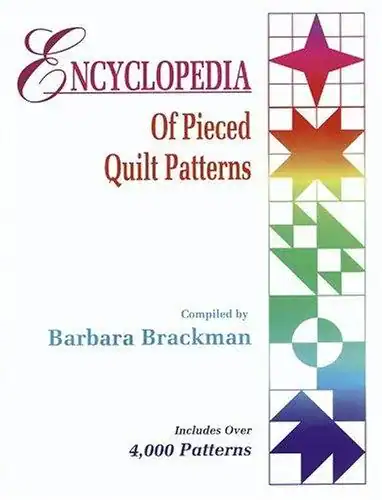
Brenda. The Blockade Block and the Four Corner Puzzle are both the same block (at least in the Kansas City Star lineup). I have redrafted all the blocks from 1928 to 1961 for Quilt Pro Software. They only released the first 330+ blocks on a CD several years ago and I’m waiting for them to package the rest. Don’t know why they’ve delayed. I spent a lot of time looking up the Brackman numbering for all the blocks (if I could find it) and the number for those two is #1212. If you send me a private email I’ll get you a visual copy of that block in Acrobat PDF – then you can figure out the cutting etc for the size block you want. — Debby (with a “y” and not “ie”) Kratovil http://www.quilterbydesign.com Visit my workshops page for guild programs!
From: “seagargwi.net”
Hi All,
A friend of mine has an old quilt that was made by his great grandmother=2E It is just about 100 years old and is in need of some love and attention=2E=
He lives in the central Maine area=2E Is there a conservationist and or restorationist that I could recommend to him that would be reasonably clos e the the central Maine area?
Thanks,
Sal
Date: Sun, 18 Jul 2004 21:01:06 -0500 | From: “cjsp70” <cjsp70@>
This comes with a special thanks to all who responded to my questions about quilting in Indiana in the 1830’s. We have just returned home from our week of volunteering at the Boyhood Memorial. My husband and son did a blacksmithing demonstration and I quilted about 4 or 5 hours a day. Really I talked more than I quilted and had a really great time. The book Quilts of Indiana was a qreat help and my quilting buddy Mabel gave me a copy of Marie Webster’s book “Quilts, Their story and how to make them”. This book published in 1915 was an incredible resource. I also had the opportunity to talk with a family from Harriett Tubman’s home town. As you can imagine the subject of quilt signals on the UGRR came up. I did my best to tell her that many people believe this but it is just a legend. I continue to enjoy reading all the postings on the list. Can’t believe I would have gotten by with snapping my garters is church. Those nuns had many eyes and a keen sense of hearing. Blessings to all of you who helped me learn more about quilting in the 1830’s. Pat ——=_NextPart_000_0327_01C46D0A.57BD49A0–
Date: Sun, 18 Jul 2004 22:28:30 EDT | From: Jccullencrew@
In a message dated 7/18/2004 10:01:44 PM Eastern Standard Time, cjsp70insightbb.com writes: Can’t believe I would have gotten by with snapping my garters is church. Those nuns had many eyes and a keen sense of hearing.
Hi Pat, Indeed, the nuns had eyes behind their heads and could hear a pin drop. I remember it well. Carol Grace
Date: Sun, 18 Jul 2004 22:48:28 EDT | From: Palampore@
I went back to look at this dress after I put up the post. Yes, I too am inclined to think the collar, pockets, and cuffs, and belt were added, but maybe not. This dealer is a vintage clothing collector, so I am prone to believe her descriptions and time period evaluations. The points of the collar don’t SEEM to fit. I see it as late 1860’s or early 1870’s not really Civil War period (1861-1865). The wax paper thing is a mystery to me. Never ever seen wax paper involved with an 1800’s period dress. Wonder when it came into use? Was it used for patterns?? The outer fabric is probably a delaine. That would be a cotton warp with a wool weft/filler. I have a log cabin pattern quilt that is all delaines from the 1860-1870’s time period. It is tied not quilted. That fabric was popular for women’s dresses, children’s dresses, and wrappers (day/house dresses) for women. The purples in delaines were fabulous as well as the madders. Off to unpack from the beach. I do love summer! Lynn Lancaster Gorges, Historic Textiles Studio
Date: Mon, 19 Jul 2004 00:49:37 EDT | From: Jccullencrew@
Hi all,
My DH went to the Air Force Museum in Dayton this past week and saw this beautiful quilt. It is HUGE. 20×20′. Part of the history of the quilt is listed below. Enjoy. Carol Grace
It looks like you’ll have to cut and paste to get to the web site.
http://www.wpafb.af.mil/museum/history/quilt.htm
This distinctive quilt, “Fabric of the Air Force,” was created to commemorate the 50th anniversary of the United States Air Force. It contains 100 handmade squares from virtually every Air Force installation throughout the world. Each installation provided a 16 by 16 inch custom made square reflecting its mission. The quilt center features a 36-inch Air Force seal and is surrounded by seals representing each major Air Force command. The four corners of the quilt are dedicated to installations that have closed in the continental US, Asian Theater, European Theater and other worldwide installations. The top border is embroidered with the Air Force core values and flanked by the 50th anniversary logo of stars and wings. Measuring 20 feet by 20 feet, it contains over 180 yards of Air Force blue material. Thread used to join the squares together was flown aboard the Space Shuttle Atlantis on its September 22, 1997 mission. Final assembly of parts and pieces took over three months to complete. The hand-embroidered lettering took more than 500 hours. After its unveiling on December 5, 1997, “Fabric of the Air Force” was on display at the Pentagon before transfer to the US Air Force Museum.
From: patkyser
I ran across a quilt-related site and would bring it to your attention since it is out of Library of Congress. Go to http://www.americaslibrary.org
and click “America at Play” and then on the left click “Stitch a quilt.” Follow the links. It gives general information. What do you scholarly folk think?
Pat Kyser in Alabama
Date: Mon, 19 Jul 2004 06:22:37 -0700 (PDT) | From: Kris Driessen <krisdriessen@>
Tuesday night I will be in Dover, NH, which is on the NH/ME border, with the QuiltBus. (http://www.quiltbus.com/bustops.htm) I will be giving my lecture on the life and times of 19th century women as reflected by their textiles. The guild that is sponsoring me has asked for a special emphasis on the Underground Railroad myth. (yeah!)
I do plan on getting their early, so if you would like me to look at a quilt, I would be happy to do so. If you want to attend the lecture, I *assume* it is open to the public, but you can double check with the president camillearnone@. If you do, please introduce yourself!
Kris
“seagargwi.net” <seagargwi.net> wrote: > > > Hi All, > > A friend of mine has an old quilt that was made by his great > grandmother. > It is just about 100 years old and is in need of some love and > attention. > > He lives in the central Maine area. Is there a conservationist and > or > restorationist that I could recommend to him that would be > reasonably close > the the central Maine area?— “seagargwi.net” <seagargwi.net> wrote:
Date: Mon, 19 Jul 2004 09:10:53 -0500 | From: “Barbara Vlack” <cptvdeo@>
I never thought of a hand-pieced Trip Around the World being done in concentric rounds, but I agree that it makes a LOT of sense. I can’t imagine our vintage quiltmaking sisters laying it all out on the floor and then stepping around it for days/weeks, etc., during the time it would take to handpiece. I do have one of these hand pieced Trips. It’s now a finished quilt, so I can’t check the construction. I do think it was a kit that was die-cut squares. The fabrics blend beautifully between prints and solids, which is why I suspect it was a kit, from the 30s.
I think hand piecing offers more possibilities for construction units than machine piecing does. Many machine piecers balk at inset seams, but a hand piecer wouldn’t! In fact, the practiced machine piecers who tackle some awkward seaming are following hand piecing “rules” for how to do this.
I have hand pieced a Grandmother’s Flower Garden and found it to be, like Becky said, sort of like knitting. You just start and keep going. A GFG project is a great one to do piecemeal and then to insert pieces with each other to complete the puzzle. It can be a mindless task (read “no-brainer”) that is very portable. If you cut the hexagons out ahead of time, all you need is needle, thread, and a thread cutter. No scissors when on the road. The GFGs of the 30s were made with a much simpler technique than ones being done today. I used the 30s technique of eyeballing a 3/16″ seam allowance. No marking on the hexagons. No paper basting. EASY! I figured this out by studying many GFG tops, with different styles, that I’ve been collecting.
Barb Vlack cptvdeo@
Date: Mon, 19 Jul 2004 09:37:18 -0700 | From: <chrisa@>
Hi Pat,
It looks like this part of the LOC website is aimed at children. They have other quilt information on their site that is scholarly and historic, oral histories, text and audio, and pictures of other quilts, etc.
Kim Wulfert www.antiquequiltdating.com
Date: Mon, 19 Jul 2004 14:25:28 -0400 | From: Joan Kiplinger <jkip@>
Lynn — thanx for yet another fabric to consider for this wrapper. I have some delaines though have never seen them in a paisley print. Coincidentally, around mid-1870s -1880s delaine was chucked and incorporated into the challis group. This from one of my glossaries, Denny I think. After you and Candace commented on a later date for this dress, it seems to me more in line with your assessments. Still, the wax paper is a mystery and can’t have laundered well. Maybe Newbie or others might know the answers.