August 22 – 28, 2001
These restored messages come from the Quilt History List, an online forum where quilt historians, collectors, researchers, appraisers, and enthusiasts discussed antique quilts and related textiles. The archive dates from 1996 through approximately 2016 and is being restored gradually. Sign up in the form at the bottom of the page if you want to know when a new page is added. Original spelling, opinions, formatting, and inactive links may remain unchanged.
Primary topics of this QHL Digest:
- Fading Powders & Dye Magnet Products — Members track down a defunct fading-powder supplier and discuss Woolite’s new Dye Magnet product for pulling loose dye out of wash water. (see the article on natural dyes)
- Boarder vs. Border Spelling Debate — A lighthearted but detailed grammar discussion breaks out over the common ‘boarder/border’ misspelling in quilt-pattern names and descriptions.
- Underground Railroad Quilt Exhibit — A member flags an upcoming Pittsburgh exhibit on Underground Railroad quilts, tying into earlier list discussion of the topic. (see the article on Underground Railroad quilts)
- Quilters’ Journal Publication History — Members trace the independent publication history of Quilters’ Journal, clarifying it was not an AQSG membership benefit but Joyce Gross’s own quarterly.
- HGTV Simply Quilts Reruns — Pepper Cory notes another rerun of her HGTV Simply Quilts appearance, prompting international members to look up broadcast schedules.
Date: Wed, 22 Aug 2001 07:36:14 -0500 | From: Laura Hobby Syler <texas_quilt.co@>
Good morning to all!
Several years ago while doing an appraisal day at one of the local
historical homesites/societies a quilt was presented for appraisal
with
such a tag from the Texas state level. It had on it a green ribbon
and a
label stating that it had been entered at the state level for the
Sears
Quilt Contest. According to Barbara & Merikay’s research, every quilt
entered in the contest received one of these green ribbons and labels
regardless of winning status. It’s a great quilt representing the 6
flags that have flown over Texas and has been displayed at the Hall
of
State at the Texas State Fair grounds and in the capitol building in
Austin. It did not win any awards in the COP contest, but the
participants ribbon is a cherished possession of the family.
Laura Hobby Syler
in hot, but not so steamy N. Texas
Date: Wed, 22 Aug 2001 16:31:33 EDT | From: jocelynm@
On Sun, 19 Aug 2001 22:30:05 EDT Trimble4@ wrote:
> I agree. While I do hate seeing these imports, I have to wonder if
the
makers are earning living wages in the countries in which they live?
Not always. Sometimes the overseas ‘living wage’ means that a person
can
buy enough food to stay alive (hungry, but alive) and then have a
little
bit left over to contribute towards housing- housing that is
dramatically
below US standards, not just in the fact that it may lack plumbing
(no
tap water for cooking or washing; no toilets), but that it may be
poorly
constructed and not weathertight or vermin-tight, and shared by far
more
people than typically share a US house.
Even so, if a person is earning a living by working 12-14 hour days,
or
in a dimly lit factory, or is punished for mistakes, the argument can
be
made that they’re being taken advantage of, even if they receive a
‘living wage’.
Jocelyn
Date: Wed, 22 Aug 2001 17:14:18 -0400 | From: Lesters <jeanlesterntown.com>
On purpose, I mean! I had some fading powders from a business called
By Jupiter! in Phoenix, some years back. I have gotten low in my
supply and the phone number no longer works for them. Does anybody
know of a source? I use it a lot when repairing old quilts.
Jean
Date: Wed, 22 Aug 2001 17:54:54 EDT | From: Quilt25@
I would like the answer to this also. I have been searching, but with
no
success.
Peg in North Texas
Date: Wed, 22 Aug 2001 21:23:54 EDT | From: DDBSTUFF@
Hi Everyone;
I need a conservator in or near Santa Rosa, California. Does anyone
know of someone in that area.
Thanks,
Darwin
PS; Has anyone called LL Bean yet?
Date: Wed, 22 Aug 2001 20:07:29 -0700 | From: “Ellen King” <>
I went to the local quilting store and they told me that no one has
this product any longer. Does anyone know where I can find it?
Ellen King,
Sacramento, Ca
Date: Thu, 23 Aug 2001 07:34:50 -0400 | From: Judy White <jawhite@>
Lesters wrote:
>
> I had some fading powders from a business called
> By Jupiter! in Phoenix, some years back.
The address of By Jupiter! is:
6033 North 17th Avenue
Phoenix, Arizona 85015
602-242-2574
Judy White – Ct
If the phone # is out of service, maybe you can write to the address
listed and see what happens. I used to see their advertisements in
magazines such as Threads and Sew News, but I don’t subscribe to
those
publications any longer so don’t know if they are still in business.
Date: Thu, 23 Aug 2001 07:29:20 -0500 | From: Laura Hobby Syler <texas_quilt.co@>
JoAnn’s
Fabrics as well.
Laura
Ellen King wrote:
>
> I went to the local quilting store and they told me that no one has
> this product any longer. Does anyone know where I can find it?
> Ellen King,
> Sacramento, Ca
>
Date: Thu, 23 Aug 2001 07:35:51 -0500 | From: Laura Hobby Syler <texas_quilt.co@>
JUdy and all…
That’s the same information that I have. I know that the company
changed
hands several years ago. We did an article on the fading kit in one
of
the VQTS newsletters early on. I’d suggest writing to them as well.
Laura
Date: Thu, 23 Aug 2001 09:14:48 -0500 | From: “Avalon” <malthaus@>
While at the Wisconsin State Fair, I was given a sample of a new
product by
Woolite after having to answer a few questions. It is called Dye
Magnet.
There are about 24 sheets in the box and you are to use a different
sheet
with each wash cycle. I have received one follow up phone call
regarding
its use. The lady at the fair giving out the samples had never heard
of the
original product with the same name. When they call again, I will
ask
about target market date.
Mary in Wisconsin
Date: Thu, 23 Aug 2001 10:06:57 -0500 | From: “Kim Heger” <kheger@>
Mary,
Were you happy with this product?
Kim
Date: Thu, 23 Aug 2001 13:51:15 -0400 | From: “Kris Driessen, QuiltBus.com” <oldquiltalbanyweb.com>
My thoughts on Dye Magnet – a great dye magnet is a piece of undyed,
untreated terry cloth. Because untreated cotton will absorb fugitive
dyes,
this plain little piece of cloth will collect all the dye in your
wash
water. When it is saturated, just bleach it all out and keep using
it. Old
well-used white 100% cotton terry washcloths, towels, t-shirts, and
underwear will work too. One caveat — it can’t be exposed to fabric
softener. Fabric softener coats the fibers and will interfere with
their
ability to absorb dye.
Kris
At 09:14 AM 8/23/2001 -0500, you wrote:
> Subject: QHL: Dye magnet
Date: Thu, 23 Aug 2001 15:28:37 -0400 | From: “bonnie wilbur” <bonnie.wilburoracle.com>
Last November there was a QHL post on magazines which featured old
quilts
saying
“Next spring Harris Publishing will be redesigning the “Country
Decorating”
magazine. It will be called “Antique Quilts”. You can get
information
about it at http://www.quiltmag.com” and suggesting the first issue
would be
out in April.
Well, this site has never had information on this magazine, and I
haven’t
seen it for sale. Has anyone else?
Thanks!
Bonnie (Northern Virginia)
Date: Fri, 24 Aug 2001 02:04:41 EDT | From: KingsCalico@
Deborah….regarding your question on quilts that carry a spiritual
essence….Have you researched Hawaiian quilts? I am no expert, but
I seem
to remember reading that the Hawaiians felt that the spirit, or mana,
of the
maker was retained in the quilt. Maybe someone else on the list has
more
information or a resource source for this?
Celine
Date: Fri, 24 Aug 2001 18:02:13 +1000 | From: “Quiltstuff” <satkinspowerup.com.au>
Hi all,
I finally have to ask a question.
I know spellings vary between Australia and the US ( eg we spell
colour, you
write color).
But one thing I see a lot in email from the US or on ebay is the
word “boarder”
as opposed to “border”
In Oz, a boarder is someone who lives in your house or a person that
boards a
boat.
So are these people just bad spellers , or is it an accepted way of
spelling it
in the US ??
Sorry that this isn’t a real history question
Suzy Atkins in Bardon, Brisbane
Date: Fri, 24 Aug 2001 07:37:07 -0400 | From: “bonnie wilbur” <bonnie.wilburoracle.com>
People are either bad spellers, don’t know the difference between the
homonyms, or most likely, are bad typists.
Bonnie
Date: Fri, 24 Aug 2001 06:57:24 -0500 | From: Laura Hobby Syler <texas_quilt.co@>
As an English major, I believe that your first perception is
correct.
The authors must not use their spell check. Otherwise you’d get a
house
guest with each quilt!
Laura Hobby Syler
In steamy N. Texas
Date: Fri, 24 Aug 2001 08:49:13 EDT | From: JQuilt@
boarder is a guest/renter in a house …. someone who receives room
and
board(meals)…i would imagine the term board, in this instance, came
from
the word board meaning a plank that they probably referred to, in
days of
old, as a table…
border means the frame around an object such as a quilt etc….
jean
Date: Fri, 24 Aug 2001 10:56:15 -0400 | From: Vivien Lee Sayre <vsayrenesa.com>
Hi Suzy,
According to the <underline>Oxford American Dictionary</underline>,
<bold>border</bold> <italic>n.</italic> 1. an edge or boundary, the
part
near this, 2. the line dividing two countries the area around this,
3.an edging, 4. a strip of ground around a garden or a part of it.
<bold>boarder </bold><italic>n.</italic> a person who boards with
someone.
Hope this helps.
Vivien Sayre in Massachusetts
Date: Fri, 24 Aug 2001 13:31:36 -0400 | From: Judy White <jawhite@>
“Kris Driessen, QuiltBus.com” wrote:
>
> My thoughts on Dye Magnet – a great dye magnet is a piece of
undyed,
> untreated terry cloth. Because untreated cotton will absorb
fugitive dyes,
>
Kris, I had the feeling when I used the original Dye Magnet that it
wasn’t so much absorbing fugitive dye as maybe picking up the
minerals
in the water. Any thoughts on that?
Judy White
Date: Fri, 24 Aug 2001 15:39:53 -0500 | From: Gail Ingram <GIngram@>
Re:
As an English major, I believe that your first perception is
correct.
The authors must not use their spell check. Otherwise you’d get a
house
guest with each quilt!
Laura Hobby Syler
In steamy N. Texas
Laura,
I’ve tried all sorts of things to restrain myself from going to
“quilts” on
Ebay, to no avail. A boarder with each quilt, however, would
definitely give
me pause! Thanks for the laugh.
Gail
Date: Fri, 24 Aug 2001 17:46:59 EDT | From: Trimble4@
About this boarder/border thing…while we’re on the subject…I
often see
“binder” used where I can only use “binding.” Anybody else?
Lori in Massachusetts
Date: Fri, 24 Aug 2001 17:47:40 -0400 | From: “pepper cory” <pepcory@>
Hello all-They hauled that chestnut of an episode of HGTV’s Simply
Quilts
out again last week! I was on (with longer hair and 20 lbs. heavier-)
five
years ago but they’re still running it. It’s the one about quilt
marking,
how to cut your own stencils etc. Some of the resources information
has
changed and since the QHL forum has the most informed, quilting-est
folks ,
I thought I’d get the new info out to you in one message.
The X-Acto Company stopped making the size gouge I used to carve
quilt
stencils but not to worry. Some enterprising company called Bob Corey
bought
their dies and now makes the gouges and they’re available on the Web.
To get
the U veiner blade in the 3/32″ size, go to http://x-actoblades.com ,
then
to page 2 Blades and down to Gouges. The one to carve quilt stencils
is the
F Gouge, #x156 and costs $3.50 for a pack of two. The knife I use is
the
classic red-handled craft knife. Go to the Knives page and down to
#3005 and
there it is for only $5.50. No, I don’t get a commission! But I sure
was
pleased that someone recognized the need for these tools. I would
have been
up the creek without a paddle!
Quilter’s Newsletter will have an article in its upcoming November
issue
called Make Your own Quilt Stencils with this amended info. But is
you have
Mastering Quilt Marking, it’s all in the book in tedious detail. Many
thanks
to the people who emailed me wanting tool information and I hope this
answers most inquiries.
Cheerio from coastal North Carolina-
Pepper Cory
Date: Sat, 25 Aug 2001 15:48:31 EDT | From: Baglady111@
Recently, there was posting about UNDERGROUND RAILROAD quilts. There
is to
be an exhibt in Pittsburgh later this year about the Underground
Railroad
history at a local history museum. In mentioning the stories of
patterns
supposedly connected to that subject, they are interested in possibly
adding
one of those quilts to their exhibit. Preferrably, the older the
better “if
possible”..but if anyone can point me in the right direction, please
email me
at baglady111@
Thank you
Jane
Date: Sat, 25 Aug 2001 15:23:38 -0500 | From: “Susan Wildemuth” <ksandbcwgeneseo.net>
There is an out-of-print publication called “Quilter’s (or Quilters)
Journal” and I am hoping to obtain some back issues. It’s my
understanding
that these publications were full of quilt history, am I correct?
Was this
connected to the American Quilt Study Group at one time or do they
pre-date
that? I see a lot of citations for this publication, but I have
never come
across an actual copy. Does anyone know where I could purchase back
issues
of this publication? I have tried all my usual sources–Hard-to-Find
Needlework Books, E-Bay, Peddler’s Wagon, and my list of online used
bookstores–for the last four years and have come up empty. Or if
they
rarely come up for sale, does anyone know where I can see one in a
museum
collection or interlibrary loan through my local library. Would the
University of Nebraska be my best choice for this? I live in
Illinois and
even our state depository doesn’t own any copies of this publication.
They
have never heard of it. Was it’s circulation small, limited, or
regional?
Thanks
Sue in Illinois
Date: Sun, 26 Aug 2001 15:34:45 -0400 | From: Judy White <jawhite@>
Hi Susan. The publication you refer to used to be part of the
membership dues to AQSG. The first one I have is dated spring, 1978
and
is Vol 1, No. 3 so there two issues before that one. The last one I
have is No. 31 and is dated July 1987. These magazines were
published
by Joyce Gross of Miss Valley, CA, and were full of quilt history
regarding old quilts, famous quilters, news of major quilt
conferences
of the period, etc. Some of the contributors were Cuesta Benberry,
Katy
Christopherson, etc.
Since I don’t know the whole history of AQSG even though I am a
member,
I’m not sure how this magazine became associated with the AQSG. I
dropped my membership for a while, and when I rejoined, these
magazines
were not part of the membership dues. I was able to pick up some
copies
that I didn’t have through eBay, but I imagine that the resource
library
at the U of Neb would have a complete set.
Judy White – Ct
Date: Sun, 26 Aug 2001 21:38:22 EDT | From: ARabara15@
Hello all, it’s Donald Brokate here and I have a question for the group. I have come across many 1930’s quilts that have bright solid colors combined with white or off white and the brights have bled into the whites. Having dealt with vintage fabrics in my past (an even older past life- you all must think I was a waiter at the last supper by now) I’ve tried several of my majic potions with varied success. Is there a product out there that can be used to treat the white areas without fading or bloching the colored areas? Appliques with chrome orange and yellow, as well as hot pink and coral are the worst offenders. (and yes I am a very poor speller). Please advise.
Date: Mon, 27 Aug 2001 11:54:26 +1000 | From: “kate knight” <kateknightoptus@.au>
Pepper, Thanks for the knife information…I am in Australia so didn’t see the HGTV’s Simply Quilts episode…what plastic do you use for your stencils…we have a product called “templastic” here that I use for templates occasionally (when I run out of the x-rays) which is a heavy-duty almost clear plastic. Is that suitable ? I have one of those double-bladed knives but it can’t cope with anything very thick, and then the template isn’t very durable. Thanks again ! Kate (from rainy windy Sydney)
Date: Mon, 27 Aug 2001 02:59:16 | From: “Anne Copeland” <anneappraiser@>
At the latter part of the 19th century here in America, people worked 12 – 14 hrs. and even more in dimly lit, and unsafe factories. I am sure most of you remember reading about that. Even children were working, and often tied into their seats. Today we are viewing what is happening in China from our own perspective of where we are now. We can only see it as exploitive, and there is no doubt that in one sense of the word, it probably is, just as our own industrial revolution was also a time when American workers were exploited. Exploitation of the coal miners, and many other American workers has also occurred over the years. China is years behind the United States in many ways. In some ways, they are probably experiencing their own industrial revolution. I am not in favor of any people being exploited in any way, but as someone on this list pointed out, at least these people are learning a skill that someday given political changes, they might be able to use in some profitable way. And surely there is something soothing in stitching a quilt compared to breaking rocks, or doing physical labor for the same amount of time. And they have a better chance of living longer. No, their lives are nothing like ours, and will probably not be as long as China is the country it is now. But we just have to remember that even when times are most difficult here, they are many times better than that of many of the world’s countries. China is in our minds because of the imported quilts. Imported quilts are also coming from India and other places now. And there are places like South Africa where people are still exploited in the diamond mines. So China sure does not have an exclusive on exploitation. Cheers and blessings, Annie
Date: Mon, 27 Aug 2001 04:30:12 -0500 | From: “Ann G. Hubbard” <ahubbard@>
http://www.womenfolk.com/grandmothers/history.htm. In my travels yesterday looking for something else, I found this website and thought some of you might be interested in visiting it. Seems to be a lot of interesting information. Ann from Lake of the Ozarks, MO
Date: Mon, 27 Aug 2001 07:51:29 -0400 | From: Judy White <jawhite@>
I see in my past email about this publication that I misspelled Mill Valley, Ca. These journals were published by Joyce Gross of Mill Valley, Ca. Sorry. Judy White
Date: Mon, 27 Aug 2001 08:02:46 EDT | From: DDBSTUFF@
Here is the website for Dyemagnet: http://www.dyemagnet.com/
Date: Mon, 27 Aug 2001 08:12:32 -0500 | From: Bettina Havig <bettinaqc@>
Quilters’ Journal was not a side benefit of AQSG membership. It was a separate and independent publication by subscripton. It predates AQSG by a couple of years. AQSG began in 1980. The only slight connection to AQSG was that Joyce Gross who published QJ was a charter member of AQSG and a prime mover in the early days. Unfortunately for the quilt world, Joyce ceased publishing QJ after the death of her husband in 1988. There is very valuable information to be found in QJ and anyone who has the complete set is very lucky. There is a chance that some selected back issues may still be available from Joyce. I hesitate to give out her address without permission but she does monitor this list and may respond directly. She is still a member of AQSG. AQSG publishes its own periodic newsletter called Blanket Statements and it is sent to all members. Bettina Havig
Date: Mon, 27 Aug 2001 18:01:11 EDT | From: CBENBERRY@
Quilters’ Journal was published quarterly beginning in the 1970s by Joyce Gross, editor and publisher, who at the time had a Mill Valley, CA address. The publication had a significant historical emphasis more so than stressing quilt pattern features. It preceded the founding of the American Quilt Study Group. In fact, Sally Garoutte, founder of AQSG, served as QJ’s Textile Editor several years prior to conceiving the idea of forming AQSG. Joyce and Sally, both Mill Valley residents, were friends of long standing, and had belonged to the Mill Valley Quilt Authority quilt organization. So later, when Sally formed AQSG, one of the first persons to help her was Joyce. At the first meeting of AQSG, Joyce curated and hung its quilt exhibition of quilts from her own collection as well as presented a research paper. Yet Quilters’ Journal and AQSG were always separate and distinct unconnected entities. For further information about Quilters’ Journal, I would suggest that you contact: Joyce Gross 853 D Street Petaluma, CA 94952 Phone & Fax# – 707-769-0269
Cuesta Benberry CBENBERRY@
Date: Tue, 28 Aug 2001 06:09:15 -0500 | From: “Leigh Fellner” <hcquiltspeoplepc.com>
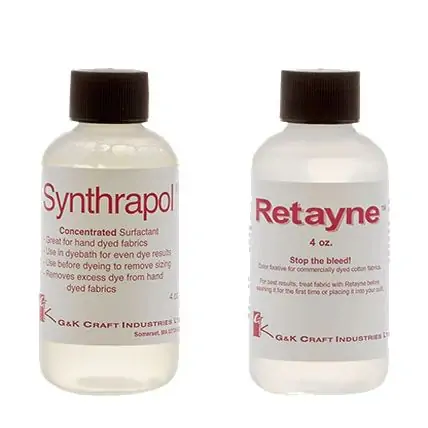
I’ve had some remarkable success removing post-quilting bleeding by
ashing – sometimes 3 or 4 times in succession – in hot water and
Synthrapol. I remember one quilt in particular in which one 19th c.
indigo
square and one red block bled like mad. To my great relief,
Synthrapol
worked like a charm!
Date: Tue, 28 Aug 2001 06:21:50 -0500 | From: “Leigh Fellner” <hcquiltspeoplepc.com>
Thank you, Anne, for giving some long-view perspective on this
matter.
If we can separate our feelings from fact for a moment, an
examination
of history demonstrates that the concept of exploitation is a
relative
one, and varies from culture to culture and era to era. (It even
varies
from state to state. I live in the poorest part of the poorest
county
in FL. We all think we’re doing just fine, thank you, but my friends
in
Boston would be appalled at what they’d consider the primitive living
conditions many of us “suffer” down here.)
Personally, I wonder how much of the western quilting world’s outrage
over imported quilts is a secondary reaction for the original uproar,
which was the flooding of our markets with cheap, mass-produced
quilts
which affected the livelihood of our own, more-expensive quilters.
If I
recall correctly, that was how the big fuss started (e.g. the
Shelburne
Museum repros). Only later did anybody find the convenient
moralistic
cover of concern for our Eastern sisters.
As for L.L. Bean’s “refusal” to provide any information on the quilts
other than that they are “imported,” it should be kept in mind that
not
every retailer (even one as big as LLB) deals directly with the
manufacturer, or if it does, with just one manufacturer in one
country.
There may be a jobber who contracts with LLB for sixty gazillion
quilts,
and then farms the work for half of the lot to Pakistan and the rest
to
Sri Lanka. So the actual origin of two quilts of the same design may
be
different.