June 7 – 10, 1999
These restored messages come from the Quilt History List, an online forum where quilt historians, collectors, researchers, appraisers, and enthusiasts discussed antique quilts and related textiles. The archive dates from 1996 through approximately 2016 and is being restored gradually. Sign up in the form at the bottom of the page if you want to know when a new page is added. Original spelling, opinions, formatting, and inactive links may remain unchanged.
Primary topics of this QHL Digest:
- Scissors Motifs on 19th-Century Quilts — Members discuss scissors and shears imagery appearing on quilts and in quilting culture, including the superstition about gifting scissors cutting friendships, and how to distinguish scissors from other pointed motifs.
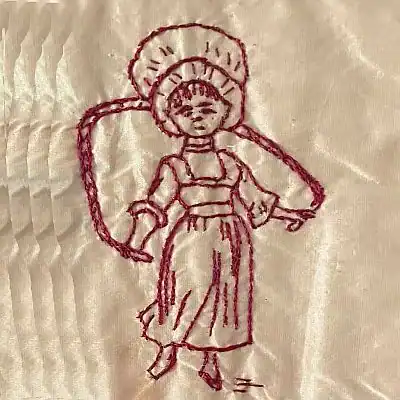
- Redwork Embroidery Research — Laurie Woodard posts a call from Deborah Harding seeking stamping and transfer pattern catalogs from the 1880s–1900s for a forthcoming book on redwork embroidery. (see the article on redwork and outline embroidery)
- Hawaiian Redwork Quilts — Laurie Woodard shares a Fiberarts magazine review of the Embroidered Hawaiian Quilts exhibit and points members to the related Uncoverings 1997 article.
- Rolling Stone Signature Quilts Continued — John Cawley reports finding another Rolling Stone signature quilt, and members continue discussing construction details, German inscriptions, and regional Pennsylvania quilt traditions.
- Feedsack History and Exhibit — Members share information about a feedsack exhibit and discuss the history of flour-sack fabrics used in quilts. (see the article on the feedsack story)
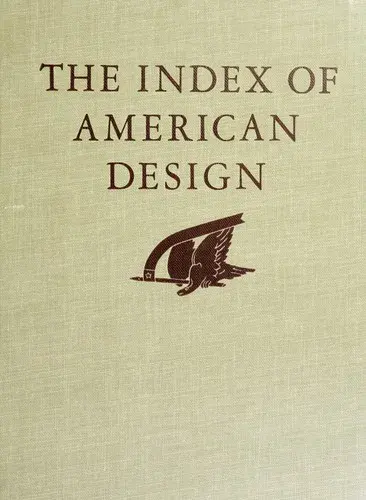
- Australian Quilter Seeks American Graphic Design Book — Marion Nielsen from Australia asks about an American quilt design book with a green cover, and members identify it and suggest other out-of-print quilt history references.
- Mammy Quilts — A member asks about Mammy quilts after encountering the term, prompting discussion of their history and cultural context.
- Kentucky Quilt Documentation Project — ZegrtQuilt describes the Kentucky Quilt Project’s effort to document quilts county by county from 1992–1995, with details on its scope and goals. (see the article on state quilt documentation books)
- Keepsake Quilting Fabric Swatch Set — Judy Grow notes a Limited Edition set of 2000 fabric swatches offered in the Keepsake Quilting catalog and discusses its potential value for future fabric identification.
- Corsets and Period Clothing for Reenactors — Continued discussion of wearing historical corsets and stays, with firsthand accounts from reenactors about fit, comfort, and period accuracy.
Date: Mon, 7 Jun 1999 22:01:06 EDT | From: EllynLK [at] aol [dot] com
In a message dated 6/7/99 6:53:18 PM Pacific Daylight Time, Jocelyn writes: << But still, I bet that far more ladies claimed to have a 16″ waist, than could have gotten into a dress with a 16″ waist, even with their corset laced to the tighest! <G> >>
I KNOW you’re right on the mark! How many of us have a weight listed on our driver’s license that may be a– er, “dramatic license”? <<gg>> I just won’t change it to add those 15 pounds… but you’d better believe if I lost 20 pounds, I’d be at the Dept of Motor Vehicles in a minute to change it!
Lauri Klobas
Date: Mon, 7 Jun 1999 22:14:11 -0400 | From: “Judy Grow” <Judygrow [at] blast [dot] net
>You have to remember that the average American is significantly taller and heavier than s/he was a century ago; we eat more protein, have healthier diets, and various ethnic/racial groups have intermarried to an extent unknown in the rest of the world (remember hybrid vigor from biology
class?).
>Modern brides are also several years older than 19th century brides (mid 20’s as opposed to mid teens). I don’t find small corsets out of the question.
Ahem! I was born in 1940, married in 1965. (You will forget that information at the end of reading this e-mail). I wore my Mother’s wedding gown, which was a princess line Skinner Satin, designed and made for her by the firm of Hattie Carnegie (her sister worked there as a seamstress, and they just made an evening gown in white satin and added length to the back for a train). I redesigned the top of the gown so it wouldn’t look so “period 1938”.
The entire waist and torso had to be taken in 3″. I am one of those modern American girls, at 5’8″ (at that time) , 2 inches taller than her mother. Add to that the fact that Daddy was a doctor and as soon as I could swallow I was forced to take vitamin pills. I also wore a “Merry Widow” under that gown, and my waist looks miniscule in my wedding photos. But I know my waist was never smaller than 23″ as a grown woman. Perhaps it is the fact that my hips are so large??????? Would that I had a waist anywhere in the 20’s now!
Judy in Ringoes, NJ judygrow [at] blast [dot] net
Date: Mon, 7 Jun 1999 22:35:45 -0400 | From: “John Cawley” <cawley [at] goeaston [dot] net
This must be the season for Rolling Stone signature quilts. I bought one yesterday dated 1862. The 20-10″ blocks are in turkey red (10 different fabrics) and chrome yellow (9 different fabrics).
The sashes and borders are poison green; the cornerstones and unfilled binding are double pink.
The dedication block says “Aveline S. A. Stern ihr Teppich (her carpet–the PA German dialect corrupted this to Deppich, the word they used for quilts which were not part of the German tradition) 1862. Underneath this inscription is a vase containing tulips on a vine and a tree. Written on the base of the vase is the name W. Gross. All of the blocks are inscribed in the same hand in exquisite fractur calligraphy; the names are all German: Ziegenfuss, Stern, Koch, Weber.
It made me think immediately of quilts from the Goschenhoppen area in southeastern PA. Sure enough the first section of Lest I Shall Be Forgotten, the book based on the Goshenhoppen documentation, discusses the signature quilts of the area of which the Rolling Stone pattern was far and away the most popular.
The following appears on page 18, “The Kemmerer Museum in Bethlehem owns a signature quilt with names written by William Gross, a well-known baptismal certificate scrivener.” Guess who I’m going to be calling tomorrow? I think I need to see this quilt in Bethlehem and to find the people whose names are on the quilt.
Date: Mon, 7 Jun 1999 21:36:55 -0600 | From: Larry Orr & Hanna Witte Orr <witteorr [at] interl [dot] net
A friend told me about an archival type ink for bubblejet printers, if you printed with that on archival paper it would be perfect ! Photocopies do turn yellow after several years.
Does anybody know if scanner or photocopier light is damaging to old documents like letters, photos, or daguerrotypes ? I’d like to scan some old family photos, but am not sure about the strong light in the scanner.
Hanna Orr
>Could you scan each one, print them onto transfer paper, press them onto plain fabric, and then tack them to the appropriate squares? Then put the originals in some kind of casing and tack it to the back of the quilt. This would preserve the originals while being reversible, and the signatures would “bend” with the quilt. You could do the same thing with new photocopies, of course, but it seems they would also begin to disintegrate.
Date: Mon, 07 Jun 1999 21:54:27 -0500 | From: Russell-Hill <russhill [at] ctesc [dot] net
I wear a corset when I wear period clothing and have found out that I can lace mine tighter than say some one else my size because for some reason I squish better. When I made my corset it was to my measurments minus the 3 to 4″ well after I laced it up to what I thought was right it was to big I have no space in the back like I should. After talking over my problem with some one who had gone to a corset maker, she explained that some people can be pulled in more. I will be honest after a day in a corset and it is 80 degress and humid I donot want it any tighter. As Newbie and Lisa said it was for the very fashionable and very young. After child birth it was never to be seen again.
Debbie
Date: Tue, 08 Jun 1999 06:57:12 +0400 | From: Xenia Cord <xecord [at] netusa1 [dot] net>
Hi, All – I also have one of these quilts – dated 1853, Rahel Ditt, ihr teppich, and with the members of her family inked in the other blocks (der grossvater, der grossmutter etc). No signature by the calligrapher that I can find, but the same branching tulips and vines under Rahel’s name. Mine is in “Pennsylvania” colors – red prints, gold and yellow prints, Prussian blue. Unwashed and in wonderful condition. I have some notes somewhere from a correspondence with Sara Dillow, where we discussed other similar quilts – will look for them and hopefully resurface <G>.
Xenia
Date: Tue, 8 Jun 1999 08:56:18 EDT | From: Feathrwate [at] aol [dot] com
About length of stitches:
An elderly lady in WV invited me to her attic to see family quilts. When I was remarking on the tininess of the stitches given the fatigue, poor light, etc., in the past, she told me that the stitches weren’t so tiny at first, but that the cotton thread shrunk being washed and the cotton fabric of the quilt, also, so as to draw up the quilting.
Linda
Date: Tue, 8 Jun 1999 10:42:58 EDT | From: QuiltFixer [at] aol [dot] com
Sharon H and I have been sharing information on scissors that were on or quilted into quilts. Also wondering about the possible meaning of these. “Bad luck” or “good luck”? Anyone have any further information or comments for us?
Toni B.
QuiltFixer [at] aol [dot] com
Date: Tue, 8 Jun 1999 11:30:37 EDT | From: QuiltNews [at] aol [dot] com
Since I am new to the history of quilting, I am finding a great deal of information by exploring the on-line auctions that are on the internet….I fine myself studying the quilt for sale….and I do NOT buy, but find that I can research quilts presented and determine whether I agree with the description or not….recently I saw a Mammy quilt….never having heard of that type quilt, I checked in a library book I had just gotten, lot and behold, that was two pages devoted to this type of quilt….I am wondering if anyone else finds that these on-line auctions beneficial? I also find I am tracking the price of quilts this way…..and find that Grandmother’s Flower Garden was a very popular quilt, many people are selling them….any thoughts?
Ann
Date: Tue, 8 Jun 1999 12:36:12 EDT | From: JQuilt [at] aol [dot] com
here’s the website for more info about the feedsack exhibit and the museum http://www.coloradomuseums.com/
jean laino
Date: Tue, 8 Jun 1999 11:58:31 -0700 | From: “Melissa Devin” <mldevin [at] aa [dot] net
I just had the luck today of being at my quilt shop at the right time! I was wandering aimlessly w/o direction trying to decide which couple of fabrics I would pick up to add to my stash (no quilt in mind, but I had to buy thread… and I didn’t want to write a check just for thread 🙂 anyway… an older lady walked in asking for help. While I was deciding which Hoffman to pick up, I overheard the lady talking about *finding these fabrics with a friend… not sure how to set them… huge bagful of scraps… etc*. Well, my ears perked up when I heard something about *older fabrics* and *huge bagful*, and looked to see what she had. She had spread out on the cutting table several gorgeous scrappy 8 pointed stars, in excellent condition.
My interest was peeked, and now I was next to her drooling over what was in the bag and on the table. She had fabrics ranging from 1840-1890! All in excellent condition. What I would give to have that huge bagful of scraps! The several stars that were already pieced were in muted browns and taupes, but she had some gorgeous coppertone madders, one brilliant green, some purple pieces, and a yellow that were ready to be pieced. She was afraid to put those in the grouping! I know I wouldn’t be!! Set in some of those coppertones, and that green… it would add sparkle and be a gorgeous wallhanging! If I were thinking quick enough, I should have made her an offer! Oh well.. missed opportunity for sure! It sure was exciting to see all those fabrics though. then we chatted about her grandmother’s crazy quilt that she had, and then about other quilts…
It was definitely a great day to wander aimlessly into the quilt shop!
Date: Tue, 08 Jun 1999 16:55:05 -0400 | From: Denise Clausen <nadyne [at] oregoncoast [dot] com
Hi Beverly
Let us know if you do self publish, the Latimer Quilt and Textile Center would be interested in carrying the book and in one for our research library.
We are also making our first attempt at self publishing soon. We have completed a book of Oregon patterns, will be available soon.
Good luck
Denise Clasuen
Director
Latimer Quilt and Textile Center
Beverly Dunivent wrote:
> As for “a book on kit quilts” Anne Copeland and I have written such a book! We just have never have been able to have it published. The publishers have encouraged us but say they don’t think enough copies would sell. At this point Anne and I have decided that if all else fails we will self publish. We will keep you posted. In the meantime our paper on the subject was published in Uncovering 1994 and Xenia Cord’s paper on kits was published by them in 1995. These are the publications of AQSG, The American Quilt Study Group and both journals are still in print. Beverly Dunivent
Hi Beverly
Let us know if you do self publish, the Latimer Quilt and Textile Center would be interested in carrying the book and in one for our research library.
We are also making our first attempt at self publishing soon. We have completed a book of Oregon patterns, will be available soon.
Good luck
Denise Clasuen
Director
Latimer Quilt and Textile Center
Date: Tue, 8 Jun 1999 21:00:58 EDT | From: EMetcalfe [at] aol [dot] com
I read with much interest, your comment on Mammy quilts…I have never heard of them, and would appreciate it if you would share any information on them. Have been studying quilt history for 25 years, and this is new to me…
Schultz in Ga.
Date: Tue, 08 Jun 1999 21:51:53 -0700 | From: Audrey Waite <awquiltr [at] sedona [dot] net
Hi all:
We documented a Mammy quilt in the Arizona Quilt Project. Picture on p. 55 of our book GRAND ENDEAVORS: Vintage Arizona Quilts and Their Makers”. It was made circa 1935 in Camp Verde, AZ. It was described as an “Aunt Jemima” style black woman with a turban. Similar quilts were discovered in Texas and Mississippi. There must have been a pattern circulating.
Audrey Waite
Sedona, AZ
http://www.quiltcamp.com
Date: Wed, 09 Jun 1999 07:25:02 -0400 | From: Alan Kelchner <quiltfix [at] mail [dot] jax [dot] bellsouth [dot] net>
Kris,
Believe it or not, I saw a similar quilt this week on Ebay. Squares with a circle in the center. The circles were smaller in comparison to the square (they called this a “button” quilt). And what’s worse, it was polyester !
I also don’t believe the Yahoo quilt top is a top, but a spread – the underside was just a bit too neat.
Alan
Date: Wed, 9 Jun 1999 07:42:22 EDT | From: Windquilt [at] aol [dot] com
A friend has two twin-size applique quilts made in 1933/34. Apparently her great-grandmother Mary appliqued the tops using a Marie Webster pattern (May tulips). She then wrote to Marie Webster to inquire about having them quilted. Ms. Webster replied (handwritten, signed note, not dated) saying that she did not believe she could meet the time frame given, but it would cost $22 for each top, etc. Mary then corresponded with the Ann Orr Studio, who did quilt the tops – they are 16stitches/inch (counting stitches on top)
and the work is absolutely exquisite.
I am going to find an AQS appraiser to look at the quilts, but I wondered if any of you have any comments regarding the interest that the provenance papers and the fact that the Ann Orr studio was involved might cause.
Thank you!
Nancy Blake
Duxbury, MA
Date: Wed, 9 Jun 1999 08:50:35 -0400 | From: “Dee Stark” <dee [at] nf2g [dot] com>
Toni asked:
>Sharon H and I have been sharing information on scissors that were on or quilted into quilts. Also wondering about the possible meaning of these. “Bad luck” or “good luck”? Anyone have any further information or comments for us?
I’ve been (for the last year) researching the symbols and motifs used on crazy quilts, and am actually about a week away from publication (I’m going to do a serial publication of the glossary, a segment once a quarter for four quarters), with a bound volume to come out next summer. I have scissors listed as: death of a friend, or quarrel. I’d be interested in knowing what kinds of quilts you are finding this symbol on. Is it embroidered, or a pieced pattern of scissors, or appliqued? And the dates of the quilts?
dee dee [at] nf2g [dot] com
Victorian Handcrafts
http://www.nf2g.com/vh
Date: Wed, 09 Jun 1999 09:38:14 -0400 | From: nancy roberts <robertsn [at] norwich [dot] net>
Kris D. wrote: Here is an interesting quilt I have never seen before: http://auctions.yahoo.com/auction/4913253
Is this a technique I missed along the way, or is this something the quilter invented?
This is a neat quilt. It reminds me of a pattern quilt published in an issue of Traditional Quiltworks awhile back (I can find the issue number if anyone wants it). A woman had recycled old yo-yo’s by removing the gathering and flattening them. Then she appliqued rings and circles cut from them to mulsin to make her “new” quilt. It was very appealing and the technique was similar to the one you referenced. Nancy
Date: Wed, 9 Jun 1999 09:36:52 EDT | From: Cml791 [at] aol [dot] com
While doing my daily quilt reading yesterday I came across a reference to “open scissors in the corner of one block”. The quilt was an applique but it was white on white. Has anyone else seen an applique like this or do you think it was a different color and it has just been washed and used so much that all the color came out?
Page 110 of ‘Treasures in the Trunk’ by Mary Bywater Cross.
Carolyn
Date: Wed, 09 Jun 1999 08:41:05 -0600 (CST) | From: magee [at] AXP [dot] WINNEFOX [dot] ORG
Sounds like you have documentation on these quilts that many of us would die for! I would think there would be significant interest. Laurie
Date: Wed, 9 Jun 1999 10:57:29 EDT | From: QuiltFixer [at] aol [dot] com
I was just given a small crib quilt from the 1930 to 1950 It is a dark blue background with appliqued toys and lots of embroidery. Around the edge of the quilt is an embroidered border in white thread with Mammys. Has anyone ever seen anything like this? Where would I find more information about quilts with mammys? Its a darling quilt in addition to being very interesting.
Toni B.
QuiltFixer [at] aol [dot] com
Date: Wed, 9 Jun 1999 13:12:47 +0100 | From: “Sally Ward” <sward [at] t-ward [dot] demon [dot] co [dot] uk>
A friend of mine has just picked up a softback book at a flea market at a cost of one of our English Pounds (about 75 cents?) which is a Dover publications 1962 revised version of the McKim Studios 1931 work ‘101 Patchwork Patterns‘.
My friend would like to know more about it and about Ruby McKim. Can anyone email me privately with info or references where she can learn more?
Regards
Sally W in UK
Date: Wed, 09 Jun 1999 11:54:04 EDT | From: silkribbon [at] juno [dot] com
I too wear stays for reenacting. Just got back from So. Ill festival where I wore them in 90+ degree heat, found that I was really faint by the end of the day. Usually though they aren’t bad — I am in the late 1700’s time period where they weren’t nearly as tight as the Civil War era.
Saw some nursing stays in Williamsburg — small neat squares in matching fabric over each nipple, couldn’t tough so don’t know how they were held in place. Think velcro would have been a popular choice if it was available back then! Amazing that woman would get back into those so quickly. Also children often wore them — yes young boys too. Notice in old paintings how uncomfortable the kids look, probably stays underneath it all.
Cathy Grafton
Pontiac, IL
Date: Wed, 9 Jun 1999 16:41:16 +0100 | From: “Sally Ward” <sward [at] t-ward [dot] demon [dot] co [dot] uk>
If my Mother was ever given scissors (or knife, anything with a blade) she would pay the giver a token penny in order that the friendship would not be ‘cut’. Maybe the givers of quilts with the design had to do the same and turn bad luck into good?
Sally W in UK
Date: Wed, 09 Jun 1999 09:34:29 -0700 | From: Marilyn Maddalena <marilyn [at] crl [dot] com>
I’m glad to read about the thread shrinking and making the stitches appear smaller. That’s an interesting concept. Re the auctions; I check them every day. I find it’s a wonderful way to be exposed to different types of quilts, to learn provenance and to keep abreast of pricing — although I do find that quilts here in California sell for higher prices than many of the ones on the internet auctions. It gives a pretty broad overview of pricing across the country and adds to my knowledge. Since I’m an appraiser working toward certification, the internet auctions give me a chance to see quilts from many areas of the country that I might not see just in my own little part of the world. Now if I could just stop BUYING what I see, maybe I’d have a little more room in my house for things other than quilts! (Wouldn’t THAT be a waste of space!) Of course I rationalize my purchases with the fact that I NEED them to fill out my trunk show programs on antique quilts. I think that’s logical; don’t you? MM Marilyn Maddalena
“Sew Special”
Quilt Appraiser — Quilt Judge20
“Potatoes to Patchwork” — a trunk show on antique quilts Publications Chair, NQA, <italic>The Quilting Quarterly </italic>Secretary, CHQP
Date: Wed, 09 Jun 1999 12:26:57 -0600 | From: Sharon Harleman Tandy <harleman [at] micron [dot] net>
Kris, and Qhlers,
I, too, have seen many of these circle quilts here in the west, usually of wool, and on a wool ground. The buttonhole stitch I’ve seen some but more often hand- or machine-appliqued. With the wool ones and no batt or back, they were usually utility quilts, sometimes cowboy quilts. Sharon.
Date: Wed, 09 Jun 1999 15:11:34 -0400 | From: Judy Kelius <judy [at] chesco [dot] com>
I think some examples of what may be seen as “scissors” on 19th century applique quilts are instead simple bow knots – the loops of the bow form the scissors “handles” and the strands of ribbon are its “blades” (opened). I’m referring to the kind of “scissors” motif that you find mostly on borders – it seems to me that I’ve seen what are definitely scissors incorporated into blocks on an album quilt.
Date: Wed, 09 Jun 1999 14:56:38 PDT | From: Kim Heger <kheger [at] hotmail [dot] com>
I received a copy of this poem at a quilt store when I was visiting Amarillo, Texas, and thought I’d share it with you all!
***A Quilter is Someone Who:
Saves ten boxes of scraps,
Has one corner of the house an eternal mess, Buys half a yard of calico,
When on vacation, goes to the fabric store in every town, Loves flea markets,
Is always looking for new ideas,
Spends sleepless nights thinking about color combinations, Has a tottering pile of books and magazines in her room, Visits every five-and-dime,
Is always picking up pins and bits of thread from the floor, Has a callus on her left index finger,
Is always looking for more quilt patterns,
Begs her friends for remnants,
Works a year on a quilt, then gives it away, Watches T.V. with a needle in her hand,
Is forever ironing,
Is never bored,
Knows one hundred patterns by heart,
Forgets to water the lawn,
Can get it all together,
Finds treasure at a garage sale,
Always has time to help a friend.
by Rosalyn F. Manesse
I love the lines about visiting fabric stores while on vacation and the tottering pile of books—mine is on my desk as we speak and I’ve planned a trip to a fabric store in Denver on our summer vacation! 🙂
Kim from Hugoton, Kansas
Date: Wed, 09 Jun 1999 21:17:27 -0500 | From: Karen Bush <Birdsong [at] worldnet [dot] att [dot] net
> and…NEVER thank the ‘giver’ for the scissors or knife! BAD luck! 🙂 kb (who’s heading for the wild blue yonder and going to the ROCKIES for b-day IN THE MORNING!!) If my Mother was ever given scissors (or knife, anything with a blade) she would pay the giver a token penny in order that the friendship would not be ‘cut’. Maybe the givers of quilts with the design had to do the same and turn bad luck into good?
> Sally W in UK
—
TIP- “Never baste a quilt on a water bed….” just another little tidbit from “Quilt As Desired” Written by Karen Bush http://www.idahoquilt.com The Hand quilting Teaching text- CLASSES- PRIVATE AND IN-SHOP- Inquiries welcome
Date: Wed, 09 Jun 1999 21:50:37 -0500 | From: Russell-Hill <russhill [at] ctesc [dot] net>
QHLer’s and Cathy,
I know this thread is not quilt related but it is historically related. In responce to Cathy’s post I have a few things to add. I have been doing a great deal of research on period clothing and found that shildren boys and girls did wear corsets for posture reasons. The Victorians felt posture was very important. I would say by mid 1800’s Doctors were insisting that children not wear corsets because their bodies could not develope. At that time it was becoming a fashionalbe thing to begin exercise men and women both. The Stays of the earl;y 1800’s were corded mostly and held up by straps so women could move more freely but as it became fashionable to have broader shoulders and smaller waists, bones came in to fashion. Oh I did forget on thing many of the early stays did have a wooden busk in the center front to keep the tummy flat. So not much movement when wearing that. I don’t think they were worn for everyday wear.
Only the fashionable wore their corsets tight in the 50’s to 60’s. Most sensible women wore them just tight enough to hold them up and keep the corset from falling down.
As far as getting back into a corset after child birth they most likely found it more comfortabel for them. If they wore a corset most of their life their muscles had not developed as ours have so they most likely had back pain. There is a corset made for the gestation period as they call it. So ladies really needed them since they had not developed a good strong body. This is dated 1830-40’s well all you wanted to know about corsets but were afraid to ask.
Debbie
Date: Wed, 09 Jun 1999 21:12:08 PDT | From: Marion Nielsen <marionnielsen [at] hotmail [dot] com>
I am quilter living Australia and would like some information. A few years ago I came across a book about old Baltimore quilts. In particular, there were 2 descibed in detail by a women who lived in Baltimore by the name of Rachel Meyer. I photocopied the whole book and now would love to purchase the book that I understand may be out of print. I would love to see the quilt – made in the early 1800’s as I will be going to the US next year. I know that the person who may have it is Mrs. Henry Hecht and she lives in Baltimore.
I would love any information that anyone may have on this specific quilt and the owner as well as how to find the book
Thanks
Marion N marionnielsen [at] hotmail [dot] com
______________________________________________________ Get Your Private, Free Email at http://www.hotmail.com
Date: Thu, 10 Jun 1999 00:19:06 -0400 | From: “Judy Grow” <Judygrow [at] blast [dot] net>
Friends,
I just got my Keepsake Quilting catalog today, and on page 25 there is the offer of a Limited Edition set of 2000 4″ square swatches, for $249.99 — no two alike. I’d like to own 2000 contemporary swatches, but not at that price. But, I’d be willing to order them, and then cut them into 2″
swatches to share with 3 others.
They are only cutting 390 of these sets, so I’d like to act soon. If you’d like to be my partners, the cost for each person would be $62.50 plus shipping. How do you feel about that?
Judy in Ringoes, NJ judygrow [at] blast [dot] net
Date: Wed, 9 Jun 1999 18:17:57 -1000 | From: “Laurie Woodard” <lwoodard [at] hawaii [dot] edu>
Deborah Harding is researching and writing a book on redwork embroidery. She now has a publisher for her work. She says of her manuscript, “The plan is to include the information on pattern sources and options, transfer methods, the stitches, . . . plus at least 20-25 documented quilts, 60-75 actual-size patterns and just a page or two with stitch diagrams and very general tips .
. .” Sound exciting?
She is looking for the following pattern sources to round out her collection. If you can help, you can phone/fax her in NYC at (212) 755-6406 or email me and I will fax your info on to her.
WANTED TO BUY–Illustrated catalogs/books of stamping/transfer patterns for embroidery c. 1880-1905.
Specific titles include:
Ladies Home Journal “Mamouth Book of Designs” c. 1888
Ladies Home Journal Style Book c. 1905
A Complete Illustrated Book of The Ladies Home Journal Transfer Patterns J.F. Ingalls’ Illustrated Catalogue of Stamped Goods c. 1887 Ingall’s Fancy Work Book c. 1905 (NOT Fancy Work Monthly) I expect she also would be happy to receive photocopies if not the original.
Thanks in advance.
—
Laurie Woodard
Researcher
Hawaiian Quilt Research Project
http://openstudio.hawaii.edu/hqrp/default.html
Date: Wed, 9 Jun 1999 18:32:56 -1000 | From: “Laurie Woodard” <lwoodard [at] hawaii [dot] edu>
Fiberarts Summer 1999 issue, page 23, features a review by Akiko Kotani and Bernard Freydberg of the “Embroidered Hawaiian Quilts” exhibit at the Mission Houses Museum in Honolulu last year. There’s one photo of the “Feathered Plumes” quilt by Eme Hobbs Mahikoa (name mispelled in the article) who was a well-known quiltmaker on the island of Kauai. Mrs. Mahikoa helped to support her family through her quilt making. She made more than forty quilts in her life time including one for each of her fourteen children. This is one of them.
You can read more about Hawaiian redwork in an article that appeared in Uncoverings 1997, called simply, “Hawaiian Outline-Embroidered Quilts.” The exhibit was based on this research.
—
Laurie Woodard
Researcher
Hawaiian Quilt Research Project
http://openstudio.hawaii.edu/hqrp/default.html
Date: Thu, 10 Jun 1999 06:23:04 EDT | From: JBQUILTOK [at] aol [dot] com
While vacationing in upstate N.Y. this summer, I found an interesting booklet in an antique store in the fingerlakes area. It was published (very likely self published) by Dorothy G. Cook in 1975. It is reprinted Kate Greenaway patterns from Harper’s Bazar 1881& 1882. Haper’s recommended using 3 shades of a color, stating that blue was most popular. These patterns were to be used for “doyleys, wall-pockets, or such small objects”. There’s also some embroidery stitch directions from Corticelli Home Needlework (1898). Ms. Cook had copied the patterns in 3 different sizes for her book.
Janet
Date: Thu, 10 Jun 1999 05:37:10 -0800 | From: onthego [at] naxs [dot] net
Dear Folks,
I’ll be flying to Prewque Isle, Maine in a couple of weeks and spending a few days in northern Maine/southern Canada with a quilting friend. Can anyone make suggestions of things we must see?
Thanks!
Dana on the hot and humid border of TN/VA
—–
Sent using MailStart.com ( http://MailStart.Com/welcome.html ) The FREE way to access your mailbox via any web browser, anywhere!
Date: Thu, 10 Jun 1999 08:48:18 EDT | From: Baglady111 [at] aol [dot] com
In a message dated 6/10/99 8:47:07 AM Eastern Daylight Time, Baglady111 writes:
<<
If anyone is interested in entering the MOUNTAIN COMFORTS QUILT SHOW in CALLAWAY VA..you can contact LUCY RICARDO at VAKwilter [at] aol [dot] com for all info..this show is ranked in the top 20 by the Southeast Tourist Society.
Jane of THE FEEDSACK CLUB
http://members.aol.com/baglady111/samples.html >>
Content-Disposition: inline
Return-path: Baglady111 [at] aol [dot] com
From: Baglady111 [at] aol [dot] com
Full-name: Baglady111
Date: Thu, 10 Jun 1999 08:47:07 EDT
Subject: quilt show
To: ozzg [at] nmia [dot] com
MIME-Version: 1.0
X-Mailer: AOL 4.0 for Windows 95 sub 214
If anyone is interested in entering the MOUNTAIN COMFORTS QUILT SHOW in CALLAWAY VA..you can contact LUCY RICARDO at VAKwilter [at] aol [dot] com for all info..this show is ranked in the top 20 by the Southeast Tourist Society.
Jane of THE FEEDSACK CLUB
http://members.aol.com/baglady111/samples.html
Date: Thu, 10 Jun 1999 09:43:57 EDT | From: Chyral [at] aol [dot] com
Let’s see…. the two OOP BAQ books that come to mind are “Old Quilts” by Dunton and the Katzenberg catalogue for the Baltimore Museum o’ Art exhibit in 1971 (is that date right?)…. I have a photocopy of the Dunton book, and didn’t see any mentions of Rachel Meyers during a a quick perusal of same….. I don’t have a copy of the Katzenberg, though. (But I’ll trade a photocopy of the Dunton for one!)
There is a Rachel Meyers quilt illustrated in “Lavish Legacies”, the catalogue published by Maryland Historical Society in conjunction with their 1994 BAQ exhibit. The quilt is color plate #18, and is identified as the “Gift of Mrs. Alice F. Hecht, 70.56.1” (Which means it has been in their collection since 1970….) There is no mention of a second quilt by Rachel Meyers in the text, and there are no references to past publications which included this quilt.
Hope this was helpful,
Cheryl
In a message dated 6/10/99 12:13:27 AM Eastern Daylight Time, marionnielsen [at] hotmail [dot] com writes:
> Subj: QHL: Rachel Meyer Quilt
> Date:
6/10/99 12:13:27 AM Eastern Daylight Time
> From:
marionnielsen [at] hotmail [dot] com (Marion Nielsen)
> To:
QHL [at] cuenet [dot] com
> I am quilter living Australia and would like some information. A few years ago I came across a book about old Baltimore quilts. In particular, there were 2 descibed in detail by a women who lived in Baltimore by the name of Rachel Meyer. I photocopied the whole book and now would love to purchase the book that I understand may be out of print. I would love to see the quilt – made in the early 1800’s as I will be going to the US next year.
I
> know that the person who may have it is Mrs. Henry Hecht and she lives in Baltimore.
> I would love any information that anyone may have on this specific quilt
and
> the owner as well as how to find the book
> Thanks
> Marion N marionnielsen [at] hotmail [dot] com
Date: Thu, 10 Jun 1999 08:08:59 -0700 | From: “R & L Carroll” <Robert.J.Carroll [at] GTE [dot] net>
Hello Marion and QhL’ers
I believe the book you are looking for is American Graphic Quilt Designs, by Dolores A. Hinson. It was published in 1983 by Arco Publishing and the book shows an address of 215 Park Avenue South, New York, NY. 10003. You might check with them.
It is a wonderful book on Baltimore and Album quilts which includes many patterns.
You might contact the Maryland Historical Society, as has been mentioned they have the first Rachel Meyer quilt, and may have the second or know of it’s whereabouts.
Laurette in So. California
Date: Thu, 10 Jun 1999 12:26:04 EDT | From: ZegrtQuilt [at] aol [dot] com
From 1992-1995 The Kentucky Quilt Project, Inc had an incredible idea to fill the gap in the then current quilt scholarship available to the quilt interested public. We began The Quilt Journal: An International Review with the plan to facilitate the work of those around the world who came to quilt research from other fields, backgrounds and with different visions We wanted to gather information generated by other parts of the world and bring it to the attention of the American quilt community, and also to act as a reference source for American quilt information.
Six issues were published with a total of 26 articles on such topics as A New World in the Old: European Quilt Scholarship, by Janine Janniere Methodology and Meaning: Strategies for Quilt Study, by Patricia Keller Quilt and Fabric Stylings of the Later Twentieth Century, by Jeffrey Gutcheon American Museum in Britain by Sheila Betterton
Quilt Scholarship: The Quilt World and the Academic World, by Lorre Weidlich Quilt Judges and Juries: Hard Questions, by Carol Jessen Quilted Links? South African Kappies and French Boutis, by Lucille Chaveas They are no longer generally available but copies do remain. The KQP is offering to QHL participants a rare chance to purchase the entire 6 issue set. The retail price for the set is $52.00 ($7.50 each and $15.00 for the double issue).
The special price to all of you is $28.00 (plus $3.00 shipping/handling).
This offer is good until August 15,1999.
ORDER NOW!!
Ordering Information: (Single issues are not available) We accept check/money order or Mastercard/Visa
E-mail zegrtquilt [at] aol [dot] com
Phone 502-897-7566
Fax 502-897-3819
Make check payable to:
The Kentucky Quilt Project, Inc.
P.O. Box 6251
Louisville, Kentucky 40206-6251
**** The Kentucky Quilt Project is a 501(c)3 not-for-profit organization. Shelly Zegart is acting only as a facilitator for the book orders.
Date: Thu, 10 Jun 1999 14:51:36 -0700 | From: “R & L Carroll” <Robert.J.Carroll [at] GTE [dot] net>
Hello!
This Mammy or Aunt Jemima pattern was published a few years ago in a magazine (LCPQ I think). They mention that they took the pattern off a 1930’s quilt.
A friend of mine made it in 30’s reproduction fabric and it really came out cute.
Laurette in So. California