September 30 – October 7, 2004
This page contains affiliate links. If you buy through them, I may earn a small commission at no extra cost to you. As an Amazon Associate I earn from qualifying purchases. Learn more
These restored messages come from the Quilt History List, an online forum where quilt historians, collectors, researchers, appraisers, and enthusiasts discussed antique quilts and related textiles. The archive dates from 1996 through approximately 2016 and is being restored gradually. Sign up in the form at the bottom of the page if you want to know when a new page is added. Original spelling, opinions, formatting, and inactive links may remain unchanged.
Primary topics of this QHL Digest:
- Concerns Over Made-in-China Quilt Tops on eBay — A seller offering new quilt tops made and shipped from China sparks debate over the quality, ethics, and long-term implications of imported tops. See: Arch Quilts
- Mystery “Quilt Blocks” Turn Out to Be Cocktail Napkins — Images someone thought were quilt-block designs are identified by the group as 1950s cocktail napkins.
- Where to Find State Quilt Documentation Books — A member asks for a list of state quilt-documentation project books and is pointed to a website that indexes them.
- Maryland Historical Society’s “American Fancy” Exhibit — Members share the dates for an upcoming decorative-arts exhibit at the Maryland Historical Society.
From: “sue reich” <suereich@>
Sally, MSH just had something that looked like more than a burp. I’ll have my jars to bring home volcanic ash. sue reich
From: “kathy moore”
From the For-What-It’s-Worth department:
Regarding our recently past discussion on the Women’s Club movement, I’ve just run across a resource which might be helpful. It’s old and probably will have to be borrowed through interlibrary loan. The author and title are: Jane Cunningham Croly, The History of the Women’s Club Movement in America (New York, 1898). Yeah, yeah, I know. I told you it was old!
Have a good day, ya’ll.
Kathy
From: Gail Ingram
As I think ahead to next week, I wonder if there would be a time when southern members might gather to talk about September, 2005 Conference on Southern Quilts.
I shall not attempt to define “South,” but I think it applies to quilt traditions under study, not necessarily to how the region is constituted today. For instance, someone noted that NOVA did NOT consider itself southern these days and I certainly know that is true and know that the population of the region comes from diverse areas. Yet, I’m sure Mrs. Robert Edward Lee and husband would find that surprising. Personally, I think of the southern highlands, including West Virginia, which was originally part of Virginia, as Southern as I do the border state of Kentucky. East Texas is part of the same cultural strain, right down to that SW VA/NC flat accent. If you think of yourself as southern or want to have input or help with this conference, count yourself in.
If southern members will write me off-list with suggestions and note of interest, I will see tally up our number and pass along possibilities.
Thanks, Gail
Date: Sat, 2 Oct | From: Hazelmacc@
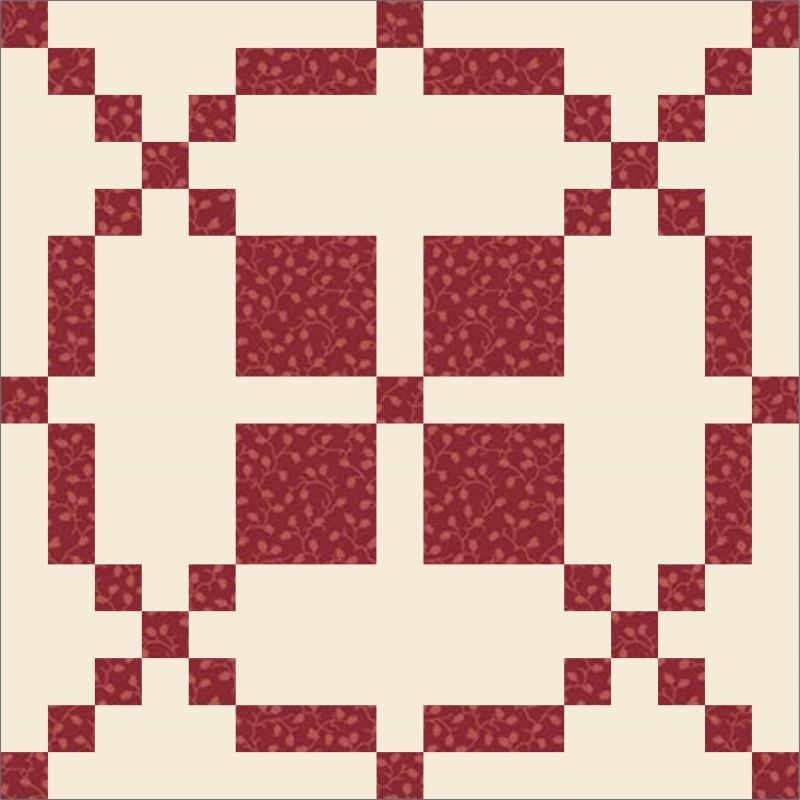
Years ago (1981) when visiting Ireland, we saw an exhibit of their quilts at the Kilkenny Design Workshop. They displayed a red and white quilt, and I quote from the catalogue titled “Irish Patchwork”: “Americans call this pattern ‘Irish chain’; it is occsionally referred to in Ireland as ‘ American Chain.'” They showed another in red and light green.
Hazel Carter in No. VA
From: Karen Alexander
I found a fascinating old book about 2-3 years ago on my way to the QHF Celebration called “What the Country Women of the World are Doing” published 1931/32 (with reports from 24 countries and a number of photos). I had never heard of this organization before. When I showed it to Cuesta Benberry at Celebration she became very interested for she and Joyce Gross had been doing some research on this organization over the years but did not have a copy of this particular issue of the organization’s work. We subsequently exchanged copies of the version we each had. The one they sent me is called “The Associated Country Women of the World: Proceedings of the Third Triennial Conference Held in Washington May 31-June 11, 1936 (with reports from 17 countries). Are any other QHL members familiar with this organization and its work? Since I will be driving to the AQSG seminar, I could bring these two with me if anyone is interested in seeing them.
Also, just wanted to alert you all to the fact that the new QHF book about our 34 Honorees will be on sale at the AQSG bookstore during the seminar.
Karen Alexander
From: “Newbie Richardson”
Dear List, In addition to the “Home and Harvest” Quilt and Sampler exhibit at the DAR in Washington, DC Oct. 8th to April 30th, 2005, the American Fancy exhibit will be in Baltimore starting the end of October. Baltimore is less than an hour drive from DC( depending on traffic!), so you could kill two exhibits in one day, so to speak. Newbie Richardson
From: “Lucinda Cawley”
The Maryland Historical Society website lists the dates for American Fancy as Dec. 4, 2004 to March 20, 2005. If you are coming to see the DAR exhibit plan a stop in Baltimore, as Newbie says it’s only an hour from D.C. and you can have crabcakes too. Cinda on the Eastern Shore who before moving to MD was ignorant of the many charms of Baltimore
From: Jeff
Just in case anyone has taken as long as I have to follow up on the ebay item I will attach a link.
http://cgi.ebay.com/ws/eBayISAPI.dll?ViewItem&item=8124955417
I for one am very happy the seller was able to finally sell her piece and hope it went to someone that will treat it right.
Jeff
From: Palampore@
I just saw Jane Pauley has quilts thrown over the sofas on her new set. I assume they are made in China quilts since folks are sitting/leaning back on them.(Mixed feelings about that….) Either way, one day they will show up at an auction and be touted as the quilts on JP’s Show. If they are made in USA that would be interesting to know —by whom??? Another thing I saw recently that might be “history in the making” like the Chicago Quilt Exhibit, is a quilt thing being done by Northern Tissue. Once they found out that quilts were not sewn/made with knitting needles they have become nice supporters of quilts. They were even sponsors of a paper at AQSG if I remember correctly. Years ago a sign saying “ERA” was done in large patchwork at a rally where Alan Alda spoke on the ERA. This took place in Raleigh, NC and I have pictures of it. Wonder where that sign is? Did Raleigh quilters make it? (Jane Hall and Kathy Sullivan might know.) It would certainly be a part of quilt history. Ilene was very kind with her comments. I had a wonderful time giving the presentation. I told them all about our wonderful list, and about AQSG. Off to sew. Lynn Lancaster Gorges New Bern, NC
From: Judy Kelius
I was browsing eBay and found a fairly new seller offering new quilt tops made in China, sent from China! Starting bids are all $24.99 for king/queen size tops (shipping also $25). Description claims these are “quality” fabrics. I wonder how good they actually are. These look nice in the photos and the feedback seems good. I would love to hear from anyone who has actually purchased one of these! Obviously I don’t believe every thing that’s on Ebay, but it would be hard to guarantee the conditions in a Chinese factory or in Chinese piecework goods (that is, goods paid for by the piece and worked on in the sew-er’s home).
From: “jocelynm@”
On October 4, 2004, Palampore@ wrote:
> I just saw Jane Pauley has quilts thrown over the sofas on her new set. I assume they are made in China quilts since folks are sitting/leaning back on them.(Mixed feelings about that….)
Not necessarily- there are even quilters who allow people to sit on or lean back against their quilts. <G> I grew up with using quilts for making play tents on the lawn. Probably some of those quilts would have survived better if they had been carefully preserved, but then, I wouldn’t have the affect ion for quilts that I have. I’d rather use, and use up, a quilt. Perhaps Ms . Pauley is of the same camp.
From: “Laurette Carroll”
Hi Judy, thanks for posting this information on the tops from China.
I have found that the majority of imported quilts, by necessity, are made with cheap unattractive fabrics and the combinations of fabrics leave a lot to be desired. They don’t seem to put it all together right, and these tops are no exception. Fabric choices are one way to tell a cheap import from a quilt made here in the US.
However there will be some confusion in the future, when we see these imported quilt tops nicely quilted, probably by machine. I wonder if they will still have the “import” stigma??
Jocelyn, the “Item location” is specified as China in the listing.
Laurette Carroll Southern California
Look to the Future With Hope
Date: Mon, 4 Oct | From: Midnitelaptop@
i too sit and lean on quilts that i make…and i invite anyone who receives a quilt from me ….to enjoy it thoroughly….i’d rather have the memories a quilt has brought to me… than some well preserved quilt stored away,wrapped in acid free paper …
i think about the wonderful multi colored sand mandalas made by tibetan buddhist monks… they take hours and hours to make… then part of the ceremony is running fingers through the designs…we all tend to attach too much emphasis on permanency…. A very old monk was sweeping the yard in a monastery under the scorching sun. Another monk passed by and asked him, “How old are you?” The old monk replied, “I’m seventy-seven.” “You are so old! Why are you still working so hard here?” “Well, because I’m here.” “But why are you working under the scorching sun?” “Because the sun is there.” jeanL
From: “Sharon in NC”
I am trying to figure out how they can guarantee it was made in a smoke free pet free environment. It looks like one of those sellers that basically takes orders and the company drop ships direct. China has run the small cottage industry people who craft out of business in the past ten years and now they are focusing on quilting it looks like. With the billions that is spent on quilting each year I can understand why but I don;t have to like it.
This reminds me of a so called “quilt shop” I ran across while traveling this summer. I can’t even remember the town or name of the shop now I was so disappointed when I walked in I just blanked it all out. They had walls, floors, racks and shelves full of quilts of all sizes. When I first walked in I thought I could pick up one that was in the window that caught my eye for my kitchen but when I touched it I realized it was low quality fabrics and had an import label on it. I went ahead and looked around thinking maybe they had homemade and imports mixed but alas it was just 300+ imports in the whole place. I wonder how many people purchase imports, remove labels then sell them as locally made. It is a scary proposition and unfortunately I can’t see how anyone 50 years from now will know if it was made in China or the hills of the Appalachians.
It truly looks like only the artistic styles or custom order business will be the only ones you can ensure are made in US very soon. Another reason to push harder for people to permanently label ALL of their quilts even those small doll blankets they whip together for the grandkids. Hhhmm speaking of which I need to label a few I haven’t gotten around to here..lol
Sharon in NC
From: “Sharon in NC”
Geez you would have a heart attack here seeing the kids and pets piled on them in the floor. I even carry two in the truck of my car for picnics and emergencies…lol.. I expect all the ones I make to be used and loved. If they never wore out how would I justify making another one to replace it?…lol.. Sharon in NC
From: “Margaret Geiss-Mooney”
Good morning, QHLers – …And I still get high blood pressure when I think of the huge Lone Star quilt from my mother’s side of the family (from Texas of course) that we took to the beach, to sit on before and after swimming in the ocean! It disappeared during one of the moves cross country (military family). I can just imagine what a tattered mess it must be: sanded with real sand grains on both sides, salt residue, baby oil (NOT sunscreen) residue, food/beverage residues, blasted with high levels of light and whopping amounts of UV light…sigh… Regards, Margaret (Meg) Geiss-Mooney Textile/Costume Conservator Professional Associate, AIC mgmooney@
Date: Mon, | From: <gingram@>
Miss Gorgeous,
Did you see the newspaper insert PARADE yesterday?
Big feature, cover story on the Scots-Irish!
gi
From: Ark Quilts
I found the list of items this seller has completed on Ebay very interesting. Out of about 33 items that had feedback posted for them, only 4 or 5 of them sold for $50-$60. All of the rest sold for about $30-$45.
They all seem to be larger, queen sized quilts, too. I don’t know how they are making queen sized quilt tops with good quality fabric for less than $50 or $60. I know wholesale & large quantities will make the items cheaper, but I would not be able to make a top for that amount.
Also, apparently they have one prototype–it appears that they use the same pictures of a quilt top and have sold 5 or 6 of that style using the same pictures & the tops are all done in the same fabric. I emailed the seller and asked if the item pictured is the item sold & how they knew they came from a smoke free environment.
It appears that these are mass produced, but maybe the seller will offer some details. I think this will wipe out the cottage industries making quilts here in the U.S. and since they are mostly run by women, it will diminish their capacity to earn a living.
Sad to see this happening.
From NW Ohio, Connie Ark
From: Hazelmacc@
Yes, l cut the article out to bring to AQSG for all to see…..Hazel
On October 4, 2004, Laurette Carroll wrote:
> > However there will be some confusion in the future, when we see these > imported quilt tops nicely quilted, probably by machine. I wonder if they > will still have the “import” stigma??
If they’re still made from cheap fabric, and put together quickly and carel essly, probably they will- but why would that be worse than an American qui lter doing it? I think we have to be careful not to sound like we think that America owns quilting. 🙂 Quilting existed before American quilters did. If there are wo men in China who use quality materials and make a quality product, are they really of less value to the quilting world than an American who makes a qu ilt for sale? After all, the Amish don’t use a wide variety of colors and p atterns, and their quilts are highly prized, so it isn’t just that the indi vidual quilter is using her own creativity to make an original design…
From: “Newbie Richardson”
This same thing happened to wedding dresses in the early 1980’s. It used to be that most wedding dresses from the 1960’s to the early ’80’s were made in the US by small manufacturers or bridal houses. Then the import laws were changed and virtually overnight the dresses were made in Indonesia, the Philipines, ect. The retail cost came down by about 50%. In 1982 a dress selling for $1,900 cost $900 in 1983. ( I am not talking about the high end dresses we see today – think David’s Bridal.) I know because I was involved in an appraisal of just such a dress damaged in a moving company accident. When the client swore the dress cost her $1900 in 1981, I did not believe her. Then I interviewed several bridal store owners. Boy, did I get an ear full! – and she got her money back from the moving company – just in time to pay for expenses of kids! Newbie Richardson
From: alan@
Nonsense !!
It was loved and used to death, quite literally. What better compliment can there be ?
Alan
Quoting Margaret Geiss-Mooney <mgmooney@>:
> Good morning, QHLers – …And I still get high blood pressure when I think > of the huge Lone Star quilt from my mother’s side of the family (from Texas > of course) that we took to the beach, to sit on before and after swimming > in > the ocean! It disappeared during one of the moves cross country (military > family). I can just imagine what a tattered mess it must be: sanded with > real sand grains on both sides, salt residue, baby oil (NOT sunscreen) > residue, food/beverage residues, blasted with high levels of light and > whopping amounts of UV light…sigh… > Regards, > Margaret (Meg) Geiss-Mooney > Textile/Costume Conservator > Professional Associate, AIC >
From: Judy Schwender
Hello- I received this inquiry and wondered if any of you out there have hear of these quilt blocks / cocktail napkins? I have a picture of two of the blocks that I’d like to post. Could someone please email me off-list and provide the url and how-to about that process? Thanks!! Judy Schwender
I found at a flea market this weekend in Clinton, IL a series of 7 quilt blocks that are appliqued with nude women wearing a sheer full length gown. Finished size of the block is closer to 6 1/2″ x 5″. Embroidered are nipples and leg lines, etc. so as it appears they are wearing lingerie. They are done with the finest of stitches and appear to be of several different poses. The detail is unbelieveable! I thought they were so funny I had to buy them. None of my friends have ever seen anything like them. Have you ever heard of such blocks? When were they made? My friends and I can only guess buy the style that they are from the 1930’s or 1940s as they have a pin up girl quality to them (the pose and style of hair). Each is also embroidered holding a mirror, or candle stick, flower and all have high heels on. I think, I have figured out what they are, some of my older quilting friends seem to think since the edges are finshed that they were cocktail napkins. Whatever they are the applique is pristine. Some of the detail the pictures don’t do justice is the stitches. Including the embriodery on them. The breasts are outlined in addition to the nipples and in some of the blocks a crotch has been added. There are seven blocks, 4 different poses. I have asked around, all my quilt friends and at the local quilt shops and no one has seen anything like them before, everyone is amazed by the detail and amazed by the workmanship. I am going to take them to the Hands All Around Quilt Guild meeting on Thurs. in Bloomington IL and see what they have to say. Thanks for replying. I can send more pictures if you want them. Thanks Mara Harris
From: Gail Ingram
Judy, your friend seems to have come upon a set of cocktail napkins, probably from the 20’s or 40’s, probably the latter. Typically, these are padded in places where nature padded women. Guest hand towels were also made in this genre. The embroidery and applique work is usually superb. Such sets and towels are valued by linen collectors and fetch alluring sums.
I think they would make interesting quilt blocks!
Gail
From: Xenia Cord
Judy, your correspondent is correct that these images are cocktail napkins from the 1950s. They were made either in China or Japan, which accounts for the fine handwork. I had a small grouping of these and turned them into a pictorial quilt called “Chicken Ranch,” posing one in each of the windows. The quilt was a donation to the AQSG auction about 3 years ago.
Xenia
From: Laura
I wouldn’t think she’d sell very many of those quilt tops. Don’t most quilters already have more tops than they can finish in three lifetimes?! Is it Libby Lehman who says we’re “toppers” not quilters?
Laura in Seattle, looking forward to AQSG this weekend. I wonder if the planners have added a new tour with views of Mount St. Helens to make the trip more intertesting for you easterners with a dearth of volcanoes. After the 1980 eruption, they had ash down in Portland (and presumably Vancouver), but it isn’t expected to go that far this time. Wouldn’t that make a memorable seminar.
From: “J. G. Row”
And you all are it.
After reading about my ex-pain-reliever,Vioxx, in the NY Times I turned the page and skimmed a health-related book review. The reviewer states that in the book, “The Strange Case of the Walking Corpse” by Nancy Butcher, the author lists other oddities, like cases of “genuine freakishness” that include menstruating men, a woman with 10 breasts, and pregnant women with cravings for plaster, charcoal, and CLOTH.”
I assume he meant that pregnant women craved cloth to eat. I have always craved cloth, even while pregnant, but I can’t remember ever wanting to put a fat quarter in between two sliced of bread (with mayo, please) and downing it for lunch.
Having said that, I assume that if I get served a sandwich on my flight to Portland tomorrow, as unlikely as gracious lunch service may be, it probably will have “mouth-feel” like a fat quarter and be equally as dry — even with two packets of mayo.
Judy, aka the Ringoes Kid judygrow@
From: “Merry Endres”
I’m going to have to buy this book now 🙂 I just read about it at Amazon.com and it sounds definitely interesting 🙂
–Merry —–
From: “Julie” <quiltappraiser@>
One day at our Quilt Guild, someone spoke at show and tell about Quilt Tops being sold at bldg 19 1/2 for $25. Many of us went to see. I was a little latter than the others but was able to pick one up and see a few others. They are thin, cheap fabrics that are sewn quickly. When quilted or tied, they won’t last any longer than the imported quilts (2 or 3 years at most). At the time of the sale, they were advertised that Bernie (or whoever the man owner is) bought a one time bulk purchase from China. This was about a year ago. I bet we’ll see these cheaper and more frequently for sale at places, especially if we keep buying them. Julie Crossland, Hudson, NH
From: Kathie Holland
Hi! I was wondering if anyone knew of a website that has all the state documentation books that have been written. I am in the process of collecting them and want to make sure I am not missing one or five!!!! Thanks for your help….. Kathie in NJ Kathie Holland kathieholland@
From: “Laurette
Jocelyn wrote………”If they’re still made from cheap fabric, and put together quickly and carelessly, probably they will- but why would that be worse than an American quilter doing it?”
First let me say that I don’t consider import quilts as less valuable than other quilts simply because they are imports. Perhaps that was not clear in my previous post, but I don’t believe I implied otherwise. And it is certainly true that an unattractive poorly made quilt is just that no matter who made it. Several years ago while shopping in a department store with my daughter I saw a display for imported quilts, and walked over to study them. I saw that while some of them attempted complex patterns and they were hand appliquéd and quilted, the workmanship was poor and the fabrics used were poor in quality. My daughter came up, looked them over quickly, and knowing nothing about them simply said “They’re ugly”, and walked off. I was kind of surprised that she would conclude exactly what I had been thinking, but realized that she had seen a lot of nice quilts during her lifetime and though she didn’t quilt, she knew the difference between good and poor workmanship.
“If there are women in China who use quality materials and make a quality product, are they really of less value to the quilting world than an American who makes a quilt for sale?”
The Chinese imports don’t use quality fabrics, because it would not be cost effective, nor do they have the time to make a quality product, and sell them at low prices. And actually as commercially manufactured items, they do have less value, intrinsically as well as monetarily, than handmade/homemade American quilts. They sell for less, and that’s especially so for a used quilt. IMO the fact that a quilt is AMERICAN made has a great deal to do with the monetary value, since it is American quilts that are so collectible. The fact that our antique quilts are purchased by collectors in other countries and leave the US presumably for all time, speaks to that.
Nicely made quilts are made in other countries to be sold here in the US, and these new quilts do sell for prices that reflect the quality of the fabrics and workmanship (some sell in the $2000 range). Presumably these quilts are bought to be used, rather than as collectibles. Only time will tell whether these nicely made, commercially manufactured, imported quilts will be accepted for their workmanship and attain the same status as the American quilt.
Laurette Carroll Southern California
Look to the Future With Hope
From: “Susan Wildemuth”
Kathie,
Try this webpage for the State Documentation Books:
http://www.booksandoldlace.com/quilting/StateQuiltHistoryBibliography.htm
Hope this helps,
Sue in Illinois
From: “Laura
There is a “chain” of quilt shops in Texas….all have the word “Rose” somewhere in the name. All they carry is imported quilts – and they are very proud that they are imports….and very proud of their prices, too! There is one on the highway that runs through Childress Texas….on the major route to New Mexico and Colorado ski country (and Texas panhandle quail hunting). The first time we saw a King Size Lone Star quilt hanging outside overnight we had to stop and check it out. Didn’t take but a few seconds to figure that one out. The fabric is nothing that any quilter would recognize, and icky fabric at that! They have had that shop for at least 7 years, maybe more. There is one in the Texas Hill Country, too. Sorry, cant remember the names. Laura Syler Richardson, Texas
From: “ElizaBeth L. Haubold”
It cost so much for shipping. I prefer to buy from people in the united states. I get good ideas from those selling on ebay that triggers another idea for me to try.
ElizaBeth
From: Kris Driessen
Kathie,
I *think* we have them all at the Quilt History website, (http://www.quilthistory.com) under bibliography. If I missed any, please let me know and I will add them.
Kris
— Kathie Holland <kathieholland@> wrote:
> Hi! > I was wondering if anyone knew of a website that has all the state > documentation books that have been written. > I am in the process of collecting them and want to make sure I am > not missing one or five!!!! > Thanks for your help….. > Kathie in NJ
From: “Sharon
Laura since we were on our way to Dallas I bet that it was one of these shops I ran into.
Sharon
From: “Leah Zieber”
Hi there – Have a friend who would like to quilt two family quilts c1890-1900 – all the fabric looks good (stable enough for quilting) and she plans to hand quilt them in a hoop. (She assures me she will be labeling them as antique tops with new quilting – they are for her daughters to inherit and she feels they would be better served if they were gently used rather than packed away as unseen treasures). She was wondering if she should use a plain muslin backing so as not to take away from the antique fabrics, or could she use a good reproduction of the same era? She wonders if either way will affect the value more or less. She is looking to hand quilt them such that they would most closely resemble a quilt of the c1890-1900 era. I know there was just a big discussion regarding quilting old tops – but don’t recall if “what type of backing is best” was addressed. Appreciate your input privately or otherwise. Leah Zieber Temecula CA
From: Judy Kelius <quilts@>
It all depends on what kind of fabrics are in the top and to some extent where they were made. If the top has printed fabrics, I personally like to see a backing that is appropriate to the period, probably a good repro. I often use woven cotton checks and plaids as backs for scrap tops from Pennsylvania since they were often used as backings for quilts from this area. They are readily available, the old and the new look virtually identical, and they needle well. In some areas of the country, muslin backs were used even for the scrappy tops, so I really think it is important to take into consideration where they are from in order to choose an appropriate back. Quilting patterns, type of batting, and bindings can also reflect regional differences.
Date: Thu, 7 Oct 2004 04:55:35 -0400 | From: “Pat Sloan” <patpatsloan.com>
I didn’t see the Newest VA quilt book on any of the lists mentioned
Virginia Quilt Museum by Joan Knight, Polly Frye (Photographer)
Is this the last state book written?
Pat Sloan
Date: Thu, 7 Oct | From: DDBSTUFF@
Does anyone know any history on the “Whigs Rose” pattern?
Thanks,
Darwin
From: “Brenda & Roger Applegate” <rbappleg1@>
I have re-created the Log Cabin in the streak of lightning set similar to what may be found on Barbara Brackman’s book “Quilts from the Civil War”. The original quilt was made out of wool, but I have used printed cottons instead. Does anyone have suggestions for how this quilt might be quilted
Can I machine quilt it? Is stitching in the ditch common during the 1860 – 1880 time period Or should it be hand quilted and suggestions?
I want to keep whatever I do appropriate to the 1860 – 1880 time period.
Thanks. Brenda
Thank you.
Brenda Applegate