November 7 – 12, 2005
These restored messages come from the Quilt History List, an online forum where quilt historians, collectors, researchers, appraisers, and enthusiasts discussed antique quilts and related textiles. The archive dates from 1996 through approximately 2016 and is being restored gradually. Sign up in the form at the bottom of the page if you want to know when a new page is added. Original spelling, opinions, formatting, and inactive links may remain unchanged.
Primary topics of this QHL Digest:
- Why the QHL Archive Requires a Donation — A reminder that the QHL message archive is available to paid/donating members, with donations helping cover listserv costs.
- What Is “Cottonade”? — Members define cottonade as another name for hickory shirting, a heavy twilled striped cotton fabric resembling ticking, drawing on a 19th-century daybook of fabric prices.
- Standard Fat Quarter Dimensions — A quick clarification of the standard 18-by-22-inch size for a fat quarter, with a note on selvage-width variation.
- The Humility Block Myth — A discussion of the popular but likely apocryphal “humility block” — the idea that quilters deliberately included a mistake so as not to rival God’s perfection. (see the article on quilt folklore)
- Preserving Fragile 19th-Century Newspaper Ledgers — A member with deteriorating bound 19th-century newspapers seeks advice on encapsulation and preservation options. (see the article on repair, restore, or conserve)
- Recommended Reading on Amish History — A member recommends Steven Nolt’s “A History of the Amish” as background reading.
Date: Mon, 7 Nov 2005 10:02:56 -0800 (PST) | From: Kris Driessen <krisdriessen@>
Archives are for paid members – it’s not a big deal, really. Any donation made helps pay for the listserv and the server space used to store the archives, so they are the only ones that get passwords to the archives.
If you feel in the mood to donate (it’s not a requirement), you can read more at http://www.quilthistory.com/subscribe.htm
Kris, buried in her new POS system. Store ownwers who know what I mean, please send chocolate…
— Ann-Louise Beaumont <albeaumont@> wrote:
> I too need the current archive password. > Many thanks and Best Wishes
Date: Mon, 7 Nov 2005 15:31:18 -0500 | From: “Lynne Z. Bassett” <lzbassett@>
Hi Julie,
I can give you some figures for Massachusetts. In the 1780s-1790s, imported chintz cost between $1.00 and $1.25 a yard, while fine calico cost about $1.10. By 1840, American calicoes cost generally around 15 to 25 cents a yard, but as low as 4 or 5 cents a yard, while imported calicoes cost 25 to 50 cents, according to my research in Worcester County newspapers. Over in Franklin County, in 1833, calicoes were selling for 12.5 to 25 cents. Sorry I don’t have any prices for the 18teens–but after the War of 1812, British cloth manufacturers flooded the American market with inexpensive fabrics to try and kill off the fledgling American fabric industry, which had gained a foothold during Jefferson’s Embargo.
Hope this helps!
Best, Lynne
> Does anyone know the figures on the price of printed cottons in the > decades mentioned – > 1810’s – 1850s? > Julie Silber
Date: Mon, 7 Nov 2005 23:32:41 EST | From: Trishherr@
In a message dated 11/7/2005 12:07:49 AM Eastern Standard Time, qhl@ writes:
Hello All, Julie Silber here. I have not read ALl of the many entries in this current thread on DIVIDED or SPLIT quilts. But if the Deborah Coates quilt we found in Cazenovia, New York while researching for “Hearts and Hands” in the very late 1980s has not yet been mentioned, please check it out. You can read about it in the book H&H on page 71. Extraordinary story. Sorry if this duplicates any earlier listings. If you don’t have the book, e-mail me at quiltcomplex@ Julie
Glad you brought that up Julie. As you all probably know it is in the collection of the Heritage Center Museums in Lancaster. It originated from our county, made by a Quaker who was active in the Antislavery movement and had a home that was a stop on the UGRR. This is not one of THOSE QUILTS, however. But a wonderful historic piece. Thanks to your work and Jon Holstein’s assistance it came home to Lancaster County. Sadly, it was divided right down the middle through the image of the slave! Each daughter got half, but we treasure it. Also appears in Quilting Traditions: Pieces from the Past, the book the Heritage Center Museum published as a result of our quilt documentation project.
Trish Herr
Date: Fri, 4 Nov 2005 14:01:30 -0500 | From: “Judy Lyons” <judy.lyons@>
Hello everyone. I was just reading my Nov/Dec 2005 Canadian Legion Magazine and found this interesting Request. I thought I would put it out to everyone just in case someone could help.
“Quilt with red crosses and family names from village of Jacquet River, N.B. made by women of Red cross Society June 1941 for the North Shore N.B.) Regt. Used in hospital in England. Info sought from those who saw it or know its location. Allan Roy”
If you think you saw it, please let me know and I will pass it along. It caught my attention because my father was part of that regiment.
Judy Lyons AQS Certified Canadian Quilt Appraiser judy.lyons@
Date: Sun, 06 Nov 2005 09:30:41 -0800 | From: Denise Clausen
Your wish is my command <G>. On eboard under ‘Chintz Quilt 1820-1840’.
> Sally W
Excuse me…. what and where is eboard???? From one not in the know Denise C
Date: Tue, 8 Nov 2005 11:51:10 -0500 | From: “Lucinda Cawley” <lrcawley@>
Everyone who joined the Eastern shore Quilt Study Group at the University of Delaware and the DE Historical Society was excited about what we saw. At the University the exhibit “Quiltvoices” highlights the quilts of people who have been interviewed by the Quilters’-Save Our Stories project. The purpose of Q.S.O.S. is to preserve the stories of contemporary quiltmakers. The project attaches the quiltmakers’ motivations and feelings to the quilts. You can checkout full-text interviews with photos at www.centerforthequilt.org/specialfeatures. The artists include Jean Ray Laury, Madge Ziegler, Juanita Yeager, Teddy Pruett, the makers of a fascinating Hmong Friendship quilt and many others. It was a departure from our focus on antique quilts but everyone agreed that stretching our eyes and brains is a very good thing. The exhibit ends Dec. 9. At the Historical Society we saw Quilt Stories by Teresa Barkley, about 40 quilts representing 35 years of work. Teresa began sewing at age 4 and majored in clothing and design at the University of Delaware. She works primarily as a patternmaker in NYC. Many of her quilts are reminiscent of postage stamps (either inspired by a particular stamp or expressing an idea as a stamp). She is a master at incorporating vintage textiles and other objects in her work. The exhibit runs through Dec. 31. Cinda on the Eastern Shore
Date: Tue, 8 Nov 2005 09:45:21 -0500 | From: “Judy Lyons” <judy.lyons@>
Hello everyone. I’m trying this again because I can’t see the first message I sent anywhere on the digest.
I was just reading my Nov/Dec 2005 Canadian Legion Magazine and found this interesting Request. I thought I would put it out to everyone just in case someone could help.
“Quilt with red crosses and family names from village of Jacquet River, N.B. made by women of Red cross Society June 1941 for the North Shore N.B.) Regt. Used in hospital in England. Info sought from those who saw it or know its location. Allan Roy”
If you think you saw it, please let me know and I will pass it along. It caught my attention because my father was part of that regiment.
Judy Lyons AQS Certified Canadian Quilt Appraiser judy.lyons@ AQS Certified Canadian Quilt Appraiser judy.lyons@
Date: Tue, 8 Nov 2005 08:22:36 EST | From: Mitzioakes@
Check with quilter Sue Reich – she just did a trunk show on WW2 quilts for us. I do not have her address etc, but I am sure Google can help out. Also the NE Quilt Museum has had these quilts on display all summer and they may help you locate the one you are looking for. What a wonderful collection Sue has – it was a great show she did (even under the circumstances of just having lost her son in Irag!!!!) Mitzi Oakes Green Mtn. Quilters President Vermont
Date: Tue, 8 Nov 2005 13:21:46 -0500 | From: <suereich@>
Just a curiosity! Has anyone ever seen these quilts finished? I have two copies of Ladies’ Home Journals for January and November, 1905. They both have quilts inspired by literature and art of the time. One is a quilt designed by Ernest Seton Thompson, a popular illustrator and writer of a series of nature adventures. This quilt has a center medallion pictorial of appliqued antelopes with the mountains in the background. There are numerous borders with appliqued trees, rabbits and characters from his books in the corners. The directions are in prose with notation for the colors to be used and suggestions for threads. There are no individual, exact-sized patterns. As a matter of fact, there is this Editor’s note that states “It is impossible for us to supply any patterns for this quilt. When the design was originally made by Mr. Seton for THE JOURNAL it was our intention to offer to supply patterns. But practical obstacles presented themselves, making it impossible to do this. All that can be told, then, about the quilt is told here.” The quilt designed for the November issue is called “A Child’s Good-Night Bedquilt” by Jessie Wilcox Smith. It was inspired by two sources of children’s literature; Mother Goose and Stevenson’s “Child’s Garden of Verses.” It is also a medallion, applique quilt with the saying “In winter I get up and dress by yellow candle light In summer quite the other way. I have to go to bed by day.” Appliqued children in bed clothing circle a child kneeing by his bed with his back facing out. The directions are very general, just addressing suggestions of colors to be used. There is another quilt referenced in the first magazine. It was a quilt designed by Maxfield Parrish called “A Child’s Circus.” The two quilts in question are very intricate. I am curious if they were ever made up and if this was part of an entire series. Thanks, sue
Date: Tue, 8 Nov 2005 13:26:46 -0500 | From: “Lucinda Cawley” <lrcawley@>
“If you want to see Baltimore Album quilts you have to come when they’re out.” That’s the only thing to say when visitors ask “Where can I see Baltimore Album quilts?” Many people think that there are always some on display in Charm City. Unfortunately not. Last Thursday, Friday and Saturday the Lovely Lane Methodist Church shared its four Baltimores, the Mayflower quilt and the John Wesley Album quilt (as well as about 30 other quilts belonging to churches in the Baltimore-Washington Conference). Another highlight was the silent auction of one-block-reproduction quilts made by members of the Baltimore Appliqué Society. they were amazing (especially to someone like me born without the appliqué gene). It was obvious that people had heeded the “come when they’re out” dictum. The prize probably goes to Fionna Grey who came from England, but there were also people from all over the US. There is a small catalogue with pictures of all the quilts. It was part of the admission and I don’t know if they had any left over, but you can see great pictures of the four Lovely Lane quilts in “The Baltimore Album Quilt Tradition” published by the MD Historical Soc. in 1999, pp. 82-89. I knew in my heart that no member of the BAS would choose to reproduce my all-time favorite Baltimore Album block the “harp on the willow tree” on the Reverend Lipscomb Quilt. My humble opinion is that appliqué people are too hung-up on pretty to appreciate the bizarre and unusual (G). The “harp on the willow tree” block is unique, as far as I know. I’ll be the first to admit that it’s sort of weird and ungainly, but it is just so cool. I spent a lot of time begging the appliqué queens of the BAS to make a pattern for me. I got no takers even though I groveled even more shamelessly than usual.. If you have the MDHS book you can see a detail of the block on p. 86. Unfortunately when the quilt is hanging that block is upside down (this may be one reason that nobody else likes it). The John Wesley quilt is the one recently discovered in a nursing home in Gaithersburg, MD. It was first exhibited last year at the Baltimore Museum of Art. The catalogue entry says “this quilt boasts an extraordinary assemblage of blocks…created through nearly every technique known to album quilting.” The most interesting block is an inked portrait of John Wesley, hence the name. The Mayflower Quilt was the showstopper. It did not come on the Mayflower, but there is sound evidence that it arrived on the Angel Gabriel in 1638. It is believed to be the oldest known quilt in the US. It is trapunto-style quilted with indigo dyed thread. The motifs are spirals, hearts, flowers etc. all corded. It’s probably about 6 ft. square. I know nothing about quilts of the 17th century (nor does anyone else I talked to at the show). I wish An Moonen, Katherine Berenson and Karen Evans could put their heads together on this one. Lovely Lane is interested in selling the quilt. they are raising funds to restore their organ. The church is worth a visit. It was built by Stanford White in Etruscan Revival style. The circular sanctuary is as White designed it–everything is a mellow brick red: the walls, the upholstery, the carpet. The windows are below a domed ceiling which is painted as the night sky of the day the church was dedicated. You can see great pictures at www.lovelylane.net. I love visiting churches so forgive me for the non-quilt related digression. From Baltimore I went to Winterthur to see a fraktur exhibit where I learned some things about inks and paper that filled huge gaps in my admittedly rudimentary knowledge of the subject. On the way to the fraktur gallery was an exquisite, small exhibit called “Needles and haystacks” featuring school girl embroideries with pastoral themes. Many of the pieces were from Boston. I’m used to seeing the mid-Atlantic samplers and embroideries. These were different. The permanent exhibition galleries always have a couple of exciting quilts and other textiles. There was a spectacular chintz appliqué Diamond on Point with stuffed quilting, lots of Prussian blues and fabulous chintzes made in Baltimore Co. by Sophia Myers Pearce circa 1840. There was a fragment (a bird) printed by John Hewson and yardage of toiles, indigos resist and block prints. An 1820-1840 Chester Co. (PA) silk quilt in alternating strips of brown and gray could serve as a visual definition of a Quaker quilt. The best news is that Wintethur is planning a major quilt exhibit for 2007. Be still my heart! I’ll keep you posted. On Sunday the Dating Club met; the topic was turkey red. Bunnie Jordan brought a new book “A Perfect Red” by Amy Butler Greenfield. It’s a history of the dye. Bunnie also recommended http://www.colour-experience.org/teknicolour/teknol_turkey_gallery/teknol_turkey_gallery_9.htm. Check it out. It’s always great to look at turkey red. We saw an 1840s Delectable Mountain variation done in a single turkey red print with wonderful double rodded quilting; strips of 1840s turkey red Flying Geese put together in the late 20th century with a beige tone on tone; a red and green Pot of Flowers four block, a PA German Bow Tie with turkey red ties set as Four Patches on yellow with double blue sashing (excess is not enough); in the same vein a Lone Star (11 different colors) on a chrome orange background with a turkey red dogtooth border (WOW!). A lady who joined us for the first time with some family quilts she wanted to learn about showed us a Single Irish Chain (appropriately turkey red) made in Steubenville, OH about 1830. It was stuffed and corded. She’s probably wondering if we hyperventilate whenever a new member joins the group. When Hazel said turkey red a number of members heard redwork so we got to see some lovely examples. I really do plan to stay home from now until Thanksgiving. I’m thinking about trying to make sense of my sewing room and make a dent in the pile of new books waiting to be read. Cinda on the Eastern Shore
Date: Tue, 8 Nov 2005 12:46:39 -0800 | From: <chrisa@>
In the Maryland Album book, pg. 50 some prices are given for 1803 and 1817.
Prices for calicoes in 1803 “ranged from 2 shillings, 4 pence to 4 shillings, 9 pence and included striped and Indian calico. In 1817 chintz sold for 60 to 70 cents a yd. and calico for 25 to 50 cents/yd.” This merchant also sold Marseilles quilting “for those who preferred not to quilt” at a cost of 10 and 13 shillings/yd. in 1803.
I am intrigued by the Ely noted on your quilt. Did you see the Prince’s Feather in the vintage store part of the RMQM? The feathers were made from pink and aqua Ely&Walker calicos- the typical prints they made, but the quilt looked 19th century rather than 20th.
Kim Wulfert www.antiquequiltdating.com
C E(?) B Ely 1855 Blue calico in this quilt bought at the time of the war 1812 at 75 cts pr yd Pieced by Grandma Ely”. Does anyone know the figures on the price of printed cottons in the decades mentioned – 1810’s – 1850s? Thanks, Julie Silber
From: <chrisa@>
I totally agree with you Karen. This DVD honored the individuals who have been most involved in the changes that have happened during our lifetime. Each of the people you listed, talk about aspects that they don’t always talk about, social history, the times, the behind the scenes events. I really enjoyed this part. The photography is very good, many quilts and places are featured, especially Jonathan Holstein’s comments about his Whitney adventures.
The focus is not on quilting, but the ways in which it has grown and the events that have occurred in life which quilts have been a part of, such as the Names Project, 9-11, Whitney, Marie Webster’s book and patchwork company, etc. Barbara does address the ugrr myth too. I can see many uses for this DVD, in class rooms, quilt groups, women’s programs and for personal archives. Bravo Georgia Bonesteel and her company (which is mostly made up of her family)!
Kim Wulfert www.antiquequiltdating.com
From: “Kathy Moore” <kathymooreneb.@>
Hello ladies. I have a sweet little mystery and I need your help.
A friend found a paper pattern for a pieced “Harrison Quilt” and I am intrigued about it’s source and date. The pattern involved half-square triangles and squares in a nine-patch arrangement. It is from “the Fancy-Work Department of Farm and Fireside” of Springfield, Ohio. The instructions refer to 30-inch wide and 36-inch wide fabric and 72-inch wide sheeting.
I did a little internet search on WorldCat and found that this publication was published in Springfield, Ohio from 1877 to 1930 when it became Country Home Magazine. I have no other clues to tell me which year or volume this printed pattern may have come from. It is blank on the backside, so it is also possible it had to be ordered and was mailed to the recipient. BUT, the instructions/printing suggest that it might have been a reprint from a magazine because there are two patterns discussed in a column beside the pattern pieces, but only one set of pattern pieces.
I would love to find the issue in which this pattern might have been featured. I can order a number of issues through interlibrary loan if I can identify reasonable date parameters. Given that it was probably before 1930, from the clues above (30-inch wide fabric) can any of you give me a best guess as to when this pattern might have been published.
Many thanks for your help.
Kathy Moore Lincoln, NE ——=
Date: Tue, 8 Nov 2005 22:33:50 -0500 | From: “J. G. Row” <JudyGrow@>
Five years ago I posted to QHL about prices I had noted from a 19th century daybook from Ringoes NJ. I forgot about that post, but Beth Donaldson found it and sent it on to Julie Silber (who asked about prices), who sent it back to me. I thought that many of you who have since become interested in the price of fabric would like to read it again.
Ringoes NJ was very rural, but was (and is) near the Delaware River although north of the falls, and was equidistant between New York and Philadelphia.
Date: Mon, 4 Dec 2000 Subject: 19th century prices
I did a local oral history today at a friend’s house. Jane had been born and raised on the farm, and indeed it had been in her family from the 1760’s until her father sold it in 1959..
She brought photo albums and other pertinant things and spoke for over an hour on what it was like growing up in our farming community.
I looked through the day book of her great-great-grandfather, wherein he wrote down every credit and every debit in his life. I copied three items you might find interesting:
on 21 December 1865
1 1/2 yards calico $.38/yard
paper of hair pins — $.05
paper of pins — $.10
13 3/4 yards gingham $.125/yard — $1.72
1 3/4 yards drilling — $.22
5 yards cottonade $.20/yard
on 28 April 1866 and the days following–
3 yards muslin .28/yard — $1.40
goods for repairing dress — $ .82
1 spool cotton, 1 skein silk — $.15
1 pattern — $.15
pins — $.15
1/2 yard dress goods — $.25
on 29 May 1879
9 1/4 yards calico $.0625/yard — $.58
3/4 yard muslin $.07/yard
15 buttons — $.15
4 yards chintz $.10/yard — $.40
to making dress by Rachel — $.40 (per day)
Can anyone tell me what “cottonade” is?
Judy, now in Flemington NJ aka The Ringoes Kid judygrow@
Date: Tue, 08 Nov 2005 23:07:24 -0500 | From: joan kiplinger <jkip@>
Judy — cottonade is one name for hickory shirting, a heavy twilled striped cotton shirting. Resembles ticking, ligher weight, softer feel. Similar to cottonade which is used for trousering. Usually yarn dyed in blue, brown and white. Source: Fabrics, Grace Denny, 1926.
Date: Wed, 9 Nov 2005 01:08:02 -0500 | From: “J. G. Row” <JudyGrow@>
cottonade is one name for hickory shirting, a heavy > twilled striped cotton shirting. Resembles ticking, ligher weight, softer > feel. Source: Fabrics, Grace Denny, 1926.
Joan,
Thanks for looking that up for me. I googled cottonade as well, and found an interesting (28 page) paper on the local Trenton Historical Society website titled, “Trenton Textiles and the Eagle Factory: A first Taste of the Industrial Revolution.”
http://trentonhistory.org/documents/EagleFactory.htm
Early 19th century forays into textile mills in Trenton, New Jersey, to compete with New England’s mills; the founders, the families, the fires, and the failures.
In 1827… “twenty-four of the 34 handlooms still in use at the factory were producing cottonade, a thick, stout cotton fabric. The remaining ten were making 3/4 muslin.”
Lots of good information in the paper
Date: Wed, 09 Nov 2005 12:14:32 -0500 | From: “Newbie Richardson” <pastcrafts@>
Hello to the current quilters on the list! Can anyone tell me what the standard dimensions are for a “fat quarter?” – or if there is one? I am designing the layout pages for my 18th c. doll dress patterns and want to include a layout for fat quarters. ( Please don’t ask about the patterns, I will announce them when they are available!) The ones I bought recently say that they measure 18″ by 22″ – or a half of a yard cut in half. However, when I measured they were in fact 22 by 22 – 3/4 of a yard cut in half. There seems to be no consistency – except that they are no smaller than 18 by 22. I understand that the term fat quarter is just that a half of a yard cut in half, and is also a way of repackaging remnants. So, if I stick with 18 by 22 as my dimension – am I safe? Thanks Newbie Richardson
From: Dana Balsamo <danabalsamo@>
Hi Newbie, Yes, 18″x22″ is the norm for a FQ, but due to different selvage widths, that could vary. I buy Dupioni silk FQs and they are only 18″x18″ because their width is 36″. That 22″x22″ one, well, I think you got lucky, or had a new girl cutting. I have heard of ‘long’ yards of 39″ or 40″, but never a long FQ! Hugs, Dana
Newbie Richardson <pastcrafts@> wrote: Hello to the current quilters on the list! Can anyone tell me what the standard dimensions are for a “fat quarter?” – or if there is one? I am designing the layout pages for my 18th c. doll dress patterns and want to include a layout for fat quarters. ( Please don’t ask about the patterns, I will announce them when they are available!) The ones I bought recently say that they measure 18″ by 22″ – or a half of a yard cut in half. However, when I measured they were in fact 22 by 22 – 3/4 of a yard cut in half. There seems to be no consistency – except that they are no smaller than 18 by 22. I understand that the term fat quarter is just that a half of a yard cut in half, and is also a way of repackaging remnants. So, if I stick with 18 by 22 as my dimension – am I safe? Thanks Newbie Richardson
Date: Wed, 09 Nov 2005 14:20:33 -0500 | From: “Lloyd E. Miller” <lemillernycap.@>
Among some odd pieces of ephemera I’ve acquired along the way is a ledger book apparently from a dry goods store dated 1854 and 1855. This was found in upper NY state, but otherwise there is no clue about where or who. Among the interesting entries (which are the wholesale prices paid):
July 15,1854
4 gross pearl buttons .45……$1.80 2 gross agate buttons .95…..$1.90 2 gross thimbles >85…..$1.70
1 gross vest buckles $.25
2 gross steel pins 12 1/2……..$.25 5 lbs Linen thread No 30 .70 ….$3.50 3 lbs ” ” ” ” No 35 .80….$2.40
1 doz sissors $2.12 20 gross hooks and eyes 9c $1.80 5 lbs whale bone $2.50
6 lbs white thread .35…………$2.10 2 box Spool silk $1.75 4 C Scane(sic) silk 52 1/2 …..$2.10
April 16, 1855
2 gross coat buttons $.45…. $.90 1 gross black jet vest buttons (size 1/4) $.16 ” ” ” ” ” ” ” (size1/6) $.18 ” ” ” ” ” ” ” (size 1/3) $.31
1/2 Doz Sewing Birds $5.25 …….$2.62
8 C silk on skein .45 $3.60 (Presume C 100)
This establishment also sold slate pencils, blacking, steamboat cases, cigars, envelops, snuff boxes, etc etc.
Wouldn’t it be fun to be in a time warp to visit that store!
Linda Miller in Upstate NY
Date: Wed, 9 Nov 2005 14:38:21 EST | From: TEXTIQUE@
Hi all;
I have several years of bound copies of newspapers from Washington D. C., dating between 1821 and 1824, I think. I have been considering extracting just the information that Julie has asked for as well as all other textile ads, ship off-loads, and other related items. The newspapers are beginning to disintegrate and they will be too expensive to conserve. I’ve talked to a conservator already. When I lived in OH, these books were from Supreme Court Justice Collett, who was from Lebanon, OH, and served many more years in office. He had the books bound and sent home for his family to read. Unfortunately, I didn’t get the whole stack. <Grrrr> They are a great but deteriorating resource. Would anyone be interested in seeing such a resource in print?
Jan Thomas Colorado Springs
Date: Wed, 09 Nov 2005 16:50:18 -0800 | From: “Lynn Davidson” <LynnA.Davidson@>
I had the pleasure this weekend of visiting the Palomares Adobe in Pomona, California.
The Palomares family was granted land by Mexico. This was the second adobe that the family built. It is believed construction was completed in 1834. The family lived in the adobe until about 1850.
There were some lovely period furnishings and china. I was JARRED by the double wedding ring quilt on one bed. I thought that maybe, just, maybe, the Red and White Princess Feather on another bed might have made it to the adobe before the family left.
I came home and pulled out my Kiracofe book, trying to decide what type of quilt might have been appropriate to the adobe. 2 thoughts, 1) being so “remote” quilt fashions would have taken some time to get to Southern Califonria, maybe as long as 10 years, and 2) with the American Influence being so slight in Southern California prior to 1850, would they have had quilts on the beds at all?
Your thoughts would be appreciated.
Lynn Davidson
Date: Wed, 9 Nov 2005 23:53:10 -0800 (PST) | From: karenquilt@
Hello QHlers,
I have been on the road for 19 days on QHF-related business and am just catching up on all the QHL posts. I especially enjoyed the recent discussions on divided quilts and heard a heart-breaking story from an antique dealer in Houston from Illinois about just such a quilt — a magnificent 4-Block that four daughters couldn’t stop squabbling over as their mother lay dying. The dealer was called to the house by the father and had offered each of the daughters $200 apiece, but they couldn’t come to an agreement for each of them wanted the entire amount for herself. The father finally got up out of his rocker, got a pair of scissors and cut the quilt into 4 parts to end the squabbling. The dealer cried all the way home, and found one of the blocks in an antique shop about a week later. The owner said he bought it from one of the daughter’s for $50.
I was able to attend the American Folklore Society’s annual meeting in Atlanta Oct 21 at the beginning of my trip. Went to hear three panels, each one containing at least one presenter who had something to say about the UGRR myth. I will try to write a brief synopsis in a few days once I unpack and find my notes. Laurel Horton from this list was a moderator of one of the panels and Terri Klassen, also of this list, was a panelist on one of the other panels.
I also attended the IQF in Houston for only the second time. I am still reeling from sensory and information overload. Katie Pasquini Masopust, this year’s Silver Star Award winner, was a hoot. What a sense of humor that woman has in addition to her incredible sense of design and color!! Karey Bresenhan said she didn’t think any Silver Star winner had ever had as much fun enjoying her entire Silver Star Week as Katie did this year, making it that much more fun for everyone. Her friends even made her a large star-crown, which they set upon her head once she was up on the dais at the banquet. Katie sat there waving her hand (as others were trying to be serious) in the same way the Queen of England waves her hand when waving to her subjects. Needless to say, she had the crowd in stitches most of the evening.
While in Houston a European quilter I met shared some information with me that she says she learned from a friend (who married into a Japanese family) about the Japanese “guild” training system. (It rather reminded me of the very early guild/craftsman systems of Europe) . I am wondering if any of you know any more about this system and could share it with the list. I did not take notes on the spot and am not sure I got it all straight in my head, but my recollection is that she seemed to imply that not all the quilts being entered in contests are solely made by the name on the entry because of the nature of the Japanese guild system — i.e. that the “guild” system requires that it be a team effort. Could someone please clarify for me? I must say that the Japanese quilts reflecting traditional American quilt patterns were magnificent and won many of the top prizes in handquilting. They were also handpieced. The workmanship was incredible.
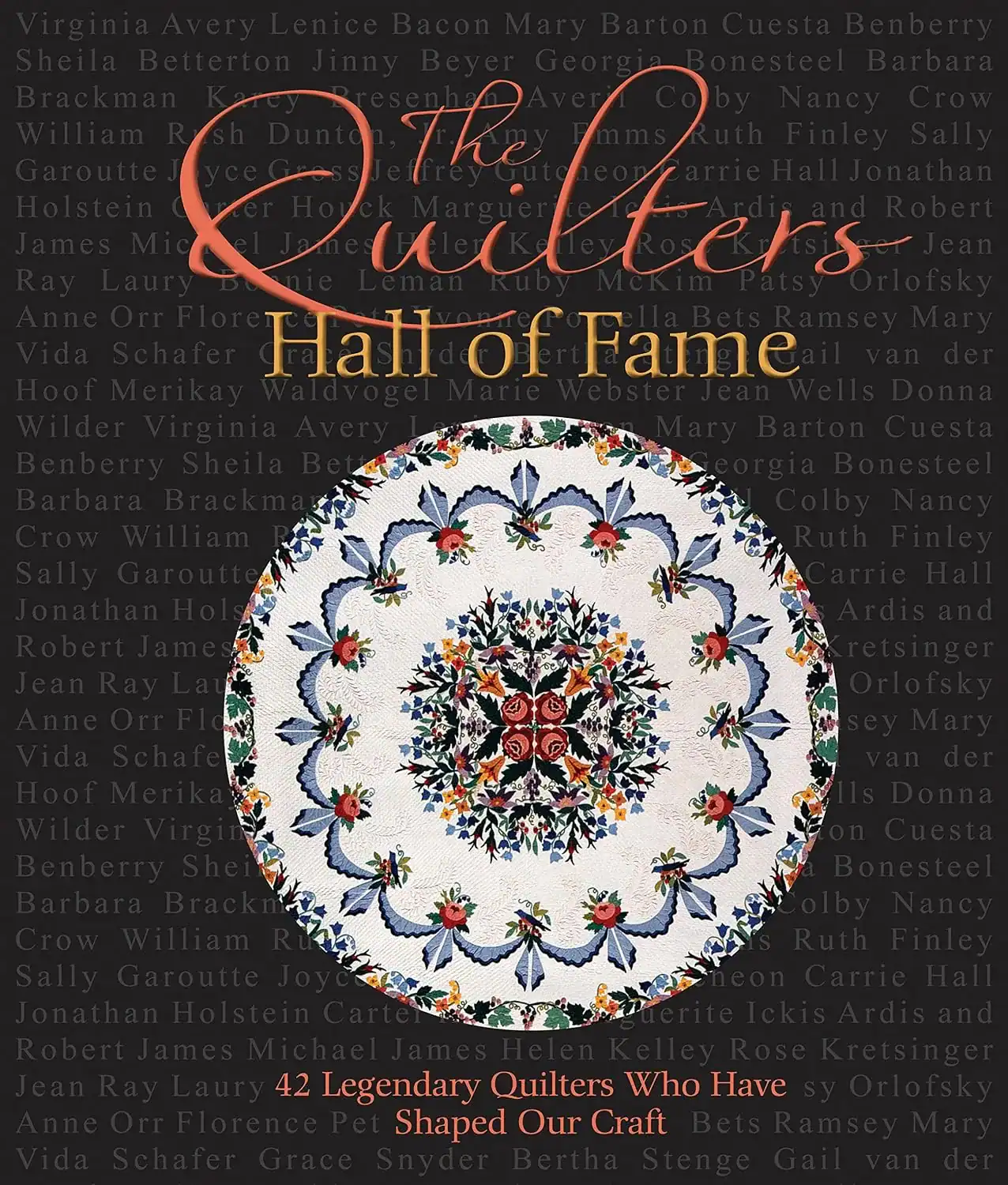
Speaking of Sue Reich’s WWII quilts and workshop, I would like to share with you that Sue is coming to Marion, IN, for The Quilters Hall of Fame’s 2006 Celebration (at which Virginia Avery will be inducted as our 36th honoree) July 13-16, to present the same WWII quilts workshop that she has presented at AQSG the past two years. If you would like to receive the registration mailing in late March, just send your snailmail address to quiltershalloffame@ with the words “2006 Celebration Registration Request” in the subject line. In addition to Jinny Avery’s lectures and Sue’s workshop, Yvonne Porcella and Eleanor Burns will also be lecturing and teaching.
Karen Alexander www.quiltershalloffame.org
PS: I just learned that the Bonesteel documentary — “Great American Quilt Revival” — earned the Audience Award Winner – Documentary award at the Ashville Film Festival a few days ago. Be to sure to check with your local PBS affiliate to see when it is scheduled to air in your area.
Date: Thu, 10 Nov 2005 14:30:57 EST | From: TEXTIQUE@
Hi all;
For those of you interested in the Eudora Welty connection to the Blosser quilts, please review Ricky Clark’s Quilts In Community about OH quilts. There is a Welty quilt and its maker pictured inside. (not like Margaret’s at all) I don’t yet know how she is related to Eudora or Margaret Culp Blosser but she is. For those of you who saw my pictures and Julie Silber’s quilt made by Margaret; many, if not all the names were Anabaptists.
Any suggestions as to what to read to immerse myself in the Anabaptist history?
Not sure of Eudora Welty’s religious connection…yet.
Date: Thu, 10 Nov 2005 16:31:04 -0500 | From: Barb Garrett <bgarrett421@>
While not totally quilt related, I wanted to tell everyone about A Pennsylvania German Holiday Tour, on Saturday, December3, 2005, 10 am to 5 pm. Their promo flyer says — Christmas Market: A Tour of Pennsylvania German Traditions and Folk Art is a one-day event which combines holiday events at the Mennonite Heritage Center, Goschenhoppen Historian’s Museum and Schwenkfelder Library and Heritage Center. The below link will take you to a page that describes what will be at Goschenhoppens, and it has links to the other 2 museums.
http://www.goschenhoppen.org/currevent_1.htm
The quiltie part is at the Mennonite Heritage Center — from November 16 to December 24, the exhibit Passing on the Comfort: The War, the Quilts and the Women Who Made Them will be on display. This is an exhibit of 18 quilts sent in 1946 to the Netherlands as part of the post war relief effort. The exhibit is very interesting. It began it’s 3 year US and Canada tour in April and is back in PA for a bit. This site will give you information about the quilt exhibit and its tour.
http://www.mcc.org/quilts/
All 3 of these museums are wonderful and I know from talking to some of the people involved that it will be a wonderful event. Our own Candace will undoubtedly do her usual exceptional job to make the displays at Schwenkfelder a delight for the eyes. Their Putz is worth the trip by itself.
Barb in southeastern PA
Date: Thu, 10 Nov 2005 16:41:29 -0500 | From: Barb Garrett <bgarrett421@>
–=======AVGMAIL-4373BE8A1CF9======= Content-Type: multipart/alternative; boundary=————060402040308000906060307
Oh, it’s so great to live in southeastern PA — what can I say <grin>. Beginning in January, the Brandywine River Museum will host a quilt exhibit —
For the Joy of It: Appliquéd Quilts from the Judy Roche Collection January 21 through March 19, 2006 In a world of quilt competitions where precision and technical skills are paramount, the creativity and passion of quilt makers are often underappreciated. For this exhibition, guest curators Deborah E. Kraak and Lynne Z. Bassett have selected 23 appliquéd quilts from celebrated expert Judy Roche’s extensive collection that clearly demonstrate excellence in design and the joy that quilt makers derive from their craft.
This museum does a beautiful job on it’s quilt displays. This is a link to their website —
http://www.brandywinemuseum.org/calendar.html
Barb in southeastern PA
Date: Fri, 11 Nov 2005 08:15:40 +1000 | From: “Peter Leate” <crafters@>
Read “A History of the Amish” by Steven Nolt , just revised and updated. See
http://www.mennolink.org/books/stevenolt.html and a review at http://www.wm.edu/oieahc/wmq/Apr03/smaby_apr03.pdf
I had 2 lectures by Steven in val d’Argent in September at the #11 European Quilt Meeting and had some interesting conversations with him.
That meeting was great , by the way, with a diverse range of quilts on display including a wonderful collection of historic Amish quilts and also intorduced us to Welsh quilts through an incredible dispay of Jen Jones’ quilts and her passionate presentation of them on the last night. These are something to behhold! Peter from OZ
Blocks
Date: Fri, 11 Nov 2005 08:44:18 -0500 | From: “Bonnie Dwyer” <bonniedwyer@>
Jan, Since you are dealing with published newspapers, I would assume these are available somewhere on microfilm — or in some other format. Check with your local or a nearby larger library. Although they probably won’t have them, they should be able to help you find out where they do exist.
“A good reference librarian is the ultimate search engine!”
Bonnie Dwyer Quilt Appraiser Manchester, Maine
Date: Fri, 11 Nov 2005 07:26:04 -0700 | From: Ann-Louise Beaumont <albeaumont@>
Recently the subject of humility blocks, or the purposeful mistake came up in a discussion. While I am aware of the belief that Amish quilters put intentional mistakes into their work, since only God is perfect, I seem to recall a QHL discussion or some magazine article suggesting that this is more myth than practice. The archive search suggests more of a discussion than what comes up with the search engine. I have scanned the copy of “The Amish Quilt” by Eve Wheatcroft Granick that I bought from Xenia in Denver and didn’t find any discussion of purposeful mistakes. However, I may have just missed it. Is there a verdict on purposeful mistakes in quilting culture in general and in Amish culture in particular? Can anyone suggest further reading on the topic? As a personal aside, the Amish quilts I saw at Quilt Mania in Dallas looked pretty darn perfect to me. Thanks for any help. Best Wishes, Ann-Louise Beaumont in Greeley, CO.
Date: Fri, 11 Nov 2005 09:55:41 -0500 | From: “J. G. Row” <JudyGrow@>
>.. several years of bound copies of newspapers 1821 and 1824, I think. >They are beginning to disintegrate …and will be too expensive to >conserve… They >are a deteriorating resource. … seeing such a >resource in print?
Jan,
Of course we would all like to see them in print, but don’t know what you are suggesting to do.
If you can or will unbind them, the individual pages can be encapsulated between two layers of mylar (buy it by the roll) with adhesive transfer tape holding the two layers of mylar together. This way the individual pages can be handled and will always be supported. It is a lot of work, but probably would not be too terribly expensive if you are willing to do the work.
Exactly one year ago I bought a roll of mylar 42 inches wide by 100 feet long for $65.00. Half inch AT tape is about $3.00 a roll. You could get a great number of pages supported for under $100.00.
Judy, now in Flemington NJ aka The Ringoes Kid judygrow@
Date: Fri, 11 Nov 2005 09:00:31 -0600 | From: “Karan Flanscha” <SadieRose@>
Ann-Louise, I know Sara Miller, of Kalona, IA, who used to have a wonderful quilt shop, Kalona Kountry Kreations. She has a Drunkard’s Path quilt that her mother made, and the girls in the family helped quilt. There is one patch turned the wrong way. Sara said her mother was just furious when they turned the quilt & discovered the incorrect patch… but by that time, couldn’t take it out & fix it. Sara said she did not know of any Amish “humility” block tradition, in the Indiana or Iowa Amish. The quilt is currently on exhibit at the Grout Museum in Waterloo, IA, as part of their exhibit “Treasured Quilts from Renowned Iowa Quilters” http://www.groutmuseumdistrict.org/exhibits/exhbtdscpt3.html This is an excellent exhibit, focusing on Iowa’s contributions to the quilting community. If you might be in northeast Iowa, the exhibit is open until March 25, 2006. Karan
Date: Fri, 11 Nov 2005 10:17:30 -0600 | From: Xenia Cord <xenia@>
Just an aside on the idea of humility blocks: If a quilter has to make a purposeful mistake in order to satisfy the idea that only God is perfect, isn’t this prideful, rather than humble? To me that would be the main reason not to believe in this idea.
Quilters know, anyway, that myriad little errors creep into their work without assistance; it may not be so glaring as a block turned the wrong way, but they are there – mismeasured borders, crooked stitches, fudged seams etc.!
Xenia
Date: Fri, 11 Nov 2005 11:51:49 EST | From: Elpaninaro@
In a message dated 11/11/2005 9:27:16 AM Central Standard Time, xenia@ writes:
> Just an aside on the idea of humility blocks: If a quilter has to make > a purposeful mistake in order to satisfy the idea that only God is > perfect, isn’t this prideful, rather than humble?
Good thought! I never considered that.
The more books I read, the more of a message I get that the notion of a Humility Block is largely a myth.
Yet even at Festival more than one dealer was keen to point them out and tell the “story” of why the mistake was intentional. The story rages on, but seemingly from the commercial side of this hobby.
Reminds me of what I told my grandmother last year- I told her I thought it would be fun if I pieced a tumbling block that she and my mother could quilt so we would have a 3 generation piece like some of our old family quilts.
She laughed and said the only reason we have family quilts that took 3 generations to make is that there were some lazy quiltmakers!
(And as long as it is taking me to piece this ^*#* thing, I think we might have another one in the family now… 🙂 )
Take care,
Tom.
Date: Fri, 11 Nov 2005 12:08:26 EST | From: TEXTIQUE@
Thanks Judy,
I have done paper encapsulation in a museum setting but I seem to be in one of my ‘duh’ moments and hadn’t thought of doing it myself. The problem with encapsulating single pages is that they are bound on the edge with glue and I’m not sure how to remove that without injuring already extremely fragile paper. Any suggestions? My thought about extracting items from the papers was to categorize them for ease of researching. There is a lot of data there that would be useful also for genealogists, UGRR researchers, etc (and some that are just so funny that I love to read them). While I seem to glory in the hunt, sometimes its nice just to open a book or slip a disc in the computer and find what you’re looking for.
In Bonnie Dwyer’s reply that I might be able to find more material in microfilm: what a good thought. My favorite genealogist Sharon DeBartolo Carmack has written Carmack’s Guide to Copyright & Contracts – a good and inexpensive book. She writes that images, which I think also means microfilm, fall under copyright laws. So, I can use my newspapers that are in the public domain since mine date between 1821 & 1824 but I can’t categorize and reprint great amounts of material from microfilm which may be copyrighted. When I use material from microfilm, I always credit the source but I have never really looked to see if they even are copywrited Any thoughts on this would be appreciated and I’m going to e-mail Sharon as well.
Jan
Date: Fri, 11 Nov 2005 14:22:50 -0500 | From: “J. G. Row” <JudyGrow@>
>The problem with encapsulating single pages is that they are bound on the >edge >with glue and I’m not sure how to remove that without injuring already >extremely fragile paper. Any suggestions?
A really sharp razor blade (single edge, no notch) and a metal straight edge. Many passes — don’t try to cut through everything all at once.
Or, I’ve had some contemporary paperback books spiral bound at my local Mailboxes store (Staples does it too). They have a machine/tool that cuts the pages away from the binding. If the machine is long enough to do a newspaper sheet, that might be an idea.
You could set up a tripod with your digital camera and take digi photos of the interesting bits. Those would easily go on a CD.
I just thought — in the 1820’s they were still using 100% rag for paper, or at the most rag mixed with a very small amount of wood pulp. Unless these papers were stored in a 200 degree attic, I don’t understand how they could be as brittle as you say.
Still thinking.
Judy, now in Flemington NJ aka The Ringoes Kid judygrow@
Date: Fri, 11 Nov 2005 15:06:28 EST | From: TEXTIQUE@
Judy;
I read an article once about Egyptian mummies being sent to the states by the boatload just to use the linen wrapping for papermaking. You would think the sheets would be in good condition and toward the centers of both books (about 200 pages in each) they are pretty white, but the edges are all flaking off and the foxing gets worse the closer you get to the outer papers. I had to lay a cloth on my table when I tried to read them to pick up all that fell off so I’ve given up on opening them until I decide what to do. I have them wrapped in acid-free paper with a sheet of the same used to interleaf each page. They were bound in a cardstock not leather so I think its possible it was done later than Judge Collett’s lifetime. His signature is on every paper. I thought as a Supreme Court Judge, some museum would be interested in conserving the papers but no takers so far: much is about daily congressional affairs. I purchased them for $5 from a museum that couldn’t afford to take care of them. I have his family history at my home in OH. They were in this condition when I purchased them…..again, trying to rescue the strays. My sister tells me I’m a hopeless case.
I want to organize the articles probably for my own research more than others. You see, every time I sat down to find something in them I got lost in sheer pleasure of reading about all the glorious fabrics “Just Received from London” on the ship Concord and “Bounty for Escaped Slave”, real estate transfers, marriages and on and on. They report things going on in the Northwest and all over the east coast; schools opening, advertisements.
I’m still working on it and I like the idea of the mylar. It would be worth the time to me.
Jan
Date: Fri, 11 Nov 2005 | From: Mitzioakes@
Just a short note – I am a volunteer at the Shelburne (VT) Museum who has roughly 400 quilts in their possession and the ‘intended mistake’ is always asked by visitors. I was told many, many years ago that it was the Native American Indians who wove a mistake into their weavings so as not to make their Gods angry since only they were perfect. Myths? Who really knows. I have seen quilts where the makers (or their heirs) have shown the errors they have made purposely to make peace with God. Myth or not it is a nice story to tell over and over again. Now, I have no problem making an error in my quilts – they come naturally! Mitzi Oakes, Vermont
Date: Fri, 11 Nov 2005 15:47:24 -0500 | From: “Pepper Cory” <pepcory@>
Have enjoyed the humility block discussion but I believe the humility block myth is a nice story–like the red square in the middle of the Log Cabin representing the hearth or that the Wild Goose Chase block was an Underground Railroad symbol–but it’s just that, a story. I directly asked several Amish quiltmakers about it and they laughed. They said the first time they’d heard it was from an ‘English’ (anyone that’s not Amish-) quilt dealer. They said their own thoughts were that putting in a block ‘wrong’ deliberately would be contrary to trying to make the quilt as best they could. As to the “mistake” in Indian weavings-the traditional Navajo weaver leaves a thread trail out of the design because of a spiritual principle–the spirit needs to escape the pattern. Have a nice weekend! Pepper Cory
Date: Sat, 12 Nov 2005 11:38:45 +1000 | From: “Quiltstuff” <quiltstuff@>
I do a small lecture on quilting myths.. and although I do point out that I can’t 100% know what was the norm back then, I do have a lovely quilt from about 1900, strippy flying geese with a bunch of geese the wrong way round.
Given that a large amount of points are chopped off on the quilt and there are some obvious poor sewing, I get the listeners to consider whether this woman would actually worry whether God would think her quilts were perfect or that she thought her quilt was perfect and therefore included a deliberate mistake.
I highly doubt it.
Suzy Atkins
Date: Sat, 12 Nov 2005 02:52:20 -0700 | From: “gingham@” <gingham@>
Just found a delightful folk art applique medallion style quilt with a 4 sprig floral center surrounded by a sun-like circle with trees and birds and flowers in the 4 corners and a floral vine border, etc. etc. item #7364338896
http://cgi.ebay.com/ws/eBayISAPI.dll?ViewItem&item=7364338896&fromMakeTrack=true
Enjoy.
Sandra Starley professional quilt appraiser Moab, Utah
(click on the thumbnails below)
Date: Sat, 12 Nov 2005 21:45:12 +1100 | From: “Lorraine Olsson”
—– > > http://cgi.ebay.com/ws/eBayISAPI.dll?ViewItem&item=7364338896&fromMakeTrack=true >
Is the date that is mentioned a little too early for the fabrics used? Maybe 1880s??
Lorraine in Oz
Date: Sat, 12 Nov 2005 11:27:10 -0800 | From: “Julia D. Zgliniec” <rzglini1@>
Dear QHL, I just wanted to mention to anyone considering the Textile Tour to Great Britain that is led by Deb Roberts that it should be wonderful!
I had the good fortune to take the tour to France and it was one of the best tours I have ever taken. Oh La La!! The opportunities to see fabulous fabrics and textiles with private tours of the textile museums was really wonderful. there was enough free time even in a packed schedule and plenty of shopping. But the best was the other people on the tour – such fun we had in the back of the bus!!! I have signed up for the GB tour and want to encourage anyone who is unsure that it should be just as good. In addition, we should meet some of our fellow list members in the UK
If anyone has any questions, contact me and I will be happy to answer them if I can or you may contact Deb Roberts directly at Deborah Roberts R <QuiltEvals@> The tour dates are May 1 – May 13, 2006
Regards, Julia Zgliniec – no affiliation – just a happy traveler
From: Sally Ward <sallytatters@>
…. we should meet some of our fellow > list members in the UK
If there are any UK based QHL listmembers who didn’t hear about the possible ‘tea party’ on BQHL but might be interested to meet up with members of this tour, please contact me privately.
Sally Ward SallyTatters@