March 10 – 13, 2006
These restored messages come from the Quilt History List, an online forum where quilt historians, collectors, researchers, appraisers, and enthusiasts discussed antique quilts and related textiles. The archive dates from 1996 through approximately 2016 and is being restored gradually. Sign up in the form at the bottom of the page if you want to know when a new page is added. Original spelling, opinions, formatting, and inactive links may remain unchanged.
Primary topics of this QHL Digest:
- Walk Around the Mountain and “Everyday Use” — Members untangle pattern variations for Walk Around the Mountain and how Alice Walker’s short story shaped later interest in it.
- Ruby McKim’s Quiltie Quaddy — A dealer asks about a redwork nursery rhyme quilt, and members supply publication dates, articles, and examples of McKim’s designs.
- Dating Streak of Lightning Quilts — A granddaughter asks when the pattern was popular, and the New England Quilt Museum curator offers c. 1850 examples. (see the article on dating quilts)
- Can a Quilting Technique Be Patented? — A long thread about a designer’s “quilt as you go” patent weighs patents against copyright and trademark and cites older examples of the method.
- Native Quilting Exhibits and Honors — Announcements cover a Mashantucket Pequot exhibit, a Home of the Brave quilt project broadcast, and a St. Louis Art Museum tribute to Cuesta Benberry.
- Matching Fabric for an Unfinished Top — A member asks how to find fabric to finish her mother’s quilt top and hears how quickly prints go out of production.
Date: Fri, 10 Mar 2006 15:31:03 +0000 | From: jocelynm@
On March 10, 2006, Pat Cummings wrote:
> comes to mind is that ANY of the current preferred > words that are used to describe people whose ancestors > came from Africa are an improvement
Pat, Yes. I think of two gentlemen I know, one of whom is Comanche, the other Sanish. They both use ‘Native American’ or ‘indiginous peoples’ when giving speech es about injustices perpetrated against their people, but will use ‘Indian’ in private conversations. 🙂 If you asked, they’d tell you that Indian is NOT the preferred term, but it’s the term they grew up using, and if they t rust that you aren’t going to be adding any bigoted attitudes to the term, they’ll use it.20
I think that’s the key concept- once someone trusts you to know that you ar en’t adding any bigoted beliefs onto the word, the word you use ceases to m atter. In a way, telling you ‘the correct term is’ whatever, what the perso n is saying is ‘Do you respect my right to define myself and my people? Or are you going to insist that YOUR definition is the only REAL one?’20 Once you show that you’re not determined to force people to accept your def inition and word, then whatever word you choose is rather insignificant.
Date: Thu, 9 Mar 2006 21:45:53 -0800 (PST) | From: karenquilt@
Dear QHLers,
Here is a very truncated schedule for the Induction of VIRGINIA AVERY into The Quilters Hall of Fame , July 13-16 in Marion, Indiana. Email us at quiltershalloffame@ with your snailmail address if you would like to receive the registration form! So relieved to have this done and ready to go to press!!
THURSDAY – JULY 13 Yvonne Porcella All-Day Workshop: Flexible Fusible Fantasy Fabric Pictures. Eleanor Burns All-Day Workshop: Pink Lemonade. Tour of WWII Quilt Exhibit with quilt historian Sue Reich (repeated Friday and Saturday) Georgia Bonesteel – walk-through of Heartland Exhibit (repeated Friday and Saturday) Sue Reich Lecture- Quilts & Quiltmakers of Connecticut and Their Stories SHOW & TELL with Georgia Bonesteel
FRIDAY – JULY 14 Tour Honoree Exhibit with Virginia Avery Book Signing: Honorees, teachers and QHF Research Associates VIRGINIA AVERY slide lecture – Woman, Minding Her Own Business Yvonne Porcella Slide Lecture: Variations on a Theme JAZZ JAM SESSION – invited musicians with VIRGINIA AVERY at the piano Eleanor Burns Lecture – Sun Bonnet Sue Live & Silent Auctions
SATURDAY JULY 15 Yvonne Porcella Workshop (half-day) Quick Clips Hand Appliqué. Sue Reich Workshop: Quiltmaking That Saw Us Through the War Years. Virginia AVERY Luncheon, Open Mic & Virginia Avery Induction Ceremony Eleanor Burns Lecture – Egg Money Quilts HONOREEE PANEL: Stories and Benchmarks: The Art Quilt Movement with Virginia Avery, Yvonne Porcella, Bets Ramsey, Donna Wilder, Georgia Bonesteel moderating
Karen Alexander, President, The Quilters Hall of Fame
Date: Fri, 10 Mar 2006 09:59:20 -0600 | From: “Charlotte Bull” <charlou@>
RE: Walk Around the Mountain question. There are designs with diamonds, some “diamond 4 patches” with alternate simple diamonds, that are named Walk Around. They came from Ladies Art Company catalog in the 1920s plus variations later on from Mountain Mist batting. Could there be a connection? There are Around the World quilt designs based on Drunkard’s Path!
Now, Judy, tell us about the book. Is there any description of the quilt in it? Any specific mention of shapes etc? If we are not familiar with author do tell us if it’s a series of novels OR is it family history??? Are you thinking that with the last name Walker there could be a word play or pun being made with a quilt called Walk Around… ? There are Around the World quilts so why not Around the Mountain quilts or other association of words & names. What is the association in the story of the quilt to what is happening? Should we all rush out & buy the book? Or just go to our library? Do share with us, please! from cb who needs something interesting to think about! ——_NextPart_000_0007_01C64429.4CF154B0–
Date: Fri, 10 Mar 2006 11:31:06 EST | From: Mitzioakes@
Think we got this problem solved here – we call us VERMONTERS! One name fits all (most of the time!). Really enjoy GHL. keep up the good conversations! Mitzi from Vermont Where spring happened today – the redwinged blackbirds have returned!!!!!!
Date: Fri, 10 Mar 2006 11:43:49 -0600 | From: “Charlotte Bull” <charlou@>
Hi… me again… I got private question so thought I’d let you all know too. Both Brackman & Malone show a block named Walk Around. I referred to it. They both also mention that it has other names in other sources. One is Guide Post in Mountain Mist. Does that clarify what I did not fully explain? Sorry.
Since sending the letter I’ve been doing Google & Amazon searches. Wound up on site where they offer intense STUDY GUIDES! Evidently Alice Walker’s short story “Everyday Uses” is a major assignment into “black history topics”. Many references into deep studies by professors & researchers. I found one entire site and a published book on research done on this single story. This must be why Anne got questions from students. I was really curious as to why this was happening. Now I sort of figured it out. I also suddenly realized why so many college students are found to be cheating on their research essays! Gee whiz, this is a guided paper on how to research one single short story and they all probably do this for other assignments. I had not realized that her writing was considered THAT outstanding. Sorry. I was off in my own “never never land” as in my day of MA level theme assignments (Over 50 years ago!) we were doing Shakespeare & Chaucer & Dickens. We had no computer study guides or web sites! ; (((
But I found no direct specific mention of the quilt name that Anne mentioned. I have not read the full story yet — just lots of quotes from it. oh well…I’ve spent a long morning doing this “random” search and I should have been binding a real quilt. It’s my limit for the day. I’ll look for your input in tomorrow’s QHL digest! : ))) cb
extra comment: I really only wanted to know about the quilt name!!! I’d put deep literary criticism long behind me! My MA thesis was on a contemporary play writer who was copying Shakespeare – rather poorly too, if I remember, and he was so bad I can’t even remember his name! My thesis got tossed years ago too in one of those moves across the country imposed on us by IBM – which meant “I’ve Been Moved”, according to my kids. ——_NextPart_000_0012_01C64437.E5E4B960–
Date: Fri, 10 Mar 2006 17:04:00 -0800 | From: Julie Silber <quiltcomplex@>
Hi,
Can someone tell me about “Quiddy Quaddy” please? Isn’t that what it is called? Redwork – nursery rhymes – squared off figures – Ruby McKim? Another designer? I can not seem to find it in my books – and my memory is failing me. Please tell me the Headlines on it – and direct me to books that will tell me more.
We just got a good example that I want to list on eBay – and I would like to list it with accurate information.
Thanks, Julie Silber
Date: Fri, 10 Mar 2006 17:24:00 -0800 (PST) | From: Pat Cummings <pat@>
— Julie Silber <quiltcomplex@> wrote:
> Can someone tell me about “Quiddy Quaddy” please? > Isn’t that what it is > called? Redwork – nursery rhymes – squared off > figures – Ruby McKim?
“The Quaddy Quiltie” design by Ruby McKim is based on some bedtime stories written by Thorton Burgess. A nice photo of a quilt with animal patterns is shown in the book, Red & White by Deborah Harding, page 118, and a description follows, on page 119.
This was one of the Outline Stitch Embroidered quilts that Ruby designed with a lot of straight lines to make it easier for elementary students to embroider.
Pat Cummings
Date: Fri, 10 Mar 2006 21:23:28 -0500 | From: “Teddy Pruett” <aprayzer@>
<<I’ve had students looking for information on my website for the pattern, “Walk Around the Mountain”.>>
It is very possible that I am mistaken (who? ME???) but when something pops into my pea brain immediately, there is usuall some accuracy to it. I immediately thought of a New York Beauty type quilt – lots of circley things and spikes. I probably should have looked this up before writing, but I’ve just got home, I’m beat, and I just dont wanna look for anything but a huge pile of down pillows.
Teddy Pruett Currently Craving A Cultured Existence www.teddypruett.com
Date: Fri, 10 Mar 2006 21:36:11 -0600 | From: “Rosie Werner” <rwerner@>
I think quaddy refers to quadruped – 4 legged animals. All the animals in Ruby’s blocks had 4 legs. Rosie ——_NextPart_000_0021_01C6448A.A645DD90–
Date: Fri, 10 Mar 2006 22:12:01 -0600 | From: Gail Ingram <gingram@>
Charlotte Bull wrote: “Since sending the letter I’ve been doing Google & Amazon searches. Wound up on site where they offer intense STUDY GUIDES! Evidently Alice Walker’s short story “Everyday Uses” is a major assignment into “black history topics”. Many references into deep studies by professors & researchers. I found one entire site and a published book on research done on this single story.”
First, let me ask this—no, let me plead thus: if there is anyone on our list who has not read “Everyday Use” by Alice Walker, print it out, and read it. Not only is it a really fine short story. It is also a really fine realization of the ultimate value of traditional quilts.
It is not about “black history” or “black people,” any more than Macbeth is about Scots people. It is about family and the ways love is embodied, is given form.
The story is far more complex than it at first appears, for it also deals with something that faces every generation that rises and is changed through literacy and education: how to keep one’s past, a theme Walker introduced in a story she wrote while still in college in the story “A Sudden Visit Home.” I’ve always thought this was a core theme of a nation of immigrants and social mobility– and maybe one especially meaningful to women today: Fitzgerald’s “The Great Gatsby” and Wolfe’s “You Can’t Go Home Again” are among the better known treatments of the theme. But Walker’s story nails it better than anything else I’ve encountered.
In my view “Everyday Use” is among the very finest short stories to come out of a half-century in which the major literary form was the short story. It was written before Walker got lost in abstraction and theory, and in it, she captures the voice and details of her characters so perfectly that we enter their world in the first paragraph.
I’ve always assumed that “Walk Around the Mountain” was the same pattern as “Trip Around the World.”
Has anyone working with the Georgia documentation project come across this quilt name?
You’re missing something if you haven’t read this story.
Gail Ingram
Date: Sat, 11 Mar 2006 00:16:29 -0700 | From: “Judy Anne” <anne_j@>
For those that don’t know, Alice Walker is best know for writing “The Color Purple” . The short story with the quilt named “Walk Around the Mountain” is “Everyday Use”. The line the title is from goes, “Maggie can’t appreciate these quilts!” she said. “She’d probably be backward enough to put them to everyday use.” You can find the story at http://www.bownet.org/jmcdermott/everyday_use__by_alice_walker.htm It’s very short.
I did find the lesson plans with the question about the quilt name. I’m sure that is why kids are looking for the pattern. Here is the assignment: “Describe the ‘Lone Star’ and ‘Walk Around the Mountain’ patterns containing scraps of dresses Grandma Dee had worn over 50 years ago, pieces of Grandpa Jattell’s paisley shirts, Great Grandpa Ezra’s Civil War uniform.”
This is well and good but I don’t find a description of the pattern in the story and I’m sure not finding it anywhere else. I’m wondering if the person who wrote the question even knows the pattern. It could be a variation or even the same as the “Walk Around” pattern that Barbara Brackman lists. The thought crossed my mind too, that it might be the same as Trip Around the World. I’ve always loved the story and it would be fun to know which pattern it is.
Judy Anne
Date: Sat, 11 Mar 2006 07:29:56 -0800 (PST) | From: Donald Beld <donbeld@>
Hi Everyone, for those of you who missed last night’s telecast regarding the HOME OF THE BRAVE QUILT PROJECT on KNBC, you can go to www.nbc4.tv/news.com and go to the upper right hand corner and click on NEWSLINKS and then click on PROJECT PROVIDES QUILTS FOR FALLEN SOLDIERS FAMILIES and read the text as well as have access to both the video of the newscast and a photo slide.
It has been extremely well received and we were honored that they featured us.
It is expected to be release to all the other California NBC affiliates next week–and then perhaps nation wide. Thanks for your continued support. Best, Don
Date: Sat, 11 Mar 2006 09:40:11 -0600 | From: “Charlotte Bull” <charlou@>
Re the pattern Walk Around the Mountain: Thanks Gail for your experienced, specific, educated information. I truly appreciated your input. By the way, I’d thought about Trip Around the World also.
But my brief excursion into internet research being done on this story seemed to lead me to believe that it was considered to be more of a ethnic study than one on quilts! The references were constantly made to the 3 women as representing how they felt about themselves and the changes they saw in each other. One article was totally consumed with passion on why the sophisticated daughter changed her name!
I simply did not run across true internet scholastic discussions on quilts or their symbolism or any actual mention of this specific pattern. The “story line” was intriguing and I’d love to read all of it. Some of the essays by scholars quoted most of it!
I was more concerned by the way in which students were being taught to do their research and being given an entire book on how to write an essay on this specific story. It appeared that their personal reactions or opinions were not being encouraged. Certainly I realized that the author and her story are now considered to be classics. But 56 years ago there was probably a different concept on the meaning of “classics”, just as there was a different attitude about the importance or the beauty of quilts. We, as women, as quilters, and as authors, have come a long way!
But please tell us, is there any description of the quilt in this story that is bearing this name? Why were students writing to Anne with questions about it? I was simply entranced by a new name of a quilt. To be very honest, I’d forgotten everything I’d read about, or by, Alice Walker. At this point in my old age, Ruby McKim or Ruth Finley are more apt to ring my bell. My apologies, but the Quaddy quilt, when mentioned on QHL, popped up in my mind instantly! —– OPPS! Gail, you are Off the Hook! My tired old mind just woke up and remembered where I’d read the story. I own the book Quilt Stories edited by Cecilia Macheski in 1994. So I just read “Everyday Use” in its entirety. Just 9 pages. The only 2 quilts named are Lone Star & Walk Around … and from the brief comment it sounds as though it’s very scrappy, made from old dresses, and that there might be one blue square from a shirt, the size of a small matchbox, which sounds like a Trip Around… So that is that!!!
The editor has a couple of sentences about the story in the introduction and does group it into a section dealing with African Americans. She states that it presents “an emphasis on the purpose of quilts as being used, not hung on walls, and not seen only as an abstract thought.” She refers to a quilt’s “womanist context”. The story is followed by a poem in tribute to Harriet Powers and preceded by a story on slaves quilting. You can see why it is being used in studies of African American history.
Tonight I’ll read the entire book! First I must “bind that quilt”!!! cb ——=_NextPart_000_0006_01C644EF.CAC4B780–
Date: Sat, 11 Mar 2006 09:45:42 -0600 | From: “Kim Baird” <kbaird@>
Why doesn’t somebody just ask Alice Walker? Kim
—–Original Message—– From: Judy Anne Sent: Saturday, March 11, 2006 1:16 AM To: Quilt History List Subject: [qhl] Re Walk Around the Mountain
For those that don’t know, Alice Walker is best know for writing “The Color Purple” . The short story with the quilt named “Walk Around the Mountain” is “Everyday Use”. The line the title is from goes, “Maggie can’t appreciate these quilts!” she said. “She’d probably be backward enough to put them to everyday use.” You can find the story at http://www.bownet.org/jmcdermott/everyday_use__by_alice_walker.htm It’s very short.
I did find the lesson plans with the question about the quilt name. I’m sure that is why kids are looking for the pattern. Here is the assignment: “Describe the ‘Lone Star’ and ‘Walk Around the Mountain’ patterns containing scraps of dresses Grandma Dee had worn over 50 years ago, pieces of Grandpa Jattell’s paisley shirts, Great Grandpa Ezra’s Civil War uniform.”
This is well and good but I don’t find a description of the pattern in the story and I’m sure not finding it anywhere else. I’m wondering if the person who wrote the question even knows the pattern. It could be a variation or even the same as the “Walk Around” pattern that Barbara Brackman lists. The thought crossed my mind too, that it might be the same as Trip Around the World. I’ve always loved the story and it would be fun to know which pattern it is.
Judy Anne
Date: Sat, 11 Mar 2006 11:03:40 -0600 | From: Gail Ingram <gingram@>
Charlotte wrote of the online criticism of “Everyday Use”
“[It was] considered to be more of a ethnic study! The references were constantly made to the 3 women as representing how they felt about themselves and the changes they saw in each other. One article was totally consumed with passion on why the sophisticated daughter changed her name!”
Charlotte, unfortunately right now in American letters, critics write very little about the universality of theme in the works they study. In most university literature classes and in many high school English classes, students are taught to read works using the tools of Marxian criticism, feminist criticism, etc. In general Alice Walker’s work rather invites the limited ‘African-American Woman’ approach, but her best work rises to a level where such a limited approach really doesn’t help. “Everyday Use” is one of the latter.
It’s a very American story. It is about the alienation that occurs within families and between generations when a child’s aspirations and opportunities lift her out of the culture in which she was reared. Dee/Wangero could be Jay Gatsby or Thomas Sutpen. Dee becomes an African-American Woman, rootless and looking for her roots in Africa. Her mother and siser are still American Southern black people whose roots go deep in the soil of Middle Georgia, where they live. For Dee the quilts are cultural artifacts. Their only meaning for her is the manner in which they might be used to display her association with a culture the strength of which she doesn’t even understand. To Mama’s bewilderment, she says she would hang them on the wall of her California apartment. For her mother and sister, they are embodiments of family and love. They are living history books of a family.
Though she is a selfish young woman, I am always saddened for Dee, rootless out there in California, playing a shallow role. But I love Mama. What a woman! What a voice! And Mama is the protagonist in the story. The plot turns on her decision. And in the end, she is sustained by her roots.
Personally, I think the limited critical approaches Charlotte mentions don’t make students passionate readers. If, for instance, a story is entirely about African-American males (few are, please note), then why does the first generation Chinese-American girl really care about it?
Right now in my older lit class, we are studying Robert Penn Warren’s “All the King’s Men.” And we are bringing to bear on it “The Great Gatsby,” “Oedipus,” T.S. Eliot’s poems “The Love Song of J. Alfred Prufrock” and “Journey of the Magi,” Allen Tate’s “Ode to the Confederate Dead,” Wm Butler Yeats’ “The Second Coming.” And my students are excited about the links they see. They are grasping the meaning of that book and the others they have read for their own lives. And great art is always about our own lives.
End of sermon, Gail
Date: Sat, 11 Mar 2006 11:05:39 -0600 | From: Gail Ingram <gingram@>
> Why doesn’t somebody just ask Alice Walker? > Kim
I did once. The answer has yet to arrive.
gi
Date: Sat, 11 Mar 2006 10:24:30 -0600 | From: “Karan Flanscha” <SadieRose@>
I was asked to share information on a fundraising quilt made by Barbara Brackman and Deb Rowden. I am removing the photo that was attached, but you can view pictures of the quilt on e-bay.
Attached is a photo of this year’s fundraising shoe quilt for the local shoe fund that buys shoes for schoolkids that can’t afford them. Deb Rowden and I organized it. She and her teenage daughter wrote former basketball players at the University of Kansas and asked them to sign shoes. We got 42 sports heroes to sign. We’ve posted it on Ebay and will leave it on auction for about a week We’ll also be selling the pattern to make money for the shoe fund. Look for it as Kansas Basketball Quilt or any of the words in the title below ******************************
Kansas KU Basketball “Jayhawk Greats” Autographed Quilt (item 8777460495 end time Mar-16-06 16:00:00 PST)
http://cgi.ebay.com/Kansas-KU-Basketball-Jayhawk-Greats-Autographed-Quilt_
Date: Fri, 10 Mar 2006 15:42:01 -0500 | From: “gb-best” <vitale@>
I saw this item on ebay and it reminded me of the discussion of quilts on the beach.
Search for item# 6259126079
The best!
It’s sunny in PA today and 70 degrees!
Donna
From: Anita Loscalzo
Linda:
The New England Quilt Museum owns one “Streak of Lightning” c. 1850 {NEQM 1991.23, given by the Binney Family}– the streaks are pieced with 45-degree diamonds. See a photo on page 36 or “New England Quilt Museum Quilts” by Jennifer Gilbert.
I own one that has streaks made with the triangles of Prussian blue & brown large-scale print, also c. 1850.
So, at least 2 were done in the 1850s! Keep us posted.
Anita
From: Julie Silber <quiltcomplex@>
Hi,
Below is the description of a quilt currently on eBay:
“I have up for auction a very pretty antique quilt. It is a pattern I acquired it in an estate clean out. The man I got it from said it was his great-grandmothers and is over 100 years old. From the research I have done it looks like it may be an African American Quilt.”
I e-mailed the seller, asking simply: “Was the man you bought it from African American?”
His answer – well, after his gaffe . what else could he say, really:
“Although I didn’t ask, He appeared to be a very light skinned black man.”
Am I the only one who thinks this is hilarious?
Julie Silber
From: Julie Silber
P.S. The quilt is an absolutely conventional darkish wools Log Cabin, Straight Furrows quilt, c. 1900 or so.
Julie Silber-
Date: Sun, 12 Mar 2006 16:05:26 -0400 | From: “Pilar Donoso”
HojasI usually lurk at the site with nothing to contribute, but a lot to learn, and I thank you all for the daily information that you provide for all of us. When I was living in California, my neighbord, a very creative Quilter, finished Alice Walker`s Quilts. Alice`s mother told Alice to start a Quilt everytime she started a new book. She thought that will slow down her writting. Well, she always finished the book before finished the Quilt, so my friend was in charge of doing that task. Her Quilts were very bright in colors with a big Quilting stitch done in 6 strand of embroidery floss, most of the time done in black, something I have seen in African-American Quilters. Do you know if this kind of thread it is still use among African American Quilters?. What kind of thread use the Gee Bend Quilters?
Thank you,
Pilar Donoso I. Santiago, CHILE (562) 211 9877
Date: Sun, 12 Mar 2006 13:43:48 -0800 | From: Karen Alexander <karenquilt@>
A friend sent me this link because of the quilts in it. It is a Native American funeral honoring a fallen American soldier form their community.
http://multimedia.rockymountainnews.com/slideshow/slideshow.cfm?
Karen Alexander
Date: Sun, 12 Mar 2006 13:57:39 -0800 (PST) | From: Kris Driessen <krisdriessen@>
That didn’t pop up for me, I think because my mail client wrapped it. Try this one: http://tinyurl.com/9sque
Kris
—
Anita said: The New England Quilt Museum owns one “Streak of Lightning” c. 1850 {NEQM 1991.23, given by the Binney Family}– the streaks are pieced with 45-degree diamonds. See a photo on page 36 or “New England Quilt Museum Quilts” by Jennifer Gilbert.
I own one that has streaks made with the triangles of Prussian blue & brown large-scale print, also c. 1850.
So, at least 2 were done in the 1850s! Keep us posted.
Anita
Anita B. Loscalzo, Curator New England Quilt Museum
Response: Thanks for the info, Anita. I looked up the quilt in my copy of that book and the one pictured is quite different from the one I own. I love the one in the photo, by the way, as it used Star of Bethlehem blocks to make up the “lightening bolts”, pretty cool! It is more intricate and a step above the norm. At any rate, the quilt I have is basic and using shirtings for the most part combined with floral prints, and the pattern is throughout the entire quilt. Knowing my grandmother made the quilt, I would guess it to have been made about 1920 – 1930. From family members, I hear that is when she made more of her quilts. Though, she was married in 1909 and it could have been made even earlier than that. There is a great family debate going on now about ownership of a horse and carriage around that time period and if, in fact, feed sacks she used in other quilts were from the feed for this particular horse, or chickens from one of the aunt’s farms. Finding these quilts has sparked a great deal of family chat, for which I am grateful as I need family contact so much after losing both my mom and dad in the last 5 months. I own the book “Dating Fabrics” and interestingly enough not a single fabric in this quilt, or the other quit I am working with. is in this book for any period, so I can’t tell a date by that. I might visit the museum at some point when I am not working on a deadline to compete a quilt, and bring it in for you to see, I only live about 40 minutes from the museum and it’s been awhile since I have been there. Thanks for the information! Linda Heminway Plaistow NH
Date: Mon, 13 Mar 2006 06:25:05 -0800 (PST) | From: Donald Beld <donbeld@>
Hi everyone, I guess some folks couldn’t access the web link I listed for the Los Angeles Home of the Brave Quilt Project newscast. Please try entering KNBC News in your search engine. If you find their web site that way, to to newslinks, then Project Provides Quilts for Fallen Soldiers’ Families.
The response has been very good–it was shown several more times on the Los Angeles station and nationally on MSNBC and we have had volunteers respond from all over the nation as well as locally. Best, Don
Date: Mon, 13 Mar 2006 6:39:14 -0800 | From: <suereich@>
Exhibit through Sunday, June 4 TO HONOR and COMFORT: NATIVE QUILTING TRADITIONS Quilt making is one of many North American Indian expressive art forms and this special exhibit celebrates quilting within various tribal communities and pays homage to the artists who have used this medium to express their c ultural heritage. The 29 exquisite quilts on display come from across the n ation, including Hawaii. Supplementing these pieces from the exhibit, on lo an from the Michigan State University Museum, are additional quilts from No rtheastern artists. The show also focuses on the social aspects of this art istic activity, such as the quilting ceremonies, the society of practitione rs, and how it passes along the tradition to succeeding generations, as wel l as how quilting binds neighbors and families across generations. The exhi bit is displayed through June 4, 2006 in the Mashantucket Gallery during mu seum hours, daily 10-4, free with museum admission, free to museum members. Half-hour tours led by museum educators are offered every weekend at 2 pm.
Saturday, March 18 MOHAWK QUILTER ALICE OLSEN WILLIAMS Born of an Anishinaabe mother and a naturalized Canadian (from Norway), Ali ce uses her double heritage as the basis of her work. In the center of her quilts are animals and birds which figure intimately in the lives of the An ishinaabeg. She also uses the floral designs which Anishinaabe-Kwewag conti nue to use in their beadwork, quiltwork, embroidery and other creative medi a. From 1 to 2 pm in the Mashantucket Gallery, meet in the Gathering Space, free with museum admission, free to museum members.
Saturday March 25 QUILTING WITH SARAH RUNNING CRANE Lakota Quilter Sarah Running Crane from the Rosebud Reservation in South Da kota shares her quilts, her techniques and the stories behind her creations . The young quilter, who was taught by her grandmother Alice Four Horses, d isplays various stitches and patterns. Afterwards join museum educators for a half-hour guided tour of the new exhibit and the various quilts from tri bal nations across the country. From 1 to 2 pm in the Mashantucket Gallery, meet in the Gathering Space, free with museum admission, free to museum me mbers.
Saturday April 15 QUILTING: COLLECTING & CARE Long-time quilter and academic Blaire Gagnon shares her knowledge of how fe llow quilters and museums collect and care for their textile treasures — a nd how there are often differing conservation approaches based on the circu mstances and beliefs. She also addresses the cultural and social role that quilts play in Native American powwows. A Ph.D. candidate at the University of Connecticut, her research has focused on historical and cultural aspect s of dress and textiles and her love for quilting has influenced her thesis : Egyptian AppliquC3A9s: Tourism and Tradition. She is currently research ing powwow arts and crafts practices. From 1 to 2 pm, in the Atrium Classro om, free with museum admission, free to museum members.
Monday-Friday April 17-21 LIBRARY QUILT VIDEO AND DISPLAY: The video “Woven by the Grandmothe rs: 19th Century Navajo Textiles” is shown and an array of material s relating to the special quilting exhibit “To Honor and Comfort: N ative Quilting Traditions,” from noon to 2 pm each day in the Gathe ring Space, free with museum admission, free to museum members.
Sunday April 30 EXHIBIT CURATOR PRESENTATION An exclusive presentation by exhibit curator Dr. Marsha L. McDowell. A cura tor at the Michigan State Museum and a professor at Michigan State Universi ty, Dr. MacDowell has spent three decades in the museum field, teaching, ma naging collections development, organizing exhibits, among other duties. Sh e is particularly involved in traditional arts such as quilting. 1 pm in th e Museum Gallery, free with museum admission, free to museum members.
Saturday May 20 TEXTILE ARTS OF THE NORTHEAST – A SPECIAL BEHIND-THE-SCENES TOUR View the wonderful and varied textile arts – woven bags, clothing, ribbon work, beadwork and quillwork – created by Native people of t he Northeast over the last 250 years. Contemporary and historical examples will be on display and discussed as you visit the Museum Collections Depart ment. From 2 to 3 pm, meet in the Gathering Space, $10/free to museum membe rs, 800-411-9671.
Quilters
Look What You Get When You Become A Member! Look What You Save When You Become A Member! Quilt Exhibit, Lectures and Workshops Non Member Cost Member Cost 1 Admission to Museum & Quilt Exhibit $15.00 Free 2 Saturday, March 18 Make a Quilt Workshop Free w/Admission $15.00 Free 3 Saturday, March 25 Quilting with Sarah Running Crane Free w/ Admission $15.00 Free 4 Saturday April 15 Quilting: Collecting & Care Free w/ Admission $15.00 Free 5 Monday-Friday April 17-21 Library Quilt Video and Display Free w/Admission $15.00 Free 6 Sunday April 30 Marsha McDowell Free w/Admission $15.00 Free 7 Saturday May 20 Textile Arts of the Northeast A Special Behind-the-Scenes Tour $10.00 w/Admission $15.00 Free Costs $125.00 0
Geri-Anne Benning Manager of Membership Marketing Mashantucket Pequot Museum & Research Center 110 Pequot Trail PO Box 3180 Mashantucket, CT 06338-3180 860-396-6838 860-396-7013 Fax www.pequotmuseum.org
See it with your eyes, feel it with your heart
From: Julie Silber
Hi, I had some good feedback on my request for information about Ruby McKim’s “Quiltie Quaddy.” Here’s some succinct ideas from a generous informant who saw the lsiting on eBay:
“This is a great example of her 1922 Nursery Rhyme Quiltie published in Omaha World-Herald April 1922 & the Des Moines Sunday register. It is very like the Mother Goose Quilty, 1916, but has more detail in the designs. The Quaddy or Bedtime Quilty also 1916, was based on Thornton Burgess characters from a series about forest animals, not nursery rhymes. I can send you copies of the newspaper layouts, if you like.”
For those of you who don’t know the style at all, I will add a full shot and a detail on the eBoard.
Thanks, Julie Silber
From: “Lucinda Cawley”
Hi Julie et al, I have a Nursery Rhyme Quiltie (yellow embroidery, green and yellow sashes and border). Jill Sutton Filo wrote a paper on Ruby McKim for Uncoverings. Of course, I can’t remember which edition it’s in (another example of the desparate need for an index). Trying to identify all the nursery rhymes was a real challenge (I have that list somewhere). Cinda on the Eastern Shore
From: “shirley mcelderry”
The St. Louis Art museum will be honoring our own Cuesta Benberry on Sunday April 2, 2006, at 3:00 p.m. with a special program. Kyra Hicks will be the guest lecturer at the event. There will be an exhibition of African American quilts–“A Storied Tradition:Three quilts celebrating the diversity of tthe quilt making tradition–through April 16.” Those of you in proximity to St. Louis on Cuesta’s special day may want to take advantage of this opportunity to meet her. Cuesta is, indeed, America’s treasure. Shirley Mc
From: RAGLADY@
This subject came up on one of my quilting lists because of a class that one of my members took recently with a designer. When I visited the designer’s website, I found that she teaches and has written about her “quilt and assembly” techniques aka “theory”.
I know that other designers, one in particular – Georgian Bonesteel – has made her Lap Quilting techniques (aka quilt as you go; quilt and assemble; etc) famous all over the world. I also believe that under copyright laws, techniques are not covered. From a quick (I emphasize very quick) search on Google.com, I found it stated that design techniques cannot be patented either – only the associated design itself.
So I figured I would go to the experts on this list to ask: Can quilting techniques be patented? I haven’t mentioned the designer’s name as I felt some of you would likely know of her “Cotton Theory” techniques or her book on the subject. 8-))
Gloria raglady@ CyberQuilters
Date: Mon, 13 Mar 2006 11:45:02 -0500 | From: “vegetable46” <akcarter46@>
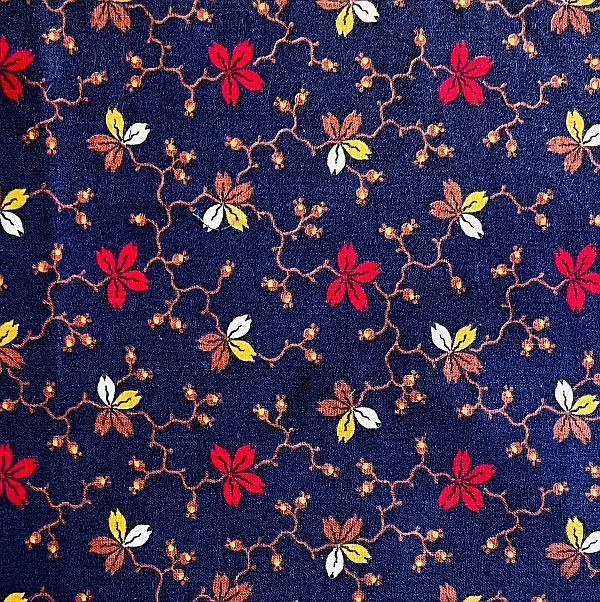
I am getting one of my mom’s tops ready to quilt for a family quilting bee. I would like to use the same fabric that’s in the border for the backing. However, I do not know the name of it, the manufacterer, not its approximate age. What is the best way to find out this information. i am sure the fabric is at least five years old and could be much older.
vegetable 46
From: Kris Driessen
Gloria et al,
I believe she was able to get a copyright on the flat-fell seam as it applies to the specific way she uses it to create quilts. I don’t believe you can get a copyright on a technique like needleturn applique or something like that. Georgia Bonesteel doesn’t have a copyright on the technique of lap quilting as she didn’t invent it, but she may have a copyright on the term lap quilting.
Kris
From: Barbara Burnham
vegetable 46, The way fabrics fly off the shelf today and go out of print forever, you will find no end to frustration finding a fabric older than a year, in my humble opinion. Using something that is “compatible” or a simple solid color (not so “date-able”) might be an easier solution, especially since you will need substantial yardage for a backing. However, if you are determined, post a picture on the qhl site and maybe someone here will be familiar with it, or try a fabric search site such as http://www.missingfabrics.com/. There are other similar web sites I cannot recall at the moment. Often, the older the fabric, the more costly it will be. Barbara
vegetable46 <akcarter46@> wrote: would like to use the same fabric that’s in the border for the backing … at least five years old and could be much older.
—
I know I have read her application because I couldn’t believe she was able to claim that she invented the quilt as you go method, but I may be confusing patents and trademarks with copyright. Certainly you can get a trademark on a name. I am perfectly willing to stand corrected!
Kris
From: “Kim Baird”
Her website states she has a patent on the technique, but I think she is confused. I believe she has a tradmark on the name. Notice she doesn’t give a patent number.
Kim
From: Dana Balsamo
I have a quilt from the 1930s that was made “quilt as you go”. So it is not a new technique. My quilt has the back seams covered in pink satin ribbon and then featherstitched the edges down. Very pretty.
My best, Dana
RAGLADY@ wrote: This subject came up on one of my quilting lists because of a class that one of my members took recently with a designer. When I visited the designer’s website, I found that she teaches and has written about her “quilt and assembly” techniques aka “theory”.
I know that other designers, one in particular – Georgian Bonesteel – has made her Lap Quilting techniques (aka quilt as you go; quilt and assemble; etc) famous all over the world. I also believe that under copyright laws, techniques are not covered. From a quick (I emphasize very quick) search on Google.com, I found it stated that design techniques cannot be patented either – only the associated design itself.
So I figured I would go to the experts on this list to ask: Can quilting techniques be patented? I haven’t mentioned the designer’s name as I felt some of you would likely know of her “Cotton Theory” techniques or her book on the subject. 8-))
Gloria raglady@ CyberQuilters
From: “Christine Thresh”
Betty Cotton has a patent on her technique.
Here is a tiny URL which should get you to the patent page: http://tinyurl.com/evson
It takes a long time to open, so wait a while.
Christine Thresh
Date: Mon, 13 Mar 2006 16:18:42 -0500 | From: Linda Hunter <hunterlj@>
To Julie Silber regarding Ruby McKim and the Quaddie Quiltie, there is a very good article by Jill Sutton Filo on Ruby McKim including this information in “Uncoverings 1996”, Volume 17, by AQSG. Jill Filo also has written a book on Ruby McKim and includes this and many other interesting facts about Ruby Short McKim. Linda Hunter
From: “Alan”
And if this is the woman I remember, I looked at her technique – way more involved and difficult than the traditional way. Which makes no sense, other than to be able to say it’s patented.
Alan