April 10 – 14, 2006
These restored messages come from the Quilt History List, an online forum where quilt historians, collectors, researchers, appraisers, and enthusiasts discussed antique quilts and related textiles. The archive dates from 1996 through approximately 2016 and is being restored gradually. Sign up in the form at the bottom of the page if you want to know when a new page is added. Original spelling, opinions, formatting, and inactive links may remain unchanged.
Primary topics of this QHL Digest:
- Courthouse Steps and Log Cabin, Round Two — The debate continues over pieced versus foundation methods and whether colorway alone makes a new block.
- Imported Quilts Listed as Antiques — Members list new imports sold under Antiques on eBay and share their own buying troubles.
- Stories of Gratitude from World War II — Members share stories of Europeans thanking Americans and remembering relatives killed in the war.
- Hanging a Large Quilt Under UV Acrylic — A member planning a public installation asks about acrylic covers, and others describe UV shielding and archival mounting. (see the article on caring for antique quilts)
- The Quilt Index and Other Resources — News of expanding Quilt Index partners joins tips on quilting blogs, Gee’s Bend, and digitized old books.
- Pricing Wet Cleaning for Old Quilts — A repairer’s question prompts dealers to share what they charge for careful washing. (see the article on cleaning antique quilts)
From: Laura Fisher <laurafisherquilts@>
OK here’s my two cents about Courthouse Steps, a log cabin variation pattern. The finished log cabin quilt design depends on the placement and juxtaposition of light and dark colors. In Courthouse Steps, the lights are grouped opposite each other, and the darks are grouped opposite each other, pieced in strips sewn out from a center square as all Log Cabins are. This allows the viewer to read ascending lengths of strips from the center square out (or descending lengths from the edge of the square on in), emulating the perspective one gets viewing a flight of stairs. When those squares are juxtaposed so lights and darks abut square to square, you see large diamonds of light and dark colors across the quilt surface as if mounted on a tiny ribbon created by the rows of repeat color from the center squares The Pineapple or Windmill Blades patterns depend on the ends of the strips being cut on the diagonal; Barn Raising results when all the lights are at 90 degree angles to one another, and darks at the similar angle, and so on for the different variations.. Though I am not a quilter, I think all these variations are executed in a similar technique–a center square and strips sewn around it, sewn and folded in increasing lengths til the finished square is the desired dimension.
By the way, just saw the opening of the exhibition of WHITE ON WHITE (and a little gray) at the American Folk Art Museum in NYC, selections from Cy Nelson’s personal collection of whitework. Don’t miss it, they are breathtaking. The show is well mounted, and the intricacy and variety is incredible. No need for color or piecing when you see the visual appeal these achieve This material is hard to photograph except by a wel- lighted professional, so it is absolutely worth seeing in person when you are in NYC; it runs til Sept 17. I had the pleasure of selling Cy some of what he said were his favorites, and he was kind enough to publish some on mine in past calendars. I miss his knowledgeable interest in them, he was one of only two collectors I know of. I remember once selling a designer several Marseilles (woven white) bedspreads, which he mountedas “walls” stretched on wood frames and wheels to make moveable partitions in a loft-like space..Seeing this exhibition it’s easy to understand what an impact this can have, despite being monochromatic.
Laura Fisher
—
The Alliance for American Quilts (www.centerforthequilt.org ) eBay auction this week has lots of great OOP books (many we will not be offering again) including “Always There: The African-American Presence in American Quilts,” “New York Beauties Quilt from the Empire State,” “World of Quilts at Meadowbook Hall” catalogue, “Quilts The James Collection,” a Tumbling Blocks summer spread c.1850-60 and much more! You can check it out by going to http://search.ebay.com/_W0QQfgtpZ1QQfrppZ25QQsassZalliancequilts or search by our seller’s name- alliancequilts.Your purchases also benefit a great organization which is doing incredible things for quilts. New auctions are posted every Sunday. Happy bidding and thanks for the support.
All the best, Karen Musgrave Join us! Become a member and get advance news on our auctions AND help preserve our great quilt heritage. www.centerforthequilt.org
—
AFter cruising through eBay today, I thought I would post a list of imported quilts that are listed in the ANTIQUES category by their sellers. Why can’t sellers figure out that if it’s new, it’s not an antique and that vintage is not a euphemism for “used bedding”!! Enjoy!
#7406247627 French Country KING Quilt #7406372458 Shabby Cottage Pink Vintage Roses Queen Rag Quilt #7406296524 Pretty n Chic Pink, Lilac n Green Couch/Bed Throw #7406265348 Beautiful Hand Stitched Star Pattern Quilt Qn. sz. nice #7406221492 Large Vintage Quilt Wedding Ring w/Double Band Edge #74063162 Vintage Hand Quilted Sampler Quilt #7406243039 Vintage Log Cabin Barn Raising Handmade Quilt lovely
PLEASE check out these 2 items. I think they deserve notice for their misrepresentation: #7406249342 Georgeous Large Ladybug Quilt (from JC Penney, 03) #6621114147 Depression Era Handmade Quilt w/Floral Applique #859902 (Do these fabrics look vintage or the workmanship reflective of the era? If anyone has dealt with this auction source before, you might want to give them a heads-up on this live auction item.) Also, check out this seller……..missypenelope……..has since last year been listing new imported quilts consistently in the ANTIQUES category….does not acknowledge when you give them info the item is not an antique.
C. Ark in NW Ohio where we wish the sun would come out and stay. P.S. My sheep, Ewegenie, had her lamb on April Fools day….we named her April (of course!) & she is adorable (of course!).
From: KYRA HICKS <khicks1@>
Hello – I’m curious how quilters are using online tools – one tool is blogs. Are there any must-visit quilting blogs that you’d recommend?
Blogs, for those who may not be familiar with the term, are person web diaries or journals that sometimes allow for reader/visitor comments and interactions.
For quilt historians, it will be interesting to see how our quilt websites and blogs will be captured and commented on in future.
Thank you –
Kyra Hicks www.BlackThreads.com African American Quilting Sourcebook
From: Gloria
Ark said, “has since last year been listing new imported quilts consistently in the ANTIQUES category….”
I’ve been doing ebay for at least 5 years and this is consistent with listing practices with tons of sellers. When I search the antique catagory I always do a -new. It doesn’t stop them all from coming through, but it helps.
They want us to see the item. It pays to learn some search techniques which will weed these out. Take out polyester, new, package, set, sham,pottery barn, etc. Look at some of these listings and you’ll come up with words to eliminate.
This seller really isn’t doing anything unusual. I am more irritated when I go to my local antique mall and see new craft items.
Gloria Hanrahan
From: Barb Garrett
Good Evening All –
Following a series of links, I found this interesting information — on August 10, 06, the USPS will issue a collection of 10 different stamps featuring Gee’s Bend Quilts. This is the site with more details —
http://www.quiltersbuzz.com/gees_bend/
Barb in southeastern PA
From: “Steve & Jean Loken” <sandjloken@>
Sarah, The High Museum of Art in Atlanta has the Quilts of Gee’s Bend right now, through June 16, I think. Jean in MN
From: jocelynm@
>square or rectangle, but because of the way it is built visually it cannot be >turned to make different overall patterns; Darwin, Well, if you make it scrappy, you certainly can make overall patterns with a CS block. I see the author’s point, and I agree that they aren’t the same block, but I think it’s splitting hairs whether one calls them 2 related blocks, or one main block and a derivation of it.
From: jocelynm@
>ANTIQUES category by their sellers. Why can’t sellers figure out that if it’s new, it’s not an antique and that vintage is not a euphemism for “u sed bedding”!! Because Ebay tells sellers, ‘List your item in a category that has a lot of traffic, whether it’s accurate or not.’ People know what antiques are…they also know that the ‘antiques’ catego ry has a lot of traffic. So they’re betting that at least one of the peop le who are looking for antiques will see their modern item, and want it. In other words, it pays for them. There’s no financial motivation to keep the categories clear; the more buyers have to hunt, the better it is for sellers.
–
From: Barb Garrett
I’ve been away and am behind in my email reading, so this topic is from last week. I apologize for the late response.
These are my personal feelings and observations concerning the blocks — I’m not an expert, but I do enjoy (mentally) dissecting blocks to study their construction techniques. I’m not saying “I’m right, you’re wrong”, but rather am offering my perspective, and the reasons.
To me, Log Cabin and Courthouse Steps are 2 distinctly different blocks. One is not a variation of the other. To me, saying one is a variation of the other because they are both made of strips would be like saying a 9 patch is a variation of a 4 patch because they are both made of squares. Lots of blocks are made of strips, and they are not considered log cabin variations.
Both blocks can be made using either of two methods — pieced block or foundation. I have made several log cabin quilts using the pieced block method, and own several pieced tops constructed without a foundation. I have seen antique tops and quilts done in both patterns using both methods. Log Cabin blocks do not by definition have to be constructed on a foundation, and therefore, to me, it is not accurate to say that another block is a log cabin variation because it’s constructed on a foundation.
The process of attaching the logs to the center square — in both methods — is different. In Log Cabin, each log must be pressed flat before the next log can be attached since the attaching order is around in a circle. In Courthouse Steps, 2 logs on opposite sides of the block are attached before pressing is necessary, then 2 more opposite logs are attached, perpendicular to the first 2 logs. You do not attach the logs consecutively around the center in Courthouse Steps as you do in Log Cabin.
I have periodically noticed in publications and exhibits that a Courthouse Steps quilt will be mislabeled (my opinion) Log Cabin. I don’t let it bother me, except that I think it’s sad when incorrect (to me) information is dispensed. I know it’s mislabeled, but not everyone viewing the title does, and they will store this knowledge as fact. My personal analysis of why this has happened — early on in the development of the area of quilt history (30 years ago?), people readily identified Log Cabin quilts, and when they saw Courthouse Steps quilts they didn’t analyze the quilt but too quickly gave it what was for them a generic name. Thus the misnaming. The area of quilt history is ever evolving as we learn more, and I believe that this is another area where early thoughts need to be refined for greater accuracy and consistency.
Just my thoughts, Barb in southeastern PA
—
>like saying a 9 patch is a variation of a 4 patch because they are both >made of squares.
Barb, Well…that’s exactly how I would describe it. <G> That may be the pivotal point here: each of us is defining ‘variation’ in a different way!
—
I still get sick to my stomach about my last “import” experience on eBay. Seller said “satisfaction guaranteed” I paid $500 for NY Beauty that was a Chinese repro.I get so mad at myself that with all of my years of buying quilts I can still get taken.In this case I trusted the seller and felt confident with her reassurances that she would take it back if it was not the real McCoy. She even have very good feedback-until now.
Donald Brokate “The Crazy Quilt Collector” Trenton NJ
Date: Tue, 11 Apr 06 15:51:19 -0700 (PDT) | From: Pat Cummings <pat@>
Dear Barb,
Thanks for your post regarding this question that has been on the table for about a week now. Your careful analysis of the matter at hand is deeply appreciated. More people who engage in the study of quilts should apply the principles of critical thinking to their assessments. Hurrah for you. You just did! Goodness knows there is enough misinformation already floating around in print. Serious quilt historians do not need to add to that.
Pat Cummings, who has a new essay online about writing quilt history, www.@
Barb said:
The area of quilt history is ever evolving as we learn more, and I believe that this is another area where early thoughts need to be refined for greater accuracy and consistency.
—
The Mill Pond Center for the Arts was the site of our second annual New Eng land Regional Quilt Day. The purpose of the day was to offer a reasonabl y priced, close-to-home opportunity to have a look at wonderful quilts, rai se awareness and membership in AQSG, and promote the 06 and 07 AQSG Sem inars. The Mill Pond Center in southern New Hampshire is centrally located for those of us living in New England. Riding the popularity and succes s of last year’s event at the Wenham Museum in Essex. MA, a different forma t was conceptualized for this year. The New England Regional coordinators of AQSG planned a day that mimics the study centers that have sprung up acr oss the country. There were 6 rooms each with a different focus manned by the coordinators. All of the coordinators contributed quilts from their stash to allow for about 7-10 quilts per room. From 10:00 a.m. to 1:00 p. m., participants spent about 25 minutes in each room, talking about the qui lts, then rotating rooms. During the lunch that followed, we had an opport unity to promote our 06 and 07 AQSG Seminars, give away 10 door prizes, including a free admission to next year’s Regional Quilt Day drawn from th e returned survey forms. Our last two activities were our Brown Paper Ba g sharing and a Plenary Session. Participants were asked to bring their f avorite quilt or sewing item in a large brown paper bag to share and pass. The Plenary Session was taken from the playbook of Fran’s Friends Textile Seminar introduced there by Mary Perini. It is a wonderful way to end a qu ilt study day. It provides an opportunity for everyone to participate and share some of their quilt-related thoughts. Each panel gave their personal responses to a provided question, and then the audience had an opportunity to chime in with their opinions. A wonderful day was had by all. The new Blanket Statements editor of AQSG, Lori East generously traveled from Missouri via Oklahoma (her nearest airport) just for this event. She is planning some photos and an article for a future Blanket Statements. I’ ll leave the mouth-watering, drooling descriptives of the quilts we saw on Saturday to her. Just to tempt you though, here is one of the many complim entary emails I received “I have never seen so much prussian blue in one room !” Still coming down from a Saturday’s quilt high. Sue Reich
Date: Wed, 12 Apr 06 00:15:35 -0700 | From: “Alan”
Ummm, I think this is pushing it. And I still say they’re variations of the same block. Colorway has nothing to do with it. Pineapple is a variation.
Alan
> >like saying a 9 patch is a variation of a 4 patch because they are both >>made of squares. >
From: “Kim Baird”
There is no single block named Log Cabin. Even if you are talking about the “classic” block, there are no set number of pieces. The relationship of the center square to the log size is also extremely variable. Log Cabin is more of a construction concept than a block name.
There are a zillion variations, including courthouse steps and cabin in the cotton (concentric squares of color) and pineapple and even blocks that are not square. The construction method works whether you start with a triangle or rectangle or some other plane figure.
Quilt pattern names are not fixed in stone. They are more like folk songs. Since they passed from person to person, they changed and developed variations over time and place. There isn’t one version of a name that is more correct than another.
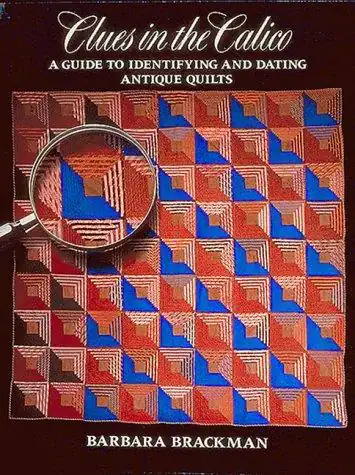
Using Brackman’s catalog of names is simply a convention. The names she cites are the earliest published names she can find, and we all know that magazines and newspapers are not concerned with historical accuracy. Notice that her book assigns numbers rather than “real” names.
Studying block names can be interesting and fun, but finding the “real” name of any particular design is not a worthwhile subject for scholars of quilt history.
Kim in ND, wearing her flameproof suit
Date: Wed, 12 Apr 06 06:09:47 -0700 (PDT) | From: Pat Cummings <pat@>
I love this list! Kim B. makes a very good point that is extremely valid:
> Studying block names can be interesting and fun, but > finding the “real” name of any particular design is not a worthwhile subject for scholars of quilt history.
> Kim in ND, wearing her flameproof suit
Pat Cummings
—
>Studying block names can be interesting and fun, but finding the “real” name >of any particular design is not a worthwhile subject for scholars of qui lt
Kim, Absolutely. 🙂 I am reminded of my mother’s story of a lady in her home community when s he was a child, who was well-known as the senior stateswoman of gardening for the area. What this lady didn’t know about gardening, it was said, w asn’t worth knowing. One day, someone asked her the name of a bush in her yard. Having a senio r moment, she couldn’t think of ‘lantana’, so she joked, ‘It’s a johnny-b ush.’ For decades after, locals called lantana bushes ‘johnny bushes’. 🙂 The same is undoubtedly true of quilt blocks- getting renamed because of a lapse of memory about the ‘real’ name, or because someone thought their name was better/more descriptive/more memorable. 🙂
From: Laurel Horton <laurel@>
Subject: Laurel Horton’s lecture >From: Laura Robins-Morris <lrobins@> > Date: Wed, 05 Apr 06 07:55:16 -0700 >Laurel’s lecture is available on the IQSC web site and it’s very interesting. Laurel, after your panel, did >you sense any change, however slight, in her thoughts?
(I’ve been away from home and email for a week, hence the delay in response.) I didn’t observe any shift in the young graduate student’s attitude during the panel presentations (which were part of the American Folklore Society meeting in October, 05). We had shared our papers by email beforehand, so she certainly knew that she would be presenting a “minority report.” At the time of the panel, she had quite a big emotional investment in the story, so she would not be able to give it up lightly. I’m continuing to look at the controversy in terms of conflicting beliefs, and this year my AFS paper will be in a panel on “Belief, Religion, and Public Display.”
Laurel Horton
Date: Wed, 12 Apr 06 21:18:11 -0400 | From: “Lucinda Cawley” <lrcawley@>
My mother’s younger brother John Osmond Boland was killed in Germany on April 14, 1945. He was 31 years old, a 1st Lt. in the Infantry and was awarded the Distinguished Service Cross. Todd, as he was always called in the family, had been married only three weeks before going overseas. My grandmother was devastated when his wife, whom she did not know, chose to have him buried at Margraten Cemetery in the Netherlands. Being able to visit a grave was very important to her generation.. Several weeks ago a man from the Netherlands contacted our family through the Scranton (our home town) Public Library. In 1946 his grandfather “adopted” the grave of an American soldier, my Uncle Todd. For the last 60 years his grandfather, then his aunt and now this gentleman have taken care of Todd’s grave. He wants to put a face to the name. I am putting together a packet of photos and family history to send him. I had an email today telling me that he will take flowers to Todd’s grave on Good Friday, the 61st anniversary of his death. Although this is not quilt related I want to share with you an example of the kindness of strangers across generations. Cinda on the Eatern shore
Date: Thu, 13 Apr 06 02:49:02 -0600 | From: gingham@
Okay, here is my posting again but with the URL this time
http://valley.vcdh.virginia.edu/quilts/quilt.html
~~~~~~~~~~~~~~~
In web wandering, I came across quilts from an exhibition held at the Woodrow Wilson Birthplace and Museum during the spring of 1995. The site features 24 quilts from the mid-1800s.
Click on the quilt thumbnails for pictures of the whole quilts. Also for some of the quilts there are detail photos and the piece de resistance for several signed quilts there are diagrams detailing the signatures (name, date, sentiment, etc.) This could be very helpful for someone trying to research other signature quilts from the area/time. There are several interesting quilts including an 1850’s quilt as you go quilt.
Sandra Starley Moab, Utah
Date: Thu, 13 Apr 06 07:35:26 -0500 | From: Gail Ingram <gingram@>
Re digitizing of key historical OOP texts and Cinda’s good people: I’d like to see more of both, appreciate each when encountered.
Cinda, several years ago in a conversation regarding topics for a high school graduation, I raised the possibility of “duty” as a theme. My three colleagues looked at me as if I had come from another planet. Duty, one of them said, was a real turn-off for kids. It seems they were not “for” it. I could well imagine it would be a turn-off if it turned their teachers off, but I held out for keeping it among the options. The students chose the topic and gave what all agreed was the most passionate and well-reasoned graduation speeches heard from that podium in years. Too bad we didn’t have your family’s experience to include! Thank you for reminding us on this list that such loving, dutiful people walk among us on this earth. A true encouragement to pass along such behavior. All policy, foreign or otherwise, begins with individuals.
On the subject of digitizing, I did not mean to open a debate that calls away from our mission on this list. I recognized the various obstacles to digitizing collections such as 00P “Uncoverings,” among them the journal’s specific copyright arrangements with its writers–whether it or they owned the texts, for it is possible and commonplace for a publisher in its contract to retain rights to the text for a given period of time or for given purposes. I also recognized the economic and personnel problems associated with such an endeavor. Nevertheless, I thought the idea was one to mull for the future. It was not an immediate request, but a thought for the times to come. Certainly, I did not wish to make more work for an already overworked and burdened Kathy Moore.
Frankly, the price of available issues of “Uncoverings” strikes me as so reasonable anyone who is purchasing quilts could certainly afford it. It is possible, however, that a selected issue out there in cyber space would serve the mission of AQSG in advancing the study of quilts and quilt history.
Here in North Louisiana the iris are blooming, the old own-root climbers are clambering over pergolas and fences, and blue has been added to the colors of the landscape. And I, lucky soul, am reading aloud to my junior-senior class the second chapter of “Absalom, Absalom!”: “It was a summer of wistaria.”–in a room redolent of the heady fragrance of that sturdy southern shrub. Every student is bringing a panicle of wistaria.
Grateful for AQSG, for wisaria, for good books and good people, Gail Ingram
Date: Thu, 13 Apr 06 13:40:55 +0000 | From: deedadik@
Hi Cinda and all, Your story gave me goose bumps! My father had a strange occurance when he was in England waiting to cross the channel for D-Day. He had gone to a local church and lit a candle and prayed for a successful birth of his first child(me) who was born two weeks later. A young priest saw him and remembered the incident. The next day – D-Day_ happened. The young priest thought my dad was lighting a candle to pray for his safe return and so kept the candle burning all during the war. My father is now 87! Good people do abound, we just don’t always hear of them. Deee
— Dee Dadik Certified Appraiser of Quilted Textiles 5689 Concord Hill Dr. Columbus, Ohio 43213 614-861-0478 Web site: deedadik.home.@
Date: Wed, 12 Apr 06 08:15:53 EDT | From: DDBSTUFF@
I’m enjoying the discussing on the “Courthouse Steps” and agree with Barb.
When I first started collecting quilts back in the mid 70’s, it was called the “Courthouse Steps” and was also referred to as a “Log Cabin Variation”.
It was called this in every book I looked at.
I am not a quilter so I never actually studied the construction.
Now, I’d like to know when the first “Courthouse Steps was made?
Most of us know that “Log Cabins” seem to first show up in the 1870’s-early 80’s ( am I right on that?) Are there any older?
Does anyone actually know when the “Courthouse Steps” began to be made?
Who coined the title, “Courthouse Steps”?
Darwin
From: “Karan Flanscha”
I think Kim’s comment that “Log Cabin” is more a construction concept it right on… I could see someone trying to make a Log Cabin, after seeing one somewhere… and not quite remembering that the logs were sewn on clockwise. Or, someone trying to ‘simplify’ that clockwise sewing by alternating the strips side to side. I can remember a Log Cabin quilt on the bed in the ‘spare room’ at my Grandma’s, and trying to figure out how it was made. (I was about 10.) I remember measuring the width of the logs, and the center square, but I didn’t sketch it out. When I got home, I tried to figure it out & couldn’t do it. I have had that happen with quilts I saw in a show… and thought I would ‘remember’ how the block was made. I think a lot of block ‘variations’ came about just this way 🙂 Sure enjoy this list & the discussions it generates!! Karan from sunny Iowa
From: Mary Worrall <worrall@>
The Quilt Index is expanding! Work is underway to bring quilts online in 06 from the Daughters of the American Revolution Museum, the Museum of the American Quilters’ Society, the Rocky Mountain Quilt Museum, the Nebraska Quilt Documentation Project at University of Nebraska-Lincoln and the Texas Quilt Search and Winedale Center for American History at University of Texas (a Regional Center for the Quilt).
Visit <http://www.quiltindex.org/collections.php>http://www.quiltindex.org/collections.php to read profiles on these contributing partners.
Major funding from the <http://www.imls.gov>Institute of Museum and Library Services, National Leadership Grant program has enabled the Quilt Index to work with additional library and museum partners to expand the mass of quilts, to develop architecture and procedures for interacting with other databases, to develop protocols for adding documents journals and oral histories to the Index; and to develop a series of written documentation for the whole project.
The Quilt Index represents years of research and development to bring together quilt information in a centralized online tool for education, research, and public access. The Quilt Index was conceived and developed by <http://www.quiltalliance.org/>The Alliance for American Quilts in collaboration with Michigan State University’s <http://matrix.msu.edu/>MATRIX: The Center for Humane Arts, Letters and Social Sciences Online and the <http://www.museum.msu.edu/>MSU Museum.
Mary Worrall Quilt Index Project Manager/Assistant Curator Michigan State University Museum
From: Joni Branscome
Wow! Thanks for sharing that. I needed to hear that tonight. Sometimes it seems that the problems of the world are too much to bear, that there is too much pain and sadness.
This made me cry, tears of joy that there will always, in the worst of times, be stories of the kindness of strangers that will just blow you away when you read it.
And tonight, when I needed to hear a story like that, you shared yours.
Thanks!
Joni
From: “Newbie Richardson”
Dear list, I have been asked by a friend of mine who repairs old quilts, (whose work I respect), if she could refer clients to me who want their family quilts wet cleaned. Although I usually agree with Xenia -when the feeling to wet clean a quilt comes over you – lie down t’ill the feeling passes! – There are situtations where it is ok – from a conservation point of view. And, frankly, better someone who knows what she is doing than the local drycleaner!
Anyway, I usually don’t clean any that are not “icons” – early pieces with lots of quilting and stuffed work – for which I charge $600. It takes me a full day. ( If I am lucky) I have to build the wash tank out of two by fours, etc, give a final rinse in de-ionized water ( now available in a kit you put on your garden hose designed for cleaning prized sports cars), I use at least 2 dozen towels blotting out the water, ( which then have to be washed and dried and put away) check on the piece evey 30 minutes to be sure no dyes are wicking out into the surrounding fabric, start VERY early in the AM on a nice bright breazy day for optimum drying time ( the possibility of mildew is very real) and then go visit my chiropractor the next day to take care of my back! NO, I am not kidding!
I also have one of the wonderful Neptune washing machnes where the handwash feature really IS! I have wet cleaned some of the VERY STURDY 1930’s and 1940’s pieces that belong to friends. Because these are friends and we usually sort of barter services ( walking dog, sharing plants, etc) my fee is less than the work involved – but does compensate for some of the time I spend. These I do for $75 – which includes a thorough vacuuming and inspection to be sure no seams are starting to come apart. ( I charge accordingly for any repair work).
As you can see, I have no in between, because I usually don’t see those. Consequently, I do not have a feel for what the market will bear for wet cleaning – say – a fragile GFG, or Dresden Plate – or any of the other “great middle ground” of quilts out there.
If any of you who do this are willing to share prices and caveats – like how do you word your letter of agreement – I would be grateful. You can email me privately if you prefer to keep the information confidential.
Thanks in advance – and happy Easter/Passover to all Newbie Richardson
Date: Thu, 13 Apr 06 09:03:45 -0500 | From: “Jean Carlton” <jeancarlton@>
I’ve learned never to argue about two things…..the name of a specific quilt block and whether or not the fabric in a quilt is from ‘feed’ sacks. 🙂 As soon as one person finds a source proving the name of a block, another comes up with a rumpled booklet showing a different name for the same block. I personally do tend to think of all the blocks constructed with strips applied around a central unit as log cabin related but in the end, what is the reason to all agree on this? As Kim said, it’s interesting to hear opinions and rationale but it’s just not important and can never be proven one way of the other so …… As for feed sack use, once fabric is cut up and sewn into the quilt one indicator might be the little holes that remain from where the string was removed or in some cases the printing visible, esp in a larger piece on the back. Sometimes we do see that in a quilt- but fabrics were produced in yard goods to MAKE those sacks and were available by the yard as well. Sacks can be coarse or fine – many think fine weave means it’s not a feedsack. I have fine weave flour sacks – coarse weave was more often used for coarse product such as chicken feed. When someone says, ‘ is this made of feed sacks’ I can only tell them what I know and say, ‘maybe’. Does that start us off on a new topic? 🙂 Jean
Date: Thu, 13 Apr 06 13:43:17 -0400 | From: “Pepper Cory” <pepcory@>
Hello friends, Lucinda’s story is wonderful and made me tear up. I realized the special affection the Dutch have for their WWII liberators the first time I visited the Netherlands. I went out exploring Den Hague with a map and no sense of direction, and eventually found myself on a street corner peering this way and that. A well-dressed couple came up and he asked, “Are you in need of assistance?” Of course I was but in a moment they got me going in the right direction. As the pair turned to leave, both the man and woman formally shook my hand and said, “Thank you.” I asked, “Thank you for what?” and he replied, “For coming to our country’s aid in the war–I shall never forget the Americans coming down out of the sky in their parachutes. Thank you so very much.” I was stunned. And humbled. To think that a half-century later people still remembered. Come to think of it, I also have a quilter friend whose Dad was killed in the last days of the war in France and his grave is still tended to this day. Duty, civility, kindness–all traits we should nourish in our young people and never forget ourselves. Happy Easter, Pepper
Date: Thu, 13 Apr 06 11:12:00 -0700 (PDT) | From: catz@
Hi All: I am doing a public installation of a quilt (approx 96″ X 112″). It will be installed on a brick wall (indoors) and will have light exposure. S/SW window nearby. I have suggested that the agency install some sort of UV shade on the windows (which they may or not do). Does anyone have any suggestions as far as a covering (for fingers as well as light. Does plexi glass come in LARGE sizes ? UV protection available like you can get in glass ? Obviously, I would have the ‘shield’ some distance from the quilt for air circulation etc Thanks ! Marie Johansen
—
Yes, plexiglass comes large enought. I would suggest archival mounting and framing. Talk to a custom framing company who has experience mounting textiles. Heather
Date: Thu, 13 Apr 06 16:16:12 -0400 | From: “J. G. Row” <JudyGrow@>
I have seen, in museum installations, very long Chinese scrolls hung on walls with a sheet of ultraviolet screening acrylic glazing (thicker than the normal acrylic used in picture framing) a number of inches bigger than the scroll (perhaps 2″ in on each side) affixed to the wall by screws which go through holes drilled in the corners of the sheet goods into 2″ tubes of Acrylic (or could be metal) first before entering the wall. This keeps the acrylic 2″ away from the scroll.
The acrylic I order for my frame shop is delivered the standard 48 x 96, the size of a sheet of plywood, and is the thickness of window glass. We cut it to use as glazing in picture frames. I am not sure if thicker acrylic can be had in sizes larger than 48 x 96, (it probably can …. at a price) but I can tell you that if it is, it will cost a fortune to fabricate your shield!!
It would be much less expensive to put the UV screening on the windows, but that won’t solve your “touching” problem.
PS. “Acrylic glazing” is to tissue, as Plexiglass is to Kleenex. As for me, I prefer “Puffs.”
Judy, now in Flemington NJ aka The Ringoes Kid judygrow@
96″ X 112″). I have suggested that the agency install some sort of UV > shade on the windows . Does plexi glass come in LARGE sizes ? UV > protection available like you can get in glass ? Obviously, I would have > the ‘shield’ some distance from the quilt for air circulation etc
From: “Andi” <andi0613@>
My DH just returned from a business trip to Southwestern Iowa. Sweetie that he is, he emailed this exhibit information to me. [ ] are mine.
I really did see some (little bit) different scenery along the drive on Tuesday and yesterday. For a stretch, it reminded me more of northern Michigan–hardwood forests on either side that seemed to go on for miles, certainly in comparison with around here [Southeastern Iowa], where they seem mostly to line rivers and creeks. (Of course, maybe the highway there just followed a river or creek for some miles, but it was a different visual effect.) And there was a stretch that seemed more like Kentucky or western NC or VA — steeper hills, almost like foothills, with horses at least as much as cows on the hillside pastures.
Then there is that quilt exhibit to be. Here is what I took from a flyer taped to the glass on a museum-like building on a corner of the town square in Villisca [IA] –at the end of a block with the medical clinic at the other end of the block and a gift store, VFW post, and a bar-and-grill (among others) in between.
Montgomery County Historical Society temporary exhibit (under a picture of a quilt) May 06 – May 07 “Stitches in Time: Montgomery County Quilts, 1850-05” for the new museum’s grand opening (no date given–of course)
a phone number (without area code; it is 712) was given for information: 623-2289
I know Southwest Iowa is not a destination for most of you, but who knows where life might take any of us in the next year? Villisca is located on highway 71 (north-south) between highways 34 and 2 (east-west). It looks to be about an hour east of Omaha, NE.
Andi in Keota, IA
—
Good evening, QHLers – Another way to spend your $$! Forwarded from LLD Specialty Sales news release:
Scalamandre, the much-loved American manufacturer whose name is recognized the world over as a premiere source for luxury fabrics and wall coverings, is unfolding a new chapter in its 50-year history. For the first time ever, the company will offer for auction selections from its extensive archives of custom designed silk, inspirational art work, historical fabrics from America’s most famous restoration projects, and a wide variety of important artifacts from the Scalamandre offices and the Scalamandre Textile Museum that during the 1950s and 60s was located on Fifth Avenue in New York City and became an important destination for designers, decorations, and fabric scholars.
The first of three scheduled Scalamandre online auctions will open for bidding on April 19, 06, and will close Tuesday, April 27. Museums, collectors, restoration professionals, antiques dealers, and fabric aficionados can peruse an online preview right now by visiting www.LLDspeicialtysales.com. Two additional auctions are scheduled this Summer and early Fall, with hundreds artifacts and archival fabrics carefully chosen as representative of Scalamandre’s weaving history, custom commissions, and restoration work for homes and buildings with profound historical provenance. Altogether, these on line auctions of never-before-made-public material offer a grand opportunity to own a part of an American company that continues to an 80 year reputation for ingenuity, authenticity, and artistic excellence.
Highlights for the April Auction include several White House fabric lots including three shuttle loom, silk lampas panels that are the original working samples for chairs in the Blue Room, and were designed by Mrs. Scalamandre for Jackie Kennedy’s restoration initiative that later became a landmark television special. These panels feature golden eagles, wreathes, and rosettes on a French blue ground and include certain design quirks that did not make the production run. Other White House fabric includes eight yards of lemon yellow Georgian silk damask woven in the 1970s for the draperies now hanging in the East Room, and almost five yards of a four field silk lampas first reproduced in the 1940s and woven again in the 1970s for the window treatment in the Nixon’s private dining room. Bidders can even compete for two historic “White House” looms that were set up specifically to produce numerous customized fabric project requested by just about every administration during the last half of the th Century.
Other important fabric includes more than six yards of hand brocaded Italian silk, woven with metallic threads in early 18th Century style, and selected by Princess Marie Jose, the last Queen of Italy, for the Royal Summer Palace. When last offered for sale the wholesale price was $2500 per yard. Serious Americana collectors can compete for more than 10 yards of a wine colored silk Damask woven for chairs and draperies at Mount Vernon and also displayed at the Scalamandre Museum of Textiles. And for collectors of modern textiles and design there is an important framed panel of the last approved loom trial of the wall covering woven for the World Financial Center, destroyed on 9/11. This brocatelle was designed by Adrianna Bitter and Cezar Pelli with inspiration from Owen Jones and Christopher Dresser.
The Scalamandre online auctions are presented by LLD Specialty Sales of Portsmouth, Rhode Island, the firm that handled Scalamandre’s record setting on-site artifact sales when the company moved its weaving operations from their historic red-brick Brooklyn factory to a new mill in South Carolina. All the auction items are authenticated and vetted by Bob Bitter, President of Scalamandre, and every lot is guaranteed as described.
“The Scalamandre auctions are very timely,” notes LLD founders Jill and Web Wilson. “With more manufacturing outsourced in Asia, Mexico and India, there is a real thirst for American made products and Scalamandre represents the highest level of American industrial production. Many people are restoring historic homes or searching for antiques and decorative products that representative American art and craftsmanship.”
“LLD is a founding member of AntiquesYes.com,” Web Wilson continued, “so we have helped develop an online auction site with proprietary software and special features for serious auction buyers. We have listed reserves, bidder anonymity, and realistic bid increments. A buyer’s premium of 15% is in effect and the new software provides for extended bid time that eliminates sniping.”
Along with archival fabrics, the April Scalamandre auction will also offer artwork and artifacts from the Scalamandre Home Office and the Scalamandre Museum of Textiles. One important furniture lot is a 19th Century European side chair, with gilded finials and upholstered in tapestry, that was given to Franco Scalamandre by William Randolph Hearst in payment for work done at his San Simeon estate. Another lot offers an 18th C. silk winding machine constructed from cast iron and carved and gilded wood, bought by Franco Scalamandre for the Textile Museum. Artwork includes painting and drawings used for design inspiration such as two paintings by Victor Portelet, an important 19th Century Indus trial artist who became Director of the Louvre in Paris. Of special note are several lots of point papers, the thread-by-thread diagrams required for every fabric design, some of which were hand-drawn by Franco Scalamandre and his daughter, Adrianna.
For more auction information contact: LLD Specialty Sales at 800-508-0022 or sign up for auction email alerts at www.lldspecialtysales.com .
Date: Fri, 14 Apr 06 05:16:48 -0700 (PDT) | From: Susan Riley <blackeyedsewsan@>
In the NYT this morning, there is a spread on the White on White show in NY; I have copied part of it in case the link does not go through. If you can access it, there is also a slide show for people not able to get to NY.
http://www.nytimes.com/06/04/14/arts/design/14whit.html?pagewanted1&_r1&th&emcth or plug in: NYT: “A Folk Art Show of Needlework in White” by Roberta Smith “But neo-Classicism trickled down to many smaller, more personal corners of American visual culture, one of which is the subject of “White on White (and a little gray)” at the American Folk Art Museum. This dazzling exhibition has been organized by Stacy C. Hollander, senior curator at the museum. Its main focus is nine magnificent whitework coverlets that are enlivened by raised patterns and motifs, most of them leaf- or flower-based. They are flanked by two other signs of neo-Classicism’s influence: five examples of the black-and-white needlework known as print work, and drawings made with white chalk and lampblack on paper prepared with marble dust. Thanks to the luminous grisailles of these smaller works — especially the marble dust drawings — the gray of the exhibition’s title comes in a rather astounding range of shades. This show traces the influence of neo-Classicism through the nonprofessional ranks of homemakers, embroiderers and amateur artists. Everything in it was made by women, whose place in art history is steadily increasing. This exhibition contributes to that expansion and suggests a possible answer to the question asked by the title of Linda Nochlin’s famous 1971 essay, “Why Have There Been No Great Women Artists?” To wit: there have been; they just didn’t work with paintbrushes or hammers and chisels. In their time, the whitework coverlets were, in addition to being great art, the latest in lifestyle chic, the bedding equivalent of white muslin Empire dresses that the ladies of the period wore. Often made for dowry chests and handed down through the generations, whitework also offered evidence of the reigning misconception of neo-Classicism: that all the marble on those Greek temples had been snowy white, rather than painted in bright and — by neo-Classical standards — gaudy colors. And it was symptomatic of the central hypocrisy of the new American democracy: slavery. White cotton fabric became plentiful only after Eli Whitney’s invention of the cotton gin, which also increased the use of slave labor. (The exhibition’s primary sponsor is Cotton Incorporated, a trade organization.) The bedcovers are mounted like big square radiant monochrome paintings. Their mostly symmetrical motifs range from Trees of Life and baskets of flowers bordered by coiling grapevines to abstract patterns, like a double wedding-ring design known from pieced quilts. It must have been a challenge to make these motifs stand out in the white-on-white color scheme. The solution was to marshal embroidery techniques so robust that the designs were built up different ways, almost to the point of resembling carved relief, thick pile or even fur. Stuff work involved defining motifs with tiny stitches and then filling the unstitched areas with batting so that they protruded. This technique is in full cry in a Tree of Life quilt from 1796. Its flower and pineapples have a marvelous repoussé-like dimensionality, but the main energy comes from a snaky border of tightly spaced leaves that might well have been inspired by a silversmith’s handiwork. The grapes seem to have been relegated to little pyramidal stacks at the quilt’s outer edges, although these could also be cannonballs. In the adjacent quilt, the stuff-work leaves are broken up, and dispersed across a field that combines delicate, netlike stitching and stuff-work dots that suggest a shower of marshmallows. Also popular was the embroidery technique known as wicking, roving or candlewick work, which was done with thread as thick as heavy string, or candlewick. When looped, clipped and washed, wicking expanded into a pompom-like fuzziness that must be a precursor of the basic chenille bedspread. Several coverlets have isolated fuzz — flower heads especially. But the technique was taken to extremes by Susan Tibbets in 1847, probably in Connecticut. Her composition of large-scale leaves, blossoms and heart shapes, all deeply fuzzed, has the thickness of a white bearskin rug. The Tibbets effort — said to be influenced by the sturdier coverings called bed rugs — has a brashness, even a crudeness that feels contemporary. You could almost see a 1980’s neo-Expressionist like Julian Schnabel going at it with fat brushloads of paint.” Susan Riley, Boston
Date: Fri, 14 Apr 06 07:32:48 -0700 (PDT) | From: Karen Portwood <acornqlts@>
Subject: Re:sharing the news about good people NQR From: “Pepper Cory” <pepcory@>
As the pair turned to leave, both the man and woman formally shook my hand and said, “Thank you.” I asked, “Thank you for what?” and he replied, “For coming to our country’s aid in the war–I shall never forget the Americans coming down out of the sky in their parachutes. Thank you so very much.” I was stunned. And humbled. To think that a half-century later people still remembered. .
Reading Pepper’s story brought a fond memory to mind and I just had to share my own similar experience.
In 1994 I went to visit my brother who was in the military stationed in Nuremberg, Germany. One of the things he wanted to see was the World War II Normandy American Cemetery and Memorial, a very humbling experience. After visiting the cemetery we got turned around and ended up in Bayeux. We happened to stumble upon the Memorial Museum to the Battle of Normandy in Bayeux. Since most of the exhibits were written in French I was doing my best to translate for my brother as we walked through.
When we parked the car we noticed there was a busload of British veterans there that same day. One of the men approached the two of us and said “I can tell from listening to you that you are American.” To that we replied yes we were and shared that my brother was on a weekend pass. This gentleman shook both our hands and thanked us over and over for coming to their assistance during WWII. It really took us by surprise to think that someone would come up to two young twenty somethings and say such a sweet heartfelt thing. Being the soft hearted person I am, I immediately got misty eyed.
I still get misty eyed now just thinking about it. Thanks for allowing me to share.
Karen
Date: Fri, 14 Apr 06 12:38:18 -0400 | From: “Newbie Richardson” <pastcrafts@>
I have had to deal with over sized UV sheilding acrylic covers for quilts – It is available in larger than the 48 by 96 – but it is by special order and takes a while. The company does these special orders at the end of it’s production cycle – so the delivery time depends on their schedule – you could well l get it the next week! _ or have to wait 6 weeks. That said it is wildly expensive. I have had some clients willing to foot the bill – and others that wouldn’t. The last time I did one it was for a sufferage banner that was just a few inches wider that the standard. The cost was $900. I bought it through a framer friend and he did tack on a few bucks to cover his time and delivery charge. Hope this helps Newbie
From: Palampore@
I agree with Newbie on everything she said about washing quilts. My price usually ranges from $400-$600. But she did leave out some things that I am sure she does as well. I also test EACH fabric with a Q-tip and deionized water, and then water and orvus. I have to make up a chart for each quilt, listing the fabrics, and then do the test to determine if any of the fabrics will bleed. I hire a person to help me with lifting and moving so as not to pull the seams and fabrics because they are heavy and fragile when wet. I also photograph the quilt before and after— full view, each fabric, edge and backing. I also write a report giving the pattern name, history, condition, fiber content, etc. So it really is more of a week long job because you also have to deal with shipping, talking with the client, etc. I also have clients sign a waiver before I begin work in case the quilt doesn’t survive 100%. Having a special room, tank, etc. custom built to wash quilts was one of the dumbest and most costly things we have ever done. I spend most of my time talking people OUT of washing. It is a nerve racking experience every time I wash a quilt. I have seen quilts pass the Q-Tip test with flying colors and then end up “running” an hour after being put on the drying rack. I have also spent hours and hours washing a quilt to have it not look one tiny bit better than it did before washing. It will just smell better and will be a bit more stiff. Then again there are times that all goes well and it is well worth the experience. It is the toughest call I make with this business. So it isn’t just toss it in a front loading machine on delicate. Dry it, and be done with it. If you want to see my set up go to: _www.textilepreservation.com_ (http://www.textilepreservation.com) I washed a quilt my mother-in-law made for us for a wedding quilt in 1980. It is a double wedding ring with a zillion different fabrics in it. It has a white back. After washing it I now have 2 large splotches of aqua and red on the white backing. I did all I could…… So it is a “washer” beware story…. Lynn Lancaster Gorges Textile Conservator Historic Textiles Studio New Bern, NC
Date: Fri, 14 Apr 06 16:19:11 -0500 | From: Gail Ingram <gingram@>
I appreciate this service and hope the Center will continue to provide such services. What a treat to have afternoon coffee while attending Laurel’s presentation. We need to build our membership, especially among people who are seeking good causes to which to leave their estates <g> so we can enjoy more such presentations. Thanks for the opportunity and the notice.
Gail Ingram