August 26 – September 1, 2003
These restored messages come from the Quilt History List, an online forum where quilt historians, collectors, researchers, appraisers, and enthusiasts discussed antique quilts and related textiles. The archive dates from 1996 through approximately 2016 and is being restored gradually. Sign up in the form at the bottom of the page if you want to know when a new page is added. Original spelling, opinions, formatting, and inactive links may remain unchanged.
Primary topics of this QHL Digest:
- Crazy Quilt “Who’s Who” Identification — Members work to identify embroidered names and portraits on a 19th-century crazy quilt, debating candidates such as actress Nellie Hazeltine Paramore, politician Samuel Tilden, and evangelist Aimee Semple McPherson. (see the article on Victorian crazy quilts)
- Underground Railroad Quilt Code Myth — In response to a request for documentation, members share sources debunking the popular but unsubstantiated claim that quilts carried coded messages for the Underground Railroad. (see the article on Underground Railroad quilts)
- Elizabeth Keckley Research — Discussion of Elizabeth Keckley, the formerly enslaved dressmaker to Mary Todd Lincoln, prompted by the Underground Railroad quilt-myth conversation.
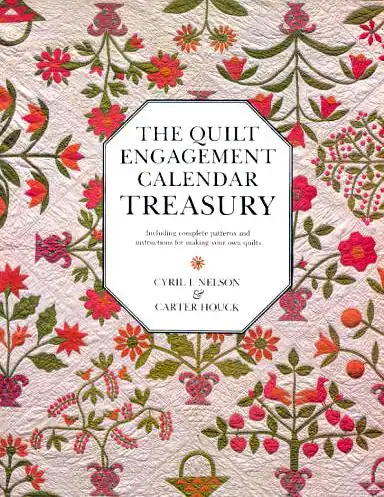
- 2004 Quilt Engagement Calendar — Members trade sightings and availability details for the new Laura Fisher and Stella Rubin 2004 Quilt Engagement Calendar.
- Museum Exhibit Research Requests — Museum staff on the list ask for help identifying quilts and their makers ahead of upcoming exhibits, including one at the Oklahoma Museum of History. (see the article on quilt museums)
Date: Tue, 26 Aug | From: “Charlotte Bull” <charloumo-net.com>
Dear Sue, Thanks for the fascinating details on the names. I printed off the letter as I want to challenge myself to see what my personal score will be. I certainly can ID many of them. My history classes are coming back to me after 50+ years!!! Of course I always enjoy your comments/contributions! charlotte
Date: [date unknown] | From: “Teddy Pruett” <aprayzer>
Oh, SUe, you are spoiling us so with these wonderful bits and pieces of descriptions of both history and fabrics!! As I read the account of the pieces for the crazy quilt, I kept thinking how descriptions such as that would affect my appraisals of the VCQ’s that I see – let me see, they would be 5 or 6 pages long, which the client would love, and I could double my fee, which I would love…..naaaahh- don’t see that happening. Teddy – who has just come in from the front goat pasture, where my 95 pound, 80 year old Mom (mighty Mouse) is mowing on her 45 year old tractor. What a woman!!!
Date: Tue, | From: Debby Kratovil <kratovil>
I’m back! I have had so many wonderful offers of the old quilts. But not one yet has revealed the Horn of Plenty quilt by Eveline Foland (KC Star, 1932). If anyone has access to a finished quilt in good condition, please let me know privately. Many thanks and now back to lurkdom. Debby — Debby (with a “y” and not “ie”) Kratovil http://www.quilterbydesign.com
Date: [date unknown] | From: “judygrow” <judygrow>
A couple of weeks ago Judy Roche posted about the show of quilts from the permanent collection of the New Jersey State Museum in Trenton, NJ.
If you have some time and would like to do something pleasant before September 14th, you need to see this show!
Sunday is the perfect time to go. The museum is at the state government building complex, but on Sunday the entire town is totally deserted. I mean totally! Parking is so easy and is free, and there is almost no one there, anywhere.
Barb Garrett and I met there at noon this past Sunday and we spent 5 hours looking at and discussing 25 quilts. The show is called “the Needle’s Eye”, and it is almost entirely quilts and samplers, most with good attributions. Most of the quilts in the show were signature quilts from 1840 – 1860, many from female academies, as were many of the samplers. There were a few later ones, at least 4 crazy quilts — good ones, and one redwork quilt — made by a 9-year old boy as the guard was very quick to tell us. He was so proud.
At least 3 of the quilts were entirely collections of Turkey reds and they just glowed. Barb and I were taken with 2 quilts in particular, entirely different in looks and fabrics (one was at least 12 or more different Turkey Reds with white, 2880 in Brackman (the Snowflake) from 1844 from Mount Holly in Burlington County.
The other had 25 many-colored Caesar’s Crown blocks, some using that great pistachio green, with an extra circle in the center for signatures, from 1841 and also from Burlington County. Though their interiors were entirely different they shared the same design for their outer border, which in both instances was 13 1/2 – 14″ wide.
Neither of us had seen this border before, but it must have been known in NJ. Photography wasn’t allowed, and the quilts have never been published, so I will have to try and describe the design of the border to you.
The technique was reverse applique. Layer a Turkey red print on top of a white. From the inner edge, starting at 1/2″, draw a shallow scallop about 3 1/2″ wide, 1/2″ tall. One half inch away draw it again. Cut between the two lines and turn under the edges of the red. You have a white scallop showing.
Now draw a dog tooth line whose peak is above the high point of the smooth scallop, about 6 1/2 inches away from the inner edge, and whose valley is 3 1/2″ away from the inner edge. Cut and turn this edge under.
Draw another zig-zag dog tooth line, parallel to the first one; the space between the peak of the first and the valley of the second should be 4 1/2″. Cut and turn under this edge and you have a 4 1/2″ wide white zig-zag line showing.
Now do another shallow scallop just as you did the first, but reversed, and leave about 1 1/4″ of the red outside for your final border.
Now all you need to do is bind off with Trenton tape! 😉
On both quilts the inner corner of the border was well realized and matched, but both quilters had lots of trouble with the outer corners.
The show was very badly advertised — meaning almost not at all, at least not in the right places. If they had advertised in the quilt mags they would have had people knocking down the doors to get in. As it was I think no more than 30 people walked through the show the entire time we were there.
Barb and I spent a lot of time in front of 2 quilts that were hung together in a corner. It was obvious to us that the museum dating on both quilts was wrong, or at the very least incomplete. One friendship quilt was dated 1871, but another block in the quilt had a second dedication and was dated 1903. The quilt also had a number of applique blocks using brightly colored, fresh, turn-of-the-century fabrics, but, on those blocks the signatures were in an earlier style and were faded ink. Very very strange. One block had a small applique oval, no bigger than 2″ tall, of Lady Liberty holding a flag. We’d never seen that before and assumed it was a Centennial print, again telling us that something was wrong with the 1871 date.
The other quilt was dated 1851 -53, from blocks that were signed and dated, but there were at least 4 applique (and redwork ) blocks that were unquestionably from the 1930’s and the binding was a 1930’s red print. But the museum card said nothing about these anomolies, and dated it 1851-53.
It is disconcerting finding these mistakes. It makes me wonder about other museum shows where I know nothing about what I am seeing and read the wall cards for information. How much bad information am I, are we, getting?
The show was very badly advertised — meaning almost not at all, at least not in the right places. If they had advertised in the quilt and needlework magazines they would have had people knocking down the doors to get in. As it was I think no more than 30 people walked through the show the entire time (5 hours) we were there. And this is a free show. As Barb commented, these historical museums haven’t a clue to the wider world outside the other identical entities they correspond with.
But, it was a beautifully mounted show, in a beautiful, well-lit gallery, and it was a chance to see some rare and wonderful quilts. Make it a weekend. Do the Burlington County Historical Society on Saturday, the Trenton Museum on Sunday! But do it soon.
Judy in Ringoes, NJ judygrow
Date: Wed, | From: <mreichattglobal.net>
You must all have researhed the 19th century “greats” represented on Mrs. Yost’s Crazy Quilt. This is what I came up with. sue reich
Rose Elizabeth Cleveland (1846-1918) – the youngest sister of Grover Cleveland, 22nd President. In 1885, she was 39 years old and the White House hostess for her brother.
Mrs. Carlisle – Mary Jane Goodman Carlisle – wife of John Carlisle, Speaker of the House from 1883-1889.
Mrs. Julia Dent Grant, wife of Ulysses S. Grant, 18th President.
Mrs. James K. Polk (Sarah Childress Polk) 1803-1889) – b. Murfreesboro, TN., wife of the 11th President.
J.E.B. Stuart – James Ewell Brown Stuart, b. Virginia, graduated from West Point in 1854. One of the most famous cavalrymen in the Civil War. His daughter was Virginia Pelham Stuart.
Mrs John Logan (Mary Simmerson Cunningham Logan) b. 1838 in Petersborough, Missouri and died in 1922. She authored “Reminiscences of a Soldier’s Wife.” Her husband was John Logan, Civil War General, Senator, leader in the Grand Army of the Republic and the founder of Memorial Day.
Beauregard – General Pierre Gustave Toutant Beauregard, (1818-1893), West Point 1838, commanded the forces that fired on Fort Sumter on April 12, 1861. He was one of the heroes of Fort Sumter and was appointed General of the Confederate Army.
Nellie Hazeltine Paramore – actress and “Belle of St. Louis.” I don’t know who Mr. Tilden is?
Annie James, born Annie Ralston, married Frank James, the notorious bandit and brother of Jesse James, without her father’s knowledge in Omaha, Nebraska in June 1874. Fran was tried in the Gallatin Opera House from August 20 – Sep. 6, 1883 for a bank robbery and a murder during a train robbery. He was acquitted, sending shock waves throughout the country.
Alice Cary and Phebe Cary were well known for their poetry and other writings. They were staunch Universalists. They especially disliked the wrong done to the women of their day.
Ella Wheeler (1855-1919) was known as a poet. Journalist, and a free thinker.
Augusta Evans (1835-1909). One of America’s most popular novelists and outspoken supporters of the Confederacy.
Whittier – John Greenleaf (1807-1892) was the famous Quaker poet and outspoken abolitionist.
Miss Alcott – Louisa May (1832-1888). We all know her.
Mary Jane Holmes (1825-1907). Very prolific novelist of 28 books.
Mrs. Margaret Preston (1820-1897). She was a poet and writer. Sister-in-law to Stonewall Jackson. She wrote “Beechenbrook: A Rhyme of the War” in 1865.
Patti – Adalina Maria Patti (1843-1898). She was considered the greatest female vocalist of her time. She performed in opera and theater.
Aimee – I don’t know??? Might be Aimee Dupont?
Ristori – Adelaide Ristori, an Italian actress, she made her American debut in 1855.
Fanny Davenport (1850-1898). She was an actress, making her debut in 1862. She chose dramatic productions.
Emma Abbott (1849-1891) born in Chicago. She was an American singer, who studied in Milan and Paris, and organized an opera company, which carried her name.
Ellen Terry (1848-1928) was a famous Shakespearean actress.
Susan B. Anthony (1820-1906) and Elizabeth Cady Stanton were leaders in the Women’s Suffrage Association after the Civil War.
Date: [date unknown] | From: Gail Ingram
> > Nellie Hazeltine Paramore AD actress and Belle of St. Louis. I don’t know > who Mr. Tilden is? > Given the general time frame and since geography seemed no object, would “M r Tilden” have been Samuel J. Tilden of the infamous presidential election of 1876, which most historians agree Tilden won but which Republican “irregularities” in three southern states and Oregon gave to Rutherford B. Hayes. Lots of Reconstruction vote suppression/denial in former. This S.J. Tilden was former governor of N.Y.. A sort of R. Guliani figure—-a reformer who had proven in court the financial corruption of the Boss Tweed political machine. The 1876 Democratic convention was held in St. Louis. So….
Does this quilt still exist?
Gail
Date: [date unknown] | From: Judy White <jawhiteinfionline.net>
Aimee Semple McPherson (Aimee) was the formost female evangelist and faith healer of the 1920’s. Aimee led quite an interesting life
Bill Tilden (Tilden) was a famous tennis player also known as Gentleman Bill.
Both of these people were born in the 19th century. I knew about Aimee Semple McPherson, but I had to look up Bill Tilden and there are several famous 19th century men with the last name of Tilden who could be represented on the quilt.
Judy White
Date: [date unknown] | From: “Candace Perry”
Well, being the resident museum loudmouth, I guess I better help with further understanding of these peculiar institutions. I worry to such an extent about what I write about anything in this museum, I rarely get much done! To me it is paramount that I have as accurate information as I can possibly find, given my time constraints — I cross check and double check. I will quote well known researchers/scholars in my text to help add authority. I will admit that as a generalist (which Barb G. kindly pointed out is not a dirty word!) I need this system of checks and balances. I also use outside help extensively…I will pick anybody’s brain at any time. It doesn’t make me feel great when I make a mistake, as a result, because I do try very hard to tie up the loose ends. I have been called on things earlier in my career, by visitors and bosses, and hope to avoid it at all costs.
I’m kinda thinkin’ if I have another quilt show I’m going to be emailing my text around to get some good critiques! The New Jersey State Museum should be an exception to this, because it is not a “small” museum…however, marketing in small museums is one of our greatest problems. We just went through an extensive long range planning consultation that included a marketing plan…and it is all well and good, certainly some things are doable, but in our small museum-ness we just don’t have the manpower. We rely on press releases, never paid advertising, which may or may not be picked up by media outlets.
Recently a very kind woman from northern NJ wrote me an extensive letter about quilt magazines — media possibilities I am sad to say I never even considered, and was ignorant of. The same woman also wondered why nothing was in the Easton area papers…and unfortunately, it’s generally because things aren’t picked up, despite our efforts. Odd that the NJ State Museum has this problem, but it’s certainly a possibility.
We had a traveling papercutting exhibit this summer, just a nice little extra for our visitors. Amazingly, a columnist from the Allentown Morning Call was interested and did a full article w/ photos…after we’ve struggled to get his attention for years about our “serious” stuff! It’s all a crap shoot. Our experience is typical of ALL small museums. It’s a major hurdle for all of us.
But once again, where does the NJ State Museum fit into this? My feeling is the government agencies have more problems than we do, and more public expectations that they subsequently can’t fulfill. It’s a weird world, that of museums.
Candace Perry Schwenkfelder Library & Heritage Center in lovely Pennsburg, PA
Date: [date unknown] | From: “Velia Lauerman”
In the Process of completing the second star of the blue grass with the judi rothermel reproduction fabrics. made one in a larger print for my sister in 1994. she has it in her collection. also have the fabric in the dusty pink reproduction. what fun. wish we could get the fabric again . found it too late (a year or so ) but managed to buy enough for 2 quilts. keep quilting and enjoying. I’d rather quilt than eat ! THATS THE TRUTH. VELIA LAUERMAN, 34128 VAN BORN ROAD, WAYNE, MICHIGAN 48184-2473, 734-729-2171
Date: Wed, 27 Aug 2003 12:29:07 -0400 | From: aol.com
If it’s 19th century, I’d be more inclined to think in terms of Samuel L. Tilden, the Democrat who had the election stolen right out from under his nose by (I think) Benjamin Harrison. Quite the cause celebre in its day.
20th century it would likely be Big Bill Tilden, the contemporary equivalent of Pete Sampras or Andre Agassi….
Karen Evans
Date: Wed, 27 Aug 2003 13:02:51 | From: <mreichattglobal.net>
I think that you are all right about Mr. Tilden. The quilt precedes Aimee Semple McPherson(1890-1944)? I thought that too at first. I was thinking more in terms of an actress or opera star. Reading the descriptive of her name on the quilt, one gets the impression of a very dramatic person, “Aimee,” embroidered in scarlet letters, interlaced with starry white jassamines, flashes across a bit of blue ribbon that she snatched from her black locks.” Also, I forgot to add “Onida” this morning. Does anyone have a clue as to what that means? sue
Date: [date unknown] | From: “Christine Thresh” <christinewinnowing.com>
Is that “Orinda”?
Christine Thresh
Date: [date unknown] | From: Paul and Nancy Hahn
I’ve just come back from a most wonderful leisure/buying trip to England and the best part of it all was the number of quilts and quilt related items I saw at the many antique centers and antique fairs I attended. In past years’ visits, I learned that British textiles were not just out there for sale, except for what the vendors would tell you they got in France. I kept asking the BQHL folks why I wasn’t seeing vintage British fabrics, as I thought I would, since the British history of textiles/quilts goes back further than the US. And, any fabric “things” I saw (pincushions, needlebooks) were just so prohibitively expensive.
This trip I was pleasantly surprised! As Sally Ward and I have just discussed, maybe now British textile treasures are finally being respected for what they are and they are no longer being tossed out. Early on at Portobello Road in London, I saw a set of decorator pillows that I wish I could have seen the quilt from which they were made-picture a Grandmother’s Flower Garden with the “setting” hexagons of turkey red challis and the “flowers” fussy cut from many challis paisley prints. Graphic beyond belief! Also, priced out of sight as they now were decorator items. I was reminded of J. G. Row and her wonderful collection of bandana print photos, when I saw a washed out (read dreary and sad) pale blue/cream/white center of a quilt top (really crudely cut, patched and assembled) but with the most incredible 4 corners, each one a bit of a different saffron colored bandana, including their borders, I had ever seen. Those 4 corners were to die for, but I couldn’t justify the price ($75) for 4 swatches of material.
In the Cotwolds, another surprise-a perky Log Cabin, Barn Raising, purely American 1880s fabrics, one of my all-time favorite patterns, must have come from the US, but then a creative person added a 15″ ruffled flounce of full blown cottage roses just before quilting it to make a truly personal statement. The person tending the shop couldn’t offer any info about its origins. Block printed fabric pelmets were abundant, some with simple cross hatched quilting, some more elaborate stitching. The majority I saw, though, had larger quilting stitches than we would put into our quilts today, probably just to hold the fabric layers together.
Victorian era Tumbling Blocks and Hexagons in beautiful silks and velvets, many still with the papers in the back, came home with me. I was more aware this time of such pieces with thoughtfully arranged and graphic color schemes, rather than the “any piece, any color, anywhere” arrangements I saw on other trips. Many pincushions along these lines were also seen. I also got 2 velvet crazy pieced pieces, each about 5″x3″, the centers are filled with tiny (1/2″x 3/4″ ) velvet and silk shards and just covered with embroidered stitches, like spider webs. These 2 pieces are each bound with a heavy braided cord. What for? And, on the back of each are satin pockets, one within the other. The vendor thought perhaps these were the pockets off a dressing robe, but then why the pockets inside the pockets? Another bit of Victorian whimsy? I know the imaginative group at Fran’s Vintage Friends will come up with a plausible explanation for these!
I met a lady from Ireland who belongs to AQSG who exposed me to “Irish quilts.” She said the Irish quilts usually did not have 3 layers but 2, usually only a top and a backing, which was then a bed covering for special occasions or when the doctor came to make a call. I need to learn more about this, I’m not aware of any books on Irish quilts. She also explained about “Scottish Quilts” of the wholecloth cotton red paisley fabric I was seeing about. Interestingly enough, I bought some Dresden Plate pattern table mats from her made of Feedcloth type fabric and prints, that were created by working the individual pieces of the pattern over paper. Each mat was just one 8″ Dresden Plate, with a top and backing in place, and the paper was still left in. Some were unused and stiff and crisp as can be, the others obviously had been washed and the crumbled pieces of paper inside could be felt (and the lumps seen!) These went to a friend who does talks on feedsacks.
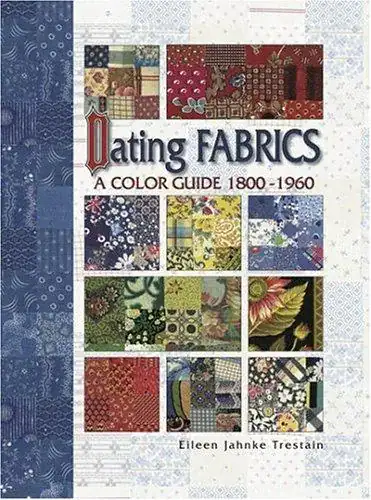
I found some small English hexagon flowers I can’t wait to share with the Study Groups I attend. They were individual flowers, perhaps cut from a top. But the predominant color is a deep purple, of the shade and feel of the 1830-1850 era in the Trestain book. The lights are pale and soft, and soft to the touch, so unlike others I have had. The seller gave me one approximate date, but I’m curious to see what others may think. These, too, were Irish in origin.
I branched out an bit and spent quite alot of time talking to the vendors of French fabrics, and ended up shipping home an assortment of vintage French toiles; both panels and remnant pieces. A red wool block printed shawl will live in my collection for awhile. I can see it swirled around the base of one of Paul’s decorated feather trees at Christmas-it has a bit of minor damage, but, so do we all! Some vintage Povencal fabric yardage also ended up catching my eye, so that was added to the lot. Leaving the barn where most of the fabric dealers were at the Newark Antique Fair, I spotted “an old friend” and ran for it, literally. I love the “toasty” colors and hung over a fence was a “cot-sized” copper madder wholecloth quilt (or comforter) from France, so said the lady. It is being shipped, so I won’t have it to stroke for about 6 weeks, but the color was incredible. The stitching was large, again, usually just to hold the layers together, but I think that piece will be very happy living in my “studio.” Most of the French quilts I admired seemed to have this larger than I am accustomed to quilting stitch, and, were often wholecloth. Whether this was the norm, or was just what I was noticing, I’m not sure.
There were also a few dealers with Durham and North Country quilts who were so happy to show their goods and answer all my questions. They all seemed delighted to “talk quilts.” And were knowledgeable in dating according to fabric, quilting designs, etc. Real quilt scholars among the many antique dealers who had a quilt or two scattered among other goods, labled “Nice Early Quilt,” just like here at home.
Vintage trims and embellishments and ribbons were hand carried home and some are already up in the shop for people in search of such items for crazy quilts. I was fortunate to find more of the Kensitas Flowers woven ribbon tobacco silks that people have been asking for since I brought back the last ones. Used in the 1900s as premiums in tobacco packages, women of the day sewed them together to make pillow coverings and to embellish crazy quilt items. The flower series are especially lovely. These were made in the Coventry area of Britain, by the people who made the Cash’s name ribbons, I believe.
My two favorite gifts to myself included a small, 3″ round spool box with ivory portals for the thread to come out of and a small pincushion on the top, made of cedarwood. This is a sweet addition to my thread holder collection. And, on our last day, we stumbled into a most unusual shop called, “Mostly Boxes” in Windsor, which was just that. In there I found a wooden “sewing turret.” Similar to the spice turrets, it is a cylindrical stack of 4 -one inch high compartments that screw together,one on top of the other, with a finial on top. One compartment holds a thimble, one a divided reel for threads. The others would hold pins or wax or rubies or wishes-whatever you wanted. The terrific patina of the wood only encourages more stroking!
Our trip included London, where most antique shops have left; the Cotswolds, which are pure magic; and north to the Lincoln/Newark area where the Swinderby and Newark Antique Fairs bring out over 7000 vendors in a hectic 5 day period. I tasted every local brew (Roarin” Meg was my favorite lager), longed to stay abit in each thatched cottage, walked among “antique and not so antique” offerings from sun-up to beyond sundown without a blister as I finally splurged on a great pair of hiking shoes. Paul is getting better on handling the roundabouts and I’m getting to be a better passenger on the left side of the car. (Meaning I don’t continue to lean desperately toward the center of the car yelling, “You’re going to hit the wall, tree, the parked car!). They haven’t yet straightened out those wonderful, meandering, narrow back roads, so 30 miles doesn’t mean 30 minutes as it does here in the States. But, I’m ready to go again! Anyone who wants more specific info on anything, just e-mail me.
Nancy Hahn, newly retired Pediatric Physical Therapist who is having special “retired from the school system” T-shirts imprinted with, “Every day’s a Snow Day.”
Date: [date unknown] | From: <mreichattglobal.net>
I am really in search of the 19th century inspiration for making crazy quilts. So far, we have seen fund raising, and the San Francisco quilter who thought that the military wives at the frontier forts who started crazy quilt mania. The twentieth and twenty-first century attribution has always been the Japanese influence at the Centennial Exhibition that began the craze. (I have yet to find that theory professed.) The following theory is similar to the first poem I submitted a few weeks ago. Just a thought, in the nineteenth century the word crazy was used. Sometimes, people would, also, say insane. The twentieth century words were senile or dementia. Today, the more common term is “altered mental status.” I wonder if crazy quilt mania hit today; it would be called the altered-mental-status quilt! sue reich
Chester Times Chester, PA. May 7, 1884
What a Crazy Quilt Is.
The new crazy quilt made by lady friends of Company B for the coming fair, has been on exhibition in the Broomall’s store window for the past day or two, where a large number of people have viewed it. The design and workmanship is exquisite and many have been the expressions of delight from passers by. Yesterday an old lady approached the window, adjusted her glasses, and after gazing at the coverlet a while, remarked: “La, me.” They tell me that they call those things crazy quilts, because crazy people make ’em. I didn’t think they could teach ’em sick things.”
Date: [date unknown] | From: “Charlou Dolan” <charloumchsi.com>
One of the things I found out as a published writer is that small town newspapers will usually print “interviews” with you if you send them the “interview” all written out, i.e. they don’t have to find time to interview you. If you send them a photo of something interesting (as opposed to a head shot of somebody), they will sometimes even include that.
As you probably know, it is much, MUCH harder to get a newspaper to actually interview you.
Charlou
Date: [date unknown] | From: “Charlou Dolan”
I was off the list for a couple of weeks so don’t know if anyone has posted this information before me.
The Dutch Doll/Girl looked much like the original girl on the Dutch Cleanser box. She was pictured sideways, like Sunbonnet Sue, but she was always walking and she wore a dutch hat on her head rather than a sunbonnet. Also, now that I think of it, she wore wooden shoes. It is quite possible that the original design was taken from the cleanser box. I think someone designed a Dutch Boy to go with it, too.
Somewhere in my boxes waiting to be unpacked, I’ve got a sheet that shows the history of Sunbonnet Sue and other designs of her type. Some were made to be appliqued, and some embroidered, and some a combination of both.
Quilter’s World specializes in Sunbonnet Sue and similar patterns. I’ve never seen that particular magazine on a newsstand anywhere, so I think it may be subscription only. They do have a website www.quilters-world.com, but I don’t know if it contains information about their books and articles about Sunbonnet Sue. They do have a “Questions?” box to click on, so you can probably get all the info you need on the Dutch Girl/Doll and any related patterns you’re interested in.
The company that publishes Quilter’s World is House of White Birches, and they also publish a lot of books of Sunbonnet Sue (and similar) patterns.
Charlou
Date: [date unknown] | From: diane shink <dimacquiltsympatico.ca>
Dear Debby I sent you information re the FARM LIFE QUILT BUT the mail bounced. I saw a time span personalized Farm Life quilt in June at a show of New Brunswick , Canada , Quilts It was made over a span of 40 years while the mker was in Africa. I could get the makers name if you are interested. Diane M shink, AQS Certified Quilt Appraiser
Date: Wed, 27 Aug | From: KareQuilt
I stumbled across a hard bound book (8 1/2 x 11) printed 1984 of the Bi-Centenial of Methodism in Bloomingburg, New York, area. Excellent condition and 376 pages. Much of the book consists of printed newspaper articles with photos that included an October 19,1977, newspaper article about two quilts the ladies of the church had made — hence I bought the book (for a mere $5.00) hoping there might be more references to quilting that might interest someone who is doing research in that area of the country or research about ladies auxillaries and quilting. <g> The book also contains some church membership and cemetary lists, etc. Good genelaogical resource for that community. Anyone interested in it may have the book for cost plus postage.
Here are the chapters titles:
Chapter I – 200th anniversary of Methodism Chapter II – The Community Church of Bloomingburg (Methodist) Chapter III – Bloomingburg Churches: Associated Reformed Church; Reformed Dutch Church; Pleasant Valley Methodist Church; and Our Lady of the Assumption R.C. Church.
Chapter IV – The Village of Bloomburg and the surrounding area Chapter V – Burlingham Chapter VI – Bullville Chapter VII – Roosa Gap VIII – Organizations pf tje Bloomingburg Community (10 listed) IX – Cemeteries (8 listed) Chapter X – The Records of the Bloomingburg Methodist Episcopal Church (The Community Church of Blomingburg) Marrriages; Baptisms; Membership
Email me privately if you are interested in the book.
Karen Alexander
: Re: Quilts sighted on UK trip (long)
Nancy – you don’t mention Welsh quilts so I wonder if you got round to those on your travels? There’s an excellent collector and dealer (she’s American, actually!) called Jen Jones whom you might find it worth visiting next time. You can find out more on http://www.jenjones.co.uk/ Best wishes, Celia Eddy
> I’ve just come back from a most wonderful leisure/buying trip to England > and the best part of it all was the number of quilts and quilt related > items
Date: Thu, 28 Aug 2003 | From: “Sharon’s” <sstarknni.com>
Sue,
I believe, given the context, that “Onida” was probably a mis-transcription of “Ouida”, one of the most famous of Victorian novelists. Ouida was the pen name of Marie Louise de la Ramee, (1839-1908)
Sharon Stark
Date: Thu, 28 | From: “Charlotte Bull” <charloumo-net.com>
Many quilt magazines do have a column where you can send in (far in advance!) info re Quilt Shows. They’d accept info from Museums as well as quilt guilds! It would behoove Museum curators, pros or volunteers, to peruse these magazines! Actually, I would be willing to check all (I might as well use my time and my collection of magazines) and compile a List with names, addresses & preferred requirements for Show Listings, if a member of QHL wants it! Contact me privately charloumo-net.com
DO NOTE THAT I AM THE OTHER CHARLOU ON THIS LIST! I just wrote to her! It was so amusing to read letters written by my other self! But I am the other one who sometimes mentions the Ozarks! Charlie in MO
Date: Thu, | From: “Sherry” <smasseyok-history.mus.ok.us>
I would like everyone to know that the Oklahoma Museum of History is currently planning an exhibit entitled “Hidden Stories” that will open November 7. We will feature 16 quilts from our permanent collection. Although it is a small exhibit and we are suffering from severe budget constraints (hence in-house produced graphics, etc.) we have some wonderful quilts. This is a preview of the larger exhibit that will be in our new facility due to open in 2005. We are planning an opening reception from 5:00 to 7:30 that same day, the 7th of November. If any of you are in this neck of the woods, we would love to meet you.
The Oklahoma Museum of History is located at 2100 N. Lincoln Blvd. in Oklahoma City. We are directly east of the state capitol building. Lincoln Blvd. is easily accessible from I-44. With today’s internet mapping capability, it should be no problem getting very specific directions for anyone that is interested. Of course, as the time for the exhibit draws nearer, I will gladly help anyone that needs it. Once again, the title of the exhibit is “Hidden Stories”, reflecting the social history of quilting and the women who made them. It will be a small exhibit, but will be a preview of a more comprehensive textile exhibit in our new history center due to open in 2005. The new history center exhibit opening in the future will also feature a database composed from the Oklahoma Heritage Quilt project done in the 1980’s. Over 4000 quilts and their histories are included in the database that has been compiled by the Central Oklahoma Quilters Guild. Unfortunately, we will not be able to include it in our small November exhibit. We would love to see one and all in November. Please contact me personally at smasseyok-history.mus.ok.us if you have any questions.
Sherry Massey Registrar Oklahoma Museum of History
This article from NYTimes.com has been sent to you by candaceschwenkfelder.com.
Interesting article regarding that Shelburne exhibit…hmmm…Candace Perry
candaceschwenkfelder.com
Folk Art Paradise Springs Back to Life
August 29, 2003 By GRACE GLUECK
The Shelburne Museum in Shelburne, Vt., the most awesome folk art phenomenon in the United States, has a new show that is quilt-lovers’ heaven. Click here to read.
: my UGRR dilemma 2003
On September 6 in New Milford, CT., there will be a walking tour of the UGRR stops in New Milford, CT. Eight stops are on the tour including the homesteads of quiltmakers that I have personally conducted quilt history research on. Have a look at the tour for yourself at www.aacaa.org. Our local newspaper has a two page article about the tour. Executive director, Deborah Calhoun states in the article “The Underground Railroad or Freedom Trail, was a way…enslaved freedom seekers used to escape slavery. …..It was a very clandestine undertaking,” Ms. Calhoun said. “The skill of the freedom seekers’ success was in creating and understanding codes – in songs and spirituals, codes in quilts that hung in windows… that then led them to a barn or tunnel.” Since I plan to attend this tour, any suggestions on what my response should be when the quilt thing comes up?” Help! sue reich
Date: [date unknown] | From: Gail Ingram <gingramtcainternet.com>
> Since I plan to attend this tour, any suggestions on what my response should > be when the quilt thing comes up?” Help! sue reich >
Suggestions offered humbly from Louisiana, where the Governor’s Race is heating up and the heat and humidity has us all cranky:
1. Send copies of research to the writer of the article. Include a cover letter that has short sentences, include phrases like “conclusively.” and “beyond question,” and volunteers to provide materials of which the writer was unaware and which would provide “the other side.” Newspaper folks believe short sentences and occasionally feel obliged to present dissenting views.
2. Send same to director of tour. Volunteer to provide review of scholarship along with summary statement that the group may copy and offer tour members. Suggest to him/her the lack of historicity might make tourgoers take the wonderful work he/she has done less seriously. Suggest this politely and with wilyness. Make clear that such scholarship reinforces the difficulties of the escape undertaking and the intelligence and determination of the slaves, rather than diminishes them.
3. Write a letter to the newspaper.
4. Send copies of #1 to all the social studies teachers you know in the district.
5. Have other guild or AQSG members in area write the newspaper and tour sponsor. We Americans tend to believe in numbers, which is how this story has gotten so far anyway.
6. Sit back, drink something cool (and frisky). You have done your duty. Clio will be proud of you.
Gail
Date: Sat, 30 Aug 2003 | From: aol.com
Another suggestion: see if you can send the information from the New Jersey Historical Society (I think that’s the place) where the director has thoroughly debunked the quilt code. The scholarship is impeccable.
You also might wish to offer your expertise to the tour organizers on the grounds that you’ve already researched the histories of the quilters in the houses they’ll be featuring. Working *with* them rather than against them can’t hurt.
Hope this helps – good luck!
Karen Evans
Date: [date unknown] | From: Judy Schwender <sister3603>
I copied this from a previous qhl posting. You can find what you need at the website at the very bottom.
Gail’s suggestions as to a plan of action are excellent. Offering to work WITH rather than objecting from the sidelines is key.
Good luck!
Judy
If anyone would like to write to Giles Wright to encourage him to publish his arguments disproving HIPV in more places, I found all his contact information, printed below.
Giles R. Wright, Director, Afro-American History Program
New Jersey Historical Commission Staff Telephone: (609)984-3464 E-Mail: giles.wrightsos.state.nj.us. … www.state.nj.us/state/history/staff.
I found it ironic that someone on the other “listserve” I belong to, sponsored by ALHFAM (Association of Living History Farms and Museums) should bring up the subject of HIPV at the same time we were disussing it. He was bemoaning the fact that so many educators have bought into this book, building curriculums around it, and thereby further embedding it into the mainstream of education.
The only reason I bring this hot topic up one more time is to pass on to whomever is interested, the website he gave, where a very thoughtul critique was written by Giles R. Wright, director of the Afro-American History Program of the New Jersey Historical Commission.
http://historiccamdencounty.com/ccnews11_doc_01a.shtml
His critique of HIPV is here (click on the thumbnails
Date: [date unknown] | From: Barbara Robson
Has anyone seen the new 2004 Quilt Engagement Calendar by Laura Fisher and Stella Rubin, published by Barnes and Noble? I have looked through the 90 plus listings for calendars on the Barnes and Noble website and it is not listed there nor is it listed by the authors names, Stella Rubin and Laura Fisher.
Thanks Barbara Robson Fox Point, Nova Scotia
Date: [date unknown] | From: “Judy Kelius (judysue)”
I don’t think it has been published yet – neither Laura or Stella have it on their web sites. I wrote Stella to find out what’s happening with it.
Date: [date unknown] | From: “Judy Kelius
If anyone has a copy of this book to sell, please email me privately at judysue.
The PA Quilt Museum just acquired the quilt on the cover of the book and I can’t find a copy anywhere to display with the quilt!
Thanks!
Judy Kelius Coordinator, PA Quilt & Textile Museum, Lititz, PA
Date: [date unknown] | From: “Sally Ward”
Hi Judy Anne
Your message caught my eye because I have only just received the most recent of a regular recurring enquiry – about a quilt made using ‘scraps of Queen Victoria’s dress’. I’ve never been able to find anything to verify this assertion, although that is not to say that it is not true….it would be like looking for the proverbial needle in the haystack to get provenance for a quilt with a family name and link that name to someone in Victoria’s employ, or close enough to get hold of such fabric. Our Royals have always been notoriously thrifty in strange ways (soap from visiting guests was not discarded but re-cycled etc.) so it is quite possible that it happened, but of course unverifiable.
I hope poor Victoria, with only rags to wear because everyone was using her wardrobe for quilts, will get a mention in your piece <G>
Sally W Yorkshire, UK (see examples below)
These are thumbnails, click on them to see them close up <table border=”0″ width=”100%”> <tr> <td align=”center” width=”100%”> <img alt=”1.jpg (42954 bytes)” border=”2″ height=”69″ src=”images/1_small.jpg” width=”100″/> </td> </tr> </table>
Date: [date unknown] | From: “Fawn Valentine”
Re what Serena Wilson told her audience in Lewisburg WV in February of this year, Jackie Tobin was an assistant professor, not assistance professor. Also, I forgot to put in the part that the Code quiltmaker’s husband was a preacher and a blacksmith, so he traveled to other plantations as well and could spread the UGRR message. While preaching he lapsed into an African language which the white people thought was speaking in tongues but the black people understood. Both the Code quiltmaker, Eliza Farrow, and her husband, Peter Farrow, were black and were slaves. I am not sure if the plantation in Edgefield, SC, that Serena talks about, owned by her white grandfather, David Strother, is the plantation where the Farrows lived.
Fawn Valentine in ‘West Virginia
Date: Mon, 1 Sep | From: AmyOKorn
In response to Judy Anne’s request for further documentation on Elizabeth Keckley (the slave who supposedly bought her freedom with her needlework skills), I have come across her story in several books: One of her quilts is pictured and some information given in The American Quilt (Kiracofe), Gladys-Marie Fry quotes James E. Newton in “Slave Artisans and Craftsmen: The Roots of Afro-American Art” and makes reference to Elizabeth’s 1868 autobiography, Behind the Scenes and Kyra Hicks gives several references to Elizabeth’s story (including Cuesta Benberry’s Always There: The African-American Presence in American Quilts and Ruth Finley’s Old Patchwork Quilts and the Women Who Made Them quoted by Ricky Clark in Uncoverings 1995). The Lincoln Quilt was once in Finley’s personal collection and is now in the Kent State University (Ohio) Museum.
Date: [date unknown] | From: “Julia D. Zgliniec”
Dear QHL,
There is also mention of Elizabeth Keckley, with a portrait and picture of quilt made from the dress scraps of Mary Todd Lincoln in:
Ferrero, Hedges, and Silber (1987). Hearts and Hands: the Influence of Women & Quilt on American Society. The Quilt Digest, San Francisco. Pg 76,77.
ISBN 0-913327-15-8
Regards,
Julia Zgliniec
Date: [date unknown] | From: “Bobbi Finley” <bobbi_finley>
I was at our local Barnes & Noble last week (which also happens to be the College of William and Mary bookstore) and inquired about the Quilt Engagement Calendar. The young man did find a listing in their computer with the following ISBN number 0760740372 and lists B&N as the author/publisher. He suggested I go the the B&N website. Just thought I’d let you know that there is an ISBN # and it is in the B&N computer. Perhaps the calendar will be along shortly.
Bobbi
Date: Mon, 1 | From: “jajb” <anne_j>
Here are some online resources:
http://www.culver.org/news/quilts.asp Barbara Brackman
http://www.antiquequiltdating.com/ugrr.html Kimberly Wulfert
http://historiccamdencounty.com/ccnews11_doc_01a.shtml Giles Wright’s Critique of HIPV (had you found this page?)
> Lest it be lost in this long message, my question is—is there anything > published which refutes the quilt history part of HIPV? >
Date: [date unknown] | From: “Maurice Northen” <3forkshighstream.net>
I just now found a seller on E-bay listed as DISCOUNT CALENDARS who is currently selling the 2004 quilt calendar. She also has a store, and shows that she will sell multiples. Try it. Joan of the South
Date: Mon, 01 | From: Judi Fibush <judifibush.net>
Joan,
If the one I found on eBay is the same as yours, it is not written by Laura Fisher and the other author.
Juid
> >
Date: [date unknown] | From: “Judy Kelius (judysue)” <judysue>
The one on eBay is a wall calendar. There is supposed to be a new Quilt Engagement Calendar with antique quilts, edited by Stella Rubin and Laura Fisher and published by Barnes & Noble – Stella is trying to find out when it will be released.
At 03:07 PM 9/1/03, you wrote: >I just now found a seller on E-bay listed as DISCOUNT CALENDARS who is >currently selling the 2004 quilt calendar. >She also has a store, and shows that she will sell multiples. Try it. >Joan of the South > >— >You are currently subscribed to qhl as: judysue. >To unsubscribe send a blank email to leave-qhl-1444947Y
Date: [date unknown] | From: “Alice Kober”
In reply to Fawn’s request for information on the false claims about quilts and the Underground Railroad, these are some websites I discovered when I did some recent research. I know many of you have explored this topic in depth, but hope some of this is information you don’t already have. Alice Kober apkober
http://www.fortunecity.com/victorian/magenta/14/id16.htm
> The author of the website for Hart Cottage Quilts presents arguments against the idea that quilts were used as codes for runaway slaves, supporting the argument with quotes from several historians who doubt the story. The author shows examples of the different quilt designs supposedly used along the Underground Railroad and discusses how some of them weren’t yet created during the days of slavery.
>
> http://archiver.rootsweb.com/th/read/UNDERGROUND-RR/2002-03/1017160716
> Historian Christopher Densmore, Curator of the Friends Historical Library at Swarthmore College, states that the idea of quilts being used as secret signals to runaway slaves is implausible and presents numerous reasons why he does not support the theory presented by the authors of Hidden in Plain View.
>
> http://www.antiquequiltdating.com/ugrr.html
> Kimberly Wulfert, PhD, begins her article, “To many of us, the use of quilts as messengers on the Underground Railroad (UGRR) is a myth. It cannot be proven through recorded historical documents or defendable oral history.” She goes on to discuss why she discounts the theory.
>
> http://historiccamdencounty.com/ccnews11.shtml
> Historian Giles R. Wright, New Jersey’s top authority on Camden’s black history, is cited as “New Jersey’s Underground Railroad Myth-Buster.” He states that fewer than one percent of all slaves went north after they escaped-most stayed in the south. Wright claims that the book presents a very appealing idea, but it is based on “sheer conjecture and speculation.”
>
Date: [date unknown] | From: “Julie Silber” <quiltcomplexstarband.net>
Hello All, Julie Silber here.
Elizabeth Keckley (this is the “official” spelling) wrote an autobiography, “Behind the Scenes, Thirty Years a Slave and Four Years in the Whitehouse” (New York: Arno Press and The New York Times, 1968). In it she does not refer to making a quilt from Mrs. Lincoln’s dresses. But she was definitely a skilled quilt maker.
A color image of Keckley’s wonderful “Liberty” Medallion QUILT is on PAGE 76 of our book, “Hearts and Hands.” On PAGE 77 is a PHOTO portrait of Keckley herself. Both pages have extended captions.
In the body of the text, on PAGE 45: “Some slave women were able to use their needlework skills to buy their freedom. Probably the best known of these is Elizabeth Keckley, who became seamstress to Mary Todd Lincoln. At one point in her life as a slave, Keckly supported seventeen people by her needlework skills, including members of the family of the then-impoverished white owner. In 1855, she was able to buy her own and her mulatto son’s freedom for twelve hundred dollars. The money was lent to her by white society women in St. Louis for whom she sewed, and she quickly repaid it through her sewing skills….”
From one of the captions: “… Later, Keckley employed the needle to further benevolent causes. In her autobiography, she talks about how she [an] got the idea to adapt the concept of the Sanitary Commission fund raisers for her own cause, the Contraband Relief Association…”
______________________________________________________________________
Mrs. Lincoln and Mrs. Keckly I’m wanting to add a little to my myths webpage on the myth of quilts made from the dresses of famous personages.
There is one instance where it seems to be documented but I have learned that just because something about quilt history is in a book or in a museum we still can’t be sure it is true. At http://dept.kent.edu/museum/collection/textiles.html there is a quilt shown saying it was made by Mrs. Lincoln’s dressmaker from scraps left over from making some of her dresses. They site as the authority quilt historian Ruth Findlay. Is this an alternate spelling for Finley?
There is also a book, “Mrs. Lincoln and Mrs. Keckly: The Remarkable Story of the Friendship Between a First Lady and a Former Slave” that I understand tells about Mrs. Keckly making this quilt. I do not own the book so I can’t verify it nor do I know what documentation the book was based on.
I am very eager to hear anything any of you might know about this.
Judy Anne historyofquilts.com
Date: [date unknown] | From: “Jocelyn”
> > Beauregard – General Pierre Gustave Toutant Beauregard, (1818-1893), West > Point 1838, commanded the forces that fired on Fort Sumter on April 12, > 1861. He was one of the heroes of Fort Sumter and was appointed > General of > the Confederate Army.
And Scarlett O’Hara’s first child was named in his honor. <G>
Date: [date unknown] | From: “Jocelyn”
> When DD left home I jokingly gave her a bundle of knicker elastic > which had been in my bits box for years. She asked ‘why on earth…?’ I flippantly > replied ‘because a girl never knows when she will need some knicker > elastic’. Recently she told me how many different uses she had found for > it, and asked for more……………..
Sally, In their youth, my parents purchased a parachute. I have no idea why; neither of them have ever USED a parachute for its intended purpose. But you would be surprised at all the useful things that can be made from a parachute. One of the oddest was a harness for our cat, Ching, so that we could let him out of his cage during a move. 🙂
Date: [date unknown] | From: “Jocelyn”
Today, the more common term is “altered > mental status.” > I wonder if crazy quilt mania hit today; it would be called the > altered-mental-status quilt! sue reich > Sue, ‘Crazy’ comes from pottery, describing a glaze that has minute cracks in the surface. That’s the original meaning of the word, and if you’ve seen a crazy glaze, you know how it resembles a crazy quilt. The application to mental illness came from the idea that the mind was broken, or cracked. 🙂