April 22 – 27, 2006
These restored messages come from the Quilt History List, an online forum where quilt historians, collectors, researchers, appraisers, and enthusiasts discussed antique quilts and related textiles. The archive dates from 1996 through approximately 2016 and is being restored gradually. Sign up in the form at the bottom of the page if you want to know when a new page is added. Original spelling, opinions, formatting, and inactive links may remain unchanged.
Primary topics of this QHL Digest:
- Antique Quilt Documentation Projects — Members compare state documentation drives run by Extension and homemaker groups, with examples from Utah, North Dakota and Maryland. (see the article on state quilt documentation books)
- Starting a Regional Study Group — A Florida member asks how to launch a group, and study group leaders share meeting formats, membership tips and photo etiquette. (see the article on quilt study groups)
- 1904 World’s Fair Redwork — A new member asks for St. Louis fair redwork patterns and gets pointers to pattern sets, crazy quilts and a book reference. (see the article on redwork and outline embroidery)
- Quilts Before 1900 at the Virginia Historical Society — Members share news of the exhibit, its appraisal day and its planned catalog.
- Hmong Quilts Sold as “Amish” — A newspaper series on Hmong women making Amish-style appliqué quilts sparks debate over labeling, value and imports.
- Thread Colors and Ruby McKim Patterns — Members talk about heliotrope and myrtle green in early thread, and one asks for a missing McKim block verse.
- Imports and Plagiarism on eBay — Members compare notes on imported quilts listed as antiques and on copied listings and copied web text.
From: gingham
Beverly, Yes. I couldn’t have answered your question until last night when I got a treasure: A pamphlet titled Antique Quilts of Utah.
“Quilts and coverlets pictured in this publication were selected from throughout Utah to be displayed at the 1977 Festival of the American West at Utah State University. Antique quilt and coverlet shows were sponsored over the state by the College of Family Life and Extension Home Economists.”
It was published by Cooperative Extension Service, USU. “Issued in furtherance of Cooperative Extension work Acts of May 9 and June 30, 1914 in cooperation with USDA.”
Sandra Starley Moab, Utah ~~~~~~~~~~~~~~~~~~~~~~~~~
The Maryland project was initiated in 1988 by the Maryland Association for Family and Community Education (formerly known as Maryland Homemakers Council and affiliated with Cooperative Extension) in connection with their 50 year anniversary. Are you aware of any other state documentation projects that were begun by Homemakers groups? Thanks for your input!
Beverly
Date: Sat, 22 Apr 2006 01:36:10 -0500 | From: Kim Baird
The ND Home Extension agents worked through homemaker’s clubs in 1976 to try and find the oldest quilt in each of North Dakota’s 52 counties. They produced a set of slides, with typed notes, of the quilts they found. Most were Victorian style crazy quilts.
Kim
Date: Sat, 22 Apr 2006 09:25:54 -0700 (PDT) | From: Mary Anne R
I’m looking for help in how to go about starting up a regional quilt study group like those on the Quilt History website.
I am in north central Florida (Gainesville) and have spoken with several quilters who, like me, can’t get enough of quilt history. Most of those in our area guilds are not interested in antique quilts but those of us who are want to get together and talk about nothing but!
Can any of you who are members of existing study groups give us some guidance on getting started?
Thanks.
Mary Anne
From: Lorraine Forster
My dictionary shows: Lloyd’s – an association at the Royal Exchange, London, comprising underwriters, merchants, ship owners, and brokers, for the furtherance of commerce, esp marine insurance. It has published since 1716 “Lloyd’s List”, a periodical of shipping intelligence. Do you think LL could stand for Lloyd’s List and perhaps that town or facility of Chauncey is somewhere in England.
Is anyone familiar with this name? As explained in the message board, a cursory run through of a 1911 Davison’s Blue Book turned up no Chauncey town or textile facility. Possibly this is a manufacturer’s or catalog’s house name. And the use of LL — sometimes seen as longer length in bedding sections of old catalogs or as part of a famous name sheet used by Montgomery Ward. Does anyone know the origins and actual meaning of these initials??
LO CIRCUSVUE
From: Jean Gonzalez
hi, i’ve just joined. i’m jean & i have a home based sewing & design business in richmond, virginia & i specialize in hand sewn repairs of antique quilts.
i find that half the calls i get are for all the things i don’t do – i don’t teach, hire, buy, clean, appraise, or broker quilts or materials – but because i get asked so much i’ve tried to figure out who does, & just in time because an exhibit is running here march 18 – december 3, 2006 called quilts of the old dominion at the virginia historical society, boulevard & kensington, richmond, va 804 358 4901 www.vahistorical.org. the gallery is free on sunday. i haven’t seen the exhibit yet but i go tomorrow. there well be 3 rotations, 20 quilts at a time, now til may 31, june 1 to aug 30 & then sept 1 to dec 3.
there is a gallery walk on may 11 at 6 pm, reduced cost appraisals may 13, a mariner’s compass workshop june 17 & another gallery walk nov 8. i know everyone on this list is not in or near virginia but if you are in our area anytime this year pls try to see the exhibit.
in conjunction w/the exhibit there will be a table of quilt related resources & services so people are welcome to send info to the museum. it’s a table so it needs to be written info. i’ve been distributing info on the exhibit locally & trying to let virginia quilt related service providers know abt it. i’m afraid i’ll be deluged with requests for appraisals (which i don’t do) after the appraisal day next month so i am talking it up as much as possible.
if you have friends in virginia who would enjoy this exhibit or benefit from having their info on the resources table pls pass the info on to them. if you come to the exhibit pls let me know. i live in the neighborhood & i’ll want to ask & see if you can come for tea. jean gonzalez, CRAZY QUILT Hand Sewing & Design richmond, virginia richmondseamstress
Date: Sat, 22 Apr 2006 21:53:38 -0400 | From: Rhonda Desgranges
Hi! I am a new member. I love to do redwork, especially older patterns. I saw once a long time ago that some one had patterns for sale of a redwork quilt that had scenes from the 1904 worlds fair. I am interested in finding line drawings or patterns of scenes of the 1904 Louisiana Purchase exposition (world’s fair) in St. Louis, MO. Or does any one know if there is a site where I can see examples of quilts that were done at this time? I could maybe draw some of the blocks. Does anyone know where I can research this subject?
Just a brief note about myself: I am from southeast Missouri. Married for 3 1/2 years. Have 2 kids: a basset hound 12 yrs old (Wrigley) and a yorkie 2 years old (Gidget or Gobblehead). I am an RN with a cardiac/intensive care/ER/administrative background. I am currently recovering at home from a second stroke which has left my left side weak. I am left handed. I am using my redwork as part of my physical therapy. I am slow, but my stitches are improving. I used to quilt and sew all the time, but I am just now beginning to try and sew again.
I hope that I haven’t rambled on too long. I just wanted you all to get to know me. Any correspondence about quilt/redwork history would be greatly appreciated. If any one would be interested I do have some old patterns for redwork, and some of the Kansas City Star patterns.
Thank you for your time!!!
Rhonda D. (wigglypup)
From: Pat Cummings
A press release for the new exhibit at the Virginia Historical Society appears here:
http://www.quiltersmuse.com/Virginia%20Historical%20Society%20exhibit.htm
Pat Cummings
Date: Sun, 23 Apr 2006 10:53:28 EDT | From: Mitzioakes
Good for you! Sorry to hear about your physical problem, but I bet working with redwork will improve a lot. I love redwork too. Will try to look thru my patterns (no easy task since I am a collector bar none!) to see what I have in redwork (or blue and green like I do a lot). Keep up the good work Mitzi from Vermont where it is finally raining!
From: J. G. Row
Mary Anne,
I started the Studio Quilt Study Group in NJ about 4 years ago. I started by just posting to QHL and asking anyone who was interested in attending such a group to get in touch with me. New QHL friends told non-computer-friendly friends and now my e-mail notification list numbers around 50 people who come to meetings and special events from NJ (of course), Penna., NY, CT, VT, MD, DE, VA and even LA, TX and once, from Great Britain — hi Audrey! MA keeps promising, but hasn’t made it yet. You could also put up notices for a first meeting at your local quilts shops and in guild newsletters. Perhaps your quilt shop could even give you a meeting room.
We usually meet at my home, where I can set up two large folding tables with chairs all around (usually 16 is the limit, but we’re willing to to cram more in if they come). We meet on the third Tuesday of the odd numbered months. And we usually just flap quilts.
A number of us are “One” with our cameras, and our general rule is that photos are allowed. But be sure to let folks know that if they don’t want their quilt or quilts photographed all they have to do is say, “no photos please.”
We meet from 10 AM until 3 PM with a break for lunch. Usually someone brings salad, someone brings dessert, and we call out for pizza or sandwich delivery — or someone makes something hearty (rare). The hostess always provides tableware and liquid refreshment. Some with dietary restrictions bring their own lunch.
Usually, with suggestions from the regulars, we have a focus at every meeting, but everyone also brings whatever else they want to show. We are fortunate that many of our members have very deep collections and are willing to share. Our meetings have focused on colors individually, pieced quilts, applique quilts, quilting and sewing tools and ephemera, periods of quilt by 25 year era, spectacular quilting or the lack thereof, and our last meeting focused on one-patch quilts. Three times we’ve had special displays by our members of their own work — guest artist of the day, so to speak. Our next (take notice all you SQSG regulars) on May 16th will focus on signature quilts. Cheater cloth in quilts is another good focus that we’ll put on our agenda.
I have two spare bedrooms and sometimes our long distance attendees will stay overnight, usually coming the day before.
We’ve taken lots of field trips on meeting day to museums and historical societies who, with plenty of advance notice, bring their quilts out of storage to spread out on their tables for us. Often they are eager to have our input because although they may be trained in museum studies, they know very little about their textile and quilt collections. Our numbers usually double when we take our field trips, but we find that more than 30 gets too crowded (and noisy!)!
I know that some study groups are more structured than ours, and even give reading assignments, but with our group when something interests someone they will go off and find out more about it on their own and then share their findings, or ask the others what they know. You will find that your members areas of expertise and interest vary, but not over too wide a spectrum.
I hope you get more answers than just mine, because I think all the study groups that I read about on QHL operate a little differently. Pick and choose from among us all those practices that satisfy your group’s interests.
Good luck, and I hope you have a “Cinda” who will write about your meetings for all of us on QHL.
Judy, now in Flemington NJ aka The Ringoes Kid judygrow
> I’m looking for help in how to go about starting up a > regional quilt study group like those on the Quilt > History website. >
Date: Sun, 23 Apr 2006 14:10:57 EDT | From: RAGLADY
I so enjoy the QHL but as a non-researcher (except for my own knowledge/pleasure), I have very few ways to contribute to the list.
But with reference to the above subject, I can perhaps “give back” a little for all the wonderful info/help I’ve received here by posting a message on my Y-Groups CyberQuilters general quilting list… 1,800 plus members from all over the world who range from beginners to teachers and designers.
For those who are interested in starting up a group or “growing” their current group, email me directly – raglady .. Please use as similar format to the one Judy has in her previous message (quoted below). 1) You must give an email address so those interested can contact someone involved in your study group that can provide information/details. My group is restricted (must have approval to join) so messages /files/etc are available only to members – not to the general public.
2) Please give the name of your group and where it is based; how many members there are currently; what general regions your members are from; how often meetings are held and for how long; any refreshments served at meetings?? and other info you feel is pertinent. As Joe Friday would say: Just the facts, mam.
I’ll save and hold any responses I receive for abt two weeks. That way I can do one message to my list with compiled information. I will also put a copy of the compiled info in the list Files for future reference. We have info there already on various quilt guilds in the U.S. and Canada.
Hope this will help increase membership for some of the quilt study groups. Judy G – when you have time could you send me a description about quilt study groups re their focus/discussions/purpose/etc. Thank you…
Gloria raglady
JudyGrow wrote: I started the Studio Quilt Study Group in NJ about 4 years ago. I started by just posting to QHL and asking anyone who was interested in attending such a group to get in touch with me. New QHL friends told non-computer-friendly friends and now my e-mail notification list numbers around 50 people who come to meetings and special events from NJ (of course), Penna., NY, CT, VT, MD, DE, VA
Date: Sun, 23 Apr 2006 14:26:33 -0400 | From: Judy Kelius
Today’s Allentown Morning Call newspaper’s cover story is Part 1 of a huge 4-part series entitled “How a hill tribe from Laos changed a Pennsylvania tradition.” The story is primarily about Laotians in Lancaster County and other areas of the US and the part they play in making new quilts sold in Lancaster County – Emma Witmer, owner of Witmer’s Quilt Shop in New Holland – is a primary player in the article. The good news is that the ENTIRE ARTICLE IS AVAILABLE ON THEIR WEB SITE – WWW.MCALL.COM. There are quite a few photographs that you are supposed to be able to view in a window with sound, but for some reason I am unable to get the photos to load. (But found if I click on “purchase photos,” I can see the photos in color but without captions.)
I found the article a bit confusing since most of the text dealt with Laotians in the US but a number of the photos were of Loations in Laos making quilts for export to the US. I’m looking forward to reading the rest of the series, which will run this week. Also, on Tuesday there will be a chat session with Jonathan Holstein and on Wednesday one with Peter Seibert (Director of the Lancaster Heritage Center). The author and photographer will be in a chat on Thursday.
Be sure to check this one out! A MUST SEE for anyone interested in quilt history and contemporary quilts.
Date: Sun, 23 Apr 2006 15:10:54 -0400 | From: Barb Garrett
Hi Judy –
Thank you for the wonderful link to the Allentown, PA, article on Hmong/Amish/Mennonite quilting in Lancaster County. I’m so glad I got to read it. When I went to the pictures, I got a message that I needed to install Flashplayer 7.0, and my live-in IT guy walked me through the steps to install it, and the pictures/sound then worked. I don’t know if that will help — the narrative explains why there are overseas pictures. According to the narrator, missionaries taught them to quilt in 1971, and “everyone” quilts, with many quilts coming to the US to be sold. Thus, when the people started coming to this country, it was natural for them to use their applique skills to earn a living.
I’m so glad you shared this — thank you.
Barb in southeastern PA
Date: Sun, 23 Apr 2006 19:17:57 -0500 | From: Jean Carlton
Mary Anne – about forming a study group …..Just get together – how ever few of you there are- and you won’t be short of conversation, I’m sure. Set a date for the meeting and have each person bring a quilt to share (or vintage fabric or a photo of an old quilt they love) – talk about those quilts and share observations and knowledge…..get to know one another and discuss what you might be interested in doing or what goals each of you have for this group. See if there are any special areas of interest. Discuss how often you’d like to meet and set the next date. An idea for the 2nd meeting is for each to bring a favorite book or two that relates to quilt history – and maybe a list of what other books they own so you will know what resources you have among you. The important thing is just to start – the organization of it will grow and evolve as you continue to meet. You may want to advertise the date of this first meeting with a flyer at a local quilt or fabric shop or mention it at your guilds. Even if you don’t think anyone there is interested, there might be some you are not aware of . Even a very small group can be educational and so much fun. Someone bring a camera! Have fun jean
Date: Mon, 24 Apr 2006 10:16:26 -0400 | From: Pepper Cory
Hello friends, My two sisters just checked in and said yes, they plan to come to the Houston Quilt Festival (November 2-5) and oh by the way, could I reserve the room for them? Hmmm…if there were any! Anyone know of rooms they’d formerly reserved but might be letting go? Am hoping for the Hyatt, the Hilton, or the Holiday Inn Express near the convention center. Just keep me in mind-Thanks! Pepper Cory ——=_NextPart_000_009F_01C66788.2510D0B0
Date: Mon, 24 Apr 2006 13:26:58 -0400 | From: Teddy Pruett
<<Good luck, and I hope you have a “Cinda” who will write about your meetings for all of us on QHL.>.
I can tell you that the gal who asked the question about forming study groups is my pal – and I will definitely be part of this group if we can get it off the ground. Mary Ann is extremely knowledgeable – a sewing machine expert and collector – as well as eloquent. She would do a magnificent job of reporting. But if she doesn’t, I want to be Cinda! (Doesn’t everyone want to be Cinda??)
Teddy Pruett I wanna be Superwoman when I grow up – and live in Colorado. www.teddypruett.com
Date: Mon, 24 Apr 2006 16:19:47 -0500 | From: Andi
In the process of assembling the next issue of Pieces of Time: A Quilt and Textile History Magazine, I’ve been privileged to have access to an amazing collection of mid-to-late 19th century thread trading cards. I was immediately struck by some of the colors represented on a J&P Coats card advertising “Best Six-Cord Thread, expressly adapted to Machine Sewing.” Some were color names we use today – white, black, brown, slate, dark slate, blue, navy blue, green, dark green, royal blue, scarlet, cardinal, garnet, rose, pale rose, sky, robin’s egg, cream, orange, plum, old gold, fawn, sage, tea, copper and olive bronze, pearl grey, ecru, cadet blue, terra cotta. And then there were these colors also listed: seal, drab, myrtle, Rembrandt, dregs of wine, linen drab, heliotrope, prune, pistache (not pistachio), Venetian, mastic silver, dark pheasant. These latter names’ placement in the line-up of common color names was not a clue to their hue; linen drab was positioned between dregs of wine and rose; pistache was between prune and Venetian; dark pheasant was between ecru and cadet blue, which was followed by terra cotta. I know we can all make reasonable guesses about these thread colors; I just thought the names were interesting. Here we are, nattering on about cheddar and poison green and not a mention in this thread card, anyway. Heaven knows the color industry has always been adept at creative names for colors. (And what must light pheasant have been?)
Andi in Keota, Iowa
Date: Mon, 24 Apr 2006 14:07:33 -0700 (PDT) | From: Rhonda Desgranges
Connie! Thank you for the information!!! I went to college in St. Louis: Forest Park, SLU and Webster. I lived there from 1978 through 1995. I lived in South St. Louis-Gravois/Hampton area. Remember the flood…
I will definitely look up you information sites, and hopefully I will be able to get those patterns. We went to the Muny opera in 2004, to see Meet Me in St. Louis. It was great! I do miss all the things to do in St. Louis. Poplar Bluff is150 miles south of St. Louis. Occasionally, we go up there. My husband has some tickets to a few Cardinal games, and we will be going up for a few days in June and August.
Thanks again!!! Keep in touch Rhonda
Date: Mon, 24 Apr 2006 20:01:26 -0400 | From: Lucinda Cawley
How come I’ve never heard of Pieces of Time: A Quilt and Textile History Magazine? Information please, Andi. Cinda on the Eastern Shore
Date: Mon, 24 Apr 2006 21:45:20 -0400 | From: joan kiplinger
Andi — myrtle green [ a lovely muted soft moss green] and heliotrope [color of the flower] were also popular colors in the 1920s-30s.
Andi wrote:
n the process of assembling the next issue of Pieces of Time: A Quilt and Textile History Magazine, I’ve been privileged to have access to an amazing collection of mid-to-late 19th century thread trading cards. I was immediately struck by some of the colors represented on a J&P Coats card advertising “Best Six-Cord Thread, expressly adapted to Machine Sewing.” Some were color names we use today – white, black, brown, slate, dark slate, blue, navy blue, green, dark green, royal blue, scarlet, cardinal, garnet, rose, pale rose, sky, robin’s egg, cream, orange, plum, old gold, fawn, sage, tea, copper and olive bronze, pearl grey, ecru, cadet blue, terra cotta. And then there were these colors also listed: seal, drab, myrtle, Rembrandt, dregs of wine, linen drab, heliotrope, prune, pistache (not pistachio), Venetian, mastic silver, dark pheasant. These latter names’ placement in the line-up of common color names was not a clue to their hue; linen drab was positioned between dregs of wine and rose; pistache was between prune and Venetian; dark pheasant was between ecru and cadet blue, which was followed by terra cotta. I know we can all make reasonable guesses about these thread colors; I just thought the names were interesting. Here we are, nattering on about cheddar and poison green and not a mention in this thread card, anyway. Heaven knows the color industry has always been adept at creative names for colors. (And what must light pheasant have been?)
Date: Tue, 25 Apr 2006 09:01:05 +0100 | From: Sally Ward
> heliotrope [color of the flower] were also popular colors in the 1920s-30s.
Ah! I suddenly heard my grandmother’s voice saying it, just like the way a smell can bring a memory back! She was also fond of Petrel Blue, which as a child I always thought was Petrol blue
Sally W
Date: Tue, 25 Apr 2006 08:13:05 -0400 | From: Lucinda Cawley
A friend will be visiting in Ashville, NC at the beginning of May. Suggestions for quilt shops/quilt related events please? Cinda on the Eastern Shore
Date: Tue, 25 Apr 2006 08:56:27 EDT | From: KathrynHerrmann
Cinda, Downtown Asheville has a lovely quilt shop called Piece Gardens. Their web site is _www.piecegardens.com_ (http://www.piecegardens.com) . Nearby Hendersonville has Material Things Quilt Shop (_www.materialthingsquiltshop.com_ (http://www.materialthingsquiltshop.com) ). Black Mountain has Marti’s Patchwork Cottage (martispatchworkcottage.com). There are some other nice quilt shops in all of these areas but their main focus seems to be on selling machines, not fabric, and their allocation of floor space to machines greatly reflects this.
The web sites will give her directions and business hours.
Kathryn in Hendersonville, NC.
Date: Tue, 25 Apr 2006 | From: KathrynHerrmann
Cinda, Have your friend check out _www.southernhighlandguild.com_ (http://www.southernhighlandguild.com) for a calendar of activities at the Folk Art Center on the Blue Ridge Parkway in Asheville. The NC Arboretum has some lovely quilts on permanent display in their main building. They are also located on the Blue Ridge Parkway. I haven’t seen their quilt garden yet, but it’s supposed to be quite nice.
I hope she has a wonderful time in Asheville; it’s a lovely time to visit.
Kathryn Hendersonville, NC
Date: Tue, 25 Apr 2006 07:37:07 -0700 (PDT) | From: Mary Anne R
Thanks for posting the website. I just called to see if there was an exhibition catalog available. They said no catalog but there is a book in production that will include the quilts from all three rotations with an expected publication date of August. They took my name and number and said they are putting together a list of pre-orders. I think he said the book will be $29.95. So call now, operators are standing by! 🙂 🙂 🙂
Mary Anne
Date: Tue, 25 Apr 2006 10:48:24 -0400 | From: Louise
Hello, I am trying to find the verse that is on the Mrs. Peter block of Ruby McKim’s Quaddie Quiltie pattern. I have orginals of all the blocks except Mrs. Peter and Chatterer the Red Squirrel. The copies I have of these two are a bit blurred and I can’t read the verse. The last word is hard to read. It goes: Mrs. Peter made a pie, not all the little rabbits _____. (cannot read the last word, would rhyme with pie).
On another note, I am looking for an original (or copy of the original) of A Jolly Circus Quilt, also done be McKim. I have the ad for it from the September 1921 Woman’s World magazine. It was also advertised in the 1922 Woman’s World Needlework catalog. Many of the ‘copies’ I have seem to be enlargements of the magazine ad – not so great resolution, and only have the 12 block motifs and not the top and bottom strip motifs. I am looking for it so send to the Jackson County Historical Society, which is housing much of Ruby’s work – as donated by her eldest graddaughter Chris Jones. In the mean time, I have redrafted the pattern based on the ad and a quilt I saw on e-bay last month – and have started making my own version.
Thanks to anyone who can help out. With kindest regards, Louise
From: Jackie Joy
heliotrope [color of the flower] were also popular colors in the 1920s-30s.
Ah! I suddenly heard my grandmother’s voice saying it, just like the way a smell can bring a memory back!
Yes, a distinctive word can. I suddenly remembered a Crayola color named Heliotrope and that took me back more than fifty years to elementary school.
Jackie Joy
From: Laura Fisher
Any planning to go to Lyon for the quilt event? Let me know privately; trying to plan a trip. thanks Laura Fisher
From: Ark Quilts
Just thought you might like this update on imported quilts that are now listed under the “Antiques” category for “quilts & bedspreads” on eBay. There were 315 new items as of the time I read the listings….that’s 14% of the 2204 items in the category. Out of the first 600 items I looked at, 25 were imports…a little more than 4%. (Remember the numbers change as items are added). Here are some item #’s for imported quilts that are being offered in the “Antiques” category: 7410127713 7410137729 7410124562 7410107151 7410107007 7410078616 7410030543 7410025968 7410017371 7410008480 6273007711 7410011128 7409977255 7409866837 7409915638 7409907001 7409871317 7409779406 7409613798 7409494185 7409497395 7409674595 7409748053 6274431578 7408812570 I’ve been tempted in the past to calculate the percentage of imports from the items in the “Antiques” category & just decided to do it today. It’s not as bad as I thought it would be, but when there is a “Collectibles” category for “quilts & bedspreads” it just doesn’t help me understand why there are so many antique quilts placed in the “Collectibles” along with many, many imported / new quilts and why (with the availability of the “Collectibles” category) there are so many newly made items in the “Antiques” category. At peak selling times (Christmas, etc.) the percent probably increases with greater numbers of items listed for sale.
Perhaps it is that way because there are SO many people selling on eBay that really have NO clue about the age or value of the item. If people use eBay as a standard of measurement for value I am afraid it is having a tremendous influence over the value of domestic American antique and new quilts. I am going to wretch if I read the words “VINTAGE” and “HAND STITCHED” in the same phrase one more time today! C.Ark in NW Ohio
From: Connie Chunn
Hi all, Just one more tidbit of information regarding the St. Louis 1904 World’s Fair redwork patterns: Deborah Harding’s book, RED & WHITE, pg 38, has even more information about the penny squares from the fair.
Connie in Webster Groves
From: Rosie Werner
Rose Lea Alboum has compiled an index of all the McKim patterns. She has drawn each block and pattern designed by Ruby, including all the blocks of the series quilts. She has also done patterns from other sources – a tremendous amount of research. If you want contact information, e-mail me privately. Rosie Werner
From: J. G. Row
“Sophie’s Masterpiece” — A Spider’s Tale by Eileen Spinelli, illustrated by Jane Dyer. Alladin Paperbacks, Simon and Schuster, NY. isbn 0-689-86680-1. $6.99
Not specifically quilt related — although our heroine put her heart into making her own masterpiece in order to replace a scratchy, drab, old brown quilt.
I noticed it because my GD’s name is Sophie. The illustrations are beautiful watercolors, and the story is heartwarming, although you might shed a tear at the ending. Earmarked for ages 4 – 7; I think my 8 year old will enjoy it, and yours will too. There is lots to discuss with your child after the book is ended.
I picked mine up at the Spinnery in Frenchtown NJ, which caters to spinners, weavers, and knitters. You might try your local knitting store first.
Judy, now in Flemington NJ aka The Ringoes Kid judygrow
Date: Tue, 25 Apr 2006 13:30:32 -0700 | From: Laura Robins-Morris
(I’m on digest, so excuse me if I’m repeating something someone else already said.)
The article about Hmong women who have been making “Amish” applique quilts is very interesting. See WWW.MCALL.COM. to read the articles. I have seen those applique quilts, without realizing their story, both in Lancaster and also in a travelling show that used to come out here annually several years ago. It was a business that represented Amish artisans, and they sold “traditional” Amish quilts (solid colors, simple block designs) as well as many “fashionable” applique quilts, with birds and flowers, like the Bride’s Quilt. The quality of workmanship was excellent, and the prices appropriately high.
It was disturbing to read one opinion letter on the web site (see text below), where the writer lumps “Asian” quilts all together. She doesn’t seem to know (or doesn’t want to acknowledge) that here is a world of difference between the Hmong work being sold as Amish, and the mass-produced imported quilts sold in the department stores. Granted, the quilts probably should be labelled properly, but it would be a shame if the Hmong work were dismissed as somehow inferior. Is the quilt’s value due only to the romantic picture of “a sweet Amish woman”? Sadly, it appears, yes. What a pity.
— Opinion letter : ” Regarding the April 23 story about Amish quilts made by Asian women: I’m shocked! My vision of sweet Amish women sitting in a quaint living room having a quilting bee has been destroyed. That article reported the truth about how Amish quilts are really made: 5 percent Amish, 95 percent Asian. ” If I wanted a quilt made by Asian people, I would go to a department store and buy one. None of the quilting stores in Lancaster County will be getting my hard-earned money to help defray their shipping costs to California and New York. ” The Lancaster women are just as capitalistic as we are. I hope somewhere else in Pennsylvania or in Ohio the quilts are 100 percent Amish-sewn. ” –Opinion letter written to Morning Call. (Not mine!!)
Maybe this is a smiliar problem to the discussion on the list about “African American” quilts. Is it the style, or the maker that warrants the label? (And, as the article points out, the applique style wasn’t even in the original Amish repertoire.) The Hmong weren’t born Amish or Menonnite, but they’ve lived there for years now and many even practice the Menonite religion, so when does their work qualify as authentic? Another wrinkle for the quilt historian. Laura
From: Palampore
My husband sells authentic Civil War swords, guns, uniforms, etc. Just tonight he was fuming about the number of fake “Civil War” items on Ebay that are bringing more money than the real things are. He said that they aren’t necessarily reproductions sold as Civil War (but some are), others are WW II or 1880 being sold as authentic CW. He said that he even saw an item called a Civil War….whatever, and then in the description it said that it was marked 1885. He said, “Do these people not even know the dates of the war??????? ” I told him that we fume about the same thing on QHL with imports that are called antiques. I guess misery loves company…. That is why I shared this. It is extremely frustrating to people who want to be honest business people to see dishonest people making out like bandits. Unfortunately Ebay gives no recourse. Off to bed. Lynn Lancaster Gorges New Bern, NC
From: J. G. Row
> as well as many “fashionable” applique quilts, with birds and flowers, > like the Bride’s Quilt. The quality of workmanship was excellent, and the > prices appropriately high.
A number of the dealers on E-Bay who sell those quilts take pains not to say “Amish made.” Rather, they say they come “from Amish land.”
You could fill an entire college course with the questions raised by Laura’s statement, “Granted, the quilts probably should be labelled properly, but it would be a shame if the Hmong work were dismissed as somehow inferior. Is the quilt’s value due only to the romantic picture of “a sweet Amish woman”? Sadly, it appears, yes.”
Where does the value in any piece of art reside? In the visual image alone? In the name of the artist? In the emotions the image brings forth from the viewer? In the cost of the materials? In the “meaning” of the art as set forth by the artist in his statement? In the artist’s sales history? In the reviewer or promoter’s reputation? In what the market is willing to pay? In awards won? In the effectiveness of press releases? In all of the above?
What happens if just a few of those conditions are missing? Or if only one of those conditions exists?
Please, define the word, “value.”
Many years ago I spent an entire college semester arguing about musical aesthetics. I don’t think we answered any of those questions then either.
Judy, now in Flemington NJ aka The Ringoes Kid judygrow
From: AnnieLB
I am going to Orlando on tomorrow for a conference and will be there until Sunday. Any quilt “must see’s” ? Or other sewing and fabric shops? I have been to Orlando but never had time to shop for me and my sewing interests. Thanks for your help. I will be checking my email while there.
Annie L. Barnes, President Memphis TN Chapter of American Sewing Guild Trained Sewing Educator 901-262-1321 Member: ASG, PACC, MSG, HSA, AQS, UTQG
Date: Wed, 26 Apr 2006 06:48:28 -0400 | From: blackriverquilts
I visited a quilt show in Washington, PA about a year ago, where the very best applique quilts on display (at least four) all bore the same person’s name – an Asian last name, and I immediately thought her to be Hmong. The next question comes to mind – are the established quilting shows validating their work? I shall have to peruse the Paducah catalog when my good friend Teri returns from Kentucky (where her miniature pineapple made the finals) In Stitches, Bev Macbeth
From: Ark Quilts
Since the discussion has turned to Hmong work, there is an item on eBay that is signed………..the place is “Thailand” and the last name is “Vang”. It wasn’t identified as Hmong work, but I believe it is. It looks very nice. C. Ark in NW Ohio
Date: Wed, 26 Apr 2006 18:27:46 +0000 | From: deedadik
Hi all, I could not find the article. Could someone please send me privately the connection. Thanks, Dee — Dee Dadik Certified Appraiser of Quilted Textiles 5689 Concord Hill Dr. Columbus, Ohio
Date: Wed, 26 Apr 2006 07:48:08 -0700 | From: Laura Robins-Morris
Today’s article shows a different and sadder aspect to the story — that poorer quality quilts are being brought in from Thailand and are being sold mixed in with the locally made PA quilts. It’s driving down the prices and causing a backlash against the Hmong who have been there a long time. It was an interesting series. So many facets to the issue. Laura
Date: Thu, 27 Apr 2006 05:29:55 -0400 | From: Debby Kratovil
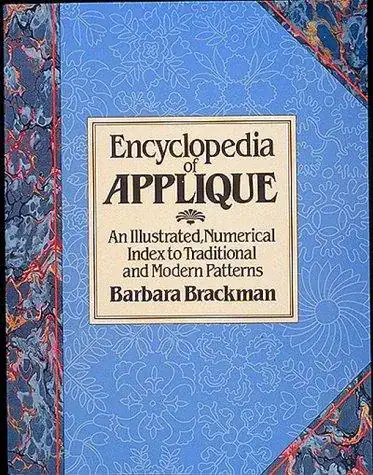
I would love to have a computerized database of Barbara Brackman’s Encyclopedia blocks so I can search and cross search. I have the book. I have Block Base. But I want it all on my computer (Mac) so I can do my research for pattern writing. If someone has it – in any format – can you respond off list? I would gladly share my own Kansas City Star database, which includes all the Brackman numbers for any blocks I could find that match. Thanks! Debby — Debby (with a “y” and not “ie”) Kratovil Special Projects Editor, QUILT Magazine http://www.quiltmag.com Quilt Workshops & Programs http://www.quilterbydesign.com
Date: Thu, 27 Apr 2006 10:31:47 -0500 | From: Charles Woodford
Hi All,
I don’t know what category of dishonesty this comes under, but since we’ve been talking about fake antiques being pushed as real, plagiarism seems to be similar and strikes an equally unethical tone, although no one is cheated.
My husband decided to add woven coverlets to my website, Historic American Quilts, and wrote a lovely piece at the head of the page as introduction. Lo and behold, I happened to notice that a seller pushing an overshot coverlet printed the exact paragraphs word for word on their selling page. My husband’s purple prose is always unique and quite good (if not always terribly accurate), and there was no doubt as to where this person had cadged his/her words. The least the seller could have done was give a citation.
I suppose, the Internet being what it is, there is no legal recourse against this, but I certainly protest such actions and wonder what happened to good will and morality.
Anyone else have this problem?
Barbara Woodford
From: Judy Kelius
You can report the plagiarism to eBay – http://tinyurl.com/mnam5
If this link doesn’t work, go to any eBay page, click on “Community,” then “Security & Resolution Center,” “Report another problem,” “Listing Violations” – choose copyright infringement.
I have had people copy my listings word for word – when I report this to eBay, they remove the plagiarized listing and the seller has to pay to relist it. Hopefully they will do the same thing if you give them the eBay listing number and the link to the page they copied it from. If the listing is close to ending, it may not get done in time.
You can also email the seller directly and complain. At least that may prevent them from doing it again. Good luck! – Judy
Date: Thu, 27 Apr 2006 08:53:34 -0700 | From: Laura Robins-Morris
Dee, and others who are trying to find the articles: The articles are at www.mcall.com . It was a 4-part series, from April 23 through April 26.
Here is a direct link, if it works. http://www.mcall.com/news/specials/all-quilt-storygallery,
If that link doesn’t work, search for Quilt Articles, or Hidden Hands, Common Thread. Right now there is a picture on the home page of the faces of Asian children, and the links are under that, but those things change quickly.
I hope this helps you find it.
Laura
From: Ark Quilts
My apologies…..the eBay item number for this is: 4457924210. I am sorry it did not paste. C. Ark
Ark Quilts wrote:Since the discussion has turned to Hmong work, there is an item on eBay that is signed………..the place is “Thailand” and the last name is “Vang”. It wasn’t identified as Hmong work, but I believe it is. It looks very nice. C. Ark in NW Ohio
From: Edwaquilt
This is a must read. About half way down into the article is the description of how the Star Quilts were used in the funeral.
Holice
I picked this off another forum.
http://www.rockymountainnews.com/drmn/local/article/ This link goes to a news article about a wake for an American Indian warrior U.S. Marine who died in Iraq. Some of the photos in the slide show are of quilts and their meaning and how they were used in the funeral procession and in the wake and ceremony itself. Described in the article linked to above. Amazing photographs and article!
Date: Thu, 27 Apr 2006 21:58:23 -0400 | From: Sharon in NC
I am looking at some quilts that will be available at a local auction soon. Will some of you take a peak and tell me which you would bid on or are any of them even worth adding to my collection. http://www.auctionzip.com/cgi-bin/photopanel.cgi?listingid=141550
truthfully I am trying to decide if I even want to attend the auction..but if any of you suggest going because one is worth the trouble I will head over there…smile.. Sharon in NC