August 26 – 29, 2005
These restored messages come from the Quilt History List, an online forum where quilt historians, collectors, researchers, appraisers, and enthusiasts discussed antique quilts and related textiles. The archive dates from 1996 through approximately 2016 and is being restored gradually. Sign up in the form at the bottom of the page if you want to know when a new page is added. Original spelling, opinions, formatting, and inactive links may remain unchanged.
Primary topics of this QHL Digest:
- New Member Introductions and Museum Recommendations — A new Australian member is welcomed to the list and pointed toward the Rocky Mountain Quilt Museum and other must-see exhibits. (see the article on quilt museums)
- West Virginia Quilt Documentation Finds — Appraisers share unusual quilts uncovered during the West Virginia quilt documentation project.
- Identifying Mystery Military Textiles — Members help puzzle out old military shirts and cigar flannels found tucked inside a box of family keepsakes.
- Caring for Antique Silk Quilts — A discussion of silk quilt history, Silk Road textile trade, and how to safely care for aging silk.
From: “Keryn” <heloise56bigpond.com>
Hello quilt lovers everywhere. I am new to this list and this is my first post. I am Australian and a passionate quilt collector, quilt history and women’s stories/history lover. My degree is in archaeology although I am not working in that field at present.
I am currently setting up a specialist tour for Australian quilt/textile/history lovers of the USA, visiting museums, some shows as well as attending some lectures and workshops by historians, textile and quilt specialists.
This tour (and others to follow if this one is a success) is aimed at people who want specialist quilt/textile information rather than a ‘touristy’ experience. All being well, I am aiming for either Spring or Autumn 2006.
If anyone on the list has any suggestions for ‘must-see’ destinations please let me know. I have a comprehensive list of places and people to visit but advise from people on this list would be much appreciated.
Many thanks.
Keryn James Adelaide, South Australia
From: “JESSICA VAUGHN”
Keryn,
By all means, come visit us in the Rockies. “The Rocky Mountain Quilt Museum is located in Golden, CO.
Jessica M. Vaughn Aurora, CO vaughn8047@
Make yourself familiar with the angels, and behold them frequently in spirit; for without being seen, they are present with you. – St Francis de Sales – ——
From: Sandra Starley
In doing appraisals last week, I came across two quilts that had been documented in the West Virginia quilt project and I’d like to get a copy of their documentation papers, can anyone help me? They were seen 8-21-92 Putnam Co. W. Va.
Also, I bought a quilt a few months ago on eBay that had gone through the South Carolina project. Can anyone help me track down that paperwork? Thanks.
Sandra Starley Moab, Utah
From: “Susan Wildemuth”
Just got my copy of Quilter’s Newsletter Magazine – October 2005 issue and finished reading Andi Reynold’s article “Leaving a Legacy – Donating Quilts to Museums.” Well done Andi.
Sue in Illinois
From: “Catherine Kypta” <ckyptasurewest.net>
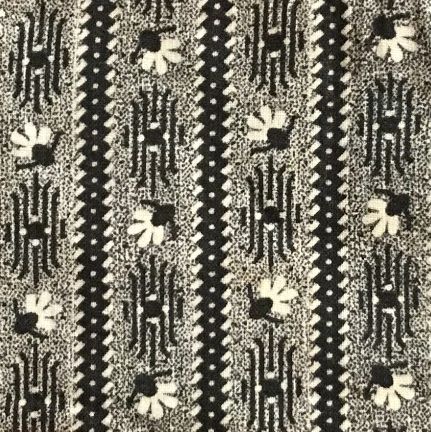
Hello All! I am hoping someone can help me with some information about a quilt that was brought to me to look at. I have never seen anything like it. It is comprised of 8000 American medal ribbon bars and is 96 X 66 inches. The woman who owns it has identified each ribbon and there are 18 different award ribbons making up the rounds. I t is made similar to a trip around the world and each ribbon piece is 1 to 2 inches wide and they are machined together with red thread and then the whole piece was backed and quilted in parallel lines to keep it together. I have posted a little photo of a piece of it which she gave me to use to help identify this. I don’t know if soldiers could have made it in a VA hospital?, or an auxillary or what. I think it is quite rare and she wants to donate it somewhere so that it can be seen. Any and all info would be most appreciated!
Catherine hot and soggy in Sacramento A
From: “Andi” <andi0613@>
Thank you, Sue, for the kind words. I couldn’t have written the article on donating quilts to museums without the gracious help of several list members who agreed to be interviewed. Thanks to each and everyone. It was through that process that I met Marilyn Woodin of the Kalona Quilt & Textile Museum and became involved with the Iowa/Illinois Quilt Study Group, which has, in turn, been such good support for my research of the three Keota quilts. Isn’t it wonderful how things are interconnected?
Andi in Keota, Iowa
From: Judy Schwender
Hello Keryn,
If you tour in the spring, the Museum of the American Quilter’s Society will have “Red & Green: Antique Quilts from the Collection of Anita Shackelford” on exhibit from Feb. 8 to May 10. From March 19 to July 9 we will have “Canada Quilts”, about 30-32 quilts. These will not be antique quilts, but you could see the quilts of two countries in one location!
For the exhibit calendar of the Museum of the American Quilter’s Society, go to: http://www.quiltmuseum.org/subcategory.html?category=Content1&subcategory=Exhibits
If you have any questions, I’d be happy to help you out. Judy Schwender Curator of Collections / Registrar MAQS
From: “Keryn” <heloise56bigpond.com>
Dear Judy,
Thank you for your suggestions. I love the sound of both of those exhibitions and shall put them on my calendar of events. A number of people have suggested MAQS and of course the huge quilt show at Paducah. It will just depend on dates and getting to as many of these fantastic shows/museums/workshops. Thank you for your offer of help and for taking the time to respond to my request.
Kind regards,
Keryn James
From: “Nancy Ray” <nancy.ray@>
All, Can any of you suggest a white fabric to me that is not transparent? I am (uncharacteristically) getting ready to appliqué a four block, and I hate seeing seam allowances through white. Got to have cotton of course, and it could be slightly off white–but not much. What about Kuna? Every white I have ever worked with disappointed me in this way. And as for wearing white pants??? Years ago I had a neighbor and sewing friend who made a pair of white pants, then wore them with no undergarments– she said that you could see underwear clearly through the pants, but nothing if she wore them without! It was a surprising idea (at the time), but actually turned out to be true. White fabric is just a pain; I’ve never liked to use it for this reason. Many thanks in advance, Nancy Ray in Alexandria, VA
From: joan kiplinger <jkip@>
Nancy — next time you are at Joanne’s, look at weavers cloth made by Springs, usually kept in the quilting section where broadcloth is displayed. This was based on the kettlecloth formula that Springs developed when it bought Lowenstein & Son in the 1980s, the originators of that fabric. And rumor has it that kettlecloth was based on Indian Head when that fabric was discontinued. Many quilters use weavers cloth for quilt backing and order it by the bolt per what I’ve observed at Joannes. Having made curtains in white, I can say that it is a nice cloth to sew with and its slightly textured surface adds a nice dimension. Most important to note, it is not a second line fabric.
From: Barbara Burnham
Nancy, depending on the size of your 4 applique blocks, you could eliminate the seam allowances if they bother you that much, by stitching on a larger piece of background; 44″ fabric would allow you at least 21+ inches square per block, minus selvages. If you are going to hand quilt, you don’t want anything too heavy (been there, done that!). With machine quilting, fabric weight would not matter. If there must be seam allowances, pressing them open when joining blocks instead of to one side reduces most of the bulk, and reduces or at least evens out the shadowing. Once it has batting and backing, you really hardly notice the seam allowances. A cotton batting instead of poly also allows less light through. Barbara Burnham Ellicott City, MD
joan kiplinger <jkip@> wrote: Nancy — next time you are at Joanne’s, look at weavers cloth made by Springs, usually kept in the quilting section where broadcloth is displayed. This was based on the kettlecloth formula that Springs developed when it bought Lowenstein & Son in the 1980s, the originators of that fabric. And rumor has it that kettlecloth was based on Indian Head when that fabric was discontinued. Many quilters use weavers cloth for quilt backing and order it by the bolt per what I’ve observed at Joannes. Having made curtains in white, I can say that it is a nice cloth to sew with and its slightly textured surface adds a nice dimension. Most important to note, it is not a second line fabric.
From: “Teddy Pruett”
>Hi all – I have been contacted by a friend who is searching for a >simple pieced butterfly block pattern. She saw one on Simply >Quilts, but I’ve done a search and can’t find it – I also googled >and came up empty handed. I can see the one she wants in my mind’s >eye – I had it in a book about making quilts for kids – didnt use >the book, ever, so sold it at the guild boutique. Of course I need >it now. The lady is a beginning quilter, and said the block uses >squares & triangles with a rectangle for the body of the >butterfly. Anyone have any ideas??? > >Teddy Pruett, the one-stop-shopping-answer-for-everything- (people >think so, it seems….) >and I wish I had more time to help people, but……..
I did a search on “butterfly quilt” on the HGTV Simply Quilts web site and came up with this episode – is this what she wants?
http://www.hgtv.com/hgtv/cr_quilting_other/article/0,,HGTV_3305_1391773,00.html
There were several other shows that had butterfly patterns too, but this is the one for kids. – Judy –=====================_4171406==.ALT–
From: d-printable
I saw the easiest butterfly pattern in a quilt at a show last weekend. It placed two half-sq. triangles on point, touching in the middle. The touching triangles were the same print, and the two sqs. and triangles were light fabric and the same in every block. They looked very sweet scattered all over top, but were simple 4 patches on point with a thin sashing . She used a Pigma pen to make filers. I was thinking they could be embellished with beads too.
Kim Wulfert www.antiquequiltdating.com
Hi all – I have been contacted by a friend who is searching for a simple
pieced butterfly block pattern. ——=_NextPart_000_0132_01C5AA67.C658F800–
From: Freda
You in luck………….http://victorianaquiltdesigns.com/ this months’ free pattern is a great butterfly, easy!!
Date: Fri, 26 Aug 2005 07:26:52 -0500 | From: “kim baird” <kbaird@>
Why not just under line the white pieces with another layer of white?
Kim
From: “frances fitz-kennedy”
Dear Hot & Soggy in Sacramento: My DH is a retired military man and he and I were wondering what the eighteen military ribbons were; I.e. names of what ribbons represent; since military ribbons have an origin and knowing those named may give clues to the background of her subject. The number of ribbons seems enormous, but in looking at my dh’s ribbons just the part shown on the ribbon bar is much smaller although the ribbon width represents the actual ribbon; usually; of the decoration/medal represented. H & S in S can you also give more background of the item–did it come to the person from a military person, place or organization, etc. Thanks. Looking forward to a response. Fran Fitz-Kennedy in Waynesboro, PA. —– Original Message
From: Carol Grace
Hi, DH has a friend who gave him a box of old military books, shirts, and so on. In the bottom of the box was what looked like a 3″ by 4″ miniature rug, with fringe onthe short ends. It’s background color is a grey-looking blue, there is a small white border with 3 tiny circles, a square on point, three circles, etc. around the rug. The corners of the border have the shape of a house with a peak (looking from the side rather than the front) which I think has nothing to do with a house, just a shape. The center shows a soldier with a tall musket almost reaching his armpit, and the wooden stock is on the ground. His arm encircles the barrel of the musket. He’s wearing a dark uniform with two rows of buttons down the front and has what looks like a canteen slung over his shoulder. He has epaulets and a hat on. In each corner is a waving flag which is on dark-colored back ground, a white stripe across the center vertically and horizontally. Checked with DH and he said it didn’t look like a confederate flag, but perhaps it was a regimental one. I have to tell you I’m very excited to see one of these, because I recall reading something about it on the list a long while ago. Does anyone know a time-frame for something like this, or how to search for them on google? I am curious as all get out. Thanks. Carol Grace
From: Kris Driessen
I have seen tiny cigar flannels from the 1920’s like these, could that be what it is?
–
Date: Sat, 27 Aug 2005 10:20:42 -0700 | From: “Catherine Kypta” <ckyptasurewest.net>
Thanks to all of you who have responded to me privately. I have posted a small photo of a portion of the quilt on the picture board. For those of you who asked about the ribbons, the ones that have been identified are as follows:
US Air Service wings, Corps badges, Bronze star, American Defense, Civilian Defense, European /African/Middle Eastern Campaign, Asiatic and Pacific Campaigns, Merchant Marine, American Campaign, Decoration – Army Good Conduct, Purple Heart, Air Medal, Soldiers Medal, WWII Phillipine Defense, VFW ribbon, WAC medal, Army Good Conduct.
If this will help with identifying the quilt, or who may have made it, please let me know!
Thank you! Catherine
From: “jocelynm@”
> > On May 14, 2005, Gail Ingram wrote: >> >> I think many of the fattest of the fat quilts now remaining date from a much >> later and poorer time than the CW days. And they were made with “bought” >> cotton, not home-ginned and combed cotton. > > Gail, > See how far behind I am on reading QHL? <G> > But I just had to respond to this. > > My grandmother made a few fat quilts that have survived, from the first > quarter of the 20th century. She did indeed use cotton that my grandfather had > grown, and carded it to make batts that were about the size of her palm. She > used one of the ceiling-hung frames, so that a quilt was laid out flat, and > the multiple pieces of batting were laid flat on top of the backing. > > As for being the warm South…for many years after framing the house and > putting up the clapboards on the outside, my grandparents couldn’t afford > interior walls. So of course the house was uninsulated. The outside temps may > have been warmer than in Minnesota, but the heat loss on a winter’s night was > still quite significant. > >
Joycelynn,
I’m a little unsure of your meaning here. Do you mean the individual batts were as broad as your grandmother’s hand? Or as thick (from palm to top of hand)?
Growing up, I encountered both the relatively flat, closely quilted quilts and the somewhat thicker and less closely quilted quilts, both made “for everyday use” and constructed from hand carded cotton.
In some cases, the decision to use home-grown and -carded cotton was not an aesthetic choice, but an economic one. In most of the rural South of the late 19th- and early 20th-centuries cotton was grown as a cash crop by families who lived and worked on small, essentially self-sustaining farms. It was what bought things that could not be produced on the farm.
Some of the cleanest and best cotton was often saved for quiltmaking. That from the “second picking,” the final sweep of the fields, was often used for quilts of purely utilitarian nature—tops and backs made from solid pieces of feedsack or used cloth, perhaps. On larger farms where there were sharecroppers, this cotton from the second picking was often reserved for the field hands or tenant farmers. I recall family conversations in which people who failed to follow the latter policy were roundly criticized for their lack of duty or generosity.
Yet, I don’t think any of the quilts made from home-grown cotton that I myself saw when I was growing up were so thick as some of those made from undoubtedly inexpensive commercial batts. These batts generally were unbleached and had cotton trash in them. They generally were quilted in the fan pattern with stitches that were as good as could be expected, given the batt.
Among the members of my parents’ large families, probably 1/4 of the extra or utilitarian quilts were old quilts that had been re-covered with feedsack fabric and requilted. Indeed, after my mother died, I discovered inside such a quilt the first quilt I ever remember sleeping under as a very young child, a carefully appliqued Sunflower quilt which had French knots in its flower centers, made by my paternal grandmother. I went to sleep fingering those French knots. In its second incarnation, it had been used as a pallet for children’s afternoon naps on the sleeping porch and for babies to play or sleep on. Since I have such fond memories of both its lives, I’ve not been able to determined how to treat it.
As for the “warm” South, that cross-ventilation so desirable in the summer was far less desirable in the winter. And while wood-frame houses were then made out of solid wood, inside and out, they generally were not insulated.
Thus, all of us from the South of a certain era remember slipping between icy sheets piled high with quilts. As children, my sister and I usually slept in the same bed, so we could argue up close and personal. I remember arguments about usurpation of the “warmed” space left by by one or the other who had gotten out of bed for some reason. It was the old “property” argument that later took place in the back seat of cars during family vacations, just located in a cold bed where warmth was a premium.
Since my own mother feared “escaping” natural gas and every other unlikely eventuality in the world, our home’s themostat and heater were turned off at night. To sleep beneath 3-5 quilts, depending on their thickness, was not uncommon in the bitterest of winter nights. Electric blankets? Fine for my parents, but too “dangerous” for “inquisitive” children who might electrocute themselves.
One of my favorite collections of quilts is a group of quilts made by a country woman in Central Louiiana. Thick thick thick. But bright, brimming with innovation, strong. “Thick” was her tradition, and somehow, it looks just right in these quilts.
Gail
From: Caryl Schuetz
Nancy, I like Kona fabric, which comes in an off-white as well as white. It is a good quality solid weave. Caryl Schuetz. Quilt shops carry this.
“”””””””””””””””””””””””””””””” Caryl Schuetz Professional Association of Appraisers – Quilted Textiles certified by the American Quilter’s Society P.O. Box 68827 Traders Point Indianapolis, Indiana 46268 www.quiltvalues.com “””
From: Carol Grace
In a message dated 8/27/2005 1:20:00 P.M. Eastern Standard Time, krisdriessen@ writes:
I have seen tiny cigar flannels from the 1920’s like these, could
Hi, That very well could be, because the fabric has the soft feel of felt. Thanks for the reply. Carol Grace
From: “Karen Evans” <
My 17th century style silk quilt, “Alchemy,” took a blue ribbon at Craftadventure, the screening competition for the Eastern States Exposition. Those of you in New England (like Sue and Jan) should look for it at the Big E during the last couple of weeks of September/early October.
Needless to say, I’m still walking on air…:)
Karen Evans
From: “Teddy Pruett”
Yall are Amazing, simply amazing. Not to mention knowledgeable, sharing and caring. Ain’t we something on this list??? I had several immediate responses to the quest for the buttterfly block, and one of you was spot on. I’ve already got the pattern printed out for the friend and ready to mail. Thank you all.
ALso, when I posted the question about the tee shirt quilt for the 911 victim, your responses were overwhelming and so generous that I was humbled. Several long arm quilters offered to take the quilt immediately and send it right back. Others of you shared your experiences with tee shirt quilts and other types of memorial quilts, and all have agreed that these quilts cannot be constructed without the tugging at the heart and tears trickling.
As it turned out, I have bar tacked at all seam intersections of the 3″ sashing squares. In the tee shirts themselves, I used a tiny flower motif as a tack, and some of the larger logos are outlined along inconspicous areas of the picture or whatever is featured. It has worked out quite well. I am now sewing the binding down by hand, and it will be ready to ship.
Heavily quilted quilts are gorgeous, but they are hard to the touch – and I wanted this one to be cloud soft, so the combination of tacking, flannel backing, and ultra low loft poly batt has created the softness I was after. The client does not know anything about this quilt, so I am on pins and needles to get it shipped to her and await her response. I truly appreciate every e-mail you sent, even though time has not allowed me to personally answer everyone.
Teddy Pruett
From: “Karen Musgrave”
I’d like to draw on the wealth of knowledge here and ask if someone can point me in the direction of books and/or articles on quilts and the Silk Road. In my trips to Georgia, Armenia and Kazakhstan, I’ve been exposed to many beautiful old silk quilts and truly want to understand the impact of the silk road on quilts. Any help you can provide, will be greatly appreciated.
Thanks! Karen Musgrave
From: aol.com
You’ve seen old silk quilts along the Silk Road? Details! Details! Sounds marvelous!
As for the Silk Road itself…there’s information in Xinrui Liu’s =Silk & Religion,” Hanne De Koning-Stapel’s =Silk Quilts=, and tons of others. The oldest known patchwork was found at Dunhuang on the Silk Road by Aurel Stein in the 1920s, and that’s mentioned in Averil Colby’s =Patchwork.=
Good luck!
Karen Evans
From: Xenia Cord
Here are some other titles in addition to those mentioned by Karen Evans. They are not about silk quilts per se, but rather about silk itself.
Vollmer, John, E.J. Keall, and E. Nagai-Berthrong, Silk Roads, China Ships, Toronto: Royal Ontario Museum, 1983, offered for sale in conjunction with an exhibit at the Cleveland Museum of Art, 25 October 1997 – 4 January, 1998, called “When Silk was Gold.” which included silk fragments from 700-800;
Anquentil, Jacques. Silk, Paris and New York: Flammerion Press, 1995. Deals with all aspects, historical and current, of silk manufacture, weaving, and printing.
Browne, Claire. Silk Designs of the Eighteenth Century, From the Victoria and Albert Museum, London London: Thames & Hudson, 1996. Wonderful eye-candy!
Xenia
From: “Alan Kelchner”
Went to the Bouckville antique show. Aside from wearing me out (not as strong as I should be – been very ill), it was a really neat experience. Quilts at every turn. And not just the poor tired babies. One has tons of a double purple (still purple). Several late 1800’s with to-die-for madder prints. But the coolest one (which I bought) was a cheddar and turkey red in mint condition, probably PA origin. I don’t have access to my pattern books, seeing as life has been upside down. But the blocks have a turkey red triangle, along with a cheddar triangle, and that is bordered by smaller red triangles. The blocks all are sewn together, none turned funny. God ! I love the thing. And bless him, the guy I bought it from had no idea he should have charged more.
And a question for you. Has anyone used Retayne to wash a quilt, and if so how do you determine how much to put in the water?. There aren’t any instructions on washing a quilt, just yardage.
I’ll try to get photos done tomorrow, and put them up.
Alan R. Kelchner Fiber Artist Http://www.alanrkelchner.com
Date: Sat, 27 Aug 2005 22:18:23 -0700 | From: “Christine Thresh” <christine@>
http://www.daytondailynews.com/localnews/content/localnews/daily/0827quiltcode.html
I just read this article about a high school with a mural about the “quilt code.” Some questions have been raised.
“[S]ome feel the colorful murals and textile patterns decorating the main hallway in the new school, and depicting the controversial “quilt code,” are giving students the wrong lesson. “The code is based on a book written in 1995 that details a South Carolina quiltmaker’s recollection of how slaves used hidden messages found in quilt patterns to map their way out of slavery. Many historians and slave scholars have dismissed the book as folklore and said slaves never used such a code.
“‘People have tried to push the book in directions that it was not meant for. A lot of people have suggested that all slaves used this system. This was based on an oral account told to me,’ said the book’s author Jacqueline Tobin from her home in Colorado.”
Christine Thresh on Bethel Island in the California Delta http://www.@
Date: Sun, 28 Aug 2005 22:24:21 +1000 | From: “Quiltstuff” <quiltstuff@>
Catherine wrote> . For those of you who asked about the ribbons, the ones that have been identified are as follows: , WWII Phillipine Defense, VFW ribbon, WAC medal, Army Good Conduct. etc If this will help with identifying the quilt, or who may have made it, please let me know!
Catherine. I am just thinking out loud about this one. Firstly let me say that I have been in the Australian Army for 26 years now.. so your quilt piqued my interest.
We don’t have as many ribbons as the US forces but they are all very identifiable as to when they were released. However, I think to my knowledge they still reproduce a lot of our ribbons so people can restore and repair their grandfathers medals for example. So if you can speak to someone who can tell you about these specific ribbons and when the last of them was produced you may get closer to a date.
The fact that there is such a wide variance of types of ribbon, from air force, marines and even WAC ( that’s the women’s service, yes?) makes me think that the maker is more likely to be someone who had access to off cuts from the manufacturer or who bought up surplus.. War surplus ?
If a similar thing turned up over here, I would be less likely to look for a military maker but rather someone who worked at a ribbon factory or where they sew attach the ribbons to the medal.
Suzy Atkins, Brisbane
Date: Sun, 28 Aug 2005 14:50:24 -0400 | From: “Julie” <quiltappraiser@>
Catherine Kypta posted the quilt picture on the vintage board and asked about the maker, etc.
It sure is strange to have so many ribbons of the same award. I am a retired Major from the Air Force and when you received another medal you put clusters on your ribbons to denote how many of times you were awarded. There are too many multiples to represent someone’s career. I wonder if they didn’t have access to a lot of ribbons no longer in use and made the quilt based on color. Traditionally, ribbons were mounted on bars so someone took the time to take all of those apart. Can you imagine? Thanks for sharing this. Julie Crossland, Hudson, NH
Date: Sun, 28 Aug 2005 15:54:49 -0700 | From: <chrisa@>
“The Silk Road” by Luce Boulnois, translated from French. History of the trade between China and the west from Roman times on. Not about quilts per se, but info on silk of course, and other cloth life velvet and Damask.
Kim Wulfert www.antiquequiltdating.com
I’d like to draw on the wealth of knowledge here and ask if someone can point me in the direction of books and/or articles on quilts and the Silk Road. In my trips to Georgia, Armenia and Kazakhstan, I’ve been exposed to many beautiful old silk quilts and truly want to understand the impact of the silk road on quilts. Any help you can provide, will be greatly appreciated.
Thanks! Karen Musgrave
Date: Mon, 29 Aug 2005 10:02:50 -0400 | From: <charter.net>
Thanks! I’m pretty pleased – and I’m definitely going to try to get this one into Images and/or the VGF for next year. 🙂
Karen Evans
P.S. There is an excellent chance I will be visiting Germany next year. Does anyone know of any quilts, applique pieces, or quilted armor in museums in the Nuremberg area? As usual, I’m interested primarily in pre-1600 pieces but am interested in anything pre-20th century. Thanks in advance
Date: Mon, 29 Aug 2005 10:53:30 -0400 | From: “Lucinda Cawley” <lrcawley@>
There’s still time to see the “Cotton in PA German Life” exhibit at the Schwenkfelder Library and Heritage Center in Pennsburg, PA. It’s up until Sept. 12 and there’s a catalogue! The phone # is (215) 679-3103. I stopped in yesterday for another look and got a great bonus, an exhibit of fraktur called “Finding Susanna Heebner.” You may not be as “into” fraktur as I am, but this is a feast for the eyes. Our own Candace Perry has outdone herself. All of these small gems are hung at eye level. You can comfortably study the motifs and colors we see so often in PA German quilts. Cinda on the Eastern Shore
Date: Mon, 29 Aug 2005 14:04:41 -0400 | From: “Denise M. R. Nordberg” <QuiltDivaUSNetway.com>
Hello all, During the next day or two, my e-mail address will change to: quiltdiva@. Please correct your address book. Thanks! Denise
Date: Mon, 29 Aug 2005 14:23:53 -0400 | From: “Denise M. R. Nordberg” <QuiltDivaUSNetway.com>
As of tomorrow, my e-mail address will change to: quiltdiva@. Thank you, Denise Nordberg
Date: Mon, 29 Aug 2005 11:52:51 -0700 (PDT) | From: Anita Loscalzo <aloscalz@>
Hi, everyone,
We now have available by September 15, 2005:
CD Catalogue World War II Era Quilts. “Honoring Quiltmakers of the Greatest Generation” Curated by Sue Reich. Many quilt historians believe that quiltmaking came to a standstill during 1940-1945. Numerous surviving quilts in this unique exhibition prove otherwise. Reichs’ treasured collection largely demonstrates patriotic themes and reflects on the nation’s reverence held for our country’s World War II heroes. The price is $9.99 plus $.50 Mass Sales Tax if applicable plus $2.00 shipping.
Also available now:
CD Catalog of “Quilted Cuisine” exhibition . If you missed the exhibit you can still see all 41 brilliantly colored food-related quilts by 46 international artists on our CD-ROM which just won a publication award from the New England Museum Association. The price is $9.99 plus $.50 Mass Sales Tax if applicable plus $2.00 shipping. and CD Catalogue of “Batiks: Piece de Resistance.” This exhibit featured our international juried exhibition of contemporary batik quilts. Quilts in this exhibition range from using highly expressive and brilliantly hued batik fabrics in traditional settings to the more abstract and whimsical quilts. The price is $9.99 plus $.50 Mass Sales Tax if applicable plus $2.00 shipping ——————- Print the CD Order Form from:
http://www.nequiltmuseum.org/Docs/CD_Order_Form.pdf
and mail to New England Quilt Museum Shop, 18 Shattuck St., Lowell, MA 01852
Thanks!
Anita
Anita B. Loscalzo, Curator New England Quilt Museum 18 Shattuck Street Lowell, MA 01852 ——– email: CuratorNEQuiltMuseum.org telephone: 978-452-4207 Ext. 11
____________________________________________________ Start your day with Yahoo! – make it your home page http://www.yahoo.com/r/hs
Date: Mon, 29 Aug 2005 12:07:26 -0700 (PDT) | From: Judy White <whitey06029@>
In answer to your question about Retayne, I happen to have a bottle right here and the label says, “Estimate amount of water needed to cover cotton fabric. Fill machine to this level with hot water (140 F). Add 1 teas Retayne per yard of cotton fabric. Add dry cotton fabric. Set machine for a 20 minute wash. Use cool water during rinse cycle and dry at once.”
I have never washed a quilt in Retayne – only yardage or pieces of fabric. Judy White
Alan Kelchner <alanalanrkelchner.com> wrote: And a question for you. Has anyone used Retayne to wash a quilt, and if so how do you determine how much to put in the water?. There aren’t any instructions on washing a quilt, just yardage.
Date: Mon, 29 Aug 2005 15:18:04 -0400 | From: “Pepper Cory” <pepcory@>
Hello Friends, Finally! The quilts of the second War era are getting recognized! I’m going to purchase this catalog.
Add to the list Passing On the Comfort. See the publisher’s website for excerpts at http://www.padutch.com/z/goodbooks.htm . I just purchased this wonderful book while teaching at the Nashville AQS show this past weekend. If you love quilt history, please add this one to your library. The authors are a Mennonite American woman, living in Holland, who discovers a cache of WWII-era quilts in a Dutch farmhouse. Eventually she meets and comes to know as a friend the caretaker of these quilts, a remarkable Dutch woman, wife of a Mennonite minister, who worked with the Resistence in WWII. The quilts were sent from the MCC (Mennonite Central Committee) to Holland as soon as aid could get to that country after liberation by the Allies. The quilts are for the most part worn but their ‘patina’ speaks volumns about their use. I cried a coupleof times as I read the stories of An’s heroism and how she and her husband saved many people from detection and extermination. I will go to see the exhibition as soon as it comes within reasonable driving distance.
All the best, Pepper Cory