December 19 – 26, 1999
These restored messages come from the Quilt History List, an online forum where quilt historians, collectors, researchers, appraisers, and enthusiasts discussed antique quilts and related textiles. The archive dates from 1996 through approximately 2016 and is being restored gradually. Sign up in the form at the bottom of the page if you want to know when a new page is added. Original spelling, opinions, formatting, and inactive links may remain unchanged.
Primary topics of this QHL Digest:
- Quilt Pattern & Kit Companies of the 1930s — Members trace the history of pattern houses like Virginia Snow Studios, Grandma Dexter, and the Perforated Pattern Company, and how WWII scrapped some of their equipment.
- Building a Quilt History Reading List — A popular thread compiles “must-have” quilt history books, including a European angle covering British and Guild-published titles.
- Does Silk Thread Damage Antique Cotton? — A long-running debate over whether silk (and polyester) applique thread cuts into the cotton fabric it’s stitched to over time.
- An Uneasy eBay Find — A listing tied to the author of ‘Stitched From the Soul’ draws interest, while a visit to Beauvoir’s gift shop raises concerns over a Confederate-flag souvenir.
Date: Sun, 19 Dec 1999 22:04:58 -0800 | From: The Schott Family <fschott@>
A good group for quilts is the one run by rootsweb. To join, send “subscribe” in the subject to <QUILTING-L-request@>
Nancy In CT calico wrote:
> I have two questions for everyone today— 1. I need to find an e-mail group like this one for the quilts, I used to belong to one about 2 years ago but got out. Anyone out there belong to an good one? Let me know.2. I am also in need of information on how to applique using an simple method. I bought an kit for the Sunbonnet Sue and want to do it up. But am not about to hand stitch all those pcs. Can this be done on an regular sewing machine, and if it can how. I seem to remember something about sizing or interfacing. Thanks for any help anyone can give me. debi calico@
Date: Mon, 20 Dec 1999 23:01:37 -0500 | From: “Judy Grow” <Judygrow@>
Xenia,
My McCalls Quilting Mag just came, and I was fascinated with the wonderful coverage of your group’s nine-patch challenge. Every quilt was wonderful! It took me a while ’cause I look at the images before I start reading, but then I saw your name attached to one of the quilts on the first page. Great looking quilt! Congratulations!
Judy in Ringoes, NJ judygrow@
Date: Mon, 20 Dec 1999 08:45:06 -0500 | From: “Store E-Mail Acct.” <qps@> (by way of List Mom
<qrs@>)
Hi Holice,
I have 3 other books in my lists by this company under the name of Grandma Dexter, all called Grandma Dexter’s Appliqui & Patchwork Quilt Designs and then numbered – #36, #36A & #36B. I also have a page from this series called Patchwork Designs from #36.
None of my books have dates but they are from Grandma Dexter, Collingbourne Mills, Inc, Elgin, IL.
Debbie
Quilting Possibilities in NJ
Date: Mon, 20 Dec 1999 11:25:48 EST | From: SSQuilt@
I’d like to try to answer some of the questions Anne posed about the quilt kits and their manufacturing from the 1930’s. I can’t speak for all companies that produced kits during that time period but do have information about the
Wurzburg Company who produced kits under their label and also for many others. Wurzburgs used only ink in black and white. It was a wax based ink that was purchased in block form and thinned by hand with mineral spirits as needed. The ink came from Perforated Pattern Company in New York. They were still in business as of the 1980’s when we last purchased ink blocks from them. The stamping was done on a padded surface on large tables,about the width of a ping pong table and at least that long because the background fabric was stamped in it’s full 36″ width and the quilt’s length (ie. 84″). The process which is very much like silk screen printing and went like this:
the pad was laid out on the table, it looks just like the machine quilted furniture blankets used to move furniture. The quilt’s background fabric or whatever color they were stamping was laid on top of the pad. The “stamping master”, which is a perforated pattern with the design to be stamped was centered over the fabric, weighted down at one edge on the table so it would stay in position. The opposite edge of the paper pattern was rolled around a wood slat and clamped so the pattern would be laid down and lifted again and again until they had stamped all the fabric pieces they wanted. The stamping ink was spread near the weighted end of the stamping master across it’s width and a “wood paddle” which looked like a piece the baseboard you see in your house today was used to drag the ink across the pattern and allow it to seep through the perforated holes in the pattern. The stamping master would be lifted, the fabric removed and another piece laid in it’s place and they’d repeat the process. When finished, the wood paddle and stamping master would be cleaned with mineral spirits until all traces of the ink was gone. The pattern was then rolled and stored until needed again. There are wood paddles and roller slats in a multitude of sizes because you only used them a little wider than the fabric pieces you were going to stamp.
The equipment from the Wurzburg company does still exist. The dies from the die-cut quilts exist also but I feel I’ve been pretty long winded for one post. If there’s interest I’ll post again with more information on the equipment and dies.
Gay Bomers
Grand Rapids, MI
Date: Mon, 20 Dec 1999 13:05:48 -0500 (EST) | From: quiltsnbears@ (Roberta Geanangel)
I know what happened to some of the equipment used prior to WWII, it became scrap for use during the war years. Some interesting machines and equipment in all fields of production were deemed outmoded and put to what was,at that time, a *better* use.
Roberta
Date: Mon, 20 Dec 1999 12:47:27 -0600 | From: Shirley McElderry <tigersoup@>
The Virginia Snow book #41 was published in the late 1930’s. The first ad I found for this book was in the October 1933 issue of Needlecraft magazine. It was also mentioned in Grandma Dexter’s book 36 B and in the catalog from Virginia Snow 1933-34.
The whole topic of this company is quite fascinating. From the Western Thread Co in Elgin IL in 1907 through the Collingbourne era, the Dexter buyout, and then later LeeWards catalog.
The Dexter company was indeed in business in 1820, but in Pawtucket, RI. This company was acquired by Collingbourne’s (from Illinois) in 1927.
Shirley Mc from snowy and cold Iowa
Date: Mon, 20 Dec 1999 22:30:10 -0400 | From: edwa@
The Perforated Pattern Company is still in business. I’ve been to their office/warehouse on about W 34th St in NYC. In fact the washable ink that the pre-printed whole cloth quilts I designed is purchased from them. The Colonial Pattern Co in (either St Louis or Kansas City) still prints the individual blocks, could they have printing equipment that dates from years ago. another possible company that I have not had a chance to check out is a company around Greensboro NC that can print short runs as used in applique kits. Some day I will be down there and will check them out.
Holice Turnbow
Designer, Teacher, Quilt Judge http://www.quiltingstencils.com
Date: Mon, 20 Dec 1999 21:21:17 -0500 | From: AZquilter9@ (by way of List Mom <qrs@>)
Gay, I’m with Xenia, please tell us more.
I have another question for any or all of our wonderful panel of experts, “If you could only have 10 books on the history of quilting and textiles what would they be?” I’m making a “shift” in my quilt book priorities to include more with historical information and who better to ask what to include than you on this list? I’d like to have a well rounded library in this area and though I have some, I’d like your input on what to add next.
Thanks in advance,
Lois
Date: Wed, 22 Dec 1999 00:11:14 -0500 | From: “Judy Grow” <Judygrow@>
Somehow I have subscribed to a notification service from the fabrics.net site. Below I have forwarded to ya’ll the lastest communique I received from them, which includes a new column on vintage fabric. I found it interesting and informative. There are clickable addresses in the body of the forward to take you to the site.
—– Original Message —–
From: Jessie <jessie@>
To: <judygrow@>
Sent: Monday, December 20, 1999 2:43 PM
Subject: Fabrics.net Newsletter
> In this Issue:
> New Column: Vintage Fabric
> Happy Holidays!
> We have added a new monthly column this month called Vintage Fabric. Joan Kiplinger, an avid fabricholic and sewist, starts her column with an
article
> called “In Search of Warp Ends”. She is incredible at researching and finding histories of vintage fabric. Here is an excerpt from her December Article:
> Indian Head — in answer to questions for “Ask Andy” about this fabric,
the
> communications staff at Textron Inc., provided this information: the
Indian
> Head brand label has been known since the 1820s, the cloth manufactured by Nashua Mfg., Co., in New Hampshire. Textron, having just changed its name
from
> Atlantic Rayon Corp and seeking diversification, bought the firm in 1945
to
> meet the growing demand for postwar fabrics. In the early 50s, Textron
sold
> the Indian Head operations and a new company, Indian Head Inc., was
formed.
> The fabric was highly regarded and a popular seller.
> Elizabeth Dyer, Textile Fabrics, 1923, described the fabric as a heavy cotton muslin with more yarns and a smoother finish than many muslins; sturdy, substantial, warm, inexpensive. Used for white skirts,
petticoats,
> girls dresses and middies, boys’ suits, men’s nightshirts, aprons,
luncheon
> sets and table covers. Grace Denny, Fabrics, 1953, reports fabric was available in 36″ and 44″ widths for white; 36″, colored. Fairchild’s Dictionary of Textiles, 1996, lists fabric as a well-known cotton crash first woven by Nashua in 1831.
> My memories of this serviceable fabric are from the mid-40s to 1960. I
used
> it for summer casual dress and sportswear, including countless maternity shorts. I do not recall seeing it after that time nor have I yet found
any
> source stating its demise. It may be in a later Denny book which always features a glossary on the latest obsolete fabrics. If any of you know
when
> it was discontinued, email Joan at joan@ .
> Read more about Vintage Fabric at http://www.fabrics.net/joan.htm .
Date: Tue, 21 Dec 1999 01:52:47 EST | From: Kathi2174@
Hello All,
There is an intriguing quilt on ebay # 222180816. The listing has a link to the seller’s website, none other than Dr. G. Fry, author of “Stitched From The Soul”
I’m interested to hear everyone’s opinion.
The Happiest of Holidays to Everyone!
Kathi in Calif.
Date: Tue, 21 Dec 1999 22:28:31 +1100
Date: Tue, 21 Dec 1999 07:32:36 EST | From: Kittencat3@
Among the “must have” books (for me, at least) are these: Clues in the Calico – Barbara Brackman
Quilting – Averil Colby
The American Quilt – Kiracofe
Amish Quilts – Robert Hughes
Anything by Robert Bishop and his numerous collaborators Anything by Janet Rae
Anything by Thomas Woodard
Hope this helps!
Lisa Evans
Date: Tue, 21 Dec 1999 09:37:40 -0600 | From: Shirley McElderry <tigersoup@>
I am sorry I goofed with yesterday’s posting. Instead of saying the Virginia Snow Studios Book #41 was “published in the late 1930’s” I should have said the “latter part of 1933.” And although the Grandma Dexter Books #36, 36A and 36 B are not dated, they were offered in 1932, 1933, and 1934 respectively.
The Virginia Snow Studios was the portion of Collingbourne Mills that offered stamped needlework, etc. The Virginia Snow name was used from 1913 through 1938, when Collingbourne Mills/Dexter Thread Mills went bankrupt.
Also: Gay, please keep the information coming on Wurzburg! We love it!
Shirley Mc from Iowa
Date: Tue, 21 Dec 1999 22:59:31 +0400 | From: Xenia Cord <xecord@>
This is my recommended reading list – I didn’t exactly stick to the defined limits, but there are plenty here from which to pick & choose: Orlofsy, Quilts in America (dated but seminal)
Kiracofe, The American Quilt
Granick, The Amish Quilt
Brackman, Clues in the Calico
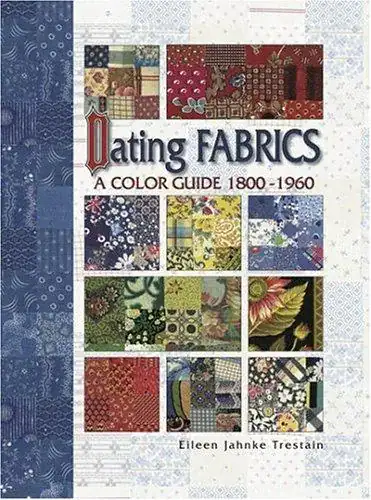
Trestain, Dating Fabrics
Adamson, Calico & Chintz
Montgomery, Printed Textiles 1700-1850 (O.O.P.)
Warren & Eisenstadt, America’s Glorious Quilts (Museum of American Folk Art holdings)
any volume by Waldvogel any of the Symposia Papers edited by Jeannette Lasansky (Pieced By Mother-2 vols, On the Cutting Edge, In the Heart of Pennsylvania-2 vols, Bits & Pieces)
any/all of the now 20 volumes of research papers of the American Quilt Study Group, in their annual journal Uncoverings, or Quiltmaking in America, Beyond the Myths, (selected AQSG writings, ed. Laurel Horton) Any/all of the state search volumes; some unevenness in quality, but each is a learning experience.
Read on!
Xenia
Date: Tue, 21 Dec 1999 18:14:53 -0500 | From: “Ann N. Richardson” <pastcrafts@>
Dear All,
The more we learn about the manufacture and equipement used to produce textiles and related items the better!
The Wars did a real number on the very sophisticated machinery used to produce machine embroideries and very complicated brocades and jacquard silks and cottons. When the factories were bombed in Italy and elsewhere during WW2, there was not enough of a demand to rebuild them after the war. In one market, the eklesiastical fabrics for Church vestments and hangings, some factories were rebuilt. However, the demand is greater than the output,(on purpose) so the price remainss very high. When I was in charge of designing and making a complete set of hangings and vestments for my Episcopal parish church some 12 years ago I was beyond appauled that I had to pay full retail! None of my contacts in New York could break the English trade agreements! They were surprised,too! I have never prayed so hard as when I stood over $235 a yd silk “Agnes Dei” brocade with a pair of sissors! Remember, the machine for making net (the background of lace) was developed in 1811 and was in full operation immediately. There were lots of machines doing lots of textile embellishments very early in the 19th c. We who admire handwork need to remember that! Newbie in Alexandria, Va. who got her groceries in ahead of the sleet that comes tonight!
Date: Tue, 21 Dec 1999 16:08:24 -0500 | From: Lisa Ayo <jlayo@> (by way of “Kris Driessen, Hickory Hill Quilts”
Quilts”
Another shop owner asked me about the silk thread frequently used these days for applique, and whether it will cut cotton fabric over time. Do y’all have any opinions on this topic? Has anyone ever worked with old silk thread applique?
Kris
Date: Tue, 21 Dec 1999 19:58:23 EST | From: SSQuilt@
Thank you all for your kind words of interest in this topic. From some of your questions sent to me I can see that I need to give a little background information. Because I have lived with this my entire life I’m sure as I relate this I’ll leave holes in my information. Anytime it doesn’t make sense please ask for the missing links.
The F.A. Wurzburg Company began it’s operation in the early 1920’s in Grand Rapids, Michigan. The “locals” always want to know if it is the same as the Wurzburg’s Department Store that was in Grand Rapids also. They were separate companies owned by two different cousins in the same family. They had very little to do with each other. My father, Garrett Raterink, got his first job in 1924, cleaning the wood paddles that were used to stamp the quilt kits. He worked his way up to become an officer in the company and purchased it from the Wurzburg’s in the 1940’s when they ceased operations. During his years of employment, he along with another man, invented the machine that produced the first slotted quilting stencil but that’s another whole series of stories. From the time I was a little girl, my father shared with me the history of his work in quilting. Along the way, he taught me how to operate all of the equipment that was used to make the stamping masters, how to stamp the quilt and embroidery kits, how to stamp and manufacture the quilting stencils and just how the whole company operated. Every time we’d start something new he would say “someone has to know how to do this when I’m gone” and one of the last things he said to me before he went into the nursing home was that he and I were the only one’s who cared about this old stuff. I want to make sure this information lives beyond both our years.
The Wurzburg Company was the largest producer of art needlework kits in the country during the 1920’s, 30’s and 1940’s. The quilt kits were only a small portion of what they made. They sold their products through two national showrooms (one in New York and one in Chicago) and through salesmen throughout the country. They sold mainly to department and dry goods stores but you could order by mail on a limited basis. They moved four times throughout their years of operations and at one time occupied a five story building the size of half a city block. The design area alone occupied one floor and had a staff of 5 full time designers.
In the 1960’s the stamping masters and instructions for all of the art needlework items not directly related to quilting were dumped in the Kent County Dump when my parents moved into their current home. Daddy and I have cried more than a few tears looking back on his taking those trailer loads to the dump but he did save the quilting things and for that we can all be grateful. My family still has, here in Grand Rapids, the perforating machines that make the stamping masters, the stamping masters for all the quilt kits and the equipment to stamp them, the machines that cut the quilting stencils, the salesman’s sample books that show the quilt kit line, all the company record books for cutting, embroidery, model making, payroll, etc. If you have Barbara Brackman’s Encyclopedia of Applique you might want to make these notations.
Page 149, illustration 73.5 is a Wurzburg quilt produced for Herrschners. Page 150, illustration 74.15 is Wurzburg #3581 quilt produced for Herrschners. The Overall Boy companion quilt is 12 designs and quilt #3589 Page 152, illustration 75.17 was produced for Herrschners. illustration 75.4 was produced for Herrschners.
Page 155, illustration 80.12 is Wurzburg kit #3577 and was titled Floral Basket.
illustration 80.15 was produced for Herrschners and was titled Spring Bouquet.
Page 160, illustration 82.21 is Wurzburg kit #3564 Marie Antoinette illustration 82.22 is Wurzburg kit #3575 Spring Bouquet illustration 82.24 is Wurzburg kit #3566 Rose Bouquet
Page 161, illustration 82.25, is Wurzburg kit #3555 Formal Garden which was their most popular kit and available in two sizes.
Page 167, illustration 82.994 is Wurzburg kit #3603 Dogwood Page 169, illustration 85.12 is Wurzburg kit crib design illustration 85.17 is Wurzburg kit Kiddies Ride
Page 170, illustration 85.42 is Wurzburg kit Old Woman in the Shoe. illustration 85.44 is Wurzburg kit Little Red Riding Hood. Page 171, illustration 85.49 is Wurzburg kit Cinderella Page 172, illustration 86.42 is Wurzburg kit Three Little Kittens illustration 86.52 is Wurzburg kit #3579 Bunnies
Sorry I don’t have all the kit numbers committed to memory but I do know a Wurzburg design when I see it.
Gay Bomers http://www.QuiltHistory.com.
Date: Tue, 21 Dec 1999 19:53:11 -0800 | From: Nancy Cameron Armstrong <narmstr@>
VERY LONG POST
Dear friends,
Hope this posting will be so useful that you will not object to its length. I looked it over carefully and although it was created way back in 1992, I think it contains most of the titles that are still “the bibles” of quilt history. Actually, I considered a couple of years ago contacting these same quilt experts and asking them if they would make any revisions to their lists in light of the last seven years of publishing. I know several of them subscribe to this list. Perhaps we might hear from them, if they have any current thoughts they wish to add???????
Please feel free to print out the list and spread it as widely as you care to.
CANADIAN QUILT
STUDY GROUP
Guide #1
Building a Quilt Library:
Top 10 Titles for the Study of Quilts from Seven Quilt Historians
Edited by Nancy Cameron Armstrong
During the CQA/ACC week at Thunder Bay, in 1992, I had the opportunity to talk at length with many of the new CQSG members and although there was much interest expressed, many were wondering where to start with the vast body of literature that has already been published. I asked if an article with booklists from “the experts” would be useful? “YES, PLEASE!” was the universal reply. The request I mailed was “a list of the first 10 titles you would buy (or if out-of-print, try to locate somewhere) if you were trying to build a collection for the study of quilts.”
The replies were first published in COVER STORIES, Volume 4 Numbers 2, 3, and 4 (Sept and Dec ’92, and Mar ’93). Several of the lists contained original publication dates for titles that are now available in reprints; where there are reprints, of which I am aware, the reprint information is included. Some titles are out-of-print; these titles may be available in libraries, or-with luck-searches at second-hand stores may bring results. Although there are many titles that appear more than once, the lists are reproduced in their entireties to help underline the importance of the titles that are suggested time and again. For example, Quilts in America, now readily available, appears on all but one of the seven lists. For those just beginning a collection, you may want to focus your first purchases on those titles held in high regard on several of the lists. And remember … these lists were first requested in 1992. With the high volume of outstanding quilt history publications in the recent years, a new request might well include some of the newer titles. Certainly, all of the AQSG UNCOVERINGS would appear.
Cuesta Benberry provided two lists; the first is a “top ten” or “basic” list, the second is a list of some of her “favorites” with added suggestions about building a quilt library. You will note that each reply contains more than 10 volumes, and I must admit as a librarian I knew that each would be tempted to latch on to the word title and add just a few more of their favorites that could not be omitted! Now, let’s hear from our seven experts …
Cuesta Benberry “A Baker’s Dozen of Recommended Basic Quilt Books.” Over the years, hundreds of quilt books have been published, many of them quite valuable for quilt historians. Especially useful are the various catalogues of quilt exhibitions, museum collections, quilt patterns, quilt identification guides, state quilt search project books, quilt history texts, books featuring quilt works of a single individual, quilt encyclopedias, the research volumes of AQSG, the Oral Traditions Project, and the Quilt Digest issues. In building one’s personal quilt library, it may be a serious mistake to arbitrarily exclude all of the quilt manuals or “how to make” quilt books, especially if those books contain original designs and new techniques. In the future, the manuals may serve as authentic records for tracing the origins and the dates of various designs and techniques that will appear on later quilts. Among the hundreds of available quilt books one may possibly collect, I believe there are a dozen or so basic texts that should be represented in a quilt historian’s personal library. Just as flour, sugar, eggs, and milk are essential ingredients to be found in a baker’s kitchen, so are the following books basic to a quilt historian’s library. 1. Bowman, Doris. The Smithsonian Treasury: American Quilts. Washington, D.C.: Smithsonian Institution, 1991.
2. Brackman, Barbara. An Encyclopedia of Pieced Quilt Patterns. Reprint ed. Paducah, KY: AQS, 1993.
3. Dunton, William Rush. Old Quilts. Catonsville, MD. By the Author, 1946. (out of print).
4. Finley, Ruth. Old Patchwork Quilts and the Women Who Made Them. Philadelphia: J.B. Lippincott, 1929. Reprint ed. McLean, VA. EPM, 1992. 5. Hall, Carrie and Rose Kretsinger. The Romance of the Patchwork Quilt in America. Caldwell, ID: Caxton Printers, 1935. Reprint ed. New York:
Dover, 1988.
6. Kobayashi, Kei. Shelburne Museum: the Quilt. Tokyo: Gakken, 1985. 7. Orlofsky, Patsy and Myron Orlofsky. Quilts in America. New York: McGraw-Hill, 1974. Reprint ed. New York: Abbeville Press, 1992. 8. Peck, Amelia. American Quilts and Coverlets in the Metropolitan Museum of Art. New York: The Metropolitan Museum of Art and Dutton Studio Books, 1990.
9. Peto, Florence. American Quilts and Coverlets. New York: Chanticleer Press, 1949. (out of print).
10.______________. Historic Quilts. New York: American Historical Co, 1939. (out of print).
11.Robertson, Elizabeth Wells. American Quilts. Studio Publications, 1948. (out of print).
12.Safford, Carleton and Robert Bishop. America’s Quilts and Coverlets. New York: E.P.Dutton, 1972. Reprint ed. New York: Bonanza, 1985. 13.Webster, Marie D. Quilts: Their Story and How to Make Them. Garden City, NY: Doubleday Page & Co., 1915. Rev. ed. Perry, Rosalind Webster. Santa Barbara, CA: Practical Patchwork, 1990.
* * * * * *
Cuesta Benberry “Favorite Quilt Books.” For the past 30+ years I have accumulated a massive library focused on my quilt interests. In fact, I no longer consider the collection a library. I now think of it as an archive because of the varied nature of the holdings. In my archive are thousands of quilt and/or quilt-related books, journals and magazines, quilt photographs, prints and slides, a couple hundred quilt scrapbooks, countless paper cutting quilt and quilting patterns, various original hand-written historical documents, and quilt ephemera. All items collected with great love and care were meant to build a vast storehouse of quilt information. To be asked to choose ten favorite quilt books was a difficult task because I cherish each book in the collection. Ordinarily, my favorite books would be determined by the research project on which I was working at the time. If, however, I omit specific projects from my thinking, and list the books I just like and find extremely interesting, the following ten books come to mind. 1. Christensen, Erwin O. The Index of American Design. New York:
Macmillan, 1959.
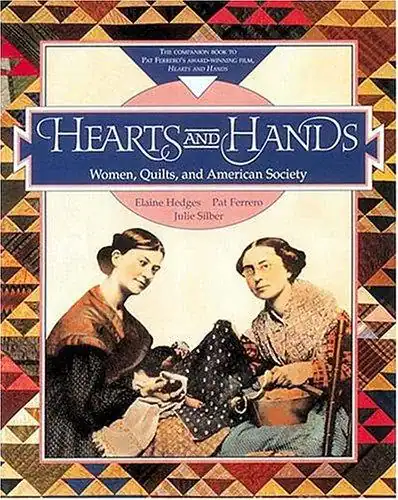
2. Ferrero, Pat, Elaine Hedges, and Julie Silber. Hearts and Hands: the Influence of Women and Quilts on American Society. San Francisco: Quilt Digest Press, 1987.
3. Fitzrandolph, Mavis. Traditional Quilting: Its Story and Its Practice. London: B.T. Basford, 1954.
4. Grudin, Eva Ungar. Stitching Memories: African-American Story Quilts. Williamstown, MA: Williams College Museum of Art, 1990. 5. Marston, Gwen and Joe Cunningham. Mary Schafer and Her Quilts. E. Lansing, MI: Michigan State University Museum, 1990. 6. Orlofsky, Patsy and Myron Orlofsky. Quilts in America. New York: McGraw-Hill: 1974. Reprint ed. New York: Abbeville Press, 1992. 7. Waldvogel, Merikay. Soft Covers for Hard Times: Quiltmaking and the Great Depression. Nashville, TN: Rutledge Hill Press, 1990. 8. Webster, Marie. Quilts: Their Story and How to Make Them. Garden City, NY: Doubleday Page, 1915; Rev. ed. Perry, Rosalind Webster. Santa Barbara, CA: Practical Patchwork, 1990.
9. Wilton, Countess of. The Art of Needle-Work from the Earliest Ages.
London: Henry Coburn, 1840.
10.Woodward, Thomas and Blanche Greenstein. Twentieth Century Quilts, 1900-1950. New York: E.P. Dutton, 1988.
From my experience, I would like to say a little about building a quilt library. Be open-minded and receptive to any print information containing the word “quilt”; collect it! Even if one knows the information in a specific item is spurious, it is still worth obtaining. Incorrect information has value to the historian, as it is prime evidence one can use later when building a case that holds an opposite viewpoint. Do not be intimidated by the size of another person’s quilt library. No one has everything printed about quilts! I have seen others’ collections that at best could be described as miniscule. Yet in those tiny collections I have seen materials I not only have never seen before, I also did not know of their existence. I can truthfully say I have never seen collections of any size – huge, moderate-sized or tiny, where I did not find something about quilts absolutely new to me. There is a tremendous amount of print information about quilts in existence. Collecting is also an act of preservation that should be encouraged.
Barbara Brackman “My list of 10 books for Quilt Study … 1. Brackman, Barbara. Clues in the Calico: A Guide to Dating and Identifying Antique Quilts. McLean, VA: EPM, 1989.
2. _________________. Encyclopedia of Appliqui. McLean, VA: EPM, 1993. 3. _________________. Encyclopedia of Pieced Quilt Patterns. Reprint ed.
Paducah, KY: AQS, 1993.
4. Finley, Ruth. Old Patchwork Quilts And The Women Who Made Them.
Reprint ed. McLean, VA. EPM, 1992.
5. Meller, Susan and Joost Elffers. Textile Designs: 200 Years of European Patterns. New York: Harry N. Abrams, 1991.
6. Montgomery, Florence M. Printed Textiles: English and American Cottons and Linens, 1700-1850. New York: Viking, 1970 or London: Thames and Hudson.
7. Osler, Dorothy. Traditional British Quilts. London: B.T. Batsford, 1987.
8. Schoeser, Mary and Celia Rufey. English and American Textiles from 1790 to the Present. New York: Thames and Hudson, 1989. 9. Set of Jeanette Lasansky’s Pennsylvania Symposium papers. Lewisburg, PA: Oral Traditions Project.
10.Set of Uncoverings. San Francisco: AQSG.
Dorothy Cozart “What an assignment! As you can see by my early reply, I couldn’t get it off my mind until I had decided on the first ten titles I would buy if I was trying to build a collection for the study of quilts. You will notice that I underlined “titles” because that phrasing allowed me to cheat a little. My list does contain only 10 “titles,” however, there are actually 23 books on my list. I could never leave all of the Uncoverings or all of The Quilt Digests off any list of “must-haves.” I do believe that any one interested in a good overview of quilt history for the 19th and early 20th century could not go wrong with my list. So, having made my apology, here is my list, in no particular order.”
1. Quilts in America, Patsy and Myron Orlofsky (New York: Abbeville Press, 1992).
2. Baltimore Album Quilts, Dena S. Katzenberg (Baltimore: Baltimore Museum of Art, 1981).
3. Printed Textiles, Florence Montgomery (New York: Viking, 1970) out of print.
4. North Carolina Quilts, Ruth Haislip Robinson (Chapel Hill, NC:
University of NC, 1988).
5. Uncoverings 1980-1990, Sally Garoutte and Laurel Horton, editors (San Francisco: AQSG).
6. The Quilt Digest 1-5, Michael M. Kile, editor (San Francisco: The Quilt Digest Press, 1983-1987).
7. Hearts and Hands, Pat Ferrero (San Francisco: The Quilt Digest Press, 1987).
8. Crazy Quilts, Penny McMorris (New York: E.P. Dutton, 1984). 9. Clues in the Calico, Barbara Brackman (McLean, VA: EPM, 1989). 10.Quilts in Community: Ohio’s Traditions, Ricky Clark, George W. Knepper and Ellice Ronsheim (Nashville, TN: Rutledge Hill, 1991). Katy Christopherson This assignment is, like that of identifying one’s favorite quilt, an impossible task.
1. The question of a single “how-to” book gave no trouble; if “only one,” The Quiltmaker’s Handbook by Michael James (Englewood Cliffs, NJ: Prentice-Hall, 1978) is it. One could learn on a desert island what to do. And knowing how, whether one does it or not, is relevant to the study of quilts.
2. Quilts in America by Patsy and Myron Orlofsky (New York: Mc-Graw Hill, 1974) should be read for its scope. (New York: Abbeville Press, 1992.)
3. The Pieced Quilt: an American Design Tradition by Jonathon Holstein (New York: NY Graphic Soc., 1973). Though the author has questioned the scholarship himself, it is the watershed introduction of the quilt as having significance as an aesthetic statement.
4. Hearts and Hands: the Influence of Women & Quilts on American Society by Elaine Hedges, Julie Silber and Pat Ferrero (San Francisco: The Quilt Digest, 1987). One of the first efforts to relate the quilt to the quiltmaker.
5. Quilts and Other Bed Coverings in the Canadian Tradition by Ruth McKendry (Toronto: Discovery Books for W.H. Smith, 1979) should be reviewed because of the clear link there revealed between patterns often seen as “American” which this suggests were part of the American scene prior to the Revolution and the great expansion to the West within the states.
6. Quilts in Community, Ohio’s Traditions by Ricky Clark, George W. Kneper, and Ellice Ronsheim (Nashville, TN: Rutledge Hill Press, 1991) is the selection from among the quilt projects. Loyalty might have suggested that I simply select Kentucky. However, reasons for any choices equally defensible, varied so much. Additionally, it is clear that any serious student will read them all. I put the “best” on slips of paper, scrunched them up, tossed them around and then over my shoulder. Finally, I reached back and picked one up. 7. Of the older books: there is no real basis for choosing one over the other from among the work of Bacon, Finley, Kretsinger and Hall, Peto or Webster. But one should be looked into.
8. Uncoverings. If the study has acquired focus, that should be the basis for selecting one of the series which has been issued annually by the American Quilt study Group since 1980. Reveals what serious inquiry demands.
9. Always There: the African-American Presence in American Quilts by Cuesta Benberry (Louisville, KY: The Kentucky Quilt Project, 1992). The significance of this study lies in its setting the quilts of this culture in a total context. Work over the last decade by anthropologists has often emphasized the African link at the expense of the American reality, and this brings balance to the inquiry. This should also serve to alert the student to so-called “genres” of quilts and suggest some scepticism of the over-easy attribution of cause without proof which characterizes some studies.
10. The QUILT: Stories from the NAMES Project by Cindy Ruskin and Matt Herron (New York: Pocket Books, 1988). A document of a time, a plague, and of the role of the quilt as catharsis. It is a compelling part of the entire story.
11. and 12. At this point frustration sets in. Two more in particular vied for inclusion: Brackman’s Encyclopedia of Pieced Quilt Patterns (Paducah, KY: AQS, 1993) and The Freedom Quilting Bee by Nancy Callahan (Tuscaloosa, AL: University of Alabama, 1987). And think of what may be in process!
Virginia Gunn The “assignment” is a great idea and the kind of thing I really like to think about. Recommended titles for a “Study of Quilts” collection.
1. For an overall study of quilts as artifacts of material culture: Patsy & Myron Orlofsky, Quilts in America. Reprint ed. (New York:
Abbeville Press, 1992)
2. For an overall view of social history connected to quilts, with a slightly feminist perspective: Ferrero, Hedges. and Silber, Hearts and Hands. (San Francisco: The Quilt Digest Press, 1987). 3. For an overview of the most recent findings related to quilt study: a complete set of Uncoverings, papers of the American Quilt Study Group (San Francisco: AQSG).
4. For understanding of regional research set in a larger perspective: In the Heart of Pennsylvania Symposium Papers and Pieced by Mother Symposium Papers, edited byJeannette Lasansky. (Lewisburg, PA: Oral Traditions Project).
5. To get turned on to what is happening and has happened around you: the state project report for your state or the state nearest to you if your state has none. For example: in my case, living in Ohio, Ohio’s Quilts in Community, by Clark, Ronsheim, and Knepper. (Nashville, TN: Rutledge Hill Press, 1991). For Canadians: Ruth McKendry, Quilts and Other Bed Coverings in the Canadian Tradition. (Toronto: Discovery Books for W.H. Smith, 1979).
6. For introduction to the wonderful material that emerges from oral history: Buferd & Cooper, The Quilter’s: Women and Domestic Art (New York: Doubleday Anchor, 1978)
7. For introduction to the fascinating world of quilt patterns: Hall & Kretsinger’s. The Romance of the Patchwork Quilt. Reprint ed. (New York: Dover, 1988) This is, of course, a classic with emphasis on midwestern depression patterns, but it gets one “turned on” to these items. When addicted, you would need to add works such as Barbara Brackman’s, Encyclopedia of Quilt Patterns. (Paducah, KY: AQS, 1993). 8. For introduction to the important area of quilt-related textiles: If fabrics intrigue, Meller & Elffers, Textile Designs (New York: Harry N.
Abrams, 1991) is a terrific new book.
9. For an understanding of the rewards of “digging deeply” into the study of one style of quilt: the classic, Dunton, Old Quilts (Catonsville, MD: By the Author, 1946) and more recent, Granick, The Amish Quilt (Intercourse, PA: Good Books, 1989).
10. For those who are visually and aesthetically oriented (I seem to use over and over again):Safford and Bishop, America’s Quilts and Coverlets Reprint ed. (New York: Bonanza Books, 1985) the visuals here remind us of how far we have traveled since this work emerged in the 1970s; or, … (I find it hard to limit myself to 10) a set of The Quilt Engagement Calendars. I like to have lots of overall views of quilts to compare to things I run up against.
Ruth McKendry This is an interesting idea, but it is difficult to know what is in print at any one time. These are the quilt and textile books I found most useful when I was researching my book Quilts and Other Bed Coverings in the Canadian Tradition (Ed. note: This title has an extensive bibliography with which those studying Canadian quilt history should be familiar). I used, as well, several early quilt pattern books, account books from village stores, and various history books containing references to early quilting, such as Samuel Strickland’s Twenty-seven Years in Canada West, (1853; reprint Edmonton. M.G. Hurtig, 1969), 295-296. Also, I obtained information from many, many quilters, some of whom are no longer with us. 1. Burnham, Harold B. and Dorothy K. Burnham. Keep Me Warm One Night. Toronto: University of Toronto, 1972. (out of print) 2. Colby, Averil. Patchwork. London: B.T. Batsford, 1971. (out of print) 3. _____________. Quilting. New York: Charles Scribner’s Sons, 1971.
(out of print)
4. Finley, Ruth E. Old Patchwork Quilts and the Women Who Made Them.
Reprint ed. McLean, VA. EPM, 1992.
5. Hall, Carrie A. and Rose Kretsinger. The Romance of the Patchwork Quilt. Reprint ed. New York: Dover, 1988.
6. Holstein, Jonathan. The Pieced Quilt, a North American Design Tradition. Toronto: McClelland and Stewart, 1973. (Ed. note: US publication omits North in title. Both are out of print). 7. McKim, Ruby. 101 Patchwork Patterns. Reprint ed. New York: Dover, 1962.
8. Montgomery, Florence M. Printed Textiles, English and American Cottons and Linens, 1700-1850. New York: Viking, 1970. (out of print) 9. Orlofsky, Patsy and Myron Orlofsky. Quilts in America. Reprint ed.
New York: Abbeville Press, 1992.
10.Safford, Carleton L. and Robert Bishop. America’s Quilts and Coverlets. Reprint ed. New York: Bonanza Books, 1985. Merikay Waldvogel This is a good idea. I’ll be anxious to see what shows up on the lists. If I were trying to build a collection for the study of quilts, these are the first ten purchases I would make: 1. The complete set of Uncoverings (Volumes 1-12). San Francisco: AQSG. These volumes offer a wide range of topics with extensive notes and bibliographies.
2. Brackman, Barbara. Clues in the Calico; a Guide to Identifying and Dating Antique Quilts. McLean, VA: EPM, 1989. Contains well-researched facts about quilt styles, construction, and fabrics. 3. Brackman, Barbara. An Encyclopedia of Pieced Quilt Patterns. Lawrence, KS: Prairie Flower Pub., 1979-1984. Book is unwieldy, but it is an invaluable resource for information on published patterns. (Ed. note: Reprint ed. Paducah, KY: AQS, 1993 is not unwieldy). 4. Montgomery, Florence. Textiles in America, 1650-1870. New York: Norton, 1984. Well-researched material on the development of the textile industry.
5. Affleck, Diane L. Fagan. Just New from the Mills: Printed Cotton in America. North Andover, MA: Museum of American Textile History, 1987. 6. Osler, Dorothy. Traditional British Quilts. London: B.T. Batsford, 1987. Written and researched by a native-born English quilt authority. 7. Orlofsky, Patsy and Myron Orlofsky. Quilts in America. Reprint ed.
New York: Abbeville Press, 1992.
8. Ferrero, Pat, Elaine Hedges, and Julie Silber. Hearts and Hands: the Influence of Women and Quilts on American Society. San Francisco: Quilt Digest Press, 1987. The best overview of the sociological aspects of quilt history.
9. Lasansky, Jeannette. In the Heart of Pennsylvania: 19th and 20th Century Quiltmaking Traditions. Lewisburg, PA: Oral Traditions Project, 1988. Important articles of Crazy quilts, appliqui quilts, and fundraisers. Good example of oral interview form, too. 10.Cooper, Patricia and Norma Bradley Buferd. The Quilters: Women and Domestic Art. New York: Doubleday Anchor, 1978. This book set me off on my great quilt research adventures when I read it in the 1970s ****************************************************** Nancy Cameron Armstrong
1109 160A St., White Rock, BC V4A 7G9;
or, PMB# 151, 1773 H. St. Suite 330, Blaine, WA 98230-5106 narmstr@ Phone/Fax: (604) 538-7551
******************************************************
Date: Wed, 22 Dec 1999 10:14:07 EST | From: QuiltFixer@
<< It has taken years of cajoling to convince the pickers with whom I trade to let me see quilts before they toss them into the washer and dryer. >> I have to jump in on this good comment from Mary. I have had to turn down purchasing so many Redwork Quilts because they were incorrectly washed and the result was faded, running color and broken embroidery. I try to tell people to worry less about the yellowing and only gently remove the accumulated dirt if necessary. Lightners and Brighteners while so called “safe for colors,” are NOT safe for old Turkey Red cotton embroidery thread.
Toni B.
QuiltFixer@ redworkldy@ www.redworklady.com
Date: Wed, 22 Dec 1999 16:56:54 -0500 | From: “John Cawley” <cawley@>
Last Saturday I was in Annapolis. I have to drive 45 miles to the quilt shop, but it’s really a treat because it involves crossing the Chesapeake Bay Bridge–glorious scenery. Anyway, Annapolis is looking like something our of Dickens. Actually the town center pre-dates A Christmas Carol by fifty years. All the lovely 18th century buildings are hung with greenery and ribbons. What thrilled me is that the Maryland State House, the oldest state capitol building in the U.S. where George Washington resigned his commission as commander of the American forces following the Revolution has an exhibit of quilts celebrating the holiday season. The first floor on the building is filled with quilts and poinsettias. The accompanying brochure contains a message from the First Lady of Maryland thanking, among others, our own Phyllis Twigg. It’s great to see quilts and quiltmakers getting this kind of attention. This is the fifth annual Red & Green & Blue exhibit.
C-Span has been rerunning their marvelous series on the U.S. Presidents. Yesterday they were at the James Monroe Museum in Fredricksburg, VA. The curator showed an unfinished quilt top made by President Monroe’s daughter Maria. It was English pieced hexagons in an arrangement of lozenges. The papers were dated 1828-29. Family history tells that she had been working on the quilt when her father became ill, put it aside and never finished it. I’ve been looking at some books that belonged to my father. One copyright 1902 is Popular Amusements by Nelle Mustain. It contains directions for a quilt fair, described as “a new and striking church social.” Included is a “Quilt Game,” questions such as “What quilt would yatch-owners choose? (Ocean Waves).”
My other find is The Masterpieces of the Exhibition. It’s the second volume of an illustrated catalogue of the Centennial Exhibition in Philadelphia in 1876. I have no idea where vol.. 1 is, and boy, do I wish I knew. Almost every page has an exquisite engraving of some item displayed at the Exhibition.
One plate shows six print patterns from the American Print Works in Fall River, Mass. They are similar to the reproductions in the Lowell Collection. The text explains that taste has improved within the “past few years…When our grandmother’s were girls young creatures thought themselves very fine indeed if they were attired in robes on which impossible peacocks and birds of paradise…were displayed… Within the recollection of many of us, dresses were covered with great sprawlings in glaring, ill-contrasted colors, such as none but a savage of today would delight in. Now we have patterns such as these–neat, carefully designed, with proper regard for the color-effect, and altogether pleasing and attractive to the eye.” What would the author think of our enthusiasm for the Barbara Brackman reproductions and the joy with which we welcomed the Calico and Chintz book?
Plus ca change!
Merry Christmas everybody.
Cinda on the Eastern Shore
Date: Wed, 22 Dec 1999 16:50:49 -0600 | From: Laura Hobby Syler <texas_quilt.co@>
Yes, yes, yes!!!!! It will cut the cotton, as will polyester thread! I’m suspicious even of cotton covered poly threads. I’ve done too many repairs over the last 5 years not to stand on a soap box and shout “DON’T DO IT”!!! Some of you may remember that I work closely with Pat Campbell (Jacobean Applique) We had several conversations with LOTS of people in Houston. Pat uses only the fine machine embroidery thread (Mettler) and uses my experiences to tell her students to beware! One person tried to convince me that since cotton and silk were both natural fibers that they would “meld”????? Well, it is super fine, and does come in tons of wonderful colors, and does almost go invisible, but I can get invisible applique stitches with *quilting thread* if I hold my mouth just right <G> All I know is that I’m tired of having hysterical quilt owners call me convinced that someone snuck in their guest bedroom and slashed their MIL’s quilt. Amazing how it is just along the sewing and applique lines! NOW, when I work on antique crazy quilts that are embroidered with silk floss, granted that it’s 100 years old, but with only a little brushing with a soft bristle brush the silk thread totally disintergrates!! Not a good thing……IMHO….Silk is a wonderful fiber, but not where this is concerned.
Laura
At 04:08 PM 12/21/1999 -0500, Lisa Ayo wrote:
>Another shop owner asked me about the silk thread frequently used these days for applique, and whether it will cut cotton fabric over time. Do y’all have any opinions on this topic? Has anyone ever worked with old silk thread applique?
>Kris http://www.QuiltHistory.com.
Date: Fri, 24 Dec 1999 00:26:09 -0500 | From: “Judy Grow” <Judygrow@>
>Another shop owner asked me about the silk thread frequently used these days for applique, and whether it will cut cotton fabric over time. Do y’all have any opinions on this topic? Has anyone ever worked with old silk thread applique?
I’m not a pro appliquer by any means. I’ve been doing applique off and on for just over a year. Because everyone was touting the glories of silk thread, I bought spools and spools, and cursed every time I put it in the needle. It just wasn’t fun working with it, and it frayed at the needle’s eye no matter how I moved it along or how short I made it, or what brand of needles I used.
But, even just using a neutral color, like beige, or grey, it did tend to disappear, no matter what the color of the cloth. And that’s what we are all after — disappearing stitches.
Then, at the Restoration conference in Omaha I bought a spool of natural colored Lacis 100% cotton thread, 140/2 for $3.75 a spool of 500 yards. This thread is extremely fine and was sold for restoration work. I think it was Mary Hanson who told me to try it for applique, and I did. It is terrific! Because it is so fine it tends to disappear, no matter what color you are working on (especially if you use the “ladder” stitch). And, it doesn’t fray and break at the needle’s eye. I find the 500 yard spool very economical. And, I don’t have to lug a whole lot of other spools of thread around with my portable project.
I wish it came in a darker color though, even grey. Maybe I’ll try coloring it with a pigma pen before I stitch. Has anyone ever done that? Anyway, I’m sold on it. The Kirk Collection sells it.
Anyone want to buy a whole lot of YLI silk thread? And some of the other popular brand?
Judy in Ringoes, NJ judygrow@
Date: Thu, 23 Dec 1999 09:23:00 +0200 | From: Ady Hirsch <adamroni@>
I’m no expert, but if I may, I’d like to add the European angle to the list – 1. Jannet Rae, “The Quilts of the British Isles” (1996) – an excellent vloume covering the history of British quilting.
2. Quilt Treasures of great Britain – The Heritage Search of the Quilters’ Guild (1995) – the equivqlent of the state quilt research project, fascinating and well researched.
3. Kathryn Berenson, “Quilts of Provence”, 1996.
I think one should also include some well researched books on applique. Two come to mind:
4. Jennifer Faulds Goldsborough – Lavish Legacies – Baltmore Albums and elated Quilts in the Collection of the Maryland Historical Society (1994) – the name says it all.
5. Ricky Clark – Quilted Gardens, Floral Quilts of the Nineteenth Century (1994).
For a folkloristic approach to modern day (well, relatively speaking)
quilting I’d also add
6. John Rice irwin, A people and Their Quilts (1984).
Merry Christmas and a happy New year to all
Ady in Israel
Date: Thu, 23 Dec 1999 07:39:01 EST | From: JBaumg5539@
Hi !
I am resending this a bit late .Seems like my messages never get through Karen I got my copy of American quilts and coverlets from Peddlers wagon .Good service and good price
Leah ,real Provencal Fabrics are $40 or more a meter in 1.50 wide (is it 60 ” ? ) not $18 .If you come to France let me know and I will tell you where to go and buy (or is it see ? ) them .BTW there is a very interesting exhibition in Mulhouse (Alsace ) at the Musee des Impressions sur Etoffes on quilted items from Provence made with fabrics printed in Alsace or Provence .Also a wonderful Indiennes from India . Mulhouse is only 170 km from Strasbourg and easily reached by train for those of you who will come to Europa Quilt this spring . The exhibition is really outstanding and the rest of the Museum is also very interesting .About 45 kms west of Mulhouse is another Museum (Musee de l’ Impression textile et du Costume ) wich is very interesting too .They have dresses and suits displayed in a very nice setting ,a very interesting film on how the printing on fabric was done and how it evolved along the 19th c and I think the temporary exhibition on Indiennes may still be on .It is set in one of the royal Manufactures wich produced some of the very best fabrics in the 18-19th centuries . Near by is the Boussac factory (fabrics ) and a shop where you can get fabrics with very good discounts (but not so much for quilts ). You need a car to get there but i think trips will be organised from Strasbourg to that place by Quilt Europa . Happy Holidays to all of you on the best list ever !!!!!!
Daniele in Paris
Date: Thu, 23 Dec 1999 08:13:00 -0500 | From: “jawhite@” <jawhite@>
I’m so glad to hear that someone else doesn’t like silk thread. I thought there was something wrong with me. I bought three spools of the stuff and can’t stand it. I tried several times to use it to applique, thinking I just had to get used to it, but finally I went back to my regular thread. When I first began quilting, there were people using silk thread to applique who said it was the best thing since sliced bread, and that was 16 years ago so I think these things just come up every once in a while. Anyway, there must be a use for the stuff besides sewing with it.
Judy White – Ct
Date: Thu, 23 Dec 1999 08:29:52 -0800 | From: “Julia D. Zgliniec” <rzglini1@>
Dear QHL,
I have enjoyed the book lists everyone has sent, being a bibliophile myself. To the list I would add a good reference textbook on textiles. I got an excellent one at a used bookstore. It is:
Encyclopedia of Textiles by the editors of American Fabrics Mag.
ISBN -0-13-276568-3
It was “discarded” by one of the community college libraries in San Diego. I have several others too. They can be had for a minimal investment and are very useful for discussions of various weaves, types of printing processes and industry jargon.
May you all enjoy the Peace and Blessings of the season and may our computers all work post Y2K because I enjoy our list so much and would miss our wonderful discussions. The recent ones have been so good. Everyone knows something.
Regards,
Julia Zgliniec
Ady Hirsch wrote:
> I’m no expert, but if I may, I’d like to add the European angle to the list – 1. Jannet Rae, “The Quilts of the British Isles” (1996) – an excellent vloume covering the history of British quilting.
> 2. Quilt Treasures of great Britain – The Heritage Search of the Quilters’ Guild (1995) – the equivqlent of the state quilt research project, fascinating and well researched.
> 3. Kathryn Berenson, “Quilts of Provence”, 1996.
> I think one should also include some well researched books on applique. Two come to mind:
> 4. Jennifer Faulds Goldsborough – Lavish Legacies – Baltmore Albums and elated Quilts in the Collection of the Maryland Historical Society (1994) – the name says it all.
> 5. Ricky Clark – Quilted Gardens, Floral Quilts of the Nineteenth Century (1994).
> For a folkloristic approach to modern day (well, relatively speaking) quilting I’d also add
> 6. John Rice irwin, A people and Their Quilts (1984).
> Merry Christmas and a happy New year to all
> Ady in Israel
Date: Thu, 23 Dec 1999 12:12:28 -0500 | From: “John Cawley” <cawley@>
This list is what used to be called in Catholic school “an occasion of sin.” I should be getting ready for the trip to Upstate NY this afternoon; instead I’m roaming thru my still unorganized bookshelves trying decide what books I would put on my list. I’d like to suggest some of my favorites.
Of the State Books:
New Jersey Quilts 1770-1950, Cochran et al.
History from the Heart: Quilt Paths Across Illinois-Ebert Quilts in Community: Ohio’s Traditions-Clark et al.
Kansas Quilts and Quilters-Brackman et al.
Each of these books looks at quilts as part of social history rather than just showing pictures and telling the quiltmaker’s story. I think we should read Finley and Webster because they kept the flame alive and are the source of so many of the popularly accepted myths. For Purpose and Pleasure and Small Endearments-both by Sandi Fox Traditional British Quilts-Osler
Soft Covers for Hard Times-Waldvogel
Twentieth Century Quilts-Woodward and Greenstein
Textile Designs-Meller and Elffers
What an embarrassment of riches we have. I hope you all have more on Christmas Day.
Cinda on the Eastern Shore
Date: Fri, 24 Dec 1999 08:12:34 +0200 | From: Ady Hirsch <adamroni@>
>Ooops – forgot to include this in my last post – re silk versus cotton, I
do quite a lot of applique. Many years ago, a dear friend, who used to be an embroidery and craft teacher, gave me a few dozen spools of English made silk she brought with her of this country in the 50ies. This was “best” silk used for hand embroideries, and you should have seen happened to it. In fact, that’s my main reason for sticking with cotton – the silk turned brittle and literally “broke” into bits. I know in all probability I won’t be around 60 years from now :-), but I certainly do not want my quilts falling apart! I find the Mettler embroidery cotton very satisfactory, and their range of colors is quite large.
>Happy holidays
>Ady in Israel
Date: Fri, 24 Dec 1999 08:15:41 -0800 | From: “Laurette Carroll” <Robert.J.Carroll@>
Merry Christmas QHL
>This was “best” silk used for hand embroideries, and you should have seen happened to it.
>In fact, that’s my main reason for sticking with cotton – the silk
turned
>brittle and literally “broke” into bits.
Does any one have any experience with silk thread in antique quilts?
Crazy quilts or earlier?
My one and only crazy quilt has some shattered fabrics but the silk embroidery remains intact and seems strong.
I remember seeing an exhibit of centuries old Chinese clothing, many made of silk and they were in excellent condition. Many had embellishment in silk and gold threads.
I wonder if the silk thread made these days will shatter as the silk fabric of the Victorian period or will it remain strong as the earlier silks have.??
Of course some cotton threads also become weak, I remember my Mother always testing the thread by pulling on it with one hand while holding the spool with the other. If it broke easily she would toss it out. Is anyone getting something quilty for Christmas? Tell us about it. I came across a wonderful early chintz top, and bought it for myself as a Christmas gift! It is made of large squares of several different chintz fabrics all set on point. Mostly browns.
Funny how I always pick the perfect gift for myself!! ;-))
Happy Holidays,
Laurette Carroll
Southern California
Look to the Future with Hope
Date: Fri, 24 Dec 1999 10:35:34 -0800 | From: “Melissa Devin” <mldevin@>
I am sure glad that there are so many people of experience and expertise on here! I had never thought of silk disintegrating in time–or having it be so strong as to cut into the fabric like poly does! I will be ordering thread from The Kirk Collection next week (and strongly suggest that my quilt shop start carrying it!). I would hate for my hours of applique (well, I am slow… so that is part of the problem 🙂 to either cut into the background or applique, or to have the silk just disintegrate. I want my quilts to last well beyond my years!
Melissa
Date: Fri, 24 Dec 1999 12:58:14 -0600 (CST) | From: Marcia Kaylakie <marciak@>
Merry Christmas one and all!
This is about Beauvoir, although quilt related and a very sneaky way to tell you all about the bowl game!
If you have not been to Beauvoir in Biloxi, Mississippi, I advise a trip there. This is a home of Jefferson Davis and his family and is delightful. The museam contains many wonderful artifacts, especailly Mrs. Varina Davis’ sewing items, needlcases, thimbles, beading items, dresses, and the like. There is also a wondrful, but very used red and green aplique quilt made by one of the soldiers’ wives of the time period. I wish the preservation on the quilt was adequate, but it is not at all. Very nice, though! And Beauvoir was a nice break from all the hustle and bustle of the Mobile Bowl game. We stayed at the Beau Rivage in Biloxi, about 1 hr. from Mobile. It is a casino, resort and spa! Yup, just the thing one needs before the holidays! So, TCU stunned’em again in a bowl game.This time E. Carolina went down in defeat (sorry, all you Pirate fans) and we had a blast with 6 college kids joining us for 3 days! However, I am much too old to pull all-nighters, which is what ended up happening after the game! So I am paying the price for that today.
Chris had the 4 points after, always a nice ending to a game. Well, off to make the traditional Bouche de Noel for tomorrow’s dessert!
Marcia Kaylakie
Date: Fri, 24 Dec 1999 16:19:21 EST | From: JQuilt@
if you go to http://www.beauvoir.org/ you can take a virtual tour of the home and grounds…the tour pictures/slides change very slowly..so be patient..
the only thing that made me a uneasy about the site, was the cap for sale, in the gift shop, that had a confederate flag with the saying”keep it flying”,on it, ..i’m sure,the sight of that flag brings back painful memories for african-americans…just as, i’m certain, the swastika flag of germany if painful for Jewish people to see..
jean laino
Date: Sat, 25 Dec 1999 16:23:14 -0600 | From: Jocelyn <Jocelynm@>
My one and only crazy quilt has some shattered fabrics but the silk embroidery remains intact and seems strong.
I remember seeing an exhibit of centuries old Chinese clothing, many made of silk and they were in excellent condition. Many had embellishment in silk and gold threads.
I wonder if the silk thread made these days will shatter as the silk fabric of the Victorian period or will it remain strong as the earlier silks have.??
Laurette,
The Victorian silks shattered because they were made with metal salts as a sizing agent, to make them nice and ‘rustley’. The thread wouldn’t’ve been treated in the same way, since there was no benefit to having it treated. Older Asian silks weren’t treated with metal salts, either, so they have survived in good shape.
Date: Sun, 26 Dec 1999 15:09:24 EST | From: EllynLK@
I hope everyone here on the list has had a nice holiday with friends and family. I had the flu but went home– where everyone had the flu so we coughed, wheezed, groaned and sneezed in passable harmony! I got one interesting gift from my best friend… I’ll try and describe it here and see if any of the resident experts here can guess what it is or what it was used for.
It’s 18 inches long, 2 inches wide, made of rough wood with rounded “spear point” tips. It’s two-sided, with the two long, skinny halves doweled together at either end. The dowels are about two inches long and about 2 1/2 inches in from the points. The whole thing is wound with about 27 yards of an old indigo print that looks to be teens or twenties. It’s about an inch wide, folded in half. I thought it could be an edging; it’s cut on the grain and not on the bias; nor are the raw edges turned under as for bias tape. Just folded over. It’s not a continuous piece; has about two joins in it. I think it’s some sort of bobbin and I guess it’s just wound with edging trim… maybe it’s a store display bobbin for dry goods??? Does this sound familiar to anybody? It’s a wonderful old artififact with loads of character and I love it. I’ll enjoy it more if I can be sure of what the darn thing is.
Any takers?
Best,
Lauri Klobas in Pacific Palisades, California where it hasn’t rained for over a month and a half