December 9 – 14, 1999
These restored messages come from the Quilt History List, an online forum where quilt historians, collectors, researchers, appraisers, and enthusiasts discussed antique quilts and related textiles. The archive dates from 1996 through approximately 2016 and is being restored gradually. Sign up in the form at the bottom of the page if you want to know when a new page is added. Original spelling, opinions, formatting, and inactive links may remain unchanged.
Primary topics of this QHL Digest:
- Machine Quilting in the 1920s–30s — A wide-ranging thread on how common machine quilting really was in the interwar decades, sparked by a research paper question and full of members’ own dated examples.
- The Fate of “A Voice of Her Own” — Members follow the news that Amazon has cancelled orders for this Wisconsin quilt documentation book and trade theories on what happened to its publication.
- What Counted as a “Quilt” Before the 1600s — A close look at old household inventories shows that “quilt” once described quilted garments and petticoats as often as bed coverings.
- Debating “Hidden in Plain View” — The controversial Underground Railroad quilt-code book draws both interest and skepticism, including a look at whether it has any reader reviews online.
- Fabric and Material Identification Requests — Members ask for help identifying cigar-flannel quilt tops, red-and-blue handwoven wool, and where to find silk netting for conservation work.
Date: Thu, 9 Dec 1999 08:49:40 -0800 | From: “Mindy Sharp” <minsha@>
Someone suggested putting a family tree as a label on the back of an old quilt. My grandmother made this for me when I was born many years ago. It does not have a label or signature. Where can I find a pattern for the family tree?
Mindy Sharp
Go forward and never lose sight of your dreams.
Date: Thu, 09 Dec 1999 10:10:06 -0800 | From: Fiona Galvin <fiona101@>
Dear Folks,
Could any of our historians (Xenia?) of teh twenties and Thirties possibly venture a quotable quote on the use of sewing machines in quilting in that period? I am now writing my paper, and in describing the characteristic qualities of quilting (for the quilter, ie what she does), I am inclined to think most quilting was by hand, but can’t really say about piecing, and it makes a difference in my paper. Any help to offer? Also, Xenia, your paper on kit quilts in Uncoverings was really interesting. I have checked out all the Uncoverings for the entire period of their publication, so I have been combing them for the last month.
Finally, can anyone give me subscription information for the various quilt history newsletters and journals?
Thanks,
Fiona
Date: Thu, 09 Dec 1999 14:00:10 -0600 | From: Laura Hobby Syler <texas_quilt.co@>
Fiona,
Here is the informaton on the Vintage Quilt & Textile Society. We have a bimonthly newsletter and a quarterly “Quilt College”. QC has been devoted to such topics as fabric dating, feedsacks, buttons, lace, 1920-30’s fabrics…..just about anything in the sewing room is fair game for our study group.
We have just secured Elizabeth Kruella for Feb. Quilt College. She has written 3 books on antique lace indentification. Elizabeth was with us last year. She had so much to share with us in 3 hours that we couldn’t begin to absorb, so we have invited her back for both the Friday evening and all day Saturday sessions. We will (for those of you who have attended Quilt College) have a short session on fabric dating. Yes, I’ve updated the wonderful “testing boards”<G>
Laura
******************************************************** We invite you to become a member of the Vintage Quilt and Textile Society. A study group organization devoted to the sharing of research and knowledge of antique quilts, textiles and related subjects. You need not be “an expert” to join VQTS!!! With QUARTERLY mini-conferences, ” Quilt College” held in the Dallas, Texas area we learn and share on the subject of things relating to the sewing room. Our Bi-Monthly newsletter is mailed worldwide & enables all members to participate by contributing articles and book reviews pertaining to the selected topics of the month. Membership dues are $24.00 anually US membership, International membership $30.00 US funds only
**For more information, contact <vqts1@> (that’s vqts*one*)
or write to:
VQTS
2401 Blue Cypress
Richardson, TX 75082 for a complimentary copy of the newsletter and membership application. Ask about bringing VQTS Quilt College to your area!
Date: Fri, 10 Dec 1999 04:53:17 +0400 | From: Xenia Cord <xecord@>
Hi, QHL and Fiona – IMHO, this is how I see machine work on quilts during the 1920s-’30s period:
1. The popular press stressed “doing as our colonial foremothers did” in quiltmaking. This meant, in general, extensive handwork to prove one’s self-worth. To be modern one had to be old-fashioned; a neat trick. The instructions for specific patterns usually did not get into HOW one was to construct the design, especially if it was a pieced design, leaving the choice up to the quiltmaker.
2. The popularity of applique kits favored handwork, because traditionally applique was done by hand. Many women “fudged” on some of their applique, especially on Sunbonnet Babies. They basted the pieces in place (or topstitched by machine) and then covered that with embroidery floss (often black) in blanket stitch, or sometimes with a running stitch not unlike sashiko.
3. Some of the most popular pieced designs of the period were not as easily done by machine as by hand – Grandmother’s Flower Garden being the most obvious, but in my continual handling of pieced quilts from the first quarter of this century I find that “hand pieced, machine joined, hand quilted” is the most common construction.
Obviously the sewing machine was a major convenience, but one had to be proficient with it, too! Sometimes hand sewing was easier because it was less exacting, especially on short, straight seams.
Xenia
Date: Thu, 9 Dec 1999 19:48:23 EST | From: JBQUILTOK@
There are a lot of tree designs – most have a lot of little triangles. If you pieced using lt green, you could put the names on the ‘leaves’ & the trunk could separate the sides of the family. There’s also one that looks more like a weeping willow that would give you longer, straighter areas to add names.
Janet
Date: Thu, 9 Dec 1999 21:00:07 -0500 | From: “calico” <calico@>
Hi there great people, I’m just startting to get an chance to read this, now that I have the time, and there sure is alot of info out there.I also do have an few questions that maybe someone can help me with. I am in the process of redoing my living room, and in doing this I’m going to finally have the places to display my feedsacks, coverlets,and quilts. Now the problem is I know that these pcs shouldnot be in contact with wood etc. But how do I put them into old cuboards with the old paint on them??? 2. question–I need to finish another one–its’ walnut was stripped years ago and nothing done to it. What do I use to protect the quilts etc against the wood??? 3. question—I bought two large dowels about 2 inches around to hang some of the coverlets on, on the wall–they are raw wood what do I use to seal the wood? Any help will be great, I just cann’t remember what I’m supposed to do with all of this. I’ve included my e-mail is someone wants to let me know that way.
thanks alot debi (stonehause)
calico@ http://www.QuiltHistory.com.
Date: Fri, 10 Dec 1999 20:19:55 +1100 | From: [from unknown]
Greetings from Amazon.com!
We have contacted the publisher to place an order for your copy of “A
Voice of Her Own : Wisconsin Women and Their Quilts”
(ISBN
1558537899).
Unfortunately, the publisher has now informed us that the publication of this item has been cancelled.
I hope it is not a case of yet another quilt history book being canned?
Hiranya from Sydney, Australia where we have had a reprieve from the hot weather.:>
Date: Fri, 10 Dec 1999 07:35:37 -0800 | From: “Robins-Morris, Laura A” <lrobins@>
Holice (and all QHLers) — you mentioned a friend who has a quilt made in China in the 30’s or 40’s. I’ve been eager to hear if that buisness existed long ago and even posted a related question on QHL a while ago. I wondered if you have any more info on early Chinese-made quilts. I have a quilt top that is applique and looks very 30’s, including Bubble Gum pink and Nile green. My grandparents lived in China in the late 20s and when my grandmother gave me the top (about 20 years ago) she said it came from China. Years later when I learned more about quilts, I thought maybe she had *mis-remembered* where it came from. But, due to the beautiful needlework and cheap labor available in China then, it would make sense that someone would have American-style handwork done over there, either for personal use or for import to the US. But I’ve never heard or read anything about American quilting coming from China prior to the 80s. So if you or any QHLers know more about this, I’d love to hear it.
Thanks
Laura in Seattle
Date: Fri, 10 Dec 1999 07:44:51 -0800 | From: “Laurette Carroll” <Robert.J.Carroll@>
Hello!
I have just received my new American Patchwork and quilting Magazine (FEB) and there is an article, by Susan Miller, on a very beautiful but unusual chintz quilt. pg. 18-22.
It is a broderie perse applique type of quilt, but made in an unusual way. In some places the chintz is used in the typical broderie perse fashion but in the main part of the design the chintz is used simply as fabric, cut in a totally different shape, a rose type pattern, but still embroidered around the edges with a buttonhole stitch. The quilt was probably made in Mississippi, but the family was originally from North Carolina. Has anyone else seen this type of broderie perse applique before? Was this type of quilt made in this area? On another note, there has been a thread on another list on prewashing quilting fabrics, pro and con.
This brought up the subject of the trend in the past few years, of making a quilt using unwashed fabrics, and an unshrunk cotton batt, machine quilting it, then washing it in the washer and dryer to shrink to get the “antique” look.
But IMHO it is the thread used in quilting and piecing that shrinks and gives it the softly puckered look.
I have studied my 19th century quilts and they pucker at the seam lines and the quilting lines. Which is what softens the quilting lines so beautifully.
Batts used in the 19th C would not shrink the same as our new cotton batts.
They were made quite differently. And any quilt that has been dried in a dryer has a different look than one laid out flat to dry. I like to use prewashed fabrics and a preshrunk batt and after it’s quilted and washed I lay it out to dry and I get a nice*antique look*. This is not a negative comment on the new quilts being made. But rather a question on what makes a new reproduction quilt look *antique*. We spend tons of money on reproduction fabrics that look antique. We want it too look right when we are finished. I think it’s the thread shrinking in the seams and quilting lines, and not shrinking fabrics or batts, that gives antique quilts their nice puckered look.
Anyone agree??
Cheers to you all, May Your Holidays Be Happy.
Laurette Carroll
Southern California
Look to the Future with Hope
Date: Fri, 10 Dec 1999 23:07:36 +0400 | From: Xenia Cord <xecord@>
Hi Laura and QHLers – I believe I have seen the quilts to which Holice referred. There are 2, and they will be in a special exhibit at Quilt America in July 2000 on Chinese quilts. These are nearly identical, and were made by students of American nuns at a convent school in China. They are an interesting mix of designs from 2 cultures. The quilts were given as gifts to an American diplomat or other American official who lived for some time in the area where the nuns had their school. The work is exquisitely done, and the quilts bear no resemblance to the Pacific rim quilts of today.
I think we can all agree that those imports we see today are copies of an American idiom done by women who have been given no understanding of our tradition, but have simply been set to work.
Xenia (Sally, you started this <G>!)
Date: Fri, 10 Dec 1999 18:55:53 -0600 | From: Mary Waller <mswaller@>
I have a “dead” 1930’s quilt with machine quilting. The quilting is in horizontal rows, about 2-1/2″ wide. The motifs are scrolls and three-leafed clovers. I’ve seen those designs on another quilt of about the same time, which makes me wonder if those were commercially available quilting designs. Anybody else seen these? The quilt I have is a sampler of embroidered Rainbow Art Co. blocks, with some hand-appliqued birds and flowers.
Saturday I bought a 1930’s quilt nightmare of appliqued tulip blocks. All the applique is machine-stitched; straight stitch very close to the edge of the appliques. My guess is the maker used the inside edge of the pressor foot toe as her/his guide. The flowers, stems, leaves and triangular base are all appliqued in colored thread. A neighbor has a machine-quilted quilt of 60-degree diamonds arranged as stars that’s 1920’s – 1940’s. I haven’t seen it in a while and don’t remember how it was pieced. The quilting was done in the ditch. I sometimes wonder if the more utilitarian quilts from that era were more likely to be machine quilted, “used up” and no longer with us, while those sewing-construction-monsters of Double Wedding Ring and Grandmother’s Flower Garden, especially with the quarter-sized pieces were preserved. In this area of the Great Plains, the Depression hit very, very hard; we’re still one of the lowest economic areas of the U.S. I think I see more salesmen’s sample type quilts, tied, with a heavy blanket(s) as batting than pieced quilts, and very few applique quilts.
I’ve seen lots of quilts from this time with machine-applied binding that looked like it was applied with the binding attachment. Mary Waller, Vermillion, South Dakota, USA http://www.QuiltHistory.com.
Date: Fri, 10 Dec 1999 22:29:22 -0500 | From: “Judy Kelius (judysue)” <judy@>
I purchased a “quilt” last weekend that looks from a short distance like a gorgeous 19th Century Whig Rose applique with a nice vine border . . . but when you get close, you see the pattern is actually printed on the fabric, and the quilting (cross-hatch) is done by machine. The patterns in the “fabrics” are similar to those I have seen in old red/green applique quilts. The fabric is cotton and the batting is a thin polyester, and the edge has never been finished, something I intend to do. Too bad it is quilted. I’m even thinking about taking the quilting out (I think it is a chain stitch that will pull out easily) and machine quilting it by following the motifs. It was dirty and stained but I was able to clean it without fading the colors. I posted a couple of photos at http://www.chesco.com/~judy/cheater.htm.
My question – have any of you seen anything like this before? Any idea of how old it is? (I’m sure it’s after 1960 because of the poly batting.) Maybe someone out there remembers seeing these in stores. I think if I would have seen it, I would remember it.
Date: Fri, 10 Dec 1999 20:18:56 -0800 | From: “Christine Thresh” <christine@>
Both Hiranya from Sydney and Sue wrote about the non-publication of the Wisconsin Documentation Book “A Voice of Her Own : Wisconsin Women and Their Quilts” (ISBN
1558537899).
Does anyone know more about the book? Was it to be lavishly illustrated with color photos or was it mainly text? My husband and I are starting up our book publishing business again and are always on the alert for possible titles, especially in the area of fiber arts. We could not handle a huge, fully illustrated (color photo) book at this time, but a narrative would be possible with a few illustrations. Who was publishing it? I could try to trace them by their ISBN number.
Christine, on an island in the California Delta http://www.threshpublications.com
Date: Fri, 10 Dec 1999 23:21:27 -0500 (EST) | From: JOCELYNM@
On 8-DEC-1999 22:25:55.3 quiltfix said to JOCELYNM
> Jocelyn, I think that story is in “A People and Their Quilts”, by John Rice Irwin. I remember reading that story. too.
Alan,
No, it was a different book- because the book I’m thinking of I had to check out of the library, and I own the Irwin book. <G> It was from a Western state, because the man was a cowboy, and Irwin wrote about Appalachia. But I agree with you, it’s a gorgeous book.
Jocelyn
Date: Sat, 11 Dec 1999 09:13:40 -0400 | From: edwa@
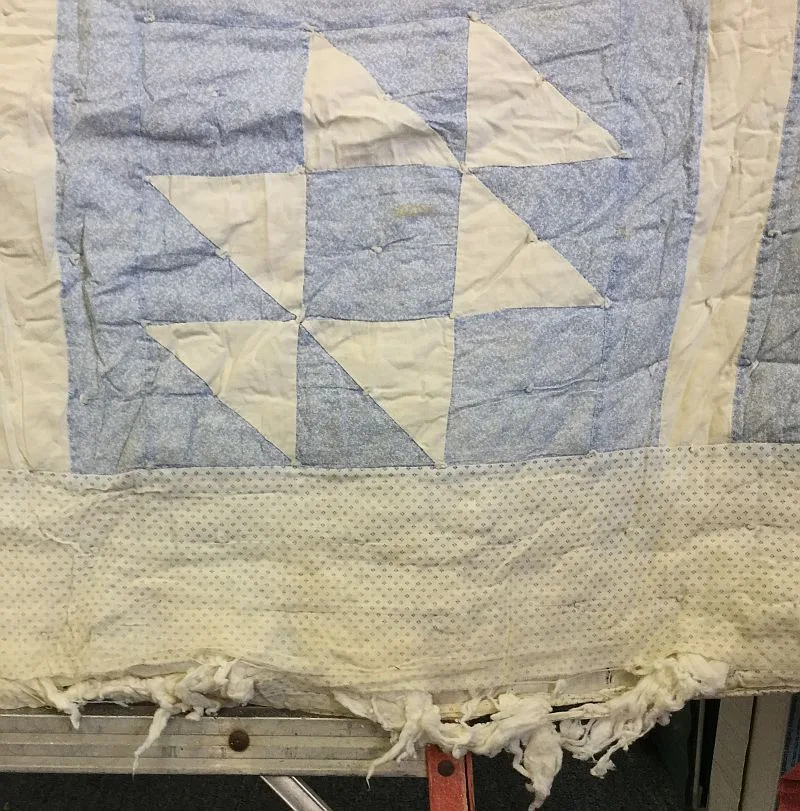
My grandmother machine quilted in the 30’s. I have some of her quilts. She quilted in a diamond or straight line pattern. When quilting diamonds, she usually would quilt one diagonal on the machine and the other by hand. This is the way I have been able to identify some of her quilts. These were purely utiliterian. Before my last aunt died, I called her one day and asked why my grandmother (and her mother) did this. She said that quilts were made to be used, lots of beds and no nitetime heat, so a lot of quilts had to be made. She also thought that by machine quilting one direction – provided the speed and in some sense served as basteing, and hand quilting the other direction gave the satisfaction of handwork. I probably have two or three which were quilted like this. Another interesting quilt that my grandmother made is one we all called the “voil quilt” It is made from the thinner voil fabric used in garments during the 30’s. I have had lots of argument about the type of fabric but that is what it was called.
Some time we get lucky. Sometime ago I purchased a box of paper and cardboard quilting designs, stencils etc and in the box was a McCall Kaumagraph Transfer pattern, No 1586. The scalloped border with peacock in the center. And then last Nov at Festival I found a quilt made from this pattern. What is the time period of these patterns. I assume late 20’s or early 30’s.
Holice Turnbow
Designer, Teacher, Quilt Judge http://www.quiltingstencils.com
Date: Sat, 11 Dec 1999 08:47:50 -0600 | From: Laura Hobby Syler <texas_quilt.co@>
Hi Hollis,
I too have owned a “voile” quilt. Acutally it was my baby quilt and I think my mother has what was left of it stashed somewhere. I remember the ruffle on it being so light and delicate. And mine was done in ’55…….and Mother, being a devote of the Vogue sewing patterns and home stitched haute coutrier, did teach me that it was called “voile”. and, I have also seen quilts machine stitched one way and hand stitched at an angle. Makes sense to me!
Laura
Date: Sat, 11 Dec 1999 07:42:35 -0800 | From: “Julia D. Zgliniec” <rzglini1@>
Dear QHL,
In 1997, the Autry Museum of Western Heritage, Los Angeles, CA did a wonderful exhibit curated by Barbara Brackman and published a catalog titled, Patterns of Progress: Quilts in the Machine Age. It is an excellent discussion with plenty of visuals of what an important development this labor saving device was. Many styles of quilts with machine quilting are shown, including work by contemporary quilters.
ISBN 1-882880-04-8
May you all have a Holiday Season filled with all that is good in life and prosperity in the new millennium.
Regards,
Julia Zgliniec – Poway, CA edwa@ wrote:
Date: Sat, 11 Dec 1999 10:50:05 -0600 | From: Jan Wass <jwass@>
Has anyone seen woolen quilts from approximately 1865-1900 that have a distinctive, handwoven-looking wool that uses red threads in one direction and blue threads in the other–i.e. red warp, blue weft? Other colors might be substituted for the red and blue, such as brown and olive green. The wool is medium weight, similar to threads in handwoven blankets–but not as heavy as coverlet wool weft.
I am researching Illinois Amish quilts and we have about 8 quilts with this distinctive wool. Eve Grannick has also seen it used in Indiana Amish quilts. Has it been used in non-Amish quilts? When? Where? Is there a name for this fabric? I am tying to get an idea of how widely (or narrowly) used it was. It may be found in non-Amish utility quilts or coverlets–but those are difficult to find. I’m hoping all of the collectors and historians on this list can give me some help with this.
Thanks,
Jan Wass,
Curator of Decorative Arts,
Illinois State Museum jwass@
Date: Sat, 11 Dec 1999 11:11:37 | From: Alice & Alfonso Cruz <akcruz@>
…I have a “dead” 1930’s quilt with machine quilting. …A neighbor has a machine-quilted quilt of 60-degree diamonds arranged as stars that’s 1920’s – 1940’s.
…I sometimes wonder if the more utilitarian quilts from that era were more likely to be machine quilted, “used up” and no longer with us, I’m interested in this subject as well. I’m doing some restoration on 2 applique quilts, made by same quilter. Her son dates the quilts as 50yo, since the quiltmaker (his mother) died 40 yrs ago. They are the same pattern & layout – 25 16″ blocks, each with a large daisy-type flower appliqued on a solid background fabric. The petals in one quilt are all solids, while the other is a scrappy collection of fabrics & colors on a yellow background. The quilting on both is a sort of wavy line going from one edge to the other. The quilting lines are about 1″ apart, but this distance varies & was obviously eyeballed by the quilter. The wave is consistent in both width & length. Both quilts originally had an “ice cream cone” border, which is quilted in a loop de loop pattern. The varying length of the quilting stitches throughout the quilt indicate to me that it is free motion quilting.
The quilt owner showed me a 3rd quilt she made – GFG – which was machine quilted in an all-over loop de loop pattern & damaged (from use) too much to justify restoration. He told me that his mother sent her tops out to be quilted, but doesn’t remember any more. Were there professional quilters using their everyday machines to machine quilt? When did long arm machines come into use?
Alice Cruz
The Quilted Chile akcruz@
Date: Sat, 11 Dec 1999 13:44:12 EST | From: KareQuilt@
Hazel Carter brought a new book to my attention this week, “Silk Quilts: From the Silk Road to the Quilter’s Studio” by Hanne Vibeke De Koning-Stapel , ISBN 0-8442-2081-7, Quilt Digest Press, copyright 2000! I just ran out this morning and purchased a copy at my local quilt shop in Fairfax, Va. I shall quote from page 8: “An important collection of antiquities from the 8th and 9th centuries A.D. was discovered in the Caves of the thousand Buddha’s at Dunhuang in China, containing Buddhist silk paintings, manuscripts, textiles, and relics…Almost all textiles found there are silk…Also found in one of the caves was a piece of ‘votive patchwork,’ as Sir Stein called it. Probably was a kesa, the robe of a high-ranking Buddhist monk.” pg. 45 “In inventories from the Middle Ages, references to silk quilts are made regularly, but none of these quilts are thought to have survived.” This is a wonderful book with history (good bibliography), the story of the cultivation of the silk worm, color photos of quilts and the silk making process, an excellent glossary, and even some patterns. I think you’ll want this book in your library!
Karen A.
Vienna, VA
Date: Sat, 11 Dec 1999 18:15:32 -0600 | From: Jon Miskowski <jmiskows@>
At 08:18 PM 12/10/99 -0800, Christine Thresh wrote:
>Both Hiranya from Sydney and Sue wrote about the non-publication of the Wisconsin Documentation Book “A Voice of Her Own : Wisconsin Women and Their Quilts” (ISBN
>1558537899).
I don’t answer with great confidence but since I’ve recently talked to people working on this book — my understanding is the original publisher pulled out of the deal and that they have found a new publisher but it is not released yet.
http://www.QuiltHistory.com.
Date: Sat, 11 Dec 1999 23:55:24 -0500 (EST) | From: JOCELYNM@
Whenever you see a reference to ‘quilts’ prior to the 17th century, it’s important to remember that quilted garments existed, and were sometimes called ‘quilts’.
For example, in Queen Katherine Howard’s household inventory, there’s a listing of her ‘quilts’…but the notation occurs in the list along with her personal wardrobe, NOT in the section with her bed hangings. It’s much more likely that it referred to quilted petticoats or underskirts, than to a bed quilt.
Jocelyn
Date: Sat, 11 Dec 1999 22:52:31 -0800 | From: Julie Silber <quiltcomplex@>
Hi All,
On principle, I do not buy books from Amazon.com (no-doubt-futile attempt to support “actual” independent bookstores and booksellers) but I went to that site to get some publisher’s information and realized that they show READER’S REVIEWS on books they sell. Curious, I went to see the reviews of “Hidden in Plain View.”
There were none… Seems like a wonderful place to give an opinion and get it out to
LOTS of people. What do you think?
Julie Silber
Date: Sun, 12 Dec 1999 14:51:19 -0000 | From: “Audrey Cameron” <audrey.cameron@>
Hi Everyone,
Concerning the book “A Voice of Her Own : Wisconsin Women and Their Quilts” by Ellen Kort.: when I first mentioned it to you a couple of months ago I received an e-mail from on Jon Miskowski (jmiskows@)
stating “Just heard that this group is working with another publisher called “Howell Press” but they are still in negotiations so you might keep an eye out for it in a couple months.”
I know no more than this
Audrey Cameron in Lincolnshire,England audrey.cameron@
Date: Sun, 12 Dec 1999 10:59:35 EST | From: Kittencat3@
And there is also evidence that quilts used on beds were referred to as quilts. It depends on the context – if the reference occurs in an inventory of bed linens or the description of a bed chamber, it’s probably what we would think of as a quilt. If it’s in a wardrobe inventory, it’s more likely a petticoat.
Lisa Evans
Date: Sun, 12 Dec 1999 14:00:39 -0500 | From: “Peggy O’Connor” <mnoc@>
Does anyone know whether the West Virginia quilt book was ever published, and, if so, what the final title was? I thought it was due out this year.
I saw that the Rhode Island book is due in February 2000, and Amazon lists the price as $75.00! Wow!
Peggy in NC
Date: Sun, 12 Dec 1999 14:25:42 -0500 | From: “Sue C. Uncapher” <erroof@> (by way of List Mom <qrs@>)
Dear Holice & QHL’ers
I have in my collection two Kaumagraph Transfer Patterns one is a “Quilted Block Bedspread” pattern, No.1629, an alternate block Dresden plate style pattern w/scalloped border. On the inside of the flap of the pattern envelope is stamped the date 12 8 27. The second pattern is an embroidery pattern, No. 1183, for a tea cloth and napkins this one also has a date stamped on the inside of the flap, it reads 4 21 20. Sue, in NW Ohio, where it is cold and rainy, with the promise of snow later in the week.
Date: Sun, 12 Dec 1999 16:49:10 -0500 | From: Jean Binns Smith <shejean@>
I think the story about the husband quilting might be from the Quilters by Patricia Cooper and Norma Buferd.
Jean in Central Pa. where we have had no snow yet.
Date: Sun, 12 Dec 1999 15:43:23 -0800 | From: Julie Silber <quiltcomplex@>
Hi,
Oooops, I was mistaken when I said there were no reader reviews of “Hidden In Plain View.”
Our Australian friend, Lorraine sent me the following message: Hi Julie, If you pan to the bottom of the page, there are indeed “too many”
reviews of the book.
Please write a good one. I am not “wordy” enough to do it well.
Cheers
Lorraine in Oz
Julie Silber
Date: Sun, 12 Dec 1999 15:56:20 -0800 | From: Julie Silber <quiltcomplex@>
Hi All,
I was dismayed to read Hiranya’s message the other day :
From Amazon.com:
“We have contacted the publisher to place an order for your copy of “A Voice of Her Own : Wisconsin Women and Their Quilts” (ISBN1558537899). Unfortunately, the publisher has now informed us that the publication of this item has been cancelled. I hope it is not a case of yet another quilt history book being canned?
Hiranya from Sydney, Australia”
Last month I attempted to order several copies of “Hearts and Hands” which I wrote with Elaine Hedges and Pat Ferrero. We were informed that they were out of stock, and that the publisher had no plans to reprint. The publisher, Rutledge Hill Press, had “given away all the remaining copies” to PBS to be used as a premium. We have no quarrel with the gift, but Rutledge had repeatedly promised us that when the stocks started to get low, we would be told so that the book would not go out of print with out our having a chance to procure a “stash.” Now we, as authors, can not get the several copies we need to have on hand and the world has lost yet another quilt history book. Sad story.
Julie Silber
Date: Sun, 12 Dec 1999 18:58:56 -0500 | From: “Diane McGuire” <dianemcg@>
QHLers:
In a small town 40 miles south of Boston my local mail carrier left the message that he could not leave the package from Hickory Hill (Kris) because my dog was loose and there was no safe place to put it. I had to call the PO and explain that it contained quilting books and fat quarters, not sausage and cheese! 😉
Diane in Southeastern Massachusetts awaiting my Christmas present to myself
Date: Sun, 12 Dec 1999 18:18:43 -0500 | From: “Kris Driessen, Hickory Hill Quilts” <oldquilt@>
Date: Sun, 12 Dec 1999 20:36:23 EST | From: EllynLK@
I saw this on an AOL message board… thought maybe someone here could help.
Lauri Klobas
Subject: Quilt Documentation
Date: Sun, 12 December 1999 12:46 PM EST
Our extension service study group is attempting to document quilts in Bandera Co, Texas and we need help/hints on how to go about this. We have come up with a tentative format but would like to hear from anyone who has experience in this. I know there was a program called ‘Boxes under the Bed” that dealt with documentation but have no real knowledge. Thanks, rita riverroos@
Date: Sun, 12 Dec 1999 20:37:59 -0500 (EST) | From: JOCELYNM@
On 12-DEC-1999 11:01:00.9 Kittencat3 said to JOCELYNM
> And there is also evidence that quilts used on beds were referred to as quilts. It depends on the context – if the reference occurs in an
Lisa,
Right– although I’ve read modern quilting books that used the Queen Katherine reference to ‘prove’ that she had bedquilts. It’s a word usage thing- then, anything quilted could be called a ‘quilt’, whereas now we reserve ‘quilt’ for a bedcovering, and call other things ‘quilted ______s’ (jackets, Christmas tree skirts, table runners, whatevers).
Jocelyn
Date: Sun, 12 Dec 1999 20:45:19 EST | From: EllynLK@
I visited Crazy Ladies fabric store in Santa Monica yesterday… needed some new sewing machine needles as I had been making a utility bag for a piece of equipment I use at work and broken two in a day!
The ladies at the counter were talking… “I love my Bernina,” said one. The other mentioned she had a Pffaf (sp??). They were going on and on. I was looking at the needles and the clerk came to see if I needed any help. Told her I just needed needles. “What sort of machine do you have?” she asked. Well, having heard the high-tech conversation of moments ago, I hesitated.
“I have a 1947 Domestic Rotary.”
I got a blank look but that’s what I expect….
When I was in high school (class of ’72), the lady across the street from my grandmother died. Gramma was the executrix of the estate. I got lots of cool paper items from old Mrs. Leiber’s estate– and my mom bought me her 1947 Domestic Rotary sewing machine, complete with buttonholer, attachments (including a quilting thing, a long, skinny rod that attaches back by the presser foot and has a flat loop on the bottom for the puffy quilt being stitched… as well as all sorts of cool attachments, a ruffler, a pleater, narrow hemmer– I mean, anything a lady in 1947 could want of her machine. I had the warranty card and the book for all the attachments. ANYWAY, I personally have never heard of a Domestic– other than my relic which I love and which was last used this morning! Since there are so many sewing machine mavens on this list– was Domestic a major brand? Or was is a lower-priced generic of a White or something like that? 52 years and this thing runs like a champ, is solid, reliable and I will never, ever part with it. But if possible, I’d like to know a bit more about it– if anyone knows!
You can e-me off-list….
Thanks!
Lauri Klobas
Pacific Palisades, California where it it chilly and the relative humidity is so low that my hair has enough electricity in it to run the city! No rain for 32 days and counting….
Date: Mon, 13 Dec 1999 07:32:30 -0500 | From: “jawhite@” <jawhite@>
I’m sorry to hear that the book is now completely out of print. I have an autographed copy that I got at a reception at the New England Quilt Museum when Julie Silber and Pat Ferrero were there together with Gail Binney Stiles – my that seems like a long time ago. Anyway, the more I learn about 18th and 19th century women and about quilt history, the more I appreciate that book and am sorry that newer quilters will not have the pleasure of owning a copy.
Judy White – Ct
Date: Mon, 13 Dec 1999 13:19:42 EST | From: QuiltFixer@
I need to locate some silk netting (having a senior moment on remembering the name). Am running out and can’t remember where I got the original. Can anyone help? Toni B.
QuiltFixer@
Date: Mon, 13 Dec 1999 10:19:07 -0600 (CST) | From: Marcia Kaylakie <marciak@>
Hi!
I have recently acquired a quilt top made of cigar flannels and would like to know much more about them. Can anyone recommend some good articles/books on the subject? I had heard that there was an article in a recent quilting magazine, but can’t locate it. Thanks, Marcia Kaylakie
Date: Mon, 13 Dec 1999 16:11:29 -0000 | From: “Jeanne Fetzer” <jeanne.fetzer@>
Yes, yes! Someone has got to get the word to the general public. Please,Eileen. We need to hear from you – or Laura, or anyone else with the great language skills you have.
Happy holidays to all of you – may you have energy to get everything done, or else the wisdom to cross some things off your list!
Date: Mon, 13 Dec 1999 17:18:20 -0600 | From: Laura Hobby Syler <texas_quilt.co@>
Silk crepeline is what you want. My ‘ole buddy Nancy Kirk of the Kirk Collection sells it in smallish quanties, rather than buying a bolt from Light Impresions or the museum conservation warehouse which is what I did many years ago. Even then it set me back a bundle.Laura At 01:19 PM 12/13/1999 EST, QuiltFixer@ wrote:
>I need to locate some silk netting (having a senior moment on remembering
the
>name). Am running out and can’t remember where I got the original. Can anyone help? Toni B.
>QuiltFixer@
Date: Mon, 13 Dec 1999 17:32:04 -0600 | From: Laura Hobby Syler <texas_quilt.co@>
Jeanne, Judy and all,
Lisa wrote a pretty good article for the VQTS newsletter last Feb (no coincidence for Black History Month) about the dubious validity of the subject. She’s temporarily off of QHL so i’ve forwarded this thread to her. I’m sure she’d be glad to give “our” two cents worth to this “publication”
Laura
Date: Mon, 13 Dec 1999 20:53:38 -0500 | From: Fran Fitz <fjfitz@>
In response to Peggy Conner..The last information I received from the WV documentation committee is that they had to find another publisher and hope to have the book published in fall of 2000. I was priviliged to see some of the quilts they documented and the book should be a real winner..Fran in rainy, foggy Western Md.
Date: Mon, 13 Dec 1999 21:06:23 -0500 | From: “John Cawley” <cawley@>
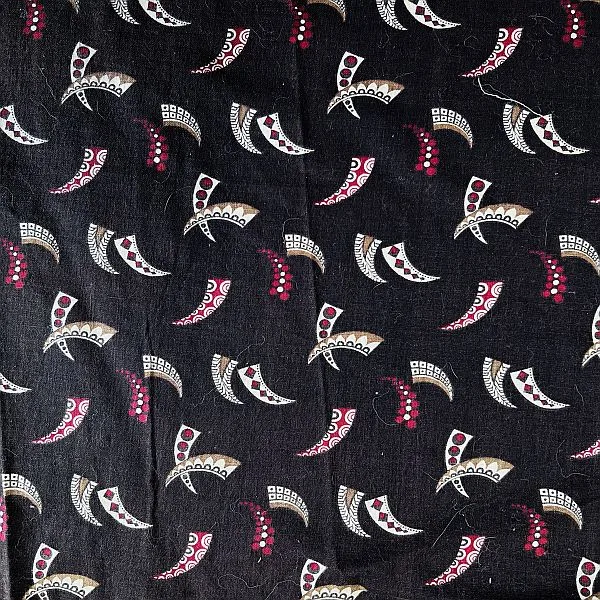
I’ve been back in PA and visiting my grandchildren in upstate NY. On the way home I stopped in an antique shop in a very out-of-the-way town on the upper Eastern Shore. I came home with 23 pages from a salesman’s sample book (company was located in Binghamton, NY) of cotton fabrics for 1932. If only I could find something like this for every decade I could be a fabric guru. I consider this to be an early present direct from Santa.
Cinda on the Eastern Shore http://www.QuiltHistory.com.
Date: Tue, 14 Dec 1999 11:00:12 -0500 | From: Alan Kelchner <quiltfix@>
Sally, someone – can you help me locate someone in England (I don’t have a specific area to give, but I don’t think it would matter) who is conversant in appraising American quilts. A local woman wrote me about a quilt sent to England to be sold as a fund raiser for Princess Diana’s land mine fund. I guess they want to appraise it before they sell chances.
Heck, when I called her, her husband asked if I would leave a message since she was eating. So I told him I was Alan and calling about a quilt. He repeated this aloud, vaguely puzzled. But she came running to the phone anyway, so they must want this appraised badly. Thanks. She was frankly amazed I even knew of someone to ask !
Alan
Date: Tue, 14 Dec 1999 11:08:29 -0500 | From: Alan Kelchner <quiltfix@>
I have a storage question.
I know all about storing quilts to keep them neat and clean. Over the weekend my collection exploded out of it’s current, not-the-best storage. Nothing exploded literally, but a new acquisition has made storage a major problem. So I’m looking for ideas.
What I want to know is this – after you have folded the quilt, padding it with paper/muslin, how do you take care of the “where to put it” problem? In particular, I’m looking for ways to cope in a small home (1400 sq ft) where a major remodel or new addition is simply out of the question. There are no available closets to take over. I want to know about your ways of dealing with your collections – especially large ones – the number of pieces I have is starting to worry me……. NOT!
Alan
Date: Mon, 13 Dec 1999 19:22:32 PST | From: “Anne Copeland” <anneappraiser@>
Xenia,
I previously also thought that certain textile methods in the 30s were a quick method to make something that looked like something that took a longer time to create. Now, however, I believe that many things developed as separate creative expressions. For example, the pre-tinted pieces, originally seemed like something to give the appearance of appliqued pieces. Time, however, has proved my thinking erroneous. The pre-tinted pieces may have come about as an independent creative expression. Today we are seeing the re-introduction of pre-tinting pieces (crayon work anyway) and the people I know who are making these pieces are not making them as something to look like applique.
Blanket stitching is not that quick if you want to do a good job. Perhaps quicker than applique, but depends on your skill level. And it has a decorative effect that might have been something that caught on because it gave more of an emphasis to an appliqued piece. We have seen the use of ric-rac similarly used to emphasize a shape on quilts and other textile items at various times in history.
In reality, we cannot know what women of the past were thinking, because we cannot see out of their eyes. These are just our own ideas of what might have been. But we must always keep in mind that we see from our own cultural perspective and time-frame. Anne Copeland
Date: Mon, 13 Dec 1999 22:31:09 -0400 | From: edwa@
There definitely needs to be a reprint of reviews that were questionable. It appears that this book is now gaining some attention from the general quilter. I watch another quilting bulletin board and twice recently there have been requests about the book. The first was from a quilter who has been asked to make a sampler of all the blocks mentioned in the book for the local Senior Center. I wrote her back and suggested she do a bit of research in light of the questionable nature of the book. Another just this week asked for the names of the blocks mentioned that she wants to make a quilt commemorating the Underground RR.
If the review could be reprinted, then i would have something to send to these folks.
Holice Turnbow
Designer, Teacher, Quilt Judge http://www.quiltingstencils.com
Date: Mon, 13 Dec 1999 22:53:02 -0500 | From: Barb Garrett <bgarrett@>
On another quilting list, a person stated that she wishes to make a sampler quilt of the Underground Railroad patterns as listed in Hidden in Plain View. I thought perhaps some who like me didn’t buy the book (although I did hear a lecture based on the book, and was able to scan the book for about 2 hours one day) might like to know what the block patterns are that are included in the book. The following was an answer to the first woman’s inquiry —
> I recently got the book (not read it yet)and here are the main Quilt Code Patterns :
> Monkey Wrench
> Wagon Wheel / Carpenter’s Wheel
> Bear’s Paw
> Crossroads
> Log Cabin
> Shoofly
> Bow Tie / Hour Glass
> Flying Geese
> Drunkard’s Path
> Star / Evening star / North Star
> Secondary Code Patterns
> Wagon Wheel variation
> Sailboat
> Britches
> Basket
> Nine Patch
> Rose Wreath
> Dresden Plate
> Tumbling Blocks or Boxes
> Broken Dishes
Barb in southeastern PA
<bgarrett@>
Date: Mon, 13 Dec 1999 20:59:15 -0800 | From: “mfm” <treetop@>
Dear Marcia K,
You posted a question about where to find more information on cigar flannels. The woman listed below was passing out her card at the East Lansing AQSG conference in October. She was involved with an exhibition entitled “Better Choose Me: Collecting and Creating with Tobacco Fabric Novelties 1880 – 1920.” ** Ethel Ewert Abrahams in North Newton, KS ** neabra@ ** good luck, and I hope you have nice ‘chat.’
molly in almost snowing oregon
Date: Wed, 15 Dec 1999 00:21:06 -0500 | From: “Judy Grow” <Judygrow@>
Eileen Trestain seems to be having a problem posting to the list. Until we can get it corrected, she has asked me to forward the following:—- Judy in Ringoes, NJ judygrow@
>Would you please post >about the book, SILK QUILTS by Hanne Vibeke de Koning-Staple. It is new, >published by Quilt Digest Press, and will cover the latest discussion on
QHL >about early quilts. It shows a quilt made in 1544, some from the 1700’s and >wonderful early embroidered silk quilts. It has new ones, too, but the
>older ones are grand! Quilt historians would probably just love this book.
Eileen Trestain ejtrestain@
Date: Tue, 14 Dec 1999 21:28:05 +0400 | From: Xenia Cord <xecord@>
On Nov. 4 Laurel Horton published the following review of Hidden in Plain View on QHL. Because it was in response to a direct query, there are some references to individuals on the list included, which do not detract from the assessment of the book. I asked to re-post it. On 14 December Laurel said:
<Xenia,
Permission granted. I don’t seem to have saved my “review.”
Laurel>
There are many problems with the Dobard/Tobin book. Personally, I found it one of the most bizarre books I’ve ever read. I found the authors’ concept of “scholarship” to be shallow, incomplete, inconsistent, and poorly directed.
As a folklorist, I recognize both the values and limitations of information gathered from oral interviews. From my perspective, I find the key element in Tobin’s experience to be the _narrative_ told to her by Mrs. Williams, rather than the “factual” details. There is a long tradition of creative narrative among African-American families. As a folklore scholar, my first research direction would have been to examine the storytelling tradition in Mrs. Williams’ family and community. What seems most likely to me is that sometime in the twentieth century, a creative person put together a wonderful narrative to entertain, to provide a sense of pride in the struggle of southern black people in overcoming hardship, and, perhaps, to engender an interest in exisiting or imaginary family quilts. Instead of researching a lot of unrelated African textiles and creating rationalizations for patterns that are obviously 20th century creations, the authros would have done better to look at published collections of African-American trickster tales and other narratives, or at least to consult with folklorists who have actively collected and analyzed these narrative traditions. Another very disturbing element in the book is that although Tobin says she sat at Mrs. Williams’ feet and took notes for hours, we are given only a few fragments of what she was told. I’d like to know what else was in those notes. Tobin obviously decided most of it was not relevant, or perhaps it did not support the interpretation Tobin and Dobard selected. The way Tobin describes her interactions with Mrs. Williams follows a formulaic structure, in which a stranger appears, offers access to arcane knowledge if the approached person performs certain tasks or agrees not to reveal the source of the information, then the stranger conveniently disappears (or dies) so that others cannot check out the information for themselves. This is not to say that the events did not happen as Tobin recounts them, but only to point out that the elements of the story fit a traditional pattern.
After reading the book, I ask myself these questions: Would a slave family really have had the resources to make and set aside that many quilts, just to have them available as signals? Archeological and archival research suggests that bedding in slave cabins was more likely to be wool blankets imported inexpensively from England and that enslaved people had few personal possessions. More pointedly, if this coding system devised by Mrs. Williams’s ancestors was so wonderful and successful, how come the family stayed in South Carolina? Maybe they were so busy making quilts that they didn’t have time to escape. It just doesn’t add up. As Marcha McDowell pointed out in her after-dinner presentation at AQSG, the book has already done a lot of damage. It doesn’t matter that the authors tucked in a few obscure disclaimers along with their arguments. Schoolchildren are now studying this stuff as the truth, they are making Dresden Plate quilts “just like the escaping slaves on the Underground Railroad,” and they have this book to back them up. It’s an attractive story, so people respond to it without questioning. Those of us who talk about quilts to public audiences will be spending the rest of our careers arguing in vain that the information in this book not be swallowed whole. Since _we_ didn’t write a book on the subject, we will not be believed. But, Dana, don’t take this as a personal put-down. I had intentions of writing my response to the book months ago and never got around to it. Then it seemed to me that interest dropped off, so I didn’t want to rehash the subject. Your brave foray was the incentive I needed to make the effort to post my thoughts. No matter where we are in our understanding of quilts, we all have much to learn. My master’s thesis from 20 years ago says that the earliest quilts were crazy quilts. I know better now, but occasionally even now I will hear or read someone’s delight in pointing out my error as if I still thought it to be true. The problem is that even if Dobard and Tobin revised their book to more accurately examine the original narrative, the new version would never overcome the hype and appeal of the first.
Laurel Horton
Date: Tue, 14 Dec 1999 19:40:50 EST | From: JBQUILTOK@
Ethel spoke at our Guild earlier this year. Her collection was going to be in a Kansas museum exhibit – unfortunately, I don’t remember the dates. She brought much of it to our meeting & let us get up close to it. Fantastic program!