October 12 – 20, 1999
These restored messages come from the Quilt History List, an online forum where quilt historians, collectors, researchers, appraisers, and enthusiasts discussed antique quilts and related textiles. The archive dates from 1996 through approximately 2016 and is being restored gradually. Sign up in the form at the bottom of the page if you want to know when a new page is added. Original spelling, opinions, formatting, and inactive links may remain unchanged.
Primary topics of this QHL Digest:
- Baltimore Album Quilt Research — A member seeks help identifying makers on a signed, dated 1853 quilt, and others point to Katzenberg’s and Dunton’s books plus LDS genealogy resources.
- Eagle Quilts, One More Round — The eagle-motif thread gets two dramatic closing examples: a twelve-eagle engagement-calendar quilt and a sixteen-eagle album border.
- Toledo Museum Exhibit, Corrected — A widely-touted 200-quilt museum exhibit turns out to be a much smaller ticketed show once a member actually visits. (see the article on quilt museums)
- Corsetry, the “1900 House,” and Textile Scholarship — A British living-history TV series sparks a tangent into Victorian corset practices, leading to a recommendation of Elizabeth Barber’s textile-history book Women’s Work.
- AQSG Seminar Recap — Members who attended the American Quilt Study Group’s Michigan seminar share highlights and reconnect with fellow attendees.
- Ladybugs and Quilt Safety — A member asks whether a household ladybug infestation poses any risk to stored quilts.
Date: Tue, 12 Oct 1999 08:37:38 -0400 | From: “Joan Brown” <jfbrown@
Hello all,
I have a friend who would like to research a quilt she just bought. She thinks it is a Baltimore Album quilt. It has a signature and the date 1853 quilted into it. I can hardly wait till I can see it for myself. Are the names of the known makers of Baltimore Album quilts listed on the net anywhere. She plans to search the census records and contact the Baltimore Museum. If anyone here can help it would be greatly appreciated.
Thank you,
Joan in PA
Date: Wed, 13 Oct 1999 09:56:54 -0400 | From: denise nordberg <quiltdiva@
Hi Joan, I don’t know of any net sources for the names on Baltimore album quilts but there are two book sources that I know of….BALTIMORE ALBUM QUILTS by Dena Katzenberg, now out of print, has lists of names wherever found on the quilts in her book Also, in LAVISH LEGACIES by Jennifer Faulds Goldsborough, there are many album quilts with the signers – as well as some genealogical information – listed. Hope this helps. Denise in Scranton, PA To Joan and Denise, Also, don’t forget the book of the Maryland Quilt Documentation Project, = called “A Maryland Album: Quiltmaking Traditions – 1634-1934” by Gloria = Seaman Allen and Nancy Gibson Tuckhorn. Published in 1995, it has quite = a few beauties, with maker’s names. Jean, with the MN project.
Date: Thu, 14 Oct 1999 20:33:35 +0400 | From: Xenia Cord <xecord@
If you can get a copy to look at, don’t forget William Rush Dunton’s Old Quilts (pubished in very limited quantities and long out of print). Xenia, off to AQSG momentarily
Date: Thu, 14 Oct 1999 10:29:23 PDT | From: “JuLee King” <piecingitogether@>
Joan, I’m not shore if this will help but the LDS church has the largest genealogy library in the world and now the have a web site to do research on line I haven’t used it yet myself so I don’t know what all information your friend may need but its worth a shot. It also might help any one else trying to find out more about some of these talented women. I know at the library here in salt lake they even have alot of journals and histories from all over the world. the site is www.familysearch.org I hope this helps. If it doesn’t get you to the site let me know and I’ll try again. JuLee in utah
Date: Thu, 14 Oct 1999 21:02:56 -0400 | From: Peg Gilson <gilsons@
Has anyone been to the special exhibit at the Toledo (OH) Museum of Art? It opened last week and runs through January 20. I understand that there are about 200 quilts, some of which are antique and have rarely been exhibited. I believe Penny McMorris helped organize or is curating it. Thank you for your feedback.
Date: Fri, 15 Oct 1999 14:17:12 -0400 | From: “Wykes Family” <wykesfcn@
Hi Peg and QHL:
I just went to the exhibit at the Toledo Museum of Art. There are NOT 200 quilts! This is a small exhibit (ticketed) that is comprised of all different types of quilts-could be only 30 or so there. They are all from the American Museum of Folklore. There are everything from whole cloth to Signature to Amish to modern quilts. Some close to 1800, many from 1850 era and all the way to 1970’s. The nicest thing in this good exhibit is that you can get VERY close to see the fabric and stitching, only a few are behind plexiglass. Some are very famous quilts that I have only seen in books. The Toledo Art Museum is a wonderful museum in its own right-free to get into, but this exhibit costs $5 a person. It’ s worth a trip to Toledo and the time to go through the show. A nice touch is that they have examples of the type of stitching (ie..applique or broderie perse) in a touchable exhibit right next to the quilt itself. My kids loved this. Debbie Wykes Monroe, MI (20 miles N of Toedo)
Date: Sat, 16 Oct 1999 22:53:52 +0200 | From: Ady Hirsch <adamroni@
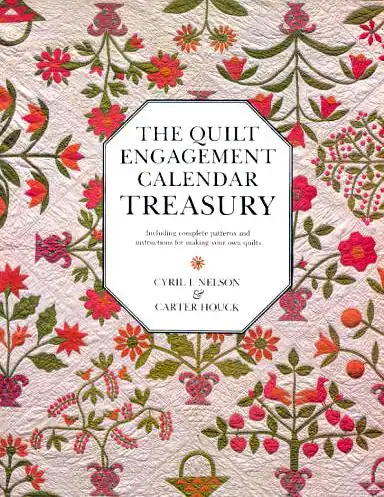
Hi, At the risk of boring everyone, here’s one last reference to eagle quilts. I’ve just received the new 2000 Quilt Engagement Calendar, and plate 10 has the funniest eagle quilt I’ve ever seen. It has twelve eagles, no less (although they do look a bit like turkeys), in all colors of the rainbow. In their beaks they hold a cherry and leaves, and the tails are made of numerous multi-colored, narrow strips. Talk about freedom of interpretation! These, I think, are the least patriotic birds I’ve ever seen, and among the nicest. Incidentally, the calendar editors date the quilt to 1850-60, and say it is probably from Pnnsylvania. Ady
Date: Sat, 16 Oct 1999 17:18:21 -0400 | From: “Judy Kelius (judysue)” <judy@
I’ll add one more to the eagles discussion. Last weekend I bought an album quilt with a large border of eagles – sixteen of them altogether. It is fabulous! Each is holding a flag in its beak with initials on it, each ending in “S,” so I imagine they represent various members of the family. There is a shield on each breast, and each is holding a sheaf of arrows.The middle has nine different appliqued blocks. I think it also dates to around 1850. There is some deterioriation in some of the reds (not that bad), so I’m going to have fun restoring it with old fabrics. Anyone who has some of the 1850ish red prints willing to sell any?
Date: Sat, 16 Oct 1999 22:07:54 EDT | From: Palampore@
I just got all of the plastic sheeting out of my studio this week and now I
have to go back tomorrow and do the wrapping process one more time. It looks
like Hurricane Irene is heading our way.
I have been shocked that I have heard very little from people regarding their
personal treasures. I am assuming that everything had to be tossed. It has
all been so sad and I just hope this storm coming does not compound it. My
uncle’s business had 5 ft. of water in it and he says the stinch is just
beginning to fade.
I talked with a woman who has frozen her photo albums. Says the pictures
seem to be stuck to the plastic film. Any librarians or photographers out
there who might have some helpful hints.
Take care and say a prayer for the east coast. Lynn Lancaster Gorges, New
Bern,NC
Date: Sat, 16 Oct 1999 21:55:23 -0500 | From: “Renee Hills” <reneehills@>
I am pretty sure it was this list discussing Victorian corsetry a = while age=20 (‘did they remove a rib? why on earth did they do it?’ etc.) and = thought this=20 might be of interest.
Our Channel 4 has a programme running in which a family have = undertaken to=20 live 4 months in a London terrace house which has been restored to = Victorian=20 state (gas lamps, coal kitchen range, boiling copper to wash etc.) and = live=20 entirely authentically, which includes the women wearing corsets.
This week the programme looked at the effects of corset = wearing. The=20 mother has been complaining of shortness of breath and the local doctor = came and=20 measured her air flow on exhaling. Wearing the corset seriously = reduced=20 her air capacity. She is complaining of faintness, weakness, = shortness of=20 breath and also the effects on the bladder – which apparently = spontenously=20 empties about half an hour after removing the corset.
What was really interesting was that researched documents showed = that she=20 could remove the corset when at home and working without compromising=20 authenticity – Victorian books make it clear that they knew the damage = they were=20 doing to the internal organs and not everyone wore them all the = time. BUT=20 she has a wardrobe of specially made ‘authentic’ clothes which will not = fit=20 properly without the corset. Despite confessing to the camera that = she=20 longed to put on trousers and a fleece top, she has decided to carry on = with the=20 corset wearing so that she can wear her Victorian clothes without = unsighly gaps.=20 The doctor felt that no permanent damage would be done during the period = of the=20 experiment.
If a 20th century woman succumbs to the pressure to corset = herself=20 all the time to ‘look right’, despite modern medical knowledge, what = chance did=20 the Victorians have?
The programme is called ‘The 1900 House’ and there is some info. on = the=20 channel 4 website (www.channel4.com)=20 although I had difficulty getting the video clips to run.
Sally W
back to corsets and on to thongs….you can’t tell me that thong underwear is
really all that comfortable…i spent most of my adult life trying to find
underpants that didn’t do what thongs do…and how about the pushup bras and
the “wonder bra” that not only pushes up but pushes in…don’t tell me that
when that one comes off there isn’t a huge sigh of relief…and can those 5
inch heels really make walking a joy? your lucky you make it to the car.. or
get off of the elevator and to your desk…
jean
Date: Sun, 17 Oct 1999 17:14:32 -0400 | From: “jawhite@” <
I am looking for a copy of or the author of a poem called, “The Song of
the Shirt.” Is anyone familiar with this poem?
Judy White – Ct
Date: Sun, 17 Oct 1999 20:34:18 -0400 | From: Alan Kelchner <quiltfix@
Judy,
Think long and hard about restoring that quilt. The description makes it
sound like an important piece. Can you make a picture available? I want
to see this neat piece! (I’m being nosy now).
Alan
busybody today
Date: Sun, 17 Oct 1999 20:42:54 -0500 | From: Jocelyn <Jocelynm@>
back to corsets and on to thongs….you can’t tell me that thong underwear
is
really all that comfortable…i spent most of my adult life trying to find
underpants that didn’t do what thongs do…and how about the pushup bras and
the “wonder bra” that not only pushes up but pushes in…don’t tell me that
when that one comes off there isn’t a huge sigh of relief…
Jean,
I’ll bet that most modern women don’t wear WonderBras on a daily basis. And
even if they did, they wouldn’t end up with ribcage malformations or
children with birth defects (due to their being unable to move in utero).
As for shoes…well, flats are more available and more widely accepted than
ever before. I remember in my childhood when women just HAD to wear spike
heels…there was no acceptable alternative dress shoe. The height of the
heel might have been negotiable, but heeled pumps it was….and if you were
a working woman, you had to dress up for work. I remember a teacher who wore
those spike heels, and who had a notch in the floor where she would park the
heels so she could lie back against the chalkboard to give her feet a rest!
Now, she’d wear Birkenstocks. <G>
Date: Sun, 17 Oct 1999 21:32:55 -0500 | From: Russell-Hill <russhill@
Dear list members, As a 20th Century woman who does wear a corset a weekend at a time and I n=know there are others who do living history everyday who wear one, let me comment. If you are a sensible woman you would not be trying to achieve an 18″ waist. Even women of the 19th century did not do that after they got their man. It was really only the young silly girls or the foolishly fashionable ones that went for that look. There were woring stays available which made it easier to move because the were no bones in them just cording. I am working on one now. I have my laced snuggly because it is to big and needs to be taken in but even at that I can breath just fine. No fainting or what ever just don’t drop anything or make sure some one is there who is not corsetted to pick it up. Can’t bend to well. I am willing to bet that this woman is trying to fit into clothes made for a 19th century woman. We are much to healthy to even concider such a thing. If her clothes were made to fit her not someone else, while she was wearing a corset then she would not be so faint of breath because her corset would be laced to a comfort level for her. I hope she is wearing a corset made for her not someone else. That could also be why she is having problems. Just a note but there were gestation corsets also that grow as baby grow. Just my .02 worth. Debbie, who would wear a corset to help with back problems but like being able to move easily.
Date: Mon, 18 Oct 1999 09:04:18 -0700 | From: pastcrafts@
Only the priviledged few wore the kind of high style corsetry that caused the physical problems outlined in your piece. Even women of the very priviledged, high style classes ( read Edith Wharton’s novels) were in negligee or deshabille when at home. There were all manner of fashionable tea gowns and morning dress where you could go either uncorsetted or loosely strussed. For the vast majority of women, this highly restricted corseting was simply not a reality. Middle class women had domestic servants (at least one if not two) to do the heavy work. The working class either did not wear them at all or only for best, or loosley corseted (like our current control top panty hose). We have scads of “Mother Hubbard” style dresses that was the daily uniform of most middleclass women at home for the last half of the 19th c. Many historians continue to have a scewed view of that aspect of history . One of the hallmarks of the last half of the 19th century was that all of society – regardless of class- aspired to the standards of the priviledged few. This was a period where people were very much judged by their appearance and that of their homes. It was strongly believed that outward appearances mirrored the inward reality. Dressed for the Photographer: Ordinary Americans and Fashion 1840-1900 by Joan Severa is eloquent and beautifully researched on this point. It is too bad that the producers of the television show did not consult material culture historians who could have put fashion into perspective! Fashion was the ideal, not the reality for most. Just as it will take us for hell and ever to eradicate the myth of the “wrong” patch in a quilt as being done because of the religious belief that nothing is perfect but God, so will it take just as long to eradicate the myth of the commonness of excessive corsetry. Bear in mind also, that women of that class were trained from birth to stand a certain way, not to raise their arms obove their shoulders (that’s why so many little girl’s dresses form the 3rd quarter are “off the shoulder”), etc. I doubt that any 20th c. actress, no matter how well trained, can revert to shallow breathing and very little movement. The concept of diaphramatic breathing was quite revolutionary. Most of these women had very little upper body strength – just look at the size of the armseyes of the dresses, blouses, and patterns that we have to study. Sorry, I did not mean to preach…! Newbie in Alexandria, VA.
Date: Mon, 18 Oct 1999 14:26:51 +0100 | From: “Sally Ward” <sward@
Thanks Newbie, I’m off to do some research.<G> But don’t forget we are talking the UK here, not the US. I wonder if there were practices differed? All the research for setting this project up seemed to be quite thorough, so I’m surprised if they have made this basic a mistake. You are absolutely right about the maid – our ‘middle class’ guinea pig has just employed a maid for the heavy work (which does not sit well with her 20th century sensibilities) but we don’t yet know what she will be wearing.
Just to clarify – these are not actor/actresses, but a real family who are literally living the 1900 house all day every day The three children only wear Victorian dress at home, but the parents are wearing it all day, every day.
They all had rather high expectations of what fun it would be, and have rapidly become disenchanted. Their ‘video diaries’ are very revealing!
Regards
Sally W
Date: Mon, 18 Oct 1999 15:26:11 -0400 | From: “John Cawley” <cawley@>
Everybody on this list ought to belong to the American Quilt Study Group. I had a wonderful time in E. Lansing, MI at the seminar. I didn’t hang around too long after Michigan State got pounded by Purdue. After all some people thing that football is almost as important as quilts.
On Friday I took the behind the scenes tour of the storage facility at the Michigan State U. Museum. They have a collection of about 500 quilts (including the Mary Shaffer and the Silber collections). We saw some fabulous things up close and learned a lot about how the quilts, costumes and other textiles are stored. Marsha McDowell took us thru an exhibit on Great Lakes Native American Quilting which was interesting. We stopped at Country Stitches, an enormous quilt shop which was a very generous sponsor of the seminar. The last stop was the best. There was an exhibit of about 200 quilts at the student union. It included quilts based on Native American designs, quiilts from an African American Guild in Flint and a spectacular range of antique quilts loaned by a number of collectors. Sally Marsh’s kit quilts were delightful, 20 of them all displayed together. There was a framed toile medallion that literally had everybody gasping; it most likely dates from the late 18th centruy. Merry Silber lent 6 indigo quilts that were stunning. My favorites (because you know I love everything Pennsylvanian) were three, yes three, 4-block eagle quilts from Kitty Cole’s collection all hanging together. One was red, white and blue, the second red, yellow and green with an elegant swag border and finally red and green eagles on a cheddar background. It was definitely sensory overload; there were albums, 4-block floral appliques, an amazing Baby Block arranged in strips which even more amazingly hung perfectly straight. I couldn’t bear to leave; I actually missed the bus, but the driver came back for me and another diehard quilt lover. All this was before the conference even started.. Marsha McDowell, president of AQSG and curator of folk art at Michigan State Museum, gave the keynote address. She talked about oral history and addressed the problem of abuses such as Hidden in Plain View which present uncorraborrated story as fact. I didn’t talk to a single person at the conference who thought that the book was anything other than a disaster for the credibility of serious quilt scholarship. This is only what happened on the first day. Saturday and Sunday we heard 6 papers presenting original reseaqrch on quilts. Vendors (including Xenia) brought super antique quilts and vintage fabric. AQSG member authors were there to autograph their books. Lauren Horton did a live auction and the silent auction had some great stuff. I got a copy of Dorothy Osler’s book which I’ve been trying to find for a couple of years. The best part is spending time with these people; somebody knows the answer to just about any question and everybody has a depth of knowledge and common interest that make every conversation interesting. Three entire days talking about nothing but quilts. I must admit that I was stunned when I asked one attendee who shall remain nameless how the Red Sox were doing and she told me she didn’t care! I guess not everybody is perfect. Cinda on the Eastern Shore and still on Cloud Nine
Date: Tue, 19 Oct 1999 02:20:01 EDT | From: EllynLK@
Thanks to Sally for the info on the “1900 House.” I went through all the video and text on the channel 4 website… WHO came up with the idea to do this experiment? How were the people chosen? Is the family being paid? I can imagine the “fun” adventure has become reality in a BIG way. I think one wash day would do it. My mother has written down her own experiences of Wash Day in the 1930’s for me… Mom still thinks the washing machine the most fabulous invention ever! Wash day in the past was a major, major undertaking (I always laugh when I watch period dramas and see such things as cowboys in white shirts. Right).
I hope “1900 House” shows up on PBS in this country!
I was watching Discovery Channel last week about the astounding 3,000 year old mummies found in China that appear to be European in origin! Of particular interest to me was the professor who is one of the world’s leading experts on textiles who examined the cloth found with the mummies (she is also a weaver). I was doing more research on the mummies and found a great article that quotes the textile maven. Here are some of her comments about REALLY old fabric/weaves I found on the Web:
****
Among [the experts studying the mummies] was Elizabeth Barber, professor of archaeology and linguistics at Occidental College in Los Angeles.
For Barber, author of a recently released book, The Mummies of �r�mchi, it was an opportunity she had been preparing for ever since she learned to weave at her mother�s knee. Barber and Irene Good, another team member, are among the world�s leading experts on prehistoric textiles.
The stacks of clothing buried with the mummies were unlike anything seen before. �It just blew me away,� Barber says.
For 13 years, Barber had rummaged through Europe from England to Iran, examining the oldest textiles she could find. Outside of Egypt, that consisted of just thumbnail-size fragments.
Even those tiny samples yielded clues about the laborious chore of creating clothing. She learned what kinds of looms they used to weave which patterns, and what raw materials they used.
So when she arrived in �r�mqi, she came with a wealth of understanding, but nothing had prepared her for what she saw.
�It was like handling 19th century fabric,� she says. The mummies had been buried in a salt basin, and the salt kept the material dry.
Clothing Was Non-Native Wool �The first thing that struck me was that it was all sheep�s wool, and that really surprised me. I had expected most of it to be plant fiber,� she says.
Sheep aren�t indigenous to that part of the world, so those early travelers must have brought sheep with them from the west. The fabric patterns must have been woven on looms similar to those used to create the scraps she found in eastern Europe.
That, along with other clues � grains of wheat were found in some tombs, and wheat is not indigenous to the region � was clear evidence that Cherchen Man was a product of Europe. So, too, were less well-preserved mummies of others found throughout the area, some of whom had died 1,000 years earlier.
**** Some of the fabrics are described as plaid which resemble celtic twill weaves. The extraordinary thing about these mummies is that some are so well-preserved, that the color and brilliance of the fabrics have not dimmed. And for the most part, they seem to be whole pieces of clothing. One guy was buried in a red cape. A baby was wrapped in a red shroud. These pieces are 1,500 to 3,000 years old! It’s also rather humbling to look at a surprisingly preserved face that lived so very long ago….
There is more about the mummies at Discovery.com (“The Riddle Of The Desert Mummies”); the program re-airs in the U.S. on Wednesday the 20th at 10:00 p.m. Lauri Klobas Pacific Palisades, California where a warm breeze is blowing this evening….
Date: Tue, 19 Oct 1999 09:43:49 EDT | From: KittyRuner@
Morning All: I’m coming out of major lurkdom here to say hello to all the wonderful folks on this list I met at the AQSG seminar. I’m glad you enjoyed my Eagle quilts Cinda, it was terrific to meet you. I must share a wonderful vignette with you all:
When I arrived on Friday, Xenia Cord rushed over to tell me she and Bettina Havig had found a name and date on one of my quilts being displayed, “The Christmas Quilt.” This is a marvelous applique quilt with dense quilting, in exceptional condition. The quilt was sleeved to show at AQSG and I had not had it hanging before. I never saw the name and date. What a treat! I had given the quilt a c1860 date and the date found was 1872. Guess my dating skills are getting there!
Unfortunately I didn’t get to participate in all of the activities of the weekend because of other commitments, but I did get to have some fun during both the silent and live auction. And of course, Xenia had something that I just HAD to have. As President of The Greater Ann Arbor Quilt Guild, I’d also like to thank the AQSG participants for supporting our raffle. All three quilts were reproductions of Mary Schafer quilts which are now part of the MSU Collection. Kudos to Marsha MacDowel, Beth Donaldson, Kate Edgar and all the volunteers for a job well done. I didn’t get to say goodbye on Sunday becuase I was running the Detroit Marathon, another passion of mine.
Take care all, Kitty Cole in Milford Mich
Date: Tue, 19 Oct 1999 09:24:26 -0700 | From: “Tamara Williams (Thomas)” <tamt@
Hi all – I have an odd question. Do Ladybugs pose any known threat to old quilts? For some reason, this Fall, a large group of Ladybugs have invaded my house. I don’t mind them (much) but am concerned about possible fabric damage. Any tips for getting rid of them (short of pesticide) also appreciated.
Thanks! Tamara (Tamtw@)
Date: Tue, 19 Oct 1999 22:32:25 -0400 | From: laurel horton <kalmia@
Elizabeth Barber is the author of a wonderful book, Women’s Work: TheFirst 20,000 Years, in which her experience as a weaver enhances here archaelogical work with textiles. I especially love her discovery that the earliest known crafted fiber clothing in Paleolithic Europe were little string skirts, which suggest some function other than “warmth or modesty.” There are current-day survivals in the fringe trim on the aprons of some European traditional costumes.
As to the ladybug question, the current issue of _Organic Gardening_ magazine (age 66) says that the new Asian ladybugs, like the ones we’re used to already, feed on aphids, scale, and other small, soft-bodied insects. “Although they don’t bite, chew wood, or damage food, carpets, or furniture, they do, when disturbed, release a yeloow fluid with an unpleasant odor.” They are looking for winter shelter. They aren’t breeding this time of year, although there may be so many that the seem to be multiplying. They suggest the usual response–vacuuming them up and releasing them outside.
Thanks to all you Michigan folks for hosting the AQSG seminar last week and providing such nice weather.
Laurel Horton
Date: Wed, 20 Oct 1999 13:34:17 EDT | From: Pzero11y@
A few people have written and asked about the other two winners from the GAAQG Raffle, 1st Place Quilt (TheDresden Plate Quilt) was won by Linda Kuester of Indiana 2nd Place Quilt (The Linden Mill Quilt) was won by Ed Dobson of Livonia, Michigan
Polly in chilly southeastern Michigan
Date: Wed, 20 Oct 1999 18:21:02 -0400 | From: Alan Kelchner <quiltfix@
Ladybugs won’t eat your quilts – they eat aphids. They are more than likely trying to hibernate. I don’t have a suggestion to rid yourself of them (wish you didn’t feel you had to they’re nature’s pesticide), but would suggest you keep them out of the quilts – smooshed bugs aren’t real pretty on quilts! <lol> Alan