May 9 – 16, 1999
These restored messages come from the Quilt History List, an online forum where quilt historians, collectors, researchers, appraisers, and enthusiasts discussed antique quilts and related textiles. The archive dates from 1996 through approximately 2016 and is being restored gradually. Sign up in the form at the bottom of the page if you want to know when a new page is added. Original spelling, opinions, formatting, and inactive links may remain unchanged.
Primary topics of this QHL Digest:
- Cleaning Wool Quilts and Army Blankets — Members share methods for cleaning antique wool quilts and military blankets, including dry cleaning, Orvus paste, and advice on handling fragile textiles. (see the article on cleaning antique quilts)
- Certified Appraiser Achievements — Congratulations to members who recently earned their certified quilt appraiser credentials. (see the article on quilt appraisers)
- Displaying Quilts at Shows — Practical advice for first-time exhibitors on preparing, labeling, and hanging quilts for a local quilt show. (see the article on caring for antique quilts)
- Biblical and Religious Quilt Patterns — Discussion of Bible block patterns, books on religion’s influence on quiltmaking, and recommendations for key references.
- Red and Green Quilts — A member seeks help dating and identifying a red and green quilt received as a gift, prompting discussion of common patterns and dating clues.
- Feedsack Fabric Samples Online — Announcement of a new online gallery of feedsack fabric samples from the Feedsack Club. (see the article on the feedsack story)
- Quilt History Reference Books — Debate over the reliability of older quilt history references, including cautions about outdated scholarship and the importance of verifying sources.
- Prestamped Embroidery Quilts — Discussion of quilts made from prestamped embroidery blocks, their history, and how to identify them.
Date: Sun, 9 May 1999 23:57:46 -0400 | From: Mary Beth Goodman <mgoodman@>
>Does anyone have the website address for this show in Troy, NY? Thanks. Nancy
Yup sure do! http://www.nyquilts.org/
also at http://www.albany.net/~mgoodman/NYQuilts.html but the first is easier to remember, eh? Hope to see you there!
Mary Beth Goodman Queen, NYQuilts!
Quilts, vendors, lectures, classes!
May 22-23, 1999 Russell Sage College, Troy NY http://www.nyquilts.org/
Date: Mon, 10 May 1999 21:41:15 -0500 | From: Longnow@ (by way of “Kris Driessen, Hickory Hill Quilts” <oldquilt@>)
Hi
This is not a quilting question but perhaps you can help. My nephew’s handsewn (by me) baptismal gown is 27 years old and yellow. It was white almost sheer cotton. It would be wonderful if I could restore it for his newborn daughter’s upcoming baptism. Any suggestions?
Longnow@
Date: Mon, 10 May 1999 21:04:14 -0500 | From: Karen Bush <Birdsong@>
CONGRATULATIONS Phyllis and Cindy!!!! ))) KB — “QUILT AS DESIRED”= The Hand quilting Teaching text- Karen Bush http://www.idahoquilt.com
Date: Tue, 11 May 1999 08:05:14 -0400 | From: “A.A. Harkavy” <aah@>
After a very rough start with its new data base-based online fabric store (now more than 600 fabrics, more to come!) PineTree Quiltworks’ Virtual Fabric store now comes to quilters from a faster server and is more directly accessible. The new, more direct address is www.pinetree.quiltworks.com Once there, click on Virtual Fabric Store and select a link to view by category, manufacturer, all fabrics, etc. To view a single category, click on the DOT at the LEFT of the category to activate it, then on the VIEW FABRIC button at the right. PineTree now carries the entire RJR American Folk Art collection and some repros from the 30’s and 40’s as well as fabrics in a “sweet nostalgia” category .. these last bespeak earlier times. If anyone has a problem viewing fabric, PineTree needs to hear about it to get the site functioning optimally. So please do let PineTree know at
Addy
Date: Tue, 11 May 1999 14:42:19 -0500 | From: “Lisa Erlandson” <erland@>
Hi, got a call from a friend wondering how to clean her father’s old army uniform and overcoat. How does she clean the wool overcoat? Also, some old men’s silk ties that appear OK but smell.
Thanks,
Lisa E
Date: Tue, 11 May 1999 16:00:38 -0500 | From: Laura Hobby Syler <texas_quilt.co@>
Lisa, according to my fashion hound DH ( actually he worked in mens clothing stores for many years)…..the older silk ties can be hand washed., especially if she is thinking about making a quilt with them. (AS per S. Botsford and Daddy’s Ties book) That way she will know what will hold up and what wont. As to the army overcoat…..How are you planing on cleaning yours <G> HD recommends the cleaners. Just ask for clean solution.
L#1 At 0242 PM 5/11/99 -0500, Lisa Erlandson wrote
>Hi, got a call from a friend wondering how to clean her father’s old army >uniform and overcoat. How does she clean the wool overcoat? Also, some old >men’s silk ties that appear OK but smell. Thanks,
>Lisa E
Date: Tue, 11 May 1999 17:14:44 +0400 | From: Xenia Cord <xecord@>
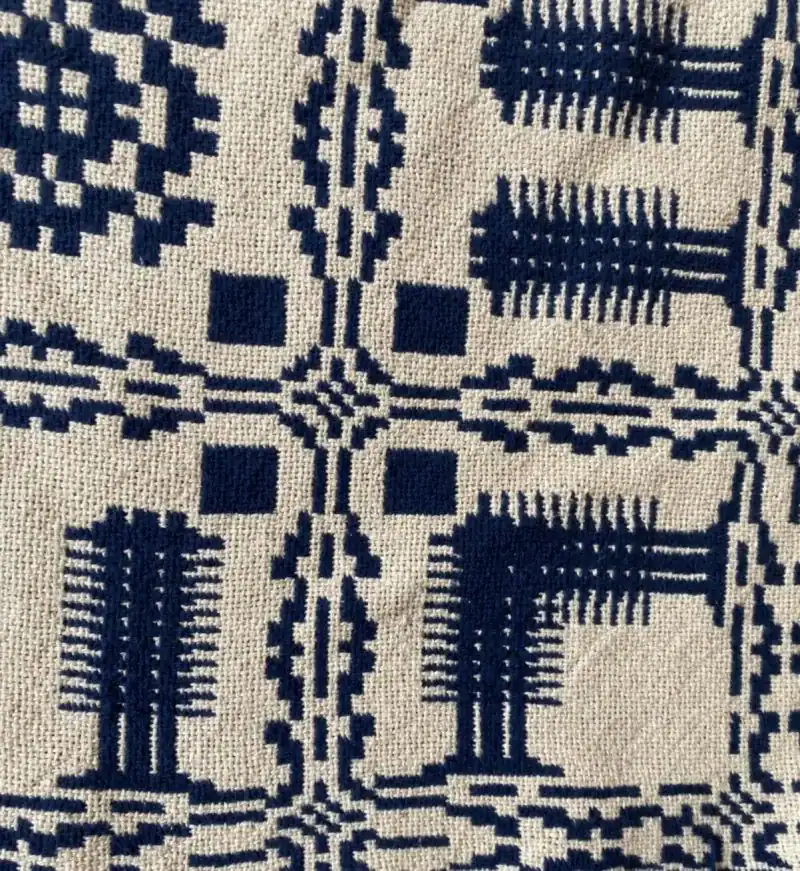
Hi, all – I have had my drycleaners clean 19th century wool coverlets without harm. They know, of course, that I am willing to accept a minor amount of fabric loss in the process, mostly to the fringes. I have always been happy with the results, especially since in the past, owners cleaned these coverlets by unpicking the center seam, hand washing the halves (VERY heavy when wet), letting them dry, and restitching the seam. Not for me if I can find an acceptable alternative! Going on that, I would think a WWI uniform could be cleaned without harm. HOWEVER – it is important to use a cleaners that does not have big tumble cleaning machines that look like the coin-op ones. They need to: understand how potentially fragile and how old the textile is, and to be willing to handle it with care commensurate. If they refuse, take them at their word! Also, I find that asking them NOT to plastic-bag the item after cleaning lets the cleaning smell evaporate. I also ask for my coverlets to be held flat on a shelf, no hangers, until I return to: claim them.
Xenia, in Indiana
Date: Tue, 11 May 1999 18:38:38 -0700 | From: “pepper cory” <pepcory@>
While most of the time dry cleaning is fine for wool clothing, if the item is fragile (look carefully at seams and at tiny-maybe moth-holes-) conservation quality cleaning is called for. Ask at a large museum that has wool uniforms in its collection (the Smithsonian comes to mind-) if it has information on cleaning those. About ALL commercial dry cleaning establishments-it’s worth it to become friends with the business owner. Dry cleaners change the fluid in their machines on a schedule. You want to take your things in when the fluid’s just been changed. While dry cleaning usually doesn’t hurt fabrics, if the fluid in the machine is dirty (saturated from many cleaning cycles-) it can impart an unpleasant yellow overcast to light colored items. If it’s a reputable dry cleaner they won’t take offense at your inquiry-just do it with a phone call or when there are no other customers around!
Pepper Cory
Date: Tue, 11 May 1999 18:29:19 -0500 (CDT) | From: Marcia Kaylakie <marciak@>
Hi one and all,
Perhaps the collective group might be able to help me locate the Judy Rehmel books, Key to 1,00 Applique Quilt Patterns and Key to One Thousand Quilt Patterns. Both appear to be out of print and I have searched all available book sites that I can find. Books.com just informed that they were cancelling my order. I really need to have both in my reference library.
Thanks for any help I can get, Marcia Kaylakie
Date: Tue, 11 May 1999 20:03:10 -0700 | From: Audrey Waite <awquiltr@>
Hi all
I have been asked to give a program on antique quilts at our church and thought I would include some information about how quilt patterns were named after particular references in the Bible. I know there is a book out there on this subject but can’t for the life of me remember who wrote it or the title. So ye of swifter brains will probably remember and e-mail me at your leisure. Thanks.
Audrey Waite in sunny Sedona, AZ
Date: Wed, 12 May 1999 06:56:16 EDT | From: Baglady111@
In a message dated 5/11/99 111606 PM Eastern Daylight Time, Baglady111 writes << <A HREF=”http://members.aol.com/baglady111/samples.html”>Feedsack Samples We now have our feedsack samples site that you can check out. Alot of the ones you see are already gone but stop by and enjoy some LOVELY colors and prints..
Jane of THE FEEDSACK CLUB http://members.aol.com/baglady111/ Samples</A>
Date: Wed, 12 May 1999 06:57:55 EDT | From: CToczek@
Hi Everyone,
We just had our guild “show” in Cornwall, N.Y.; it was a small, mainly in-house affair, a chance to open our doors to the community. We presented two sections, one the show and tell for finished projects of the year and the other the judged challenges. I skipped the challenge this year, focusing on my own projects. I brought a queen size quilt I finished last fall, hoping for a nice response. Using a variety of 1930’s reproduction fabrics I pieced and quilted (and for lack of a better pattern name) a quintuple Irish Chain or “Over the Rainbow” (name from a magazine.) Lots of hand quilting in the white spaces and borders, machine quilting in the diagonal straight rows. Mine was the only such item at our small show where many styles and colors were exhibited. As I wandered with the group of viewers I overhead lots of comments on the quilts, technique, color and such. You know what I heard about mine? (Ah, at last she gets to the point! <G>) “Oh, look at this one; it looks so soft, like you’d love to sleep under it!” And THAT, my friends, is precisely what I love about the vintage 30’s quilts, why I’m drawn to them so. I couldn’t have asked for a nicer compliment on my reproduction quilt.
Best to you all,
Carla Toczek, West Point
Date: Wed, 12 May 1999 08:14:36 -0400 | From: “jawhite@” <jawhite@>
Dear Marcia. I looked in my “Key to a Third 1000 Quilt Patterns” and found Judy Rehmel’s address. It is (or was) Judy Rehmel, PO Box 1002, Richmond, Indiana 47374. You might try writing directly to her.
Judy White – CT
Date: Wed, 12 May 1999 14:04:32 -0400 | From: “Judy Grow” <Judygrow@>
Many congratulations to Phyllis and Cindy on becoming our newest Certified Quilt Appraisers. I don’t know Phyllis personally, but I do know Cindy, and know how long and hard she has worked to achieve this stunning success. I have great admiration for all who have come so far! Some of you have been with me from the beginning of our barn-into-studio project. Today, after only 13 1/2 months of work, most of it by hand, the studio is totally finished, habitable, and got its certificate of occupancy this morning! We just have to carry DH’s art stuff in to the second floor, some sitting furniture in to the first floor, and I can invite everyone of you in to share this gorgeous snug space with us. For newbies — this won’t be my studio. This will be DH’s. I get the large bedroom with the 12 foot closet and south-western exposure that he has been using for 14 years. That means I can move out of the guest bedroom with the double bed, and can probably even set up a cutting table in the middle of the room. There might even be room to set up 2 sewing machines! Of course, getting my new room repaired, replastered and repainted will probably take another 6 months, but 6 months is a whole lot closer than never! DH and I just returned from 6 days in the Denver area, visiting DS and family in their new home. DS, the kid who couldn’t do anything quite right as a teenager, especially wanted us there now to share his greatest success, which was planning an open house event for Centennial Airport — the 4th one he has done. We spent Saturday at the airport along with between 15,000 and 20,000 other people! He put together quite a show of old and new airplanes, helicopters, and cars, and everyone had a great time! It was so weird to see him in action, so earnest, so capable, so admired by his peers! Wow, are we proud of him! Gorgeous, wonderful, GD, only 19 months old still takes naps, of course, so on all the other days we were there DH and I went ANTIQUEING while she slept. Last time we were there,in September, in one antique shop I saw 3 lovely 1930’s quilts that the dealer had just brought in from one estate sale. Friday, 8 1/2 months later, I walked into the same shop and saw two of the three quilts still there. I got wonderful markdowns on both and so bought them, my first GFG and also my first DWR. The third quilt, a Snake in the Hollow, was on her desk being packed up to be sent to a woman who bought it by phone that morning after seeing it the previous weekend. Isn’t that weird? She sold all three quilts in a single day! I’d never seen a SITH quilt before in the flesh, and would have loved to have owned it too! I was just a few hours too late. All three were in very good condition, having been washed perhaps only once, with very little to no fading. Since coming home last night I’ve had time to really study the 2 quilts, and I believe they come from the same hand. The DWR is a puzzlement, however. None of the printed fabrics in it match any of the prints in the GFG, although the exact same yellow solid was used in both — as the center hex in the GFG, and the medallion shaped connectors in the DWR. I have looked long and hard, late last night and again this morning, and cannot find any two prints in the wedges of the DWR that match any other printed wedges! That means that there are 960 different prints used in this quilt! Not 1000, but close enough. Is it possible that the maker intentionally set out to make a charm quilt? Or were DWR charm quilt kits put out in the 30’s, possibly early 40’s?
Judy in Ringoes, NJ judygrow@
Date: Wed, 12 May 1999 17:06:15 -0700 | From: Judith Brainerd <jnrbrainerd@>
Hi, all. I got a lovely quilt for Mother’s Day that is a red and green on white. Nice intricate quilting. There is a name and date cross-stitched on it Elica Ann Moll, 1852. I am interested in researching the history of this quilt but am not sure where to start. I know it was found in California (in someone’s trash!) and brought up here. What would you all suggest? I know nothing about researching geneology but that seems a good place to start. Are any of you familiar with doing family searches with only a name & date? Any help would be appreciated!! Thanks.
Judith B Olympia WA
Q-Toons Quilt designs to tickle your funnybone!
Judith@ http://www.qtoons.com
Date: Wed, 12 May 1999 20:14:00 -0400 | From: “Phyllis Twigg” <ptwigg@>
Dear QHL’ers…
Thank you for the many kind words and congratulatory notes I have received regarding my recent acceptance as an AQS Certified Appraiser. Although Cindy Brick lives in Colorado and I am in Maryland, you can imagine we were on the phone celebrating just as soon as possible when we saw each other’s name come up on QHL. I won’t tell you that the test was easy (it definitely wasn’t), but I will say all the study and practice was worth it. I am looking forward to the opportunity ahead of seeing many quilts, both old and new…and meeting even more quilt lovers.
With much appreciation,
Phyllis Twigg
Date: Wed, 12 May 1999 23:15:40 EDT | From: Jilly31@
Could anyone give advise on displaying my quilts in a local quilt show? This is the first time I have ever displayed my quilts at a show and I am wondering if there is anything I should do before “turning them over” to the show directors. I know the local historian in charge of the show and trust her to care for them but since this being my first display I thought some of you might have good advise. Bye the way, our local show will be held June 12th to the 18th in Centerville, IN Jill
Date: Thu, 13 May 1999 00:46:59 -0400 | From: “Judy Grow” <Judygrow@>
Dear Sue,
What a gold mine of information your post was! It certainly does make sense now, that if indeed my quilter got her scraps through donated scraps at church fairs and bought by the pound that she could make an almost 1000 piece charm quilt. She had the entire area’s stashs to cull from. I am sure I am not the only one out here in quilt history land who will find that bit of information invaluable!
Thank you so much.
Judy in Ringoes, NJ judygrow@
—–Original Message—– From: sue reich
To: Judy Grow
>Dear Judy,
> I received a beautiful collection of 20’s/30’s fabric from an elderly >neighbor of mine in Ohio about 20 years ago. The fabric had been collected >by her mother. The pieces were already cut to make a fan quilt. I believe >that it was meant to be a charm quilt because there were no two pieces that >matched. However, the pastels colors of blue, pink, yellow, green, etc. were purposefully color co-ordinated.
> When I questioned my neighbor about this she said that she remembered how >her mother acquired the scraps. (My neighbor was in her 20’s and 30’s in >the 20’s and 30’s so I trust her memory.) She told me that her Mom >collected her fabric at church fairs. There were booths with scraps of >donated fabrics. A quilter could go through and take the pieces of scraps >she needed and co-ordinated to her heart’s content. The fabric was weighed >and charged by the pound. This is how she collected the outstanding array >of scraps. She had lived in Bedford, Ohio. I don’t know if this was done >in other parts of the U.S. Just an FYI. sue reich > ———-
>> From Judy Grow
>> To Quilt History List
>> Subject QHL Congrats, new studio, new quilt LONG >> Date Wednesday, May 12, 1999 204 PM >>
>> The DWR is a puzzlement, however.
>> None of the printed fabrics in it match any of the prints in the GFG, >> although the exact same yellow solid was used in both — as the center >>hex in the GFG, and the medallion shaped connectors in the DWR.
>> I have looked long and hard, late last night and again this morning, and >> cannot find any two prints in the wedges of the DWR that match any other >> printed wedges! That means that there are 960 different prints used in >>this quilt! Not 1000, but close enough.
>> Is it possible that the maker intentionally set out to make a charm quilt?
>> Or were DWR charm quilt kits put out in the 30’s, possibly early 40’s?
>> Judy in Ringoes, NJ judygrow@ >>
Date: Thu, 13 May 1999 07:22:12 EDT | From: Tubeywooby@
In a message dated 5/12/99 84744 PM, QHL-Digest-request@ writes << I have been asked to give a program on antique quilts at our church and thought I would include some information about how quilt patterns were named after particular references in the Bible. >> THere is a book out by Kaye England with Jericho in the name, I think. Also a web site with lots of good bible blocks- you might make a search?
Melissa
Date: Thu, 13 May 1999 07:36:19 -0500 | From: Laura Hobby Syler <texas_quilt.co@>
Jill, Most shows will have “rules” that you must comply with before your quilts will be accepted at the door. Most of them are pretty common sense, but sometimes you wouldn’t think of them until you’ve done it a couple of time. 1) You most likely need a 4″ casing or sleeve sewn securely to the top of the quilt for hanging. This should not be any smaller than 4 ” because you do not know what the diameter of their dowels or poles to hang the quilts will be. I recommend, particularly if they are antique quilts that you use a gray thread and stitch through the entire quilt, not just on the back. That way the weight is supported through the entire piece. 2) Label – securely stitched- on bottom right hand back corner (right as you are looking at the front of the quilt) with your name , address, name of quilt, maker if known, any other important information. Label should always go on the same corner so incase there is ever any judging the judge will not inadvertantly see the makers name on the label. 3) Have an appraisal done. Most shows do carry insurance for each quilt up to: $500. If your quilt is worth more than that they need a written appraisal to give to their insurance company to justify a higher amount. 4) Make sure the quilt is clean and show ready. I know this sounds silly, but there is nothing more gross than to work with old smelly quilts(no matter how wonderful they are) or trying to hang something that is covered with cat hair <G> These simple items have come from years of working with the Dallas show and curating many small exhibits for the Vintage Quilt & Textile Society. Again it’s pretty common sense, once you’ve done it <G>
If anyone else has any other suggestions, chime in….
Laura At 1115 PM 5/12/99 EDT, you wrote
>Could anyone give advise on displaying my quilts in a local quilt show?
This >is the first time I have ever displayed my quilts at a show and I am >wondering if there is anything I should do before “turning them over” to the >show directors. I know the local historian in charge of the show and trust >her to care for them but since this being my first display I thought some of >you might have good advise.
>Bye the way, our local show will be held June 12th to the 18th in >Centerville, IN >
>Jill
Date: Thu, 13 May 1999 08:36:41 -0500 | From: “Lisa Erlandson” <erland@>
“Could anyone give advise on displaying my quilts in a local quilt show? “
Jill, With the recent congrats to the new certified appraisers on the list, this just follows very smoothly. It is always advisable to have your quilt appraised before putting it on display in a show, exhibit, or anywhere else.
Check Kris’s web site for an appraiser in your area.
Good luck! Lisa Erlandson
AQS certified appraiser
Date: Thu, 13 May 1999 09:05:36 -0700 | From: “R & L Carroll” <Robert.J.Carroll@>
Hello!
Judith has asked an interesting question. How to research a quilt. Would those of you who have experience researching quilts, please post to: the list the methods you use? I have quilts in my collection that should be researched.
TIA,
Laurette in So California
Date: Thu, 13 May 1999 10:54:58 -0700 (PDT) | From: Kris Driessen <krisdriessen@>
Judith, I think I would start with http://www.ancestry.com. I am not sure of the other resources, maybe someone else will post.
Kris — Judith Brainerd
> Hi, all. I got a lovely quilt for Mother’s Day that > is a red and green > on white. Nice intricate quilting. There is a name > and date > cross-stitched on it Elica Ann Moll, 1852.
> I am interested in researching the history of this > quilt but am not sure > where to start. I know it was found in California > (in someone’s trash!) and brought up here. What would you all suggest? I > know nothing about > researching geneology but that seems a good place to > start. Are any of > you familiar with doing family searches with only a > name & date? Any > help would be appreciated!! Thanks.
> Judith B
> Olympia WA
> Q-Toons
> Quilt designs to tickle your funnybone!
> Judith@ > http://www.qtoons.com >
_________________________________________________________ Do You Yahoo!? Free instant messaging and more at http://messenger.yahoo.com
Date: Thu, 13 May 1999 13:28:39 -0700 | From: “Julia D. Zgliniec” <rzglini1@>
Dear QHL,
When using the computer as a genealogy tool, the undisputed best place to: start is Cyndi’s List. You will find more resources than you ever imagined. You will also want to get into a “search able” database like the one mentioned previously and it is possible to start with just a name, date, and location.
Good luck,
Julia
Date: Fri, 14 May 1999 05:45:21 -0400 | From: Debby Kratovil <kratovil@>
http://www.mountain-inter.net/~graham/partners.html Kim Graham has a wonderful website with at least 24 (yes, 24!!) Bible Blocks, their patterns, and a description and Biblical reference for each. A virtual goldmine of information that will serve very well for your research for the church class. Also, Rosemary Makham (sp?) has a book entitled Biblical Blocks (can’t find my copy at this minute) that I believe That Patchwork Place still publishes. Quite a few blocks, a short Biblical description and a marvelous 24″ Tree of Life central medallion (which I’ve sewn 3 times for 3 quilts). Hope this helps! Debby Debby Kratovil — Quilter By Design kratovil@ http://www.his.com/~queenb Paper Piecing Patterns & More!
Mac Pfaffie 7570
Date: Fri, 14 May 1999 08:47:58 -0500 | From: Mary Waller <mswaller@>
Audrey, The Kaye England book of biblical patterns is “Journey to Jericho”, published by ME Publishing, as in Mary Ellen Hopkins. You could also try looking up some biblical names in pattern collection books, like Brackman Jacob’s Ladder, Hosanna Palm, Cross and Crown, Dove, etc.
Mary Waller, Vermillion, SD
Date: Fri, 14 May 1999 10:07:45 -0700 | From: Audrey Waite <awquiltr@>
You have to take a peek at the 3 quilts Anne Dutton has made reproducing those made by her grandmother in the 1930’s http://www.quiltcamp.com/QuiltCamp/Anne.htm Those old patterns are so charming and with all the reproduction fabric available today, don’t we all want to make every one!
Audrey Waite in sunny Sedona, AZ awquiltr@
Date: Fri, 14 May 1999 21:06:40 -0700 | From: Judith Brainerd <jnrbrainerd@>
Thank you to everyone who suggested ways to research my 1852 quilt. I have gone into some of the geneology sites (you can get lost for days in there!) and left messages on some message boards. Hopefully someone from: the Moll family will see my post and have some information. This has been really interesting to me. I am thinking of doing a reproduction of this quilt using the early 19th century repro fabrics to replicate what it must have looked like when it was first made. It is terribly faded now. Xenia suggested it might be a “best” quilt because of the colors and the applique. That could well be because of the care in the applique and quilting. One odd thing – everything is quilted beautifully and intricately except for one corner which looks like it was finished in a hurry. There are morning glories in 2 corners a poinsietta-type flower in the 3rd and the 4th looks like someone just whipped a few straight lines in order to finish the quilt. I wonder what the story was behind that?!
Judith B Olympia WA
Q-Toons Quilt designs to tickle your funnybone!
Judith@ http://www.qtoons.com
Date: Sat, 15 May 1999 04:18:02 PDT | From: “Ann-Louise Beaumont” <albeaumont@>
asked the dealer the price which was 22 thousand. The next day I went back to: visit the quilt again and it wasn’t up. The dealer told me that he had taken it down and that it was going to Christie’s. What a thrill to see it. I overheard one dealer say that the Brimfield show was going very well, because of the great weather and people had money in their pockets. I believe the author of a Bible block book is Rosemary Makhan.
Best wishes,
Ann-Louise
_______________________________________________________________ Get Free Email and Do More On The Web. Visit http://www.msn.com
Date: Sat, 15 May 1999 10:18:24 -0400 | From: nancy roberts <robertsn@>
Two books have chapters or references to how religion influenced quilt pattern names. Old Patchwork Quilts and the Women Who Made Them by Ruth E. Finley (EPM Pubns., reprinted) and Quilting Manual by Dolores A. Hinson (Dover Publishing). Good luck with your presentation. And thanks for the links to the Bible block page and the ’30s-style quilts in V99 #132. Nancy
Date: Sat, 15 May 1999 10:04:50 EDT | From: Jilly31@
Debby, Oh such wonderful information about Bible Blocks! Thanks for sharing. In a message dated 5/14/99 84719 PM US Eastern Standard Time, QHL-Digest-request@ writes << http://www.mountain-inter.net/~graham/partners.html Kim Graham has a wonderful website with at least 24 (yes, 24!!) Bible Blocks, their patterns, and a description and Biblical reference for each. A virtual goldmine of information that will serve very well for your research for the church class. Also, Rosemary Makham (sp?) has a book entitled Biblical Blocks (can’t find my copy at this minute) that I believe That Patchwork Place still publishes. Quite a few blocks, a short Biblical description and a marvelous 24″ Tree of Life central medallion (which I’ve sewn 3 times for 3 quilts). Hope this helps! Debby >>
Date: Sat, 15 May 1999 22:54:17 EDT | From: Kittencat3@
I would be *very* careful about using =Old Patchwork Quilts & the Women Who Made Them= as a source. It was written very early on, without the benefit of modern research techniques and archival information, and contains many inaccuracies and myths. It was a good effort for its time, but it can’t be considered a good source anymore.
Lisa Evans
Easthampton, MA
Date: Sat, 15 May 1999 23:27:33 -0500 | From: Laura Hobby Syler <texas_quilt.co@>
In the same light, neither can Quilts In America by the Orlofskys, The Romance Of the Patchwork Quilt by Rose Kretsinger, or anything written about quilts pre 1989…..now, having blasted just about everything that we as quilt historians use as research material, I think that it is best to consider *what* exactly is the topic under investigation. As far as the Biblical references to the names of the quilt blocks and patterns, I would assume that the names that are referred to in those books were correct for that time, and some of them may or may not still hold true today. Just remember to cite the source, and the published date and you will have a whole other lecture on your hands before you know it!!! Isn’t it wonderful that we can study and do research and come up with different answers than were previously thought to be true.
Laura At 1054 PM 5/15/99 EDT, Kittencat3@ wrote
>I would be *very* careful about using =Old Patchwork Quilts & the Women Who >Made Them= as a source. It was written very early on, without the benefit of >modern research techniques and archival information, and contains many >inaccuracies and myths. It was a good effort for its time, but it can’t be >considered a good source anymore.
>Lisa Evans
>Easthampton, MA
Date: Sun, 16 May 1999 12:56:04 EDT | From: Kittencat3@
<< In the same light, neither can Quilts In America by the Orlofskys, The Romance Of the Patchwork Quilt by Rose Kretsinger, or anything written about quilts pre 1989…..now, having blasted just about everything that we as quilt historians use as research material, I think that it is best to consider *what* exactly is the topic under investigation. >> Let’s see…I warned a questioner against using a 70 year old book that is well known for misdating patterns and accepting romantic stories as fact. I said *nothing* about any other book, either pre or post-1989 (and why that date? What is special about 1989?). Nor was I “blasting” Ruth Finley’s book. I was stating a fact that has been public knowledge at least since the article in QNM a few years back Ruth Finley did her best and tried her hardest to produce an accurate book, but she simply did not have access to modern research techniques, libraries, oral histories, and so on. Her work has been superseded, exactly the same way that Jessie Weston’s work on the Grail legend was superseded by Roger Sherman Loomis’s a generation later, and Loomis’s was in turn replaced by a younger generation of scholars. Scholarship is not static. Without Ruth Finley, there might not be an AQSG. But Finley’s time was before many of us were born. It doesn’t make sense to rely on such an old, and admittedly flawed, book when there are better and more recent sources available. As for the other works mentioned…forgive me for seeming dense, but didn’t the Orlofskys revise their book about two years ago? Many of the old classics need to be updated in light of recent work. The Orlofskys were wise to: recognize this, and I applaud them for doing so. I’ve been hoping for years that someone would update the material in Averil Colby’s =Quilting=, a far more comprehensive work on quilting the world over than anything produced in America to date.
********* As for the original topic of discussion, Biblical quilt blocks, there might be some information in Barbara Brackman’s quilt pattern book. Religious imagery has figured in quilting and patchwork for at least six hundred years, since Durham Priory inventoried a quilt showing the Evangelists. This is a fascinating subject. Good luck finding out more.
Lisa Evans
Easthampton, MA
Date: Sun, 16 May 1999 13:59:11 -0500 | From: Laura Hobby Syler <texas_quilt.co@>
Lisa, I “blasted” the books, not you. Your explination is true, however, it needs to be noted that sources are “aged”, cited and again, that can be a whole other topic. My VQTS members will recognize this method. I use it often in my articles for the newsletter…Info available then vs. what we know not.
OTOH…. The re-issuance of the Orlofksy’s book was just that, a reprint. We urged Patsy for many years to have the book reprinted, but since the research was mainly Myron’s, after his untimely death, she did not want to (for many reasons) do a rewrite on the book, or even discuss the idea of reprinting it. It was only after many years ( I know that I personally had spoken to her about it at least 5 times from 1985 until 1991) did she relent and allow the book to be reprinted *just as it was, with no revisions* So, again, anything that was printed prior to ’89 can be shot full of holes. As to Brackman, again, you need to know some of the obscure references that are given in books like Finley or Krestinger/Hall to know just what is ment by the name. And the last time I spoke with Barbara on updatind Clues….her only comment (3 years ago) was…..”Maybe in 2000, if I get around to it!”
Laura At 1256 PM 5/16/99 EDT, you wrote
><< In the same light, neither can Quilts In America by the Orlofskys, The >Romance Of the Patchwork Quilt by Rose Kretsinger, or anything written about >quilts pre 1989…..now, having blasted just about everything that we as >quilt historians use as research material, I think that it is best to >consider *what* exactly is the topic under investigation. >>
>Let’s see…I warned a questioner against using a 70 year old book that is >well known for misdating patterns and accepting romantic stories as fact. I >said *nothing* about any other book, either pre or post-1989 (and why that >date? What is special about 1989?). Nor was I “blasting” Ruth Finley’s >book. I was stating a fact that has been public knowledge at least since the >article in QNM a few years back Ruth Finley did her best and tried her >hardest to produce an accurate book, but she simply did not have access to >modern research techniques, libraries, oral histories, and so on. Her work >has been superseded, exactly the same way that Jessie Weston’s work on the >Grail legend was superseded by Roger Sherman Loomis’s a generation later, and >Loomis’s was in turn replaced by a younger generation of scholars. Scholarship is not static. Without Ruth Finley, there might not be an AQSG.
> But Finley’s time was before many of us were born. It doesn’t make sense to >rely on such an old, and admittedly flawed, book when there are better and >more recent sources available.
>As for the other works mentioned…forgive me for seeming dense, but didn’t >the Orlofskys revise their book about two years ago? Many of the old >classics need to be updated in light of recent work. The Orlofskys were wise >to recognize this, and I applaud them for doing so. I’ve been hoping for >years that someone would update the material in Averil Colby’s =Quilting=, a >far more comprehensive work on quilting the world over than anything produced >in America to date.
>*********
>As for the original topic of discussion, Biblical quilt blocks, there might >be some information in Barbara Brackman’s quilt pattern book. Religious >imagery has figured in quilting and patchwork for at least six hundred years, >since Durham Priory inventoried a quilt showing the Evangelists. This is a >fascinating subject. Good luck finding out more.
>Lisa Evans
>Easthampton, MA
Date: Sun, 16 May 1999 18:07:16 EDT | From: CABHoney@
I am looking for a pattern or information about a pattern I have misplaced. My Aunt had made a quilt called Williamstown in 1960. It is red embroidery and I wish I could describe it better, but here goes. It is on a white background square, and in the center, the embroidery forms like a dresden plate in cross stitch. Between each of these is an elaborate cross stitch design, sort of cross shaped. I have the quilt but no means to scan it so you can see it, but if anyone remembers a quilted embroidery pattern by that name before 1960, please let me know any info.
Thanks!
Cindy, in Norman, Ok, 15 miles down the road from Moore, Ok where the terrible tornadoes were almost two weeks ago.
Date: Sun, 16 May 1999 19:57:38 EDT | From: JBQUILTOK@
Cindy’s quilt sounds like it may have been made from some of the prestamped quilt blocks that were available in the 60’s. Any evidence of the blue marking behind the stitches? It’s supposed to wash out, but doesn’t always or sometimes comes back after it does. I’ve got enough prestamped violet blocks for a full size quilt. I bought them in the late 70’s or early 80’s. They travel around on vacation with me & three or 4 more get finished every year. Someday I may get serious about completing it.
Janet