The Drunkard’s Path That Goes By a Dozen Names
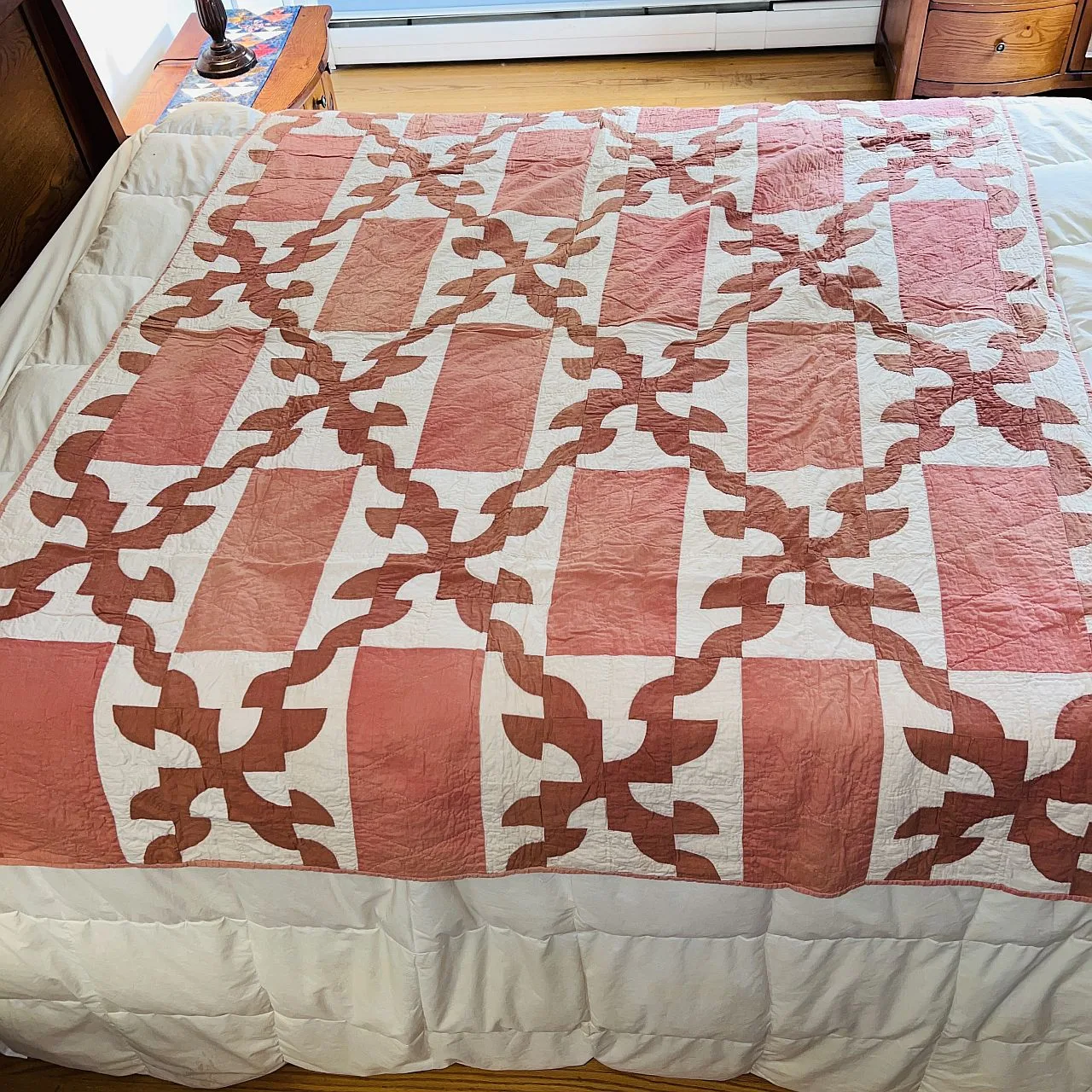
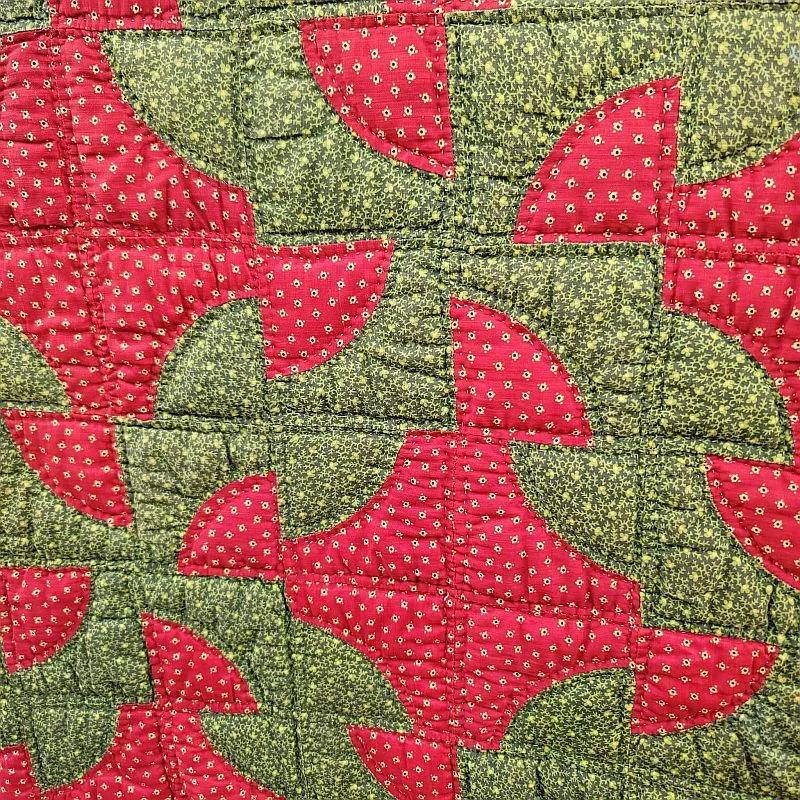
I have a Drunkard’s Path quilt tucked in my collection that I pulled out recently for an entirely different reason: I needed a good example of worn cotton batting for an article on dating quilts by their filling. But once it was out on the bed, it turned into a case study of its own. Here is how I went about researching it.
A block older than its most famous name
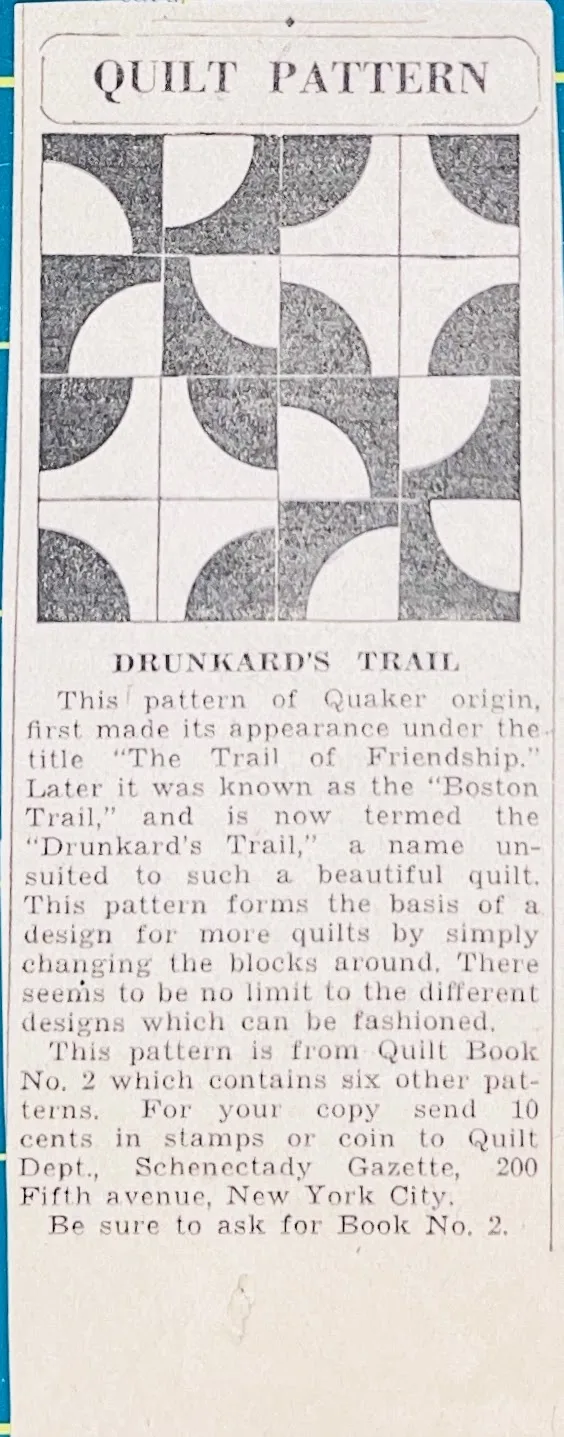
Drunkard’s Path looks like exactly what it sounds like: a staggering, zigzagging trail made from quarter circles pieced into squares. But the name is much younger than the block. Quilters have been piecing this curved unit since at least the early 1800s, brought over from English patchwork and stitched into American quilts by the 1820s. Long before anyone called it Drunkard’s Path, it was going by names like Solomon’s Puzzle. It’s fun to think of that tracing all the way back to ancient design motifs, but there is no solid documentation tying the block itself to any actual ancient artifact. Rats.
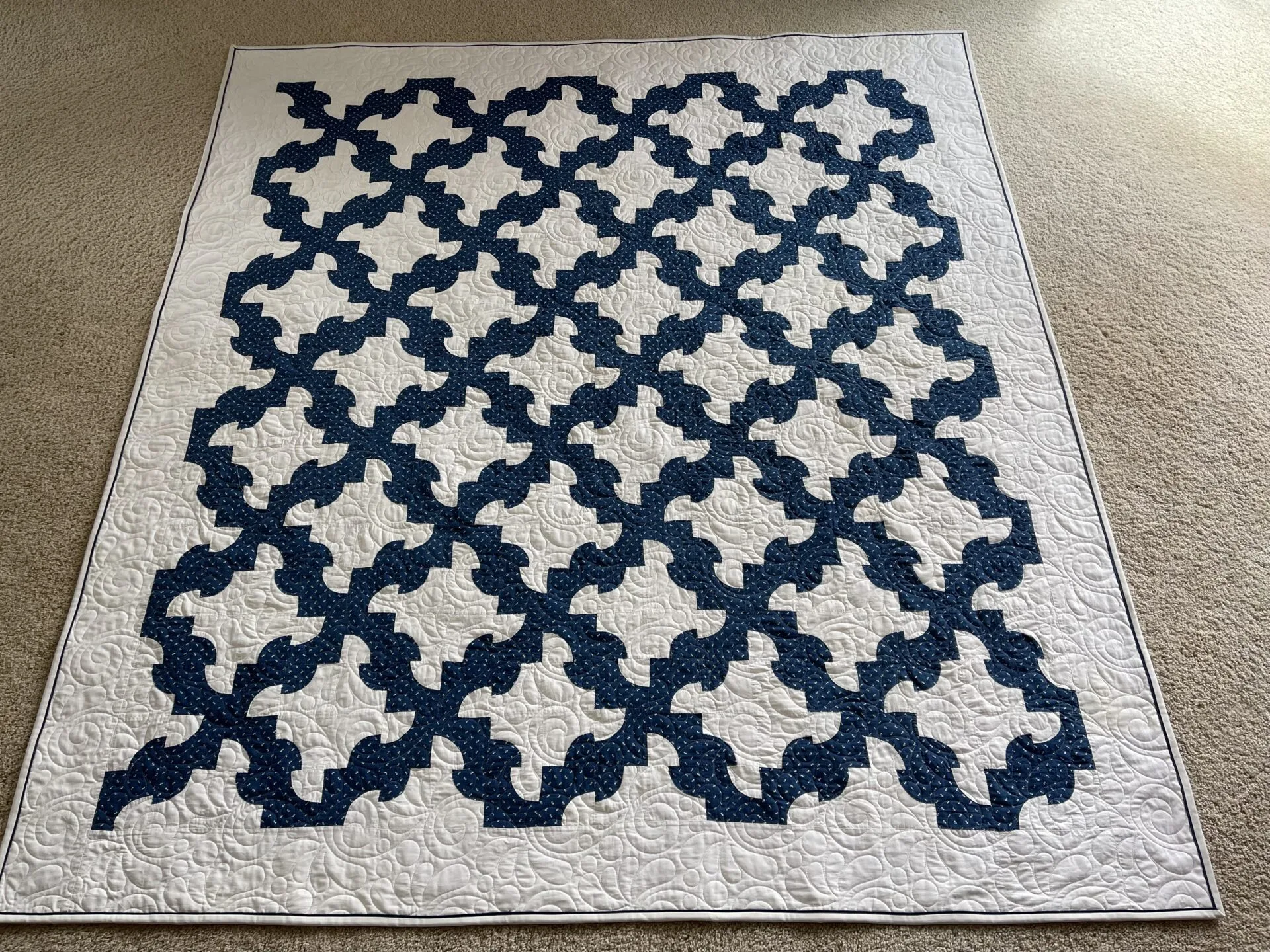
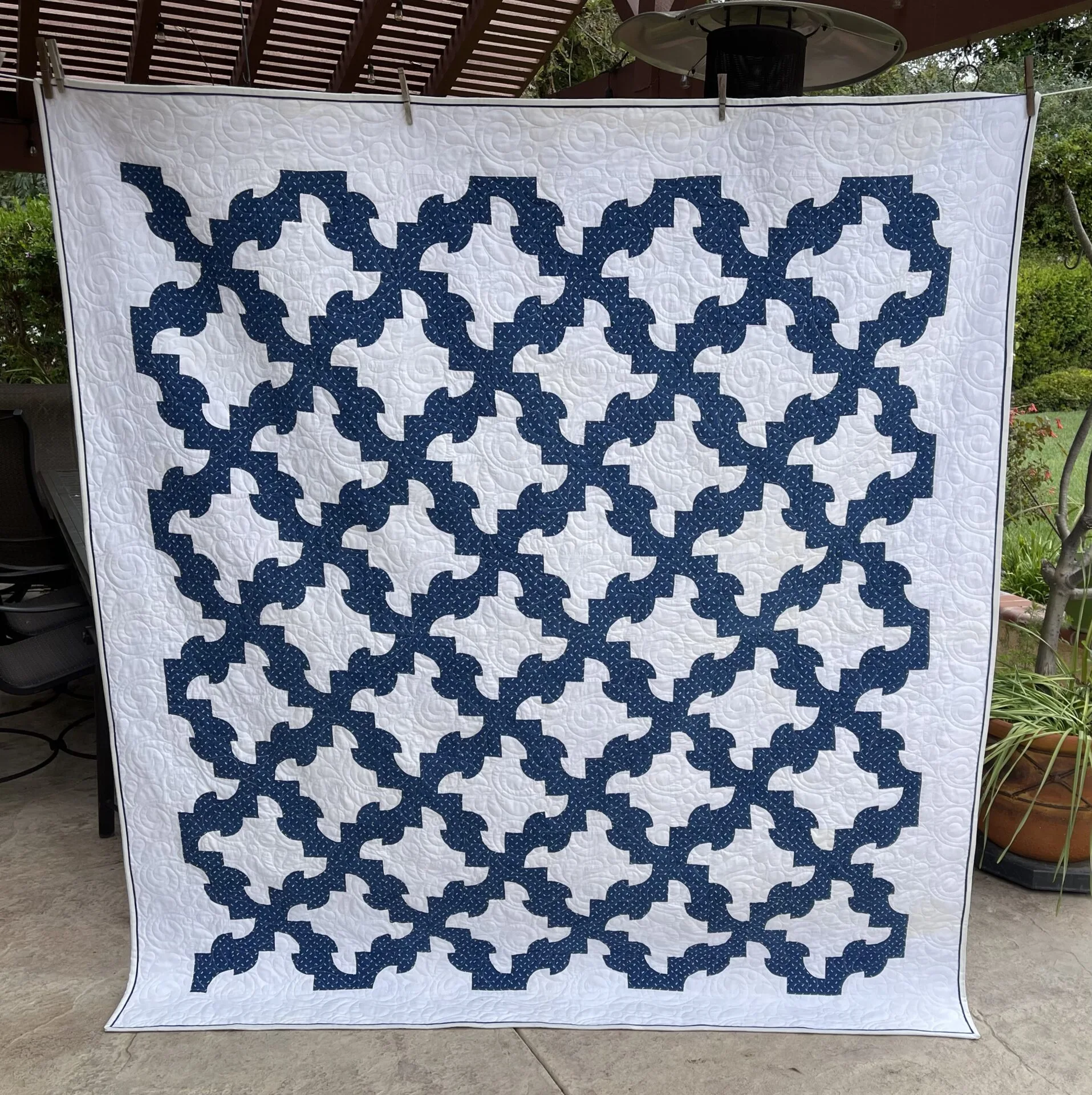
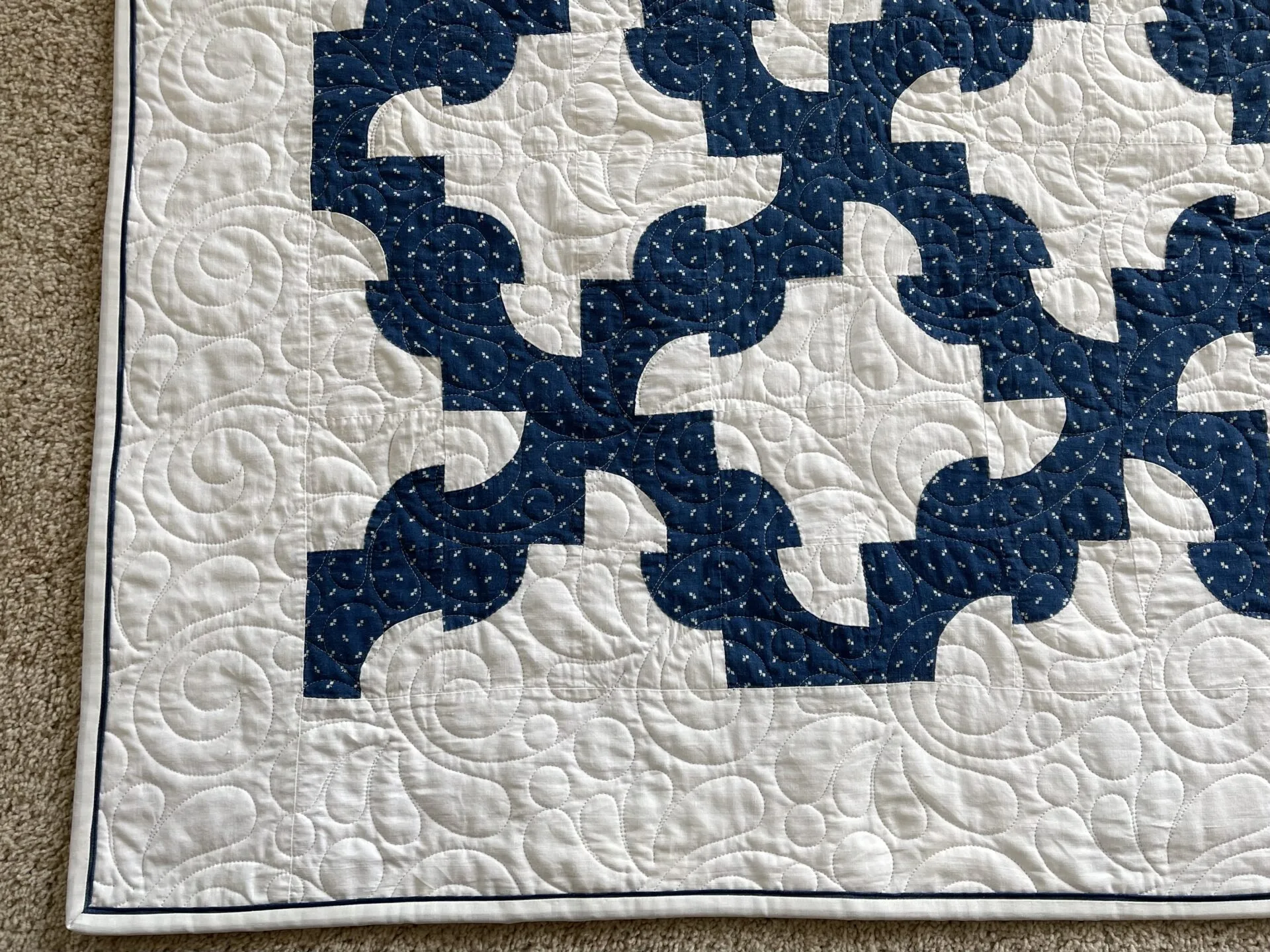
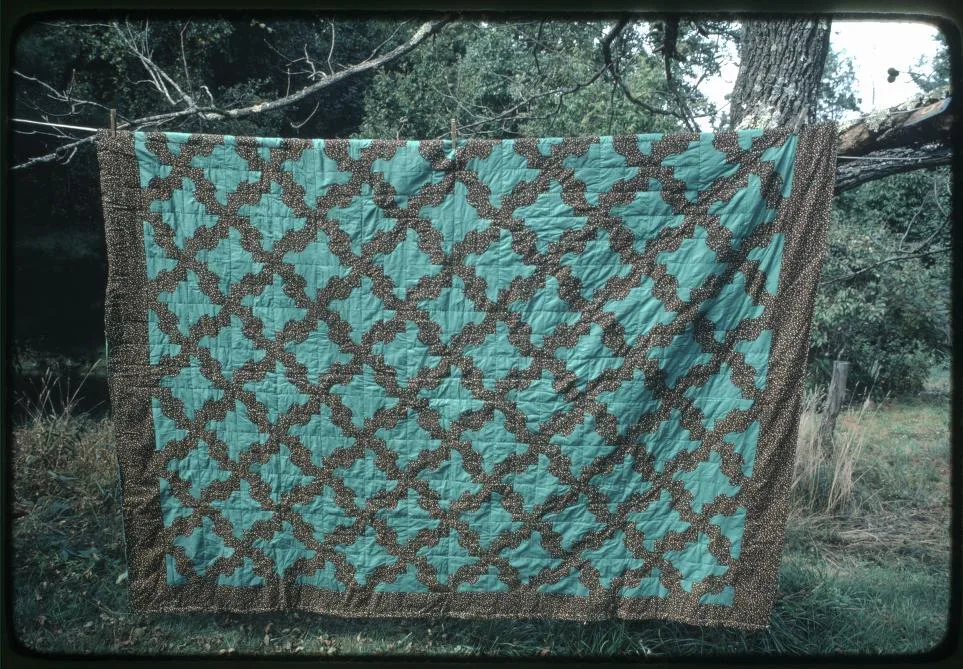
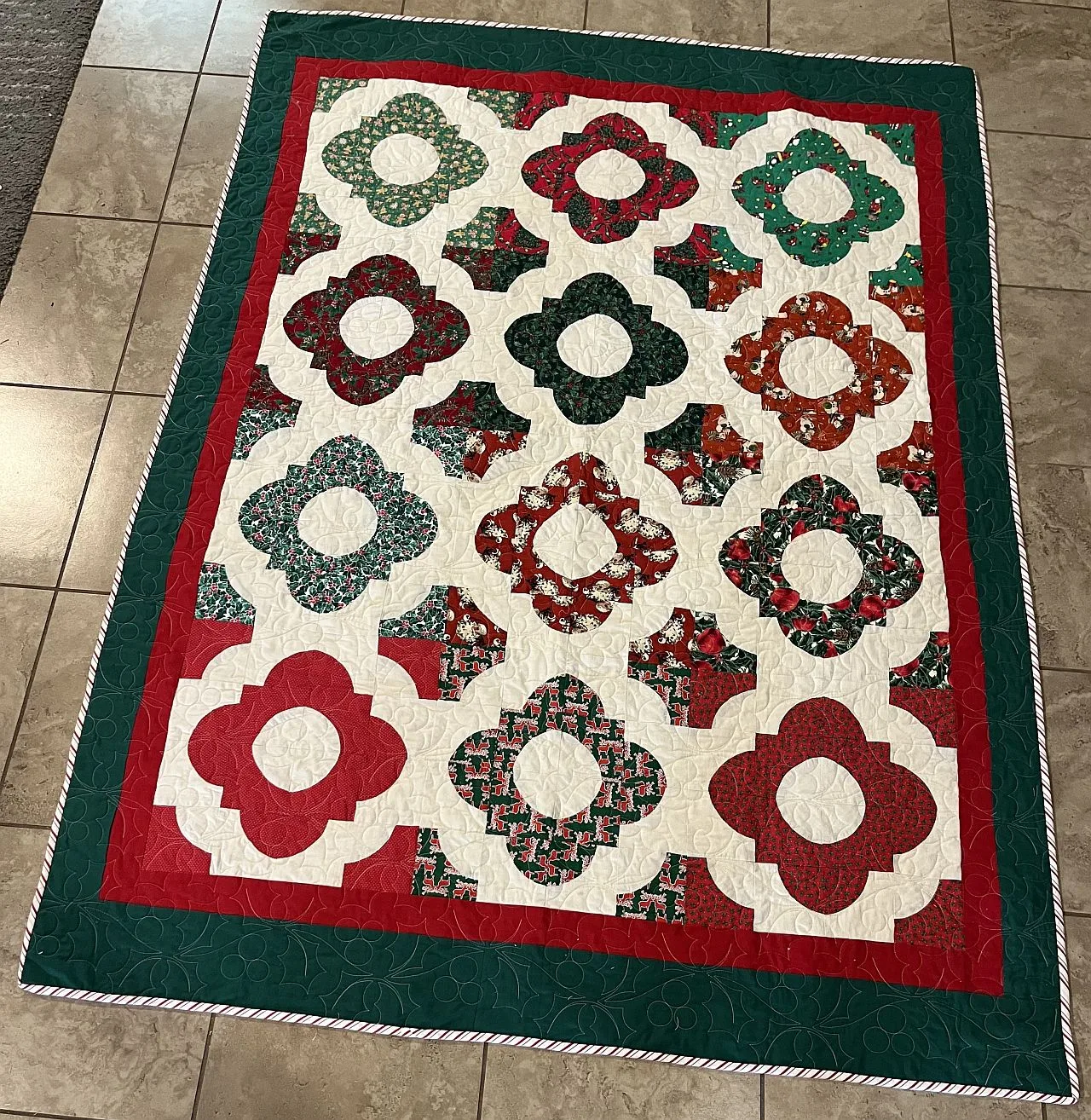
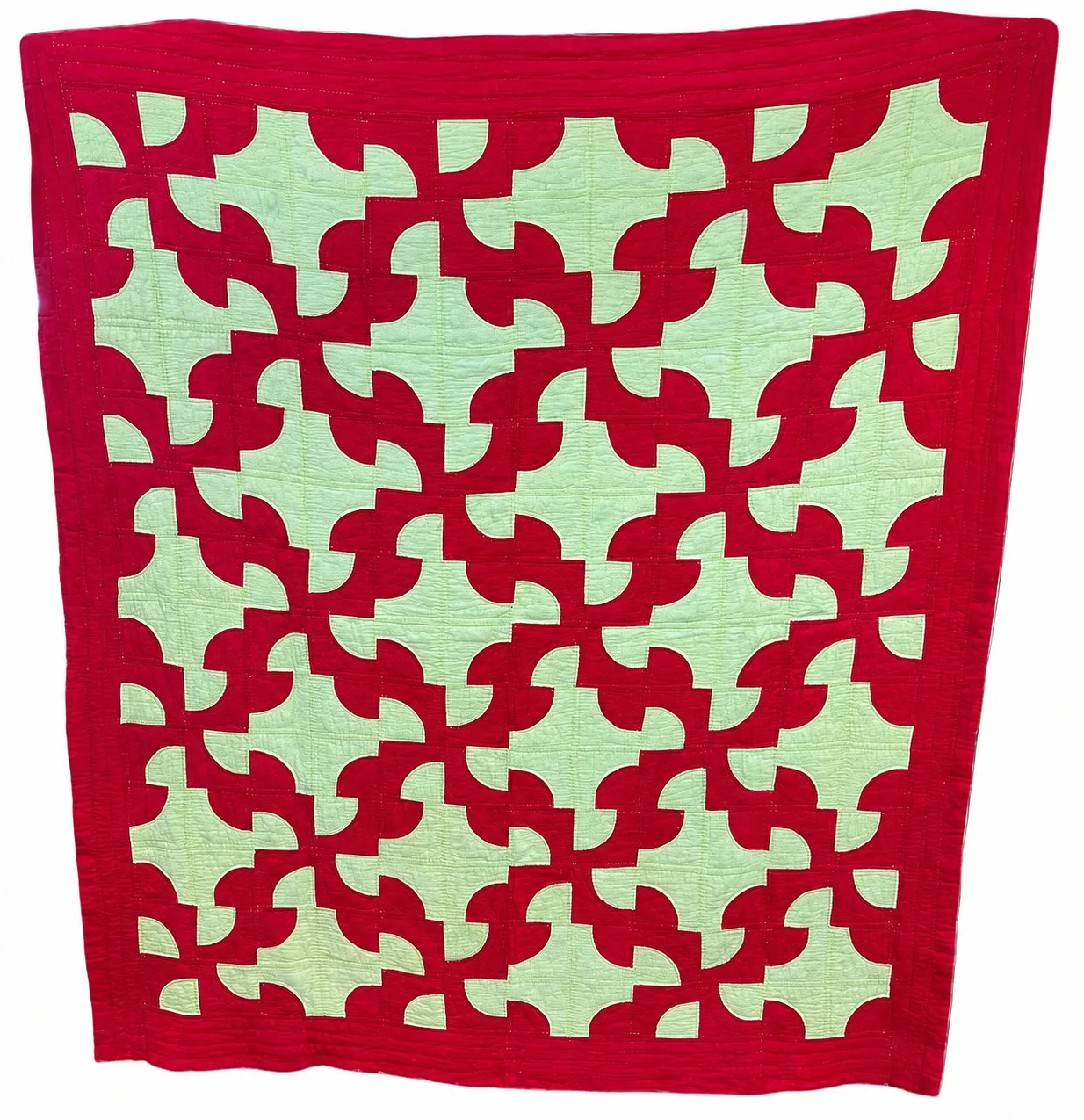
Mary sent me a picture of this quilt. A friend of hers spotted the top at a swap meet type event they attended about fifty five years ago. She always displayed the top on a rack in her home. Back in 2024 she asked Mary to make it into an actual quilt. Her friend loved it and used it on her bed. When she passed away, she bequeathed it to Mary.
Mary said, “I have always been fascinated by the way the one side does not match the other. Did the quilter run out of fabric, tire of the task or simply not realize??? We had no idea who the maker was as it came with no information, but I hope she approves of the finish.”
It was questions like those that started me down the road to collecting antique quilts. I actually prefer the ones with a little damage because you can see inside of them to see how they were made. This one is perfect, and I do love the flange border.
So many names, so little agreement
If you look this block up in Barbara Brackman’s BlockBase, the software built from her exhaustive research into printed quilt sources, you will find well over a dozen names attached to this one design. Depending on which decade and which newspaper column you were reading, you might have known it as:
- Boston Trail
- Trail of Friendship
- Drunkard’s Trail
- Ghost’s Walk
- Old Maid’s Puzzle
- Wonder of the World
- Indiana Puzzle
- Cleopatra’s Puzzle
- King Tut’s Crown
- Wanderer’s Path in the Wilderness
- Solomon’s Puzzle
- Rob Peter to Pay Paul
Here is the interesting part. Several of these names all trace back to the same handful of syndicated quilt pattern columnists working in 1933 alone. Mae Wilford’s pattern booklets that year called it Trail of Friendship, Cleopatra’s Puzzle, and Drunkard’s Trail, all for the same basic block. Nancy Cabot, the pen name for Chicago Tribune needlework editor Loretta Leitner Rising, called it Boston Trail. Quilt historians who have studied Cabot’s column note she had a habit of recycling older patterns under fresh, catchy names, and occasionally stretching the truth about their origins. So when you see a dozen names for one block, you are not looking at a dozen different histories. You are looking at a handful of newspaper writers all trying to sell the same pattern to their readers under whatever name sounded good that week during the newspaper circulation wars.
You will often read that this block was adopted by the Women’s Christian Temperance Union in the late 1800s as a symbol of their fight against alcohol, sometimes with the added detail that blue and white color schemes symbolized the purity of water. This is one of those “it’s a nice story, but…” sentiments. It’s never been documented.
Dating my own Drunkard’s Path
With the block’s tangled naming history in mind, I turned to my own quilt to see what it could tell me. I do not have paperwork on this one, but I have owned it for about 35 years, which means that whatever its age, it predates my ownership.
A few things ruled out some easy guesses. I bought it at a feedsack show, so I wondered if the solid fabric might be a plain feed sack. Looking closely, I do not think so. The fabric reads as ordinary commercial yard goods rather than feed sack cotton, and that is common; quiltmakers in this era mixed sack fabric with store-bought cotton all the time, so this does not rule out a period-correct quilt on its own.
The construction told me more. The blocks are machine pieced, the binding is machine applied, but the quilting itself is done entirely by hand. That combination is a classic home-sewn utility quilt profile from the 1930s through the mid-1900s: piecing and binding done quickly by machine, with the actual quilting, the part that took real time and skill, done by hand the old way.
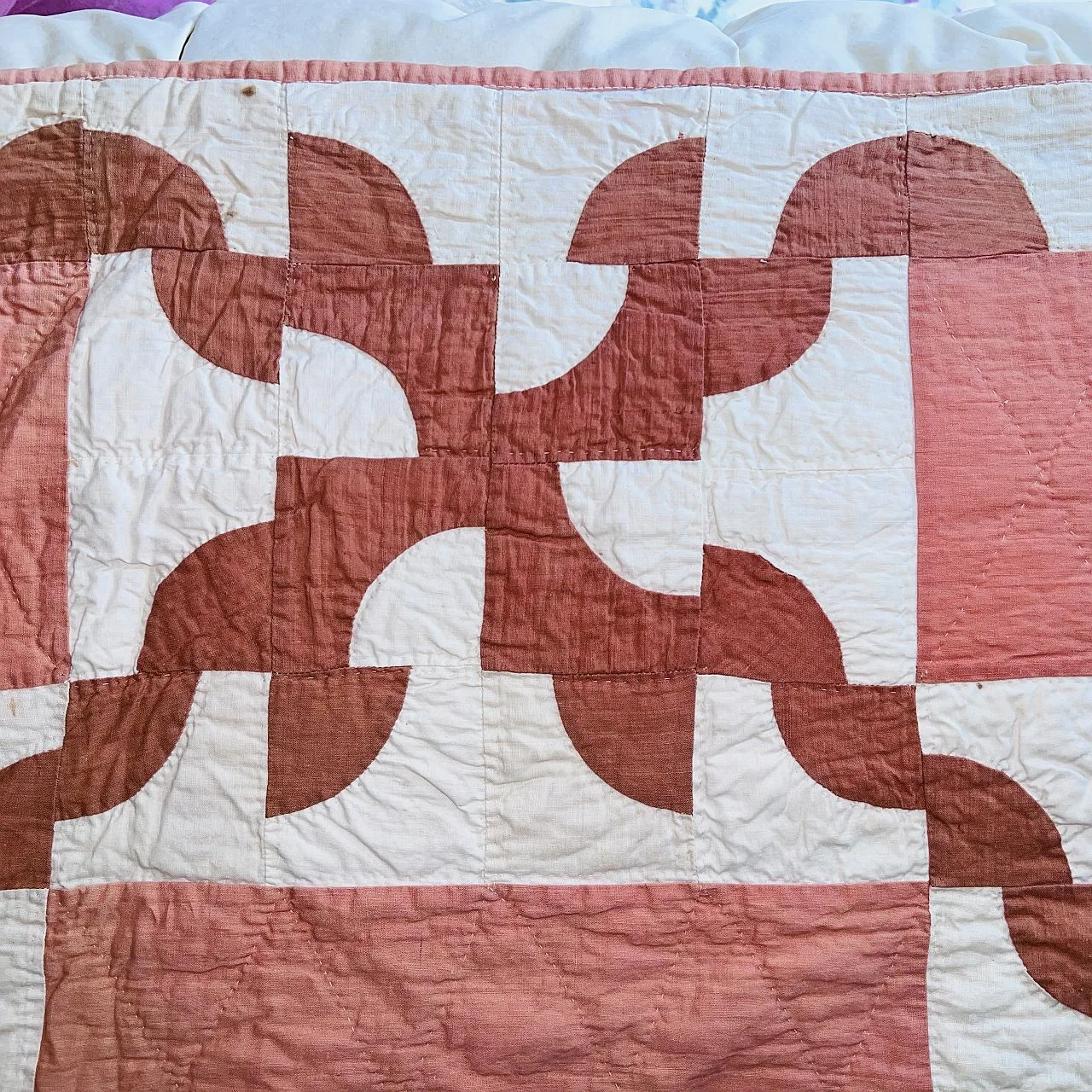
The batting sealed it for me. It is cotton, and it has clearly been through many wash cycles: thin, flattened, and pieced together in sections rather than one continuous layer. Old-style unbonded cotton batting compresses and thins with repeated washing in exactly this way. This is a quilt that got used on a bed, washed, and used again, for a long time.
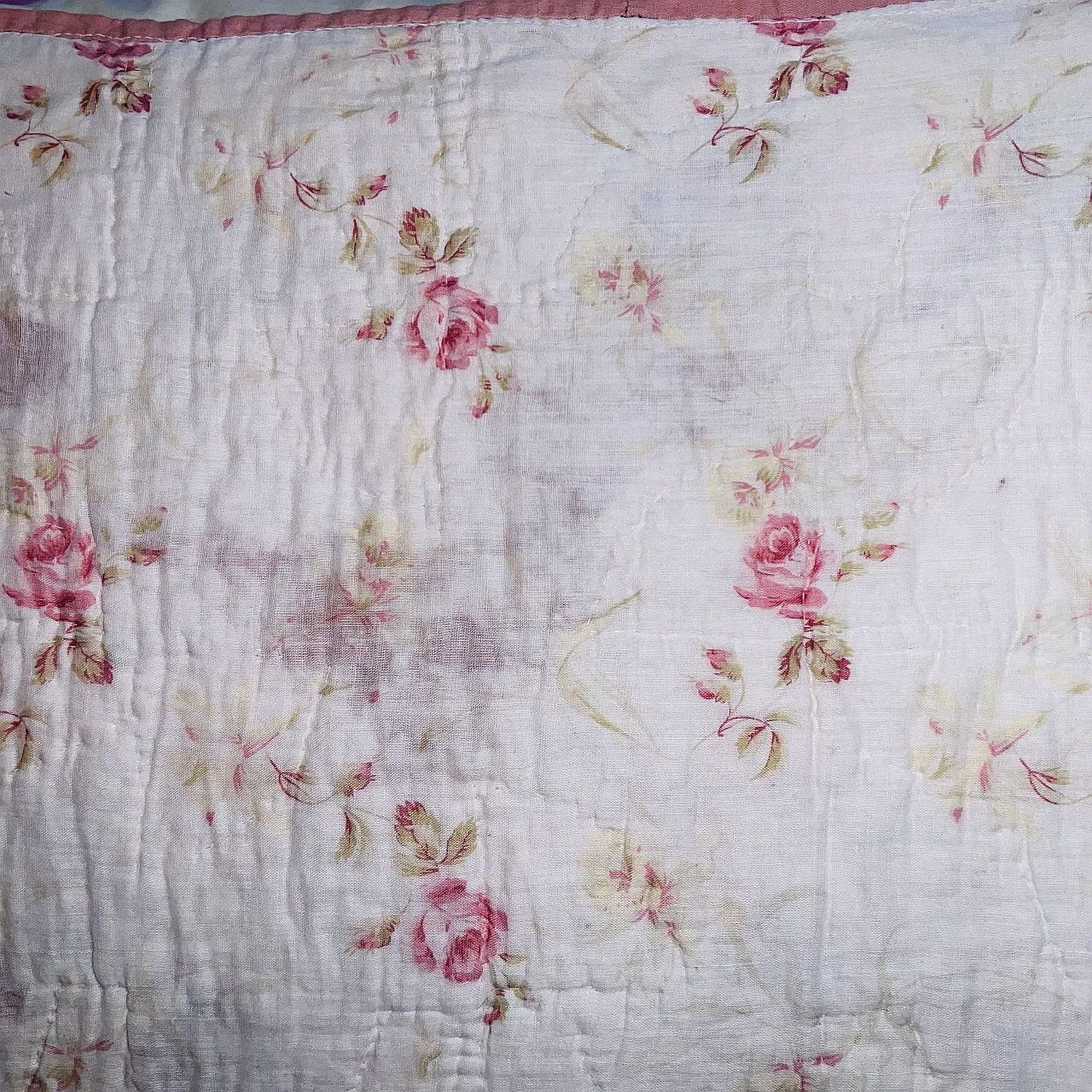
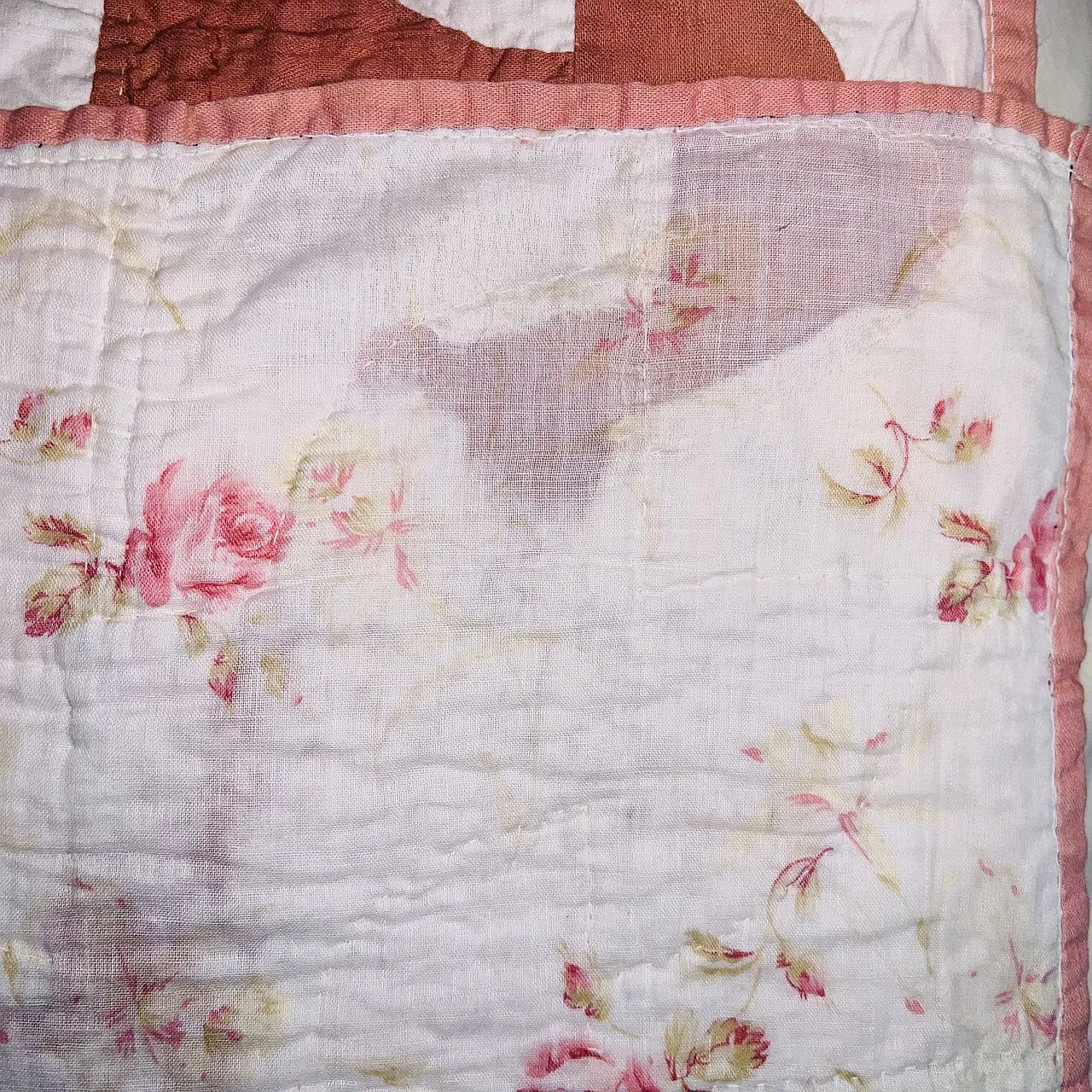
Putting it together: I am comfortable calling this a home-sewn utility quilt from the Depression era through the 1950s, based on construction and wear rather than any one flashy clue. No single detail proved it. The combination did.
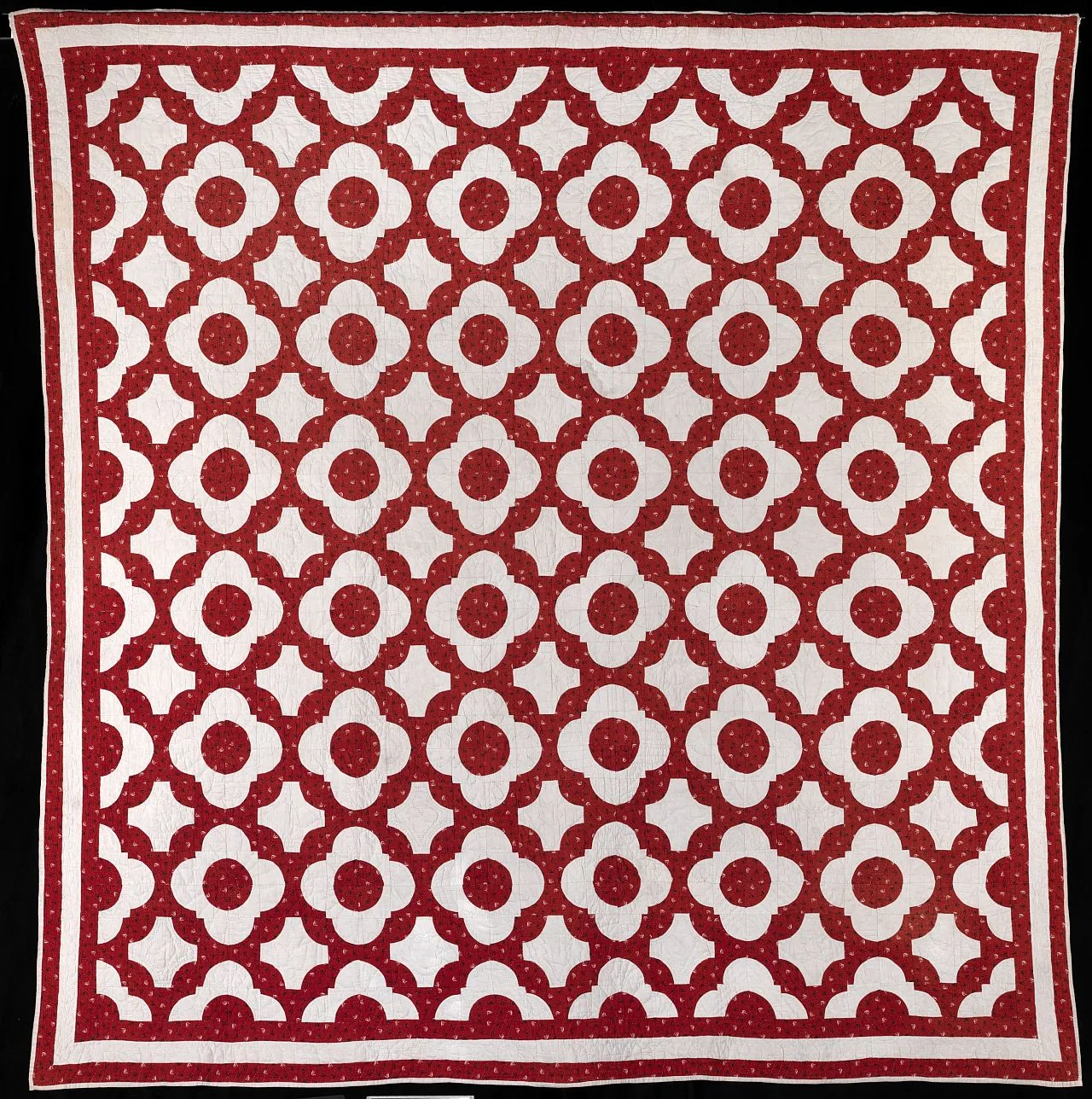
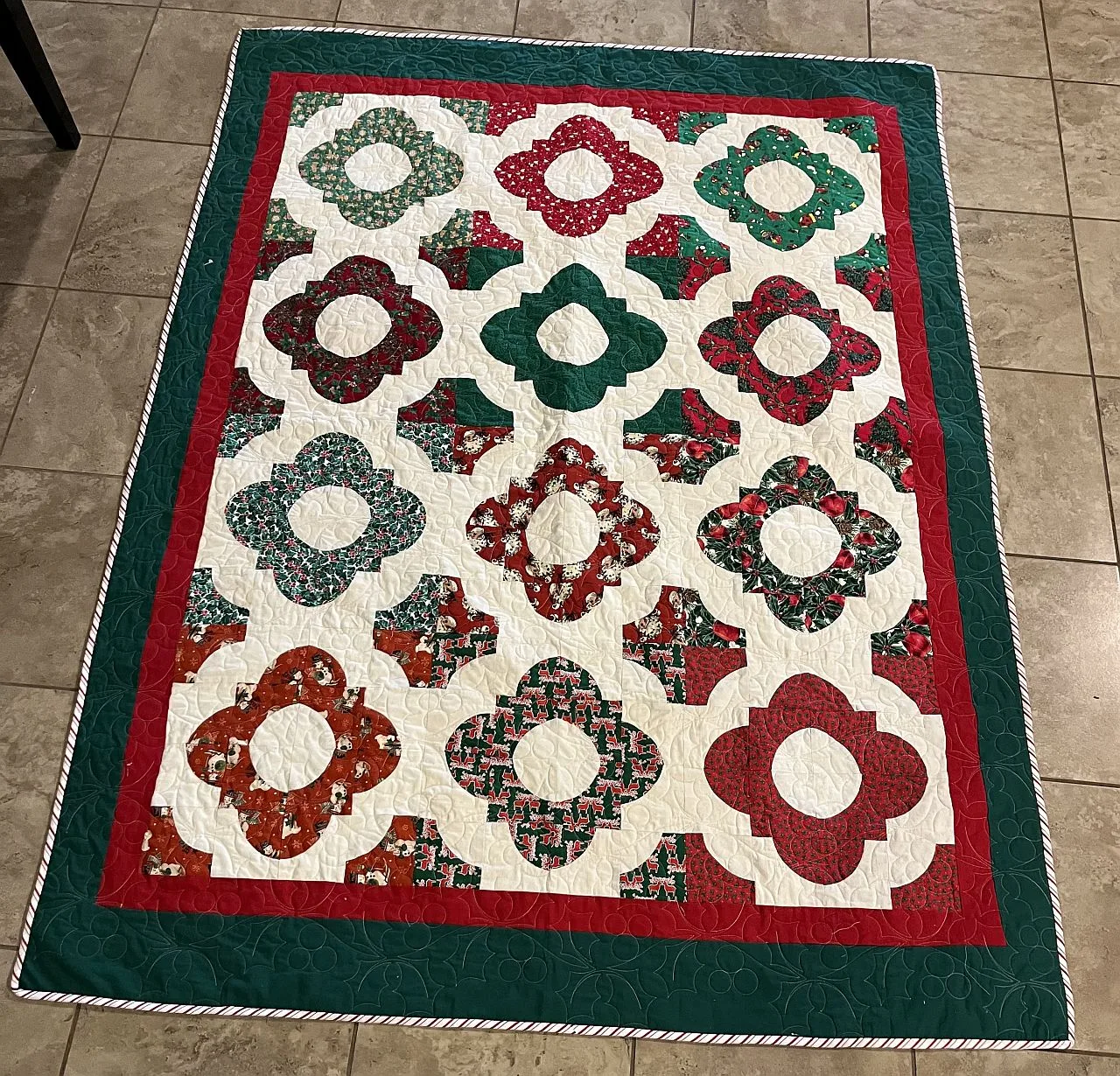
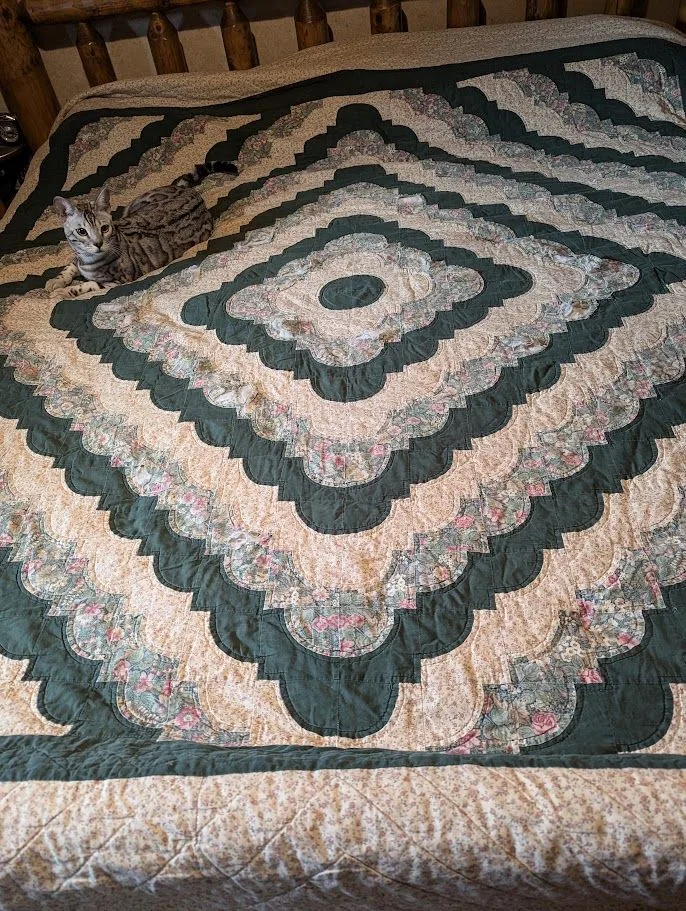
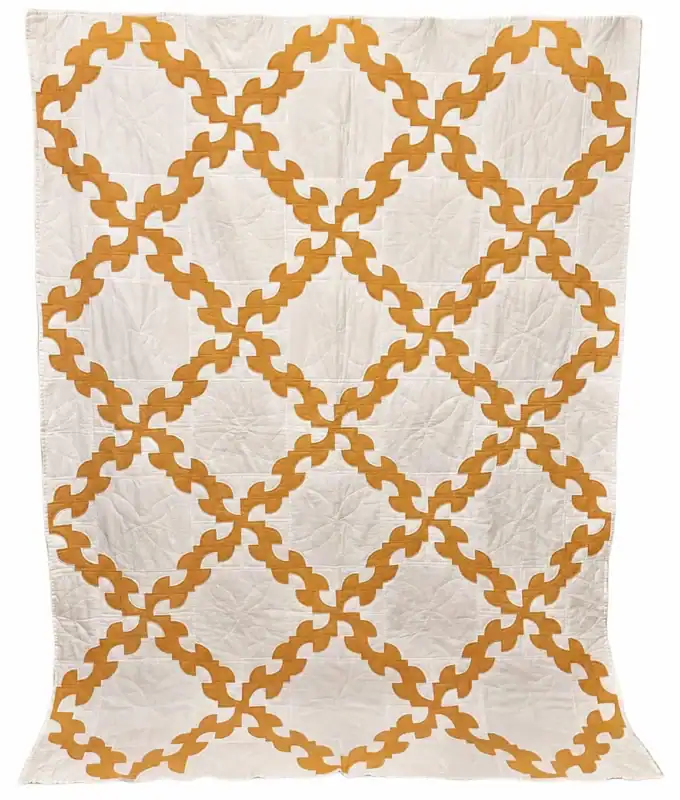
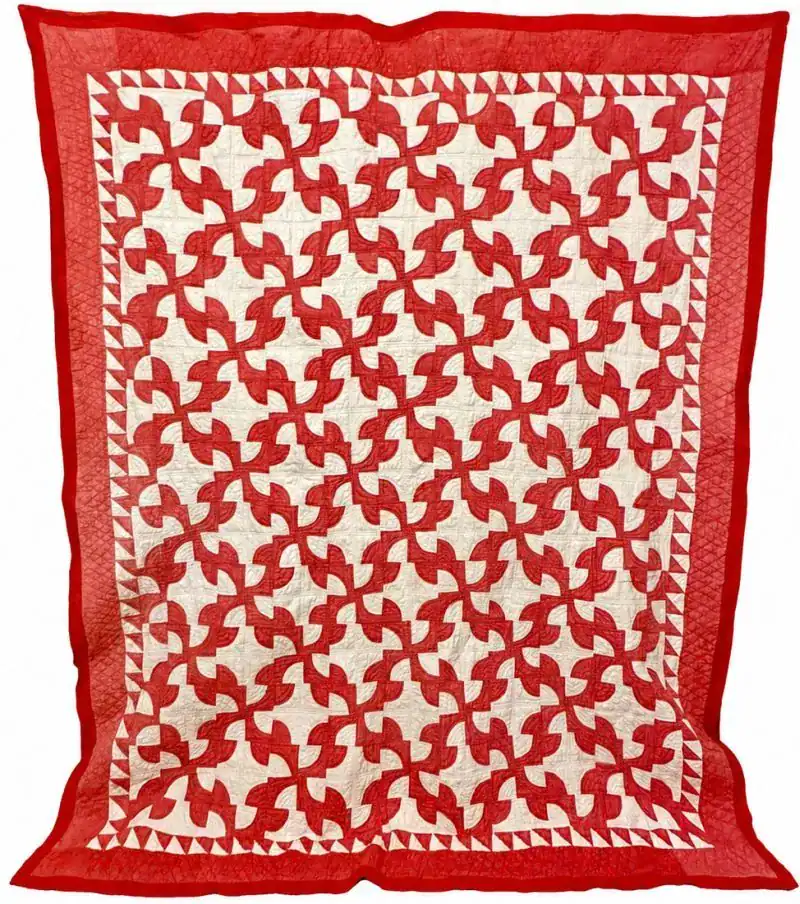
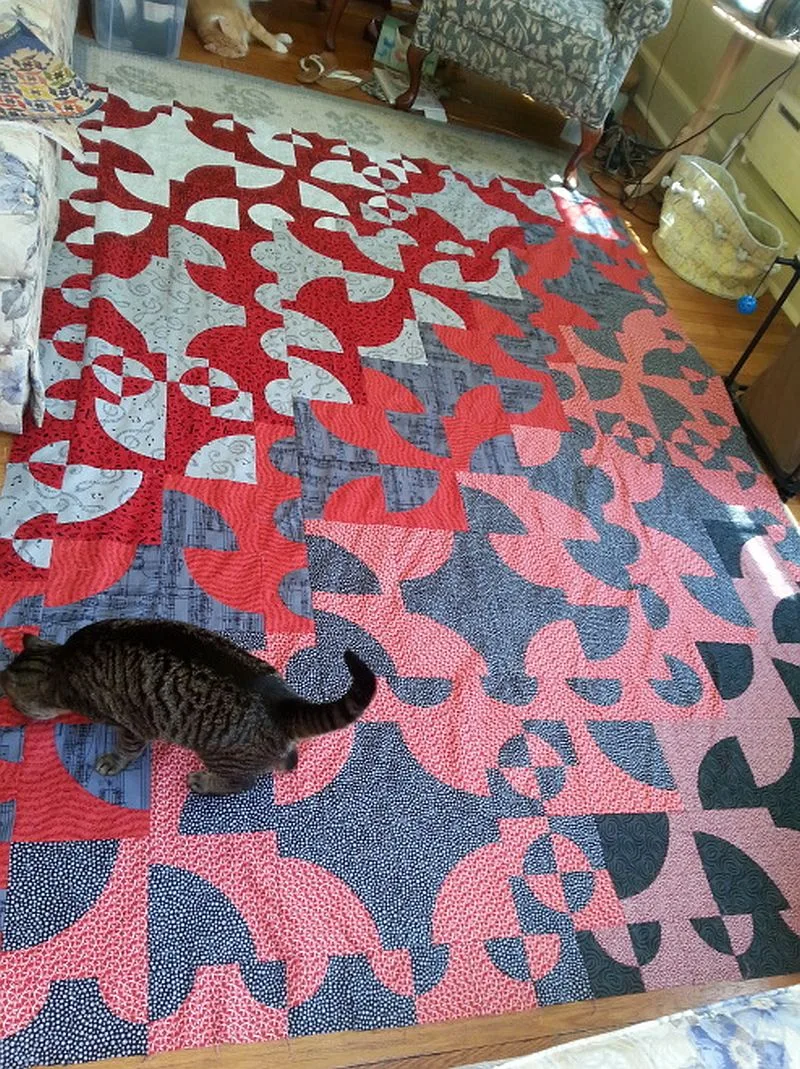
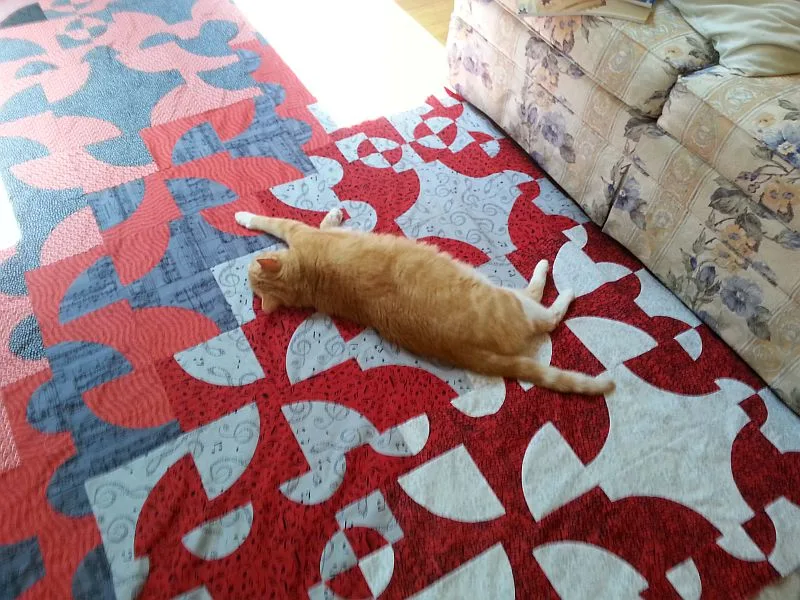
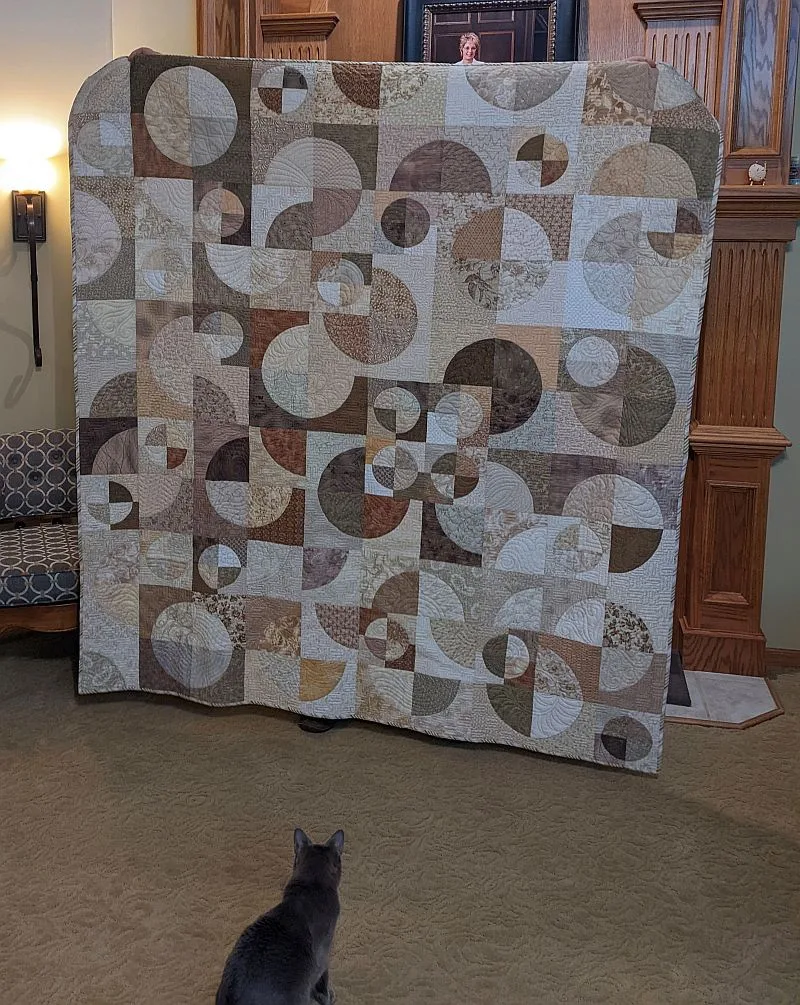
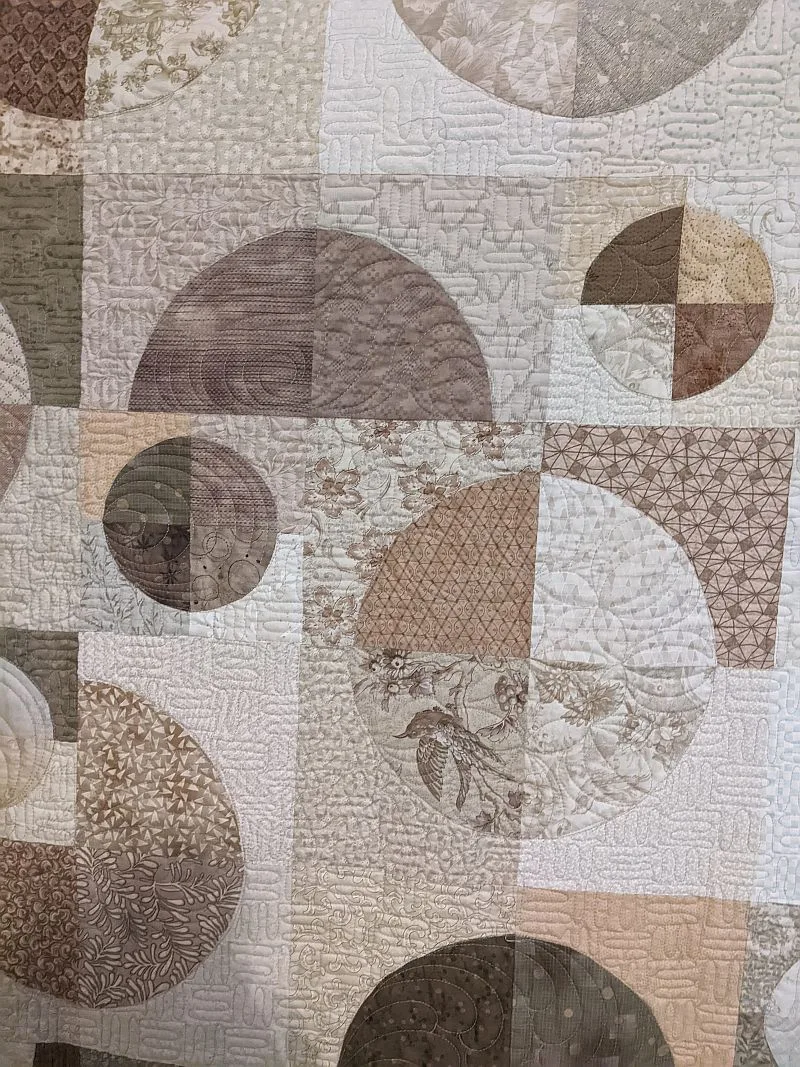
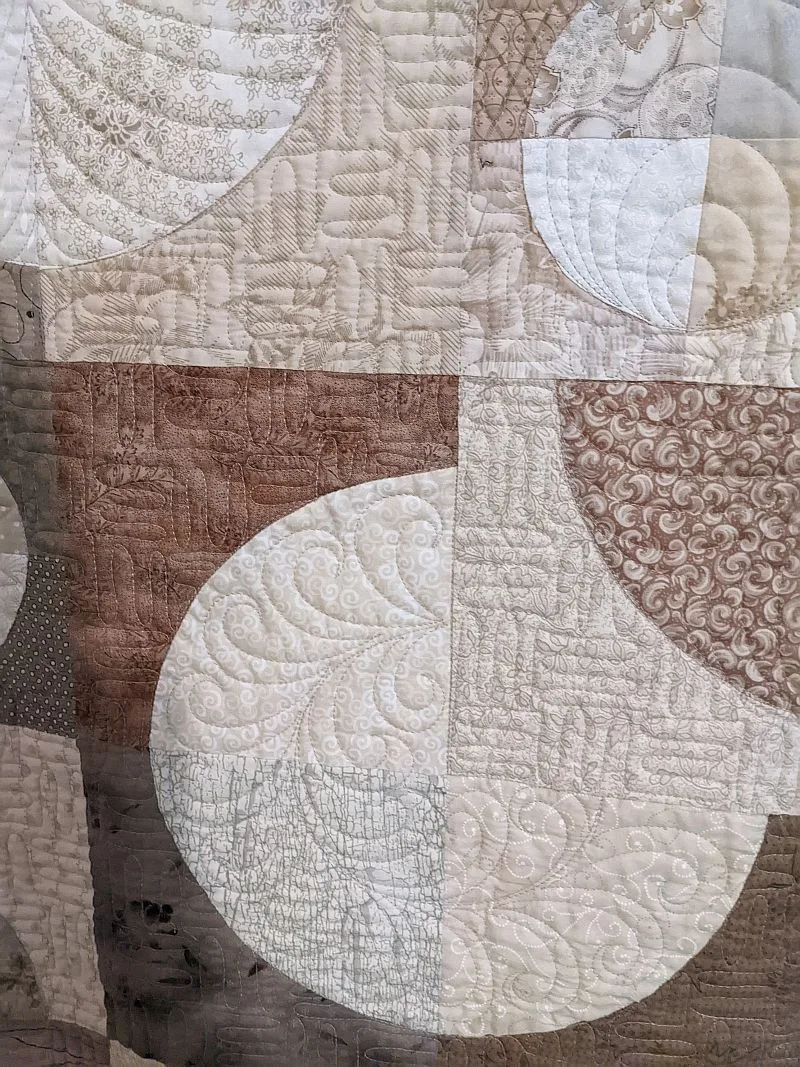
Variations on the Drunkards Path block
Mine is not a typical drunkards path quilt. As it happens, I don’t own one. Here are some pictures I found in the public domain, or pictures that wonderful people shared with me. If you would like to share yours, let me know.

Learn More
Books
- Barbara Brackman, Encyclopedia of Pieced Quilt Patterns (American Quilter’s Society). The reference for pattern names and print sources going back to 1830.
- Carrie A. Hall and Rose G. Kretsinger, The Romance of the Patchwork Quilt in America (1935). An early classic on pieced quilt history.
Articles and blogs
- Barbara Brackman, “Temperance Quilts 1: T Blocks”, Material Culture blog. Her direct research into the WCTU claim.
- Barbara Brackman, “Nancy Cabot/Loretta Leitner: A Short History”, Material Culture blog. Background on the columnist behind “Boston Trail” and many other renamed patterns.
- “Drunkard’s Path Quilts, T Quilts, and the WCTU”, The Quilt Index. A call for documented WCTU quilts, still open, still unanswered.
- “Nancy Cabot and Her ‘Exotic’ Quilt Patterns”, The Quilt Index. More on Cabot’s habit of renaming and embellishing older patterns.
- “The McKee-Boyles & Drunkard’s Path Quilts”, Quaker Quilts and History blog. A specific quilt with a family-documented Temperance connection, a good example of provenance versus pattern symbolism. Includes a picture of a typical Drunkards Path Quilt.
- Nancy Cabot Blocks index, Early Women Masters.
