The History of the Cotton Gin and Its Impact on American Textiles
Few inventions changed everyday fabric and clothing more dramatically than the cotton gin. Before its invention, cotton was difficult, slow, and expensive to process. Afterward, cotton cloth became cheaper, more common, and deeply woven into daily American life, from clothing to quiltmaking.
But the story of the cotton gin is not entirely one of progress. While the machine transformed the textile industry and helped fuel the growth of American manufacturing, it also strengthened the expansion of slavery in the South. Like many inventions during the Industrial Revolution, its impact was both remarkable and deeply complicated.
Before the Cotton Gin
Today, cotton fabric feels ordinary. We use it every day and quilt with it without giving much thought to where it comes from. In the late 1700s, however, cotton was far more difficult to produce.
Why Cotton Was Difficult to Process
The biggest problem was the seed. Short-staple cotton, which could grow in much of the American South, had tiny sticky seeds or trash tangled throughout the fibers. Removing those seeds by hand was exhausting work. A worker could spend an entire day cleaning just one pound of cotton.
Long-staple cotton was easier to clean, but it only grew well in limited coastal regions. Farmers inland needed a faster way to process short-staple cotton if it was ever going to become profitable.
Cotton Becomes a Cash Crop
At the time, tobacco and indigo were the South’s primary cash crops. Cotton existed, but cleaning it required so much labor that it could not compete economically on a large scale. Cotton was not considered anywhere close to being a profitable crop. But after the gin came into use, cotton very quickly began to rival in profit the industry of growing tobacco. Land that had been barren for so long now held a very profitable crop that could enhance a grower’s finances.
Farmers began repuposing their land from food production to cotton production. This would prove to be problematic during the civil war when the South had no food to feed its citizens, and no market for their cotton crop.
Eli Whitney and the Invention That Changed America
Eli Whitney was born in Westborough, Massachusetts in 1765 and showed mechanical talent at an early age. Working in his father’s woodworking shop, Whitney could be found taking apart such items as pocket watches and clocks, studying the intricate mechanisms and then putting their parts together again. At the relatively early age of fourteen, he had opened his own nail-making business and then a pin-making shop, earning a fairly good wage for his efforts.
After graduating from Yale University in 1792, Whitney traveled to Georgia, where he stayed on the plantation of Catharine Greene, the widow of Revolutionary War general Nathanael Greene. There he heard local planters complain constantly about cotton seeds and slow production. Farmers had plenty of land and growing demand for cotton, but cleaning the crop took too much time to make large-scale production practical.
Whitney believed machinery could solve the problem. In 1793, he created a crude but ingenious device that would soon become known as the cotton gin when patented in the following year. The word “gin” came from “engine,” meaning a machine or mechanical device.
How the Cotton Gin Worked
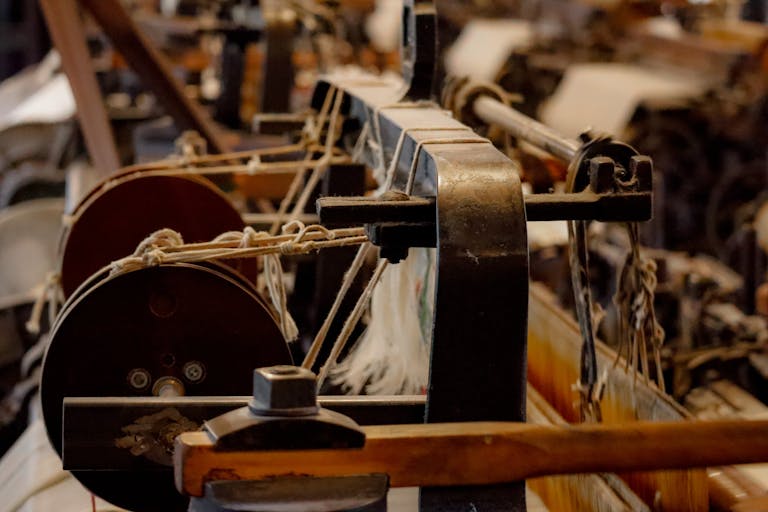
Whitney had arrived at a basic design: a cylinder, through which the cotton was fed, with wire teeth. The raw cotton from the field could be fed through the cylinder and as it spun round, the teeth would pass through small slits in a piece of wood, pulling the fibers of the cotton all the way through but leaving the unwanted seeds behind. This crudely made box, with a cylinder, a crank, and a row of saw-like teeth had made it possible to clean much more cotton than could be cleaned by hand.
Early Gin Designs
They were not elegant. Early versions were made largely from wood and wire. But they worked. Instead of cleaning one pound of cotton per day by hand, workers using a cotton gin could clean roughly fifty pounds daily. Larger mechanized versions eventually processed far more.
The invention spread rapidly across the South. In some areas, farmers were so eager to use the new machine that homemade copies appeared almost immediately, often in violation of Whitney’s patent.
Ironically, Whitney earned far less money from the cotton gin than many people assume. Patent disputes and illegal copies consumed years of his life. He later found greater financial success manufacturing muskets for the United States government.
Cotton Becomes “White Gold”
The effects of the cotton gin were immediate and enormous. In 1793, the United States produced roughly 180,000 pounds of cotton. Within only a few decades, production exploded into the millions of pounds annually. Cotton quickly became one of the most valuable crops in the American South.
The textile industry boomed alongside it. Northern mills processed Southern cotton into cloth, thread, and fabric. New machinery powered by water and later steam engines accelerated production even further.
Cheap Cotton Fabric Reaches Ordinary Homes
Cotton fabric became affordable for ordinary families, not just the wealthy. This period also helped fuel the popularity of printed cotton fabrics. Calicoes, shirtings, and floral prints became widely available to homemakers and quilters. Quilting traditions expanded as fabrics became cheaper and easier to obtain. By the mid-1800s, homes contained more cotton clothing, curtains, bed coverings, and quilts than ever before.
For many Americans, cotton transformed daily life as thoroughly as electricity or the internet would in later centuries. That is one reason cotton earned the nickname “white gold.”
Before the cotton gin, most American quilts were made from wool, linen, or carefully saved scraps of expensive imported cloth. Cotton fabric existed but was a luxury item for most households. After the gin changed the economics of cotton production, printed cotton fabrics flooded the market at prices ordinary families could actually afford. Quilters who had previously used scraps from clothing construction could now buy new yardage. This shift is one reason the mid-1800s saw an explosion of new quilt block patterns — more fabric meant more experimentation, and more quilts meant more shared ideas between neighbors, church groups, and families heading west.

The Cotton Gin’s Connection to Slavery
The cotton gin solved one labor problem while creating another. Although the machine sped up seed removal, cotton still had to be planted, cultivated, and picked by hand. As global demand for cotton increased, plantation owners expanded production rapidly. The result was a tragic growth in slavery across the American South.
Before the cotton gin, some Americans believed slavery might gradually decline. Instead, the soaring profitability of cotton encouraged the expansion of enslaved labor into new territories across the Deep South. By the mid-1800s, cotton production and slavery had become tightly linked economically and politically.
This connection gave rise to the phrase “King Cotton,” which reflected the enormous influence cotton held over Southern politics and trade before the Civil War. The cotton gin remains one of history’s clearest examples of how an invention can improve efficiency while also worsening human suffering.
For quilters, this history is stitched into every cotton scrap. The fabrics that created antique quilts were products of a cotton economy built on enslaved labor. Understanding where the cloth came from adds a layer of meaning to the quilts that survive from this period.
Human Stories and Textile Superstititons
Textile history is filled with colorful sayings, traditions, and superstitions, and cotton workers had many of their own.
One weaving expression may even connect to the modern phrase “the kiss of death.” Weavers often repaired broken threads by tying tiny knots and moistening them with their lips to tighten the fibers. In some mills, poorly tied knots that later failed earned joking criticism as a “kiss of death.” Whether or not the modern phrase came directly from weaving, textile workers used many similar expressions throughout the 18th and 19th centuries.
Cotton mills also had a darker side. Workers inhaled fine cotton dust daily, leading to respiratory illnesses later called “brown lung disease.” Conditions in many early mills were noisy, dangerous, and exhausting.
Yet textile communities also created strong traditions of craftsmanship and creativity. Many women transformed inexpensive cotton scraps into practical quilts, preserving family memories stitch by stitch. The same cotton industry that powered factories also filled hope chests and family linen cupboards across America.
Quilting Bees
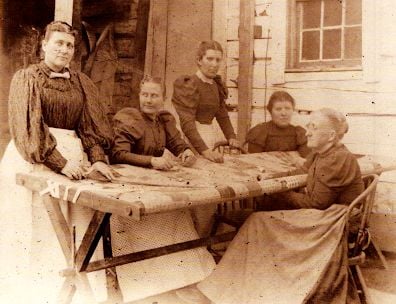
Cotton mill towns developed tight social communities, and quilting was a central part of that culture. Mill workers, like farm families, held quilting bees where neighbors gathered to finish a quilt top that one woman had pieced alone. The abundance of cotton scraps from mill work meant that textile communities often produced a distinctive regional style of scrap quilt. Researchers studying 19th century New England mill towns have found evidence of quilting circles organized through churches and benevolent societies, some of which made quilts specifically to raise money for charitable causes.
The Lasting Legacy of the Cotton Gin
The cotton gin helped transform the United States into a textile and agricultural powerhouse. It fueled industrial growth, changed trade, expanded cotton farming, and made cotton fabric common in everyday homes. It also strengthened slavery and reshaped the nation’s economy in ways that eventually contributed to the Civil War.
More than two centuries later, the cotton gin remains one of the most influential inventions in textile history. Its legacy can still be seen in the fabrics we sew, the quilts we treasure, and the complicated history woven into American cloth itself.
Sometimes a simple machine changes far more than industry. Sometimes it changes a nation.
Resources
Eli Whitney Museum: — covers his life and inventions with primary source material Library of Congress,
Smithsonian National Museum of American History has textile history resources
