December 16, 1996 to December 21, 1996
These restored messages come from the Quilt History List, an online forum where quilt historians, collectors, researchers, appraisers, and enthusiasts discussed antique quilts and related textiles. The archive dates from 1996 through approximately 2016 and is being restored gradually. Sign up in the form at the bottom of the page if you want to know when a new page is added. Original spelling, opinions, formatting, and inactive links may remain unchanged.
Primary topics of this QHL Digest (mid-to-late December 1996):
- Oral history vs. documented evidence — a substantial, occasionally heated debate between Rabbit Goody (textile historian) and Jean Ann Eitel over whether family oral history is legitimate documentation for practices like hand-carding cotton batts, with several others weighing in on regional variation and primary-source research.
- American Quilt Study Group (AQSG) — introduction to the organization, its journal “Uncoverings,” and the book Quiltmaking in America: Beyond the Myths.
- Paper and foundation piecing — beginner questions answered with detailed how-tos distinguishing paper piecing from foundation piecing.
- Quilt cleaning and stain removal — several members trading washing methods (Orvus, Biz, Axion) for removing water stains and dirt from vintage tops.
- Signature quilt authentication — a request for help verifying signatures, including one attributed to a President’s wife.
- Amish quilt characteristics — discussion of construction methods, machine vs. hand piecing, and quilts made for sale vs. for personal use.
- Feedsack and Rising Sun fabric — sourcing hard-to-find reproduction and antique fabrics, plus feedsack quilt condition issues.
- Upcoming book preview — Barbara Brackman and Terry Thompson’s in-progress Civil War quilts book, described via a forwarded guild report.
- Glazed wool and linsey-woolsey — a technical exchange on 18th/19th-century whole-cloth glazing techniques.
Date: Mon, 16 Dec 1996 04:53:19 +0000 | From: Susan Nixon <Desertsky [at] worldnet [dot] att [dot] net>
I believe it was Carolyn Davis who researched and wrote about the quilts of an LDS woman in southern Utah. Pinedale, maybe? The woman, even into late in the century, grew her cotton, carded it for batts, spun it for thread, wove her own fabric, dyed her own fabric and used it for quilts. She also tied her thread in knots and all the knots are on the back. This woman was a genuine artist and I have seen one of her fabulous quilts. It is well documented that she did all these things. There was no easy access to the things we all take for granted, or that our grandparents took for granted! I doubt she was the only woman to continue doing these things well past the time we consider them outmoded. Women in many times and places, when they lacked access to what they want, have figured out a way to make it themselves. Susan in Sunny Phoenix, Arizona, USA ______ __/ | | \__ / | | \ \_/| / \ |\_/ | @ @ | Mooory Christmas! Ho! Ho! Ho! | | And a Happy Mooo-ooo Year! \ / | ^^ | \ __ / \/
Date: Sun, 15 Dec 1996 22:23:54 -0700 | From: “Mary E Scott” <mscott28 [at] cybertrails [dot] com>
I also know that there was hand carding of cotton done well into the depression years. I have a quilt (look at my webb page it is there) that the batts in it are hand carded cotton. This quilt was put together in the middle to late 30’s. It was done in either Mumford or Obion, Tenn. I did not realize that was what the batts were until some ladies told me. I know there is a lot of cotton trash in the batts. Mary Scott mscott28 [at] cybertrails [dot] com http://inficad.com/~lightsp/suitee/index.html
Date: Mon, 16 Dec 1996 03:41:05 -0500 | From: QuiltLine [at] aol [dot] com
To All, If anyone can share any information with me regarding the responsibilities of guest curating, I would really appreciate it. Thanks, Debbie
Date: Mon, 16 Dec 1996 06:07:57 -0500 | From: AJSNGS [at] aol [dot] com
Hi Everyone! I’m trying to subscribe to the Nine Patch News! I found an online address through Jean Ann Eitel’s webpage, but when I mail my subscribe notification, the mail comes back! Anyone have any suggestions? The address I used is: ListServ@ListServ [at] aol [dot] com. I’ve checked this more than once. Also, when I posted a Help to QuiltBee, several people e-mailed me because they would also like to subscribe. Thank you in advance for your suggestions! Nancy in Virginia AJSNGS [at] aol [dot] com
Date: Mon, 16 Dec 1996 06:47:50 -0500 | From: AJSNGS [at] aol [dot] com
Hi, Forgive the BASIC questions once again! But what is paper piecing? And what is foundation piecing or quilting (see I’m not even sure what it’s called)? I’ve heard these terms and am not sure what it is. Thanks for your patience with a newbie. Nancy in Virginia AJSNGS [at] aol [dot] com
Date: Mon, 16 Dec 1996 08:54:27 -0600 | From: “Lang” <lang [at] wellsville [dot] com>
My mother grew up during the depression. She has always loved quilting. I remember as a child hanging some of the “old” quilts she had made during the depression years on the clothesline. When the sun would shine through the quilt you could see the “batting”. These quilts were filled with old worn out clothes. Use it up, wear it out, make it do, or do without was very true in those days!–Eula<lang [at] wellsville [dot] com>
Date: Mon, 16 Dec 96 06:31:48 -0900 | From: Nick Fuller <nickf [at] xyz [dot] net>
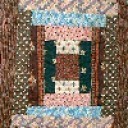
My mother has a quilt that she beleives is Amish. I don’t know for sure, but her aunt bought it from a neighbor and lived near Pennsylvania so it is possible. The front is a very thin-strip log cabin of mostly calicos, not Amishy except the wide brown border, which is quilted in an Amish cable. The back is wide vertical stripes (8 to 10 inches maybe) of red, blue, green, Amish tones. The back looked more Amish than the front! I thought the striped effect was a neat way to do a back and plan to do some myself this way. Now I can’t verify that this quilt is Amish, but for those just looking for a suitable style, I thought this might help. If you’re *really* interested I have pictures. Maybe after Christmas I’ll have time to design a webpage for them! Abby Fuller nickf [at] xyz [dot] net
Date: Mon, 16 Dec 1996 11:36:37 -0500 | From: gridgees [at] algorithms [dot] com (Merry May)
Re: Rabbit’s comments I wholeheartedly agree with you, Rabbit, on your comments yesterday about documenting what REALLY happened, as opposed to what we’ve been reading in romantic accounts of quilt history for so many years. This is what the American Quilt Study Group is trying to do – chip away at the hearsay, do the research, and document what’s really going on now. If you’ve never heard of AQSG (not to be confused with AQS, the American Quilter’s Society, which publishes books and sells them at a discount), you can contact them by e-mail at: aqsg [at] aol [dot] com AQSG sponsors an annual seminar where original research papers are presented. The papers are also published in an annual journal called “Uncoverings.” These journals are now widely accepted as resources in libraries throughout the country (including college libraries). If you contact AQSG, be sure to request a publications list along with your membership application. I can’t claim to not be affiliated with AQSG, as I’m one of their Regional Coordinators (volunteer position), but if you’re at all interested in quilt history, this is a very worthwhile group to be associated with. They’re also a very warm, friendly group – not snobby “egghead” types at all – so everyone can really feel at home with them, no matter what your skill level may be in quilt history. The overall impression I get is that we’re ALL still learning about this together! Sorry to ramble on so long – the AQSG is one of my favorite organizations to be involved in, and I hope to encourage everyone else who’s interested in finding out what REALLY happened in quilt history to join me! Merry May gridgees [at] algorithms [dot] com I live enar the Amish community of Middlefield, Ohio. And have met several amish quilters. The women here do all of their piecing by machine, and all of their quilting by hand. They may use the compressed air machines, but they also have a repairman who can turn any non-computerized machine into a treadle. They do a lot of treadle sewing.. They use all the modern fabrics, and (if they are making items to sell), will use the popular prints. I am not sure what they choose to use for their own quilts, though (haven’t asked). I know several Amish women who love rotary cutters and other modern time-savers. The Amish are not against modernization. They are only against those things which may break up and divide a community. The most important woman in the Holmes county Amish community still “holds” by the Amish beliefs. But she also has her own car (and driver), Lear jet (and pilot) so she can travel around the world to get her business completed. Mrs. Miller is a modern day Old Order Amish… > > Barb in southeastern PA > <bgarrett [at] fast [dot] net>
Date: 16 Dec 96 17:27:11 | From: Rabbit Goody <75444.1037 [at] CompuServe [dot] COM>
Thanks for the referrence Yes there certainly were women who did that but again, we have to be creful not to generalize from them to the entire population of 1890. They were as you say genuine artists and need to be recognized as such. As artists they hold a very special place and the understanding of textile process gets tranferred and diffused into and out of a culture is very important to understand their special place
Date: 16 Dec 96 17:27:14 | From: Rabbit Goody <75444.1037 [at] CompuServe [dot] COM>
can you show some documentation for “hand” carded batts? other than some ladies said so? Thaty would be really important. Also, what happened in the depression is not what happened in the 1840’s or pre Civil War or 1890’s. We know a great deal about textile production in many places at many times it is extremely regional and needs to be looked at regionally and in terms of different socio-economic classes. What happened in one family living next another family may have been quite different. -************************************** Date: Tue, 17 Dec 1996 06:25:12 -0600 (CST) From: Amy Lauderdale <laall [at] olemiss [dot] edu> To: QHL [at] cue [dot] com Subject: QHL: Re: QHL-Digest Digest V96 #14 Message-ID: <Pine.SGI.3.95.961217061758.8839B-100000 [at] sunset [dot] backbone [dot] olemiss [dot] edu> Content-Type: TEXT/PLAIN; charset=US-ASCII > I will look up the documentation after xmas…but I can tell you absolutely > that there was hand carding of cotton for batts in the South well into the > depression years. I am new to the list and haven’t seen this whole thread, but I can say with certainty that it was done even past depression years. I am from Mississippi and my grandmother lived in a community called “Swampers”, Louisiana. As a child I have seen her card cotton and I was born in 1953. But she quit carding sometime during my youth. I have some of her quilts made with flour sacks in the 30’s and 40’s, which have this batting though
Date: Tue, 17 Dec 1996 06:39:03 -0600 (CST) | From: Mary Jo Kennedy <KENNEDYAC [at] VAX1 [dot] Mankato [dot] MSUS [dot] EDU>
ntent-transfer-encoding: 7BIT I am also new to this list and very interested in quilting. I sure wish I would have paid more attention to my grandmothers when they were quilting – in the 1950s. Please explain what “carding” is. Thank you. Also, I noticed people don’t sign their messages on this listserv, why is that? Part of the fun of belonging to a listserv is finding out where people are from and getting to know each other better. Just a suggestion. Mary Jo from BRRRRRRRRRRRRRR Mankato, Minnesota
Date: 17 Dec 96 09:54:57 | From: Rabbit Goody <75444.1037 [at] CompuServe [dot] COM>
Thanks for the referrence
Date: 17 Dec 96 09:54:58 | From: Rabbit Goody <75444.1037 [at] CompuServe [dot] COM>
carding is the second step in preparation of short fibers such as cotton or wool for spinning or making batts by the 1790’s this could be accomplished by water power although hand carding persisted in some areas for a long time in conjunction with water power Rabbit Goody 75444.1037 CompuServ.com textile historian
Date: Tue, 17 Dec 1996 20:08:48 -0500 | From: Baglady111 [at] aol [dot] com
Oh my goodness..so much has been going on while I have been held captive by my old server..mesgs out there that I am trying to access..on several digests I find such gret info..I’m happy to see Nancy of VA still asking great questions..I am interested in th discussion going on about cotton carding batt..also the 20 page bibliography on ‘history’ books..also glad to see two of my members from the Feedsack Club inin posting such great info..I have a BIG favor to ask..would it be possible to have Mary Persyn, Barb Garrett, Susan Nixon (about Carolyn Davis) and all others who posted about Amish and cotton carding PLEASE email me the posts on these subjects? Inturn, I have a member who is an expert, and most passionate on cotton, and I know she would be quite interested in sharing any info you might seek on cotton..also, Barb Garrett, are you interested in the Amish in the Pgh area, actually, north of Pgh? I thank you all. Sure have missed what has been going on..hope to learn how to copy. new address is <baglady111 [at] aol [dot] com> in Pittsburgh, Pa..OLD address was baglady [at] nauticom [dot] net
Date: Tue, 17 Dec 1996 20:45:00 -0500 | From: AJSNGS [at] aol [dot] com
Hi, I bought an old quilt (c. 1930 Boutinere (sp?) pattern) in a medium bright green with lovely prints all set on an off white background. The front is pretty nice considering it’s an orphan, but the binding is badly deteriorating. The back is nasty, disgusting, etc. I saw that first and didn’t hesitate to throw it in the washer to soak. It was gross, and I wasn’t having it in my house until it was a bit cleaner! Anyway, I quickly pulled out ALL my recent notes from QHL on washing quilts and believe me, they are coming in handy. Now, I would like suggestions on how to dress this quilt up. As I said, the front is quite pretty–definitely worn but that’s okay. The back is yucky–looks like someone died on it! Well maybe I’m exagerating! Anyway, I would like suggestions on how to put a new backing on it, and how to repair the binding. Remember, you will be talking to a rank beginner! But this quilt is something I do want to fix up. So thanks in advance, Nancy Sentipal in rainy Virginia AJSNGS [at] aol [dot] com Date: Tue, 17 Dec 96 22:35:43 EST From: “Bob Mills” <decision [at] tigger [dot] jvnc [dot] net> To: QHL [at] cue [dot] com Subject: QHL: Re: QHL-Digest Digest V96 #14 Message-Id: <decision.1201267783C [at] tigger [dot] jvnc [dot] net> Hi Nancy in Virginia, Paper piecing is drawing the pattern on paper and then sewing fabric to the paper, rather than making templates. That is a very simplistic description. I think you would really enjoy rec.crafts.textiles.quilting newsgroup. You should be able to get that group and get the answers to many of your initial questions. Enjoy. Jan (not Bob)
Date: Tue, 17 Dec 1996 23:15:27 | From: josiem [at] tekstar [dot] com
For Nancy and others who are interested there are a number of websites that will give you good information about patterns and How-tos. Start out with the WWQP at http://ttsw.com/MainQuiltingPage.html, then visit Mary Ann’s Cyber Sewing Room at http://www2.nb.net/~maryann/ . Mary Ann has great links to all the best foundation patchwork sites including Zippy Publications, producer of the Foundation Piecer Magazine at http://www.other-world.com/ftp/QuiltersWeb/ZippyDesigns/index.html. Debby Kratovil also has great patterns and information at her website Quilter by Design http://www.his.com/~queenb/index.html. Most of these places will have patterns to run off on your printer and instructions on how to use them. Paper foundation patchwork is, to me, a wonderful innovation in sewing blocks. Because you sew on the pattern, you get precise and perfect points and a perfect sized block every time. Lots of mini blocks are available but a number of books today are published with 10 – 12″ blocks. Shirley Liby’s books, Jane Hall and Dixie Haywood’s Firm Foundations, plus many more will satisfy those piecers who want to use this method with larger blocks. I would be happy to share anything further with anyone who wishes to write me privately. Jo in Minnesota
Date: Wed, 18 Dec 1996 07:53:52 -0500 (EST) | From: Beth Ferrier <APPLEWD [at] cris [dot] com>
Merry Christmas all, My husband’s aunt has three old quilts that she is thinking about selling. (No matter how longingly I caressed them, there appears to be no chance of inheriting!) Being no way an expert, I guess that they are feedsack creations. They are not intricate, rather utilitarian patchwork, but they are in excellent condition. She would like to know where to sell them. I wish I could tell her that they are worthless and offer her $30 for the lot! My find this summer was a blue and white “T” block quilt. I believe it to be a Temperance quilt. I would love to date the quilt. It is in rough shape. It was $8, sold as a cutter! I washed it in Orvus in the bathtub, dried it on the lawn in the shade. It’s folded, good side out, on my hutch. By they way, part of the binding has been burned! Oh, how I wish it could talk!! Thank you for this list. I live in an 1860 house and would like to fill it with wonderful quilts, both old and new. I love history (though I wish I had paid better attention in high school!). It’s been fun learning the history of this house. Beth in Saginaw, MI
Date: Wed, 18 Dec 1996 11:55:33 -0500 | From: SadieRose [at] aol [dot] com
I have been busy with holiday preparations, had 2 parties, one at my home, on Monday. But, I took time to read each post on QHL….left the other e-mail messages to catch up on later….love this group!! (Thanks, again, Kris!) Thanks to Merry May for posting about the American Quilt Study Group. This excellent organization has done much to encourage the research and discovery of factual information on the history of quilts and their makers. They published a book in 1994, “Quiltmaking in America- Beyond the Myths”. This book, edited by Laurel Horton, contains articles by 17 different authors, which first appeared in the AQSG’s annual publication, UNCOVERINGS. Here, they are illustrated with color photographs, as well as b&w photos, maps, and newspaper reproductions. The articles cover a variety of topics, divided into 6 chapters: Pattern Development and Distribution, Quilts & Quiltmakers in Early America, Wars & the Work of Women, Textiles and Tools, Group Quilts, and Quiltmakers in the 20th Century. The significant difference about the information in this book, is that it is based on careful research, not on the myths about quilts and quiltmaking. Many “facts” about quilt history started as one person’s theory, but then were repeated often enough to become accepted as fact. These generalizations don’t stand up when research from many areas is combined to create a more accurate picture. If you are interested in quilt history, or women’s history, this is an excellent book to add to your library. It was published by Rutledge Hill Press, 1994, in hardcover, 192 pages, $34.95. ISBN# 1-55853-319-2 it should be available through your local book store. Karan Flanscha, from the deep freeze (-25 wind chills this morning!)
Date: Wed, 18 Dec 1996 12:07:54 -0500 | From: SadieRose [at] aol [dot] com
Jane, If you need some posts forwarded, I think I still have them all in my incoming mail. Let me know. Sorry to be brief, have to leave for work 🙁 TTYL…..Karan PS These are individual posts, I am not on Digest
Date: Wed, 18 Dec 1996 12:55:15 -0500 | From: mgoodman [at] albany [dot] net (Mary Beth Goodman)
Someone has written me (ah the price of being famous LOL) and asked for advice about a signature quilt she recently bought – she wants to track down the signatures and see if they are authentic – one is a President’s wife! Any helpful hints I can pass along? I pointed her to the State Museum/Library, which are probably pretty good resources but are notoriously not very user friendly….. and of course, I asked if she would like to display this quilt at our show! Mary Beth Goodman, Coordinator NYQuilts! Quilts, Fairfield Fashion Show, vendors, lectures, classes! June 7 & 8, 1997 Russell Sage College, Troy NY http://www.albany.net/~mgoodman/NYQuilts.htm
Date: Wed, 18 Dec 1996 14:49:30 -0500 | From: “James M. Welch” <hawk [at] csionline [dot] com>
Hi everyone, I have a question for you. I had a customer come into the shop and ask how to take what seems to be a water stain, brown streak, out of a circa 1930’s quilt top that had been given to her. She took it to the dry cleaner’s and when she saw the look on my face, she hastened to tell me that they wouldn’t touch it, they told her they would probably make it worse. I suggested she wash it in the tub with Orvus with a sheet under it and see how much that would take out. Any other suggestions? I am hoping that she will bring the two in she was given, just so I can get a peek! Debbie at QPs in NJ t
Date: Wed, 18 Dec 1996 13:55:02 -0600 | From: R D <holmr [at] execpc [dot] com>
Hi all, I used to be on AOL for several years before changing providers last summer. I wanted to keep getting the Ninepatch News, but I was told at that time that you had to be on AOL to actually get the newsletter mailed to you. However there were archives for the Ninepatch News that could be accessed and you didn’t have to be on AOL to get those. Unfortunately I do not have that address any longer. Someone on AOL should be able to access the quilters area, and easily get the current scoop on the Ninepatch News and post it to this group. Donna in Wisconsin
Date: Wed, 18 Dec 1996 15:46:28 -0500 | From: AJSNGS [at] aol [dot] com
Marilyn and others, Personally I like the title “Thread Heads”! My DH calls me “Quilt Momma” because our house has suddenly started filling up with old quilts, and tons of mail about quilts! He collect train memorabilia and I call his fellow collectors “Trainers”. He subscribes to a listserv about trains, and we compare notes about who is getting more e-mail. I have to tell you, quilters win hands down. Nancy in Virginia AJSNGS [at] aol [dot] com
Date: 18 Dec 96 17:32:12 | From: Rabbit Goody <75444.1037 [at] CompuServe [dot] COM>
the census records are actually easy to use in a library and I never hesitate to go straight to the research librarian and say Help but gazetteers and local history collections are usually very helpful. Geneological information is of course available from the Mormons on line and through their great network. At least if a President’s wife name is on it you can date and place it remarkable well yes
Date: Wed, 18 Dec 1996 19:52:30 -0500 | From: Baglady111 [at] aol [dot] com
you are probably going to shudder..so sit down, prepare yourself..years ago a gal in Bronxville, NY told me this..she used Axion in her bathtub and cold water..she did not use the sheet to support it..good idea tho..anyway, she would soak an antique quilt in cold water and Axion for a week to two..RAVED about the results..naturally she would not wring the quilt/top but press the water, rinse, begin again for that week or so..I hae no idea the results of what they look like today..but that was HER method!! Jane (baglady111 [at] aol [dot] com> those 111’s are ones
Date: Wed, 18 Dec 1996 20:26:13 -0500 | From: Baglady111 [at] aol [dot] com
WOW!!! HOW EXCITING..last year. RITA BARBER of QUILTERS’ HERITAGE CELEBRATION shindig in Lancaster, Pa had signature quilts as their main theme..bet she could help..ditto, Brenda Groelz is very knowledgeable.. plus Jinny Beyer at jbstudio [at] inter-look [dot] com [dot] [dot] Brenda is at bgroelz [at] hamilton [dot] net [dot] [dot] can’t lay my hands on Rita’s right now..I can also go thru my American Quilt Study Group roster and see who specializes in signature quilts..can’t wait to see how this all goes..Jane
Date: Thu, 19 Dec 1996 09:25:04 -0500 | From: Linda Stormo <lstormo [at] mail [dot] nasboces [dot] org>
A note for those of you who are interested in bibliographies: there’s a web site for fiction books about quilts, quilters, and patchwork at: http://www.nmt.edu/~breynold/quiltfiction.html#F There are two categories, adult and children’s literature. Some books might interest those of you on the list as they are probably based on some historical facts
Date: Thu, 19 Dec 1996 11:16:07 -0500 | From: QuiltFixer [at] aol [dot] com
I have just sucessfully washed a 1930’s quilt by soaking it in warm water and BIZ for 10 minutes two times. Washed in a gentle soap on delicate. Rinsed 3 times. All this in the washing machine. Some of the brown water stains are still there but greatly faded out. The colors are much brighter and fresher. Whole quilt looks much better. Toni Baumgard QuiltFixer [at] aol [dot] com >From beautiful Spring Lakes on the Central California Coast, where the frost is like snow this a.m
Date: Thu, 19 Dec 1996 14:27:51 -0200 | From: “Barry A. Cruikshank” <barryc [at] injersey [dot] com>
Send e-mail to “NINEPATCH-request [at] LISTSERV [dot] AOL [dot] COM” Barry Cruikshank
Date: Thu, 19 Dec 1996 14:07:10 -0800 | From: ADELAIDE LEWIS <all [at] styx [dot] ios [dot] com>
Foundation piecing is using a pattern drawn or printed on paper or cloth (muslin) as a base to which the quilt fabric is sewn. It is sometimes referred to as “sew and flip”. The first piece of fabric is placed right side up on the foundation; the second piece is placed along one edge of Piece 1, right sides together, a 1/4-inch seam is sewn along the raw edges; Piece 2 is then flipped over so the right side side up; Piece 3 is then aligned with the edge of Piece 2, right sides together, the seam is sewn, and Pice 3 is flipped so its right side shows (etc., etc.). This method is sometimes also called “string” piecing. In paper piecing, on the other hand, pieces of paper the size and shape of your finished block pieces are cut. The fabric is cut 1/4″ larger than the paper pattern and the fabric is placed right side up over the paper. The fabric edges are turned under and based in place. After the block pieces are all based to their paper bases, they are joined to each other by whip stitching the edges of the block pieces together. When the block is completely sewn together, the basting stitches are removed and the paper patterns separated from the fabric. The paper patterns can be used more than once. The Grandmother’s Flower Garden pattern and some star patterns are often done using this method. (After re-reading this explanation, I’m not at all sure I can understand what I just explained — hope it makes some sense to others out there.) Adelaide (In New York City, where the Rockefeller Center tree looks just beautiful in the rain)
Date: Thu, 19 Dec 1996 17:12:45 -0500 | From: quiltmag [at] mindspring [dot] com (Jean Ann)
Hey you guys! wait a minute…<giggle> I mean, I only linked this page to mine as a favor to the AOL quilt forum that has always treated me like yesterday’s leftovers they never wanted in the first place anyway! I have absolutely no connection to the AOL Quilt Forum. Their Choice. They asked me to link their Nine Patch News website and I did. My Choice. If their page isn’t operational. their problem. not mine. I have copied this email to the two people at AOL Quilt Forum who should be able to fix their web site so you can subscribe to the Nine Patch News. I frankly never liked the Nine Patch News, but then I quit subscribing to it at least a year ago, and long before PamNana took over as the editor. I am sure it has changed, and I have always liked PamNana, which is why, when she asked if they could be linked to my page, i linked it. However…if it ain’t fixed so you can subscribe in a week….when I do my up-dates, off it goes. I get enough email without working on something to do with the AOL quilt forum that has let me know over and over again that I am persona non gratis….. so…email PamNana [at] aol [dot] com or Micki411 [at] aol [dot] com please! Jean Ann Eitel America’s Favorite Quilter http://www.quiltmag.com Let’s Talk Quilting: dal.net IRC – /join #quilttalk http://www.quiltmag.com/QuiltTalk/
Date: Thu, 19 Dec 1996 17:20:16 -0500 | From: quiltmag [at] mindspring [dot] com (Jean Ann)
Rabbit says: >can you show some documentation for “hand” carded batts? other than some ladies >said so? Thaty would be really important. Also, what happened in the >depression >is not what happened in the 1840’s or pre Civil War or 1890’s. We know a great >deal about textile production in many places at many times it is extremely >regional and needs to be looked at regionally and in terms of different >socio-economic classes. What happened in one family living next another family >may have been quite different. Documentation is word of mouth from grandmother to daughter to granddaugter. It is good enough for me as oral history is every important and revered in the South. If that is not good enough for you, then fine. Jean Ann Eitel America’s Favorite Quilter http://www.quiltmag.com Let’s Talk Quilting: dal.net IRC – /join #quilttalk http://www.quiltmag.com/QuiltTalk/
Date: Thu, 19 Dec 1996 20:53:24 -0500 | From: quiltmag [at] mindspring [dot] com (Jean Ann)
Jean — can you explain what you mean by sewing old blocks over muslin? I bought 13 very small fan blocks that were pieced over muslin fabric much like we piece fabric over paper today. Only we remove the paper after the blocks are sewed. The muslin stays there to stabilize the fabrics. The fabrics in my blocks are silks, etc. fancy fabrics. Also, points meeting on old blocks? almost never. I just add sashings between the blocks and dont worry about the points. if they get chopped off, it is okay. I often sew with 1/8″ seams instead of 1/4″. I have seen many old quilts with 1/8″ seams. this doesnt chop the points off too much. Jean Ann Eitel America’s Favorite Quilter http://www.quiltmag.com Let’s Talk Quilting: dal.net IRC – /join #quilttalk http://www.quiltmag.com/QuiltTalk/
Date: 19 Dec 96 21:06:09 | From: Rabbit Goody <75444.1037 [at] CompuServe [dot] COM>
Jean Ann Eitel’s comment about whether oral history is good enough or not good enough brings up avery important point about what documentation of historic process is and how we can use documentation of historic process to understand the wider culture. Oral history is extremely important and things past down are the way we learn about the past by documentation what I mean is referrence that we can then look at the larger group so for instance when someone says past down from mother to daughter etc I want to know more about the mother and daughter. I want to know who they were where they were what surrounded them etc how does it all fit together. The fact that hand technology ( hand carding) in this case continues long after we expect it to in some areas tells us alot about individuals preferrences, about the influence of culture about all the things that transcend the quilt and make quilting more important. That is why we ask for and want referrence and documentation so that we can better understand
Date: Thu, 19 Dec 1996 18:28:19 -0800 (PST) | From: Michele Weise <michele [at] peppertreestudios [dot] com>
Hi everyone, I just finally had a minute to read over some old mail and Julie Gardner had a question about freezing dust mites. Here is a message that was sent to me last spring. I think it’s really interesting and good info. te: Fri, 3 May 96 10:31 PDT X-Sender: jgibson [at] crash [dot] cts [dot] com To: Michele Weise <michele [at] peppertreestudios [dot] com> From: jgibson [at] cts [dot] com (Judy Gibson) Subject: Re: moths eradication Michele: Textile conservation is a bit out of my line–my professional responsibility is the care of dried plant specimens, and my museum does not “do” ethnological collections. So, since you have a serious textile conservation need (unlike most of the knitlist, who are merely interested in keeping their sweaters from being munched), I think you should consult with the best experts in the field. The first place I would try would be the Textile Museum in Washington, D. C. I have just looked around and I don’t seem to have their gift shop catalog any more, so can’t give you an address. But someone there should be able to point you in the right direction, and they probably sell some books that will give you the answers you need. Or call any major museum with textile collections; someone should be able to tell you who to talk to. As to the wooden boxes, I don’t know what the insect is–probably some kind of beetle–but freezing should be able to solve that one. I froze some Mexican weavings that had been hung on sticks, when the sticks developed the symptoms you describe. Both sticks and weavings came through just fine. Of course, I’d spent about ten dollars on them, so it wasn’t much of a risk. To be extra careful, try it first with a wooden box you’re not too attached to. Seal them in a plastic bag before putting them in the freezer (to keep scraped-off frost from getting on them), and leave them in the bag until they return to room temperature so they don’t pick up moisture from the air. The freezer should reach -20 degrees Celsius (zero, Fahrenheit) if possible, and should not be a frost-free type, since these have a warming cycle to remove frost. The objects should stay at the low temperature for three or more days. I usually freeze things for a week, but this is mostly for the convenience of knowing that I unload and load the freezer on Mondays. We have a chest-type household freezer in our department that we use for bundles of dried plants, and from time to time our education and exhibits departments use it to freeze taxidermied mounts–wood, plaster, mounted animal, acrylic case, and all–when they have any sort of insect problem. In six years in this job I’ve never seen damage to any item due to the freezing process. I have a book I bought about twenty years ago on textile conservation. It’s published by Watson-Guptill, the art publishers, so maybe it’s still available. It might not be the most up-to-date source of information, but it is very thorough: Caring for Textiles Karen Finch O.B.E. and Greta Putnam Watson-Guptill, New York. 1977. ISBN 0-8230-0564-X It talks about storage, display, repair, restoration, and washing of museum-quality textile objects, chiefly garments and tapestries. Well, I just sat down to write you a short note referring you to other people, and look what happened! I hope this points you in the right direction. Good Luck! –Judy Date: Thu, 19 Dec 1996 22:54:54 -0500 From: quiltmag [at] mindspring [dot] com (Jean Ann) To: QHL [at] cuenet [dot] com Subject: QHL: oral history Message-Id: <v01540b0faedfbd7f2b39@[168.121.76.43]> Content-Type: text/plain; charset=”us-ascii” so you are saying that oral history, stories handed down from one generation to the next…is acceptable documentation. When i say *oral history* i am talking of something more formal than family gossip. I am talking about stories that have been memorized and repeated very much word for word. They are stories that have become part of a family identity. They are the kind of stories that the younger members of the family roll their eyes at cause they know they are going it hear whatever it is again, word for word….but then it gets memorized, whether they like it or not. and some day, when they are older, they will tell the story word for word too….and their children will roll their eyes. I have some pictures of old quilts with hand carded cotton in them. I have the stories that go with them. After xmas I will share with the list. Right now, i need to think about starting my shopping. On the lighter side…..Oral history very important in the South..we couldn’t buy paper and pencil after Sherman marched through…too poor! LOL Jean Ann Eitel America’s Favorite Quilter http://www.quiltmag.com Let’s Talk Quilting: dal.net IRC – /join #quilttalk http://www.quiltmag.com/QuiltTalk/
Date: Thu, 19 Dec 1996 23:12:12 -0500 | From: AJSNGS [at] aol [dot] com
I would just like to add my 2 cents (if it’s worth that much!). I don’t know diddly about handcarding but I’ve listened with interest to Rabbit and Jean Ann’s conversation about proper documentation. Wasn’t a great deal of our history handed down orally for many many years? Most people did this didn’t they? I would imagine that a great many of our ancestors didn’t have access to books, paper, pencils, etc. like we do. And even if they did have access to this stuff, could they write, or read? Just something to think about. Nancy in Virginia where it snowed tonight
Date: Fri, 20 Dec 1996 01:09:30 -0500 | From: SadieRose [at] aol [dot] com
>From my perspective, oral histories are very interesting…but not always factual. Some of those stories “get a little better” or get embellished as they are told and retold. When we do “quilt identification days” (based on the state research project, and using similar forms and techniques), we invariably get someone claiming their quilt is 150 years old, when it obviously is a depression era quilt. Often, if you gently lead the conversation along, you can get them to concede that this quilt was made by “grandma” who didn’t live in the 1840’s. Usually, they become quite interested in how you can estimate the age of the quilt based on the fabric prints and/or colors. We always have Barbara Brackman’s “Clues in the Calico” on hand, which is an excellent reference and supports our estimate of the quilt’s age. We encourage them to go to older family members, to see if anyone can add more information on the quilt or it’s possible maker. We try to be very positive and do our best to educate these quilt owners…but once in while you get someone who is very obstinate and vocal. I had to deal with one woman who brought in a depression era quilt, which was very obviously newly quilted, with a polyester batt!! She insisted she had watched her mother and grandmother quilt this in the 1930’s….(too bad when the facts get in the way of a good story). You could still see some of the blue washable marker that hadn’t washed out….plus the polyester batting….didn’t add up to a 1930’s quilt. She may very well have watched someone piece the top…we finally quietly filled out the form, stating “old top, newly quilted”. Maybe someone else in the family had a top similar to the quilt she remembered (this was an unusual design)- and had it quilted, then passed along to her. Who knows….not worth a public row….but another reason to encourage everyone to SIGN and DATE your quilts!! Karan from frigid Iowa…..-8 degrees and dropping!!
Date: Fri, 20 Dec 1996 06:44:24 -0500 | From: Baglady111 [at] aol [dot] com
In adding to Nancy in VA and Jean Ann in GA, I have a residence in Floyd, VA, a very mt, rural area..word of mouth history is the GOSPEL. Many of my stories I tell on how quilt patterns were named is oral history that came ‘from my mama, who was told by HER mama, and so on. Nancy mentions not being able to read or write. I recall Barbara Brackman’s paper presented at the American Quilt Study GRoup’s seminar in Linclon NE about 4 yrs or so ago about our pioneer women heading west..Did they quilt?? NO diaries were found, no letters, no signs of correspondence..BUT, as Pat Cox of MN commented..WHAT ABOUT THE WOMAN WHO COULD’NT WRITE? Did she quilt but couldn’t write, but would pass along what we call oral history to HER children/relatives? Floyd is in excellent example of this because there are still folks there that can’t write their name but use an ‘x’. Sad but true. As Sadie Rose posts abut embellishing on stories..absolutely..we do it today..but the base of the story is there. Folklore, isn’t that close to our discussion? Storytellers, who went from village to village were also a form of oral history. Jane in Pgh where some of that VA snow blew in
Date: Fri, 20 Dec 1996 06:56:39 -0500 | From: AJSNGS [at] aol [dot] com
Hi, Karan from Iowa (in a post a week or so ago) mentioned the Amish had blue and white summer quilts. I’d love to hear more about these quilts. Are they easy to find? Or are these something that we “English” would have a difficult time coming across? And why did they make them in blue and white? Just interested. Nancy in Virginia where it is 19 degrees. (Excuse me, but you dear people up North can take this weather BACK!)
Date: Fri, 20 Dec 1996 06:59:59 -0500 | From: “Perry C. Trimble” <trimblep [at] indy [dot] net>
Good morning, Everyone! I have a question, please. A dear friend of mine was sent a box of items from her mother’s house. Inside the box was a packet of appliqued blocks. These blocks are in 2 sizes, about 9″ and 12″ squares. They’re very simple – appliqued tulips outlined in blanket stitches on unbleached muslin. The flower part is a solid color, the stems and leaves match on each block and are of the 1930s-looking era (turquoise, pink, salt-water taffy colors with flowers and hearts on them). I’d like to make a quilt for my friend out of these blocks (I bought some reproduction fabric that looks right), but would like some suggestions on patterns to use as sashing and borders (I think scrappy) that would fit the time period. This friend, BTW, has absolutely no idea of how to love a new quilt (as opposed to an old one) – she lets her dog lie on them! If she can’t promise to keep the doxie off of it after it’s done, I’m going to offer to buy it from her!!! TIA, Marilyn Trimble trimblep [at] indy [dot] net
Date: Fri, 20 Dec 1996 08:13:57 -0800 | From: Rayna Gillman <RG2 [at] worldnet [dot] att [dot] net>
Thirties quilts tend to have either solid sashing (i.e.*that* green or depression orange) with corner blocks, or feedsack-type sashing. Borders tend to be the same. Question: why on earth would you want to put all that work into a quilt for someone who obviously doesn’t appreciate quilts?? Why don’t you just offer to buy the blocks from her and make the quilt for yourself? If she doesn’t value new quilts, much less old ones, chances are that you’ll do all that work and she’ll stick it in a chest somewhere (which is better than having the dog lie on it). Breaks my heart to think about it. Rayna in NJ RG2 [at] worldnet [dot] att [dot] net
Date: Fri, 20 Dec 1996 09:58:09 -0500 | From: quiltmag [at] mindspring [dot] com (Jean Ann)
hi….trimble asked for a good book on quilt history/sociology. here is one i just got to review. Hearts and Hands, Women, Quilts and American Society by Elaine Hedges, Pat Ferrero, Julie Silber it is the companion book to Pat Ferrero’s award winning film, Hearts and Hands by Rutledge Hill Press, 211 Seventh Avenue North, Nashville, TN 37219 Jean Ann Eitel America’s Favorite Quilter http://www.quiltmag.com Let’s Talk Quilting: dal.net IRC – /join #quilttalk http://www.quiltmag.com/QuiltTalk/
Date: Fri, 20 Dec 1996 10:45:45 -0500 | From: JQuilt [at] aol [dot] com
I have reached a stage of enlightment which allows me to truly enjoy the journey and not the goal. Mostly because I find “reached goals” are so momentary and sometimes so far removed from the vision of them; that I realize the journey was a lot more satisfiying. For instance, when I am creating a quilt…..I love trying to define in fabric what I had in my fantasy….Piecing the squares and triangles to form a colorful little block…Then stacking them, each one an accomplishment, all of them waiting in joyful anticipation of becoming the “soon to be quilt “…Laying out the blocks for the first time and seeing my vision start to form… Sewing the blocks in rows and listening to the heavy sound of the full fledged fabric, of swirling colors and lines….The borders, the batting, the quilting or tying, and then…. the binding put on, with trembling and excitement…..The little label that tells me, I did this and when…Sleeping under it, before anyone else, and feeling the warmth of my hands, that cut and sewed each piece, comfort me…..The joy of creation and fulfillment that fills my body and soul… Whatever happens to the quilt from that warm delicious moment doesn’t really concern me… I send it out like a “feather on the wind” hoping that it will delight someone’s eyes and heart…that they will feel my fingers in the stitches…But that’s beyond the sphere of my creating….And so I just let it go…. I never cease to be thankful that I have eyes that are able to see and fingers that are able to sew… Merry Christmas and Happy New Year. Jean jquilt [at] aol [dot] com
Date: Fri, 20 Dec 1996 11:25:43 -0500 | From: SadieRose [at] aol [dot] com
I just received the Winter 1996 issue of “Blanket Statements”, the quarterly newsletter of the American Quilt Study Group. In the “News of Members” column, there is a paragraph: “Julie Silber, Pat Ferrero, and Elaine Hedges have released a second edition of their book HEARTS AND HANDS, published by Rutledge Hill Press in October with a new preface by Elaine.” As mentioned by Jean, this book is a companion to the movie HEARTS AND HANDS. Stay warm!! Karan
Date: Fri, 20 Dec 96 11:56:52 | From: Sharon Harleman Tandy <harleman [at] micron [dot] net>
Dear QHL companions, Just saw Jean Ann’s comment on Hearts and Hands: Women, Quilts and American Society, and I whole heartedly agree. It is the one book, among perhaps a dozen or more, that convinced my professors that Quilt History was a legitimate subject for a Masters. But, let me back up and do my intro. I am a 56 year old woman, wife (married 34 years come January 20th, to the same man, Charlie) mother, grandmother living in Boise, Idaho. We’ve been here for 19 years and now feel “rooted” here. We have two grown sons, one married, one not and so very lucky that they both live in Boise. We include a wonderful daughter-in-law, a thirteen year old granddaughter (going on 39, you know) and a six year old grandson who has just started kindergarten. At the age of 41, when our sons were in high school, I went back to school, got my Bachelors Degree in Fine Arts, fooled around for a couple of years searching for a direction, found the MIS program and embarked on my masters in Quilt History. The Masters of Interdisciplinary Studies Program is a wonderful way of tailoring graduate study to a person’s search for a niche particularly their own. Anyone desiring more information on such a program with hopes of installing one in a local university, snail me @ Sharon Harleman Tandy, Quilts & Answers, 11602 Reutzel Drive, Boise, Idaho, 83709-4405, and I will send copies of info. I especially encourage women to create their own programs tailored to their chosen fields. In my fledgling business, Quilts & Answers, I examine, date, record, and research quilts and textiles for a modest fee. I travel the Northwest lecturing on how we find American Women’s history in the quilts, on the documentation process (we still have no state regis! ! tration project in place, which I hope to have a part in), and on various techniques of special help to quilters. Of course, I collect quilt history books, state project books, and textile history books. I just finished reading *Indigo Textiles: Technique and History* by Gosta Sandberg, pub. by Lark Books, Asheville, NC, 1989. Indigo is a special interest of mine and this book lavishly fulfilled some of my fantasies about working with indigo, and answered lots of questions. It frightens me to contemplate just what I might do to own ten yards of the fabric the man is wearing who is pictured on page 60. By the way, my special era of interest is the 1800’s, largely because there are so few 1700’s quilts and textiles available for examination/research here in the Northwest and because my own collection is primarily from that time period. I have done two small research projects at museums, one in Boise and one in Spokane, WA, for graduate work credit. Would love to do much m! ! ore of that type of work with an eye toward publishing, eventually. I’m sure this is long enough already, but wanted to say, Kris, this is wonderful. I feel connected to a world I was only vaguely aware of, the world of quilt and textile historians, and I am in touch with them every day, sharing and accepting not only knowledge but differing views and making friends. Thank you, Kris, from a *newbie*, Sharon Harleman Tandy in, as of this am, snowy, snowy Boise
Date: Fri, 20 Dec 96 12:29:37 | From: Sharon Harleman Tandy <harleman [at] micron [dot] net>
Sadie Rose and all others, Just where can I rent, borrow, buy (I *could* get desperate!) the companion film to Hearts and Hands? TIA, Sharon in Boise
Date: Fri, 20 Dec 1996 12:39:59 -0700 | From: kmccoy [at] glenerin [dot] com (Kay McCoy)
Coming out of “lurkland” to wish you Happy Holidays and introduce myself. I’m very new at learning about old quilts but need to because: I have 9 “old” quilts which I have inherited. One is a postage stamp size pieced that was done by my husband’s great-grandmother when she was in her 90’s and almost blind. The top isn’t very square but it’s remarkable when you realize the work that went into it. Another utility top by her which is mostly sentimental in value. My MIL was going to trash them when I rescued them! She now claims she had no intention of dumping them and hints every once in a while for me to give them to her daughters–but I won’t. She had her chance and my husband deserves them as much as they do. Neither of them quilt or sew anyway. I also have 3 cathedral windows, one done by my aunt (she’s 91), one started by my mother and finished by this aunt, and one by her daughter, my cousin who died at 50 yrs. old. A candlewicked one by the same cousin, 2 appliqued ones, which are showing signs of deterioration and I don’t really know what to do with them, done by ladies at the turn of the century (both long dead) that my sister and I were named after, and finally the double wedding ring my grandmother made for the first marriage among her grandchildren–turned out to be me even though I wasn’t the oldest. The quilt lasted, the marriage didn’t!!!! Fortunately I now have a DH who indulges my quilting habit with pleasure. Katie in Colorado “A Quilting Sew & Sew” kmccoy [at] glenerin [dot] com
Date: Fri, 20 Dec 1996 17:01:54 -0500 | From: Ricki Maietta <rmaietta [at] csrlink [dot] net>
Caught up reading this list & wanted to comment on several subjects: Back of Amish quilts – had an early 1900’s wool Amish in the antique show I guest curated last year (local museum), & the back was brown, also wool but lighter weight, & light & dark threads woven – not gingham, much smaller design. This quilt was also intense “grass” green & purple – quilting absolutely fantastic! My questions – where does one find this type of wool nowadays? It was so soft & drapey. I’ve often thought of replicating the 18th C. whole cloths that are waxed or pressed, or somehow made shiny (anyone know how?). Where to find that type of fabric, again???? I did meet an Amish woman while perusing the quilt show in Boyertown, PA about 10 years ago. Got to talking. She told me that when they make quilts to sell to the “English”, they have bees & lots of people quilt on them. When they make quilts for themselves, one person makes one quilt, alone, start to finish. She said they considered them heirlooms & do their best quilting, not necessarily their best on the quilts to sell. Did not think to ask if the fabrics or designs were different! Must remember – one person you talk to does not speak for the group. Laughed when someone said their house was piling up with quilts. I have 3 antique quilts/tops in my basement laundry room that my DH doesn’t even know about yet! And – I saw 2 fantastic Penny Square spreads (red embroidery on white) at a local antique shop last week, & I want one really bad!!! One was dated 1884 & was $275, the other was less elaborate (didn’t see a date) & was $120. I’d better not tary, they will be snatched up I am sure. Jane & others interested in feed sacks, I am almost finished quilting a feed sack Boston Common the lady said her grandmother made in the 1940’s. There is one fabric that caught my eye – a military motif – war years? This quilt has been a real problem in the borders – it’s so stretched out that I have had to applique “tucks” to make the border lie flat enough to quilt. I hated doing it – otherwise it is in perfect condition. But all those feed sack squares on point just stretched over the years, & I didn’t know how else to handle it. Anyone else had this happen? Ricki in PA
Date: Fri, 20 Dec 1996 17:02:02 -0500 | From: Ricki Maietta <rmaietta [at] csrlink [dot] net>
Does anyone know if Sandi Fox, author of Small Endearments, has an e-mail address. I would like to contact her with a question. Please privately answer. TIA Ricki in PA
Date: Fri, 20 Dec 1996 18:17:30 -0500 | From: Baglady111 [at] aol [dot] com
Ricki, first off, the ‘war’ fabric..there is a wonderful piece that has alot of World War II on it,mine is done in red/blue/on white depicting Guam, Bataan, Flying Tigers, MacArthur, ChurchHill, Stalin, battleships, The Malta sign..when it is exhibited men stand by the hour and look at it, studying it, and I’m guessing reliving it..a lady did a quilt with red/white/blue borders..marvelopus piece of nostalgia for those of us who remember that era.. As to the flimsy feedsacks..just as we have the closer thread count and lesser today, so did the sacks. Depending on what was being stored in them..if flour, sugar, salt, etc..the thread count was much like your percale pillowcases on your bed today..If nuts, apples, beans, peas, etc, a much looser weave..sacks like this need stablizing..or ‘tucking’ as you are doing. Would enjoy seeing a photo of it when completed with any history you can share ie: owner, location, etc..The Feedsack Club has alot of albums that are historical records of what is still with us..Jane in COLD pittsburgh..brrrr
Date: Fri, 20 Dec 1996 19:59:20 -0500 | From: QRestore [at] aol [dot] com
I’m {{(desperately)}} looking for approximately 7 yards of fabric from the “Rising Sun” Smithsonian Collection. It’s the light blue print on a beige background, a toile design, floral and birds. There are no other colors other than blue on a beige background. I’ve contacted several of my sources with no luck. Unsure if RJR has any or will reprint any. Anyone know how to contact RJR? Anyone have any in their stash? Victoria Montgomery (Boise, ID with 8″ of snow and still snowing) QRestore [at] aol [dot] com
Date: Fri, 20 Dec 1996 21:33:28 -0500 | From: Laurajbr [at] aol [dot] com
I know they won’t reprint it as it was a one-time deal. I made a whig rose out of the reds and greens in the Rising Sun collection. A friend of mine managed to locate several yards of one of the prints about a month ago so they are still out. Try that Mary Jo’s in Gastonia, NC. (e-mail me if you need the number.) My freind just called every quilt shop she oculd and finally loated her fabric. Good luck! Laura in Tampa
Date: Fri, 20 Dec 1996 22:46:02 -0600 | From: R D <holmr [at] execpc [dot] com>
Hi All, The following letter was posted to another quilting group that I belong to. I thought the information would be interesting to our group, so I asked Julie for permission to reprint it. Julie said yes. It turns out she’s a new member of our group! Lucky us!! Welcome Julie! She is also going to pass on information about our group’s existance to Barbara Brackman. Wouldn’t it be wonderful if we could get her online with us?!! I am definately interested in this new book. I’m sure that others will be too so, Julie, please keep us posted. Donna in Wisconsin Here’s Julie’s letter: From: Julie Swords <julies [at] KUHUB [dot] CC [dot] UKANS [dot] EDU> Subject: Civil War Quilt Book (long) Hello from the frozen Plains! Just wanted to share with IQ’ers some tidbits from our local guild’s meeting Tuesday. IQ member Karla Menaugh was also in attendance. We had a good time even if it was about 10 degrees outside, not counting the effects of a brisk wind. Instead of the usual monthly guest expert we all shared recent projects and Christmas presents in one long show and tell. This was made especially interesting because two of our guild members, Barbara Brackman and Terry Thompson, showed all the quilts they have just had photographed for their upcoming book on Civil War Quilts. The quilts made especially for this book are based on Civil War quilts made both in the north and south. Some of the new quilts were made by area guild members; others were made by other talented women all around the country. The new quilts were all on hand at once here in Lawrence, Kansas, because the photography for the book was done here the week before. So, lucky us, we got to see them all up close. The book will show and tell all about the various kinds of quilts made around the time of the Civil War. Included will be at least 20 projects with full instructions. All the project quilts are directly based on quilts typical of the time. Some are pieced only; some feature wonderful applique designs. Barbara has been researching and lecturing about this subject for some time so she has a tremendous base of knowledge. There will also be a great amount of historical background about what kind of quilts were made, how they were used, the colors and fabrics, how political sentiments were often prominently featured in the design through words and art, etc. The guild has heard Barbara’s talks on the subject and the stories are fascinating so the book should be great as well. If you have ever heard Barbara lecture, you know she is as interested in telling about the people who made the quilts and their stories as she is about describing the quilts themselves. She said her copy deadline comes up right after Christmas and the book is tentatively scheduled to be published in October. I don’t know who the publisher is. If any of you have a particular interest in this era of quilting let me know and I’ll post more details as I learn them. We were also privileged to see three very, very old quilts Terry is in the process of appraising. They are so old, in such incredibly great shape, and feature such remarkable quilting techniques that the process of appraisal will take some time. One of the quilts dates from around 1820. From a distance it looks like it has a rose-colored floral fabric border about 10 inches wide. However, Terry says the border was stamped on with the red ink and huge wooden stamps, one stamp block at a time around the outside of the quilt. The other two were probably from right after the Civil War. The intricate quilting designs (many of them trapunto-stuffed) were breath-taking. The quilts have been passed down through a family so the makers are known…isn’t that nice for a change?! I hope everyone has a wonderful holiday season! Best wishes from Julie Swords in very, very cold northeast Kansas
Date: Sat, 21 Dec 1996 10:29:00 -0500 | From: AJSNGS [at] aol [dot] com
Hi Everyone, I wanted to wish everyone here a very happy holiday. If you are traveling, drive carefully so that you can join us after the holidays! And for the rest of you staying home during the holidays, I hope you are spending it with the people you love. And if you ARE staying home during the holidays, please keep writing so the rest of us who are not traveling, will have something to read! Blessings of the season to all of you, Nancy Sentipal in cold Virginia AJSNGS [at] aol [dot] com
Date: Sat, 21 Dec 1996 09:40:40 | From: jadavis [at] juno [dot] com (Julie A Davis)
Happy Holidays Everyone! I just want you all to know just how much I am enjoying this list. I really don’t have much expertise in this area and I am learning so very much! When I have time, I have a beautiful story to tell about how I got my Grandmother’s machine and quilt frame…… Merry Christmas! Julie Davis jadavis [at] juno [dot] com
Date: 21 Dec 96 14:40:24 | From: Rabbit Goody <75444.1037 [at] CompuServe [dot] COM>
As far as I know, written language is about 10,000 years old. I have been involved in oral history and folklore as legitamate studies and I love both studies for what they tell us about people and culture. But, we have written histories and many many ways of understanding the past that involve written language and not just oral history. For example, if you are interested in a small town in the southern appalachains and you want to find out about quilting traditions the newspaper archives listing the prizes at the local fairs, grange, church suppers, etc.. are great ways to figure out what type of quilting was being done. to corroborate the oral traditions. Probate records, store accounts, all those things are available, letters diaries, journals exist. Gazeteers exist. Agricultural magazines with womens pages listing what type of quilting is popular and how to do it. How to do it pages have been around since the 18th century in America. Thats how we substantiate or question oral histories. Oral histories tell us how people think and remeber their past. No two people perceive the past the same way. “Roshimon” the movie is a wonderful exploration of the concept that an event has truth only for each participant and observer and that truth is different. The place we can actually date and identify textiles in quilts is the microscope, the records of mills, and having signed and dated pieces as referrence. and then checking out the written information against the oral traiditons. No one aspect is really better than another they allmust work together. As I said I would be thrilled to find referrences for hand process continuing in the south we know they continued in Canada we know there were pockets elsewhere. But that certainly was not what was happening in New York State, Pennsylvania, New Jersey, What is vital is the contribution of all of this. THis is not a competition it is a learning process and an unbderstanding that quilts are a way to understand the past. Those of us who study textile history usually also study food history and other parts of vernacular life. Oral traditions are wonderful and Janette Lasansky and Sandra Rambo Walker in the PA oral histories project has done so much to contribute to the merging of written history with oral history and no, not all basket makers were gypsies and not all blacksmiths were muscle bound Many of you will be glad if I never respond again to these discussions but I feel that if we want womans history to be taken seriously and oral traiditons to be part of the referrence material we need to do it right or we will be repeating the secondary sources of the early 20th century that are romantic and not helpful to understanding the past
Date: 21 Dec 96 14:56:06 | From: Rabbit Goody <75444.1037 [at] CompuServe [dot] COM>
most early 19th century and late 18th century whole cloth quilts were made using a glazed worsted top and a woolen back. These have been mistakenly called “linsey-woolsey because of the shine or galze. We know taht several different glazing techniques were in use. One is simply calendaring which is a very heavy pressing ( not accomplished with irons at home) which self glazes worsted wool. Another was gum arabic glaze and another was a pressed wax but these are all only semi permanent glazes so many pieces lack the finish they once had. Thistle Hill weavers and Eaton Hill Textile both reproduce worsteds for glazing and do a limited amount of glazing on fabric. for more infor 75444.1037CompuServ.com Rabbit Goody Thistle Hill
Date: Sat, 21 Dec 1996 16:07:12 -0500 | From: Baglady111 [at] aol [dot] com
fOR rABBITT..I have a piece of linsey-woolsey but it doesn’t have a glaze or shine to it..it is a portin of woll and a portion of linen. It is my understanding that most thought ‘linsey-woolsey’ was so called because it was half wool and half linen..but later, someone discovered a town in England named Linsey-Woosley, hence the name. Jane <baglady111 [at] aol [dot] com
Date: Sat, 21 Dec 1996 17:46:50 -0500 | From: QRestore [at] aol [dot] com
Dear Rabitt Goody; Please permit me to add my thoughts about your informative discussions. This was a primary reason for me to become a part of the ListServe, to not only share information with others but to learn from those who have spent a good deal of their life researching and documenting quilt and textile information. I strongly encourage your input as I do others that have participated in these discussions. People who know me know I’m a great debater and throughly enjoy searching out both sides of any issue. It’s truly the only way we learn about ourselves, our past and our history. I’m truly fascinated by the historical perspective you and others on this ListServe have to offer. Please continue . . . Thank you, Rabbit Let me say “Welcome” to a very good friend and a remarkable, talented woman, Sharon Hareleman Tandy (also from Boise, Idaho). She has such a wealth of knowledge and information to share with all of us, can’t wait. Warmest Wishes to All, Victoria Montgomery QRestore [at] aol [dot] com Boise, ID (9″ + snow)