July 31 – August 1, 1997
These restored messages come from the Quilt History List, an online forum where quilt historians, collectors, researchers, appraisers, and enthusiasts discussed antique quilts and related textiles. The archive dates from 1996 through approximately 2016 and is being restored gradually. Sign up in the form at the bottom of the page if you want to know when a new page is added. Original spelling, opinions, formatting, and inactive links may remain unchanged.
Primary topics of this QHL Digest:
- Quilt Myths vs. Documented Fact — The “intentional flaw” and feedsack-vs-yard-goods stories get the same documentation scrutiny as the ongoing Log Cabin legend. (see the article on quilt folklore)
- Folk Dyeing with Mud and Kudzu — Members swap stories of traditional clay-mud and kudzu-leaf dyeing methods from the South and Appalachia. (see the article on natural dyes)
- Distinguishing Feedsack from Bolt Fabric — A question about whether feedsack-look fabric in an old piece could actually be store-bought yard goods of the same era. (see the article on the feedsack story)
- AQS Appraiser Certification & the Omaha QRS Conference — Plans and details for certified quilt appraisals available at an upcoming meeting. (see the article on quilt appraisers)
Date: Thu, 31 Jul 1997 06:33:34 -0400 (EDT) | From: AJSNGS [at] aol [dot] com
Carla and all,
Don’t forget that you can usually get books via the inter-library loan
system, and it’s much less expensive to do this rather than borrow from
others and pay alot of postage to mail and insure books both ways. I’ve done
this for several quilting books that I wanted to look at before considering
buying. Just go to your local library and they have forms that you fill out
for the loan.
Hope this helps,
Nancy Sentipal in Virginia (where it is unseasonably chilly–and I’m NOT
complaining!)
Date: Thu, 31 Jul 1997 08:46:25 -0400 (EDT) | From: Quiltfix [at] aol [dot] com
then again, why should we assume that all quilters have the purest
motives, while TV historians (and these whom I was watching we *interviewed*
by the TV show and are respected in their field) are suspect? I mean,
quilting was romanticized to sell patterns earlier in the century.
ALan
Date: Thu, 31 Jul 1997 09:02:18 -0400 (EDT) | From: Quiltfix [at] aol [dot] com
Did what I promised myself I wouldn’t. HP, if the previous post
seemed a bit curt, I apologize. I wrote and sent it immediately. Usually I
save posts an entire day before sending, so I can re-read and revise.
Also, I meant to say earlier pattern sellers tended to *over*-romanticize.
We all romanticize to one extent or another. So let’s not fight over that
point, OK? I basically just wanted to say that we cannot automatically hold
suspect other historians for their “hidden agendas” without doing the same to
ourselves. Fair’s fair, and everyone is human, whether we like to admit it
or not.
And for the record, I get myself into trouble, and wade into the fray on
other lists too.
Alan
Date: Thu, 31 Jul 1997 08:49:43 -0400 | From: Merry May <gridgees [at] algorithms [dot] com>
I have to wholeheartedly agree with Brenda’s post about acknowledging that
myths seem to be here to stay in the quilt world, and that it’s up to us to
CONFIRM that they are romantic MYTHS until they can be proven or disproven.
My personal pet peeve with the myths is the one about the “intentional
flaw.” Why would anyone be so pretentious as to claim to have made their
quilt so “perfect” that they HAD to include a flaw in it??!! Think about
this for a minute. Have any of US ever made a perfect quilt? I DON’T
THINK SO!
Being of the human race, it’s my policy to screw up at least once a day….
and of course, that includes whatever project I might be working on!! <G>
… and now, back to lurkdom…..
Merry May (a.k.a. Inspector Cluesew)
🙂
Schoolhouse Enterprises
gridgees [at] algorithms [dot] com
http://quilt.com/GG
Date: Thu, 31 Jul 1997 10:33:27 -0400 (EDT) | From: Sue <erroof [at] alpha [dot] wcoil [dot] com>
out the coupon section of your Sunday paper. I have a coupon for
Northern Quilted (Knitted) Tissue. Guess they didn’t get all the ads changed.
Sue in NW Ohio
Date: Thu, 31 Jul 1997 11:00:06 -0400 (EDT) | From: HPQuilting [at] aol [dot] com
grateful that Northern tissue isn’t really knitted. All those holes would
definitely cause problems!!
Penny(HPQuilting [at] aol [dot] com)
Date: Thu, 31 Jul 1997 10:24:25 -0700 | From: Frank & Inge Stocklin <stocklin [at] erols [dot] com>
everyone is probably tired from sifting thru myths and facts can I
add this little footnote.
From all these messages, I hope we have learned a lesson that if we put
symbolism into our quilts, that we will also document the meaning,
hopefully on a label on the back. This will save a lot of quilters from
doing a lot of research and guess-work 100 years from now!
I do enjoy reading all the comments! Regards, Inge
Visit my web page… still haven’t learned how to make 2 corrects on my
page – any help out there.
http://www.erols.com/stocklin/
Date: Thu, 31 Jul 1997 11:54:47 -0400 (EDT) | From: Palampore [at] aol [dot] com
Good response Kris. I think we all have to remember that there was not a quilt rule
book and if there was a standard of that time it was like we still hear
—— rules are made to be broken. So I think the center of log cabins
mystery was buried along with the makers. Any good research projects going
on out there? Let us hear from you. Lynn in NC
Date: Thu, 31 Jul 1997 12:15:33 -0400 (EDT) | From: Palampore [at] aol [dot] com
If a quilt top already has brittle fabric in it from a fiber science
standpoint don’t wash it. You are 99% sure it will ravel or threads will
fall out. Not sure what the buttermilk reference is to—-I thought that was
to brighten a quilt. Just use the quilt in a manner which will not allow it
to get dirty, because pulling, tugging, and wrapping up in will also send the
brittle threads to cracking. When quilting old fabric I would think that
using larger stitches is needed in most cases unless the fabric is extremely
strong. I have been told by an expert in the field to never quilt tops made
prior to the
early 1900″s. This is because looks can often be deceiving, and strong
looking fabric can often fall apart under the stress of those sought after
tiny stressful stitches. Lynn in NC
Date: Thu, 31 Jul 1997 11:56:14 -0500 (CDT) | From: celmore [at] ksu [dot] edu
will be attending the QRS meeting in Omaha and will be doing appraisals
at the meeting.
Carol Elmore
AQS Certified Quilt Appraiser
Manhattan, KS
On Wed, 30 Jul 1997 QuiltFixer [at] aol [dot] com wrote:
> Would like to hear from any and all who are going to the QRS meeting in Omaha
> in September. Also from people who are attending Barbara B.’s fabric
> indentification class right afterwards.
Please E-mail me at
> QuiltFixer [at] aol [dot] com
>
>
Date: Thu, 31 Jul 1997 10:55:37 | From: didde [at] cyberport [dot] com
12:47 PM 7/30/97 -0400, you wrote:
>One of my students inquired recently as to whether or not I had ever heard of
>”mud dyeing” in the Appalachian region. She said that her grandmother told
>her that they used to dig a hole in either red or yellow clay here in
>Alabama. They would fill the hole with water, put in the fabric and leave it
>there for one week to dye it. Then they’d cut it into shapes and quilt it. (I
>suppose this would be a secondary source, historically speaking). I told her
>that I would research it for her and that it was certainly possible for
>several reasons:
Penny —
This form of dying is not only done in the Appalachian area. My
Grandmother, whom I learned my quilting from, used natural dyes for muslin
and white flour sacks along with her wools. Here in the southwest we have
wonderful red clay that make a great dye. This red clay was not local to
where my grandmother lived, but she have brought in a large mount of this
clay to use for mud dying. Along with mud dying we often did dying with
herbs and flowers.
Yvonne
didde [at] cyberport [dot] com
Date: Thu, 31 Jul 1997 14:36:03 -0700 (PDT) | From: Burney Adair <burney [at] wf [dot] quik [dot] com>
thanks for your info. on the book. I posted a request earlier this
week requesting information on “older piecing” and applique tecniques. The
quilt I will replicate is a Rose of Sharon that was originally white, red,
and green. Since it was found in an abandoned warehouse, floating in a
wooden trunk, it is now a soft Taupe, red, and green due to the redish clay
in the north Texas – southern Oklahoma region waters.
In Lone Star, A Legacy of Texas Quilts, 1836 – 1936, by Karoline P.
Bresenham and Nancy O, Puentes, there is a Whig’s Defeat Quilt with “soft
rosy beige” centers. Page 42 discusses clay dyeing and book called
Vegetable Dying, by Alma Lesch, pub 1970 which was a set of instructions
for dying with clay.
I hope this info helps with your research. Marta Adair
Date: Thu, 31 Jul 1997 15:23:10 -0700 (PDT) | From: Burney Adair <burney [at] wf [dot] quik [dot] com>
I don’t know your name but am responding to your post regarding the
Omaha meeting. I can hardly wait to be in Omaha. I was there two years
ago but missed Albany. I will be there with bells on and a big “Fabriholic
Smile” on my face. Truly, I can hardly wait to overload on all the
knowledge. See you there! Marta Adair
Date: Thu, 31 Jul 1997 16:01:54 -0700 | From: Quilting Heritage ListServ <qrs [at] mail [dot] albany [dot] net>
guys? Please don’t debunk this myth. It is this very myth that I tell
*everyone* who looks at my quilts. “I did it that way on purpose…” <G>
Kris
>
>My personal pet peeve with the myths is the one about the “intentional
>flaw.” Why would anyone be so pretentious as to claim to have made their
>quilt so “perfect” that they HAD to include a flaw in it??!! Think about
>this for a minute. Have any of US ever made a perfect quilt? I DON’T
>THINK SO!
>
>Being of the human race, it’s my policy to screw up at least once a day….
>and of course, that includes whatever project I might be working on!! <G>
>
>… and now, back to lurkdom…..
>
>Merry May (a.k.a. Inspector Cluesew)
🙂
>Schoolhouse Enterprises
>gridgees [at] algorithms [dot] com
>http://quilt.com/GG
>
>
>
>
Date: Thu, 31 Jul 1997 18:49:52 -0700 | From: Diane Lockwood <dcl [at] innercite [dot] com>
When I visited Georgia for a couple of weeks last month, I dropped in at a
little clothing store near Calico Quilter in Roswell. The store had two
stacks of tshirts on a table. One stack was orangish the other was a light
green. Each shirt had a little plactic bag attached holding either some
Georgia clay/dirt or a piece of Kudzu leaf. Yep, you guessed it…each
shirt was dyed with one or the other!
Someone finally figured out what to do with Kudzu!!
Diane
Date: Thu, 31 Jul 1997 21:57:53 -0700 | From: Carol Elmore <celmore [at] ksu [dot] edu>
AQS certified appraisers will also be available to do appraisals
at the Omaha QRS conference. I didn’t want all of you to think I was
the only one who would be there. I have had several of you ask if you
could observe appraisals because you are interested in the certification
program. Just check with the appraiser and the quilt owner whose quilt
is being appraised to make sure it’s o.k. for you to observe. Some
quilt owners want their appraisals to be private and others welcome
apprentice appraisers. I hope I’ll get to meet a lot of you QHLer’s. I
love reading all your comments.
Carol Elmore
Manhattan, KS
Date: Fri, 1 Aug 1997 07:28:43 -0400 (EDT) | From: Baglady111 [at] aol [dot] com
<<
The statement made me curious, so I’m going to an expert: Is it true that
feedsack *fabric* was also available on the bolt during the same time period
as the sacks, which would mean the squares I point to in my vintage pieces as
*sacks* are not necessarily from that source?
In other words, these squares
could just as easily have been from the dry goods store?
>>
I am posting this inquiry to the membership of QHL as several were also
interested..
Yes, feedsacks did come in yardage as well as individucal sacks..When the
sacks became so popular, both for personal interest as well as necessity, it
appeared in dry good stores as yardage. I have a nice large piece in THE
FEEDSACK CLUB’S collection..and before anyone asks..we have plenty of
feedsacks available in many sizes, but nothing from the collection..Jane
Date: Fri, 1 Aug 1997 07:39:23 -0400 (EDT) | From: Baglady111 [at] aol [dot] com
following the thread of MYTH & DOCUEMENTION..what does one call
docuementation? What constitutes it? Jane of THE FEEDSACK CLUB
Date: Fri, 1 Aug 1997 08:18:35 -0400 (EDT) | From: Baglady111 [at] aol [dot] com
<< At 12:47 PM 7/30/97 -0400, you wrote:
>One of my students inquired recently as to whether or not I had ever heard
of
>”mud dyeing” in the Appalachian region. She said that her grandmother told
>her that they used to dig a hole in either red or yellow clay here in
>Alabama. They would fill the hole with water, put in the fabric and leave
it
>there for one week to dye it. Then they’d cut it into shapes and quilt it.
(I
>suppose this would be a secondary source, historically speaking). I told
her
>that I would research it for her and that it was certainly possible for
>several reasons:
Penny —
This form of dying is not only done in the Appalachian area. My
Grandmother, whom I learned my quilting from, used natural dyes for muslin
and white flour sacks along with her wools. Here in the southwest we have
wonderful red clay that make a great dye. This red clay was not local to
where my grandmother lived, but she have brought in a large mount of this
clay to use for mud dying. Along with mud dying we often did dying with
herbs and flowers.
Yvonne >>
Penny, I believe that JEAN ANN EITEL posted on this thread when QHL first
started..if she is following this thead, she’ll join in with input..or you
can email her for info. Jane of THE FEEDSACK CLUB
JEAN ANN EITEL <quiltmag [at] mindspring [dot] com>
Date: 97-07-31 13:11:06 EDT | From: didde [at] cyberport [dot] com
Forwarded message:
didde [at] cyberport [dot] com
At 12:47 PM 7/30/97 -0400, you wrote:
>One of my students inquired recently
as to whether or not I had ever heard of
>”mud dyeing” in the Appalachian
region. She said that her grandmother told
>her that they used to dig a hole
in either red or yellow clay here in
>Alabama. They would fill the hole with
water, put in the fabric and leave it
>there for one week to dye it. Then
they’d cut it into shapes and quilt it. (I
>suppose this would be a
secondary source, historically speaking). I told her
>that I would research
it for her and that it was certainly possible for
>several reasons:
Penny
—
This form of dying is not only done in the Appalachian area.
My
Grandmother, whom I learned my quilting from, used natural dyes for
muslin
and white flour sacks along with her wools. Here in the southwest we
have
wonderful red clay that make a great dye. This red clay was not local
to
where my grandmother lived, but she have brought in a large mount of
this
clay to use for mud dying. Along with mud dying we often did dying
with
herbs and flowers.
Yvonne
didde [at] cyberport [dot] com
Date: Fri, 1 Aug 1997 08:45:11 -0400 (EDT) | From: Quilt97 [at] aol [dot] com
was sent to me recently, I think by Stella. My apologies if someone
else sent it — after answering them, I deleted all address info. Then
someone recommended this be posted to the forum . ..
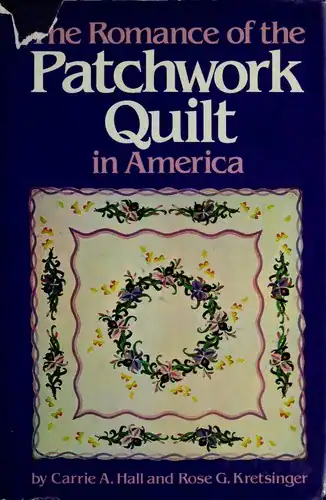
<< Hi Elisabeth, I have a book called “The Romance of the Patchwork Quilt in America” and
here is what I found out about the blocks you mentioned. There was no design
shown for Underground Railroad when i went to the page in the index. But
Slave Chain is
described this way.
“Job’s Tears” in 1800. In 1825 it became the “Slave Chain”
showing the
tendency of the times, when slavery and not religion was the paramount
issue
of the day. In 1840 when Texas was the topic in everyone’s thoughts this
pattern
became “Texas Tears”. After the Civil War it was called “The Rocky Road
to Kansas” or “Kansas Troubles” and finally it became the “Endless Chain”
That is a whole lot of history for one block huh?
Hope this helps,
>>
Elisabeth in south TX where the rain we need fell on the industrial section
of town yesterday
Date: Fri, 1 Aug 1997 10:33:21 -0400 (EDT) | From: HPQuilting [at] aol [dot] com
Thanks for the info. There is a gal here who sells Alabama mud T-shirts in 6
states. She got started when her clothes got stained with some of our red
clay(which only the Lord could remove!). I hadn’t heard about kudzu, though!
WOW!
Penny(HPQuilting [at] aol [dot] com)
Date: Fri, 1 Aug 1997 10:44:56 -0400 (EDT) | From: CToczek [at] aol [dot] com
times I’ve wondered just HOW our quilting ancestors found TIME to quilt
during their busy days of building lives from scratch.
I’ve wondered even
more when the frustration of balancing crying, crawling, walking babies with
colic, teething, ear infections (then toddlers, then pre-schoolers) with
keeping a family together while Army Dad was deployed threatened to overwhelm
me.
Quilting was a sanity saver during those years; now it is a daily joy
for me.
Again I ask, how did THEY do it, with so many more daily chores
than I could ever imagine accomplishing?
I found an answer while reading a copy of John Irwin’s *A People and Their
Quilts* which I found used through the internet.
On page 25 he interviewed
Ethel Hall of Tennessee:
She said:
“I’d take my little babies out in the corn field where I’s
chopping corn when they’s two weeks old. I’d take me an old quilt and spread
it down under the shade somewhere. I’d lay the little feller down there and
I’d put a cheesecloth over him when he’s asleep to keep the flies and
mosquitoes off-….I’d come by every two hours to feed him, then I’d go back
to workin’ in the field-choppin’ corn, diggin’ out stumps or whatever else
I’s doing. They’d lay there and sleep all morning and all afternoon.”
And I’ve worried about sending my own two little ones to our 90’s daycare
*playgroups.* It puts things in the proper perspective, I think.
Carla in dry, dry, dry West Texas
Date: Fri, 1 Aug 1997 12:32:26 -0400 | From: quiltmag [at] mindspring [dot] com (Jean Ann Eitel)
saw those t-shirts yesterday too. I was in Blueridge GA where I bought a
great antique 3/4 Jenny Lind Bed with high fancy headboard for my own
bedroom. My old quilts are going to look great on it.
BTW, my grandsons do a great job with the red clay dye on their summer play
clothes…they love to roll around in the dirt and their mother says it
will not wash out no matter what! she buys their play clothes at thrift
shops cause she knows they will be ruined in at first wearing
Jean Ann Eitel, Editor
QUILT Magazines
Date: Fri, 01 Aug 1997 13:27:28 -0400 | From: “Miklos B. Lukacs” <mlukacs [at] webbernet [dot] net>
Yes, pull down that Kudzu and dye, dye. I was amazed how it took over
areas in the south. Connie L.
Date: Fri, 1 Aug 1997 15:20:34 -0400 (EDT) | From: HPQuilting [at] aol [dot] com
I don’t know about everyone else, but when I get a “we used to do this” or
“my mother/grandmother said they used to” type of story, I ask them to write
it up and sign it and send it to me. Primary documentation I tend to record
like a bibliography if it is in a published source, otherwise I have it
copied.
Penny(HPQuilting [at] aol [dot] com)
Date: Fri, 1 Aug 1997 16:56:49 -0400 | From: “Phyllis Twigg” <ptwigg [at] radix [dot] net>
Jane,
I’m in the process of buying a feedsack one piece type “outfit” from an =
antique shop in southern Maryland. I mailed my check today but I have to =
go pick it up sometime this month (about an hour’s drive from =
Annapolis).There’s a drawstring around the “neck” of the top of a
feedsack(actually it looks like a big running stitch and that’s all.).I
would say that the sideseams are still the bag’s seams. The feedsack has
printing on it but is basically the muslin utilitarian type bag. Between
the legs it is just sewn in a big inverted “u” shape. I guess the
length comes down to the knees. The sleeves are made from a faded dirty
looking flowery type pinkish feeedsack fabric. The whole thing is quite
crude ! (0r shall we say primitive.) I saw it for the first time about
two weeks ago and didn’t buy it but it stuck in my mind.It’s around $
30. When I went back to the shop yesterday,the place was closed due to a
doctor’s appointment.So today I called and purchased it over the phone.
I think the antique dealer found it in a barn. They say it is the real
thing – that someone wore it. I’m trying to get more information from
the owner ( it’s a multi-dealer shop).
Does this sound to you like a slave wore it (or at least a very poor
person) ? After I pick it up I will give you more definite
information.I’lll let you know the words that are on the bag.I think it
will need washing. Will that hurt it ? Maybe Orvus soap and dry flat ?
Well, what do you think? Hope to hear from you soon.
Thanks,
Phyllis ptwigg [at] radix [dot] net=20
Date: Fri, 1 Aug 1997 17:05:05 -0400 (EDT) | From: Quiltfix [at] aol [dot] com
Y’know, I was thinking some more about the log cabin as it relates to the
Underground Railroad and had another thought. How long can you air out a
quilt before the neighbors notice something strange? I think that a quilt
hung out every day would end up being a red-flag to others that something
isn’t quite right. Also, do you hang it on rainy/cold days?
Do you see where I’m going? I really, really think that this is a
romanticization (is that a real word?) of the quilts. It would make more
sense to build the signal into the body of a person’s home.
Someone also asked about a block named Underground Railroad. If memory
serves me, Jacob’s Ladder had that as another name. Never heard of Slaves
Chain (the mental images that brings up are truly awful).
And on a lighter note, my aunt gave me one of my great-grandmother’s
appliqued butterfly quilts.
FYI for people in NYS – there is a display of 15 quilts (1700’s and 1800’s)
at the Johnson Museum at Cornell University, Ithaca, NY. Not certain about
the exact dates, but my father said it’s gonna last a couple more weeks (he
even has offered to go take pix! What a guy. ) Thought you might want to
know.
Alan
Date: Fri, 1 Aug 1997 16:12:50 -0700 | From: Jocelyn
>
QHL [at] cuenet [dot] com
After the Civil War it was called “The Rocky Road
> to Kansas” or “Kansas Troubles” and finally it became the “Endless Chain”
Currently, there are two blocks, Rocky Road to Kansas, which is
reminiscent of Jacob’s Ladder, and Kansas Troubles, which is made up
of half-square triangles- one half of the block is a plain color, the
other half is made up of a slightly smaller triangle with a border on
the two outside edges made up of half-square triangles.
I suspect it is the former block that is the one that transmogrified
from Slave Chain, as there’s nothing ‘chainlike’ about the block I
know as Kansas Troubles.
Jocelyn
Date: Fri, 1 Aug 1997 16:12:53 -0700 | From: Jocelyn
> In following the thread of MYTH & DOCUEMENTION..what does one call
> docuementation? What constitutes it? Jane of THE FEEDSACK CLUB
Jane,
The most minimal documentation contains a description of where the
person who is recounting the story, heard it. One of my professors
says that ANY time you’re making a statement you’re alleging to be
fact, you should have a source on it. (obviously, papers for his
class are liberally footnoted! )
If the source is a book, enough information should be given so that
anyone can find the book on their own. If it’s a personal
communication, enough information should be given so that the
audience can judge the reliability of the source. For example, if I
said that an Amish woman told me something about quilting, you
wouldn’t know much. Maybe she’s not a quilter, and is just repeating
her misunderstandings. But if I told you that Mrs. Ruth Yoder of
City, State, who is locally regarded as a quilter of great
excellence, and as THE expert on quilt history, told me that over her
80-year lifetime, she had learned that…… you would have enough
information to decide if you wanted to believe Mrs. Yoder’s oral
history of quilting or not. Also, if I’m using Mrs. Yoder as an
expert, I should be ready to refer any other scholars to her so that
they can verify I heard her correctly….instead of ‘well, I don’t
know who she was…she was just an Amish woman who was standing by
the road when I pulled up and asked for directions, and we got to
talking…’.
The closer documentation is to a ‘primary source’ or an eyewitness,
the better. Remember the game of ‘Gossip’ we used to play as kids,
and how after you got a circle of four or more, the message was
always garbled? So it is with oral history. Someone suggested that
the origin of the legend was perhaps that the black-centered log
cabin quilt was made for unknown reasons, but used at least once as a
signal for the UR, as in ‘go to the house that’s airing the
black-centered Log Cabin quilt’. On other days, it could have been
a nine-patch. It strikes me as likely that it was used this way at
least once, and perhaps a slave child remembered it so clearly that
she told the story to her children (I know I have memories of things
happening ‘all the time’ in my childhood, when they happened only
once or twice!). But that’s a jump to saying it was commonly used, or
that black-centered quilts were MADE for that purpose. It could just
as easily have been a blue apron, or a bowl of apples on the porch!
The very best documentation would be someone who used the quilt in
this way, who wrote in a diary at the time. Second best would be
perhaps a daughter, writing in HER diary, ‘Mama gave me the
black-centered log cabin quilt, that she had used as a signal when
she was a conductress.” After that, would come a grandchild, who’d
heard the story from Grandma, but didn’t think to write it down until
she was an adult…..
Jocelyn
Date: Fri, 1 Aug 1997 19:08:14 -0400 (EDT) | From: Baglady111 [at] aol [dot] com
Burney, that was a wonderful post on how to use our computors more
efficiently. For those adept at it, skip on. For beginners..A SUPER POST.
Jane
Date: Fri, 1 Aug 1997 19:33:41 -0400 (EDT) | From: Baglady111 [at] aol [dot] com
YOU LUCKY DUCK!! I would have LOVED TO HAVE FOUND IT!!! I don’t know if it
was a slave garment..I don’t know how it could be determined to be that..or a
very poor person../there were so many of each..I know of several members who
willl be DELIGHTED TO HELP YOU..and I hope you will photograph it in various
positions to get a good shot of it at all angles..and share..I for one will
be happy to pay for the film/developing..I am particulary interested in
seeing the neck and the crotch..WHAT A FIND!! GOOD FOR YOU..Jane