March 7 – 12, 1999
These restored messages come from the Quilt History List, an online forum where quilt historians, collectors, researchers, appraisers, and enthusiasts discussed antique quilts and related textiles. The archive dates from 1996 through approximately 2016 and is being restored gradually. Sign up in the form at the bottom of the page if you want to know when a new page is added. Original spelling, opinions, formatting, and inactive links may remain unchanged.
Primary topics of this QHL Digest:
- Should Old Tops Be Machine Quilted? — A long-running debate over hand- versus machine-quilting antique tops continues, along with tips for building a quilt-history lecture without owning period pieces.
- Orvus Paste: Soap or Detergent? — Members dig into the chemistry of Orvus Paste, sparked by a lengthy post on soap versus detergent that some found alarming.
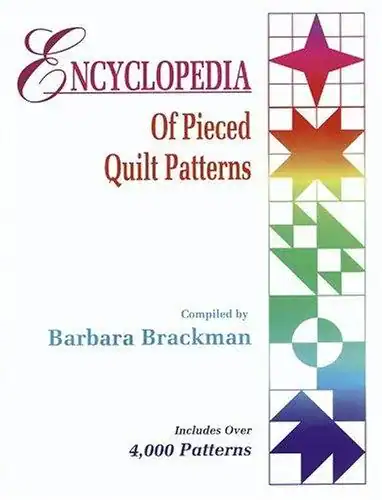
- Vintage Pattern Book Research — A member asks whether anyone has researched vintage quilt pattern books, prompting pointers to Barbara Brackman’s past magazine articles.
- Fabric Dating Projects and Swatch Services — Laura Hobby Syler and R&L Carroll compare notes on building their own fabric-dating references and the swatch services they use. (see the article on dating quilts)
- Quilt Shows and a Red Cross Quilt Search — Announcements for the Quilters Heritage Celebration and Amherst-area shows, plus a request for help locating a Red Cross-connected quilt for a museum curator.
Date: Tue, 9 Mar 1999 23:25:34 EST | From: Xroadclown@
i appreciated receiving the info on the “worm” that was attached to info on our digest. I guess if you were fortunate enough to pass it by, then you can pass by the info on how to get rid of it. just my 2cents
Date: Tue, 09 Mar 99 21:49:10 PST | From: “dhaynes5” <dhaynes5@>
Thanks for the information. I have been very allergic to Dawn dish washing soap for years. I wondered why my hands have suddenly started itching and were red after washing dishes with the clear Ivory liquid. I will definitely switch. I wish these manufacturers would put something on the label to warn people. My hands were really bad before I figured out it was Dawn the first time around. DeAnna in beautiful Colorado dhaynes5@ ———- > HI GUYS, > finally solved our server problem and can join you again. > I want to let every one know about info I learned from the chemists at > Proter and Gamble. I have been using Ivory liquid for wet cleaning old > textiles for some 20 years now. However, I recently noticed a change in > the way the fabrics were responding. I used up my supply of the white > liquid and bought new, clear Ivory. The clear Ivory is a compleatly > different chemical formula than the old pearl white lotion was. Please > do not use it on any fragile fibers. Ivory dishwashing liquid now is > closer to the chemical formulation of Dawn. > I inquired about the formula of Ivory Snow. The chemist assured me that > it had not changed. The chemical formula of Ivory Snow is almost the > same as Orvus (also made by Proctor and Gamble). It is more > concentrated with a higher degree of what the textile chemists call > “surfacents”. > Ivory Snow is cheaper and easier to find. It is a pure soap and is ph > neutral. However, you REALLY have to rise well! I always taste the > rinse water to be sure that It is totally gone. > I prefer to use Ivory Snow than Orvus because I have more control over > the cleaning power. I can really control the concentration of soap. > One of the things we discussed in Omaha was that we may not be getting > all of the dirt out of these old textiles. that is just as harmful as > not washing at all! The idea is get to them stablized and in as > neutral a state as possible. Remember that the real danger comes not > from the soap, but from the damage to the faibers while being handled > when wet. They get so very heavy. > Cheers, it is good to be back. Newbie Richardson >
Date: Wed, 10 Mar 1999 07:06:31 -0800 | From: Debra Roby <debroby@>
Just an observation.. or maybe a question. Everyone is writing that Orvus Paste “is a soap not a detergent”. Yet, the chemical description of it on the large tub is pure Sodium Laureth Sulfate (or Lauryl or something really close to that, I lost my label), which, according to my chemist husband is pure detergent. The purpose of a detergent is to act as a surfactant. That is, to break up the surface tension that exists in water and on items to be cleaned. This allows the water to move more easily on, through and around the items and move dirt away. I’ve also been told by another chemist/quilter that the clear, free laundry detergents have the same formulation as Orvus but are obviously more dilute. This might just be an addendum to my regular cringe about “chemical free” things (the only chemically free thing is a total vacuum). deb
Date: Wed, 10 Mar 1999 10:30:18 -0600 | From: Russell-Hill <russhill@>
I have to agree with Snow about the lengthy and frightening post this lady sent. When I got the message and scrolled down and saw the picture of the fireworks on my screen I paniced to the point my heart was pounding. I can not afford an expensive repair job on my computer because someone thought the whole lot of information needed to be included. It appears that Kris felt it was a bit to much also because she unsubscribed her. I hope the woman knows why she was unsubscribed. Otherwise it won’t to do any good. On all the list I have been on with the worm passing through only the web site addy has been given and that is all we needed. I realize that you can not get viruses etc from email but this thing is so awful who knows what it can do. When ever I saw that message as I scrolled though it was unnerving to say the least. I realize this woman was trying to be helpful but the addy would have been enough. Debbie putting in her .02 worth.
Date: Wed, 10 Mar 1999 10:35:35 -0700 | From: Brooke Flynn <brookeflynn@>
Greetings – if anyone would be interested in helping in my vendor’s booth at the April Quilters Heritage Celebration in Lancaster, please email me privately. Thanks! Brooke Flynn Quilt Frame Company brookeflynn@
Date: Wed, 10 Mar 1999 18:27:13 +0000 | From: shirleyb@
Thanks Deb. for your encouragement. One woman flamed me (not really bad). I think you know me well enough that I am usually pretty modest in what I mail but that scard me to death also as I am just about completely illiterate. Blessings Snow
Date: Wed, 10 Mar 1999 13:58:12 -0600 | From: DSefton@
Hi all, reporter Dru here. In the midst of my digging I have run across a quilter who has an interesting question Does anyone out there know the origin of the Double Wedding Ring quilt? As in, origin of the name, time period, any myths attached to the pattern (good luck to sew before the nuptials, etc.) She doesn’t have access to the Internet so I told her I’d post the query for her. Any info greatly appreciated! Or any good books on the subject? Best, KC Dru
Date: Wed, 10 Mar 1999 16:23:53 -0600 | From: Laura Hobby Syler <texas_quilt.co@>
Dru, Lisa and I attempted to cover DWR at the June meeting of the Vintage Quilt& Textile Society and Lisa wrote an article in the June ’98 issue of the VQTS newsletter as well. What we came up with was…..no one really knows. The Orlofsky’s in “Quilts In America” say that the pattern became popular in the late 19th Century when it was known as “THe Rainbow” But, In Kiracofe’s “The American Quilt” he says that he found no reliable documented examples of a DWR that dates before 1920… The only book that we could drum up that is really devoted to the DWR is by Robert Bishop titled” The Roamance of Double Wedding Ring Quilts” Dutton, 1989, ISBN 0-525-24753-X It mainly deals with the history of the interlocking ring motif but even he couldn’t pin down who “penned” it DWR…… Laura In cloudy, cool and threatning thunderstorms N. Texas
Date: Wed, 10 Mar 1999 20:04:26 -0300 | From: susan silva <woody@>
QHL friends, I dearly hope someone out there can help me! Eight years ago I made a quilt for my sister and last Saturday she had a fire in her house. 75% is destroyed and the rest has so much smoke/chemical damage that we aren’t really sure if anything will be saved.The quilt looks ok but the smoke smell is just overpowering. I’ve washed it once, but the smell is still there. Any suggestions? On a brighter note, her puppy dogs were outside so they are O.K. We can replace “stuff” but not people, so we are just counting our blessings. On an even brighter note, I plan to visit Wash.D.C. next month, and my DH & I will have 3 days to travel outside of the city. I was thinking of Baltimore(quilts….hum.) or maybe south to Richmond,Virgina Beach, or where ever. There must be some great museums in Baltimore where I can see great Balt. Album Quilts. Any recommendations from world travelers out there? Thanks so much! A Washington State quilter, Susan C.Silva
Date: Wed, 10 Mar 1999 18:48:04 -0500 | From: paul hahn <phahn@>
Thanks Laura for letting us know of the misfortunes of Sharon Tandy. Hope our notes cheer her up. I know my Mennonite friends in Lancaster County, PA love to show off their treasures from what they call a “tea towel shower” when one of them go through an illness, and word is spread to sent a cheery tea towel along with a card. When I went through my fabric swatches to send along to Sharon, I realized, more than anything, I need to organize my collection of swatches, yardage, scraps, etc. Laura, could you briefly describe Sharon’s fabric dating book–is it archival with special paper, dividers? Does she jot notes with each piece noting location found, approx. date, etc? Wow, this could be a project! Just wondering if you could describe what Sharon found to be the best way to organize these treasures. Nancy Hahn, Annapolis , Maryland–enjoying this late season snowstorm as the snow day off from school gives me additional time to play with my fabrics.
Date: Thu, 11 Mar 1999 00:10:15 -0000 | From: “Jenni Dobson” <jenni@>
Re the perforations again in response to an enquiry on the spacing of = the lines of quilting – there was a central motif with an irregular = outline, but then the design was printed to look like concentric rows of = lace etc., so I guess mostly the quilting rows were around 1/2 – 3/4″ = apart. And the panels were actually two cushions, not a quilt as someone = seems to have thought – I’m sorry if I didn’t make that clear. So I = don’t think it was the weight of water on these itmes that caused the = damage – I think it was just regular use – what we call ‘wear & tear’ = but the fact remains that the fabric still tore away from the stitching = – which is still intact right through to the backing. That is all the = point that I was making.
Date: Wed, 10 Mar 1999 23:09:47 EST | From: SadieRose@
Hello, A friend of mine, who is a curator of a local museum, is looking for a Red Cross quilt that they might be able to borrow for an exhibit. The exhibit is from April – August this year. If you know of a Red Cross quilt that might be available, please contact rventer@ Thanks!! Karan from snowy Iowa
Date: Wed, 10 Mar 1999 20:16:56 -0800 | From: “R & L Carroll” <Robert.J.Carroll@>
Jenni, I think you are right about the damage to your quilted piece being caused by use. Since you have eliminated the obvious causes of damage thread etc.) then all it could be is the fabric itself. If the stitching size were the cause I would think that the back would be damaged also. If the back is still intact then I think that the fabric panel just did not hold up well. Thanks for this interesting thread. We all want our quilts and quilted articles to last as long as possible, since we put so much time into them. Laurette in So. California
Date: Wed, 10 Mar 1999 22:35:10 -0600 | From: Quiltbaron@ (by way of “Kris Driessen, Hickory Hill Quilts” <oldquilt@>)
I have a gift shoppe and sell some quilt in Jenks, OK. A customer from Australia came into our shop several months ago to purchase a wedding ring quilt for a wedding which is next weekend. I have just received an e-mail from him requesting a story about the “wedding ring” quilt for the newly married couple to include with the quilt. If you have a story relating the history of the wedding ring pattern or any information at all could you please e-mail to me or fax to (918) 298-5097. He has contacted me rather late and I am searching high and low for information…would appreciate your help. Thanks, Paula Applegate Quiltbaron@
Date: Wed, 10 Mar 1999 20:43:14 -0800 | From: “R & L Carroll” <Robert.J.Carroll@>
Deb, thanks for that interesting note on Orvus. Maybe some one on the list with a chemical background could explain how soap differs from detergents. It would be helpful to know . This has probably been covered on the list before, but not since I have been on. I would also like to know more about Mountain Mist Ensure. They call it a quilt wash. Laurette in So California
Date: Thu, 11 Mar 1999 07:53:21 EST | From: Harr32@
I apologize for the misnomer, but it sounded so good…… Yesterday I drove three hours to meet my mother and sister for a Rod Stewart concert. I broke up my drive by stopping at an antique mall. Since I really had no money to spend I had a quilt that would NOT stop calling to me! I spent my t- shirt money ( and a little bit more) on a 1860-1880 quilt. It has an unusal pieced center (I’ll look at it better today!) with gone brown pieces. Wonderful hand quilting with elaborate designs, and a little damage to the red/yellow back. I paid $62 and now I want to find fabric to replace the browns enough to gently display it. I bet I was the only person at the concert who had a quilt for a concert souvenier! Dana In cloudy, cold VA
Date: Thu, 11 Mar 1999 07:57:22 EST | From: JQuilt@
The Hands Across the Valley Quilt Guild will have it’s bi-annual quilt show at Amherst College in Amherst Mass.. the weekend of Mar 20-21 It’s a great show try to visit.. jean jquilt@
Date: Thu, 11 Mar 1999 07:10:27 -0600 | From: Laura Hobby Syler <texas_quilt.co@>
Hi Nancy, Actually, I guess I started my idea of a fabric dating book after watching Barbara Brackman and Terri Thompson unload box after box and swatch card after swatch card at one of their fabric camps….My tubs of vintage fabrics and blocks needed to be organized too! Soooooooo………….. At the first VQTS Quilt College last fall we did a 1 1/2 day seminar on fabric dating and developing a fabric dating book….tools, supplies, etc. Lisa Erlandson wrote a great article for the newsletter for those VQTS members who were unable to attend. Gives information on what kinds of protective sleeves to use, acid free papers…..plus those at the seminar got to see my books that I’ve been working on for 2 years now…figured that I cant own *all* the quilts with these wonderful fabrics in them so I collect orphaned blocks and fabrics….I’ve reorganized mine several times now. Started out with quarter centuries but then realized that it was not really as effective as I would like, so I now just go chronologically…..notes from other fabric dating classes and seminars can be added and price and dating information for each piece that I purchase (or find<G>) is kept with the swatch of fabric. I also have my “early 20th century ” book as well as one of current swatches…..the fabric swatch clubs are great for this….Benartex’s Mr B’s Fabric Pack Club for one….great 3″ swatches of the new lines, and there are several other places that offer swatch services. As always….If you’d like a copy of the newsletter with the fabric dating book article and membership information send me your snail address and I’ll pop one in the mail for you. Laura In stormy N. Texas ******************************************************** We invite you to become a memeber of the Vintage Quilt and Textile Society. An organization devoted to the sharing of research and knowledge of antique quilts, textiles and related subjects. With QUARTERLY mini-conferences , ” Quilt College”held in the Dallas, Texas , our MONTHLY newsletter mailed worldwide enables all members to participate by contributing articles and book reviews pertaining to the selected topics of the month. Membership dues are $24.00 anually US membership, International membership $30.00 US funds only **For more information, contact <vqts1@> (that’s vqts*one*) or write to VQTS 2401 Blue Cypress Richardson, TX 75082 for a complimentary copy of the newsletter and membership application. ******************************************************** When I went >through my fabric swatches to send along to Sharon, I realized, more >than anything, I need to organize my collection of swatches, yardage, >scraps, etc. Laura, could you briefly describe Sharon’s fabric dating >book–is it archival with special paper, dividers? Does she jot notes >with each piece noting location found, approx. date, etc? Wow, this >could be a project! Just wondering if you could describe what Sharon >found to be the best way to organize these treasures. > >Nancy Hahn, Annapolis , Maryland–enjoying this late season snowstorm >as the snow day off from school gives me additional time to play with my >fabrics. > > >
Date: Thu, 11 Mar 1999 09:06:19 -0800 | From: “R & L Carroll” <Robert.J.Carroll@>
Hello. Laura your fabric dating book sounds similar to mine. What method do you use to hold the swatches themselves? Are your plastic sleeves divided as the baseball card holders are? I use a tiny dab of removable archival glue to hold my swatches on acid free paper in the archival sleeve. Do you take orphaned blocks apart to display swatches in the book? I have not done that but I am considering it as I’m unhappy with the way the blocks look in the book. Thanks. Laurette in So. California
Date: Thu, 11 Mar 1999 13:06:19 EST | From: JQuilt@
I forgot to mention in my announcement about the Amherst Quilt Show…the hours are sat & sun Mar.20-21….there will be about 28 vendors and a quilt appraiser call 413 323 4741 for an appraisal appointment….lots of wonderful quilts, clothes and boutique items…One of the vendors will be our very own QHL mom Kris… jean
Date: Thu, 11 Mar 1999 14:03:02 -0500 | From: “Judy Grow” <Judygrow@>
Someone from Quiltbee wrote a letter to Sakura about Pigma pens and got a satisfactory answer about Pigma pens, which she posted to the list. It didn’t answer my question about the Gelly Roll pens, so I wrote a followup letter to Sakura. Within 2 hours I got my reply. My letter, and then both replies are printed below I don’t know about you, but after reading the answers to my queries, I feel perfectly secure using the Sakura products to write on quilts. >Dear Cheryl, > >I read a letter on the QuiltBee list that you sent to Terri Deosdade, with >assurances that your Pigma inks were safe to use for archival writing. > >Nowhere did you mention anything about the inks in your Gelly Roll pens. Months >ago it was the inks in those pens, not the Pigma pens, which we were warned >about. The original warning said something about a chemical that was part >of the formula to make the ink glide so wonderfully well that was the >culprit that would eventually degrade the fabric. > >I am very interesed in your answer to this dilemma. I have already used the >Gelly Roll pens for a wedding signature quilt. > >Sincerely >Judy in Ringoes, NJ >judygrow@ > Hi Judy This appears to be the rumor (perhaps started by one of our competitors) that shall not die! Sort of like alligators in the sewers of New York! Pigma ink is in the Gelly Rolls as well as the Microns. So, please refer to the following (below). Finally, due to the wide variation in fabrics, fabric finishes and cleaning methods, we strongly recommend you try ANY pen or marker (ours or our competitors’ on a small swatch of the fabric(s) you will be using, allow it to dry completely, then clean the swatches as you will the finished piece. Given the hours and hours of time that go into those beautiful quilts, this should be a basic precaution for all quilters. By the way, there is no “chemical” added to make the inks glide. A big reason our pens glide better is because the tiny little ball in the tip is itself smoother than our competitor’s. This superior engineering enhances the “delivery” of the gel ink. Obviously, the smoother the fabric or paper, the more this will be evident. Best regards, Cheryl R Kettell Sakura of America Archival or Acid Free? Over time, we have received many inquiries about the nature of the Pigma* ink in Sakura pens. We will try to cover the most common questions (so that you can get back to journaling, scrapbooking, quilting and crafting!) — 1.) Pigma* ink is the brand name of the pigmented ink used in Sakura products. The formula for Pigma* ink was developed specifically for museum archivists and conservators after extensive research and testing. 2.) You will notice that the Sakura memory products are labeled as “archival.” “Archival” means that these products are permanent, durable and chemically stable. They can, therefore, be safely used for memory preservation purposes. This is a non-technical term, since there are no industry standards for how long “archival” or “archivally sound” materials must last. Sakura uses this term to describe the high overall quality of our Pigma ink products along with the qualities described below. 3.) Acid-Free is a deceptive term used in connection with many products in the memory market. This is also mistakenly used as a synonym for alkaline or buffered. Do not be fooled by pens or writing materials labeled “acid free” because this does not guarantee that a product is truly suitable for memory projects. There are no industry standards applicable for ensuring that a product is, indeed, acid-free. 4.) Chemical stability refers to the ability to resist chemical degradation. Sakura uses a single pigment to color its inks, to enhance their chemical stability, and to eliminate the possibility of pigment separation due to age or exposure to outside elements. This is not the case with many non-Pigma inks! 5.) Light fastness refers to the ability to retain color over time and/or when exposed to light, heat, or other adverse conditions. Sakura Pigma inks are light fast due to the high quality pigments that compose them. 6.) Neutral pH refers to a material with a pH of 7, that is, one that is neither acid nor alkaline. Sakura’s Pigma inks dry to a neutral pH and, therefore, will not adversely effect the materials on which they are applied. (If you are using any product on fabric — it is always wise to first test it on a swatch of your fabric, let it dry and then launder as you would the finished piece. This test is necessary due to the extremely wide variety of fabrics available today.) 7.) Permanent/permanence refers to the ability of a substance to resist change over long periods of time without significant deterioration under normal use and storage conditions. Permanence may be effected by temperature, humidity, light, and acidic or alkaline chemicals. Sakura Pigma inks are permanent, waterproof, chemical resistant and temperature-resistant on paper and on many fabrics.
Date: Thu, 11 Mar 1999 17:05:31 -0500 | From: “susanlk” <susanlk@>
Last, summer, after visiting Texas and spending a wonderful day with Laura (we had instant bonding — both of us drive ancient Suburbans, and we both keep pins stuck in the upholstery of the passenger side door — in patterns) I started my swatch book after seeing one of Laura’s.
I’m up to three books now, and I’ve been fortunate in that I actually was able to buy a JC Penney swatch book from 1938.
I also include color xeroxes of swatches that a friend (Jan Drechsler) and I share. Most of my swatches are in full page sheets for the larger swatches. I sew these swatches to card stock with a long machine stitch. I also have photo album sheets with 3 x 5 openings, and baseball card sheets. I have found slide sheets to be good for the 1 1/2″ swatches that Keepsake Quilting sends out . I used ATG tape to mount them when I first started, but stopped that fairly early. I really like using the sewing machine. I’ve been cutting swatches from my own contemporary stash, making sure to get the entire signature from the selvedge edge, if there is one. That means that some of the swatches are at least 8 1/2″ long.
Laura, we need more input from you, the swatch-book authority. Like, what address do we write to for the Benartex swatches? And others? Do you buy from the addresses that advertise in the back of QNM ? There wasn’t nearly enough information for those of us greedy for more knowledge in the VQTS newsletter. It merely whetted the appetite of those of us who couldn’t get to the meeting.
As my DH says every time he sees me working on my books “Kids always love to work on scrapbooks.” Judy in Ringoes, NJ judygrow@
Date: Thu, 11 Mar 1999 19:04:10 EST | From: SudaNim@
You know, when I go to pick up the books people have asked for, I should quit looking around. There was ONE copy of the 1963 Rose Wilder Lane book, Woman’s Day Book of American Needlework WITH the box of patterns (unused). $13 for the set. Grab ’em! (She was Laura Ingalls Wilder’s daughter, by the way. The book covers embroidery, hooked rugs, patchwork, quilting, knitting, crochet, etc etc etc. I don’t know how accurate her history is in this book, but the pictures are gorgeous. My mom knit two of the bedspreads in the book; took her 10 years for each. I have very fond childhood memories of looking through this book.)
Date: Thu, 11 Mar 1999 20:50:56 EST | From: EGinebaugh@
Hi all, I was talking to an AOL tech yesterday, and got onto the subject of quilts. This guy has three quilts made by his GM & GGM. I, of course asked about them, & he told me one was in the hosanna pattern, which was similar to the Eye of God. I had never heard of these before. Can anyone tell me anything about what they look like? Also, he gave me a web address for The Queen’s Christmas tree this past year, all decorated by people who are needlework artisans in England. Beautiful ornaments. Let me know if anyone is interested. Thanks, Liz in Michigan
Date: Thu, 11 Mar 1999 19:27:25 -0800 | From: Nancy Cameron Armstrong <narmstr@
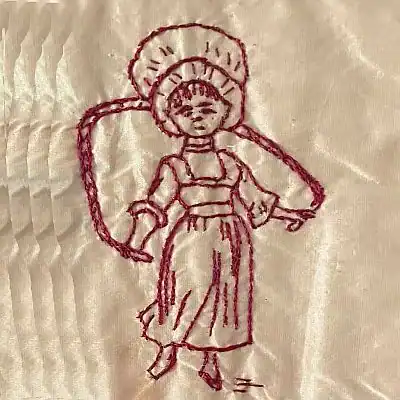
Dear friends, Have two patterns from apparently seven issues of STITCH ‘N SEW that had a “complete set of seven designs” that were intended for embroidery.
July/August 1976 … No. 1 “Strawberry Girl” October 1977 … No. 5 “Pea Girl”
Not just sure what months they published. Appears that No. 2 might have been in October 1976 issue. No. 3 … sometime in “winter” and No. 4 might have been in July/August 1977 with the other two following end of 1977 and first of 1978. Does anyone have the other five issues? Would greatly appreciate photocopies of just the five missing patterns. Thanks for any help with this! nca
Date: Thu, 11 Mar 1999 22:51:51 EST | From: SudaNim@
I love the internet. The Soap and Detergent Association has a few pages on the chemistry of, yes, soaps & detergents.
Soaps are fragments of fats, broken up so that one end is electrically charged (and hence attracted to water), and the other end is a long, greasy hydrocarbon chain (attracted to grease & dirt). The lipophilic ends (hey, I have to show off my chemistry degree once in a while) surround the gunk, while the hydrophilic ends deal with the water. What you get is a sort of soap dandelion with the dirt in the center. Detergents contain both soap and “surfactants” — fragments of petroleum that are joined with a charged fragment. So the surfactants are sort of like soap, in that they have a greasy end and a charged end, but they’re made up of different sort of chemicals. The association states that different surfactants are designed to work in a range of water hardness & pHs. I’m not going to get into their discussion of nonionic surfactants, except to say that they’re not charged at one end; they’re a form of alcohol joined to a hydrocarbon. (Alcohols, like water, have no charge, but also like water, they’ve got slightly more positive & negatively-charged regions on the molecule).
There’s no discussion on why detergents and soaps affect different textiles differently. My guess is that we’re tending to operate on “simpler is better” with Orvus etc.
The site is http://sdahq.org/sdalatest/html/soapchemistry1.htm (and second page is soapchemistry2.htm
Date: Thu, 11 Mar 1999 23:02:49 EST | From: Kittencat3@
This was forwarded to me by a medievalist I know –
<< In the recent issue of “Archaeological Textiles Newsletter,” (ATN 27, Autumn 1998, 12-14) Penelope Walton Rogers writes about “Cotton in a Merovingian Burial in Germany.” She points out that cotton rarely enters the picture for European textile researchers and when it does, it usually can be dismissed as a modern contaminant. However, in this case, the identification of cotton comes from a secure context in a Merovingian burial dated to the end of the 5th century, so it is therefore of rather exceptional interest. The cotton is a Z-spun thread which was used to quilt some sort of garment or cover which was made from a wool diamond twill with a padded backing. This textile was found over the whole length of a woman’s body in a coffin burial in the Merovingian cemetery at Lauchheim/Ostalbkreis in Baden-Wuerttemberg. She concludes that the presence of this cotton thread suggests some far- reaching link with the eastern Mediterranean or western Asia. It is at present unknown whether the textile arrived in Germany already quilted with the cotton thread or whether the thread arrived in Germany on its own and was then used to quilt the textile. It is also unknown whether it was unpicked from another textile, but further research should answer these questions. >>
Lisa Evans Easthampton, MA Hello to the list.
In the recent issue of “Archaeological Textiles Newsletter,” (ATN 27, Autu= mn 1998, 12-14) Penelope Walton Rogers writes about “Cotton in a Merovingian Burial in Germany.” She points out that cotton rarely enters the picture for European textile researchers and when it does, it usually can be dismissed as a modern contaminant. However, in this case, the identification of cotton comes from a secure context in a Merovingian burial dated to the end of th= e 5th century, so it is therefore of rather exceptional interest. The cotton is a Z-spun thread which was used to quilt some sort of garment or cover which was made from a wool diamond twill with a padded backing. Thi= s textile was found over the whole length of a woman’s body in a coffin buri= al in the Merovingian cemetery at Lauchheim/Ostalbkreis in Baden-Wuerttemberg= .
She concludes that the presence of this cotton thread suggests some far- reaching link with the eastern Mediterranean or western Asia. It is at present unknown whether the textile arrived in Germany already quilted wit= h the cotton thread or whether the thread arrived in Germany on its own and was then used to quilt the textile. It is also unknown whether it was unpicke= d from another textile, but further research should answer these questions.
Greetings! Ingvild/Nancy