March 22 – 25, 1999
These restored messages come from the Quilt History List, an online forum where quilt historians, collectors, researchers, appraisers, and enthusiasts discussed antique quilts and related textiles. The archive dates from 1996 through approximately 2016 and is being restored gradually. Sign up in the form at the bottom of the page if you want to know when a new page is added. Original spelling, opinions, formatting, and inactive links may remain unchanged.
Primary topics of this QHL Digest:
- State of the Quilt Magazine Industry — Editors and industry insiders including Xenia Cord, pepper cory, and Anne Scott debate whether quilt magazines have drifted from quilt history toward commercial pattern content.
- Templates: Paper, Cardboard, or Plastic — A practical comparison of paper, cardboard, and durable template materials for hand piecing and appliqué work.
- Dating an Antique Sewing Machine — A member seeks help identifying and dating a White treadle sewing machine from its features and markings. (see the article on dating quilts)
- Publishing a Quilt History Book — Writers and researchers compare notes on the practical difficulties of getting a quilt history book into print.
- Quilt Shops vs. Department Stores — Members weigh whether the trend toward buying fabric at big department and craft stores is squeezing out small specialty quilt shops.
Date: Mon, 22 Mar 1999 22:27:51 -0500 | From: “Judy Grow” <Judygrow@>
Until around the time of the Civil War, paper was made out of cotton linters. That is why the NYTimes from the mid 19th century is in better shape than last week’s paper.
Judy in Ringoes, NJ judygrow@
Date: Mon, 22 Mar 1999 22:40:57 EST | From: AlineMcK@
You are correct, sir! And that’s also the answer to the currency puzzle “paper” money, even today, is made out of cotton. I believe there’s also a small amount of silk; the very fine red threads that help act as anticounterfeit. Plus the embedded strip that appears with the denomination when you hold it up to the light (this is true of older money as well as the new “monopoly”
money). And, obligatory trivia, if you look very, very, closely at the oval around the portraits of the $20 and above bills, you’ll see it’s not a solid line…it’s writing, about 1/2 mm high, saying “United States of America” over & over. You may need a magnifying glass. Again, anti-counterfeit. The writing is finer than a copy machine can duplicate. Are we far enough off-topic yet? I can bring up the bit about guessing the model of the car that’s on the back of the $20. (or is it the $10?).
In a message dated 3/22/99 92937 PM, Judygrow@ writes
>Until around the time of the Civil War, paper was made out of cotton linters. That is why the NYTimes from the mid 19th century is in better shape than last week’s paper.
>Judy in Ringoes, NJ judygrow@
Date: Mon, 22 Mar 1999 19:48:04 -0800 | From: “Christine Thresh” <christine@>
We could use cut up paper money for English paper piecing. Or we could sew many bills together and use it to wrap our quilts for storage.
Christine Thresh http://www.winnowing.com
Date: Mon, 22 Mar 1999 22:53:50 -0500 | From: “Judy Grow” <Judygrow@>
Today I was able to spend a lot of time with the cardboard box of templates I bought yesterday. Many of them have broken into pieces in the very narrow sections and I’ve been taping them together, as the original owner did numerous times. In my last post I mentioned the 1951 date found printed on one of the pieces of cardboard. Today I found one with a 1933 date. They were the same type of cardboard, with the same printing; it seems like a yearly calendar of bus and/or train time schedules, and tips, and household hints put out by the Reading Eagle. So it seems our early quilter lived near enough to Reading Pa to get the same wall poster every year for many years. I have some very good plastic, a huge pile of the plastic used for the “Template Applique” kits. This is heavier weight and in much larger sheets than the stencil plastic we can buy retail. So I plan to trace all these stencils off onto the plastic to make sure the patterns are available without too much handling of the actual cardboard. My question is, how do I permantly preserve the original stencils? My first thought was encasing them in contact paper, but that in not reversible, so not considered good conservation practice. My second idea is to encase them in Mylar, but that wouldn’t prevent the fragile 1/4″ connections from breaking further.
Anyone out there have some good conservation practice for this project?
Remember, I don’t have the kind of storage a museum would have.
Judy in Ringoes, NJ judygrow@
Date: Mon, 22 Mar 1999 22:09:54 -0800 | From: “Anne Copeland” <anneappraiser@>
Thanks, Judy for your enlightening “factoid” (thank you Julia) on paper. I had a suspicion that paper was a higher rag content than wood, but I was not clear as to the %. Would there have been any acid involved in the manufacturing of rag into paper? So during, or after the civil war, was paper made only from wood, or a combination? Thanks again, Anne Copeland Get your FREE Email at http://mailcity.lycos.com Get your PERSONALIZED START PAGE at http://personal.lycos.com
Date: Tue, 23 Mar 1999 07:32:25 -0000 | From: “Kirk Collection” <kirkcoll3@>
I’ll be in Paducah from Sunday through the following Sunday mid-day — taking the two appraisal revoew courses and testing. We don’t have a booth this year, but will have an “Open House” in my room on Friday at the Executive Inn. Just ask for my name on the house phone and I tell you the room number — don’t know ittil I get there. Or callthe shop that week and they can tell you. I’ll be bringing “a few things.” Drop by and say hi.
Nancy Kirk The Kirk Collection 1-800-398-2542 www.kirkcollection.com
Date: Tue, 23 Mar 1999 08:57:05 EST | From: CToczek@
I finally understand the comments on the changes in the quilt mags. After subscibing to QNM only about a year, I just had the chance to go through some back issues of the same. I agree that QNM was then much “meatier” in history, “people/guild” articles and general interest topics. The ones I’ve received lately seem to be turning into “pattern” magazines…..like so many of the others? What about American Patchwork and Quilting? Not like the old QNM, but Heidi Kaisand and the staff are including history-based articles and it has become “meatier” in the past year.
Carla, West Point, NY who found spring for a week in Arkansas only to return to snow yet again……..
Date: Tue, 23 Mar 1999 08:10:55 -0600 | From: Laura Hobby Syler <texas_quilt.co@>
Thought that might get your attention <G>….
Actually that is the title of an article in yesterdays Dallas Morning News.
Some of you may remember the thread that we had going quite some time ago….what exactly IS “poison” green, nile green, alizeran blue…….
Well one of the reasons that we as textile historians cant keep a handle on the names follows….
Taken from the Dallas Morning News- Monday March 22 Page C-1 “A SHADY LINE OF WORK What color is Infinity? This sounds like the kide of question you ask after you’ve heard one hand clapping, but it’s more likely to come up at your local paint shop. Infinity is what Behr paints calls an ultra-brught white lates and it’s typical of the latest trend in paintnames that have notheing to do with colors such as Homecoming, Victory, Hummingbird, Bitter Root, Dark Secret. Naming new paint colors is an extremely infomal qualitative process, says Kristi Thorne, a spokeswomna at Cleveland-based Glidden Paints.
“We gather up a couple of people who are great at thinking up names, and a few bottles of wine, and lock them all in a room until they finish the job.
The most recent batch had about 650 colors”……..
Wish I had a scanner to scan the 9 samples and the multiple choice test they gave for readers to match up…….Did you know that what we’ve been calling Nile Green is now “Hummingbird”……..go figure!!!
And who do we call to apply for next years panel…..and can we opt for Margaritas instead of wine??????????
Laura
Date: Tue, 23 Mar 1999 09:39:58 -0600 (Central Standard Time) | From: Mary Persyn <Mary.Persyn@>
The above topics aren’t as far apart as you might think. )
Paper money – According to the Federal Reserve Bank of Atlanta’s web site, US currency is printed on cotton and linen rag paper. So we could use paper moeny for paper piecing and not have to worry about the acid content. Acid paper – Reaching back into ancient history (library school in the late 1960s), we were taught that paper used in the US before about 1850 was made from rags and so had a low acid content. About 1850 the cheap process of making paper from wood pulp was invented and soon almost all paper was made from wood pulp and had a high acid content.
That’s why books in the library from before the Civil War are holding up better than much newer ones.
Deacidification of library materials is a major problem for most libraries, which many of us can’t afford to deal with.
Paducah – I’m up for getting together in Paducah.
Thursday, Friday or Saturday night would be best for me.
Mary in sunny Valparaiso, IN where the crocuses are in bloom!!!
Date: Tue, 23 Mar 1999 09:04:02 -0800 | From: “R & L Carroll” <Robert.J.Carroll@>
Hello!
Color “names” can be very confusing when trying to determine colors used through out the decades. I prefer to use the color wheel when describing colors (blue-green, yellow-green, yellow-orange, etc.) Color names changed over time with fashion, as they do now, and some colors were named later simply because they were associated with certain areas or certain nationalities. It seems useless to try and determine what was meant by these type of names. Should we assume that everyone in a certain time period agreed on exactly what color could be called by a certain name? I have seen the name “Nile Green” for greens from light yellow-greens to deep blue-greens. The notion that there were only certain hues used in certain decades is incorrect. As a collector of scrap quilts I see a wide range of colors, used in the same quilt. An example is the 1930-40 time span, where there were dozens of greens used. Not just ” Nile green”, or “that thirties green”.
It is true that certain colors were very popular in certain time periods.
And we all enjoy hearing the charming and interesting names from earlier times.
Laurette in so. California
Date: Tue, 23 Mar 1999 15:10:51 +0400 | From: Xenia Cord <xecord@>
Some thoughts on quilt magazines First, most magazines work 6-7 months in the future, so there may be the kinds of articles you are looking for coming up later in the year. For instance, I will have 2 articles on conversation prints in American Patchwork & Quilting, one in August and one in December. The text for the August issue was due at the magazine this past January 15; the one for December is due May 1. Second, most magazines have a fixed number of pages, a percentage of which must be allotted to advertisers who pay the cost of the publication; the balance must be editorially juggled between pattern articles, how-to pages, news, new products, contests, all the wonderful pictures we love – you know the format. In order to make room for those historically-oriented articles (“meaty,” someone said), either something has to go or the number of pages must be increased. This is not a decision that boards of directors and editors make lightly. Third, while we in QHL may wish for more historical focus, there are those who don’t like/don’t read articles of that kind, and feel that quilt magazines are meant to be full of instruction (maybe replacing the traditional family as a source of information on quilting?). When I did an APQ article last August on historical kit quilts they used my email address as a point of contact. I can’t tell you how many people wrote to order one of the kits shown in the article, but in another color.
(So – we don’t read?)
Bottom line – with the field of quilt interest as diverse as it is, it is hard for the current quilt magazines to be all things to all people.
That’s why there is a publication for miniature quilts, and one for art quilts. For pure historical-interest publications, one can join the Vintage Quilt and Textile Society or the American Quilt Study Group, just to name 2 possibilities. I recommend them both.
Xenia
Date: Tue, 23 Mar 1999 15:19:37 +0400 | From: Xenia Cord <xecord@>
I think it’s a good idea to try to put antique colors into a current color spectrum frame of description, but perhaps these terms should be appositive to the name used for that color when the color was popular.
For instance, it makes little sense to use the term “bubblegum pink”
when referring to 19th century tone-on-tone pink prints, since bubblegum wasn’t even a reality then.
Xenia
Date: Tue, 23 Mar 1999 14:34:47 -0600 | From: KAREN BUSH <Birdsong@>
Hi guys…we’re sprucing up the website and we have a new ‘room’ or two for you to go into. One is the Q&A area. Just click on the hot link under my name…..we’ll also have a new BB up today sometime. I’ve had several e-mails lately asking me some quilting (hand quilting)
questions, and thought this would be a good idea to put up. ??
kb
Birdsong@ ~*~*~*~*~*~*~*~*~*~*~*~*~*~*~*~~*~*
> > – http://www.idahoquilt.com
> > -“QUILT AS DESIRED” THE “TELL ALL BOOK” of hand quilting!!!!
> > –
> —
> Birdsong@
> ~*~*~*~*~*~*~*~*~*~*~*~*~*~*~*~~*~*
> – http://www.idahoquilt.com
> -“QUILT AS DESIRED” THE “TELL ALL BOOK” of hand quilting!!!!
> –
—
Birdsong@ ~*~*~*~*~*~*~*~*~*~*~*~*~*~*~*~~*~* – http://www.idahoquilt.com -“QUILT AS DESIRED” THE “TELL ALL BOOK” of hand quilting!!!!
–
Birdsong@ ~*~*~*~*~*~*~*~*~*~*~*~*~*~*~*~~*~* – http://www.idahoquilt.com -“QUILT AS DESIRED” THE “TELL ALL BOOK” of hand quilting!!!!
–
Date: Tue, 23 Mar 1999 16:44:35 -0800 | From: “pepper cory” <pepcory@>
Greetings all antique quilt lovers–got to agree with Xenia on this subject. The bottom of the pyramid of quilting interest has gotten WAY larger in the past five years and magazines know what sells–great color and patterns that are within the capabilities of their readers. I’ve just faced this fact while finishing writing a book on quilt marking–we had to ax the chapter on the history of quilt marking. Believe me, for one who adores the flotsam and jetsam of quilt history, that decision was like self-amputation! But how many people (don’t hold up your hands all at once!) give a mouse patootie about the influence of 18th century French embroidery factories on American quilts today? Our solution in the book was to show as many great antique quilts as possible and feed the reader bits of palatible history along with the how-to. When Susan McKelvey and I wrote The Signature Quilt, we poured our heart and soul into that work. It was truly history, how-to, and mucho patterns for the money. That book has not sold well to the masses but remains decorative on a coffee table or handy for that extra inch your wobbly table needs. However, we who love the old, the stained, the challenge to piece and applique, may not be without resources. What about approaching a magazine publisher about trying an issue, perhaps once a year, that’s devoted to antique quilts?
I vote for Christiane Meunier at Chitra as a possible publisher. Comments?
Pepper Cory PS-apologies for the length–I have fallen off my soapbox…
Date: Tue, 23 Mar 1999 14:42:00 -0800 | From: “Julia D. Zgliniec” <rzglini1@>
Dear Pepper and QHL, Piecework by Interweave Press has found a way to balance history and “how to” in a very successful way. It has become one of my favorites. It would be a good place to read about the “history of marking quilting designs”. They touch on all sorts of needlework topics.
IMHO as far a the current crop of quilt books go, more and more is being written on less and less. But, as everyone has said thus far, there must be a market for what is being written or there would not be so much.
I’ll get off my soapbox now too, Julia Zgliniec
Date: Tue, 23 Mar 1999 18:14:33 -0500 | From: “Peggy O’Connor” <mnoc@>
Pepper wrote
>What about approaching a magazine publisher about trying an issue, perhaps once a year, that’s devoted to antique quilts?
I’d love to see a magazine issue devoted to antique quilts, since I don’t buy the quilt magazines now because there is little to no history in them.
I love antique quilts and fabrics and their histories, but I rarely make a quilted project. I have enjoyed Piecework because it is so beautifully done, but I do hate buying a magazine for only one quilt article, so I have passed it by sometimes.
Peggy, in the middle of sewing valances (one mostly done and four to go)
Date: Tue, 23 Mar 1999 18:09:09 EST | From: SaraLMcN@
I have to agree with Xenia, the diverse nature of quilting makes it hard for publishers to focus on one aspect. I know that another problem is obtaining material presents a constant challenge, many publications would like input and ideas. Readers get discouraged because there is the long wait to see the results.
Another thing that I have noticed and after talking to other vendors is the smaller number of historical / reference books being published with not many in the works. I think as we continue to see the changes in spending occur in the quilting market that there will be a focus on books, etc., that appeal to the largest group. While I think our area is the most important, we are a small specialty market. There will still be reference books, but they may be harder to get published and will really need our support when they are introduced.
Sara
Date: Tue, 23 Mar 1999 18:53:01 +0400 | From: Xenia Cord <xecord@>
Well, I have to stick my oar in on the issue of historical/reference books, as well. Just try to have a manuscript published, especially one that has lots of illustrations that should be done in color. The popular presses will tell you that the book has to have either a price guide or patterns to sell successfully. This is often not a good fit with the subject. Try, for instance, to publish a book on the history of kits and kit quilts, and establish any kind of a price guide that is meaningful. And of course patterns are pretty much out, since each entire quilt would need to be copied in pieces (a great many were center medallion floral appliques with hundreds of pieces.)
I have another good book idea in the works, with much of the writing done and many of the artifacts assembled. This idea crosses cultural and collecting lines, but is also not a good pattern/price guide fit. So, I haven’t been able to discuss it with a publisher.
One wonders if the market has created this problem, or if the publishers, thinking they see where the demand is, have created the problem. It’s sort of like the lurid and repetitious covers on “romance” paperbacks – the publishers say the audience (mostly women)
wants them, the authors (again, mostly women) say it’s the publishers (mostly men) who think they are necessary to sell the books.
I think I need a nap!
Xenia
Date: Tue, 23 Mar 1999 22:02:44 -0500 | From: “Judy Grow” <Judygrow@>
>Judy,
> I buy from an archive company binders and folder sheet that are for preserving paper items. If you are interested contact me, I can either buy them for you through the shop at cost or give you there info. I store all my
>KC star patterns that way. For the larger pieces, I have one acid free box that sits up on top of my shelf and I place all of my stencils in these.
>Sara
Sara, Thank you for your answer and your offer, however, as a picture framer, I have access to all those distributors of preservation materials. I buy from Light Impressions, etc. all the time. My problem is that some of the larger home-cut stencils are falling apart at the bridges, or feathers are downright falling off. There are no folders or things you can buy that are large enough for them. I might have found the solution to my problem today. A couple of weeks ago I bought out the contents of another picture frame store. Along with the really useful stuff for the store came a roll of what I thought was either shrink wrap or dry-mounting tissue. Turns out I have a 24″ x 500′ roll of the stuff that is being sold to quilters as thread wrap. This roll is labeled as toy wrap, but it is exactly the same stuff. It is absolutely clear and sticks to itself. I’ve cut large chunks of it off and am wrapping each stencil individually, and it is working. The clear stuff (vinyl, I suppose) is just the right amount of support each brittle and fragile stencil needs to be handled without further damage. I suppose the stuff is inert, or it wouldn’t be sold to wrap threads (you know what they say about people who assume). But the materials these stencils are made of are self destructing at a furious rate anyway. At least his will hold the detritus together. My first thought was to cut the vinyl into sections to give to my guild to sell as thread wrap as a fund raiser (a lifetime supply). But I’ve found a really good use for it, so the guild will do without.
Judy in Ringoes, NJ judygrow@ —–Original Message—–
From: SaraLMcN@ <SaraLMcN@>
To: Judygrow@ <Judygrow@>
Date: Wed, 24 Mar 1999 15:13:35 -0800 | From: Anne Scott <nzquilter@>
I come to this discussion as editor, publisher (and most other things besides) of a small (by US standards) and only New Zealand quilt magazine New Zealand QUILTER.
Yes, from my experience, Xenia is right on target. Several years ago I introduced profiling an antique quilt in each issue. It involved a lot of research, tracking these old quilts down, often in the store rooms of museums (we don’t have very many in NZ) and getting them photographed and writing the article. Yes, I did most of the legwork and learned heaps.
From: it dates my interest in historical textiles of all sorts.
However, there was never any feedback from readers and when, after about a year and a half I cut those pages to make way for – yes – more patterns, there was not one letter or communication. I wondered if anyone in fact noticed that the antique quilt column had vanished. And reader surveys I have done all point to the vast majority of quilters buying magazines for the patterns. I’ve been in the business for almost seven years now and seen significant changes. With the proliferation of magazines and increasing competition for the quilter’s dollars on the newsstands, the smaller interest groups will ultimately be less well served. It’s an expensive business printing in colour on good paper stock so I had no option but to go with what readers overwhelmingly were telling me.
I am sure the bigger magazines could tell a similar tale.
Thanks to QHL for providing a forum for us all.
Regards Anne Scott Editor & Publisher New Zealand QUILTER magazine Wellington, New Zealand
Date: Tue, 23 Mar 1999 21:12:55 -0600 | From: Laura Hobby Syler <texas_quilt.co@>
>Bottom line – with the field of quilt interest as diverse as it is, it is hard for the current quilt magazines to be all things to all people.
>That’s why there is a publication for miniature quilts, and one for art quilts. For pure historical-interest publications, one can join the
>Vintage Quilt and Textile Society or the American Quilt Study Group, just to name 2 possibilities. I recommend them both.
>Xenia
For those who are not members, I attach the following information on VQTS….Xenia is a member who has contributed articles to the newsletter in the past, and Lisa eagerly awaits more <G> Laura ******************************************************** We invite you to become a memeber of the Vintage Quilt and Textile Society. An organization devoted to the sharing of research and knowledge of antique quilts, textiles and related subjects. With QUARTERLY mini-conferences , ” Quilt College”held in the Dallas, Texas , our MONTHLY newsletter mailed worldwide enables all members to participate by contributing articles and book reviews pertaining to the selected topics of the month. Membership dues are $24.00 anually US membership, International membership $30.00 US funds only **For more information, contact <vqts1@> (that’s vqts*one*) or write to VQTS 2401 Blue Cypress Richardson, TX 75082 for a complimentary copy of the newsletter and membership application.
********************************************************
Date: Tue, 23 Mar 1999 20:59:46 -0800 (PST) | From: “Pat L. Nickols” <patlnickols@>
templates.
Over the years I too have gathered some, and felt they were important so did buy an acid free box to store them. These boxes are sturdy and do protect the often fragile, small, and well used templates. If the pattern is one I want to use I photocopy and paste on cardboard or plastic. Some of my old ones are cereal boxes, contain all sorts of writing, some notes on how many pieces to cut, color, even gardening notes. Fun to read.
Pat L. Nickols
Date: Wed, 24 Mar 1999 07:40:07 EST | From: [from unknown]
Dear Friends, I have been known to stick a spool of hand quilting thread on my machine in a pinch ( you know…when I’m too lazy to dig for the right thing…..) I was told by a quilting instructor to NEVER to that…hand quilting thread is waxed and that the wax would mess up your machine….. I’ve since read the labels and I don’t see anything to that effect on the label…what’s the deal. I KNOW someone on our list will have information.
Thanks, Dana in cool and cloudy southwest VA
Date: Wed, 24 Mar 1999 08:44:47 EST | From: Baglady111@
IT IS JUST AROUND THE CORNER..April 8, 9, and 10..at THE HOLIDAY INN on GREENFIELD ROAD..we have moved to this new location.. It is across from the TOURIST CENTER..come out of THE HOST and make a left on Rt 30..come two miles…some see us..and visit our web site to tell you of all the FUN STUFF going on…any questions..EMAIL ME ..JANE of THE FEEDSACK CLUB http://members.aol.com/baglady111/
Date: Wed, 24 Mar 1999 08:52:13 EST | From: JQuilt@
Thank you, Anne Scott, for that insight into the quilting magazine business…..
I think it would be wonderful, if once every month or maybe every 2 months, someone from QHL sent Kris a picture/drawing of an antique quilt they own..
and the history behind that quilt… then Kris could put it up on the Website for QHL, and we could all see and read about it……or maybe someone else on this list could “do” a website for this purpose….as Kris no doubt has enough on her plate right now…. I had the pleasure of meeting Kris at our guild quilt show in Amherst MA…and she is as great, in person as she is on this list…I do hope that the venture into Amherst was a profitable one for her…
jean laino jquilt@
Date: Wed, 24 Mar 1999 08:07:42 -0600 (CST) | From: Carol H Elmore <celmore@>
In response to Judy’s and Pat’s comments about cardboard templates, I also have an extensive vintage cardboard template collection. I ordered acid free file boxes and hanging files and have categorized them into various subjects such as leaves, circles, etc. This does not solve the problem of the acid in the templates themselves but at least I have reduced the acid content in the storage containers. I have a pH testing pencil and test this storage material to see if any acidity has been transferred to the storage materials. The storage materials get quite expensive but I feel it’s worth it to protect my templates as long as possible.
Carol Elmore Manhattan, KS
Date: Wed, 24 Mar 1999 09:38:59 EST | From: JQuilt@
Isn’t it about time to replace paper with electronics…I receive far too much mail that I have to read…look at…or toss out before reading or looking at…. If they can put an encyclopedia on a disc…why not a quilting magazine?…One could pay a subscription price and then receive the electronic magazine once a month at a website.. that only subscribers could access…. If I saw a picture of a quilt or an article about a quilt, on the website, that I wanted to save. .. I could download it to a flopply disk or CD…it would take up a lotttttt less space and save a lot of trees….
What do you think?
jean jquilt@
Date: Wed, 24 Mar 1999 06:47:30 -0800 | From: “Anne Copeland” <anneappraiser@>
You go, Jean!
Great idea. The web has so much potential. I guess the only drawback are the many who don’t even own a computer yet. Perhaps for them the new media could feature a special TV channel where they could access their subscriptions and just program in each magazine to be read separately. It certainly does sound like the wave of the future. Also, there could be animation in some cases, or instead of just seeing the winning quilts from a big show, you could visit the whole site. Wow, let’s get moving!
Cheers from Anne Copeland Get your FREE Email at http://mailcity.lycos.com Get your PERSONALIZED START PAGE at http://personal.lycos.com
Date: Wed, 24 Mar 1999 09:06:59 -0600 (CST) | From: magee@
I for one am looking forward to your book on kit and kit quilts. I am a librarian and this sort of problem in publishing is not limited to quilt history books. this sort of marketing to the masses is what is happening with the huge book stores and the demise of small book stores as well.
It really helps to be only interested in whatever everybody else is interested in. I’m aware I am guilty of gross generalizations, but the trend bothers me.
Laurie in sunny Oshkosh.
Date: Wed, 24 Mar 1999 07:15:18 -0800 | From: “Julia D. Zgliniec” <rzglini1@>
Dear Carol, You mentioned a ph testing pencil.
Will you please tell us how this works and how it is used. I wonder what other applications it has?
Thank you, Julia
Date: Wed, 24 Mar 1999 11:10:04 EST | From: JQuilt@
this is the address for the museum…and a posting about the exhibit…there weren’t any photos of quilts on the site.
http://www.denverartmuseum.org/
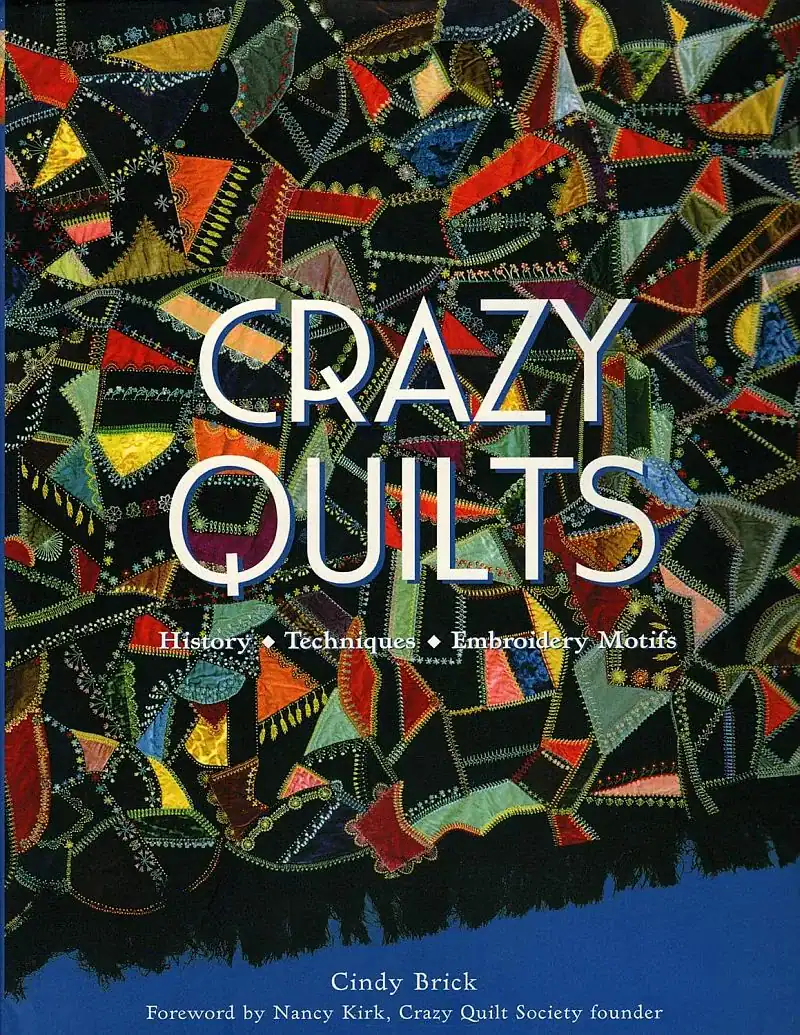
Crazy Quilts & Other Curiosities October 31, 1998 through April 11, 1999 As one of the most popular and often asked about collections of the Denver Art Museum, crazy quilts exemplify the highest levels of intricate handiwork paired with unparalleled creativity. You’re sure to go crazy over this colorful presentation of more than a dozen of the Museum’s most bold and beautiful quilts.
jean
Date: Wed, 24 Mar 1999 10:36:57 -0600 (Central Standard Time) | From: Mary Persyn <Mary.Persyn@>
I had a request for the web address for the crazy quilt article I mentioned in an earlier message. I found the article in a fee-based service called Lexis-Nexis. However, I checked the CS Monitor’s website and the article is there (with pictures, Lexis-Nexis is text only). The URL is http://www.csmonitor.com/durable/1999/03/24/fp18s1-csm.shtml
Mary
Date: Wed, 24 Mar 99 19:09:41 EST | From: “Bob Mills” <decision@>
The reason I wrote about buying no more tops or lumpy tops several days ago was that I am very frustrated trying to make the top reasonably flat that I bought in Omaha. (Not from Nancy.) Also creating and filling in the edges, when nothing could be accurately measured for size.
To: give myself a break and do something easy, I decided to sandwich and baste the Streak of Lightening from the doubled sided quilt I brought to Omaha. I hadn’t ironed it after washing it and started to wonder as I pressed the top. Sure enough, a large half of a beach ball in the middle and various spots with smaller tennis size bulges when I spread it on the floor. I was especially glum because I just acquired for peanuts a lovely 1870-80’s hexagon quilt with a secondary pattern of large stars. Lovely material, bright colors, very large and extremely uneven. Evident even just holding it up. The hexagons aren’t quite hexagons and it is a mystery why or how the quilter continued to pleat these pieces together. The only solution would be to——-unstitch and recut and resew each hexagon. In the meantime, the Streak of Lightening has been taken apart into squares and I will square them and resew. And since it is so far apart, I might just as well replace a few of the pieces that look coffee-stained with clean vintage fabric.
Things are so bad that I lied to my husband when he asked if i was going to take the entire quilt top apart. “Oh no, just a few sections.” I am the only person in this town-maybe county -who has to vacuum herself several times a day to pick off the threads from my clothes I am wearing! A little bit of forward progress will help my spirits.
Jan Drechsler (not Bob)
http://ourworld.compuserve.com/homepages/bobmills/jan.html
Date: Wed, 24 Mar 1999 13:58:47 -0300 | From: susan silva <woody@>
Dear Pepper, As a QHL person, and lover of all quilts, I must say that I was shocked when I read your post about your book not selling well. As a past president of my guild, (Spokane Valley Quilters)current newsletter editor, and owner of many, many quilt books, magazines etc…YOUR BOOK IS MY VERY FAVORITE BOOK! It inspires me and I just love everything about the book. It was my guide when I inked drawings on my (3 years in the works) applique quilt. Starting with one inking, it looked so awesome I did the other 11 blocks. It will be a prize winner this year (i hope)and your section on writings,techniques, tracings etc, was my hands on guide.Also in my collection I have 6 red/green applique blocks where the signatures deteriorated because of the ink, as your example shows on page 36 of your book.
For any quilter, this is a must own book for your library!Thanks Pepper and Susan for your inspirational book.
Sincerely, Susan C.Silva in Sunny Spokane Washington
Date: Wed, 24 Mar 1999 19:21:47 -0500 | From: Barb Garrett <bgarrett@>
I can’t speak for the difficulties in getting a quilt history book published, but I do know that it has ranged from very difficult to impossible to buy a quilt history book even when you know the title, author, publisher. I am speaking pre-QHL days, but during that time I would visit many quilt shops and ask if they could order a book — it never was on the shelf. I was told that “it’s one of those history books, and they don’t sell, so we don’t carry them.” And they would not special order it for me. They perceived that their customers wanted patterns, and “those books don’t have any patterns in them.” And when I would say the publisher was Rutledge Hill (my favorite publisher), that was an automatic kiss of death. I had many shop owners tell me they never buy books by Rutledge, they prefer That Patchwork Place – those are the kinds of books their customers want. It was useless to explain that I wanted to be a potential customer, so… I was delighted to discover I could buy my books once a year — at the Lancaster Show. After visiting the antique dealers booths — yes, I know exactly where Xenia is located and have been visiting her since before I knew her name — my next stop was the big book dealer. I had to get there fairly early because he would only bring about 3 of some of the history books — I guess he didn’t want to take up much space on these books nobody wants <grin>. Yes, we are a small niche in the big quilt picture, but it seems we may be part of a self-fulfilling prophecy — nobody wants the books, so nobody will publish them and nobody carries them if they are published, so nobody can buy them, so obviously, nobody wanted them in the first place since nobody is buying them. A weird kind of logic.
So, we need to be grateful for those who self publish like Jeannette Lesansky and those who can get Rutlege Hill to listen like Merikay — her Civil War book appears to be popular with non-quilters as well as quilters because of it’s history, and doesn’t have any patterns. But my local quilt shops still won’t carry it because of the publisher, and several have shown me “this better Civil War” book “because it has patterns”. They don’t understand that it’s hard to sell a book if they won’t carry it on their shelf.
Barb in southeastern PA <bgarrett@>
Date: Wed, 24 Mar 1999 20:27:42 EST | From: SaraLMcN@
Another great source for books that I recently found is the MAQS bookstore in Paducah, they have a great selection. I have called them twice in the last year and they have sent books to me at home.
Pepper, I have never seen your book. Would you give us the ISBN number, so I could try to find it.
Sara
Date: Wed, 24 Mar 1999 18:43:47 -0800 | From: Judith Brainerd <jnrbrainerd@>
I’m trying to date a White treadle sewing machine and can’t find any websites dealing with dating a White. Does anyone know where I can get this machine dated or maybe a book that would help?
Thanks!
Judith Brainerd
Date: Thu, 25 Mar 1999 14:16:10 -0400 | From: Lorraine Olsson <sven@>
Me To!! Me To!!!
I bought wonderful old treadle in an full Oak cabinet all in very good condition. It is a dream to use. I know White machines were made in Cincinati, but I would love to know the year. I believe there is a phone number that you can call and if you have the serial number, they will give you the date, but I am in Australia and do not know the number. I believe it is a 1800 number.
If you find out, please let me know.
Lorraine in OZ
Date: Wed, 24 Mar 1999 22:38:29 -0500 | From: “Judy Grow” <Judygrow@>
Carol, So, how do you store templates/stencils that are 30″ long by 10″ wide? I certainly don’t want to fold them!
And the poster/calendars that many of these are on, 20 years worth, are incredibly interesting to read. Lots of history, almanac stuff, timetables, household hints.
Judy in Ringoes, NJ judygrow@
Date: Wed, 24 Mar 1999 20:17:24 -0800 (PST) | From: Jackie Joy <jjoy@>
On Wed, 24 Mar 1999 JQuilt@ wrote
> Isn’t it about time to replace paper with electronics…(a cyber quilt magazine) would take up a lotttttt less space and save a lot of trees….
> What do you think?
I think it would be difficult to read it in the bathroom.;-)
Jackie Joy jjoy@
Date: Thu, 25 Mar 1999 04:40:23 -0500 | From: Lynn and Debbie Cupp <lcupp@>
For sewing machines? ;>
Go to ismacs.net Glean what you can from their generous online information and if you can’t find what you are looking for there, feel free to join the ISMACS discussion list. We collect sewing machines and feel this is the best resource for all models. The featherweight list is helpful, too, but for the old models this is a very comprehensive discussion group. The featherweight group, Featherweight Fanatics, has a subscription fee after a free trial period now. Ismacs is free.
Debbie Lorraine Olsson wrote
> Me To!! Me To!!!
> I bought wonderful old treadle in an full Oak cabinet all in very good condition. It is a dream to use. I know White machines were made in Cincinati, but I would love to know the year.
> I believe there is a phone number that you can call and if you have the serial number, they will give you the date, but I am in Australia and do not know the number. I believe it is a 1800 number.
> If you find out, please let me know.
> Lorraine in OZ
> Judith Brainerd wrote
> > I’m trying to date a White treadle sewing machine and can’t find any websites dealing with dating a White. Does anyone know where I can get this machine dated or maybe a book that would help?
> > Thanks!
> > Judith Brainerd
> > Q-Toons
> > Quilt designs to tickle your funnybone!
> > Judith@ http://www.qtoons.com
Date: Thu, 25 Mar 1999 08:50:21 EST | From: CToczek@
Jean and others, I love the web and the fact I can learn, surf and shop across the nation…and the world, but I wouldn’t trade my noon break with newspaper, book or quilt magazines for anything in the world. The tactile sense of holding those articles at my leisure is as pleasurable as my quilting time. With DH, I am encouraging computer literacy with my two young boys, but I hope, as well, to instill in them a love of the printed word and the quiet moments of reading.
<G> Even though it seems I’m in the minority (quilt worldwide) that wishes to see more variety in the pattern magazines, I keep buying them. I guess I’m fostering that circle of non-publishing, huh?
Best to you all, Carla West Point, NY
Date: Thu, 25 Mar 1999 09:22:45 -0600 | From: DSefton@
Hi quilters, Dru from KC here. Saw this on the Associated Press wire and thought it might be of interest.
{Cabin Creek Quilts fights catalog retailer Orvis over name}<
CHARLESTON, W.Va. (AP) _ It is the apparel world’s version of the big guy and the small fry.<
The small quilting cooperative, Cabin Creek Quilts, has been here before, defending its turf in successful fights with Wal-Mart and the Smithsonian Institution.< Now the Appalachian group is battling Orvis Co. Inc., contending the Manchester, Vt.-based company improperly marketed a foreign-made quilt as a “Cabin Creek Quilt”
and “an Orvis exclusive.”<
“We’re tired of this David-and-Goliath stuff,” co-op manager and founder David Thibeault said Wednesday. “They are playing fast and loose with our name, and we’re not going to let them get away with it.”< The cooperative has about 25 people actively working, and earns about $350,000 a year. A productive quilter can complete about one quilt a month.<
While Orvis was selling its quilt for $239 for a twin-bed size, handmade Cabin Creek Quilts made by West Virginians working out of their homes often run in the thousand-dollar range.< Orvis shipped out an estimated 20 million summer 1999 gift and clothing catalogs advertising its quilt, and Thibeault said the cooperative wants Orvis to print a half-page clarification in its next catalog.< An Orvis spokesman said the company made “an honest mistake” and has removed the offending article from its Internet order site.<
The co-op has fought repeatedly to protect its name since its founding in 1970. Its aggressive approach persuaded Wal-Mart to stop using the “Cobble Creek Quilts” name on machine-made quilts from China.< The Smithsonian later made a deal with Cabin Creek to reproduce a Smithsonian design and sell it through Lands’ End after a fight over quilting patterns.<
Date: Thu, 25 Mar 1999 15:19:22 -0000 | From: “Sally Ward” <sward@>
Buying American quilting books in (or from) the UK is fraught with problems. Not in terms of actually buying – on-line that is easy. But rather, judging whether what you are looking at is worthwhile. This is an occasion when you really do have to judge a book by its cover. Without actually handling a book, it is very hard to know what the content will be. I did well when I bought Eileen Trestrain’s Dating Fabrics (heard about through QHL), but wasted just as much money on Hidden in Plain View (didn’t wait for the QHL opinion and should have done!). I have burnt out on buying ‘pattern’ books, but I am fascinated by textile history and heritage. I have the feeling that there are certain books which are ‘standard issue’ to many of you for whom quilt study is a way of life. I would love to know some recommendations of those books which have been around long enough for you all to ‘take them for granted’. 20
Date: Thu, 25 Mar 1999 10:26:49 -0600 | From: Laura Hobby Syler <texas_quilt.co@>
Dru, and all, It’s a good thing my DH is not here to see this post. As a former Orvis employee, he ( and I) can assure you that the Perkins (that own Orvis) made no mistake what so ever! and BTW, there is no such thing as an “Orvis Exclusive” check out any of the other mail order catalogs and you’ll find that shortly after the Orvis catalog is on the market, the same item will appear in so many others. It’s a shame that they have let such a once lofty and truely admired company sink to such low levels. It’s the matter of the all might dollar and not quality and service any more. If you’ve been in one of their stores lately you’ll see the same thing that happened to Cloth World when JoAnn’s bought them out…..just an upscale ($$ that is, not quality) Spencers Gifts!
Orvis did introduce me to the wonderful world of flyfishing, but I’ll never set foot in their stores again!
I’ll get off my soap box now!
BTW….anyone want to buy a couple of Orvis flyrods?????<G>
Laura
Date: Thu, 25 Mar 1999 12:03:52 +0000 | From: Bobbie Aug <qwltpro@>
I also feel that this trend applies to department stores vs small specialty shops, grocery stores vs meat markets, auto parts stores that not only sell you the tires, but put them on, fix your brakes and install new mufflers.
Bobbie Aug SaraLMcN@ wrote
> I have to agree with Xenia, the diverse nature of quilting makes it hard for publishers to focus on one aspect. I know that another problem is obtaining material presents a constant challenge, many publications would like input and ideas. Readers get discouraged because there is the long wait to see the results.
> Another thing that I have noticed and after talking to other vendors is the smaller number of historical / reference books being published with not many in the works. I think as we continue to see the changes in spending occur in the quilting market that there will be a focus on books, etc., that appeal to the largest group. While I think our area is the most important, we are a small specialty market. There will still be reference books, but they may be harder to get published and will really need our support when they are introduced.
> Sara