April 21 – 26, 2000
These restored messages come from the Quilt History List, an online forum where quilt historians, collectors, researchers, appraisers, and enthusiasts discussed antique quilts and related textiles. The archive dates from 1996 through approximately 2016 and is being restored gradually. Sign up in the form at the bottom of the page if you want to know when a new page is added. Original spelling, opinions, formatting, and inactive links may remain unchanged.
Primary topics of this QHL Digest:
- The MacArthur Quilt eBay Controversy — Members debate a dry-cleaned, war-dated quilt auctioned on eBay, questioning its condition and provenance and whether the group should pool funds to acquire it.
- Traditional Quiltworks Spotlights Antique & Redwork Quilts — Readers flag features on vintage redwork and an heirloom-edition spread in the magazine’s new issue. (see the article on redwork and outline embroidery)
- Storing and Documenting Fabric Study Samples — Following the Paducah show, members compare notebooks, zip-loc bags, and zigzag-stitched swatch cards for organizing teaching fabrics. (see the article on caring for antique quilts)
- Tracking Down Navy Signature Quilts — Two outside researchers’ requests about WWII-era signature quilts are relayed to the list for leads.
- Grandmother’s Flower Garden Blocks and a Mystery Fabric — A member seeks help identifying paper-pieced GFG blocks and a fabric marked “Cortley Fabrics, Cone Mills.” (see the article on Grandmother's Flower Garden quilts)
- Show Announcements and Community Chatter — A barn-auction find, a Stamford, CT show, an AQS Nashville roommate request, and a scorched-fabric mishap round out the week.
Date: Fri, 21 Apr 2000 21:12:51 -0500 | From: Karen Bush <Birdsong>
I feel/felt the same way about the MacArthur quilt, and wrote to the seller, very terse and short comment that she/he didn’t know the ‘history’ of the quilt. I shudder to think there would be a family member somewhere who maybe didn’t KNOW the quilt existed and lost out on having it!
Along with a Lot of you out there, when Desert Storm was going on, I was Glued to Cnn, I decided to DO ‘something’besides just sit there and shake, I had several family members over there, and made my own version of “Old Glory” and in the stripes, embroidered the names of all the soldiers/officers and units from my County, along with stars if they didn’t get home…( It’s hanging in the VFW hall right now. I wouldn’t Dream of keeping it (unless I had had a son/daughter there), it was a ‘memorial’ that I could give. I wonder if this poor woman who made the quilt had something like that in mind herself??? And, the question about buying from ebay and feeling intimidated about the number beside their names,..that doesn’t mean these numbers represent QUILTS they’ve bought. It could be ceramic cats, potted plants, and maybe a quilt or two in between. I LIKE going to auctions when there’s dealers there…I feel Confident that if I buy for myself,…I can usually bid More than the dealers! Don’t let anyone intimidate you, just bid what you can afford! ) kb
—
See who I am and what I do http://members.ebay.com/aboutme/karenbush/
Date: Fri, 21 Apr 2000 22:20:11 -0400 | From: Alan Kelchner <quiltfix>
When bidding on eBay, the number next to the name only means the number of items purchased. They could be someone on eBay for several years. Or someone who bought the entire Happy Meal toy collection, one by one. You bid on only what you love, and accept that there’s always the chance to be outbid. Frankly, eBay seems relatively reasonable in the prices. Now if we could get rid of the quilt charm squares ……. (sorry, personal bias.
Alan
>Carla Toczek wrote
Does anyone else feel that individual collectors are frequently priced
>out of ebay bidding? It’s very frustrating to be outbid by buyers with
“300”
>(purchases) by their name.
This doesn’t actually mean that the buyer is not an individual with lots of money to spend on their collection. But what you are saying is what I used to hear a lot of at auctions for antique furniture. People used to say that it was terrible if there were lots of dealers there as it would “drive the price up”.
Date: Sat, 22 Apr 2000 08:37:06 PDT | From: “Kim Heger” <kheger>
>
Date: Sun, 23 Apr 2000 00:08:37 -0400 | From: Gail Wagner <dpw13>
>”When bidding on eBay, the number next to the name only means the number
of items purchased.”
I’m usually just a lurker, but feel I must jump in to correct some misconceptions about the numbers after an ebay user’s ID. That number is not the number of items the person has purchased, nor is it the number of items that person has sold. That number (feedback) represents about 1/3 to 1/2 of the transactions that person has completed. Feedback does not occur automatically and is not created like a counter by ebay. It must be left by the person who has completed a transaction with that registered user. It only takes a few seconds, is very easy to understand and complete, and is FREE. Apparently, 1/2 to 2/3 of the people who participate in transactions do not understand the importance of leaving feedback. Across the board, the average seller or buyer who does alot of business on ebay will tell you that they receive one feedback for every three transactions — someone who receives one for every two is doing exceptionally well. Feedback is not like leaving a tip in a restaurant — something that is a “reward” for exceptional service. Leaving feedback is the last part of completing the transaction. It is not required by ebay, which is probably the reason that some people can’t be bothered, but is very necessary. How else is someone supposed to know how well a seller or buyer does business? If a seller or buyer follows all the rules and the transaction is completed relatively smoothly, a positive feedback comment should be left — whether the item purchased was $3, $300, or $3000. Neutrals and negatives should only be used when a problem cannot be resolved — as a last resort after contacting the buyer or seller either through e-mail, snail mail, or on the telephone. Please don’t fire off a neutral or negative without having the courtesy of contacting the other party first — read the ebay “fine print”. Anyone who has completed transactions and has skipped leaving feedback, please go back and catch up. The person that you did business with will appreciate it greatly. And now, I will get off my soapbox and return to Lurkdom.
Thanks. Gail.
Date: Mon, 24 Apr 2000 21:36:03 -0500 | From: Valerie Davis <vpse>
While the idea of collecting money for purchasing a spectacular quilt like the
McArthur quilt is admirable, I can’t get over the repugnance I feel for the general the quilt is commemorating. McArthur had as many failures in WWII as successes. In the Korean war he showed both arrogance and bad judgment of nearly invading China, and thus was stripped of his position by Pres. Truman. Why commemorate an arrogant bastard like that? He had nothing to do with peace and everything to with puffing up his own image. I must admit the quilt in itself is fantastic, but peace quilt it ain’t! Valerie
QuiltFixer wrote
> Hi Sue, I seem to have lost the thread of this somewhere, but did we not
have
> the e-mail name of the dealer who bought it? If anyone has the E-bay
item
> number of it, we can pull it up and get a contact e mail. Maybe if
enough of
> us care, we can collect enough money on QHL (provided Kris did not mind)
and
> if the quilt is available at a set price, we could buy it as a group and donate it to West Point. I think this would be a really worthwhile
community
> service endeavor for the group as a whole. What do any of you out there
in
> QHL Land think?
> Toni Baumgard
> QuiltFixer aol.com
> The Redwork Lady redworkldyaol www.redworklady.com
Date: Tue, 25 Apr 2000 08:47:04 EDT | From: LindaKoe
Dear QHL friends,
If you are in the Stamford, CT area on Saturday, April 29 please stop by the
Long Ridge Tavern (2625 Long Ridge Road — this is 4 miles north of the Merritt Parkway, exit 34). Merikay Waldvogel will be the special guest at “A
Celebration of Traditional Arts,” signing her books and speaking about “Ten Top Tips for Dating Antique Quilts. The celebration is from 900 a.m. until 430 p.m. and features an exhibit and sale of antique quilts and “quilted egg collectibles” created by nationally known artist Jane Pollak. For more information, you may contact me at LindaKoe. Hope you can come.
Linda Koe
Date: Tue, 25 Apr 2000 06:28:26 -0700 (PDT) | From: Kris Driessen <krisdriessen>
This question was posted on the QuiltHistory.com bulletin board. I thought it was interesting – I know the blocks LOOK different, but why? Is one a derivation of the other?
Kris
>I am trying to find out the difference between Sun Bonnet Sue and Dutch Girl. Or is there a difference at all? Thank you. Karen in Irving, Texas
karenquilts
__________________________________________________
Date: Tue, 25 Apr 2000 09:42:37 -0500 (Central Daylight Time) | From: Mary Persyn <Mary.Persyn>
Paducah was wonderful, as usual. Thanks to Liz for arranging the dinner. I’m not sure that the new arrangement for vendors and quilts at the Executive Inn is any better than the old one, but I heard comments both ways about the arrangement. The workmanship on the quilts gets better every year. I may not agree with the color choices (I’m not into “muddy” colors), but the quilts were spectacular.
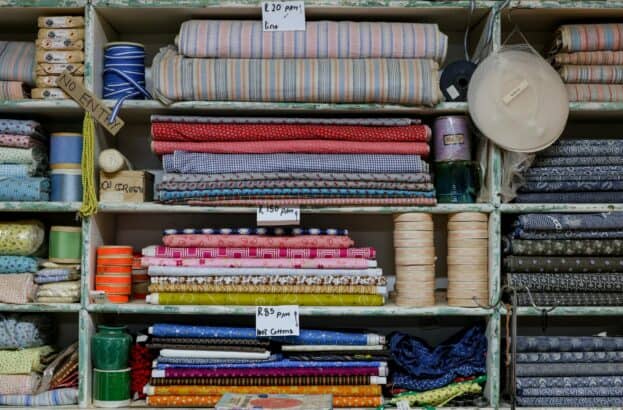
On to my question – I spent too much money, as usual, a fair chunk of it on “study fabrics” (you know, pieces of old fabrics that you just can’t bear to leave behind). Originally, I was going to put these pieces in archival quality top loaders/page protectors, but then I started worrying about the lack of air circulation to the fabrics in the top loaders. Many of the pieces I bought came in plastic zip lock bags. How do you QHLers who have study fabtic collections store the pieces? In top loaders, in zip locks? In a box? If you use top loaders or zip locks do you punch holes in the plastic for air circulation? I bought one piece of toile that is over 200 years old and I’d like for it to survive another 200 years. I also got some sonderful early 19th century chintzes. I don’t want to do anything to make these fabrics deteriorate any more, but at the same time I want to protect them. Any recommendations?
BTW, I also increased my late 1960s study fabric collection with one of the ugliest small quilt tops I’ve ever seen. I resisted the double polyester quilt.
Recommendations gratefully accepted.
Mary in bright, sunny, but cool Valparaiso, IN
Date: Tue, 25 Apr 2000 08:27:20 -0700 | From: “Julia D. Zgliniec” <rzglini1>
Dear Mary and QHL,
I too have many “teaching samples” of antique fabrics. I store them in all the ways you mentioned, depending on the age and condition of the fabric and also the size.
I store my large pieces of chintz between acid free tissue and rolled on muslin wrapped “mailing tubes”. Some of them have those plastic ends on which to write what is on the roll and that is handy. I also used washed muslin or flannel sometimes in place of the tissue but it can cause wrinkles so I have to be careful when I roll. I then store the rolls in my linen closet which has cedar lined shelves covered with muslin.
This system works well for me and helps keep the fabric from getting creased and damaged. It also helps keep the fabrics safe when taking them to class or lectures.
AQS show – I too could not decide whether I liked the new arrangement. The “pool annex” downstairs was a maze of vendors and I did get a little claustrophobic there. I found myself “escaping” frequently to the parking lot for the “fair food”. Those butterfly potatoes were absolutely wonderful.
Regards,
Julia Zgliniec, Poway CA
Mary Persyn wrote
Date: Tue, 25 Apr 2000 08:55:03 -0700 | From: “Laurette Carroll” <Robert.J.Carroll>
Hello,
Mary asks………………………….. How do you QHLers who have study fabric collections store the pieces? In top loaders, in zip locks? In a box?
I don’t live in an area with high humidity so this is how I keep my study fabrics.
Small swatches are kept in archival sheet protectors with acid free paper backing. These are in three ring binders on my book shelves. Larger pieces of fabric are kept in large flat boxes lined with muslin or acid free paper.
Yardage is kept on rolls covered with acid free paper. I do try and keep them out of direct light as I do my quilts, but like to have everything handy and available to enjoy often.
Laurette Carroll
Southern California
Look to the Future with Hope
Date: Tue, 25 Apr 2000 12:06:39 -0400 | From: jthompson <jthompson26>
I am not able to attend AQS/Nashville Show. I have a reservation at the Opryland Hotel (8/30 to 9/3). Traditional room for 2, rate $132 per night. If you are interested in having my confirmation number please contact me privately.
Judy Thompson
Date: Tue, 25 Apr 2000 13:57:10 EDT | From: Mercynun
In a message dated 4/23/2000 120037 PM Central Daylight Time, ptwigg writes
<< I neglected to mention that the same Traditional Quiltworks magazine has several other articles by and of interest to QHL’ers… Cindy Brick writes on how to give your new quilts the vintage look (“Ask the
Experts Cindy Brick,” pages 38-39), >>
Greetings! My name is Cindy Lambert and I have just recently signed on to this list. I have been lurking for a couple of weeks. I am a new quilter who is mostly interested in historic quilts – primarily Civil War era (I am a
Civil War reenactor as well) and I am interested in those from the 1930’s-40’s.
I am constructing my first quilt (I have done blocks before for a Civil War exchange but not a complete quilt) and it is a repro 1930’s bow tie with repro fabrics. I am machine piecing it but plan to hand quilt it with cotton batting, etc. I want to keep the quilting pattern accurate to the period.
I am particularly interested in this article above and would like info on how to subscribe to this magazine and get a copy of that particular article or a back issue wiht that article in it. I have not seen it before. After I complete this one, I have already collected a large collection of repro fabrics from the 1790’s to the 1840’s which will go into a Civil War era quilt.
I would appreciate any info on subscribing to the magazine and have enjoyed reading y’all’s posts!
Sincerely,
Cindy Lambert (New Orleans, LA)
Date: Tue, 25 Apr 2000 21:04:47 EDT | From: EllynLK
For the knitters amongst us, I found a great site with lots of free patterns.
It takes a while to download because there are lots of pictures. These are the most modern-looking knitted things I’ve seen in a long time! The site originates from Italy, la moda Italia, I guess! It’s the site of a knitting magazine and they put up things from their magazine. There is an English version of the page in addition to the Italian. Look out for the metric measurements, though, for those of us in the U.S.!
http://www.adriafil.com
Lauri Klobas
Date: Tue, 25 Apr 2000 21:10:39 EDT | From: KareQuilt
Dear QHLers,
This is a request I got after my story about the research I am doing on my Navy Signature Quilts appeared on RootsWeb. [By the way, I received over 30 responses to the article, and am just about ready to interview someone who knows parts of the Navy quilt’s story. It has generated a lot of excitement among Navy people doing genealogy.] Don said it was okay to post his email on my quilt research lists. Can anyone help this gentleman? Thanks! Karen Alexander
From: dcrin (Don Cameron Rininger III)
Hi, saw your article in rootsweb. I am searching for an authentic signed coverlet produced by my g-g grandfather, William Rininger, in his woolen mill in Kantner, PA (Somerset Co.) He worked for the Wm. S. Morgan mill before he built his own mill. His mill operated from about 1884 through 1920. Have you seen a Rininger coverlet or know of any documented? I would be interested in knowing anything you can help me with! Also, is there a coverlet/textile magazine or classified that I can advertise in to find one?
Thanks-
Don
Date: Tue, 25 Apr 2000 21:15:59 EDT | From: KareQuilt
Another request, QHLers, from someone who responded to my Signature Quilt story that appeared on RootsWeb.
Karen Alexander in Northern Virginia
He wrote
I’m seeking a good design/pattern for a “family heritage quilt” to be made for my niece’s hope chest. Ideally, I’d like the design to include our family’s pedigree with each ancestor’s name & dates embroidered on a piece. These would be assembled to show our ancestry in something approximating a “fan chart” format. The information to be included extends 10-12 generations back in most lines.
Have you ever seen a quilt or design of this sort that you could put me on the track of? Also I’m interested in finding a maker with whom to commission the work.
Onesimus (Bryce W. Self)
Date: Wed, 26 Apr 2000 06:08:07 -0400 | From: “Diane McGuire” <dianemcgici.net>
Hi, QHLers,
I have been behind in my readings due to a move, but I am excited to hear that the RI book is finally being published. I agree that the price is outrageous. I know from personal experience as a yearbook advisor that the price of books is based as much on the number of copies published as on the size, quality, photos. They must be doing a very small run. I will be ordering a copy t omorrow because my grandmother’s quilt is featured in the book. She came from near Quebec and settled in a Canadian enclave in Pawtucket. As a result of the documentation there has been a renewed interest in this community and the quilt was also featured at a special museum exhibit near Quebec of quilts made by this group. I am surprised that there was a show of the quilts in Providence and I was not asked to loan my quilt to the show or even told about it. I live in southeastern Massachusetts so I don’t get the RI news.
Since the information on my grandmother’s quilt in the book is information I provided I do not believe it would be any copyright infringement if I relayed that information to the group when the book comes out as long as I retell it in my own words. I will also post a picture of the quilt and I have written out directions in both inches and metric to reproduce the quilt. I can also post pictures of my grandmother and her four sisters in beautiful Gibson girl blouses.
That was the only quilt I took with me to the apartment I am in now except the one on my bed. All my other antique quilts and ones I made are at my Dad’s house.
Diane in still soggy Massachusetts where I still can’t find my toaster or my iron.
Date: Wed, 26 Apr 2000 07:21:29 -0500 | From: Laura Hobby Syler <texas_quilt.co>
My mind is befuddled this week. I have a client in need of information and I’m not thinking clearly…..Does anyone know of anything that will remove or lighten scorched marks on fabric? Home remedies? I think I remember my grandmother telling me that white vinegar steamed into the fabric on a white towel worked…..but then that may have been for fold stains. I’m afraid that she’s outta luck, but I thought I’d ask……other problem is that none of the fabric has been prewashed so the bleeding problem is likely.
TIA
Laura
Date: Wed, 26 Apr 2000 08:34:05 -0400 | From: Judy White <jawhite>
You didn’t say if the fabric is white or not, but my mother always used lemon juice, salt and sunshine, the latter being in short supply here in Connecticut. But that was on white or very light fabric. Let us know if you find a remedy.
Judy White
Date: Wed, 26 Apr 2000 09:01:14 EDT | From: CToczek
Valerie and QHL,
Your point of view regarding MacArthur’s personality is well taken. I showed the ebay photo to my DH, a military historian and instructor here at West Point. He said, “It’s a nice quilt, but I’m not much of a MacArthur man.” (He’s more of a Patton man, who was another arrogant *#!%. <G>) When I made the comment to the list about the quilt being suitable for West Point or another museum, I was thinking of the quilt from the maker’s perspective, not the war general the quilt celebrates. Consider this: there may be those who feel compelled to make a quilt honoring the current president’s term of office. There are also those who now and in the future will neither agree with, nor understand, why the quilt was made. Think of the 19th century quilts made using campaign fabrics, or the Civil War quilts, both Union and Confederate, or even the Prohibition quilts. The messages in those quilts teach us more than just fabric styles, twists of thread and fiber content. They help us read the minds of the makers and their times.
That’s why I loved the MacArthur quilt.
Respectfully,
Carla Toczek
West Point, NY
Date: Wed, 26 Apr 2000 09:06:02 EDT | From: JQuilt
a quilter/friend gave me a stack (about 40) of grandmother’s garden blocks and a stack ( a couple of 100) of paper basted hexagons and some nice sized pieces of some of the material used in the above….
i would say that the fabric is from the 40s & 50s(possibly 30s too) what’s surprising is that the paper hexagons are all cut very exactly…but the method the person used, was to cut the fabric, very inexactly, somewhere near the dimensions of the template and then just fold and neatly baste it to the very precise paper…she then sewed the hexagons together English paper piecing style…with very tiny stitches…
i know that i will never make a quilt of the blocks or hexagons…i will wash and use the fabric…
what are the chances of finding the exact dates for any of this..?
jean
Date: Wed, 26 Apr 2000 09:17:18 -0400 | From: “J. G. Row” <Judygrow>
Mary,
I’ve resisted the zip-loc bag solution, except for duplicates that I wouldn’t mind trading. My stuff is in notebooks, in a few different ways. The idea is not to handle them and contaminate them with the oil from your hands.
I use slide sheets for the tiny 2″ x 2″ more modern ordering swatches. I use baseball card sheets with (9) 2 1/2 x 3 1/2 slip in pockets per sheet. And I use the top loader singles for sets of color runs and other unwieldy pieces that I don’t want to cut smaller. I first tack (zig-zag) these to sheets of index weight paper. Yes, I know this is not acid free, but it is such a wonderful weight and gives me a place to write a description or date. I’ve often thought of using a hole puncher to punch holes in each section or sheet, but figure since it is open at the top there must be some circulation already going on.
I’d love to hear from anyone else who “swatches” and get any new tips from them. Setting up some trades wouldn’t be a bad idea also. I know Laura’s VQTS will probably do that, but I find it near impossible to be in Texas when she runs those days. Laura is the person who got me started swatching in the first place.
Right now I have sitting on top of my computer (8) 3″ x 3″ swatches of indigos and wash blues , 1 quaker grey ,and 1 neon print (red diagonals on black with green circles and white flowers). I’d love to trade them with someone for another set of 10 period swatches.
Judy in Ringoes, NJ judygrow
Date: Wed, 26 Apr 2000 10:11:13 EDT | From: JQuilt
a little more info on the fabric pieces that came with the grandmother’s garden block stufff…one large piece of fabric has a sticker from a store on it…with
2 1/3 yds for 85cents…
should i wash this fabric…i really want to use it or should i leave it sticker and all jean
Date: Wed, 26 Apr 2000 10:19:59 EDT | From: KareQuilt
This is a question posted on the Quilters Unlimited of Northern Virginia electronic newsletter list today. Anyone care to help her and let us know too?
Karen Alexander
6. HALF DOLL PINCUSHION HISTORY NEEDED – Judy Jackson (V) is looking for any information on the history of the half doll pincushion. She says, “I know they stared in Germany but need to know more. Year, town, what the first one looked like, etc. I know there are some books out there, but I am unable to locate them since they’re out of print. Please e-mail me at rtistk”
Date: Wed, 26 Apr 2000 10:44:39 EDT | From: KareQuilt
Here is another question posted below from QU’s electronic newsletter list today also. Again, please share your answers with us too. But first an associated story. I recently found something very similar to a Whisker Guard at an antique shop in Dillard, GA. The one I found is a 8″ to 9″ deep sleeve that fits across the width of the top of the quilt (or sheet?) like a shallow pillow case and was meant for a girl’s bed. The depth varies because the front-side was made in a swag design with a rather Marie Antionette-like figure in big buffont skirt at two points out of 9 (dips) of the swag. The back of this “sleeve” is a consistent 7″ depth. The figure has a purple gingham skirt, shoulders, neck, head and high hair-do in black embroidery thread, and is “holding” a nosegay made of lace with a tiny yo-yo center of the same stripped purple fabic that the whole front of the “guard” is edged in. The tiny yo-yo has 6 French knots in it. She also has this same lace attached at her shoulders to resemeble puffed sleeves. The skirt of the figure (as well as the entire run of purple stipped binding along the front edge of the “guard”) is atached in a rather unusual way with a black zig-zag stitch. I say “unusual” because it leaves the tinest gap between the two pieces of fabric it is binding together which adds to the over all since of “airyness’ to the whole design of the motif. The tag on the piece said “Bed Cover to Pull Sheets With ca. 1925) Karen Alexander From the QU List: WHISKER GUARD & ADVERTISING THIMBLE HISTORY NEEDED – Judy Jackson (V) is also looking for information on the history of the “whisker guard.” This was a plain fabric basted onto the top half of a quilt to protect it from getting soiled from a man’s beard. Judy’s also researching the history of the Advertising Thimble. (i.e. who was the first company to have them, what year, etc.) If you have any information, please e-mail Judy at rtistk
Date: Wed, 26 Apr 2000 11:37:18 EDT | From: QuiltFixer
Jean, if this were mine and I were going to use the fabric, I would carefully cut out a square of the fabric containing the sticker and a big enough piece to see the pattern. I would keep that with my vintage fabric samples.
Toni B.
QuiltFixer
The Redwork Lady redworkldyaol www.redworklady.com
Date: Wed, 26 Apr 2000 11:52:22 -0400 | From: Judy White <jawhite>
Hi Jean. What a lovely present. I have about 25 gmfg blocks made exactly the same way. My fabrics are 30’s and 40’s. The hex pattern is 1 3/8″ wide and the blocks are about 8 1/2″. The hex patterns have been cut from old time cards so either the maker or her husband worked somewhere where they punched a clock. No date on the card stock though nor the name of the company.
Judy White
Date: Wed, 26 Apr 2000 11:53:52 -0400 | From: Judy White <jawhite>
In Betty Hagerman’s book, A Meeting of the Sunbonnet Children,” which was published in 1979, she states that the Kate Greenaway drawings were probably the forerunners of the Sunbonnet patterns. Hagerman says that
Bertha Corbett has been called “America’s Kate Greenaway,” and while we don’t know for sure that she was influenced by Greenaway, most likely she had seen the Greenaway drawings, and Corbett went on to develop the familiar Sunbonnet patterns of the early 20th century. Hagerman touched on the question of whether the Sunbonnet patterns are a natural evolution of the Dutch and other ethnic-oriented dolls brought to America by European colonists. She seemed to think that the ethnic-oriented patterns evolved after the popularity of the design was established (Hagerman 7).
Hagerman says “there is another source of confusion among pattern names-the Dutch Doll of the eastern mountain region most likely refers to a sunbonnet pattern without regard to ethnic association with a costume. A few Dutch Doll patterns retain the old-world costume, but most are typical sunbonnet patterns found in other areas as well.” Old Dutch Cleanser used a variation of a sunbonnet pattern for their trademark, The Old Dutch Cleanser Girl.
Sorry that this post is so long and I hope it helps. I know that there are people on the list more knowledgeable that I am re: Sunbonnet Girls and hope they add something to this discussion.
Judy White – Ct
Kris Driessen wrote:
> This question was posted on the QuiltHistory.com bulletin board. I thought it was interesting – I know the blocks LOOK different, but why? Is one a derivation of the other?
> Kris
> >I am trying to find out the difference between Sun Bonnet Sue and Dutch Girl. Or is there a difference at all? Thank you. Karen in Irving, Texas karenquilts
> Send online invitations with Yahoo! Invites. http://invites.
Date: Wed, 26 Apr 2000 11:58:01 -0400 | From: Judy White <jawhite>
Judy, what a good idea to zigzag the samples onto stock or some kind of paper. When I started collected vintage fabric and cutting samples for a swatch book, I didn’t know anything about what I was doing and I cut 3″ samples and “glued” them to paper so I could write about them. Now I know that is not the way to go, but I do like the idea of sewing them to paper and then I can still write some notes.
Judy White
Date: Wed, 26 Apr 2000 16:06:47 -0400 | From: “sue reich” <mreich>
In response to your question about advertising thimbles. There is a thimble museum in Northern Bavaria, Germany. I don’t have the exact village name at my finger tips (no pun intended). However, with a little research I can find its location. In Germany it is called a Finger Hut Museum. If anyone is interested, let me know. Sue Reich in Connecticut where it snowed today!
Date: Wed, 26 Apr 2000 16:23:00 -0500 | From: Laura Hobby Syler <texas_quilt.co>
Hi folks…..
Watch out for a duplicate message about the scorching. I cant remember who I got it from…The Monroes? anyway, the second message has the Happy exe. worm opening. There was no attachment, just
“open happy exe.” and a bunch of gobbledygoop in the text. Sorry I cant remember just how got hit….I immediately deleted it, emptied the trash and restarted the computer. Hopefully no one will get stung. And BTW, thanks for the suggestions about the scorching. I think we’ll just get more fabric! (It’s a new Fossil Fern color!)
Laura
Date: Wed, 26 Apr 2000 16:48:36 -0500 | From: Laura Hobby Syler <texas_quilt.co>
Ok, ok…..I wasn’t going to jump in here…..too many irons in the fire this week (namely scorched fabric!) But…….we do have a pretty good article in the VQTS newsletter on Developing a Fabric Dating Workbook. Do use archival quality top loading page protectors. They keep the fabric tight enough in place so that it doesn’t fly across the room, but open at the top so air can get in. Like Julia, I too roll larger pieces, usually wrapped in muslin, over a muslin covered tube….You can also get archival quality pages for slides and 3×5 photos that are great for smaller swatches……like the 3×3 squares from Benartex or Mary Koval <G> slide holders work great for those GMFG pieces or DWR arch slices! BTW, Back by Popular Demand (a lot of whining really <G>) the Vintage Quilt & Textile Society will be offering another 2 day fabric dating workshop Saturday and Sunday, July 8 & 9…..Quilt College is held at the McDermott Library on the campus of the University of Texas at Dallas (located in Richardson!)
If you want more information, please email <vqts1> and we’ll get information out to you. Space is limited so if you are interested contact VQTS immediately.
Laura
Date: Wed, 26 Apr 2000 20:22:35 EDT | From: JBQUILTOK
In a message dated 04/26/00 8:19:29 AM Central Daylight Time, Judygrow writes:
<< Right now I have sitting on top of my computer (8) 3″ x 3″ swatches of indigos and wash blues , 1 quaker grey ,and 1 neon print (red diagonals on black with green circles and white flowers). >>
I’ve read enough of Judy’s posts to know that storage on top of the computer is not a long-term solution for her, but it seemed a little odd to admit it in a post about archiving fabric swatches…
Janet
Date: Wed, 26 Apr 2000 22:15:49 -0400 | From: “J. G. Row” <Judygrow>
>Like Julia, I too roll larger pieces, usually wrapped in muslin, over a muslin covered tube….
I don’t use tubes to roll my larger pieces around. By larger pieces, I mean something like one repeat of a toile, or the like. I use a fairly heavyweight mylar, 6-12″ longer than the piece. It makes its own tube as I roll. Of course, I buy it by the 500 foot roll for the picture framing business, so I kind of have an endless supply.
For my yardage of vintage fabric I make my own bolt centers from a few layers of acid free matboard or foamcore, again from the frame shop. Most of this would get thrown in the dumpster. It is usually only 6 – 8″ wide and then cut to 36 or so inches long.
These are cutoffs from the larger sheets, and there is no other use for them in the shop.
Judy in Ringoes, NJ judygrow