February 23 – 26, 2002
These restored messages come from the Quilt History List, an online forum where quilt historians, collectors, researchers, appraisers, and enthusiasts discussed antique quilts and related textiles. The archive dates from 1996 through approximately 2016 and is being restored gradually. Sign up in the form at the bottom of the page if you want to know when a new page is added. Original spelling, opinions, formatting, and inactive links may remain unchanged.
Primary topics of this QHL Digest:
- “Hidden in Plain View” and the Underground Railroad Quilt-Code Debate — A televised segment on the Underground Railroad quilt-code book Hidden in Plain View reignites a heated, extended debate among members over its sourcing, historical claims, and Ozella McDaniel Williams’s oral account. (see the article on Underground Railroad quilts)
- Standards of Evidence in Quilt Oral History — Branching off the HIPV debate, members discuss how oral history and undocumented family stories should be weighed as historical evidence for quiltmaking claims.
- Identifying a “Sleepy Eye” Stamped Quilt — A member asks about a quilt bearing a Sleepy Eye flour-brand stamp, and others weigh in on dating and identifying Sleepy Eye collectibles.
- The Radical Rose Pattern and Political Quilt Names — A member notes earlier documented references to the Radical Rose quilt pattern, connecting it to the broader discussion of politically-named quilt blocks.
Date: Sat, 23 Feb 2002 09:56:19 -0500 | From: “Nancy Roberts” <aquilter@>
The letters WRC rang a bell in my head when I first saw them, and this morning the words Women’s Relief Corps came to me. I did a bit of searching on the internet and found these links which may be of interest to you.
The WRC, which was established as an auxiliary to the Grand Army of the Republic, has a motto of “fraternity, charity, loyalty.” They have a museum in Springfield, IL.
from their website: “The National Woman’s Relief Corps, Auxiliary to the Grand Army of the Republic, is a patriotic organization whose express purpose is to perpetuate the memory of the Grand Army of the Republic, as we are their auxiliary organized at their request on July 25 and 26, 1883 in Denver, Colorado and incorporated by act of the 87th Congress, September 7, 1962.”
There’s more info on their website at: http://suvcw.org/wrc.htm
And this one by the Sons of Union Veterans gives a history of the Grand Army of the Republic. http://suvcw.org/gar.htm
Both are interesting reading. Nancy Roberts
Date: Sat, 23 Feb 2002 16:08:29 -0500 | From: Newbie Richardson <pastcrafts@>
Dear Don and list, To eliminate crease lines in fragile ofl fabrics, first re-hydrate the fabric. Do this by laying flat on a table and placing a few shallow bowls of water around it. then drape a piece of plastic over the whole with some kind of support to keep the plastic from toudhing the fabric and bowls of water. I use some old candle sticks and piece of painters tarp. Leave it alone for a f ew days to absorb the natually occuring moisture from the evaporation of the water. (Make sure no cats or kids can jostle it!) Then place it the fabric between two pieces of soft fabric ( old terry cloth towel, flannel sheet, mattress pads, ect) and weight it down with a few heavy books. If that does not work well enough, then you can try using a steam iron on LOW with a 100% cotton press cloth (I like and old birdsey diaper, or an old soft piece of cotton flannel). BE very careful that the steam does not turn to moisture droplets and cause any of the dyes to run. This is the most low tech way. You can use a piece of “Gortex” fabric and a damp cloth. Lay the gortex over the crease line, cover with the dampened cloth, weigh it down with weights (glass bricks are good) and allow to stand for about 3-4 minutes. The gortex allows the humidity through in a short time. Leave it too long, though, and the humidity will turn into water beads – NOT good! Good luck Newbie
Date: Sat, 23 Feb 2002 22:02:14 -0800 | From: quilter@
there was a commercial on hgtv today for a special that will be
airing
tomorrow (sunday) and then repeated. it is for a program called
“homes of
the underground railroad” and during the commercial there is a quilt
prominently displayed on one of the porches. i don’t know if this
idea
will come into play during the narrative of the program, but thot
many on
this list would be interested to see if the hipv quilt code will be
promoted.
dutchrose
http://hgtv.com/HGTV/episode/0,1101,FOLI_episode_19180,FF.html
Homes of the Underground Railroad
The Underground Railroad was a loose
collection of individuals united in the belief
that slavery was wrong. A few of these
brave souls opened their homes to fugitive
slaves on the run. They hid the escapees
in attics, secret rooms and other hiding
places. At stake was the lives of the
escapees and the homes of those who had
the courage to help them. In Homes of the
Underground Railroad, viewers will be
transported to a world where bravery and
risk were part of everyday life. The homes
in this program provided more than just
shelter–they were beacons of freedom
during a dark time in our country.
Air Times
Feb 24, 2002 9:00p EST
Feb 24, 2002 Midnight EST
Mar 02, 2002 5:00p EST
Date: Sun, 24 Feb 2002 10:38:23 EST | From: Kathlash@
It appears there has been discussion on this list about “Hidden in
Plain
View,” before I was a member. Can we revisit it?
Having read the book, I couldn’t have been more disappointed. Can any
of you
recommend books that discuss “slave quilts”, using primary source
documents/information?
Are there artifact quilts out there with provenance to prove they
were in
fact made by slaves?
The Galena, IL quilt show is offering a speaker talking about quilts
and the
Underground Railroad. Knowing how everyone seems to want to jump on
that
bandwagon, I’d like to attend just out of curiosity.
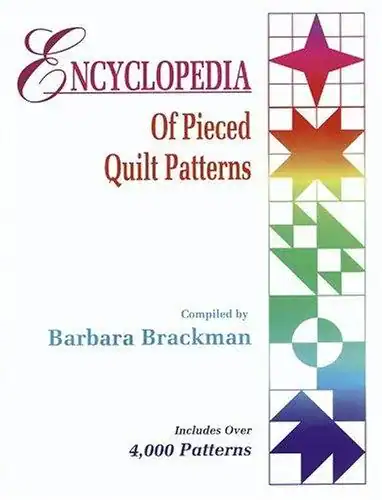
In Carrie Hall’s “Romance of the Patchwork Quilt in America,” she
states that
in Western Kentucky, “Jacob’s Ladder” was called “Underground
Railroad”. I
have no idea what time period this occurred. Also, doesn’t Barbara
Brackman
have a quilt pattern for sale using this block and calling the quilt
“Underground Railroad.”
I’d like some confirmation on some of this information if any of you
can
offer it.
Kathleen Lashley
Date: Sun, 24 Feb 2002 16:18:33 -0500 | From: mreich@
This is definitely a term which refers to Women’s Relief Corp. There
are
two quilts uncovered in our state’s documentation made by WRC
members. They
are both fundraising quilts with hundreds on signatures. One made in
1885,
has seven hundred signatures with each person paying one dime for
their name
to be inked on the quilt. The other has four hundred names
embroidered with
red floss from 1896. They can both be found on page 116-117 of
Quilts and
Quiltmakers Covering Connecticut. There is also of short history of
the GAR
(Grand Army of the Republic) and the WRC. sue reich
Date: Sun, 24 Feb 2002 14:57:26 -0600 | From: “leigh/hcquilts” <hcquilts@>
A good starting point is Stitched from the Soul: Slave Quilts of the
Antebellum South by Gladys-Marie Fry. A bit heavy-handed at times,
but the best-researched one I’ve found so far. Unfortunately it’s OOP
but if our little public library has a copy, it’s likely yours does too
🙂
Interesting link – with a furiously-backpedaling letter from Tobin (HIPV) herself in which she blames everybody else (including her editors) for the often-hilarious gaffes in her book, is at http://www.beavton.k12.or.us/greenway/leahy/ugrr/, but currently the
entire website’s down. I wish I’d printed out a copy.
—– Original Message —–
From: Kathlash@
To: QHL@
Sent: Sunday, February 24, 2002 9:38 AM
Subject: QHL: Slave Quilts and HIPV
It appears there has been discussion on this list about “Hidden in
Plain View,” before I was a member. Can we revisit it?
Having read the book, I couldn’t have been more disappointed. Can
any of you recommend books that discuss “slave quilts”, using primary
source documents/information?
Are there artifact quilts out there with provenance to prove they
were in fact made by slaves?
The Galena, IL quilt show is offering a speaker talking about
quilts and the Underground Railroad. Knowing how everyone seems to want to
jump on that bandwagon, I’d like to attend just out of curiosity.
In Carrie Hall’s “Romance of the Patchwork Quilt in America,” she states that in Western Kentucky, “Jacob’s Ladder” was called “Underground Railroad”. I have no idea what time period this
occurred. Also, doesn’t Barbara Brackman have a quilt pattern for sale using
this block and calling the quilt “Underground Railroad.”
I’d like some confirmation on some of this information if any of
you can offer it.
Kathleen Lashley
Date: Mon, 25 Feb 2002 11:38:14 +1100 | From: rathgarr@
> Interesting link – with a furiously-backpedaling letter from Tobin
(HIPV) herself in which she blames everybody else (including her
editors) for the often-hilarious gaffes in her book, is at
http://www.beavton.k12.or.us/greenway/leahy/ugrr/, but currently the
entire website’s down. I wish I’d printed out a copy.
***
The search engine Google caches, so if you search with it, you can
bring up site pages that aren’t ‘live’ any more.
eg. if you search on leahy tobin beavton one of the links is to what
sounds like that letter – here’s the cache link, which you may need
to cut/paste onto a single line.
Cheers
Ruth in the Blue Mountains, NSW, Australia
(article shown below)
<center> <table border=”0″ cellpadding=”0″ cellspacing=”0″ width=”90%”> <tbody><tr> <td width=”100%”>
<i>There is some confusion as to whether or not quilt squares were ever used as coded maps to help slaves escape. Below is an email from Jacqueline Tobin, one of the authors of <u>Hidden in Plain View</u>. She explains some of the background to the book and puts her book into perspective.</i>
There has been much said about this story that we certainly never stated or wrote. For example, the term “Underground Railroad quilts” is a misnomer. No quilts per se were used on the escape; no quilts were taken on the journey, no quilts hung outside safe houses, etc according to Ozella’s story. In her code the quilt pattern names were appropriated by the slaves on the plantation to be used as mnemonic devices; to trigger memory of clues they could remember as they journeyed north. All of it was in their mind; as Ozella stated so many times, “its a mind thing!” The only quilts were on the plantation themselves. How they were displayed or used is still conjecture except that Ozella stated they would be hung, one at a time, until the clue represented by the particular pattern was memorized. Yes, there are many stories about quilts and the URR; do not confuse them with this story.
The graphics editor made a mistake in indicating that the Dresden plate pattern was one of the patterns Ozella talked about in her code. Her code reference was to the cities of Dresden, Ohio and Dresden, Ontario and had nothing to do with the quilt pattern, despite the fact that there was a later quilt pattern of that name. Authors do not have as much control over the final copy of their books as they would like; please note that this was corrected in the paperback edition.
Yes, we had three introductions or prefaces to the book. This story had not yet been written so we surrounded ourselves with the best scholars in related fields that we could find. They read our research and wrote what they wanted; we did not dictate any words to these scholars. While we recognize there is argument in the “mostly white” quilt community about oral tradition and this story, we must point out that we have lectured at most of the top universities and venues in the nation, including the Smithsonian, Emory, Howard, U. of Wyoming, etc. etc and to a one, all the scholars who have heard our lectures have come to us and stated that we were absolutely on the right track with this story. If some of the specific interpretations we suggested are not totally accurate; the substance has not been challenged as not only possible, but likely.
The log cabin quilt, which unfortunately is poorly pictured in our book is indeed dated 1840-1850 and is housed in Buxton, Ontario. It was a gift given to the Rev. William King by the former slaves he took to Ontario and freed. It is sad that most Americans believe that our history begins and ends with our borders. As we researched this story it became very clear that in order to understand the possibilities of the code we had to reach back to West Africa and their cultural traditions which the slaves would have brought with them; and also reach forward into Canada to see “the rest of the story.”
As to the idea that this story was a ploy by Ozella to sell her quilts; how insulting. We discovered that Ozella told pieces of this story to many but no one, even though they asked, was given the whole story except for myself. As to why then, we can only surmise that Ozella, after making me wait three years to be “ready” for the story, knew that she was dying of cancer and realized that it was time to get the story out. Her family, who all corroborated the story, albeit in slightly different versions, gave me the same history of the story. Relatives from Ohio, Georgia and California have confirmed the story their mother and grandmother told Ozella. All of them knew it was Ozella who was to keep the story alive.
The photographs are certainly of recently made quilts. The book was written for the average, non quilter, not the quilt historian. Most non quilters do not know what a monkey wrench or crossroads quilt pattern looks like. There was not time to seek out antique quilts, nor were we trying to be accurate as to the date of the quilt shown. These quilts were illustrative.
We are sorry that no one has taken us up on our offer to hold a panel discussion of the elements of this book. We have continually asked for such. It seems much easier to attack without having the chance of rebuttal. No one wins with this method. Our offer still stands.
One other statement requires attention. Elizabeth Scott’s “Plantation Quilt” is shown in our book for a very good reason. I was able to interview Ms. Scott and her daughter in 1994. During that interview, Ms. Scott was able to tell me that this quilt was a replica of one earlier made. She recited a story about how, as a child, she sat under the quilting frame, threading needles for her relatives and listening to their stories. One thing she remembers is that while quilting, the relatives would point to a part of the quilt and state, “this represents where Uncle—lives.” She was adamant that her relatives stitched so as to indicate the contours of the various fields. She also talked about how the stars represented what she saw from her porch as a child. Interestingly enough, we were recently contacted by a museum planetarium astronomer who said that there was no doubt that the stars on Ms.Scott’s quilt represented certain constellations.
Dr. Dobard and I have never stated that we have all the answers regarding this code or its interpretation. We have just tried to present the story and interpret it in light of the research we have done. I remain honored that Ozella told her story to me and told me to “write it down.” History will have to decide the veracity of her story. Jacqueline Tobin.
<strong>Quilts</strong>
Routes North
Ways to Escape
Times to Escape
Stations
Code Words
Drinking Gourd Song
North Star
Canada
Uncle Tom’s Cabin
Treatment of Slaves
Free vrs. Slave States
Fugitive Slave Act
Harriet Tubman
Teacher Resources
Word Search
Quiz
Date: Sun, 24 Feb 2002 17:41:29 -0500 | From: “Teddy Pruett” <Aprayzer@>
I have been anxiously awaiting the show tonight. I dont get much
chance to veg out in front of the TV, but when I saw the promo with the
quilt on the porch, I knew I would hurry home from church to see it. I
have been very interested to see if they promote the quilts as fact,
fiction, myth, “perhaps” or whatever the case might be.
This subject deserves study, but it deserves truth above all else.
It is a truth that may never be known, unfortunately. Teddy Pruett
Date: Sun, 24 Feb 2002 23:37:12 EST | From: Kittencat3@
Oh man – what a self-serving, defensive, ridiculous piece of slop
this is. I can tell you one thing: she is absolutely, 100% WRONG when
it comes to her implication that authors have no say in the
production of a book. Authors are customarily sent a complete set of galley
proofs before publication and must correct, approve, and return them
before the book goes to press. Artwork is another matter in some
cases (usually in work made for hire, like gaming supplments), but the
authors are still the ones who choose the illustrations, produce the
captions, indicate what pictures should go where, and so on.
I still remember a long, bitter struggle before Jacqueline Tobin
would reply to a detailed letter on her research methods and field
notes/tapes of her interviews with Ozella Williams, and the final worthless
excuse for an answer. She and Dr. Dobard may or may not have
stumbled across a piece of slave lore (according to two black scholars of my
acquaintance, they probably haven’t), but their metholodogy and
obfuscatory approach to questions makes them very, very suspect.
This letter does not impress. And the book does a huge disservice to
all Americans, black, white, and other, by disseminating poor
scholarship.
Lisa Evans
Date: Sun, 24 Feb 2002 22:46:45 -0600 | From: “Jeff ‘n Sheri Lesh” <jefflesh@>
I knew this would evoke some messages, as I also watched the show on
the
homes with a connection to the UGRR. I was interested in the home
with the
Iowa connection, as I had never heard of it and I thought we had seen
all
the historic homes there were to be seen in the Des Moines area, then
when
they threw out the reference to using a quilt on the upper railing of
the
porch. Thought that might be worth checking out the next time we go
to Des
Moines.
I did find the home listed in my Iowa tourism book, just guess we
have
missed it. But I plan on asking about the quilt reference when we go
there,
I want to see the documentation. I will let you all know what I am
told
too.
I did enjoy the show very much and thought it interesting the many of
the
most passionate activists were ministers or Quakers. Also they
showed many
of these people traveling during the day, not at night. I am not
sure I
have heard documented information about when most of them traveled.
Is
there a consensus about this? Or is this a hot, debatable topic? It
would
seem to me, if they typically traveled at night, that would throw the
quilt
signal out the window, because it could not have been seen. That is
probably too obvious and too easy. 🙂
Sheri from Windy Iowa
Date: Mon, 25 Feb 2002 21:25:43 +0800 | From: “Roberta Geanangel” <ragcat@>
Teddy…I missed the show..can you fill me in? Thanks…Roberta
PS…It was great seeing you in Orlando last month!
—
Ragamuffins are for loving!
>^..^<
Blessed Be!
Roberta in Florida
Date: Mon, 25 Feb 2002 12:51:45 -0800 | From: donbeld@
Okay, I know you all have hashed out your feelings about HIDDEN IN
PLAIN
VIEW by Tobin and Dobard before; but let me weigh in with my
thoughts.
As an oral tradition, the riddle clearly has inaccuracies and errors;
but I believe their is some truth to the story–It may be only that
Ozella’s grandmother, when she returned to South Carolina after the
War,
made quilts–and the riddle–to commemorate her escape to Canada. I
think that is the most likely scenario.
However, some of the blocks create interesting ideas. For example,
Ozella said the Double Wedding Ring block was probably Double Irish
Chain (we all know Double Wedding Ring didn’t exist during the Civil
War); the authors thought it was the OLD Job’s Tear (kind of like
LaFayette’s Orange Peel). I think it was WEDDING RING (rolling
stone).
When you take it as the symbol for the shackles of the slaves, it
makes
sense. In fact, the use of the words Double Wedding Ring by Ozella to
me
shows that it probably has some truth. If it was made up, it would
be
more accurate. As an oral tradition, when Double Wedding Rings
became
so popular during the early 1900’s, the story probably inadvertently
got
changed to Double Wedding Rings–Single Wedding Ring or Just Wedding
Ring makes more sense
Also, CATHEDRAL CHURCH–a lost quilting pattern? That is my thought.
Finally, Log Cabin (we know that a black center is highly unlikely as
they didn’t use much black during the Civil War) is interesting
because
of the reference to DUG A LOG CABIN ON THE GROUND–a clear stick
drawn
secret sign. Finally, I assume you all know that Shoofly is a
child’s
Rocking Chair with an Animal’s head–in short a rocking horse; which
makes sense, if Shoofly had a nervous habit of rocking on his feet
while
talking.
I have made a king size 104 x 104 quilt using thirteen patterns from
the
book and have given lectures to historical societies, churches,
schools,
civil organizations, and yes, quilting guild in Southern California
during the past year and one half and I always tell people that there
is
controversy regarding the accuracy of the story; BUT, it doesn’t
matter,
BECAUSE WHAT IS IMPORTANT IS WHAT THE STORY REPRESENTS–the escape of
slaves prior tot he Civil War to Canada represents all that is great
about our Country. Didn’t all our ancestors come here for the same
reasons these slaves when to Canada?–Life, Liberty and the Pursuit
of
Happiness? This is the great American story and the great American
dream. Let us never lose sight of that.
I have told this story to over 25 groups and probably 2000 people and
I
always get a wonderful reception–even tears sometimes and an
occasional
standing ovation. It is good that we continue to research these
stories
and discuss the probable inaccuracies, but let us always remember to
honor the people who made these stories possible. Don Beld
Date: Mon, 25 Feb 2002 15:23:00 -0500 | From: “Candace Perry” <candace@>
Out of curiosity I entered Underground Railroad Quilts into my search
engine, and was very surprised at the number of hits related to
school
curriculum. It is something that educators have latched onto, big
time.
If anyone is interested (and I won’t share it here because it is off
of the
subject) there are similar oral histories about lawn jockeys and the
Underground Railroad.
Candace Perry
Date: Mon, 25 Feb 2002 02:39:26 -0600 | From: “quilt97” <quilt97@>
There are copies of “Stitched from the Soul: Slave Quilts of the Antebellum South” by Gladys-Marie Fry for sale online. The only
problem is that they cost $400 and $500.
I have no association with the book or the bookstore.
Elisabeth
Fry, Gladys-Marie Stitched from the Soul : Slave Quilts from the Ante-Bellum South
NY Dutton Studio Books 1990. ISBN:052548535X. Good. Stated first printing. pocket, discreet stamps, almost no wear but faint dampstain
across pages. 101pp. “Probably the real significance of Harriet
Powers’s explanations of her quilt blocks is that oral history turns out to be
startlingly accurate.” very scarce and unique!. Illustrated by Photographs Profusely. F Stated First Edition Ex-Lib. Binding is H Pictorial Pastedowns. 4to – over 9=BE” – 12″ tall . Bookseller
Inventory # 0093693
Price: US$ 400.00 convert currency
Presented by VENTURA PACIFIC LTD Out of Print Books, Ventura, CA,
U.S.A.
order options
Date: Mon, 25 Feb 2002 15:10:17 -0600 | From: “leigh/hcquilts” <hcquilts@>
I cannot disagree emphatically enough with your statement that
although
“there is
controversy regarding the accuracy of the story; BUT, it doesn’t
matter,
BECAUSE WHAT IS IMPORTANT IS WHAT THE STORY REPRESENTS”
Facts don’t matter: what a frightening viewpoint. If you desire any
sort of
historical credibility, you must deal with documented *fact*.
Otherwise
you are writing fiction: Washington and the cherry tree, Betsy and
the
flag, Lincoln walking 5 miles in the snow to return a penny change.
Do you
believe those stories should also be presented as historic fact?
—
Date: Mon, 25 Feb 2002 15:16:40 -0600 | From: “leigh/hcquilts” <hcquilts@>
Hey, it’s an interesting book, but it’s not that interesting! 🙂 Definitely a “borrow” rather than “buy”.
—– Original Message —–
From: quilt97
There are copies of “Stitched from the Soul: Slave Quilts of the Antebellum South” by Gladys-Marie Fry for sale online. The only
problem is that they cost $400 and $500.
I have no association with the book or the bookstore.
Elisabeth
Fry, Gladys-Marie Stitched from the Soul : Slave Quilts from the Ante-Bellum South
NY Dutton Studio Books 1990. ISBN:052548535X. Good. Stated first printing. pocket, discreet stamps, almost no wear but faint dampstain
across pages. 101pp. “Probably the real significance of Harriet
Powers’s explanations of her quilt blocks is that oral history turns out to be
startlingly accurate.” very scarce and unique!. Illustrated by Photographs Profusely. F Stated First Edition Ex-Lib. Binding is H Pictorial Pastedowns. 4to – over 9=BE” – 12″ tall . Bookseller
Inventory # 0093693
Price: US$ 400.00 convert currency
Presented by VENTURA PACIFIC LTD Out of Print Books, Ventura, CA, U.S.A.
order options
Date: Mon, 25 Feb 2002 17:44:14 EST | From: Midnitelaptop@
i found this fascinating census site
http://www.vw.cc.va.us/vwhansd/HIS121/Census.html
that has the total and slave population by state in 1790, 1850, and
then in
1860
it really was a revelation to me…
so many new facts for me …for instance
in 1790 New Jersey had a total population of 184,139 and a slave
population
of
11,423
by 1850 New Jersey had a total population of 489,555 and a slave
population
of 236
by 1860 there were 0 slaves in any of the northern states…but the
slave
population in the 14 southern states had increased
tremendously…with the 4
states of alabama, georgia, mississippi,south carolina and virginia
each
with a slave population of over 400,000…
i can’t describe my feelings of shame when i write the word
slave…and then
to realize the vast numbers of africans living in that
condition…for so
many years…
i don’t think we can ever make enough amends to the africans and to
the
african-americans…
i take a small pride in the fact that there never was any slave
population in
either massachusetts or vermont in 1790 or in any subsequent
years……….
jean in amherst mass.
Date: Mon, 25 Feb 2002 18:13:01 -0500 | From: Lydia Hamessley <lhamessl@>
I agree that these numbers are shameful. However, I have to say that
even though there may have been no slaves in Vermont or
Massachusetts, the cotton for the huge textile industry of the north
was only made possible and available through the enormous number of
slaves held in the south. Northern complicity in the slave trade
can’t be overlooked.
–Lydia
—
Lydia Hamessley, Associate Professor
Chair, Music Department
Hamilton College
Clinton, NY 13323
office (315) 859-4354
lhamessl@
Date: Mon, 25 Feb 2002 18:29:22 -0500 | From: “Alan Kelchner” <quiltfix@>
“Quilt from 1850 s. Has the SLEEPY EYE stamp. color is still very
bold. hand made and date was given by apraizer in the cedar rapids, ia
area. picute avaliable upon request. “
No picture is available on the sales site.
http://cgi.ebay.com/aw-cgi/eBayISAPI.dll?ViewItem&item=3D1075629723
Has anyone heard of the Sleepy Eye stamp? I emailed the seller, but never heard back.
Alan
Date: Mon, 25 Feb 2002 20:06:36 EST | From: Palampore@
1) Cinda I loved hereing about the apron at the CW site. Did you by
chance
get a photo of it?=A0 There is an apron in the New Bern NC Historical
Society
collection which is called a “secesh apron”.=A0 The tag says that it
was worn
by a Confederate lady to quietly express her political views during
the “war
of Northern aggression”.
It has a shield shaped upper portion of blue with stars appliqued on
it.=A0 The
skirt is red and white wide pieces of fabric.=A0 There is not a neck
strap.=A0
Pepper Cory showed me how it should be pinned to the bosom.=A0 At the
museum
they had it displayed so that the top part acted as a skirt over the
main
part of the skirt.
2) I recently bought a magazine—NEEDLECRAFT: The Magazine of Home
Arts
(Dec. 1929)=A0 I bought it because of my annoyance over the front
cover
picture.=A0 It is an illustration of a young boy admiring a log cabin
quilt(red
centers) in the lap of a young woman wearing a CW period dress.=A0
The caption
at the bottom is—The Patchwork Quilt-Civil War Period.=A0 Inside it
has an
article–An Old Fashioned Quilting Party.=A0 It is an article
which
romanticizes the quilting bee.=A0 An illustration is at the top of A
Quilting
Bee by Edward Simpson.=A0 It is a group of Colonial period women
quilting away
with a child and animals underfoot.=A0 The author talks about
quilting in a
very wistful manner—ah the good old days when quilts were made of
used
clothing, hand dyed cloth, etc.=A0 She even makes up a little story
to go with
the picture.=A0 Now mind you, the picture is of women wearing 1770’s
type
clothing, but she gives them an imaginary conversation that is 2 yrs.
after
the Civil War.=A0 She claims that the pattern the Radical Rose
“seemed
incomplete. Since half the trouble was to free the negroes, ‘hit
didn’t look
fair to leave them out.’ So she put a spot of black ‘right plumb in
the
middle’ of the Rose, and it has been there ever since.”(Is this a
real
pattern?=A0 My books are over at my studio.)
There is much more in the article to ponder, but you get the idea.
People
have been making history into fantasy for a long long time.=A0 But,
it doesn’t
mean we should sit back and let it grow as people continue to
embellish.
February is always such a lively month for this list since the
UGRR
controversy is always present then.
On a personal note,my mother had a stroke last week. She is now left
with no
independence and no ability to communicate.=A0 Please remember her in
prayer.She hated to sew, but she financed and encouraged my sewing for
years and
years.=A0 She was a grand letter writer who would have loved email if
she could
have ever done it. I have told her about this list many times.
Take care, Lynn in New Bern, NC
Date: Mon, 25 Feb 2002 19:54:29 -0600 | From: “leigh/hcquilts” <hcquilts@>
For more information on why and where the slave populations of
Border,
Middle, and Deep South states changed, and on how very few whites
even in
the Deep South (1 family in 3) actually owned slaves, I recommend
William
Freehling’s “The South vs. The South” – a reallllly dryyyyy read (I
never
thought I’d use the term “priggishly grammatical,” but it fits here)
but
very informative.
As a Bostonian now living in Dixie, I had to smile at your “small
pride”
regarding slavery, particularly considering the abominable living and
working conditions in Massachusetts and other Northern factory towns
not
only during the same period, but well into the 20th century. The
North
didn’t need slavery. It had a constant influx cheap immigrant
laborers who,
unlike slaves, did not pose a financial loss for factory owners if
they died
or were disabled, and therefore were replaceble at virtually no cost.
I’m not saying the two situations are morally equal, but I doubt the
North’s
entitled to any moral superiority for a decision that was primarily
pratical
and only secondarily ethical.
.
Date: Mon, 25 Feb 2002 20:21:30 -0600 | From: “leigh/hcquilts” <hcquilts@>
No, I don’t “doubt Shakespeare’s worth”. But I don’t consider his
characterization of Richard III historical fact, either. Shakespeare
*is*
fiction – it’s entertainment. ( I should point out that his plays
are based
not on “oral tradition”, but on other people’s (also fictional)
stories, or
like the Feegee Mermaid are a mishmash of disparate facts joined
together to
form an entertaining, politically expedient and profitable whole.)
Oral traditions are only as good as the documentary evidence that
backs them
up. I can’t tell you how many quilt owners I’ve run into who are
utterly
convinced that since Grandma told them their pastel art deco Dresden
Plate
quilt was made before the Civil War, it *must* be – even though it
would
require the maker to time-travel from 1850 to 1930 to acquire the
fabrics
that appear in the quilt.
And the documentary evidence *is* there – in household records,
letters, and
*firsthand* accounts transcribed by e.g. WPA workers. All that
boring
research stuff.. An example: I’m my family’s genealogist in this
generation. My family, full of preachers, has a lot invested
emotionally in
our history – among others, a Revolutionary War-era fellow who oral
tradition says was a Baptist minister, Loyalist chaplain, who was
murdered
c.1800 while on an evangelical trip across Quebec. Martyr to the
faith,
etc. You get the idea.
Well, shame on me for checking the facts. Turns out that military,
church,
census and other firsthand records, and even newspaper clippings from
the
18th century – all of which are much more readily available than
you’d
think – tell quite a different story. He was an Episcopal minister
who
skipped town just as the bishop was arriving. Seems somebody
discovered his
ordination papers were fakes; he’d defrauded not only the Church of
England,
but the government as well, since he’d never seen a day of military
service.
He left his wife and dozen children to starve, landless, in
famine-blighted
Quebec, and appeared on his brother-in-law’s doorstep in NY, living
under an
assumed name in comfort for the rest of his life. Not bad for a guy
who
first shows up as a pickpocket and scam artist in pre-Revolutionary
Boston.
Well, you can imagine the reaction of certain family scions,
particularly as
this opened the door for other family “oral history” to be examined.
Among
other things, it turns out my grandmother completely erased from our
“oral
history” the most appalling of her own father’s behavior,
miraculously
sanitizing a Klan recruiter into a fun-loving Mason. Unfortunately,
she
couldn’t destroy microfilm.
Morals: A. Fact is usually more interesting than fiction B. Don’t
base
your self-worth on oral history.
But I digress. Why do you continue to spread a story you admit is at
the
very least inaccurate?
Date: Mon, 25 Feb 2002 22:15:45 EST | From: Kittencat3@
I realize that this letter may seem redundant, but this shows just
how
outrageous the HIPV controversy has become, when a sloppy, blatantly
wrong
book is defended as somehow being a piece of oral history. I
apologize in
advance if this becomes boring…please feel free to delete.
> Facts do matter, but no-one can disprove the claims of oral
traditions.
Sorry, but this is quite wrong. As Leigh pointed out, oral
traditions are
often sanitized to make their subjects look better. They can also be
jazzed
up to make them sound better; for instance, my great-grandfather’s
musket was
always represented to me as the gun he took to the Mexican War, even
though
a) he was too young to fight in the Mexican War and b) the gun was a
shotgun
used for bird hunting, not a musket.
> This story, whether fact or fiction, can inspire, which is the
purpose I
use it
for. I stated that I do not belive the story is accurate.
Considering the wealth of true stories about the Underground Railroad
and the
courage of those who used it and staffed it, it is quite beyond my
comprehension why anyone would knowingly use an inaccurate story
instead.
The strength of Harriet Jacobs, who lived for seven years in an
attic, or the
cleverness of Henry Brown, who literally mailed himself to
Philadelphia,
aren’t inspirational, but HIPV is? That is an insult to the memory
of every
slave who managed to get to Canada, and every abolitionist who risked
his/her
life to hide a runaway.
>Perhaps you should take a look at how vehement you sound and the
reasons
behind your feelings.
So wishing to correct an error that is rapidly being accepted as fact
is
somehow suspect, and “too vehement”? How interesting. Are we next
to burn
Barbara Brackman in effigy for daring to research early quilts and
dispelling
our cherished beliefs about the age of Grandma’s heirlooms?
> p.s. Most of Shakespeare is fiction based upon oral traditions.
Do you
disputes Shakespeare’s worth. Don Beld >>
Actually, most of Shakespeare was based on Holinshed’s Chronicles,
the
histories of Saxo Gramaticus, and various Italian poems. NONE of it
was
based on “oral traditions.” And may I gently remind Mr. Beld that
Shakespeare was a poet and a playwright, not a historian? And that
“history”
as we now define it was scarcely known in the English Renaissance?
The whole “it’s a nice, inspiring story so don’t contradict it” idea
sickens
me. Are our children so fragile that they don’t deserve the truth
about the
Underground Railroad? Isn’t it more likely that they’ll dismiss the
whole
idea as a lie when they find out that HIPV isn’t true? Young people
today
are cynical enough without being fed yet another pretty legend
they’ll find
out isn’t true five years later.
Lisa Evans
Date: Mon, 25 Feb 2002 21:30:46 -0800 | From: Gaye Ingram <GIngram@>
Re:
> i can’t describe my feelings of shame when i write the word
slave…and then
> to realize the vast numbers of africans living in that
condition…for so
> many years…
> i don’t think we can ever make enough amends to the africans and to
the
> african-americans…
> i take a small pride in the fact that there never was any slave
population in
> either massachusetts or vermont in 1790 or in any subsequent
years……….
>jean in amherst
>
I was born in and have spent most of my life in Louisiana, a state
which had
a sizable slave population in 1860. I find the fact that slavery
existed in
Louisiana no more a source of personal guilt than I would expect
someone
from New England or New York to find in the fact that the American
slave
trade was conducted largely in the shipping vessels and by shipping
firms of
New England and New Yorkor that the thriving textile industries of
states
like Massachusetts depended on the existence of slavery in the South.
Nor,
for that matter, would I expect a New Yorker or individual of Dutch
descent
to feel personal guilt for the fact that the first slaves brought to
the
American colonies in 1619 arrived as part of the Dutch trade in
America.
Slavery was an American problem, as much a testimony to the power of
greed
and unbridled rationalism as Soviet Communism or Nazi Socialism was
in the
20th century.
Yet, guilt is necessarily individual and private. Individual human
beings
elected to enslave other human beings. And while all Americans have
had
visited upon us the sins of our American forebears who collectively
supported the institution of human slavery, we have not inherited
their
guilt, their individual moral responsibility.
It seems to me the only thing any American can do for any other
American,
regardless of ethnic or national origin, is to treat that person with
the
respect and generosity of spirit due a fellow human being. That’s a
demanding task, one at which we, like our fathers, are almost certain
to
fail from time to time but at which we must labor nonetheless.
Embarking on an unending amends-making journey can only paralyze an
individual or a nation, sap energies required for purposeful,
positive
growth.
A member of this list noted her surprise at the number of units of
study
she found on the Internet about the Underground Railroad. Many–if
not
most–of these are historically ill-founded, based in and
perpetuating a
rather simplistic sentimental myth, not truth. It strikes me that as
people
interested in quilt history, we might call on our schools to give our
children a deeper, more truthful understanding of history, especially
of
their own nation’s history. Truth alone provides a sound basis for
action.
Such a study might remind them of their personal responsibilities as
citizens of the world and the United States. It might also encourage
moral
humility and watchfulness, reminding them how easily the oppressed
become
the oppressors.
In the “Papers of the American Slave Trade” published by the Newport
(RI)
Historical Society, e.g., they might read about one Aaron Lopez, a
Jewish
refugee who in the 1750’s fled the Inquisition in Portugal and landed
in
Newport with almost nothing but the clothes on his back. There Lopez
worked
his way into the mercantile business, cultivating Jewish and
non-Jewish
contacts in Boston, Charleston, Halifax, New York, Jamaica, Lisbon,
and
Amsterdam. He became “one of colonial America¹s most prominent
residents and
Newport¹s most prosperous citizen.” The enterprises of this man who
had
fled racial oppression? The Papers report his “mercantile ventures
were
varied and included the export of spermaceti candles, rum, furniture,
and
other finished products from Newport, and the import of snuff and
African
slaves.”
Like a number of the published slave narratives and similar
documents, these
papers are accessible via the Internet. Like all real life, they will
raise
the hairs on one’s body. They attest to one thing—man’s inhumanity
to
man. And our affinity for that, I submit, is what joins Louisiana,
Vermont,
Massachusetts, with the rest of the world in any era and should,
therefore,
also breed humility.
From North Louisiana where the oriental magnolias and daffodils are
in
glorious bloom and facing an incoming freeze (oh phooey!),
Gaye
Date: Mon, 25 Feb 2002 23:05:26 -0500 | From: “Jan Drechsler” <quiltdoc@>
Xenia,
Apologies to all for sending this thru QHL. I keep getting messages
that
Xenia has a ‘permanent and fatal error.’ Gee, and I liked her so
much.
Re: I went trolling through the Smithsonian website but couldn’t
> find Calico & Chintz
It only took me 15 minutes Sunday night and 15 minutes tonight to
find it!
They could make it harder, but not sure how. And they wonder why web
sales
are down?
http://nmaa-ryder.si.edu/shopping/index.html
Glad I could help. It is such a great book.
Jan
—
Jan Drechsler in Vermont
Quilt Restoration; Quilting teacher
www.@/~bobmills
Date: Mon, 25 Feb 2002 23:44:24 EST | From: Kathlash@
Well, I guess I need to put my two cents worth in, as I seem to have
“opened
this can of worms.” Working in a living history museum, I feel an
important
part of my job is to guard against allowing entertainment value to
overshadow
the cold hard historically accurate truth. If, I say IF, “Hidden in
Plain
View” had documentable evidence, as well as a quilt code not more
full of
holes than swiss cheese, it would be an awesome programming
opportunity for
our African-American exhibit, but it is simply not credible. In
trying to
keep living history fresh and new on a continual basis I am always
looking
for a new “angle” to present historic crafts, but there was more
conjecture
than fact presented there. It would be irresponsible to present any
part of
it in our programming PERIOD
Kathleen Lashley
Domestic Crafts Program Coordinator
Old World Wisconsin
Date: Tue, 26 Feb 2002 04:27:38 -0500 | From: “Judy Kelius (judysue)” <judysue@>
<html>
I was curious about this too. There are Sleepy Eye collectibles,
primarily a stoneware jug with a blue and white Indian from the early
20th century, made by the Sleepy Eye milling company of Sleepy Eye,
Minnesota. My guess is that the quilt’s back is made of flour sacks
from
the milling company, but since it was in operation from 1893 to 1921,
that makes the 1850 date out of the question. Methinks the seller
doesn’t
know what s/he is doing! Absurd price, no photo, no information, and
terrible spelling . . . and then he will probably complain that eBay
isn’t any good. Also makes me wonder about the so-called
"apraizer" he used!<br>
Date: Tue, 26 Feb 2002 10:36:59 -0000 | From: “Sally Ward” <Sally.D.Ward@>
Being in the UK and largely ignorant of your country’s history I have
learnt
a great deal through the arguments visited and revisited on the list
regarding the Tobard book, and would like to add something from our
perspective.
If you think this book is ‘dangerous’ in its own land, consider the
effect
on readers over here. Before I joined QHL and became interested in
American
quilt history I had never even heard of the Underground Railroad
(although I
*had* heard, swallowed whole, and to my shame even repeated, the
‘black
centre log cabin’ story). I’m not alone. When HIPV came up for
discussion
on a British based list, several correspondents wanted to know if the
UGRR
itself was real or imaginary (and what ‘evidence’ I had for its
existence<G>), let alone whether the quilt-related parts of it were
true.
HIPV is now on the bookshelves of British quilters who have access to
*no
other information whatsoever* on the broader subject, so don’t even
know
there is a debate to be had about it, and this is what I find most
disquieting. Whenever I see a copy I want to stick a caveat in the
front
and say…hang on, there’s a debate about this, did you know……
But I
can’t be everywhere <G>. In one fell swoop, this book has entered
the UK
scene as an authoritative source…and if I wasn’t a member of this
excellent list I wouldn’t know differently either.
Its one thing to regard this book as adding to an ongoing debate and
open to
interpretation, but quite another to think of it as the only book on
the
subject which many people will ever see.
Sally W
Yorkshire, UK
Date: Tue, 26 Feb 2002 07:42:27 -0600 | From: “leigh/hcquilts” <hcquilts@>
Good point, Sally. It’s as damaging as if the only information on
hand
about the life of plantation slaves were “Gone with the Wind” .
> Its one thing to regard this book as adding to an ongoing debate
and open
to
> interpretation, but quite another to think of it as the only book
on the
> subject which many people will ever see.
>
Date: Tue, 26 Feb 2002 10:02:52 EST | From: Kathlash@
A few more comments on the book:
First, I have got to admit the first time I looked at the book I got
very
excited at the whole concept. First of all the foreword was written
by Cuesta
Benberry, who has been a highly regarded quilt historian for many
years,
which certainly added credibility right from the start. Then, the
history of
the African tribes and their fabrics and the meanings of the symbols
printed
on them was (and continues to be) fascinating. It makes sense that
they would
carry these symbols forward as a method of communication, since they
were not
allowed to read and write. However, when you get to the point where
the quilt
code is explained the whole thing falls apart. As a student of quilt
history,
this is where I feel the need to walk away.
The bibliography and timeline are well done, as is some of the
history. For
instance, I learned about a General Reed, whose fleet of boats sailed
from my
hometown of Racine, Wisconsin, taking fugitives on the Underground
Railraod
to Canada via the Great Lakes. Primary source material is available
on this
point.
So, as you see, the book is not all bad, it just fails to deliver on
the
primary point it is trying to sell us…Dresden Plate??Double Wedding
Ring???
Feels like revisionist history to me.
Kathleen Lashley
Date: Tue, 26 Feb 2002 10:28:24 -0500 | From: “Candace Perry” <candace@>
I just wanted to comment on the extraordinary level of literacy,
intellect,
and thoughtfulness I have seen demonstrated on this list in the last
few
days. I am impressed even by the postings I don’t agree with. And
I’m not
kissing up to get you to see our quilt exhibit, Patterns of
Pennsylvania,
April 1-Aug. 31 at the Schwenkfelder Library & Heritage Center,
Pennsburg,
PA — see our quilt page at www.schwenkfelder.com.
Woo-hoo!
Candace Perry
Date: Tue, 26 Feb 2002 10:21:37 -0600 | From: “leigh/hcquilts” <hcquilts@>
Yeah, yeah, we’re all purists: all cotton, thin batting, microscopic
hand-stitching or at least dazzling machine work. And a whole lot of
those
early post-Bicentennial quilts are, in retrospect, painful to look at
– kind
of like my high school photos. (The only good I can salvage from my
Disco
Era pix is that they were a strong admonition to my son to dress
*classically* and *conservatively* for his own high school portrait.)
The
early issues of QNM demonstrate how far the craft has evolved in just
a few
decades, in both available materials and technique.
But a photo on another site of a (shudder) 1970s doubleknit-and-blend
Dresden Plate top which some valiant quilter had recently salvaged
and
quilted into something actually kind of nice, and a long thread on
needle
selection, got me to thinking about my dismissive attitude. Icky
fabric,
ultraloft batting, odd color combinations, and sparse quilting aside,
aren’t
quilts from this period worth study? I wasn’t quilting then, but I
know a
lot of you folks started in the ’70s, and considering the available
materials and the aesthetic of the period, you did the culture a
huge
service by literally creating something out of nothing and, kind of
like
Renaissance artists rediscovering the rules of perspective drawing,
resuscitating a craft which AFAIK was in many ways abandoned in
the’50s and
’60s. (Bless the women of those decades who doggedly quilted on, not
to
mention the ones who saved their stashes!)
In some ways, Depression-era “make-do” has nothing on mid-1970s
quilting
pioneers. Even in my personal backwater, these days I’ve got half a
dozen
needle and batting brands to choose from, not to mention several
thousand
calicos; and that’s not even considering websites. Under present
circumstances there’s no reason *not* to be creative.
Anyway, I’m looking at – hmm, what shall we call this era? Early
Revival?
quilts with a new eye. (I confess I’m still squinting at the
doubleknits.)
But having been out of the quilting loop during that period, I need
to be
educated with, uh, firsthand accounts 😉
I’m also wondering if there is any organized information around on
quilts of
the ’50s and ’60s.
Comments? Flames?
Date: Tue, 26 Feb 2002 08:38:11 -0800 (PST) | From: Kris Driessen <krisdriessen@>
This *is* an interesting debate. I think we all need to keep in
mind, though, the social context of the time. People had a different
mindset back then. Everyone worked from dawn to dusk just to
survive. It’s easy to see how they might have felt the only way to
get ahead would be to have unpaid labor, be they children,
immigrants, indentured servants or slaves. (In my house, it’s
children:-))
When I do my antique quilt lectures, I make it a point to “guard
against allowing entertainment value to overshadow the cold hard
historically accurate truth” as Kathleen said. It is so easy to get
lost in the romance of the era and convince yourself that your
conjecture is a fact.
Just as modern quilters are now influenced by the Internet and Simply
Quilts, our foremothers were influenced by the media and politics of
their day. Since women weren’t allowed to vote, many of their
political sentiments ended up in quilts. 54-40 or fight. Burgoyne
surrounded. When was the underground railroad design first named,
does anyone know?
Kris
Date: Tue, 26 Feb 2002 13:25:23 -0500 | From: mreich@
I have researched many 18th-century and early 19th-century
Connecticut
families through quiltmaking. It was not unusual at all for wealthy
Connecticut farming families to employ slaves. They were listed in
the
census just as other members of the family would be. They were given
housing, tracts of their own land and were paid salaries. With the
enormous
sheep farms and all of the labor needed for food and textile
production,
sometimes even the large families needed help. When the farms were
dispersed, they kept their properties and all had their own
identities. I
have not conducted research to determine whether they were paid equal
to
their white counterparts, however, in family genealogies they were
often
recorded in fond ways. Frequently, more mention was given to them
than to
passing members of the family.
Also, it was common when researching our families from two and
three
centuries ago, to find mention of their involvement in the
underground
railroad in their family genealogies and in 19th-century histories of
Connecticut’s towns. Many of our quiltmaking families participated in
the
underground movement.
A few years ago, I was asked to participate in making a quilt to
commemorate Connecticut’s Freedom Trail. It showcased all of the
underground railroad stops known in 1998. The huge four-panel quilt
can be
seen at the Connecticut State Library in Hartford. More and more
sights are
being identified each year. Just an FYI, if anyone is interested.
This being said, I was just asked to curate a quilt show for our
local
museum, The Gunn Museum in Washington, CT. The museum was named
after
Frederick William Gunn, founder of The Gunnery, a private boarding
school
across the Green from the Museum. He was very involved in the
underground
movement. The assistant curator asked me to make the connection
between
quilts that will be displayed and the underground movement. She
presented
her copy of HIPV, like it was her bible. I tried to enlighten her
about the
book’s authenticity, making other reading suggestions but I am not
sure that
I convinced her to question this published, popularly acclaimed work.
One of the quilts to be displayed in the Gunn Museum show is a
Jacob’s
Ladder/Underground Railroad pattern. It was made in the third
quarter of
the 19th-century. Its colors are red, white, and blue, owned by
descendents
of the Gunn family. It has always been my understanding that before
the
Civil War, the pattern was called Jacob’s Ladder and after
Underground
Railroad. I think the reference is from Brackman. I’ll take time to
look
it up in a few days. My son is returning home from the War in
Afghanistan,
so I’m busy cooking everyone of his favorite meals. From warm and
sunny
Connecticut, where is temperature is 60 degrees at the end of
February!!!!
sue reich
Date: Tue, 26 Feb 2002 14:37:04 EST | From: RPLHouseQuilts@
Hello, I’ve been a member of QHL for over a year now and I’ve learned
alot.
I/ve also had my interest in different subjects picqued. But i too
have begun
to take a new look at the 70’s Renaissance of Quilting. Eileen
Trestain has
given the quilting world a wonderful fabric dating book . I feel that
some in
depth documentation of the fabrics from the early 60’s to the late
70’s is
an area that needs to be explored. I’ve begun collecting fabric,
early
quilting magazines, and quilting project booklets from this tme
period. I
purchased a double-knit Nine Patch quilt top. Now double-knit sets
my teeth
on edge but one needs to have a representative from this era’s
quilting. The
top I purchased for the hugh sum of $8.00, was very well executed.
The
Quilter had embroidered all the seams in the manner of crazy
quilting. If
you would like to corresponde on 60’s thru 70’s fabric , Please let
me know,
Thanks for your time, Paulette Lancaster
Date: Tue, 26 Feb 2002 16:03:19 -0500 | From: “pepper cory” <pepcory@>
Loved the back-n-forth about underground railroad quilts, even the
snipes
about scholarship. But since we can’t solve all problems in some
dignified
arena (mud wrestling?) let’s move on to a newer bone: polyester
quilts! The
word is best said with the same cadence and emphasis as “
Hallelujah!” in
Handel’s opus. I always get a laugh when I trill the word in lectures
on
scrap quilts, just before unfurling some of the brightest, sturdiest,
folkiest quilts I own and yes, they’re polyester. Admit it friends,
when
many of us were first exposed to quiltmaking, it was the 1970’s and
we were
Bicentennial-bound, both in our craft efforts and our thinking. We
searched
for 100% cottons and wanted to achieve that flat, well-quilted, a tad
old
(remember when you could sum up the quiltmaker’s palette in two
words, Brown
and Blue?) look, a patina if you will if the term can be applied to
fabrics.
Our first ‘quilt heroine’ was Jinny Beyer who made the Ray of Light
quilt
(which looked as if it could have been done in the 1700’s). But many
quiltmakers who’d never stopped making quilts from the 30’s on simply
started using the synthetic knits and never missed a beat.
Occasionally
these quilts come up on ebay and I always look at them. They are a
part of
our textile history too. My collection boasts a North Carolina Lily
top hand
pieced in two loud pinks, white and screaming lime green polyester.
It makes
me smile.
Have a nice day y’all!
Pepper
—
[This E-mail scanned for viruses by Cape Lookout Mail Server]
Date: Tue, 26 Feb 2002 16:36:44 EST | From: Kathlash@
It’s funny that this subject should come up at this time. Yes, I, too
started
quilting in the glorious ’70’s, and have had occasion in the past
week to
revisit some of my old masterpieces. I just handed over to my son who
is
getting married soon the quilt I made for him when he got his first
big boy
bed. Churn Dash, scrappy, all cotton on the top, but poly batting and
a
cotton/poly sheet used as the backing, yuck. Also, an Amish wall
hanging I
did early ’80’s, the most extensive hand quilting I have ever done on
one
quilt, but again, poly batting, cotton/poly backing. As they say,
hindsight
is 20/20. What can I say? I also pulled out my wedding dress,
which…brace
yourselves…was made from the new miracle fiber Qiana, you guessed
it,
polyester!!! What a hoot! What did I know in 1976?
Kathleen Lashley
Date: Tue, 26 Feb 2002 15:33:07 -0800 | From: “Laurette Carroll” <rj.carroll@>
>>When was the underground railroad design first named,
does anyone know?<<<
Hello QHL’ers,
I was just reading about this pattern in Barbara Brackman’s “Quilts
from
the Civil War”. 1997. She mentions that Ruth Finley mentions the
pattern in her book “Old Patchwork Quilts and the Women who made
them”.
1929.
Brackman says that quilts made of this pattern date to 30-40 years
after
the Civil War. She states that no quilts in this pattern exist from
the
era of slavery. For those that don’t have her book, the block Finley
calls UGRR is better known in my neck of the woods as Jacobs Ladder.
Brackman poses two possibilities for the block Finley names as UGRR.
The
first, the pattern was a commemorative pattern, named in the last
quarter of the 19 C. to remember the UGRR. The second was that the
pieced block could be a variation of the arrangement of four patches
set
on point, in a strippy setting.
Laurette Carroll
Southern California
Look to the Future with Hope
Date: Tue, 26 Feb 2002 10:59:32 -0800 | From: Anirvan Chatterjee <anirvan@>
On Tue, Feb 26, 2002 at 08:30:25AM -0500, Velma Clinton wrote:
> Does anyone have any idea why, suddenly, so many insider messages
start
> out with the following quote:
>
> demime could not interpret encoding binary – treating as plain text
demime is the name of the software package we use to strip
attachments
and HTML from the mailing list. It complains when it sees what it
interprets as mis- or badly encoded email content headers;
apparently,
mail from Thomas Chambers’ email provider (bigmailbox.com, the folks
who run the outsourced mail.addall.com free email service)
consistently triggers this error. I’ll look into upgrading our copy
of
demime — it’s possible that this might solve the problem.
—
Anirvan Chatterjee
www.bookfinder.com
www.chatterjee.net
Date: Tue, 26 Feb 2002 20:54:04 EST | From: Kittencat3@
I’ve recently heard a rumor that those ubiquitous lawn jockeys have
some sort
of Underground Railroad significance. I seriously doubt this, since
lawn
jockeys seem to be more of a 20th century suburban thing, but my
husband
suggested that the idea can be expanded as follows:
Iron deer – safehouse for Bambi
Plaster burro – safehouse for the Frito Bandito
Duck and ducklings – children welcome
Saints in a bathtub – free showers
Bathtub alone – showers *and* baths
Garden gnomes – safehouse for the Seven Dwarfs, the Fellowship of the
Ring,
etc.
The Green Man – safehouse for the Jolly Green Giant
Pink flamingos – safehouse for birds, Deadheads, and assorted hippie
types
Bird baths – drinking water
Koi ponds – fish fry on the weekends
Anyone else who cares to try it, feel free to add on…it’s no
sillier than
lawn jockeys….:)
Lisa Evans
Date: [date unknown] | From: “Alan Kelchner” <quiltfix@>
I want that top !! <laughing> I have a penchant for saving cool,
ugly tops
to make into way-cool quilts for my bed. I recently saved a
courthouse
steps from ingnonimity, and it’s great.
My next step is a polyester top. I keep looking at these things and
thinking the’ll be collectible in the next decade or so. They are
about 30
years old now. Around here they’re bought for high prices at auction
because they are so bright and cheerful. They just don’t have good
resale
value yet.
But it makes me think of things that are very collectible now. Mom
has told
me that, when she was growing up, jadite dishes were the stuff no one
admitted to having, much less using. I really wish I had grandma’s
full
set. I remember thinking her dishes were so neat when I was a kid.
Alan
—– Original Message —–
From: “pepper cory” <pepcory@>
To: “Quilt Heritage List” <QHL@>
Sent: Tuesday, February 26, 2002 4:03 PM
Subject: QHL: Polyester (hallelujah) quilts
> Loved the back-n-forth about underground railroad quilts, even the
snipes
> about scholarship. But since we can’t solve all problems in some
dignified
> arena (mud wrestling?) let’s move on to a newer bone: polyester
quilts!
The
> word is best said with the same cadence and emphasis as “
Hallelujah!” in
> Handel’s opus. I always get a laugh when I trill the word in
lectures on
> scrap quilts, just before unfurling some of the brightest,
sturdiest,
> folkiest quilts I own and yes, they’re polyester. Admit it friends,
when
> many of us were first exposed to quiltmaking, it was the 1970’s and
we
were
> Bicentennial-bound, both in our craft efforts and our thinking. We
searched
> for 100% cottons and wanted to achieve that flat, well-quilted, a
tad old
> (remember when you could sum up the quiltmaker’s palette in two
words,
Brown
> and Blue?) look, a patina if you will if the term can be applied to
fabrics.
> Our first ‘quilt heroine’ was Jinny Beyer who made the Ray of Light
quilt
> (which looked as if it could have been done in the 1700’s). But
many
> quiltmakers who’d never stopped making quilts from the 30’s on
simply
> started using the synthetic knits and never missed a beat.
Occasionally
> these quilts come up on ebay and I always look at them. They are a
part of
> our textile history too. My collection boasts a North Carolina Lily
top
hand
> pieced in two loud pinks, white and screaming lime green polyester.
It
makes
> me smile.
> Have a nice day y’all!
> Pepper
>
> —
> [This E-mail scanned for viruses by Cape Lookout Mail Server]
>
>
Date: Tue, 26 Feb 2002 22:49:24 -0500 | From: “judygrow” <judygrow@>
Oh dear! I hesitate to think what those little painted wooden things
with
just some frilly underpants on a wide bottom ( the little old lady
gardening) that I sometimes see edging flower beds would signify!
Judy in Ringoes, NJ
judygrow@
> Iron deer – safehouse for Bambi
> Plaster burro – safehouse for the Frito Bandito
> Duck and ducklings – children welcome
> Saints in a bathtub – free showers
> Bathtub alone – showers *and* baths
> Garden gnomes – safehouse for the Seven Dwarfs, the Fellowship of
the
Ring,
> etc.
> The Green Man – safehouse for the Jolly Green Giant
> Pink flamingos – safehouse for birds, Deadheads, and assorted
hippie types
> Bird baths – drinking water
> Koi ponds – fish fry on the weekends
> Lisa Evans
>
Date: Tue, 26 Feb 2002 22:11:07 -0600 | From: Laura Hobby Syler <texas_quilt.co@>
Again I will say…I’m so glad we have so many scholarly and learned
people on this list…and I’m equally glad (and maybe even more so)
that
some of us have wonderful sense of humors!!!
Thanks Lisa!!!
BTW….where is the safehouse for the Parrot Heads…is it the sign
that
says “Tail Gate party here first…”??
Kittencat3@ wrote:
>
> I’ve recently heard a rumor that those ubiquitous lawn jockeys have
some sort
> of Underground Railroad significance. I seriously doubt this,
since lawn
> jockeys seem to be more of a 20th century suburban thing, but my
husband
> suggested that the idea can be expanded as follows:
>
> Iron deer – safehouse for Bambi
> Plaster burro – safehouse for the Frito Bandito
> Duck and ducklings – children welcome
> Saints in a bathtub – free showers
> Bathtub alone – showers *and* baths
> Garden gnomes – safehouse for the Seven Dwarfs, the Fellowship of
the Ring,
> etc.
> The Green Man – safehouse for the Jolly Green Giant
> Pink flamingos – safehouse for birds, Deadheads, and assorted
hippie types
> Bird baths – drinking water
> Koi ponds – fish fry on the weekends
>
> Anyone else who cares to try it, feel free to add on…it’s no
sillier than
> lawn jockeys….:)
>
> Lisa Evans
Date: Tue, 26 Feb 2002 23:40:44 EST | From: CBENBERRY@
There are earlier references to the Radical Rose quilt pattern with
the black
centers story than the Needlecraft-the Magazine of Home Arts,
December 1929
issue cited by Lynn in Bern, NC. The earlier sources refer to the
time of
the Civil War when the separation of West Virginia from Virginia
occurred.
The West Virginia separatists were called Radicals. The first
Radical Rose
quilt was reputed to have been made by a West Virginia woman.
Suggested Readings:
“Of Shreds and Patches” by M.H. Lardge in House Beautiful Magazine,
November
1905.
“Patch Quilts and Philosophy” by Elizabeth Daingerfield in Craftsman
Magazine
-August 1908.
Note: The Daingerfield story about the Radical Rose quilt pattern was
repeated in the 1915 book of Marie Webster, Quilts, Their Story and
How To
Make Them.
In view of the times in which their writings appeared neither Mary
H.
Lardge’s nor Elizabeth Daingerfield’s credentials should be short
changed or
denigrated. In today’s terms, especially Daingerfeld would be
considered a s
cholar, a folklorist. She was a regular columnist for Ladies Home
Journal
telling of the lives and lore of the mountain people of Appalachia.
Two of
her LHJ features on quilts “The Kentucky Mountain Patchwork
Quilt”-July
1909, and “The Kentucky Mountain Quilt”- February 1912 were landmark
influences in the early 20th century’s recognition of the value of
America’s
Appalachian cultural heritage. It was during this period that a
number of
cottage industries dedicated to the making of handmade objects arose
and even
prospered for a time in Appalachia.
When we contrast the almost limitless information resources available
to
present day historians and the very limited sources available to
writers of
nearly one hundred years ago, it is not a difficult task to locate
errors or
discrepancies in their works. That does not mean, however, that
everything
they wrote was incorrect or built on fantasies. True scholars will
take a
path of researching the old, learning
from it, correct the errors, conduct their own research for new
findings,
then record
a new and more historically accurate chronicle. Simple as that.
Cuesta Benberry
CBENBERRY@