October 26 – 28, 2004
This page contains affiliate links. If you buy through them, I may earn a small commission at no extra cost to you. As an Amazon Associate I earn from qualifying purchases. Learn more
These restored messages come from the Quilt History List, an online forum where quilt historians, collectors, researchers, appraisers, and enthusiasts discussed antique quilts and related textiles. The archive dates from 1996 through approximately 2016 and is being restored gradually. Sign up in the form at the bottom of the page if you want to know when a new page is added. Original spelling, opinions, formatting, and inactive links may remain unchanged.
Primary topics of this QHL Digest:
- Quilting as a Social Movement — A substantial thread connects historic quilting bees to women’s social and political activism, including Susan B. Anthony.
- Underground Railroad Quilt Codes — Members debate the contested “UGRR quilt code” book and discuss anti-slavery quilt history. (see the article on Underground Railroad quilts)
- Feathered Star & Block Variations — Questions and answers about feathered star and other unusual quilt block variations.
- Teal Ribbon Quilts & the Freedom Center — Discussion of teal-colored awareness quilts connected to the National Underground Railroad Freedom Center.
From: Joan Kiplinger <jkip@>
Evelyn — camel hair was used as a pillow stuffing for furniture; my parents’ chair from the 1930s contained a mixture of horsehair, camel hair and a few other specialty hairs. Possibly this was camel hair left over from a project or recyled???
Karen Evans wrote:
From: “Peter LEATE” <crafters@>
For what its worth a camel hair paint brush is not mad of camel hair its a mix Peter form Oz
From: “Sharon in NC”
My first thought is it is so unusual in its own right that I wouldn’t do anything to it except repairs it might need. This may be on of those “if you think of washing/disassembling ect situations go lay down and take a nap”..lol.. Sharon in NC
From: Gail Ingram <gingram@>
Dear Friends,
I am only now having my “afternoon” coffee and reflecting on my day.
I have to say I have never experienced a day like this on QHL. Nor do I wish to experience another.
I started the day with Sue Reich’s sobering post, at lunch ate an apple and marveled at the rancor abroad on a list usually so sympathetic and generally with its sense of humor (dare I say giggles?) intact. And when I turned my office computer off, I simply could not help laughing out loud at Candace’s trump of a fable.
The day has made me more appreciative of Kris. What in the world would our postings have been like without her presence in the wings!
But somewhere in there I came across a very quiet implied suggestion in Christine Thresh’s posting of two links to political quilts: get out the machine and all that stashed fabric and turn it into something that might outlive the day—make a quilt that will do honor to all those Whig’s Defeat and other political quilts. We’re still talking about them and looking at them all these year since. Honor the tradition.
Thanks to you, Christine. I hope others got your hint.
I appreciate all the information on teal, though I wonder if those colors described as ‘teal’ in the 1950’s was so dark as the color of the late 19th century—the Hussar color.
Any interior design folks on this list? That dark color is present in Victorian interior paints and possibly in exterior paints as well. Any ideas?
WHEW! Gail
From: Donald Beld
Hi everyone–don’t want to weight in on all the fuss the last couple of days–enough said.
BUT, one of the things that fascinates me is that quilting, in my opinion, has always been a bit of a social movement–both political, religious, crusader, and ideological. Women in the 19th Century could not express themselves politically–in fact, until the end of the century they couldn’t speak in public, write, or express views–thus they showed support for causes and people by making and naming quilts for the–frequently political in nature.
Another common expressive way they used quilting was the religious quilts–Delectable Mountain, Job’s Tear, Jacob’s Ladder, King Solomon’s Puzzle, and on and on and on. I have designed–and partially made–a series of quilts in that tradition–all pieced–that I call the “Moment of Awareness” for the great religions–John the Baptist and Christ at the River Jordan for Christianity; Noah’s Ark and the Rainbow (the new covenant) for Judaism; the Five Pillars of Islam; Buddah Under the Bodai Tree; and for Hinduism–I’m STUMPED! If anyone has a suggestion on a appropriate subject for Hinduism, I would love to hear it.
And by the way–rather than talking politics–make a quilt–it will last longer than any words we might utter. Best, Don Beld
From: Joan Kiplinger <jkip@>
Gail — hussar uniforms were various colors depending on the country which had hussar units in its military. Most adopted the Hungarian hussar colors which ranged from red to green [including a bluish green] to other brilliant colors plus brown and grey. This url provides the French versions of its hussar uniforms. http://www.histomin.com/housekeeping/pghussarsfr.htm Also this site http://www.anthus.com/Colors/Cent.html shows the entire range of bluish greens and greenish blues from which undoubtedly gave birth to many shades of teal per fashion leaders decrees. So it may be difficult to trace the source for hussar blue listed in the 1895 catalog. Somewhere along the line some historian decided that color was teal in more modern times and put it in a textbook to inform students such as myself. When catalogs list both teal and teal blue on the same page, confusion is created. Who knows, there may be or have been light, medium and dark teal advertised. A perfect example of color confusion is copenhagen blue, so popular during the early 1900s on through the 1950s. Catalogs from those decades list it as that color or copen blue or copen in addition to lt., med. or dk. copenhagen blue or copen blue or copen. Sometimes all three shades plus copen proper are found on the same page. I tried searching for historical color charts listing the evolution of names for a color but have so far been luckless. Crayola was the closest I came; for example Prussian blue was changed to midnight blue in 1958 as teachers felt children could not identify with Prussian military history; and out of respect for skin colors and at the behest of teachers, flesh was changed to peach in 1962 and Indian red to chestnut in 1999. Perhaps there is someone on this list who knows more about color name changes and if there are available references.
<BUT, one of the things that fascinates me is that quilting, in my opinion, has always been a bit of a social movement– both political, religious, crusader, and ideological. >
Temperance was another theme that was ‘recorded’ in quilts.
From: “
I have some books on quilting and it shows pictures of women quilting in a frame and one of the husbands is standing there with his arms folded over his chest watching him, the caption says something like, this man is watching so that the women won’t gossip or take about politics.
Karan Flanscha <SadieRose@> wrote:in my opinion, has always been a bit of a social movement– both political, religious, crusader, and ideological. >
Temperance was another theme that was ‘recorded’ in quilts.
Hm…for Hinduism, how about something Gandhi-themed, like a Peace quilt?
Karen Evans —–
From: “Pat Sloan” <pat@>
I don’t know the lady who has the camel hair batting…she emailed me and I said I would forward the message on…please send her a private email because she is NOT on the list and I have no other information…sorry! *************************
since many of the hindu gods and goddess sit on lotus blossoms…how about a lotus blossum for your quilt? jeanL
From: “cjsp70”
Last week I celebrated my birthday with a trip to the Quilter’s Hall of Fame in Marion Indiana. I took my best friend and quilting buddy with me. We live as far south in Indiana as you can go without being in Kentucky so we turned it into a two day trip through the tree covered hills and valleys of the central part of the state. What beauty and inspiration for a quilt of autumn colors we found in the scenery. The Hall of Fame itself will be a place to visit many times as the quilts displayed there will change throughout the year. The ones we saw last week will be changed at the end of this week for a Christmas display. Thanks goes out to all the exhibitors and those who worked so hard to make the Hall of Fame a reality. What a birthday!!! God Bless, Pat Sauer ——_
From: “Andi Reynolds”
Hello List,
I asked my non-quilting mother to look up the word “teal” in her Oxford English Dictionary. This is the result: Thanks, Mom! ME. refers to Middle English (according to my much less involved 3rd. ed. of American Heritage Dictionary). Note that for all the preponderance of bird references, the earliest mention appears to be about clothing (1314 – Wardrobe means clothing to me). If I am misreading that reference, the first one under the color definition is dated 1923. That seems late to be the earliest known use of the term. As I don’t know the OED’s reference system, perhaps someone who does can make better sense of this information.
Andi in Keota, Iowa
teal (ti:l). Forms: 4 tele, 5 teill, 5 teele, 6 teyle, teale, 7 teil, tayle, 8 teall, 7AD teal.20
[ME. tele, exemplified early in 14th c., but pointing to an unrecorded OE. tE6B4le, tE9le:-WGer. *taili. Du. has a deriv. form taling, teling masc., in Kilian teelingh, MDu. tEAling, teiling, MLG. tEAlink masc., teal. (Connexion with Du. teling fem., generation, LG. teling fem., brood, from Du., and LG. tEAlen to breed, is improbable.)]20
1. a. A small fresh-water fowl, Querquedula or Anas crecca, or other species of the genus, the smallest of the ducks, widely distributed in Europe, Asia, and America; also locally applied to other genera of the AnatidE6. Also as collective pl.20
1314 in Wardrobe Acc. Edw. II 21, 2 teles 3d.20
c1325 Gloss. W. de Bibbesw. in Wright Voc. 151 Turbe de cercels [gl. teles].20
14.. Voc. in Wr.-WFClcker 563/45 Anacius, a tele.20
c1440 Promp. Parv. 487/2 Tele, bryd, turcella, turbella.20
1486 Bk. St. Albans d j, I haue seen them made sum to sle the pie sum to sle the Tele vppon the Reuer.20
1530 Palsgr. 279/2 Teele a byrde, plignon.20
c1532 G. Du Wes Introd. Fr. ibid. 912 The teyle, le cercelle.20
1538 Elyot, Querquedula, a waterfowle callyd a teale.20
1575 Turberv. Falconrie 191 Some water plashet or pitte where wylde fowle lye, as Teales or suche lyke.20
1614 Markham Cheap Husb. vii. xviii. (1668) 123 So you may nourish Teils, Widgens, Sheldrakes or green Plovers.20
1661 Lovell Hist. Anim. & Min. 183 Teales and Widgins… Commonly they are very fat and sweet of taste.20
1773 G. White Selborne xxxix. 99, I saw young teals taken alive in the ponds of Wolmer Forest.20
1873 G. C. Davies Mountain & Mere ix. 70 A couple of teal came within shot.20
1876 Smiles Sc. Natur. xiii. (ed. 4) 259 The Teal..and the Eider duck visit the loch occasionally in winter.20
b. The flesh of this bird as food.20
?c1475 Sqr. lowe Degre 320 With deynty meates that were dere,..The tele, the ducke and the drake.20
1620 Venner Via Recta iii. 65 Teale..excelleth all other water~fowle.20
1735 Sheridan in Swift Let. to Mrs. Whiteway 8 Nov., His teal was spoiled in the roasting.20
c. A shade of dark greenish blue resembling the patches of this colour on the head and wings of the teal.20
1923 Daily Mail 14 Feb. 10 (Advt.), Jersey frocks… Colours: Teal, Purple and Champ.20
1978 N.Y. Times 29 Mar. a 14 (Advt.), Both in a delicious new shade of teal.we call it Prussian blue!20
2. With distinctive prefixes, applied to various species of Querquedula and allied genera: as20
American or green-winged teal, Q. carolinensis;20
Baikal or Japanese teal, Q. (Eunetta) formosa;20
blue-winged teal of N. and S. America, Q. discors or cyanoptera;20
Brazilian teal, Q. brasiliensis;20
Chilean Teal, Q. flavirostris;20
cinnamon or redbreasted teal, Q. cyanoptera;20
falcated teal, Q. falcata, of China;20
summer, cricket (see cricket n.1 3), or20
garganey teal, the garganey, Q. circia;20
also Chinese Teal, the mandarin duck, Aix galericulata;20
goose teal: see goose n. 8;20
salt-water or brown diving teal, the rudder-duck (G. Trumbull Game Birds 1888).20
1678 Ray Willughby’s Ornith. 378 Of the Summer-Teal, called by Gesner Ana circia.20
1754 Catesby Carol. I. 99 The Blue-Wing Teal.20
1785 Pennant Arct. Zool. II. 569 American Teal.20
1785 Latham Gen. Syn. VI. 557 Baikal Teal.20
1824 Stephens in Shaw’s Gen. Zool. xii. ii. 143 Garganey Teal.20
Ibid. 153 Mexican Teal.20
1837 Penny Cycl. IX. 181/2 The beautiful Anas (Boschas) formosa, Sw., or Baikal Teal of methodists.20
Ibid. 182/1 Such a species is actually the blue-winged Teal of North America.20
1896 List Anim. Zool. Soc. 447 [Seven species named].20
1896 Newton Dict. Birds 949 In ordinary talk ‘Teal’ stands for any Duck-like bird of small size.20
Ibid., In the same loose sense the word is often applied to the two most beautiful of the Family AnatidE6, belonging to the genus C6x..-the Carolina or Wood-Duck of North America, C6. sponsa.., and the Mandarin-Duck of China, C6. galericulata.20
3. attrib. and Comb., as teal-catcher, -duck, -flapper (flapper n.1 3), -shooting, -springing;20
teal blue, a shade of dark blue tinged with green (cf. sense 1 c above);
teal-house 3D tealery (see below).20
1668 Wilkins Real Char. ii. v. A74. 156 To the Teal-kind should be reduced that other fowl..called Gargane.20
1845 Statist. Acc. Scot. XIV. 122 Teal-duck..are found here.20
1874 J. W. Long Amer. Wild-fowl xv. 193 In no other branch of wild-fowling is a breech-loader of more advantage than in teal-shooting.
1888 ‘R. Boldrewood’ Robbery under Arms iii. (1890) 16, I was off the old pony and into the water like a teal-flapper.20
1902 T. W. Webber Forests Upper India xviii. 247 A..canoe..which belongs to the teal-catchers.20
Ibid., Most bungalows in Gorakhpur have a teal house..where teal are fattened.20
1949 Dict. Colours Interior Decoration (Brit. Colour Council) III. 26/2 Teal blue, a descriptive colour name from the plumage of the small freshwater duck.20
1963 New Yorker 1 June 75 Sandwich-board sheaths in teal-blue linen are piped down the sides with double rows of lime.20
1980 M. H. Clark Cradle will Fall iv. 24 Her teal-blue uniform.20
Hence20
‘tealery, a place in which teal are kept and fattened.20
1890 Cornh. Mag. July 17 Here are..the cow-house, and the tealery, and the quailery.20
1894 E. Braddon in Blackw. Mag. Sept. 387/2 The teal..kept and fattened in a tealery.20
From: Joan Kiplinger <jkip@>
I apologize if this book has been mentioned before. I just picked it up at the new arrivals shelf at the library — Passages to Freedom: the Underground Railroad in History and Memory, edited by David Blight and published in association with the National Underground Railroad Freedom Center by Smithsonian Books. The jacket illustration shows a family in the midst of escaping; a baby is wrapped in a quilt — but relax; this one is dull grey and looks more like a wholecloth comforter of stitched oblong blocks. In glancing through the book, I noticed a section on separating history from legend; in fact, the preface emphasizes the entire book is dedicated to removing the myths of memory and legend from this movement and pursuing and replacing with historical accuracy. There were no quilts listed in the index and as I quickly flipped through the pages, I didn’t see any graphics about coded quilts. Has anyone read this book?? Any comments??
Date: Tue, 26 Oct 2004 09:52:50 -0700 | From: <chrisa@>
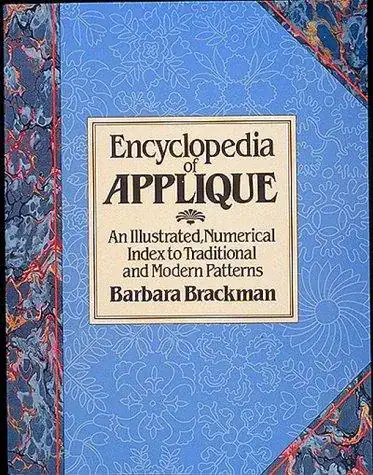
Hi Don- How about the Paths to Peace block for your block of Hindu symbolism (#3264 Brackman)
The Aids Name quilt is another example of what you are talking about. Perhaps in a smaller way, all mourning quilts were a form of voicing feelings and thoughts among women, and some may have been made in a group, if only family.
Kim Wulfert www.antiquequiltdating.com
From: KareQuilt@
http://www.greenvalleyauctions.com/
This is the website for the Coverlets Collection auction. It is a good wesbsite to check every now and then for all kinds of textile auctions also.
Karen A.
From: RAGLADY@
Hi Don You might be able to find some inspiration at this site….. http://mailerindia.com/hindu/veda/index.php?hindusymbols
Lots of information…. and pictures of some of the Hindu gods and symbols.
Gloria raglady@
From: Inglewood Quilt
All forms of art have been used to make social or political statements. Some that are ‘in the moment’ to others where the theme is enduring. Being able to see these quilts and understand the motivation of the quilter provides understanding of the mind frame of those that are not hear anymore. It makes a profound impact on me and helps develop my current veiws.
Have a funny story about quilts and politics…I was lucky to learn quilting from my grandmother and great aunts who were very independent minded for their time. My Auntie Ester used to go on and on about the ‘Constriction of Marriage’, she left her husband in her late 20s, never divorced but did meet another man who she lived, very happily with, in sin, until she passed. During these lectures, trying to save me from the Constriction, (I was 5 when they started), she would tell me about the suffregette movement, the Woman’s Union and the Temperance movement. These talks all took place around the quilt frame with one Auntie complaining about my stitch length and Ester trying to teach me about life. In my teens I wasn’t spending as much time with my Grandma and her sisters. Anytime I saw Ester though she would ask, ‘You still not thinking about marriage are you?’. She also began to drink wine or gin out of her Woman’s Union cup with saucer. She also had a T quilt, cream and royal blue. Now she would tell me about the temperance movement complaining about it, thinking that people are always trying to control people and just let them be and they can live and die of their own vices, (she was a character and I loved her for it, even if I disagreed). Listening to her, I felt as though in her way she was really trying to make things easier for me or give me a different perspective on things around me. She passed while I was in my late 20s and when her children went through her things they found a note where she divided up what little she owed. And to me was left, the Woman’s Union cup and saucer and the T quilt……a gentle reminder to save myself from the ‘Constriction of Marriage’ and to let people do or die by their own vices……
Well I did get married, after she passed of course, and occassionaly I take out the cup and saucer, fill it with wine, lay the quilt over my lap, give a cheers to Auntie Ester and a tongue in cheek nod to the temperance movement…..
Wish I knew the history of the T quilt I now own. I know Ester didn’t make it and both items were left to her, just don’t know by who.
That is my story about politics and quilts.
Carol-lynn in Calgary
From: Inglewood Quilt Design
Love your idea for the religious quilt. Would love to see the end result. For the Hindu block, what about the blue multi-armed woman or some type of representation of karma. I think the blue woman is the ‘main’ god. The other blocks seem to be a representation of an ideology or principal so that was why I suggested Karma. May not be the most accurate in my info, trying to remember back to Grade 11 World Religions….
Hope it at least gives you ideas!
Carol-lynn in Calgary
—
In response to”the man is watching so they won’t gossip or talk about politics”
Susan B. Anthony, the maker of several quilts early in her life, was said to have given her first talk on Women’s Rights at a quilting bee. In fact she found it wise to travel a bit of a circuit of quilting bees as a way to connect directly with women. I guess it worked.
Margaret
From: “Linda Heminway”
And by the way–rather than talking politics–make a quilt–it will last longer than any words we might utter. Best, Don Beld
Couldn’t have said it any better myself! You and I think alike, that’s for sure, Don! On this same theme, I am working on a 9/11 quilt. It’s not a thing of beauty, but some day years from now a quilt historian would be able to identify clearly why this quilt was made, and the time period. The greif, anger, fear, hope, confusion, patriotism and many other feelings I have had about this event are very clearly part of this quilt. It’s border has a written statement that goes all the way around the outside of the quilt naming how many died, the places, etc.
There are airplane blocks, fabric that is the NY City skyline and shows the WTC, a pentagon block, a pine tree block (represents PA) hearts, a dove, a flag, “fire” freeform machine quilting goes all through the areas where planes crashed and swirls around all the other areas. Hearts are all over the quilt. Many other things that “say” 9/11 to me are on this quilt. It’s nearly complete and it’s a project I pick up and down when my mood dictates. By the way, I normally make “formal” and precise quilts and this quilt is more like a collage or enlarged crazy quilt. Everything is placed crazily all over the quilt, many things overlapping the others. The craziness I felt, and still feel, when I reflect back on that day and time period, is very much part of the quilt, itself.
I started on this right after the event in 2001 and it is still incomplete. I call it my therapy quilt. I have never felt a desire to rush it and was amazed that, like me, so many other quilters made quilts depicting that event. Yet, these other quilts have long since been completed. My quit has become my constant “healing/grieving companion” during this time. It is always on my work table. As I have worked on it, I wonder if that is kind of the feeling some quilters of yesteryear felt when they were making memorial quilts when a loved one passed? I plan, I stitch, I remember. Like I said, this quilt is not a thing of beauty, but one day if it ever does hang at a quilt show, people will stand in front of it and “feel” the quilt. It’s what I want, and it makes a clear statement. People who have seen it NEVER say “how beautiful” as they do about my other quilts that they see… they ask if they can touch it, which really interests me.
A few quilters have asked (before all the applique was done) if they might move something and “try their hand” at if they liked a certain things here or there. I actually did accept their movement and did applique items right where they were placed. They somehow shared my intent, I guess? If my time was more “free” nowadays, I think I would make a quilt that would represent this election process, somehow. There are so many feelings of anger and so much inappropriate behavior, on both sides. I’d like to show a tug of war game with the white house, senate and congress buildings in the middle. Candidates grabbing at straws, basically, to sway people one way or the other.
These are certainly the times when quilts SHOULD be made to show what is going on from a historical standpoint. It would be a great challenge for a quilter to find a way to show all that is going on in a way that people would truly be able to visually see! My great hope is that, no matter what the outcome of this upcoming election, we heal as a nation and all this nasty bickering stops. I’ve always been a dreamer! I look forward to a day (hopefully next Wednesday) when our nation can start baby steps and move forward. We can put aside differences and work together no matter who is elected and just get on with making a better country and a better world. Now show me THAT in a quilt!!!! The historians, as many in this group are, would marvel at how wonderful and “clever” our quilts were during this time! A challenge for us all, to find a way to unite a divided country and to move on from this nasty time “in stitches”. Linda Heminway Plaistow NH
From: Mary Persyn
Here is a fun 😉 question – Which shade at http://www.anthus.com/Colors/Cent.html would you define as teal? 168 and 172?
Second point, I was at the new Freedom Center and UGRR Museum in Cincinnati last week. We only had a couple of hours and so I didn’t examine every exhibit, but there was no mention of the use of quilts as guides on the URRR. However, there were two lovely quilts on display that had been made, if I remember correctly, in towns that had been settled by ex-slaves. Both quilts were traditional designs. I think one was a Whig Rose, and I can’t remember what the other was.
The Freedom Center is really quite well done.
Mary in overcast Valparaiso
From: Joan Kiplinger <jkip@>
Perhaps the impact quilters have had in trying to dispel the quilt codes is having an effect?? I am halfway through Passages to Freedom, the book I mentioned yesterday. So far there is no mention of quilts and a cursory thumbing of pages through rest of book appears to avoid that subject. Could the 13 guest authors be sending their own version of a signal 😀 In fact, the extensive suggested further reading at end of book doesn’t list HIPV.
> Here is a fun 😉 question – Which shade at > http://www.anthus.com/Colors/Cent.html would you define as teal? 168 > and 172? > 174 or 175 is my idea.
gay
From: “Jean Carlton”
The Minnesota book, the result of about 20 years of documention, is now in the final stages and due to be published in May, ’05. Here’s the link to the MQ site http://www.mnquilt.org/ The second paragraph talks about the book and gives you a link to download an order form.We are offering it at a reduced pre-publication price until January, I believe. The title has changed a time or two and I believe Voyageur Press is still not sure – but it will relate to Connections – MN quilts making the connections to history, family, economics etc. Over 150 quilts of the 4000 documented are featured in this hardback issue. We hope you’ll want to add it to your collection. If you might be coming to the state show next June (in Duluth) you can pick it up there. Otherwise, we’ll ship it. I’d be happy to take any questions you have.
Jean Carlton Minnesota
From: “Julia D. Zgliniec”
Hi All, Fun color page! OK QHLers – calibrate your monitors!
On my monitor – 168, 172 but 173 is a little darker – more like the teal I have seen in the color scheme we are discussing.
Also – in the quilts I have seen the teal solid is very saturated.
Regards, Julia Zgliniec
From: “Kathy Moore”
Joan, your discription is interesting. What does the book say about escape attempts? The illustration sounds like it depicts a family with small children trying to escape. From a quick reading I did a couple of years ago of John Hope Franklin and some of his sources on this subject, I’d have to say that was pretty unlikely. The risks and difficulties involved in escaping slavery and the consequences of attempting to escape were extreme and horrible. Only the most fortunate and fit (and unencumbered) who attempted to escape actually succeeded, if the scholars I read are to be believed. Of course, this doesn’t mean that families never succeeded. There could have been exceptions to the generalization, but if you think about it, families escaping together, especially with small children, does seem a little unlikely, don’t you think? They would have had to hide out in very dangerous places like swamps and forests along with unfriendly creatures, etc. They were pursued by men on horseback and on foot with hunting hounds. They had to hide during the day and travel by night traversing unfamiliar territory. Many got lost and were found by locals who knew the territory better than the slaves did. If they made it to a safe house, they were likely to be hidden in cellars and caves. In the best of circumstances, it would have been hard to maintain complete silence with small children.
What does this book say about all this? What information is there about the author and research credentials?
Just interested and curious.
Kathy Moore Lincoln ——
From: “Joan Kiplinger” <jkip@>
Kathy — this is a very detailed and meaty book that really deserves to be part of a class study to digest such overwhelming text. It is a compilation by 14 authors, each contributing a chapter which details one aspect of the UGRR movement. There are no speculations, text is a chronology of events based on published facts and documents, many by slaves upon reach freedom, and many illustrations of ads, newspaper articles and other published literature. This is not a fast reading book as commentary overlaps from one chapter to the next, repeating the same facts several times. Escape was not easy, many slaves preferring to remain with their slaveholders. But there was organization by abolitionists to establish many routes; in fact, many slaves [called maroons] lived in swamps for a generation before making their next move; some children never knew there was an outside world. Florida, after its sale by Spain to England, was a popular destination as of course was Canada. The cover illustration is a painting by Paul Collins titled Harriet Tubman’s Underground Railroad. To give you an idea of book’s range, here is the table of contents which explains much better than would be any attempt by me to provide you with an overview.
Part I. Slavery and Abolition 1. Before cotton — slavery in 17th & 18th centuries by Ira Berlin 2 Simple truths about antebellum slavery by Deborah Gray White 3 From moral suasion to Political confrontation: American abolitionists and the problem of resistance 1831–61
Part II Stories of the Real Undeground Railroad 4. Above ground on the undergound railroad, places of flight and refuge by John Michael Vlach 5. Southern passage: the forgotten route to freedom in Florida by Jane Landers 6. Freemen to the rescue: resistance to the fugitive slave law of 1850 by R.J. M. Blackett 7. Kidnapping and resistance: antislavery direction action in the 1850s by Lois E. Horton 8. A crusade for freedom: William Still and the real underground railroad by James Oliver Horton 9. Slavery is war: Harriet Tubman and the Underground railroad by Catherin Clinton 10. Flight and fight: the wartime destruction of slavery, 1861-65 by Bruce Levine
Part III The Story Endures in History and Legend 11. Why the underground railroad and why now by David W. Blight [compiler of this book] 12. Telling it like it was at Rokeby: the evolultion of an underground railroad historic site in Vermont by Jane Williamsion 13. Reading freedom’s memory book: recovering the story of the underground railroad in New York state by Milton Sernett 14. The places and communities of the underground railroad: the National Park Service Network to freedom by Diane Miller 15. A sacred drama: exodus and the underground railroad in African American life by Eddie S. Glaude Jr.
A short bio of each contributor reveals that they are professors of history and American and African studies at respected universities with a long line of credits and authorship. I am just starting Ch. 9 on Harriet Tubman; no mention remotely of quilts of any kind.
From: MargaretFahey@
In a message dated 10/27/2004 5:33:12 PM Eastern Daylight Time, rzglini1@ writes: http://www.anthus.com/Colors/Cent.html And what would you pick as a the “yellow” of the red, green, on white ground, “yellow”?
Margaret
From: “Lucinda Cawley”
I vote for 173 (169 is my second choice). I think of teal as a fairly dark color. Cinda on the Eastern Shore
From: Gail Ingram
Dear QHL members,
Below you will find details to the Conference on Southern Quilts, an event first announced on this list in June.
Some features are still tentative, owing to unsettled schedules and ongoing discussions, but the general outline of events is established. We offer it for your convenience in planning.
We hope you will mark your calendars and join us as we explore the origins and characteristics of Southern quilts and quiltmaking. Oh yes (because the question has arisen each time the conference has been mentioned): No, you don’t have to be from the South to participate in this conference. We welcome all who are interested. We just warn you: you might not want to go home after a weekend in Nashville.
Those of you who know Nashville only as the home of the Grand Ole Opry will be happy to know the city is also noted for its superb bookstores (Elders Books, for instance, is one of the nation’s best sources for southern materials, including ephemera), educational institutions, and cultural resources. It is surrounded by historic buildings, such as The Hermitage, Andrew Jackson’s home, and Traveler’s Rest, the 18th-century residence of Jackson’s law partner, John Overton. Belle Meade Plantation was home to one of the first Triple Crown winners and has a fine collection of carriages. The Country Music Hall of Fame, the Bluebird CafE9, and Ryman Auditorium attest to the city’s role in giving voice to the traditional music of the Southern Highlands. So you might want to plan an extra day or so in your visit.
Gail Ingram
A Conference on the Southern Quilt will be held in Nashville, TN, September 16-17, 2005.
Meetings will be be in the Nashville Metropolitan Library, which is co-sponsoring the event with The Deep South Quilt Study Group and the Carolinas Quilt Study Group, now being formed by Lynn Gorges and Pepper Cory.
The overall mission of the Conference is to stimulate research and study of the history of quilts and quiltmaking from across the broad area known as the American South—Virginia, West Virginia, North and South Carolina, Georgia, Kentucky, Tennessee, Alabama, Mississippi, Louisiana, Texas, and Florida.
It is hoped that from this conference will grow a community of scholars and quilt students that will help encourage a continuing study of the region’s quiltmaking history. It is also hoped the resulting knowledge will establis h the peculiar
The Conference will explore questions fundamental to the study of the region’s quiltmaking history, generally whether a coherent regional quiltmaking tradition exists and if it exists, the origins, hallmarks, and sectional variations of that tradition.
Keynote speaker for the Conference will be Laurel Horton, the publication o f whose book, “The Quilts of Mary Black” will coincide with the Nashville meeting. Merikay Waldvogel, Fawn Valentine, Kathy Moore, Michael Daniel, Hazel Carter and Bunny Jordan will discuss quilts from the major cultural traditions that formed the South.
Mary Elizabeth Johnson Huff will lead a panel discussion of the state quilt documentation programs and important collections of Southern quilts.
Presenting research-in-progress on textiles, color ways, and apparently related quilt patterns peculiar to the South will be Pepper Cory, Lynn Gorges, Lori East, Marcia Kaylakie, Carolyn Miller, and Gail Ingram.
A traditional show-and-tell session will be part of the gathering.
It is hoped that a panel of scholars and collectors from outside the region will join the Southern group in reviewing the conference and identifying important questions, information, and research techniques that emerge from the discussions of the weekend.
Question-and-answer sessions will accompany each presentation group.
Libby Smith, Nashville, will coordinate local efforts to provide quilt displays and area tours.
Anyone wishing to help with the conference is invited to contact Gail Ingra m (gingramtcainternet) or Lynn Gorges (Palampore@).
Recommendations for local hotels and a program of events will be provided i n a later posting. We are grateful to the Nashville Metropolitan Library for its generous offe r to join with regional quilt study groups to make this event possible.
Date: Thu, 28 Oct 2004 02:14:34 -0400 | From: “J. G. Row” <JudyGrow@>
I’ve just been able to buy a feathered star quilt from the late 1800’s. It was made in Hunterdon County NJ and I do have provenance — the first quilt in my collection where I’ve been able to trace chain of title, so to speak.
I’ve been trying to find the pattern, but so far I’ve had no luck. It is not in Brackman. I’ve tried to draw it in EQ and have given up. The difference is that in all the feathered star quilts I’ve seen diagramed the center of the star is a square or an octagon. This star is based on a Lemoyne Star with the diamond points meeting in the center. Each star is made of two colors, counterchanged from point to point, with an equal number of feathers (3) moving back from the point tip. Each 16″ block is a dark and a medium for the stars set on a light background. Drawing the square-center feathered star and then removing the square doesn’t work.
Have any of you have seen this before. It is a difficult block to draft, (for me, anyway) so I wonder if it was published anywhere.
PS. Congratulations to our Boston area listees and condolences to our St. Louis members. The playoffs and series were really exciting. We can all get a full night’s sleep from now on. Perhaps that is why almost all our conversations have been during the daytime for the past 2 weeks. Virtually no one was posting at night.
Judy, aka the Ringoes Kid judygrow@
Date: Thu, 28 Oct 2004 07:52:54 -0500 | From: Gail Ingram <gingram@>
Dear QHL members,
Please ignore a previous notice of this conference. I cut and pasted earlie r version of text to that notice. Apologies.
Below you will find details to the Conference on Southern Quilts, an event first announced on this list in June.
Some features are still tentative, owing to unsettled schedules and ongoing discussions, but the general outline of events is established. We offer it for your convenience in planning.
We hope you will mark your calendars and join us as we explore the origins and characteristics of Southern quilts and quiltmaking. Oh yes (because the question has arisen each time the conference has been mentioned): No, you don’t have to be from the South to participate in this conference. We welcome all who are interested. We just warn you: you might not want to go home after a weekend in Nashville.
Those of you who know Nashville only as the home of the Grand Ole Opry will be happy to know the city is also noted for its superb bookstores (Elders Books, for instance, is one of the nation’s best sources for southern materials, including ephemera), educational institutions, and cultural resources. It is surrounded by historic buildings, such as The Hermitage, Andrew Jackson’s home, and Traveler’s Rest, the 18th-century residence of Jackson’s law partner, John Overton. Belle Meade Plantation was home to one of the first Triple Crown winners and has a fine collection of carriages. The Country Music Hall of Fame, the Bluebird CafE9, and Ryman Auditorium attest to the city’s role in giving voice to the traditional music of the Southern Highlands. So you might want to plan an extra day or so in your visit.
Gail Ingram
A Conference on the Southern Quilt will be held in Nashville, TN, September 16-17, 2005.
Meetings will be be in the Nashville Metropolitan Library, which is co-sponsoring the event with The Deep South Quilt Study Group and the Carolinas Quilt Study Group, now being formed by Lynn Gorges and Pepper Cory.
The overall mission of the Conference is to stimulate research and study of the history of quilts and quiltmaking from across the broad area known as the American South—Virginia, West Virginia, North and South Carolina, Georgia, Kentucky, Tennessee, Alabama, Mississippi, Louisiana, Texas, and Florida.
It is hoped that from this conference will grow a community of scholars and quilt students that will encourage continuing study of the region’s quiltmaking history. It is also hoped the resulting knowledge will establis h the peculiar traits of that history and the quilts in which it is manifest.
The Conference will explore questions fundamental to the study of the region’s quiltmaking history, generally whether a coherent regional quiltmaking tradition exists and if it exists, the origins, hallmarks, and sectional variations within that tradition.
Keynote speaker for the Conference will be Laurel Horton, the publication o f whose book, “The Quilts of Mary Black” will coincide with the Nashville meeting. Merikay Waldvogel, Fawn Valentine, Kathy Moore, Michael Daniel, Hazel Carter and Bunny Jordan will discuss quilts from the major cultural traditions that formed the South.
Mary Elizabeth Johnson Huff will lead a panel discussion of the state quilt documentation programs and important collections of Southern quilts.
Presenting research-in-progress on textiles, color ways, and apparently related quilt patterns peculiar to the South will be Pepper Cory, Lynn Gorges, Lori East, Marcia Kaylakie, Carolyn Miller, and Gail Ingram.
A traditional show-and-tell session will be part of the gathering.
It is hoped that a panel of scholars and collectors from outside the region will join the Southern group in reviewing the conference and identifying important questions, information, and research techniques that emerge from the discussions of the weekend.
Question-and-answer sessions will accompany each presentation group.
Libby Smith, Nashville, will coordinate local efforts to provide quilt displays and area tours.
Anyone wishing to help with the conference is invited to contact Gail Ingra m (gingramtcainternet) or Lynn Gorges (Palampore@).
Recommendations of local hotels and a program of events will be provided in a later posting. We are grateful to the Nashville Metropolitan Library for its generous offe r to join with regional quilt study groups to make this event possible.
From: “Mary Ann Kasaitis” <makasaitis@>
A design based on the mandala might work well for a quilt that represents Hinduism. A web search for “mandala in Hinduism” should give you some ideas. Mary Ann
From: Judy Schwender
Re: Passages to Freedom: the Underground Railroad in History and Memory, edited by David Blight and published in association with the National Underground Railroad Freedom Center by Smithsonian Books
All of us should check our public libraries to see if the book is available. If not, urge your library to acquire it, or offer to pay for a copy. I just checked my local library, and they do not have it. Usually, libraries display recent arrivals and this would help “get the word out.”
From: “Gail Chalker”
Hello from Australia,
At a recent BAQ class I was tutoring a class participant stated her family were from Baltimore (up to the late 1880’s ?) before immigrating to Australia , were a family of prominence in Baltimore. My memory seems to be I have seen a BAQ (perhaps a freedom quilt or marriage quilt) of this surname. Does anyone have recollection of such a quilt?
Thanks, gail in gatton (s.e.queensland, australia)
Date: Thu, 28 Oct 2004 23:42:09 -0400 | From: “J. G. Row” <JudyGrow@>
I figured out my feathered star variation. Well, close enough for government work. It isn’t based on a square center star, but on a blazing star, with 3 diamonds out from the center, then going back in to the point. Erase some of the lines for the inner diamonds, leaving the feathered star on the outside of the points. I don’t know why it took me so long to figure that out. Duh!!
Anyway, if you’d like to draw it in EQ, just copy block number 3777 from Block Base and remove the lines of the inner diamonds and then add a couple of lines to make the feathers. My blocks are 16″ square.
Let me know if you have any success.
Judy, aka the Ringoes Kid judygrow@
Date: Thu, 28 Oct 2004 20:10:59 -0400 | From: “Janet” <right2me2003@>
I have been reading your list for some time. I really enjoy it and have learned a lot. I am searching for information about Talula Gilbert Bottoms and her quilts. Does anyone know a little history aobut her? Are any of her quilts in museums? Thanks Janet
From: “Janet”
Hi, I have been reading the list for some time now. Really enjoy it. Now I have my own question. I would like to know about (Cora) Talula Gilbert Bottoms. I know she was an avid quiltmaker and that some of her quilts still survive. Does anyone know some history about her? Janet
From: Feedsackfanatic@
There’s a book called, “Legacy The Story of Talula Gilbert Bottoms and Her Quilts”, written by her granddaughter Nancilu B. Burdick. The ISBN No. is 0-934395-70-5, published by Rutledge Hill Press, Nashville, TN in 1988. I don’t know of any quilts being in museums. Nancilu lives in Orchard Park, NY and is a member of the American Quilt Study Group, the Southern Quilt Symposium, and Kenan Quilter’s Guild.
Paula in GA
I am still unpacking from AQSG and jsut found a “lost’ book i happen to bring home. (Don’t know why I haven’t finished unpacking yet when I only dragged 6 boxes of “stuff’ down there to Vancover with me to share and came back with 7 boxes full!) Anyway, being one of the last to leave the luncheon on the last day, I found a book someone left on the table at the back of the room. (The same table where I had placed one of my research binders that several were browsing through.) If anyone lost a book during the seminar email me off-list.
Karen Alexander KareQuilt@
Date: Fri, | From: “Charlotte Bull” <charlou@>
There are 2 books on Talula Gilbert Bottoms. Family Ties by Nancilu Butler Burdick c. 1991 Legacy by Nancilu Butler Burdick c. 1988 Earlier book is about Talula. Later book is patterns based on her quilts. Author was active in AQSG at the time. My books are autographed. : ))) charlotte in the ozarks
From: Xenia Cord <xenia@>
What Charlotte grinned at – the fact that her Nancilu Burdick books are autographed – reminds me of something that might bear repeating. In the quilt world, hands-on or history and research, we are in an era where new books are coming out at a fantastic rate, and where the authors are alive and approachable. What an opportunity, if we think about it. Theoretically, it is possible to create an entire library of autographed first editions!
That may not mean so much now, but think of the value to future quilters and quilt historians…
Xenia