November 25 – December 3, 2005
These restored messages come from the Quilt History List, an online forum where quilt historians, collectors, researchers, appraisers, and enthusiasts discussed antique quilts and related textiles. The archive dates from 1996 through approximately 2016 and is being restored gradually. Sign up in the form at the bottom of the page if you want to know when a new page is added. Original spelling, opinions, formatting, and inactive links may remain unchanged.
Primary topics of this QHL Digest:
- Humility Blocks as a Modern Fad? — The humility-blocks debate wraps up with members largely agreeing the tradition may be a later folk explanation rather than a documented historic practice.
- Mourning Quilts and Churn Dash Speculation — Members discuss regional mourning quilts and swap theories about scrappy churn dash blocks made under wartime fabric shortages. (see the article on Victorian mourning customs)
- The 1960s Needlework and Colonial Revival — A wide-ranging discussion covers the early-1960s needlework revival, Rose Wilder Lane’s Woman’s Day pattern series, and the broader Colonial Revival movement in American quiltmaking.
- Postal Service Gee’s Bend Stamps — Members share news of new U.S. postage stamps honoring the Gee’s Bend quilters, with background on the community and its quilts.
From: “Ellen Lessmann” <
I have had a fascination for this theme for a long time, and even though the list seems pretty well in agreement that it is a myth (and I have great respect for the expertise of our membership), I still have some reservations. Perhaps it was not used as much as a show of “humility” as participation in a fad. I can well imagine my ‘fore-mothers’, out on the plains, hearing of a neighbor who had put a fashionable “humility” block in a quilt, doing the same. Not in the spirit of humility necessarily, but in the spirit of fashion. After all, these women did read the newspapers and send letters, as well as follow magazines and patterns, and much visiting was done. I can allow the occasional orange or gold that shows up as a ‘gold standard’ thing, and I can well understand the occasional misplaced block, but I still see these in so many quilts — I can’t help but wonder if it was done to be fashionable for lack of a better description of a fad. And, yes, I do think quilts have followed fashion trends–Grandmother’s Flower Garden, Double Wedding Ring, and even the ‘Rag’ quilts we are currently seeing.
Respectfully– Ellen in Omaha
From: Ark Quilts
There is an interesting item on Ebay –new today. This seller has some excellent closeup photos of some of the blocks & fabrics. But my question is…..is this a Civil War quilt or does the U.S. Grant fabric with the “Let us have peace” phrase a bicentennial commemorative ?
Item # 7371264106 Civil War basket quilt — U.S. Grant “Let us have peace”
http://cgi.ebay.com/Civil-War-BASKET-Quilt-
rk in NW Ohio where it is snowing
From: “Lucinda Cawley”
“Let us have peace” was Grant’s campaign slogan in 1868. Cinda on the Eastern shore
From: “Louise” <ltiemann@>
I was wondering if anyone has done research on Margaret Techy who worked for the Cleveland Plain Dealer in the early 1930’s. A quilter friend of mine thought that Blanket Statements newsletter just had an article on here. Can anyone confirm this? If so, who was the researcher?
I have many of the quilt patterns that she designed, plus the 1943 book she published on Filet Crochet.
Thanks, Louise
From: Debby Kratovil
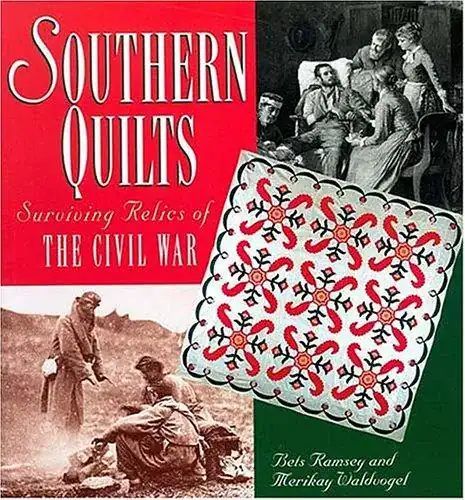
Forgive me if this has already been discussed. I don’t always read my Listserve emails. I received the magazine’s copy of the new KP Books “The Civil War Diary Quilt” and on the first quick read/glance, I find it fascinating. I am disappointed that the blocks are presented as traceable for templates and piecing and not with other methods for creating them. I can draft my own blocks, so this, in fact, won’t be an issue for me should I want to sew any of them. But each of the 121 blocks is accompanied by a real diary entry from one of 10 women who lived through the Civil War. It is reminiscent of the Dear Jane book, but instead of “conversations” between Brenda and Jane, we get an up-close-and-personal glimpse because we get to read from each woman’s own writings. So, any of you QHL members who would like to give me your take, I’d love to hear from you! Debby — Debby (with a “y” and not “ie”) Kratovil http://www.quilterbydesign.com Special Projects Editor – QUILT Magazine Quilt Workshops & Programs
From: Kyra Hicks
Good Morning – This week the United States Postal Service annouced 10 new stamps featuring quilts by African American women of Gee’s Bend. Enjoy – Kyra Hicks, Black Threads: An African American Quilting Sourcebook www.BlackThreads.com
From the official press release (Nov 30) http://www.usps.com/communications/news/stamps/2005/sr05_054.htm Gee’s Bend Quilts The American Treasures series continues Aug. 24 in Chicago at the American Philatelic Stamp Show with the dedication “American Treasures: Gee’s Bend Quilts” stamps depicting quilts made by African-American women of Gee Bend, AL. Located southwest of Selma, on a big bend in the meandering Alabama River, Gee’s Bend – officially named Boykin in 1949 – is a community made up primarily of African-American women descended from slaves. Although quilts were created for the practical purpose of keeping warm, they also demonstrate how ingenuity and improvisation are prized in Gee’s Bend. The stamp images are based on photographs of 10 quilts made between 1940 and 2001.
From Scott Stamps http://www.scottonline.com/NewsandNotes/NN_issues2006.asp
Quilts of Gee’s Bend, Alabama, American Treasures Series, booklet of ten self-adhesive stamps depicting Housetop quilt by Mary Lee Bendolph, Chinese Coins quilt by Arlonzia Pettway, Roman Stripes quilt by Loretta Pettway, Medallion with Checkerboard Center quilt by Patty Ann Williams, Housetop and Half-Log Cabin quilt, by Lottie Mooney, Bars and String-pieced Columns quilt by Jessie T. Pettway, Nine Patch quilt by Ruth P. Mosely, Medallion quilt by Loretta Pettway, Pig in a Pen Medallion quilt by Minnie Sue Coleman, and Blocks and Strips quilt by Annie Mae Young
Images of the stamps from Virtual Stamp Club: http://www.virtualstampclub.com/2006usnew.html
From: “Carroll”
C. Ark wrote……..
> There is an interesting item on Ebay –new today. This seller has some > excellent closeup photos of some of the blocks & fabrics. But my question > is…..is this a Civil War quilt or does the U.S. Grant fabric with the > “Let us have peace” phrase a bicentennial commemorative ?
I checked my copy of the book “Threads of History” and it shows this fabric and gives the date of 1868, and describes it as yard goods.
Laurette Carroll Southern California
Look to the Future with Hope
From: “Jean Carlton” <jeancarlton@>
I tend to agree in general that many ‘mistakes’ we see in quilts are probably most often just that – I make quilts and know how easy it is to reverse something or whatever but……Just yesterday I examined a quilt that brought the ‘humility’ block idea back for me, too. I will post photo on Eboard but it’s a bowtie – the entire quilt is consistent in having the knot match the two ends of each tie – EXCEPT in ONE block along the outer edge where the knot is different. VERY different. Really stands out and I first thought it might be a restoration but it’s not. Strikes me as odd that the maker would be so careful to follow her plan throughout the quilt except for one lone block. I believe she certainly had enough fabric of something to use the same in all three positions and if she had run out, I think she could have come closer than she did to matching when substituting. The fact that not one single other block uses anything but the matching fabric and that this is on an outer edge makes me think it’s very possible that, for some reason, she did it on purpose. Fun to speculate! Jean
From: TEXTIQUE@
Hi all;
Does anyone know of mourning quilt collectors who will loan for an exhibit?
Jan Thomas Colorado Springs
From: Joe Cunningham
I see that Ellen Lessman wrote to inquire whether humility blocks might have been a fad of some sort, after seeing them so frequently. It is worth repeating that there is not a bit of evidence for it. No one from the 19th century, that I know of, talks about deliberate mistakes so as to avoid competing with God. Also, I do not think a fad could account for the misplacement of elements in quilts from every corner of the country, from every ethnic group.
I can only speak from my own experience on this. I have been making quilts for 26 years now, and have made many dozens of them. Of all the mistakes they contain, none have been deliberate. And I work in a studio with great tools, wonderful light. Imagine if I were working by oil lamp in a corner of the living room. Humility is thrust upon me nearly every time I sew; I do not need to pretend I have it.
Joe Cunningham, humble quilter from San Francisco
From: sue reich
Jan, I don’t know a specific collector but we did have mourning quilts here in Connecticut. They are owned by Historical societies and private individuals, I could put you in touch with them if you would like. sue reich
From: Sharon in NC
Jean here is something else to speculate on.. I was piecing a scrappy churn dash back a few years ago, my DD who was 8 at the time wanted to “help” so I let her pick out the fabric for the blocks and sew them , with some help from me, into a block for the quilt..HER block had to have different fabrics in each unit of the block and they could not match like the rest of the blocks. Since the quilt was going to a grandmother I left the odd block in, signed her name to it and sent it with a note as to why it did not coordinate. So it may be some of those blocks that don’t exactly fit the makers overall quality have a chance of being a dear daughters first attempt to create a block just like mom made and have her hard work and care recognized by earning a place in one of “Mom’s quilts”.. Just something to think about..
Sharon in NC
From: Sharon in NC
Just had another hhmmm thought.. What if the weather turned bad and they were desperate to get the quilt done but didn’t have enough for that last block. I know sometimes I take for granted how easy it is to obtain fabric even those who live in the boonies.. Have to remind myself how many back then had to make do or do without.. No quilts in cold weather would be like saying no power to us now.. Can’t even imagine it..
Sharon in NC
From: “Velia Lauerman”
BRAVO ! Joe Cunningham, for those words of wisdom. Years ago when Mom created works of art for her 11 children and I was just starting to quilt with her I would praise her work to my friends and family. She would say to me ” Don’t put me up so high it’s tuff coming down. Even with those not so even stitches and now loved pieces family and friends would like to own one of her heirlooms. You are right, as she was, to say we have enough of our little or big trademarks and only God is perfect.Velia
From: “Kathy Moore”
I believe the Summer 2005 issues of Blanket Statements has a good article about these fabrics.
Kathy Moore Lincoln, NE
Date: Sat, 3 Dec 2005 | From: Palampore@
Recently I purchased a boxed set of Woman’s Day patterns—- American Needlework, Simon & Schuster, NY, 1963. They are patterns of incredible textiles from museums. The needlework skills are: embroidery, crewel work, cross-stitch, needlepoint, patchwork, applique, quilting, hooking, crochet, knitting, weaving, candlewicking, and rugmaking. All of the patterns had been a part of a series in the magazine beginning in 1961. When they had overwhelming interest in them they decided to put out a boxed set. Make sure you look for these when out doing yard sales, etc. I bought mine for $5. I am trying to “thin out” a bit at an antique booth downtown, but not sure I can part with this treasure. I am sure many of you out there probably already own this set. Don’t you agree that it is a great collection of information and fabulous full size patterns? What was happening in 1961 that prompted this interest in historic textiles? When I looked for a date I was so sure it would be around the time of the Bicentennial. Off to sew. Lynn Lancaster Gorges in New Bern, NC
From: Julie Silber
OK,
I need a lesson. Colonial Revival 101, please. We have a red, green and white c.1920 Mariner’s Compass quilt listed on eBay now. I heard from a well known quilt historian who said, and I quote, “You have a smashing Colonial Revival Mariner’s Compass quilt on e-bay right now. Wow!”
Rather than reveal my ignorance to her directly, I thought I would ask you guys to help me. What elements make it an example of Colonial Revival?
Your humble student, Julie Silber
From: Dana Balsamo
Hi Julie, That is a stunning quilt!! Here is Kim Wulferts website with a section dedicated to Colonial Revival Quilts http://www.antiquequiltdating.com/medallion.html My best, Dana
From: louise-b
I bought my set from Book of the Month Club selections in the 60s probably. I lost the patterns at one part and let the book go later. Bad mistake.
I am still enjoying reading the new Uncoverings, particularly the one about sewing machines since I collect the old ones.
Louise — in mid-Missouri
From: Judy Kelius <quilts@>
The book was written by Rose Wilder Lane, daughter of Laura Ingalls Wilder of the “House on the Prairie” fame and the entire series had been published in Woman’s Day. There was a lot of interest in American history because 1961 marked the Centennial of the beginning of the Civil War – I know that because I graduated from high school in 1961 and that was the theme of our commencement! (dating myself . . . oops!)
I agree that the patterns set and book are FABULOUS and a must-have for any lover of antique needlework. They are timeless and as far as I know, very accurate. Since so many of these were published, they are easy to find and usually very reasonable. The set of patterns is not as readily available as the book but there are still many around. If you didn’t get the book with the patterns, you can find a copy on Amazon/eBay/ABE for a few dollars.
You would pay as much or more for one similar pattern today as you can buy this whole set for . . . a fantastic bargain. Most of the patterns are not for beginners – I guess that’s why we don’t see that many 2nd half 20th century quilts made from them. There is one crewel bedspread in the set that I think would be awesome as a quilt. – Judy, happily collecting Social Security in PA –_1968093.ALT–
From: Ann-Louise Beaumont <albeaumont@>
I have had so much fun with the bag of Laurel Horton’s ephemera that I bought at the silent auction at the AQSG seminar in Denver. What caught my eye were the clippings from “The Magazine Antiques” on the tree of life pattern. However, there was so much more in it on varied topics. I became interested in quilts in the late l980’s, quilt history in the mid 1990’s, and so missed what was going on earlier. One article in this bag, “The Story of American Needlework #2: Patchwork” by Rose Wilder Lane (Woman’s Day, April 1961), must be part of the series Lynn is mentioning. There is an order form for the patterns for Robbing Peter to Pay Paul,Sunburst, Delectable Mountains, and Star of Bethlehem, all for 75 cents. By happy chance, my guild was weeding out their library at a garage sale, so I snapped up the box of American Needlework patterns and instructions, not realizing the tie-in at the time. Lots of gorgeous patterns and helpful information. The editor’s preface to the booklet in the box states “And so, when it was decided that the text of the story of American Needlework would be put into book form as the ‘Woman’s Day Book of American Needlework’, by Rose Wilder Lane, it seemed natural to go one step further and make all the patterns and instructions available at the same time.” So, it seems there is a book we could watch out for too. For those of us who came late to the quilt history party, background like this is exactly what we need for a better perspective. I can’t contribute any information to Lynn’s question about what was happening in 1961 to spark Rose Wilder Lane’s articles and subsequent book and patterns, but I hope folks who know about this time will teach us. If Laurel Horton is reading this, thank you so very much for contributing your ephemera so that I could have so much fun with it. Best Wishes, Ann-Louise Beaumont in Greeley, CO
From: Sandra G Munsey <munsey@>
Well, Lynn, I guess I can hazard a guess or two about the 1961 interest in needlework – and in so doing reveal quite a bit about my age and inclinations <G> since I not only own the book and boxed set – purchased when published, but I also have the original articles torn from Woman’s Day!
The late 1950s and early 1960s magazines were full of needlework and stitchery articles. Considerable emphasis was on embroidery, not only traditional crewel wool and classic floss designs, but also on “modern” Scandinavian work. Woman’s Day also did articles about Danish counted cross stitch and flower thread embroidery, thereby re-igniting an interest in counted cross stitch that had been dormant for probably a half century. Jean Ray Laury had early quilt designs published in Family Circle and in Woman’s Day, too. At least I believe she was published in both. Attribution of designs and credit for the stitching rarely was given during those years, being before the impact of Gloria Steinem and Betty Friedan, so it is a bit difficult to be sure who provided some of the featured projects other than guessing at style. To the credit of editors and publishers of Woman’s Day, particularly, many articles over a period of years included serious, although usually condensed, histories of a given craft. I believe it was the influence of Rose Wilder Lane, in particular, and her relationship with the magazine, as I think she was an editor for them for a while. In addition to my collection of the American Needlework series that she wrote, I have articles about rug hooking, furniture, colchas, antiques, art, and who knows what else. There were “primers” on furniture styles, for example, and woodworking instructions. Woman’s Day also published food features that included tear out sections a couple of times a year – Christmas cookies, Scandinavian cooking, Southwestern cooking and so on. These features eventually became the Woman’s Day Encyclopedia of Cooking in twelve volumes, available at the local supermarket over a period of several weeks. (Before Julia Child.) And, yes, a well worn set is in my kitchen as I write. It was reprinted about 10 or 15 years later, too. McCall’s Needlework Magazine was another contributor to the volume of information and augmented by other articles in McCall’s Magazine, a general interest publication. (How many of your had Betsey McCall dolls a spin off from the magazine’s paper doll?) Better Homes and Gardens Magazine, Ladies Home Journal, and Good Housekeeping had patterns available for the whole range of needleworks, but none of these featured history the way in which Women’s Day did.
O.K., so why the 1960s? Actually, the interest in needlearts was a post WWII resurgence and the how-to-do articles were aimed at housewives not employed outside the home, kind of a morphing of Depression economizing and war rationing. Woman’s Day and Family Circle could be purchased next to the register at the local – brand new – self service market for 10 or 15 cents. My mother bought them for ideas to make Christmas cards, gift tags and other holiday decorating ideas, recipes and home sewing fashions. Money wasn’t as tight as in the Depression, but it certainly wasn’t plentiful in the 1940s and 50s. As a Korean War vet graduate student’s wife, the cheap price (maybe 20 or 25 cents by 1959) was the only magazine I could afford. The late Fifies brought the early “back to basics” movement. Remember the Beatniks before there were Hippies? Families of married students lived on the edges of college campuses, often rented a old house together to share expenses, child care, and juggled schedules so the married women could also enroll in classes or work. ($135 a month from the GI Bill for a man with a wife and 1 or more children.) Hand crafts of all kinds were part of that survival – even to sell for a few extra bucks. So, the magazines and the market place (when decent cotton yard goods could be purchased on sale for 33 cents a yard) found ready customers of women trying to make a home on the cheap as well as the financially better off woman who did not work outside the home but had time to fill. As the 1960s rolled on, the “flower children” created a political movement coupled with earlier necessity.
The popular Bicentennial revival of home crafts came later – not until around 1970 when county extension agents began adding the teaching of quilting, making “colonial” costumes et al to their classes and the “Bicentennial Industry” geared up to march toward 1976. The needlework magazines morphed once again. Today we find ourselves in the current iteration where Bicentennial inspired interest in quilting, researching and reenacting history has fostered – dare I say it by the “Bicentennial Industry”? – to continue to create markets. Or, who else besides the quilters have rescued the textile industry?
Fortunately, we find a genuine interest in history in the broadest sense has been created. Now, if only we learn something by it, to prevent the errors of the past. In that cause I try to remain optimistic, although on some days – – – – –
Sandra on snowy Cape Cod — This is WAY too early!
From: Mitzioakes@
If you really want to know what was happening in 196i log onto GOOGLE and ask for 1961 Events – you will be surprised what you will come up with. Mitz
From: Jccullencrew@
In a message dated 12/4/2005 1:44:41 P.M. Eastern Standard Time, Jccullencrew writes:
Hi Sandra, Even though I was just a sweet young thing (lol) in the late 50’s, reading your post brought back fond memories of the embroidery revival. During that time I found in either Woman’s Day or Family Circle (probably the former) counted cross stitch patterns for the flowers of the 48 states. I did the states in which we lived (moved around a lot) and framed them in oval frames and they still make me happy looking at them today. Like you, I have files of great patterns, how to’s, and things to do “sometime” down the road. I cut out a picture of a crazy quilt pillow years ago, and then found it again, knowing that I WAS going to make one for myself. Joined a crazy quilt group and I’m having a ball doing it. What’s interesting now is that once again, the teenagers’ jeans, jackets, etc. are being embellished with stitchery. I guess the manufacturers got tired of making everything look old and worn and torn, while charging outrageous prices at the same time. I’m waiting for DGD to ask me to “do” her jeans for her. Here’s my chance to introduce her to stitching. I do believe in miracles!!! Thanks again for an informative post. Carol Grace
From: Gail Ingram <gingram@>
How I enjoyed Sandra Munsey’s post on mid-20th century needlework scene! So much came back.
Sandra, here is a subject that needs developing, and you are the one who should develop it: Woman’s Day contribution to needlework of the time. A passion and familiarity with the subject, far from precluding a scholarly eye, informs it and and writing. Please go for it—snow on Cape Cod or not!
The prevailing view now is that there were the thirties; then came the Bi-Centennial. And that is false, as those of us who loved needlework in the intervening years know.
I went to my files and found one of those pull-out sections from WD on pressed and brilliant-cut glass, another on depression glass. I must have clipped these long before I was married. I think my mother bought this magazine primarily because of the level of attention and the quality of attention it gave to traditional crafts and furnishings.
Go examine your files, start taking notes about organization and research, and generally put your thinking cap on, young lady!
Gail
From: Alan Kelchner <alan@>
Bought a quilt last night. A wonderful 1870s flying geese top, tied in the forties with a neat passionflower fabric. But they didnt go together, so when I got home, I dismantled the thing. The work was easy, and the top is much happier. I’ve listed the backing on eBay, maybe make some of the purchase price back ($45). The backing fabric is way cool. Item #7372263346.
Alan
From: Julie Silber <quiltcomplex@>
Hi, I have had some helpful responses to my inquiry about how our quilt (currently #7370421223 on eBay) “fits’ into the category of Colonial Revival.
Sally Ambrose wrote to me:
“Emyl Jenkins has a good discussion of Colonial Revival in her book “Reproduction Furniture” pages 55-57. Even though this book is specicfic to furniture, the style discussion are applicable to the decorative arts found in American homes since (here it comes) Colonial times. A summary of Jenkin’s discussion follows.
“This is a term that has been bandied about by antique dealers and decorators for years. The term really is a substitute for American reproduction furniture. Over the years the term “Colonial Revival” stuck. When you read about 1920 or 1930’s furniture and interior design, the style the writers called Colonial or Colonial Revival was often Empire-style furniture made between 1820-1850. In a book published in 1907, The Quest of the Colonial the term ‘Colonial’ is attached to all furniture of early times and shapes. (You will love the next part of this quote) It has come to be so generally employed, and is a term in itself so suggestive and so sonorous that it would be invidous indeed to strivce to limit its use with chilly literalness.” End quote.
Julie, style reproduction of style in America took off around 1910 when assembly line production of goods was in full swing. Faithful reproductions were being made before this circa 1880, but the assembly line made the styles of goods more cost effective so everyone could have a Chippendale chair. Magazines began to publish ads of items made that duplicated the ‘colonial style’. Then it was necessary to write articles (see Dec. 1915 Arts and Decoration) showing the difference between good and bad reproductions. Colonial Revival has evolved the mind set is a 30 year period between 1895-1925. Going back into the early reproductions into the 20th century. According to Jenkins, the pivotal years were 19l0-1919. Colonial style was prevalent in the 1920-1930’s to liven up the previous decades of dark Victorian style in homes. It is being reproduced today and quality of workmanship ranges from good to bad just as it always have.
So…you are both right. It was probably made in the early part of the 20th century, therefore, could be dubbed Colonial Revival.” Sally
I answered her this: “I appreciate your ideas and the quote from Emyl Jenkins. Do I take this all to mean that there is nothing in particular about this quilt that makes if CR, only that it was made during that specific period time and that is not a “new” or innovative design, but rather a repeat of an earlier, traditional design? Julie”
She answered with this, which I found very helpful:
“Correct Julie. Colonial Revival has become a catch-all phrase. It is not a derogatory phrase and decorators, dealers, museum people know what is meant by CR. It is taught in the colleges and decorative arts courses. It does not have the connotation that ‘museum quality’ has acquired . CR does have meaning but the meaning stretches over several revival periods that this country has gone through. The most recent ‘revivals’ 1880’s, 1915, 1920-30’s (post WW I and pre-WW II), 1970’s, a flurry in the 1990’s. The earlier, pre-1880, periods had some revival items that were reproduction of Napoleonic, Queen Anne, Gothic and other styles. The active cabinet makers made what they thought the gentry wanted and recent arrivals to this country were attracted to the European styles. Good sources of available raw materials made it easier to reproduce items that were very, very close to original construction. Woe unto the appraiser that has to determine circa date!! 🙂 I try to avoid using CR in my appraisal work because it is too obtuse a phrase.”
Thanks to Sally and several others who wrote to me directly.
Julie Silber
From: QuiltEvals@
I have received several emails from some participating QHL’ers suggesting that I “get the word out” so to speak about the NEW deadline for the Quilt and Textile Study tour to England and Scotland as it has been extended. So with permission of our list mom, I would like to mention that we have had a change of airlines and therefore the new registration deadline is now January 10. There are 4 openings left before reaching our max of 25 on this tour. For tour information go to _www.textiletour.com_ (http://www.textiletour.com/) .
As a side note: I had to smile at Gail’s post regarding the “Andrinople” book from the textile museum in Mulhouse. When she first mentioned it, the title did not seem familiar, but later after thinking about it, it dawned on me that I had bought it in Mulhouse, along with just about everyone else who was on the French Textile Tour, yet, it was still in its cellophane wrapper at the bottom my “things to get to” pile. Shame on me!
Thanks Gail for the reminder!
It is a magnificent book, and when I did thumb through the pages, it truly gave me wanderlust to venture once again to similar museums that contain such treasures. If anyone ever has the chance to go to France, be sure to go to the Musee de l’Impression sur Etoffes in Mulhouse, where the fabrics depicted in the book are from. You will not regret the extra time it may take to get there.
To see the fabrics in the “Andrinople” book is breathtaking….but the experience of opening drawers and thumbing through sample books each full of 18th and 19th century fabrics to see, study, and fawn over, will actually take your breath away.
If anyone is interested in a few images from our tour there this past September, you may go to _http://quiltappraiser.com/frenchtour1.htm_ (http://quiltappraiser.com/frenchtour1.htm) .
Wishing everyone a happy and blessed Christmas season!
Deb Roberts
From: “Marcia Kaylakie”
Well, I still have my Betsy McCall doll! She resides happily with my Barbie and my Chatty Cathy, whose voicebox still works! Someday I will pass them on to my granddaughters. I loved the Betsy McCall paper dolls and looked forward to them every month when the magazine arrived. Did I save them? No. Just played with them and then they “disappeared” when the next month’s magazine arrived. You know, those outfits would have been wonderful sources of mid-twentieth clothing info! Now why didn’t I think of that ? New topic to think about and discuss: was this generation of quiltmakers (us right now) the first generation to make more quilts from materials purchased exclusively for quilting vs. clothing cutaways and leftover materials from dressmaking? The operative word here is ‘more’ . Certainly we have wonderful examples of quilts made with fabrics purchased solely for the quilt, but did our ancestors more often than not use their fabrics from clothing? Certainly, I know that I have purchased materials for a quilt that I would not wear. And how will this affect our future perception of quiltmakers and their art? Will it be perceived as an activity of leisure and some disposable income vs. frugality and need? Yes, I know not all quilts were made from need in every time period. Just throwing out some grist for the brain mill, as it were. Marcia Kaylakie, who is loving this chill in the air in Austin tonight! Feels a little like the Christmas season now!
From: kathie holland <kathieholland@>
Julie, thank you for sharing the respones to the list. I learned a lot by the responses…. I hope that others will be encouraged to do this (or respond to the list) so we can all learn by the questions asked on the list. thanks again, Kathie in NJ
I have had some helpful responses
From: Xenia Cord <xenia@>
Another part of the “Colonial Revival” involved the upholding “Colonial foremothers” for emulation. If one fully endorsed CR, one must also do handwork, especially quilting. Here is the prologue from a circa 1935 Boag catalog, “The Romantic Story of Quilts,” which said in part:
“Quilting is one of the oldest and most fascinating fireside crafts. Hundreds of years ago, humble maids, austere nuns, grand dames, and stately queens, in cottages, convents, and castles made quilts through necessity or for their own pleasure. Generation after generation enriched and advanced the quilter’s art of expressing in design the joys and sorrows, the thrills and heartaches, and the incidents of love and daring of the times. During pioneer days, quilting brought consolation to our great grandmothers through their long vigils in barren cabins. . . . Women of today intuitively cherish the beauty of an ancient quilt not only for itself, but for the enduring romance of men and women who lived and loved and, dying, left inanimate possessions to serve as witnesses of the spirit.”
All right now, get out there and quilt <g>!
Xenia
From: “Andi” <andi0613@>
Marcia wrote:
New topic to think about and discuss: was this generation of quiltmakers (us
right now) the first generation to make more quilts from materials purchased
exclusively for quilting vs. clothing cutaways and leftover materials from
dressmaking? The operative word here is ‘more’ . Certainly we have wonderful
examples of quilts made with fabrics purchased solely for the quilt, but did
our ancestors more often than not use their fabrics from clothing?
The seven quilts I inherited all came from my maternal great-great grandmothers – women born in the 1880s in the TN or NC mountains. The quilts were made in the 1930s and are typical – GFG, hexagon, GM fan, etc. The way I can tell which side of my mother’s family they came from is that one great-great grandmother’s husband owned a dry goods store (I have his Coats & Clark spool cabinet). The fabrics in her six quilts “match” because she had access to new fabrics and plenty of it, although some of them contain fabrics she made into clothing, too. The other ggm was married to a dirt-poor farmer and the only quilt that survived hard use – a log cabin – is truly ugly, made of the most awful collection of scraps you ever saw. But it’s my favorite. My ggm, gm and mom told this story repeatedly through my childhood – that there the “haves” and the “have nots,” so I’d say that in my family, at least, I’m not the first batch of quilters to rely on purchased fabrics. (Besides, I gave up sewing clothes when I took up quilting – only so many hours in the day!)
Andi in Keota, Iowa
From: “Judy Anne” <anne_j@>
>> “The Story of American Needlework #2: Patchwork” by Rose Wilder Lane (Woman’s Day, April 1961), must be part of the series Lynn is mentioning<<
In a delightful bit of synchronicity a quilting friend just gave me that exact issue of Women’s Day! Lane’s article has a bit of the romanticism that we see in early writers like Marie Webster. Not totally accurate but they didn’t have the AQSG in the 1960s. ; )
Judy Anne
From: “Karen Musgrave” <KarenMusgrave@>
This week’s The Alliance auction is mostly out-of-print or rare books (most of them signed)!! This includes Penny McMorris’ Crazy Quilt book, Always There: The African-American Presence in American Quilts by Cuesta Benberry and more! You can find children’s books and a new cookbook- Matzoh Ball Gumbo.
Also included in this auction is a diorama of a quilting bee from 1930. This miniature Quilting Bee has six women dressed in vintage clothing with painted nuts for faces and twigs for arms. They are sitting in stools around a quilting frame. In the frame is a miniature patch quilt complete with needles and thread. Three of the women are blondes, three are brunettes, with different hairdos, glasses, and clothes. The base resembles a wood floor. This incredible collectible is protected by a plexiglass box 12″ x 12″ x 9″ high. The miniature patch quilt measures about 6″ x 9″ and the women are about 5″ tall. Just too cool!
The Alliance for American Quilts (www.centerforthequilt.org), a 501 (c)(3) nonprofit organizations 100% of the sales goes to the organization.
These can be found on eBay through the following link http://search.ebay.com/_W0QQsassZalliancequiltsQQhtZ-1QQfrppZ50QQfsopZ1QQ fsooZ1QQrdZ0?. You can’t beat the powerful combination of quilts, caring people and a good cause!
Thanks! Karen Musgrave who has volunteered for the organization since 1996
From: Laura Fisher <laurafisherquilts@>
re buying fabrics solely for quilt use, think back to the Broderie Perse era, all those chintzes to cut out to applique for quilts, and Baltimore Album quilts with those wonderful fondu prints. There is nothing new under the sun. How many were made, compared to today’s quilt output per population, who knows, but thankfully many were saved and treasured.
re Colonial Revival, I think iformost of Wallace Nutting prints and books; the company reproduced many colonial era furniture pieces, and placed them in room settings with period-appropriate braided rugs and household accessories, stimulating an interest to recreate the period room ambiance in the early 20th century.
Laura Fisher
From: “Steve & Jean Loken” <sandjloken@>
I think, as a quilter coming of age in the 60s, I could add to this thread. My mother lived through the Depression, and wants everything new. She has no appreciation for antiques, but does enjoy walking through antique malls with me, as a nostalgia trip. So, as a hippie and “earth mother” type, I had to rebel and have only hand-made things in my house. We covered coffee cans to make canisters, embroidered our tops with pop flowers, and of course I bought the Women’s Day magazines for home-made ideas. I started out in crewel, advanced to counted thread work, and when I discovered quilting, I dropped all the rest. To her credit, my mother does very fine embroidery, but still doesn’t like to decorate with anything that looks “old”, so when I make quilts for her they are the more modern designs, or pure nostalgia, now that she’s a great-grandmother. Also, she gave me the Rose Wilder Lane set early in my needlecrafting years, and has borrowed back a few of the patterns. Jean in cold, snowy Minnesota, which is as it should be.
From: catz@
Most of you may already know about this auction- but I didn’t. Thought some of you might be interested .. Marie Johansen
>>>>This week’s The Alliance auction is mostly out-of-print or rare books >>>>(most of them signed)!! ….. The Alliance for American Quilts (www.centerforthequilt.org), a 501 (c)(3) nonprofit organization, which >>>>Karey Bresanhan is a founder, benefits 100% from these auctions. These >>>>can be found on eBay through the following link http://search.ebay.com/_W0QQfrppZ50QQfsooZ1QQfsopZ1QQrdZ0QQsassZalliancequilts You can’tbeat the powerful combination of quilts, caring people and a goodcause. Thanks! Karen Musgrave who has volunteered for the organization since 1996
From: Sue Reich
A few years ago, we had this same discussion about colonial on QHL. A highly esteemed member of the quilt world emailed me privately, and reminded me that there have been multiple colonial revivals throughout our country’s history, both in the nineteenth century and the twentieth century. Below is Webster’s definition of colonial. It specifically relates to the colonies. Most of the quilts that we see post date that time period by almost two centuries. Webster Main Entry: 1co·lo·nial Pronunciation: k&-‘lO-nE-&l, -ny&l Function: adjective 1 : of, relating to, or characteristic of a colony 2 often capitalized : of or relating to the original 13 colonies forming the United States: as a : made or prevailing in America during the colonial period <colonial architecture> b : adapted from or reminiscent of an American colonial mode of design <colonial furniture> 3 : forming or existing in a colony <colonial organisms> 4 : possessing or composed of colonies – co·lo·nial·ize /-nE-&-“lIz, -ny&-“lIz/ transitive verb – co·lo·nial·ly adverb – co·lo·nial·ness noun
Regarding fabric bought, left-over or reused for quilts. I believe that fabric was made for quilts from the late eighteenth century. Remember Hewson. We have a quilt in “Quilts and Quiltmakers” on page 165 with a backing that also appears in Montgomery. She claims it was printed here in America. Unlike palampores, it is more crudely rendered but its purpose is the same. Also, from the center of the Quaker quilt world in Pennsylvania, I have this ad: Chester Daily Times Chester, PA November 5, 1881 John Wanamaker’s Philadelphia “Turkey-red for quiltings, 8, 10, 12 1/2, 15, 20 cents.” We all know Quaker dress was very different fabrics than their colorful quilts. One other source, (I just straightened my shelves, consequently I can’t find the book.) “Forget-me-Not” has those wonderful examples of applique quilts from the huge floral motifs with the matching borders from the mid-nineteenth century. Many examples can be seen at the Shelburne Museum. They were supposedly printed specifically for quiltmaking. Oh, If we could only have those beauties reproduced today. Sue Reich, from Connecticut waiting for a nor-easter.
From: “ChrisA” <chrisa@>
Since the list is on this more recent track, I have a question for you related to a Hallmark Cards promotion or something like that at the time of the Bicentennial. These are commemorative all fabric dolls, in boxes that look like 18th century houses. The dolls I have are Betsy Ross, Ben Franklin, and G. & M. Washington.
Betsy’s dress could be made from Ely & Walker’s pink fabric, Martha’s dress fabric I don’t recognize. Ben and George’s clothes are pre-printed to look like a waistcoat. all of the faces are printed on, as are the socks and shoes, but they are three dimensional dolls about 7″ tall. Betsy is holding a flag. They all have some lace embellishments. The packaging is really cute. You open the house box and they are behind a clear sheet of plastic. The roof of the house stands taller than the box behind it, and there is a chimney at the top too. M. Washington is in Mt. Vernon.
Can anyone tell me anything about these, like how many there were total, were they sold as a promo or bought separately? I can contact Hallmark, I know, but I thought the list would like to know about these little gems and others would know have the whole collection and could fill in the gaps in my knowledge. I bought these at an antique store this summer.
Kim Wulfert www.antiquequiltdating.com Email: quiltdating@
From: Kris Driessen <krisdriessen@>
Ah, Kim, nothing like telling me you bought something from 1976 at an antique shop to make me feel old…
Kris
From: “ChrisA” <chrisa@>
I’m one with you on that concept Kris! What’s more is, they were surprised when I wanted to buy them! They were seen as decoration in their ever delightfully arranged front windows, which were decorated for July 4th. Fortunately they know me and my textile proclivity, so they sold me their decorative touches.
Kim
From: “Lucinda Cawley” <lrcawley@>
I saw the Civil War Diary Quilt at Barnes and Noble the other night. The diary entries look intriguing, but the pictures are a big disappointment. I expected real quilt blocks, but instead they are drawings in really dull solid colors. I guess if you only look at the right hand pages (the text) it would be okay (G). Cinda on the Eastern Shore where it is actually snowing (a very rare occurrence)