April 11 – 15 1997
These restored messages come from the Quilt History List, an online forum where quilt historians, collectors, researchers, appraisers, and enthusiasts discussed antique quilts and related textiles. The archive dates from 1996 through approximately 2016 and is being restored gradually. Sign up in the form at the bottom of the page if you want to know when a new page is added. Original spelling, opinions, formatting, and inactive links may remain unchanged.
Primary topics of this QHL Digest
- Golden Syrup Available in Canada — A member reports finding Golden Syrup at a Canadian gourmet shop, confirming it’s a British staple, not only Australian.
- Insurance for Quilts in Restoration — A member describes carrying inland marine insurance to cover antique quilts consigned to her for sale or repair.
- Selling Quilts Made from Others’ Patterns, Continued — Discussion continues on the earlier question about the ethics of selling quilts made from purchased patterns.
- Kingwood Quilt Show Reminder — A reminder is posted for the Houston-area Kingwood quilt show taking place April 18 to 19.
- Anne Orr and Dorothy Osler Book Search — A member thanks the list for Anne Orr information and asks for help finding Dorothy Osler’s out-of-print book on traditional quilts.
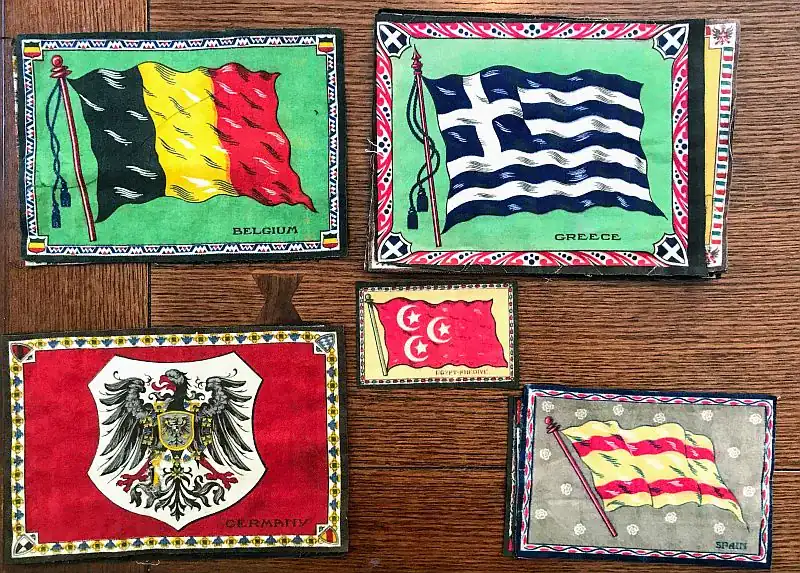
- Cigar Flannel Flag Quilt Top — A member describes disassembling a quilt top made of cigar flannels, each printed with a different country’s flag, and shares an expanding list of the countries represented.
- Australian Federation History — A member gives background on the 1901 federation of Australian states, in response to an earlier question about South Australia.
- Anna Holland House Tour, Northern Neck of Virginia — A member recommends touring the Northern Neck of Virginia, praising its scenery and historic homes.
- Freshening a Musty Antique Quilt — A member asks for advice on freshening a musty, machine-quilted family quilt.
- Ethics of Quilt Restoration and Washing Risk — A member raises concerns about the professional and financial risk restorers take when a quilt might disintegrate during washing.
- Efferdent on Water Stains — A member confirms that a dissolved Efferdent tablet successfully lifted a brown water stain from a partially quilted top.
- Cigar Flannel Flag Quilt, Continued — The list owner answers the most common question about the cigar-flannel flag quilt top described in the previous digest.
- A Box of Assorted Antique Quilt Blocks — A member describes a mixed box of turn-of-the-century shirting, indigo, and 1930s quilt blocks purchased for the pieces she liked.
- What Are Cigar Flannels? — A new member new to the topic asks for a basic explanation of cigar flannels.
- Quilt History Reading List — Members trade recommendations for quilt history books, including works by Merikay Waldvogel, Barbara Brackman, and Bets Ramsey, and debate whether books that combine history with patterns serve either purpose well.
Date: Fri, 11 Apr 1997 22:24:06 -0400 | From: Ricki Maietta
Hi everyone. Just thought you’d like to know that I have gotten Golden Syrup in Canada. It’s not just an Australian thing, but a British thing (I guess?). Got mine in a dept. store gourmet shop in Toronto. Yes, it’s heavy.
Regarding another matter – was telling someone today that I had just finished 2 restoration projects & had 2 to go. She asked me what kind of insurance I had. Never thought of having insurance, but it’s a good idea. This lady is a shop owner, & she said “You’d never believe what kind of nuts are out there – what if they don’t like what you did & think you ruined their quilt? Or what if your house burns down while their quilt is there?” All good questions.
My question to all of you – do any of you have insurance to cover the quilts you are in the process of repairing? What does it cost (estimate)?
I’m in the process of getting my sewing machine covered, since I haul it around to classes & found out that if something happens to it, I would only get about $200 back from my homeowners – something to check out, folks. (This is a Bernina 1630 we’re talking about!)
Would love to know if anyone else has addressed these two “business” issues relating to quilt restoration.
Ricki in PA – still exhausted from Lancaster
Date: Sat, 12 Apr 1997 07:27:32 +0400 | From: Xenia Cord
Hi, all! Ricki asked about insurance for quilts in her possession while she is restoring them. Since I sell antique quilts consigned to me I carry a kind of insurance called inland marine. Don’t ask me what this has to do with quilts, but it is also what drycleaners and others in temporary possession of others’ goods carry. It is not inexpensive – based on the value of what you have responsibility for at one time, of course – and not all insurance agencies (at least in Indiana) can get it. We have a regular insurance agency that writes all our insurance, but I had to go elsewhere to get this coverage. However, since I carry these quilts to shows, and also have some of them in a local antique mall, I feel better with the coverage.
Xenia in Indiana, where I don’t have time to be exhausted from Lancaster, because I’m trying to get ready for Paducah!
Date: Sat, 12 Apr 1997 08:56:34 -0400 (EDT) | From: JOCELYNM [at] delphi [dot] com
On 11-APR-1997 08:43:34.6 philspan said to JOCELYNM > Also, what happens if I make a quilt thinking it is my own, and then >see one or a picture of one that is almost the same. Can it still be >sold or not? Have I really violated any laws? Lee, It is only a copyright violation if you used copyrighted material. So if you make a quilt that’s ‘almost the same’ design-wise, it wouldn’t be infringement. After all, look at how many quilts are just small variations of each other! Most old patterns were never copyrighted…back then, getting a copyright was a hassle, and generally, only authors did so. So a modern author may write and copyright a book about how to make those patterns…but that doesn’t mean she owns the design.
For example, Eleanor Burns may own her ‘Quilt in a Day’ methods, but she doesn’t now have a copyright on log cabin quilts! If you design a quilt, keep notes about how u did it. Write it as if you were writing the biography of the quilt. Keep notes on why you decided to use the shapes and sizes of the pieces you did, why you chose your colors, every decision you made in making the quilt. Then, if you are ever accused of ‘stealing’ a design, you have proof that you derived the same pattern independently. I am not sure what copyright will do in such a case: whether you both get a copyright, or the first-originator does. Copyright law, as I said, has so traditionally dealt with writing, and it would be so unlikely two people could write the same poem or story. But having a process log would probably help protect you in the rare case that someone actually sued you for infringing on their design! AND… if you design enough quilts, it could make a fun book!
Jocelyn
Date: Sat, 12 Apr 1997 09:33:59 -0400 (EDT) | From: [sender unknown]
Houston locals: Forgot to mention yesterday, our local Kingwood area quilt show is to be held at the Humble Civic Center on Will Clayton Blvd. off IH59, April 18-19, 10a-6p. This year includes an antique quilt exhibit. I put in a quilt my mother made for my daughter, made of antique butterfly applique blocks (some feedsacks!). Seems one of my mothers friends did not know what a treasure they had on their hands as they cleared through her great aunts things after she died. All her “sewing stuff” was thrown into one box, and given to my mother. Several sets of beautiful applique blocks, including dresden plate and baskets of flowers, were in the box. Mother has already finished 2 of the quilts and plans to finish them all. Alice Acker was the block piecers name, from San Antonio. Thanks, Aunt Alice! Melissa in allergy-ridden Houston…. Achoooo!
Date: Sat, 12 Apr 1997 09:25:18 -0400 (EDT) | From: AJSNGS [at] aol [dot] com
Hi all,
In Virginia, the week of April 19th through the 26th is Historic Garden Week. Various parts of the state have special days where historic houses are open for touring.
In the Northern Neck region of Virginia, on April 23rd, there is a house on the tour owned by a QUILTER! The house is named Arcadia, and is owned by Anna Holland. She has been a quilter for 40 years, taught quilting for 30 years, and has collected antique quilts for a quarter of a century. She designed and coordinated the Belle Grove album quilt for the opening of the Virginia Quilt Museum in Harrisonburg, Va. During the house tour many of her quilts will be on display. These include one of her recent acquisitions, a broderie perse appliqued quilt. It’s an early 18th century Baltimore quilt, heavily appliqued.
Anyway, for any of you who live anywhere within several hours drive, it just might be worth the trip! The pictures in our newspaper show a lovely home! For more information, call 804-529-6482.
Nancy in Fredericksburg, VA AJSNGS [at] aol [dot] com
Date: Sat, 12 Apr 1997 17:23:54 -0400 (EDT) | From: Quilting Heritage ListServ
I saw a quilt top today made entirely of cigar flannels, each flannel featuring a the flag of a different country. I thought of QHL and the discussions we have had about them and bought it, with the idea that I would take it apart and sell each flannel separately. That way everyone gets to see what they are and own one without investing a lot of money. If I take it apart, the flannels work out to about $3 each – does anyone want one? The countries are:
Ireland Turkey Poland Spain Australia Scotland Cuba Mexico Russia Bulgaria Germany
Kris
Date: Sat, 12 Apr 1997 19:36:11 -0400 (EDT) | From: MiamiQuilt [at] aol [dot] com
Thank you to Merikay for Ann Orr info. Will send along any info I run across. I am also looking for the Traditional Quilts book by Dorothy Osler. It went out of print and in 1995 she was looking for a US publisher. Any help to get this would be appreciated. Pam
Date: Sat, 12 Apr 1997 19:40:37 -0400 (EDT) | From: Quilting Heritage ListServ
As I take this top apart, I am noticing even more countries, including some which have been gone for a long, long time. Here is an updated list:
Argentine Republic, Austria- Hungary, Belgium, Bulgaria, Burma, China (Empire), Columbia, Cuba, Dominican Republic, France, Germany, Great Britain, Ireland, Japan, Mexico, Netherlands, Paraguay, Persia, Peru, Poland, Russia, Scotland, Servia, South Australia, Switzerland, Spain, Turkey, USA, Zion.
Ok, all you Ozzies, when did South Australia have its own flag?
Kris
**Date: Sun, 13 Apr 1997 08:34:32 -0400 (EDT) | From: narmstr [at] ibm [dot] net **
Re: So. Australia. The Australian federation of states was formed January, 1901 (of five state New South Wales, Victoria, Queensland, South Australia, Westeern Australia, and Northern Territory). I expect the states would have had flags until then … but PROBABLY still do, just as provinces and states in the USA.
As Hiranya says, must choof off now. nca
Date: Sun, 13 Apr 1997 15:08:11 -0700 | From: Lynn & Debbie CUPP
I am so glad Nancy wrote about Anna Holland’s house to tour. The Northern Neck of Virginia is a charming place, rolling hills and many water views of the Chesapeake Bay, Rappahannock River, etc. You are in for a real treat if you get a chance to meet Anna Holland who is truly a master quilter. She is very personable and you will love her quilts. She is teaching a block of the month applique class based on an antique red and green quilt (my favorite) at the quilt shop in Kilmarnock. I recently saw the antique displayed there–it is breathtaking. It was made by many women and I believe they signed their blocks. I am not sure if it is still on display. The quilt shop is The Briar Patch, Main Street, Kilmarnock. Not a long drive from Anna’s at all. The owner is Jeannie…..her last name escapes me at the moment. I have been visiting her shop every other week since last summer when I was assigned to give chemotherapy to a local resident. Anyway, I hope you will call for more information about seeing Anna’s home, Arcadia. I believe it is near or in Heathsville, VA.
Ricki Maietta wrote:
My question to all of you – do any of you have insurance to cover the quilts.
Ricki: I have all my clients sign a disclaimer stating that we are contracting for _X_ and that there are special conditions working with antique and/or damaged textiles, and while every effort is taken to protect the other fabrics in the quilt we can not be held responible for any additional deteoriation that might occur to adjacent textiles while working on the quilt. Should any other fabrics become damaged due to cleaning or handling the quilt owner will be contacted. Also insurance is the responsibility of the quilt owner. I’ve used this disclaimer for about 2 years now and every one seems to sign it most happily, many adding that they indeed know that additional things can/could happen, but rarely does it. Hope this helps
Laura Syler, Texas Quilt Co. Richardson, TX…. where spring is supposed to be back some time this week.
Date: Mon, 14 Apr 1997 08:37:25 -0400 (EDT) | From: Knutem [at] aol [dot] com
I just obtained an old quilt from a family member and it is a bit on the musty side. Any suggestions to freshen it up? The quilt was also machine quilted in rows using a ziz zag stitch. Any idea when the first machines began doing the ziz zag?
Thanks for your help, Bet
Date: Mon, 14 Apr 1997 17:03:15 -0400 (EDT) | From: Quiltfix [at] aol [dot] com
Ricki, I’m thinking there are a lot of things that we, as restorers, are doing that do not protect our livelihoods. I’m thinking about things such as washing. What if the quilt disintegrates in the wash and you’ve done everything right? We should all have a disclaimer available for the client to sign that states the problems in washing an antique quilt, the liability involved, and that they understand this. I haven’t started doing this myself (I intend to do so immediately), but I also typically will refuse to wash quilts (or do any other sort of restoration) when I feel it’s inappropriate – even if it means refusing work (which I have done, clearly stating the reasons – people seem to appreciate the honesty). While we are trying to preserve the quilts, we have to remember that we need to preserve our own hides as well!
Unfortunately, the layman doesn’t have a good conception of quilts in general, let alone quilt restoration. This can be very hurtful for both parties when something happens that we, as restorers, cannot control. This also is a good reason to keep a detailed diary of the work being done, ie, washing – water temp, cleaning agent(s), time immersed, method to dry (Vert vs Horiz); Fabric added, removed, time spent, etc. All this would help to show what was actually done without having to rely on your memory. I guess in the end we have to show that we are indeed *professionals*, to the best extent that we can since there is no certification to show ability. But before I even touch that one in depth, I’m leavin’ it!
Alan
**Date: Mon, 14 Apr 1997 20:25:56 -0400 (EDT) | From: cabhoney [at] juno [dot] com (Cindy A Honeycutt) **
Laura, you asked what kind of stains Efferdent worked best on? I used it on a brown water stain. A window had leaked some rain water onto a partially quilted top that my aunt had. The complete directions are dissolve one Efferdent tablet in 1/2 cup of hot water. Apply it with a Q-tip, and no need to rinse. Only use this on white fabric, though, as it may leave the fabric a little whiter than it was. The book only mentions it being used on brownish stains, but I am going to try it on an area where some pink fabric has bled onto the white. Cindy
Date: Mon, 14 Apr 1997 20:44:58 -0400 (EDT) | From: Quilting Heritage ListServ Hi guys! To answer the most commonly asked question about the cigar flannels: I found the top I am taking apart on the floor of a barn type antique place. It was pretty badly damaged in spots. I bought it for the sole purpose of taking it apart and offering it to y’all, so you could have a feeling for what a cigar flannel is. So don’t feel badly that I am taking it apart! It was a mess to start with. No Time on my hands No Time on My hands came in…anyone who wants one, please say so now or forever hold your peace as I am going to a show this weekend and will take them with me. Quilt Restoration; a Practical Guide Speaking of the show (in Woodbury, CT), this is a restoration-theme show that I am doing with Camille Cognac. There will be demonstrations there on furniture restoration, picture frame restoration, etc, so if you would like to stop and see us with the male of your choice, there will probably be things there for him to look at, too. Kris
Date: Mon, 14 Apr 1997 22:10:22 -0400 (EDT) | From: JOCELYNM [at] delphi [dot] com
On 14-APR-1997 08:37:48.5 Knutem said to JOCELYNM > I just obtained an old quilt from a family member and it is a bit on >the musty side. Any suggestions to freshen it up? Bet, Laying it outside on a clean sheet in the shade. Don’t hang it on a clothesline, as the weight and wind can do nasty things. Covering it with a sheet is a good idea, too, in case a bird happens by. > The quilt was also machine quilted in rows using a ziz zag stitch. >Any idea when the first machines began doing the ziz zag? Don’t know about FIRST…but I have a treadle sewing machine that zigzags. Jocelyn
Date: Mon, 14 Apr 1997 23:38:32 -0400 (EDT) | From: ef693 [at] cleveland [dot] Freenet [dot] Edu (Clare Smith Long)
I recently bought a box of assorted quilt blocks because I liked about half of them (turn of the century shirtings and indigos and a few great 1930’s blocks – these are the ones I liked).
The half I really don’t care for are made up of 1960’s and 70’s fabrics – lots of blends, strange colors – get the picture?
My dilema is what to do with these “uglies”. Does anyone think they will ever have historical value?
My instinct is to toss them in the Goodwill box.
A few of the blocks have 60’s/70’s fabric mixed with obviously older fabrics (some feedsacks). Should I take the blocks apart for the fabric I like?
I suppose this era is all making a comeback now but the colors and the fabrics make my skin crawl.
Any advice? Thanks.
— Clare Long Bay Village, Ohio ef693 [at] cleveland [dot] freenet [dot] edu
Date: Tue, 15 Apr 1997 16:20:03 -0700 | From: nomad1 [at] ibm [dot] net
Dear All, Just letting you know that the Web Page is finally up and running, though still under construction. I still have lots of fine tuning to do on my bit.
Jane a la Baglady, I have added The Feedsack Club details on my update as well. So you might get more Aussies in your club!!! Have you been getting my e-mails lately??? Aol has been having a ball sending my mail to wrong addresses, losing them etc etc. I have also posted some flour bags that I thought you might like to fondle!! These mills are no longer in existence, so its a bit of Aussie history for you. Also for some reason your Newsletter has not reached me. Was it sent by Sea or Air mail, Jane ? I do hope its not been lost.
Hopefully all the web deatails should be finalised soon. The web address is:
www.duquilts.com.au
Toodles for now, Hiranya Loder nomad1 [at] ibm [dot] net Quilting Treasures of Old Sydney, Australia PH: 61-2-9630-5839
Date: Tue, 15 Apr 1997 07:37:40 -0400 (EDT) | From: [sender unknown]
Clare,
I think you should put these up in the attic with a note that they belonged to Great Grandma Rosie and let some future descendent figure out what to do with them…
Kris
Date: Tue, 15 Apr 1997 07:24:34 -0500 | From: LAURA SYLER
Clare Smith Long wrote: > > I recently bought a box of assorted quilt blocks because I liked > about half of them (turn of the century shirtings and indigos > and a few great 1930’s blocks – these are the ones I liked). > > The half I really don’t care for are made up of 1960’s and 70’s > fabrics – lots of blends, strange colors – get the picture? > > My dilema is what to do with these “uglies”. Does anyone think > they will ever have historical value? > > My instinct is to toss them in the Goodwill box. > > A few of the blocks have 60’s/70’s fabric mixed with obviously > older fabrics (some feedsacks). Should I take the blocks apart > for the fabric I like? > > I suppose this era is all making a comeback now but the colors > and the fabrics make my skin crawl. > > Any advice? Thanks. > > — > Clare Long > Bay Village, Ohio > ef693 [at] cleveland [dot] freenet [dot] edu
Clare: Before you toss them contact the Quilt Heritage Society, ala Kirk Collection and Nancy. The Quilt Rescue Squad will be happy to accept any and all “cast-offs” to use in the restoration of others that will be auctioned off for scholorships to future QRS meetings and the eventual developement of a museum. The first session of the Quilt Rescue Squad in Dallas was great. We all learned a lot.
Date: Tue, 15 Apr 1997 09:53:13 -0700 | From: Deanna Apfel
Kris, what is No Time on My Hands? I’m new to the list, so perhaps I missed something.
Re: What would I want to see in a catalog for quilt restoration:
Some good books on identifying fabric – age, country of origin, etc.
Stain removers,
Vintage fabric, of course,
Deanna in Philo
Date: Tue, 15 Apr 1997 14:33:16 -0500 (CDT) | From: j_finley [at] ix [dot] netcom [dot] com (JANET FINLEY)
Anyone, what are Cigar Flannels? New to the net and from Denver. Janet Finley
Date: Tue, 15 Apr 1997 15:36:14 -0400 (EDT) | From: CToczek [at] aol [dot] com
Hi to Deanna in Philo! I’m new to the list also. I’m enjoying reading these interesting quilt restoration facts and realizing that I’m not, thank goodness, the only person with a passionate interest in handling the vintage pieces.
What I’d like to see in quilt restoration catalog:
Restorer’s Anonymous Program-tips for controlling the compulsion to stop people on the street and ask if they have Grandma’s sewing scraps stored in their attic.
But really, how about adding cotton threads to Deanna’s list?
Carla in Texas
Date: Tue, 15 Apr 1997 17:05:46 -0400 | From: “Miklos B. Lukacs” Sooooo, in reference to Kris talking about this book, Time On My Hands, is this a book I would want to read? What are some interesting books to read concerning quilt history? What is the most interesting book on QH? Especially in view of the fact that there are probably more than one more like me on this list–fairly new to quilting and even newew to quilt history. The best I have in my references is
- 1.The Standard Book of Quilt Making and Collecting- Marguerite Ickis
- 2.Old & New Quilt Patterns in the Southern Tradition-Bets Ramsey
- 3.The History of the Patchwork Quilt=Schnuppe von Gwinner
- 4.Gallery of American Quilts 1830-1991
The rest of my sewing room is full of how to’s Thanks for your help and ideas. You ladies(gentlemen?) have whetted my appetite for more history. Connie L
> Date: Tue, 15 Apr 1997 18:28:46 +0000 | From: gilsons [at] mail4 [dot] voicenet [dot] com The best freshener I’ve found is to lay the quilt outside on the ground on a clean sheet and covered with another clean sheet. Fresh air and the chlorophyl in the grass seem to work together to clear the odor. We have a covered patio which is useful when the weather is un-cooperative. Some people like to put quilts in the dryer on the air fluff cycle with a softener sheet, but not all of them are strong enough to stand the tumbling. When I absolutely cannot put the piece outside, I’ve put it into a large box with some newspapers and changed them every few days until the odor disappeared. It takes a while, but does work. Best of luck, Peg G. gilsons [at] voicenet [dot] com
Date: Tue, 15 Apr 1997 15:38:08 -0700 (PDT) | From: Colleen Francis I’ve read several good books on quilting history. The most recent was “Crazy Quilts” by Penny McMorris. Colleen (silver [at] sfsu [dot] edu)
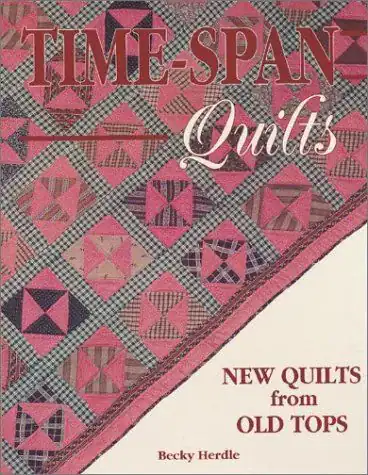
Date: Tue, 15 Apr 1997 19:09:36 -0400 (EDT) | From: CToczek [at] aol [dot] com To Connie L: Your list of books raised a question for me. What do you think of Bets Ramsey’s book? I’ve been leaning towards getting it, but I’d like to hear from one who has read it first. I have Better Homes and Gardens, America’s Heritage Quilts, which I have read, re-read and read again. It’s a good overview of various quilting styles and the eras which promoted them. Also a how-to book, by the way. On the same subject, is it true as I’ve heard that Barbara Brackman’s, Clues in the Calico is a must have? Thanks for any info, Carla in Texas
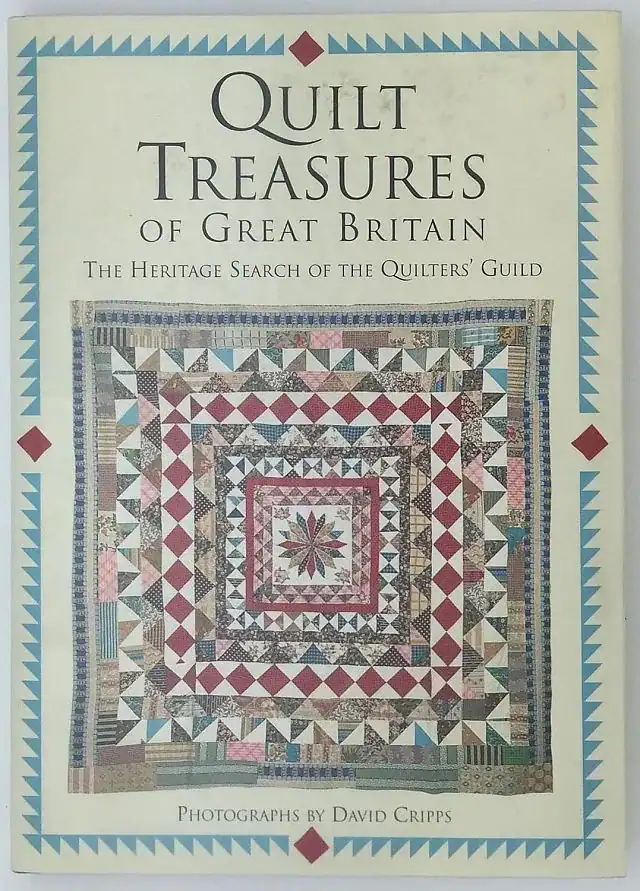
Date: Tue, 15 Apr 1997 19:12:48 +0400 | From: Xenia Cord Hi all! On the matter of what books to read to get some in-depth understanding of our quilt history: maybe I’m getting old (I am), but I feel that a book that mixes dollops of history with patterns to cut out and make is really trying to serve two interest areas and doing neither one justice. Some of the best books on quilt history are just that – books on quilt history. Some of the best books on how-to, especially how to make antique-looking quilts, may give a very brief decription of the particular quilt to be made, but emphasize color and fabric choice, construction techniques, and finishing.
For History I would recommend:
- Orlofsky, Quilts in America Kiracofe,
- The American Quilt Brackman,
- Clues in the Calico Montgomery,
- Textiles in America 1650-1870 Meller and Elfers,
- Textile Designs
- Anything by Merikay Waldvogel, by Jeanette Lasansky, by Carolyn O’Bagy Davis, by Mary Bywater Cross, by Sandi Fox, by Kathleen Sullivan
The state quilt search volumes Membership in and publications by the American Quilt Study Group
For the past 10 years at least, there has been a veritable outpouring of good books on quiltmaking, and of good books on quilt history. No one should have trouble finding something to read! Xenia, in Indiana (I’ll get off the soapbox now!)
Date: Tue, 15 Apr 1997 21:00:02 -0400 | From: “Miklos B. Lukacs” I enjoyed this book. I would probably not use her patterns due to the fact that they do not seem to be accurate. It certainly introduced me to a lot of patterns I have never seen, made me look up some methods I was unfamiliar with, and I could draft some patterns using her descriptions as guidelines. Now you do have to remember that I am not, at this point anyhow, a quilt historian. I am only a lover of history and a quilter. This page joins my two loves. Also this book was purchased as a momento of a visit to Belle Meade Plantation in Tenn. Much better that a pair of earrings. Connie L. **************************************