April 7 – 10, 2004
These restored messages come from the Quilt History List, an online forum where quilt historians, collectors, researchers, appraisers, and enthusiasts discussed antique quilts and related textiles. The archive dates from 1996 through approximately 2016 and is being restored gradually. Sign up in the form at the bottom of the page if you want to know when a new page is added. Original spelling, opinions, formatting, and inactive links may remain unchanged.
Primary topics of this QHL Digest:
- UGRR Scholarship Debate Continues — The “gnats and elephants” and “The Interview” threads keep debating academic qualifications for writing black quilt/Underground Railroad history.
- Pine Burr Quilt Pattern History — Members trace the Pine Burr/Feathered Star pattern seen on a quilt featured on Antiques Roadshow back through pattern-source books.
- Calico and Chintz Exhibit & Catalogue — Members request help finding a sold-out museum exhibition catalogue and discuss a Calico and Chintz exhibit at the Portland Museum of Art.
- Memorial Quilt Discussion — A member asks the list for input on a memorial quilt, including wording and design ideas.
- Capital Region Quilt Study Group Announcement — A new Capital Region Quilt Study Group is announced to the list. (see the article on quilt study groups)
From: Patricia L Cummings <quiltersmuse@>
Giles Wright: … “Tobin is bereft of training in African American history; teaching Women’s Studies hardly qualifies her to write about the Underground Railroad. Since Tobin lacked expertise in the field of black history, she clearly lacked the capacity to adequately assess or evaluate the authenticity of the oral testimony she had received from Williams”.
THIS PERSONAL ATTACK ON TOBIN IS UNWARRANTED AND IS OFFENSIVE. HOW DO WE KNOW THAT SHE HAS NOT STUDIED BLACK HISTORY? IS IT ALSO BEING INFERRED THAT SHE WAS TOO STUPID TO ASSESS OZELLA’S TESTIMONY?
BY EXTENSION, WOULD GILES BELIEVE MEAN THAN NON-AMISH PEOPLE SHOULD NOT WRITE ABOUT THE AMISH, NON-JAPANESE SHOULD NOT WRITE ABOUT QUILTS FROM JAPAN, NON-HMONG PEOPLE SHOULD NOT WRITE ABOUT HMONG TEXTILES, ETC.? IF THAT IS THE CASE, “GUILTY AS CHARGED”.
I AGREE WITH XENIA. IT SEEMS TO ME THAT ANYONE CAN RESEARCH, AND ANYONE CAN WRITE ABOUT ANY SUBJECT THAT INTERESTS THEM. IF WE WANT TO GET PERSONAL, IT COULD BE SAID THAT KIM HERSELF IS A PSYCHOLOGIST BY TRAINING, AND DOES NOT TO MY KNOWLEDGE HAVE ANY ACADEMIC DEGREES IN TEXTILES OR RELATED FIELDS. YET SHE AND OTHERS WHO CALL THEMSELVES “QUILT HISTORIANS”, INCLUDING MYSELF, (WITH MY UNRELATED ACADEMIC TRAINING IN SPANISH AND IN EDUCATION), SHARE OUR KNOWLEDGE THROUGH A COMMON INTEREST AND BONDING WITH THOSE OF SIMILAR INTERESTS, WITH HANDS ON LEARNING EXPERIENCES BEHIND US, AND THROUGH PERSONAL STUDY AND APPLICATIONS. WE ALL HAVE SOMETHING TO ADD TO ONGOING STUDIES OF QUILTS AND QUILTERS.
LET’S NOT BE SO CRITICAL OF JACQUELINE, WHOM I’M SURE IS EMBARRASSED TO TEARS WITH ALL OF THESE NEGATIVE REMARKS. AFTER ALL, WHY SHOOT THE MESSENGER?????
PERSONAL ATTACKS ON THE CREDENTIALS OF OTHERS DO NOT SERVE ANY PURPOSE.
GILES: “Tobin therefore would have been better served by turning to some black{my note here- Kim’s, this means the discipline of black history, not the color of the skin of the historian} historian for counsel on the plausibility of the folklore received from Williams. Implicit in her failure to do this must be her thinking that anyone, whether possessing the proper credentials in African American history or not, can write about this discipline. Would she have treated any other people’s history in such a way? The degree of hubris she has shown is astounding”.
HUBRIS?? ACCORDING TO ONE DICTIONARY THE MEANING IS: “WANTON ARROGANCE ARISING FROM OVERBEARING PRIDE OR PASSION”.
IS THIS REALLY THE RIGHT WORD TO DESCRIBE TOBIN’S AFFECT OR INTENT? SOUNDS LIKE WE ARE USING A SLEDGE HAMMER TO KILL A MEALY BUG HERE.
“I feel strongly that Tobin and Dobard should cease dishonoring the precious heritage of the Underground Railroad and acknowledge that their claim-that Charleston slaves were induced by quilts with coded messages to runaway and head for Cleveland-is simply untenable. That the story offered in HIPV is untrue is grounded in the fact that it is in so many ways illogical, some of these ways having been identified by me”. _________________________________________________________
I’D LIKE TO THANK KIM FOR DOING THIS INTERVIEW WITH GILES WRIGHT. IT WOULD BE MY GUESS THAT MOST OF US AGREE BY NOW THAT THE SECRET QUILT CODE IS “UNTENABLE”, ALTHOUGH I WOULD ADD ONE THING. THE BOOK /HIDDEN IN PLAIN VIEW/ HAS GENERATED A LOT OF INTEREST IN BLACK STUDIES AND AS A RESULT HAS GENERATED INCOME FOR INDIVIDUALS AND ORGANIZATIONS (INCLUDING BLACKS)WHO HAVE HELD LECTURES OR HAVE SOLD BOOKS. IN ADDITION, IT HAS PROBABLY GENERATED A NEW INTEREST IN THE HISTORY OF THE UNDERGROUND RAILROAD, ACROSS THE BOARD. PERSONALLY, I NOW HAVE MANY ADDITIONAL BOOKS IN MY LIBRARY ON THE SUBJECT OF BLACK STUDIES.
BEST OF ALL, WE HAVE BEEN CONSIDERING THESE HISTORICAL MATTERS AND WE HAVE BEEN DISCUSSING THEM, THANKS TO KRIS D.
WE NEED TO MOVE ON AND LOOK TO MORE SUBSTANTIVE MATTERS. THE IDEA OF QUILT INVOLVEMENT IS WHAT BROUGHT US TO THE TOPIC BUT NOT FINDING PROOF OF QUILTS OR QUILT BLOCKS, THOSE OF US WHO ARE INTERESTED COULD CHOOSE TO STUDY OTHER RELATED ASPECTS, SUCH AS AFRICAN CLOTH TRADITIONS, FOR EXAMPLE.
LET’S BE AS KIND TO EACH OTHER AS WE WOULD HAVE OTHERS BE TO US. ISN’T THAT THE GOLDEN RULE? I DON’T THINK WE NEED TO BORROW SOMEONE ELSE’S DISGRUNTLEMENTS, DO YOU?
IF YOU HAVE READ THIS FAR, THEN YOU DESERVE A MEDAL. SORRY FOR THE CAPITAL LETTERS. IT WAS MY WAY OF SEPARATING QUOTED MATERIAL FROM KIM’S POST FROM MY OWN COMMENTARY.
GOD BLESS.
PAT
From: “Jocelyn Martin” <jocelynm@>
>>>PERSONAL ATTACKS ON THE CREDENTIALS OF OTHERS DO NOT SERVE ANY PURPOSE.
In academia, however, it is considered good scholarship to consider the credentials of others. It is in no way considered a personal attack to state that a person does not have any training in a particular field; that is a matter of fact.
When an academician chooses to speak as an expert on a field, s/he is always expected to have credentials in that field, and one of the most common challenges to authority is whether it is well-grounded. Scholars are expected to support their statements by quotes from the scholarly work of others. It is not considered a personal attack to point out that an author is using questionable sources, or no sources at all. Indeed, it is considered the DUTY of scholars in the field to write and publish a response to a publication they consider poorly researched or having illogical conclusions.
One would not expect a scholar to be tearfully ashamed at having such a response to his or her work; it’s part of the rules of engagement. If a scholar sees a publication that does not match with his/her personal research, his/her duty is to write a critique, publish it, and open the field to scholarly debate. No true scholar would say, ‘Well, this author would be embarrassed to tears if I point out that this work is poorly researched, so it is better for me to remain silent and let these untruths be accepted as fact, than to embarrass a person who didn’t do his/her job correctly.’
Academia may be called ‘the ivory tower’, but it’s a tower ringed with fierce watchdogs, because it has the responsibility of propagating TRUTH. Any real academician knows that s/he may be ripped apart by the opposition, and defends against this by offering the best-researched and -written case for his/her point of view that s/he can possibly write.
From: Patricia L Cummings
Dear Jocelyn:
Of course, I am in total agreement with what you’ve said. Academic standards must be maintained and every writer, whether or not he or she holds a doctorate degree, should adhere to presenting the best researched, most well-informed data that is available at the time of writing. Since writing relies heavily on the previous research of others, it is often a compilation of existing fact gleaned from a number of well-documented resources. Often, conclusions are drawn based on this pre-existing information.
Looking at this (HIPV) situation from an emotional angle in terms of Jacqueline Tobin, I can understand why she could possibly be very upset at being criticized. After all, she started out thinking that she would be imparting important information that sounded new and exciting. She collaborated with an art historian, a black professor, and thought that she was doing the right thing.
Who knows if she is to “blame” for this book? What percentage of it did she actually write? (Just wondering this, after having heard a number of NPR interviews where Dobard espoused his many theories on how slaves might have communicated, the ways that quilt blocks or quilts may have been used, and why there is no tangible evidence for his assumptions). Dobard had met Ozella McDaniel Williams and interviewed her, too.
Logically speaking, perhaps Tobin should not be “tearfully ashamed”, but emotionally speaking, I should think she would be feeling a bit battered by now.
This whole issue of /Hidden in Plain View/ has devolved into a very unsavory controversy. There seems to be no chance of putting it to bed any time soon. Five years past the publication date, we are still exchanging ideas, not only about the book, but about the people instrumental in supporting it, in challenging it, in continuing to give lectures about it, and in writing more fiction related to the code.
Jocelyn, I appreciate your taking the time to voice your opinion. In this free country of ours, it is the one privilege that we are guaranteed, the freedom of speech. Your assessments of the standards of academic excellence are right on the mark.
Let me add that if we only listen to everyone with whom we are in agreement, we would all be singing the same song, and it would be a much duller world. It is only in the collaboration of fine minds that true scholarship prevails.
We all have something important to say about this topic, and we each need to take the time to patiently listen to each other. The book /Hidden in Plain View /contains much information, even if we do not agree with its theories. To reflect on what the authors have said is to be able to formulate ideas of why we DO disagree. Thinking is good, in the same way that taking a daily vitamin is “good”. That is why I love books so much. They are brain stimulants.
Well, off of my soapbox. I think that I have now said just about all I have to say on this topic. I should sing a song I suppose, just to be sure. You know the expression: “It ain’t over ’til the fat lady sings?”
As a sweet aside, I am very happy to report that my son found out two days before his 30th birthday that he has been accepted into a doctoral program for English for the fall term. I have to hope that my love of words has been instrumental in moving him along this path. Forgive me for being a proud mother, but I just had to share this good news.
Pat www.quiltersmuse.com
Jocelyn wrote:
In academia, however, it is considered good scholarship to consider the credentials of others. It is in no way considered a personal attack to state that a person does not have any training in a particular field; that is a matter of fact.
From: “Candace Perry” <candace@>
Sorry, I neglected to sign my last comment. Not trying to remain anonymous, Candace Perry
From: “Candace Perry” <candace@>
I’m sorry, but this is all very disturbing. I’ve just been through the war on Iraq on Museum-L. Maybve this should be dropped, now?
From: Gail Ingram
I think the bottom line in all this Tobin, et al talk is this: the quality of the scholarship.
Certain experiences, personal and vicarious, give people an edge in grasping the nuances of a subject, of picking up clues that others might miss. I grew up in the South, did grad work in Southern Lit, spent a lifetime teaching southern studies, and have traveled the backroads of the South all my life. That experience is a tremendous advantage in understanding the politics, aesthetics, sociology, language, and other elements of this region’s life.
Yet, if I’m going to write on any aspect of Southern culture, I have to do the hard, slogging work of the scholar. And it will be a great advantage to me to have people who are from other regions with whom to discuss my work, for they will bring other, valid perspectives I might have missed.
When it comes to a scholarly book, it’s the quality of the scholarship that serves as a rubric. We buy at quilt stores because the fabrics there are superior. Could be the fabric in some of those knock-off stores is produced by lovely individuals. But we want good, high quality fabric, don’t we?
The only way to put HIPV to bed is for everybody to treat it as scholarly text, judge it accordingly, forgetting color of authors and subjects.
This subject stays alive for the reason lots of subjects are staying alive today: you can find the same basic problems in any variety of academic areas. We quilters should hold ourselves to a high level of scholarship.
i pomise to say ‘nary another word on the issue.
Gail
From: Patricia L Cummings
Good afternoon:
We just returned home after spending the entire day in Portland, Maine at the national treasure known as the Portland Museum of Art. The main purpose of our trip was to see the traveling exhibit from the Smithsonian: “Calico and Chintz”. What a totally delightful time we had! The quilts are exceptional in quality. I did notice that the most heavily and elaborately hand quilted quilt on display was hand quilted by slaves. Some of my other favorites were: the strippy style quilt with 526 triangles representing “Flying Geese”. The fabric used as strips between the panels of geese has a later provenance. The sign near the quilt said that this was often the case with quilts that had many small pieces. Scrap quilts are so much fun because they show what fabrics were available to the quilter in her time!! I love them.
In a special glass case, one could see a small quilt with the tiniest hexagons in various colors, set so that the second row outward in each rosette had tiny prints that were very graphic and that formed a kaleidoscope type effect. The colors were very “sweet” and the workmanship exquisite. There was an elaborate, wide (probably hand made lacy fringe) on the edge.
Quite a few of the quilts had “fondu” fabrics, also know as ombres or rainbow prints. The term “fondu” is French and means “melted”. If anyone has an idea of whether or not the term had some meaning as related to the dyeing process, I’d love to know more.
I was very surprised to see a Chintz bird print that is in the Montgomery book, and that we also saw in several different colorways in a quilt that we photographed last year for an article about the quilts of Strawbery Banke Museum (correct spelling).
A number of quilts feature “Pillar Prints” (a vertical print with vines, flowers, etc.). These are large scale prints that were often in a weight used as furnishing fabrics, if I remember correctly. In one case, the Pillar Print is used as a border and is simply turned sideways for top and bottom border treatments. Looks kind of odd, by today’s expectations.
All of the quilts were stunning. What a treat!! As if the traveling exhibit was not enough, in the musuem foyer, there is a small exhibit of Art Quilts. The only one I immediately recognized is the one that Jo Diggs of Portland, Maine made. This quilt is memorable because it is unlike her landscape work for which she is better known and symbolizes industrialization and has parts that are simulated to look like steel. The quilt was exhibited in Japan in the recent past.
The other art quilts were just wonderful, although I did not recognize any maker’s names from books I have seen, or from various people who post to the quilt art list. There did not seem to be a list of quiltmakers available and my memory is not reliable enough to recall any of the names listed on the small summaries near the quilts.
Next stop was the gift shop. At the moment, they are featuring many quality books on quilt history, a variety of quilt related gifts, and many irresistible items, so compelling that we did some serious damage to the plastic card we had with us.
The museum has an extraordinary number of paintings by famous painters including French Impressionists. Salvador Dali, Matisse, Renoir, DaVinci and many other “big names” that you would immediately recognize, are represented. The sculptures are breathtaking, as is the “Lantern House” in which the walls are composed of interlocking glass slides, each with an image of paintings (I immediately saw part of a Velazquez painting, and also a Goya painting). There are also drawings of cave animals, photo images of people and places. One has to stand inside this glass house to enjoy the “view”. It would take hours to see them all.
If you are traveling to New England this summer, please don’t miss this museum. The traveling exhibit ends in early June. If you are interested in more information, I believe that there is some listed on the Smithsonian site, or you can always contact me. I’d be happy to help. One more thing, the cafeteria is very ambient, surrounded by encased units which hold a display of nineteenth century glass pieces. The snack food is upscale…fresh fruit cup, homemade soup, gourmet sandwiches, and fancy pastries and deserts. So there you have it. We are happy!
Pat Cummings
Date: Thu, 8 Apr 2004 | From: MargaretFahey@
Pat,
I do not think it is personal to discuss aspects of historical inquiry. We study quilts and are gradually learning more about them. I agree with you that any study is likely, to the inquiring mind, to lead to other tangential topics. And I delight in it
However, if I were taking quilts and applying them to a “peoples movement” I would need to do an in depth study of that movement prior to assuming the quilts would apply. It doesn’t mean I would need to understand all of Black culture. But I would have to rely on the scholars who have done so much research already on this topic. Better yet, a historian ON THIS TOPIC, to act as a major consultant would be best. Now Pat, tell me you would do otherwise. You would check out all the sources avaliable surely. This was not about quilts so much as about the use for a movement.
Ms. Tobin did not propose this as a myth, nor as total folklore,but fact. Did she heavily credit her reliance on the history of the movement in the text itself? Are there references on every page as to what would support her theory? I can understand Giles impatience with false information seeping through the culture, when he has spent so much time making sure he “gets it right.” as a valuable historian must.
Also, this has since become a bit of a mini business. Speakers have appeared before quilt clubs explaining the premise of the book as though it were true. Our club cancelled one speaker once we understood that the Program person had booked her. It was not the authors. People have made quilts based on the book with the understanding that they actually represent a movement. It isn’t just Ms Tobin but the mini industry that has taken off since. And how many people have learned that it is no doubt a false theory? Or how long will this idea continue in the minds of many?
So, it is important that we all be careful to avail ourselves of the scholarship which attends application of the production of, and use of quilts, so as to avoid further problems.
Margaret
From: MargaretFahey@
All 22 quilts are available to see at www.portlandmuseum.org then click on Chintz and Calico. One by Ann Dagge is incredible. Last I knew it was in a NYC gallery. We have been restoring a collection of our museum, long neglected before we realized it, here in Rochester NY It would have been wonderful to have this one in our collection, but at least now we know where it is.
Margaret
From: “Kathy Moore”
I’ve been reading your responses with interest regarding that quilt on Monday night’s roadshow. I’m not nearly so accomplished at dating quilts as are all of you, but I had my suspicions about that one. I’m glad to know I’m not the only one.
BUT, I think it’s curious that none of you caught the one piece of information the owner seemed to think was so special about the quilt. I think I heard him say it was owned by a black slave owner! Did anyone tape that show? Could you replay it and see if I heard him right?
I’ll look forward to learning what you all hear.
Thanks, Kathy Moore Lincoln, Nebraska
Date: Thu, | From: “Kathy Moore” <KathyMoore@>
I’ve just read the exerpt of Giles comments and Margaret Fahey’s response. Thank you Kim for the interview. It’s really well done. And thank you Margaret for your thoughtful and penetrating comments. I completely agree. Tobin could have consulted academic colleagues who specialize in Southern storytelling and learned a lot about what Ozella was up to.
Enough said. No more gnats, please.
Kathy Moore Lincoln, Nebraska
Date: Thu, | From: “Kathy Moore” <KathyMoore@>
Boy, you people have got me going tonight. I’m just going to make this one last comment on the Giles Wright-J. Tobin debate.
Pat: all those capital letters mean you’re shouting, right? Well, just calm down and read Jocelyn Martin’s response. She knows of what she speaks. It’s not a personal attack by Mr. Wright. If Ms. Tobin wasn’t/isn’t willing to “suffer the slings and arrows” from historians who know her work doesn’t measure up to accepted standards of scholarship, she shouldn’t have published that book I rather suspect she’s not too embarrassed to accept the checks from her publisher.
Jocelyn: thanks for those remarks. You put it in the right context and said it better than I could.
Goodnight! Kathy Moore Lincoln, Nebraska
From: Donald Beld <donbeld@>
Hi everyone, several comments on the Antique Roadshow/Pine Burr (?) quilt.
First, why does everyone think it is later than they said? Several of you have said that you think it is more likely around 1880, but haven’t said why. I don’t doubt that you are right, but am curious as to why you think so. It appeared to me to be solid color fabrics, which means it would be difficult to date. So I am interested.
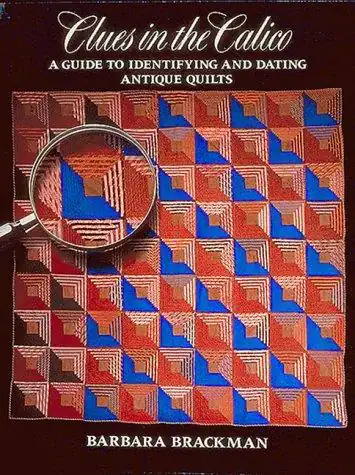
Second, why are you all calling it Pine Burr? I looked in Brackman and it doesn’t correspond with the three Pine Burrs she lists; if anything it would be Double Pineapple–Brackman 2992.
Finally, what I heard was that it was made by a slave–not a black slave owner—but it is possible I was wrong.
Still hoping one of you caught the names of the books it was featured in–PLEASE!!!.
Don Beld
(Off to England next week in search of 18th Century Log Cabins and Hexagons.)
From: “Alan R. Kelchner”
Maybe someone has a thought on where I can look. I’m trying to research a porcelain piece I own, and I’m not having a whole lot of luck (I’m doing research with the thought of selling). It’s a replica of “The Forced Prayer”, which was displayed at the 1876 Philadelphia Exhibition. This is what the original looks like:
http://www.geh.org/fm/st01/centen/htmlsrc/m198166650121_ful.html#topofima ge
Mine is modeled exactly as the original, but has been finely painted (and is probably smaller). It appears to be from the last quarter of the 19th century, and is heavy-weight. Any thoughts about where to find info on this reproduction? Oh – the mark is illegible, look vaguely like Plaue on Havel.
Thanks
Alan R. Kelchner Textile Artist http://www.alankelchner.com
From: Patricia L Cummings <quiltersmuse@>
Margaret wrote:
All 22 quilts are available to see at www.portlandmuseum.org then click on Chintz and Calico. One by Ann Dagge is incredible. Last I knew it was in a NYC gallery. We have been restoring a collection of our museum, long neglected before we realized it, here in Rochester NY It would have been wonderful to have this one in our collection, but at least now we know where it is.
Hi Margaret:
Thanks for providing the link above. Yes, the Dagge quilt was the first one I saw as I turned the corner into the exhibit room. It is so striking, I must have stood in awe for a full five minutes or longer.
The amazing thing is the fine condition of every quilt in the collection. Makes one wonder if they were all made “just for show” or if any of them actual saw any use.
A visitor to the exhibit turned to me and asked why old quilts seem to have lasted so much longer than the ones today. I replied that Americans are “too clean” and they want to wash quilts often…..this does not bode well for longetivity of the fibers!! Not to even mention the fact that most people are not equipped in any way to wet-wash quilts at home. They resort to tossing them in a home washer and drying them in a hot dryer. Yikes!
It did not appear that any of the quilts in the collection had ever been washed.
Anyhow, that is beside the point I suppose. The questions posed by the general public, especially non-quilters, are very interesting sometimes.
Thanks for the info., Margaret.
Pat Cummings
From: Patricia L Cummings
Yes, I just saw the show tonight here in NH. The quilt was listed in an inventory which also contained the information that the owner of the quilt also owned slaves.
I plan to look for the pattern. It was not one readily recognized by name, although I think that I have seen the same geometric configuration somewhere.
Pepper Cory was “right on”, as usual, in her recommendations that the stitching be looked at more closely, especially on the edges, to ascertain whether or not there is evidence of any machine quilting which would likely indicate a post 1850 date.
Very interesting quilt. I did not catch the first part of what the person who brought the quilt in said. I did write down the names of the books or exhibition catalogs mentioned (it is downstairs at the moment) but will retrieve that and post the info. tomorrow for Don and others who might be interested.
I just kept wondering how the appraisal of $40,000 – 60,000 was derived.
It appeared to be a scrap quilt, only because the quiltmaker ran out of the fabrics she was using.
Did you notice the Baptist or Methodist Fan quilting lines? I am wondering when that style of hand quilting was first used and if that could be a clue to help date the quilt? Will have to revisit research materials…. So much to know, so little time.
Pat Cummings
From: Patricia L Cummings <quiltersmuse@>
“Ready for the news? Seems as though Ms. Tobin is currently at work on a book about the Underground Railroad from the Canadian side of the fence. This information is from a reliable source. Food for thought.
Pat”
My reply: Good grief! Somebody stop her before she hurts herself.
Kathy Moore Lincoln, NE
From: “Quiltstuff”
Forgive my ignorance ( after all I know Australian History and not so much American). But I was wondering why it would be extra special even if it was owned by a black slave owner. I was thinking that given slavery existed until the Civil War and a large number of quilts that did survive from that period would have been more likely to be the ‘good ones’ and perhaps from well off people, .. wouldn’t half the quilts come from the south and from slave owners.
Or is there a widely disparate amount of Northern quilts compared with southern quilts that survived the war.
Just curious?? or am I missing the point?? Suzy
From: Patricia L Cummings
Dear Don Beld and anyone else who is interested:
I jotted down the following notes about the quilt on the Antiques Roadshow:
It is linked to African American heritage by virtue of its colors (red, white, and blue) and its block pattern. The quilt is listed in an inventory of the Polk estate (Polk died in 1864).
It has been shown at both the Smithsonian and the Shamburg Center, NY and both times was included in exhibition catalogs. Date of provenance: 1825-1830. Estimated value: $40,000-60,000.
These tidbits of info. only whetted our appetites to learn more, I think. I would have liked to have verified if the hand quilting was done in “double lines”, for example.
Wish we could have taped the show.
Hope this helps, Don.
Pat Cummings
From: Margareta.Faust@
Oh, now I am curious about this quilt! Is there a picture of it anywhere online or in some publication?? Margareta
From: Bob Shaw
<img align=”left” alt=”pineburr.jpg (32023 bytes)” border=”2″ height=”75″ src=”images/pineburr_small.jpg” width=”100″/>on the PBS website at http://www.pbs.org/wgbh/pages/roadshow/series/ontheroad/savannah.html
Bob Shaw
From: “Laurie Magee”
It is on the cover and end papers of “Jubilee, the emergence of African american culture” by Howard Dodson. I have not had time to read the book but it has wonderful illustrations and covers many facets of the African ameerican culture. If anyone else has access to this title I would love to hear some comments.
Laurie, in Wisconsin where spring is finally creeping in. > Dear Don Beld and anyone else who is interested: > > I jotted down the following notes about the quilt on the Antiques Roadshow: > > It is linked to African American heritage by virtue of its colors (red, > white, and blue) and its block pattern. The quilt is listed in an > inventory of the Polk estate (Polk died in 1864). > > It has been shown at both the Smithsonian and the Shamburg Center, NY > and both times was included in exhibition catalogs. Date of provenance: > 1825-1830. Estimated value: $40,000-60,000. > > These tidbits of info. only whetted our appetites to learn more, I > think. I would have liked to have verified if the hand quilting was > done in “double lines”, for example. > > Wish we could have taped the show. > > Hope this helps, Don.
I am sending this to the list because it may affect other quilters, but mostly because I don’t want any of you to see me standing by the side of the road thumbing it to get home from Paducah.
Flights out of Paducah on Sunday, April 25 are OVERSOLD – a word to the wise – and many trying to make reservations have been forced – as I have been – to depart from the Marion airport which is about 56 miles NE. The airport is located on the near side of Marion on US 60. There are no rail connection or morning bus connections from Paducah to Marion.
Car rental, if you could find one, would top $80.00/day to drive the 56 miles.
I’m staying 3 blocks from the Executive Inn and need to be at the airport by 10:30 AM, would be happy to buy gas, have someone to visit with, etc.
Please email me privately.
Linda Karppinen
From: “Judy Kelius (judysue)”
My hunch is that it’s a New York quilt! Applique albums were made all over the North East in the mid-late 19th century, and there is nothing on this that suggests to me it was made in Pennsylvania. It would be a different case if it were on a cheddar or blue background <GR>! This is quite a beauty, and I agree that it looks like the restorer did a good job with what was available at the time! I’d just consider it part of the history of the quilt. Personally, I think some of the most magnificent quilts I have ever seen were made in New York State.
By the way, for the list’s information, I am no longer affiliated with the Pennsylvania Quilt Museum in Lititz in any way. If anyone has questions, you can write me at judysue@.
Date: Sun, 11 Apr 2004 00:19:08 +0930 | From: “colleen archbold” <colleenarchbold@>
Margaret mentioned this exhibition currently at Portland. If anyone is planning to attend could you please contact me ? Thanks.
I’m a keen lurker here, feel quite intimidated by all you people with vast knowledge of quilt history. I’m learning. Thanks for all the valuable info. warm regards Colleen Archbold, Adelaide, Australia
Date: Sat, 10 Apr 2004 14:46:14 EDT | From: Trishherr@
Does anyone who has visited the Portland Museum of Art have an extra copy of the Calico and Chintz catalogue? I called the gift shop to order it and they said they would not ship it and are only selling them on site.
Thanks, Trish Herr
Trish Herr 717.569.2268 2363 Henbird Lane Lancaster, PA 17601
Date: Sat, 10 Apr 2004 15:10:43 -0400 | From: “J. G. Row” <JudyGrow@>
Like Trish, I’d love a copy of the Calico and Chintz catalog as well. Perhaps someone (Kris?) could buy a bunch that we could then buy from her? Just a thought. I’d be willing to pay double postage if need be.
Judy ” Ringo” in Ringoes, NJ judygrow@
—– Original Message —– From: <Trishherr@> To: “Quilt History List” <qhl@> Sent: Saturday, April 10, 2004 2:46 PM Subject: [qhl] Looking for copy of Calico and Chintz catalogue
> Does anyone who has visited the Portland Museum of Art have an extra copy of > the Calico and Chintz catalogue? I called the gift shop to order it and they > said they would not ship it and are only selling them on site. > > Thanks, Trish Herr > > Trish Herr > 717.569.2268 > 2363 Henbird Lane > Lancaster, PA 17601 > > > — >
Date: Sat, 10 Apr 2004 15:04:45 -0400 | From: <mreich@>
I have a twentieth-century memorial quilt with this saying on it. “Breathes there a man with soul so dead, Who never to himself hath said, This is my own, my native land!”
Can anyone identify this saying or direct me a place that might know its origin? Many thanks, sue reich
Date: Sat, 10 Apr 2004 14:36:29 -0500 | From: “Karan Flanscha” <SadieRose@>
Sue, Here is what I found (www.askjeeves.com)
The Oxford Book of English Verse: 1250–1900.
Sir Walter Scott. 1771–1832
547. Patriotism 1. Innominatus
BREATHES there the man with soul so dead, Who never to himself hath said, ‘This is my own, my native land!’ Whose heart hath ne’er within him burn’d As home his footsteps he hath turn’d From wandering on a foreign strand? If such there breathe, go, mark him well; For him no Minstrel raptures swell; High though his titles, proud his name, Boundless his wealth as wish can claim; Despite those titles, power, and pelf, The wretch, concentred all in self, Living, shall forfeit fair renown, And, doubly dying, shall go down To the vile dust from whence he sprung, Unwept, unhonour’d, and unsung.
Date: Sat, 10 Apr 2004 12:38:34 -0700 (PDT) | From: Dana Balsamo <danabalsamo@>
That is beautiful…I had to read it twice, aloud. Beautiful, and so appropriate in this day and age. Timeless.
Dana
Karan Flanscha <SadieRosecfu.net> wrote: Sue, Here is what I found (www.askjeeves.com)
The Oxford Book of English Verse: 1250–1900.
Sir Walter Scott. 1771–1832
547. Patriotism 1. Innominatus
BREATHES there the man with soul so dead, Who never to himself hath said, ‘This is my own, my native land!’ Whose heart hath ne’er within him burn’d As home his footsteps he hath turn’d From wandering on a foreign strand? If such there breathe, go, mark him well; For him no Minstrel raptures swell; High though his titles, proud his name, Boundless his wealth as wish can claim; Despite those titles, power, and pelf, The wretch, concentred all in self, Living, shall forfeit fair renown, And, doubly dying, shall go down To the vile dust from whence he sprung, Unwept, unhonour’d, and unsung.
Date: Sat, 10 Apr 2004 15:40:29 -0400 | From: Joan Kiplinger <jkip@>
Sue — Lay of the Last Minstral by Sir Walter Scott.
mreich@ wrote:
>I have a twentieth-century memorial quilt with this saying on it. >”Breathes there a man > with soul so dead, >Who never to himself hath said, >This is my own, my native land!” > >Can anyone identify this saying or direct me a place that might know its >origin? Many thanks, sue reich > > >
Date: Sat, 10 Apr 2004 16:44:38 -0400 | From: Patricia L Cummings <quiltersmuse@>
Hi Judy and Trish:
I was there on opening day. The gift shop had approximately ten each of both hardcover and paperback books. I was told that that is the total number they will ever have. Consequently, they are selling them only to people who attend the exhibit in person. Perhaps by the end of this weekend, the book will be sold out. They were divided between the venues, none of whom were allowed to take phone orders. I guess they want to have the catalogues available for patrons of the museum, i.e. those who pay an admission to get in.
Other options?
Right now, the book is selling on amazon for between $132., and $800. (for a signed copy). The only other one I know about that is listed for sale is the one on Kim’s site for $175. plus shipping, for one with a slightly damaged cover- don’t know if it is a hardcover book, or not.
At the museum, the price is $75. for a hard cover, and $55. for a paperback, up from the initial prices of $39.99 and $19.99.
This is a book you would all love to own, but perhaps you can at least get a glimpse of it by borrowing it through your local library’s reference desk, via Interlibrary Loan.
I can see the traffic jam on I-95 now, as anxious quilt enthusiasts form a bumper to bumper line to Maine on Easter Sunday.
Pat